

P0106 on 2006 Mazda 5: MAP/Barometric Pressure Sensor Causes and Fixes
On a 2006 Mazda 5, code P0106 is most often caused by a faulty Manifold Absolute Pressure (MAP) sensor. A Mazda technical service bulletin noted this specific issue, citing internal corrosion. Replacing the sensor with the updated OEM part (1S7Z-9F479-AD) is a common and effective fix, costing around $40-$100 for the part.
- Code P0106 on a 2006 Mazda 5 almost always points to a problem with the Manifold Absolute Pressure (MAP) sensor circuit.
- The most likely cause is a faulty MAP sensor itself, a known issue documented by a Mazda TSB for this specific model year.
- Before replacing the sensor, perform a quick visual inspection of its vacuum hose and electrical connector for obvious damage.
- Replacing the MAP sensor is a relatively simple DIY task that can be completed with basic hand tools.
- Do not confuse the MAP sensor with the MAF (Mass Airflow) sensor; they are different parts.
What's Unique About the 2006-2006 Mazda 5
For the 2006 Mazda 5 with the 4-cylinder engine, this code is specifically called out in a Mazda Technical Service Bulletin (TSB). The TSB points to corrosion within the MAP sensor as a common cause of failure, recommending replacement with an updated part. On some Mazda models, this sensor is also referred to as an EGR Boost Sensor, as the PCM uses its readings to verify the EGR system's operation. This makes the sensor's health critical for both fuel mixture and emissions control functions. The sensor is typically located in the right rear corner of the engine compartment, mounted on a bracket with a solenoid.
Symptoms You May Notice
- Check Engine Light is on
- Rough or erratic idle
- Hesitation or stumbling during acceleration
- Reduced engine power
- Poor fuel economy
- Engine stalling
- Increased smoke or emissions from the exhaust
- Replacing the Mass Airflow (MAF) sensor. The MAF sensor measures air volume, while the MAP sensor measures pressure. While they work together, P0106 specifically points to the MAP sensor circuit. Owners often confuse the two sensors.
Most Likely Causes
- Faulty Manifold Absolute Pressure (MAP) Sensor 🔴 High Probability A Mazda TSB specifically identifies corrosion causing MAP sensor failure on 2006 Mazda 5 models, recommending replacement with an updated part. This is the most documented cause for this specific vehicle.
How to confirm: Test the sensor's voltage output using a multimeter or scan tool. With the key on and engine off, the voltage should be around 4.5-5.0V. At idle, it should drop to 1.0-1.5V. If the voltage is stuck or doesn't change with engine vacuum, the sensor is likely bad.
Typical fix: Replace the MAP sensor. It is located on a bracket in the right rear of the engine bay. 🎬 Watch this video to see the MAP sensor location and replacement. Use the updated OEM part number for best results.
Est. part cost: $40 - $100 - Vacuum Leak 🟡 Medium Probability Hoses can become brittle and crack over time due to heat and age. The intake manifold itself on the related Ford Focus is known for developing cracks or gasket leaks, which could also occur on the Mazda 5.
How to confirm: Visually inspect all vacuum hoses connected to the intake manifold for cracks, breaks, or loose connections. A smoke test is the most effective way to find hard-to-see leaks in the intake system. You can also carefully spray brake cleaner around suspected leak areas with the engine running; a change in engine idle indicates a leak.
Typical fix: Replace the cracked or broken vacuum hose(s) or intake gaskets.
Est. part cost: $10 - $50 - Wiring or Connector Issue ⚪ Low Probability
How to confirm: Inspect the MAP sensor's electrical connector for corrosion, damage, or loose pins. Check for continuity and proper voltage (5V reference, ground, and signal) at the connector using a multimeter. A real-world fix involved bending the connector pins slightly to ensure a tighter connection after repeated P0106 codes.
Typical fix: Clean the connector with electrical contact cleaner or repair/replace the damaged section of the wiring harness. In some cases, simply ensuring the connector pins are making a tight connection can solve the problem.
Est. part cost: $5 - $75 - Clogged or Damaged MAP Sensor Vacuum Line ⚪ Low Probability
How to confirm: Remove the vacuum line that connects to the MAP sensor and inspect it for blockages (often carbon buildup) or physical damage. Ensure strong vacuum is present at the hose when the engine is running.
Typical fix: Clean the port on the intake manifold and clean or replace the vacuum line.
Est. part cost: $5 - $20
Rare But Worth Checking
- Clogged Catalytic Converter: A severely clogged catalytic converter can create backpressure that affects manifold pressure readings. This is usually accompanied by other codes and a significant loss of power.
- Dirty Throttle Body: A dirty throttle body can affect idle and airflow characteristics, potentially confusing the PCM and contributing to a P0106 code, especially after a battery disconnect which resets idle calibrations. 🎬 Watch: How to remove and clean your Mazda 5 throttle body.
- Faulty Powertrain Control Module (PCM): This is very rare. The PCM should only be considered after all other possibilities, including the sensor, wiring, and vacuum systems, have been thoroughly ruled out.
Diagnosis Steps
- Check for any other stored trouble codes to see if they provide additional clues.
- Perform a thorough visual inspection of the MAP sensor, its electrical connector, and all associated vacuum hoses. Look for obvious cracks, loose connections, or damage.
- With the engine running, listen for hissing sounds that could indicate a vacuum leak. Use a smoke machine to precisely locate any leaks in the intake manifold or vacuum lines.
- If no vacuum leaks are found, test the MAP sensor. Using a scan tool, observe the MAP sensor reading (in kPa or Volts) with the key on, engine off. Then start the engine and note the reading at idle. The reading should change significantly.
- Alternatively, use a multimeter to back-probe the sensor's connector. Check for a 5-volt reference, a good ground, and a signal wire that reads between 1.0-1.5 volts at idle and increases as the throttle is opened.
- Inspect the wiring harness and connector pins carefully. A user on Mazdas247 reported solving a persistent P0106 by bending the female pins in the connector for a tighter fit, suggesting a poor connection was the culprit.
- If the sensor and vacuum system test good, inspect the wiring harness between the sensor and the PCM for any opens, shorts, or corrosion.
- If a new sensor was installed or the battery was disconnected, and the code returns, consider cleaning the throttle body and performing an idle relearn procedure.
- If all other components check out, the MAP sensor itself is the most likely culprit, especially given the TSB for this vehicle.
Parts You'll Likely Need
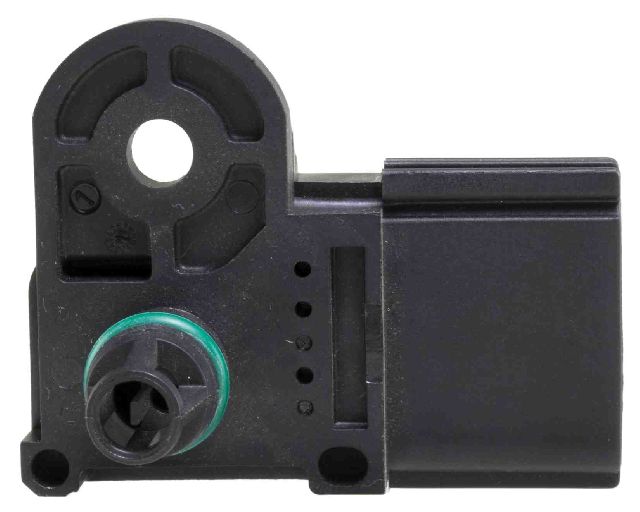
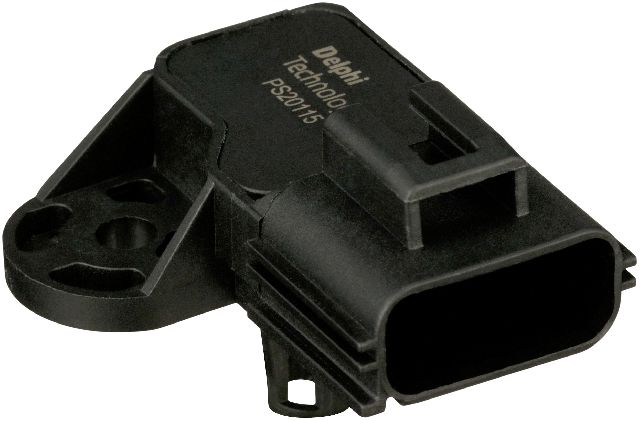
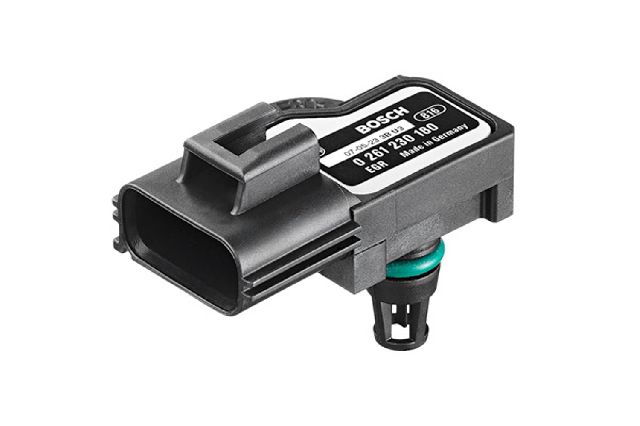
- Manifold Absolute Pressure (MAP) Sensor
(OEM #1S7Z-9F479-AD)— This is the most common failure part for code P0106 on this vehicle, as noted by a manufacturer TSB regarding internal corrosion. The part number 1S7Z-9F479-AD is the updated Ford part that supersedes the original 1S7Z-9F479-AA.
Trusted brands: Ford (OEM), Bosch, Denso, Standard Motor Products
OEM price range: $80-$125
Aftermarket price range: $40-$100
Related Codes That Often Appear With This One
- P0300 — A random misfire code can be triggered because the incorrect MAP sensor readings lead to an improper air-fuel mixture, causing cylinders to misfire.
- P0171 — This code for 'System Too Lean' can occur if a vacuum leak is the root cause of the P0106, as unmetered air is entering the engine.
Technical Service Bulletins (TSBs) & Recalls
- Mazda TSB for P0106 on 2004-2006 Mazda 3, 2006 Mazda 5, and other 4-cylinder models. The TSB identifies internal MAP sensor corrosion as the cause and recommends replacement. The specific TSB number is not consistently cited, but its content is widely referenced in repair databases.
Platform-Specific Known Issues
- A Mazda Technical Service Bulletin (TSB) was issued for 2006 Mazda 5 models (among others) for code P0106 caused by internal corrosion of the MAP sensor. The fix is to replace the sensor with an updated part.
- On a Mazdas247 forum, a user with a similar Mazda platform fought a recurring P0106 code. After replacing the MAP, EGR valve, and solenoid, the final fix was to physically bend the pins inside the electrical connectors for a tighter fit, which solved the problem permanently. This indicates that a loose connection, not a faulty part, can be the root cause.
Mechanic-Grade Diagnostic Values
- MAP Sensor Signal Voltage (Key On, Engine Off) — expected: 4.5V - 5.0V. Failure: Voltage significantly lower than 4.5V suggests a wiring issue or faulty sensor.
- MAP Sensor Signal Voltage (Engine at Idle) — expected: 1.0V - 1.5V (for naturally aspirated engines). Failure: Voltage that is stuck high (near KOEO reading) or does not respond to throttle changes indicates a vacuum leak, clogged port, or bad sensor.
- MAP Sensor Signal Voltage (Wide Open Throttle / Sharp Acceleration) — expected: Rises to approximately 4.5V. Failure: Voltage does not rise significantly when the throttle is snapped open, indicating a sensor or vacuum delivery problem.
- MAP Sensor 5V Reference Wire Voltage — expected: 4.8V - 5.2V. Failure: No voltage or low voltage indicates an open/short in the wiring or a problem with the PCM.
- MAP Sensor Ground Wire — expected: 0V (continuity to ground). Failure: Any voltage reading indicates a bad ground connection, which can cause erratic sensor readings.
Scan Tool Commands That Help
- Mazda IDS (or equivalent professional scanner): ETB and Idle Learnings — After cleaning the throttle body or replacing the battery, the PCM's learned values for the throttle valve closed position and idle must be reset. A specific procedure involving cycling the ignition and letting the engine idle until the cooling fan activates is required to prevent idle issues that could be misdiagnosed as a P0106 fault.
- Generic OBD-II Scanner: Idle Relearn Procedure (Manual) — After a battery disconnect or replacing the MAP sensor/cleaning the throttle body, a manual idle relearn is often necessary. The general process involves a hard PCM reset (touching battery cables), turning the key on to set the TPS angle by pressing the pedal 3 times, then starting the engine and letting it idle without loads until warm, and finally adding electrical loads one by one.
Wiring & Ground Locations
- G4 — Behind the left end of the dash.. This is a primary ground point for multiple systems controlled by the BCM and can affect sensor readings if the connection is poor or corroded.
- G2 — Behind the right headlight.. This is a key ground point in the engine compartment. A loose or corroded connection here can introduce electrical noise and cause erratic behavior from engine sensors, including the MAP sensor.
- MAP Sensor Connector — At the MAP sensor, located in the right rear corner of the engine compartment on a bracket with a solenoid.. The 3-wire connector provides the 5V reference, ground, and signal return to the PCM. The pins should be checked for 5V reference, good ground, and a signal voltage that changes with vacuum.
Real Owner Repair Stories
- Mazda Forum user 'babyhuey' (Mazda (model not specified, but platform has similar EGR/MAP setup)) — User was getting a P0106 code.
❌ Tried (didn't work) The user was considering replacing the MAF sensor, which was incorrect.
✅ What actually fixed it The expert user advised that a common cause is the vacuum port on the intake manifold getting clogged with carbon. This blocks vacuum from reaching the MAP sensor's solenoid and sensor, causing the code. The fix is to remove the vacuum line and clean the port on the manifold to restore vacuum flow.
OEM Part Supersession History
1S7Z-9F479-AA→1S7Z-9F479-AD— The original part was prone to internal corrosion as identified in a Mazda TSB. The subsequent revisions (-AC, -AD) are updated parts to address this failure mode.
Heads up: Part number 1S7Z-9F479-AD also replaces 1S7Z-9F479-AC and 4S4Z-9F479-AA. The Motorcraft service part number is often listed as CX-2543.
Diagnostic Flowchart
Real Owner Stories
Aggregated from forums and TSBs cited above. Mileages and costs reflect what owners reported in those sources.
Mazda 4-cylinder platform (similar to Mazda 5)
Symptoms: Fought a recurring P0106 code that wouldn't go away even after replacing the MAP sensor, EGR valve, and solenoid.
What fixed it: Physically bent the female pins inside the electrical connectors for the EGR system components to create a tighter fit, permanently solving the intermittent connection.
Source hint: Mazdas247.com - Thread 'P0106 Won't Go Away'
Mazda 4-cylinder
Symptoms: Car kept kicking out the P0106 code repeatedly, even after a battery disconnect and replacing parts.
What fixed it: Thoroughly cleaned the throttle body and performed a 10-minute idle relearn procedure to prevent the code from returning.
Source hint: Reddit (r/MechanicAdvice) - Thread 'Car keeps kicking out P0106 code...'
2006 Mazda 5
Symptoms: Check engine light illuminated with code P0106 due to internal sensor corrosion.
What fixed it: Replaced the MAP sensor with an updated OEM part as directed by the manufacturer bulletin.
Source hint: samarins.com referencing Mazda TSB for 2006 Mazda 5
Related OBD-II Codes
Frequently Asked Questions
Is there a known issue or TSB for the P0106 code on the 2006 Mazda 5?
I replaced the MAP sensor on my Mazda 5, but the P0106 code came back. What should I do?
How can I test if the MAP sensor on my 2006 Mazda 5 is actually bad before buying a new one?
Could a vacuum leak cause the P0106 code on my Mazda 5?
I've replaced the MAP sensor, EGR valve, and solenoid, but P0106 won't go away. What else could it be?
Helpful Videos
We Have This Part in Stock


The information in this article is provided for general reference and educational purposes only. Vehicle specifications, procedures, and part compatibility can vary by production date, trim level, and region. Always consult your vehicle's factory service manual and verify part numbers before purchasing or performing repairs. Safety-critical components such as airbags, seat belts, and braking systems should be installed by a qualified professional.
- Mazda 5:
- 🎬 Helpful Videos
- 🛍️ Shop This Part
- What's Unique About the 2006-2006 Mazda 5
- Symptoms You May Notice
- Most Likely Causes
- Rare But Worth Checking
- Diagnosis Steps
- Parts You'll Likely Need
- Related Codes That Often Appear With This One
- Technical Service Bulletins (TSBs) & Recalls
- Platform-Specific Known Issues
- Mechanic-Grade Diagnostic Values
- Scan Tool Commands That Help
- Wiring & Ground Locations
- Real Owner Repair Stories
- OEM Part Supersession History
- Diagnostic Flowchart
- Real Owner Stories
- Mazda 4-cylinder platform (similar to Mazda 5)
- Mazda 4-cylinder
- 2006 Mazda 5
- Related OBD-II Codes
- Frequently Asked Questions
- 🎟️ Get 5% Off