

P0106 on 2011-2016 Kia Sportage: MAP Sensor Causes and Fixes
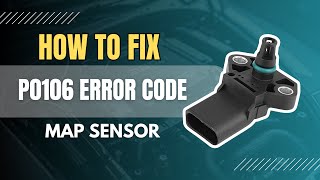
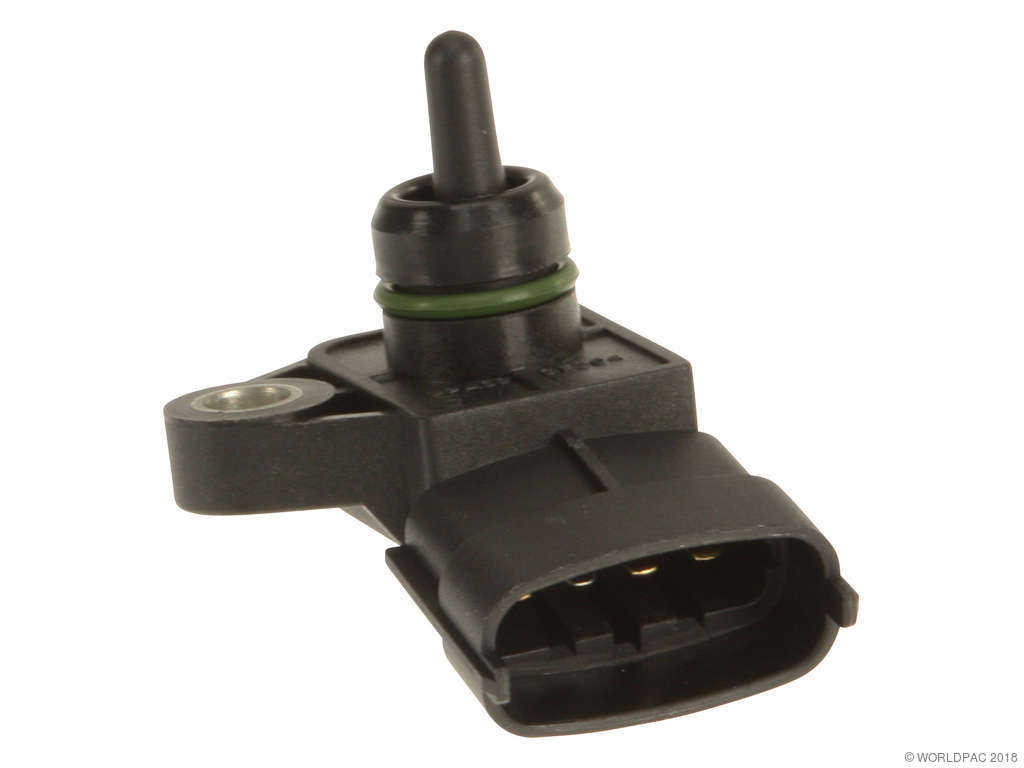
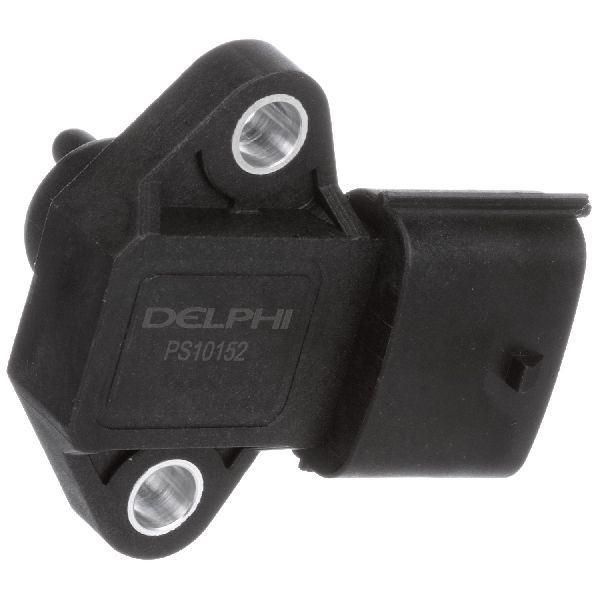
Code P0106 on a 2011-2016 Kia Sportage most often points to a faulty Manifold Absolute Pressure (MAP) sensor. It's a simple, 15-minute DIY fix with a part cost of around $30-$70 for an aftermarket sensor. The OEM part number for the 2.4L engine is 39300-2B000, while the 2.0L Turbo uses a different sensor, part number 39300-84400.
- P0106 on a 2011-2016 Sportage almost always points to a problem with the Manifold Absolute Pressure (MAP) sensor.
- Symptoms include a rough idle, poor acceleration, and reduced fuel economy.
- Before replacing the sensor, perform a quick visual inspection for cracked vacuum hoses or damaged wiring, as these are less common but possible causes.
- Replacing the MAP sensor is a very easy DIY job that takes less than 30 minutes and requires basic hand tools.
- The most likely required part is a new MAP sensor (OEM part number 39300-2B000).
What's Unique About the 2011-2016 Kia Sportage

For the third-generation Kia Sportage with the Theta II engines, the P0106 code is a very common and straightforward issue. Unlike some vehicles where this code can lead to a complex diagnostic path, on this platform, it's heavily weighted towards a simple MAP sensor failure. Owners report that replacing the sensor is often the first and only step needed to resolve the problem. While vacuum leaks or wiring issues are possible, they are far less frequent causes for this specific vehicle. The issue is also common on its platform mate, the Hyundai Tucson with the same 2.4L engine.
Symptoms You May Notice
- Check Engine Light is on
- Rough or unstable idle
- Hesitation or sluggish acceleration
- Poor fuel economy
- Engine stalling, especially when coming to a stop or at idle
- Black smoke from the exhaust
- Backfiring during acceleration
- Replacing oxygen sensors. While a rich or lean condition might trigger other codes, P0106 is specific to the MAP sensor's performance and is not directly caused by O2 sensors.
- Replacing spark plugs or ignition coils. While these can cause a rough idle or misfires, they will not set a P0106 code.
Most Likely Causes

- Faulty Manifold Absolute Pressure (MAP) Sensor 🔴 High Probability The MAP sensor is a common failure point on many vehicles, and on this specific Sportage generation, it is the most frequently cited cause for P0106. Forum users and video repair logs consistently point to sensor failure as the primary culprit.
How to confirm: With the engine off, use a scan tool to compare the MAP sensor reading to the BARO (Barometric Pressure) reading; they should be nearly identical. You can also test the sensor's voltage with a multimeter while applying vacuum with a hand pump; the voltage should change smoothly. A lack of change or erratic readings indicate a bad sensor. A YouTube video specifically on the 2012 Sportage with P0106 confirmed the fix was a new sensor after checking wiring and cleaning the throttle body.
Typical fix: Replace the MAP sensor. It is typically mounted directly on the intake manifold and held by a single 10mm bolt.
Est. part cost: $30-$120 - Vacuum Leak 🟡 Medium Probability Hoses, particularly the PCV hose or intake air duct, can become brittle and crack over time due to engine heat and age, creating an unmetered air leak that confuses the MAP sensor.
How to confirm: Visually inspect all vacuum hoses connected to the intake manifold for cracks, breaks, or loose connections. You can also spray brake cleaner or starter fluid around suspected leak areas with the engine running; a change in engine idle RPM indicates a leak.
Typical fix: Replace the cracked or broken vacuum hose.
Est. part cost: $5-$30 - Dirty or Clogged Throttle Body ⚪ Low Probability Gasoline Direct Injection (GDI) engines like the Theta II can be prone to carbon buildup on the back of the intake valves and in the throttle body over time. This buildup can restrict airflow at idle, causing an implausible pressure reading.
How to confirm: Remove the air intake tube from the throttle body and visually inspect for significant black carbon deposits around the throttle plate and bore.
Typical fix: Clean the throttle body using a dedicated throttle body cleaner and a soft brush or microfiber towel. A diagnostic video for a 2012 Sportage showed cleaning the throttle body as a preliminary step before ultimately replacing the MAP sensor.
Est. part cost: $10-$15 (for cleaner) - Damaged Wiring or Poor Connection ⚪ Low Probability
How to confirm: Inspect the MAP sensor's electrical connector for corrosion, dirt, or water intrusion. Check the wiring harness for any visible signs of damage, chafing, or breaks. Use a multimeter to check for the correct 5-volt reference signal and a good ground at the connector.
Typical fix: Clean the connector terminals or repair the damaged section of the wiring harness. Replacement pigtail connectors are available.
Est. part cost: $5-$50
Rare But Worth Checking
- Clogged Catalytic Converter: A clogged exhaust can create backpressure that throws off manifold pressure readings. This is rare and would typically be accompanied by other codes (like P0420) and more severe performance loss, often described as the engine feeling like it's 'choking'.
- Faulty Powertrain Control Module (PCM): This is the least likely cause. All other possibilities should be exhausted before considering a PCM failure. Sometimes a simple battery disconnect and reconnect can trigger a false P0106, which can be cleared and may not return.
Diagnosis Steps

- Read the codes with an OBD-II scanner to confirm P0106 and note any other codes present.
- Visually inspect the engine bay. Look for any obviously disconnected, cracked, or broken vacuum hoses, especially around the intake manifold and the air intake boot.
- Locate the MAP sensor on the intake manifold. Inspect its electrical connector for damage, corrosion, or a loose fit. Check the wiring for any visible damage.
- With a scan tool that shows live data, turn the key to the 'On' position (engine off). Compare the MAP sensor reading (usually in kPa or inHg) to the BARO reading. They should be very close (within 1-2 kPa). If they differ significantly, the sensor is likely faulty.
- Start the engine and observe the MAP sensor reading at idle. It should be a steady low voltage (typically 1-1.5V) or pressure reading (e.g., 28-35 kPa). If the reading is erratic, stuck high, or doesn't change when you snap the throttle, the sensor is suspect.
- If the sensor seems to read correctly at idle, test for vacuum leaks more thoroughly by spraying short bursts of brake cleaner or starter fluid around intake manifold gaskets and vacuum lines. If the engine RPM changes, you've found a leak.
- If no vacuum leaks are found and the sensor readings are suspect, replace the MAP sensor. This is the most common fix.
- After replacement, clear the code with the scanner and perform a test drive to ensure the code does not return.
Parts You'll Likely Need

- Manifold Absolute Pressure (MAP) Sensor (2.4L)
(OEM #39300-2B000)— This sensor is the most frequent point of failure for a P0106 code on the 2.4L GDI engine.
Trusted brands: Kia/Hyundai (OEM), Bosch, Delphi, Standard Motor Products (SMP)
OEM price range: $80-$120
Aftermarket price range: $30-$70 - Boost Pressure Sensor (2.0L Turbo)
(OEM #39300-2G000)— The 2.0L Turbo engine uses a different sensor that reads both vacuum and boost pressure. It is not interchangeable with the 2.4L sensor.
Trusted brands: Kia/Hyundai (OEM), Bosch, NTK
OEM price range: $90-$140
Aftermarket price range: $40-$80
Related Codes That Often Appear With This One
- P2187 — This code indicates 'System Too Lean at Idle.' A vacuum leak causing P0106 would also allow unmetered air into the engine, leading to a lean condition at idle.
- P0107 — This code indicates 'MAP/BARO Circuit Low Input.' It can appear alongside P0106 if there is a wiring issue or a complete failure of the sensor causing the signal to drop out entirely.
- P0011 — This code for '"A" Camshaft Position - Timing Over-Advanced' has been reported alongside P0106 in a platform mate (Hyundai Tucson). This could indicate a more complex issue involving engine timing or oil pressure affecting the VVT system, which in turn affects engine vacuum.
Technical Service Bulletins (TSBs) & Recalls
- PI1802: Knock Sensor Detection System (KSDS) ECU Logic Improvement. This TSB involves a software update to better detect vibrations from premature connecting rod bearing wear, a known and severe issue on these engines. If triggered, it puts the car in 'Limp Home Mode' with a flashing check engine light and code P1326.
- TSB Bulletin #TSB_FUE047: While issued for a different model, this bulletin notes that vehicles with the 2.0L MPI engine may exhibit a Check Engine Light with codes P0101, P0106, and/or P0068 related to Electronic Throttle Control (ETC).
Platform-Specific Known Issues
- The Theta II engines in this generation of Sportage were subject to a product improvement campaign (PI1802) for the Knock Sensor Detection System (KSDS) logic. While not directly related to P0106, it's a notable engine management software update for this platform that can cause limp mode and set code P1326. An engine running poorly due to the underlying issues the KSDS monitors (rod bearing wear) could potentially cause erratic vacuum and trigger a P0106, though P1326 is the primary indicator.
Mechanic-Grade Diagnostic Values
- MAP Sensor Signal Voltage (Key On, Engine Off) — expected: ~4.5 V at sea level. Failure: Voltage significantly lower or higher than expected barometric pressure reading.
- MAP Sensor Signal Voltage (Engine Idling) — expected: ~1.0 - 1.5 V. Failure: Voltage is stuck high (near 4.5V), does not drop when the engine starts, or is erratic.
- MAP Sensor Live Data (Key On, Engine Off) — expected: MAP reading should be nearly identical to the BARO reading (e.g., ~101 kPa at sea level).. Failure: A significant difference between the MAP and BARO readings points to a faulty MAP sensor.
- MAP Sensor Reference Voltage at Connector — expected: 5 Volts. Failure: No voltage or significantly lower voltage indicates a wiring or PCM issue, not a sensor failure.
Scan Tool Commands That Help
- Kia GDS (Global Diagnostic System): Live Data Graphing (MAP vs. RPM vs. Throttle Position) — This is the dealer-level tool used to view high-resolution sensor data. It's used to spot intermittent glitches or slow sensor response that a basic code reader might miss. Graphing the MAP signal against RPM and throttle input can reveal if the sensor's output is illogical during transitions (e.g., snapping the throttle).
- Advanced OBD-II Scanner: Freeze Frame Data — When P0106 is set, the ECU stores a snapshot of all sensor data at the moment of the fault. This is critical for determining the conditions (e.g., idle, high load, cold engine) under which the MAP sensor reading became irrational, helping to narrow down the cause.
Wiring & Ground Locations
- MAP Sensor Connector (2.4L Engine) — On the MAP sensor, which is mounted on the top of the plastic intake manifold, near the throttle body.. This 4-pin connector is the single point of failure for the sensor's power, ground, and signal. Corrosion or loose pins here will directly cause P0106 or P0107. The pigtail harness is a known weak point.
- MAP Sensor Pinout (Typical 4-Pin) — At the sensor connector.. For manual testing: Pin 1: Sensor Ground, Pin 2: Intake Air Temperature (on some models), Pin 3: Signal Output to ECU, Pin 4: 5V Reference from ECU. A video for a 2012 Sportage identified the black wire as 12V ignition power, which is unusual and may be specific to certain models or an error in reporting. Always verify with a model-specific diagram if possible.
- Ground Point GC402 — On the left rear of the engine compartment.. A TSB for a newer Kia model identifies this as a main ground point for the engine control system. While not specific to the Sportage, a corroded or loose main engine ground can cause erratic sensor readings, including from the MAP sensor, leading to a P0106 code. It's a key location to check when diagnosing electrical faults.
Real Owner Repair Stories
- YouTube video from 'Mozam auto' (2012 Kia Sportage) — Check Engine Light with codes P0106 and P2187, rough running, and misfiring. The owner had already changed multiple sensors without success.
❌ Tried (didn't work) Replacing C-K-P sensor, Replacing T-C sensor, Cleaning the throttle body
✅ What actually fixed it Replacing the MAP sensor. After checking the wiring and cleaning the throttle body, the technician replaced the sensor, which resolved the fault. - YouTube video from 'Car Experience 72' (2015 Kia Cerato (platform relative with similar engine controls)) — Engine runs after ignition is turned off, Check Engine Light with codes P0106 and P2188 (System Too Rich at Idle).
❌ Tried (didn't work) Initial diagnosis pointed towards MAP sensor or rich condition.
✅ What actually fixed it Replacing a faulty purge control valve (PCV). The technician noted this was a common problem on several Kia models where a bad purge valve causes these specific codes and the engine run-on symptom.
"I Checked Everything" — The Actual Cause
- In a case involving a related Kia vehicle, codes P0106 and P2188 (System Too Rich) were present. While a vacuum leak (which a smoke test would find) can cause P0106, the combination with a 'rich' code pointed away from unmetered air. The actual cause was a faulty purge control valve (PCV) that was sticking, causing an incorrect mixture and affecting manifold pressure.
OEM Part Supersession History
39300-2B000→39300-2B100— Standard part revision and consolidation.
Heads up: The new part number 39300-2B100 is a direct replacement for 39300-2B000 and is used across a wide range of Hyundai/Kia 2.0L and 2.4L non-turbo engines. There are no known incompatibility issues.
Model Year Variations Within This Range
- 2011-2016: The primary difference is the MAP sensor part number between the naturally aspirated 2.4L engine (39300-2B000/2B100) and the 2.0L Turbo engine (39300-84400). The turbo version's sensor is a 'Boost Pressure Sensor' designed to read both vacuum and positive pressure, and they are not interchangeable.
- 2014-2016: The 2014 model year received a facelift and introduced a 2.4L GDI engine that replaced the previous MPI version in some trims. While the P0106 diagnosis is largely the same, it's important to confirm the engine type (GDI vs MPI) when sourcing parts, although the MAP sensor part number remained consistent for the 2.4L block.
Diagnostic Flowchart
Other Known Issues on This Vehicle
Issues unrelated to this code that are worth knowing about as an owner of this generation:
- Catastrophic Engine Failure (Theta II) 🔴 High — Widespread across 2011-2016 models. Caused by manufacturing debris blocking oil passages, leading to connecting rod bearing failure. Onset can be as early as 60,000 miles but is common around 80,000-120,000 miles. (Ref: Multiple recalls (e.g., NHTSA 17V-224) and a class-action lawsuit settlement resulted in extended lifetime warranties and the KSDS update (PI1802) for early detection.)
- Excessive Oil Consumption 🟠 Medium — Common issue for GDI engines, including the Theta II. Can lead to oil sludge and premature engine wear if not monitored closely. (Ref: Kia issued TSBs related to oil consumption testing, but no universal recall was issued for this specific problem.)
- A/C Compressor Failure 🟠 Medium — Owners report premature failure of the A/C compressor or its clutch, sometimes due to internal failure ('grenading') which contaminates the entire system with metal shavings.
- Panoramic Sunroof Noise or Failure 🟡 Low — The panoramic sunroof mechanism is prone to developing creaks and rattles due to dirt accumulation in the tracks or drying of seals. In rare cases, the glass has been reported to shatter spontaneously. (Ref: TSB BOD306 was issued for later models (2017+) to address cleaning and lubrication procedures, but the issue is known on the 3rd generation as well.)
- Hydraulic Electronic Control Unit (HECU) Fire Risk 🔴 High — Affects some 2014-2016 models. The HECU can short circuit, potentially causing an engine compartment fire even when the vehicle is turned off. (Ref: NHTSA Recall 20V-519)
Used vs. New Parts: Buying Guide for This Vehicle
When a used part is the smart pick: For this specific repair, a used MAP sensor is generally not recommended. The part is electronic, relatively inexpensive to buy new from an aftermarket supplier, and prone to failure from age and heat cycles. The cost savings of a used part (e.g., $10-$20) do not outweigh the risk of receiving a part that is already near the end of its service life.
Donor-vehicle mileage cap: roughly under 50000 miles for the part to have meaningful remaining life.
What to inspect on the donor part:
- Ensure the connector pins are straight and free of corrosion.
- Check for cracks in the plastic housing.
- Verify the O-ring is present and pliable, not dry or cracked.
- If possible, get the part from a vehicle with a known, lower mileage.
OEM-only on this vehicle (don't cheap out):
- Powertrain Control Module (PCM)
Aftermarket brands forum-validated for this vehicle:
- Bosch
- Delphi
- NGK/NTK
- Standard Motor Products (SMP)
Brands owners have reported issues with on this vehicle:
- Ultra-cheap, unbranded sensors from online marketplaces are a gamble; they may fail prematurely or have incorrect voltage scaling, causing persistent performance issues even if they clear the code initially.
Real Owner Stories
Aggregated from forums and TSBs cited above. Mileages and costs reflect what owners reported in those sources.
2012 Kia Sportage
Symptoms: The owner performed a diagnostic check after a P0106 code appeared. Initial steps included checking the wiring and cleaning the throttle body.
What fixed it: Replacing the MAP sensor with a new unit resolved the issue.
Source hint: YouTube video specifically on the 2012 Sportage with P0106
Kia Sportage (2011-2016 generation)
Symptoms: A user reported getting a P0106 code immediately after disconnecting and reconnecting the vehicle battery, which was accompanied by a temporary rough idle.
What fixed it: The code appeared to be a spurious result of voltage fluctuations during battery service.
Source hint: Polish forum user report: 'P0106 - zagadka - Forum Kia Sportage'
2011-2016 Kia Sportage 2.4L Theta II — ~80000 miles
Symptoms: Flashing check engine light and the vehicle entering 'Limp Home Mode.'
What fixed it: While not a direct fix for P0106, the KSDS software update (PI1802) is required to manage the underlying engine vibrations that can cause poor running conditions.
Source hint: PI1802: Knock Sensor Detection System (KSDS) ECU Logic Improvement
Kia Owner Report
Symptoms: An owner reported that after an oil change and spark plug replacement, the car would not drive and triggered code P0106.
What fixed it: The owner noted the dealer could not initially determine the issue (NHTSA ODI #11649485).
Source hint: NHTSA ODI #11649485
Related OBD-II Codes
Frequently Asked Questions
Does the PI1802 product improvement campaign for the Theta II engine relate to my P0106 code?
Is there a specific TSB or recall for the P0106 code on my 2011-2016 Sportage?
Can I just clean the throttle body to fix P0106 on my 2.4L Sportage?
Where is the MAP sensor located on the 2011-2016 Sportage 2.4L?
Will disconnecting my battery cause a P0106 code on my Sportage?
Helpful Videos

Used OEM Parts in Stock
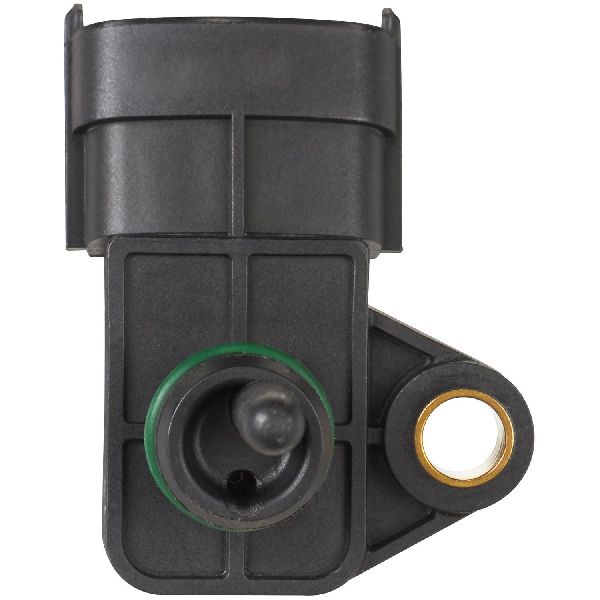
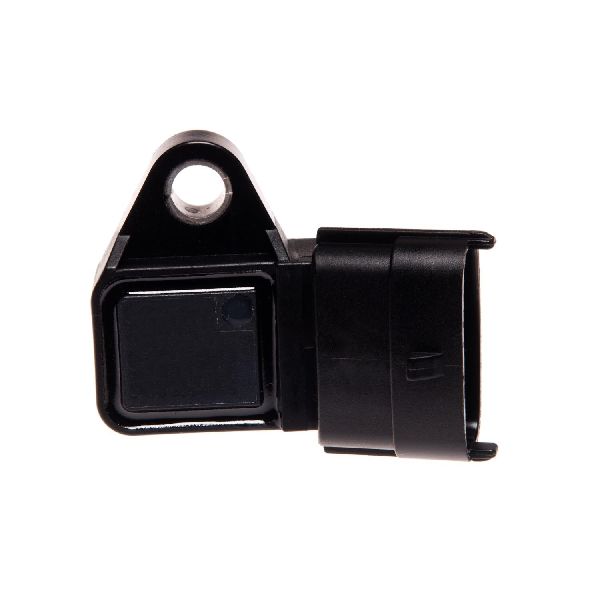
New Aftermarket Parts Available


The information in this article is provided for general reference and educational purposes only. Vehicle specifications, procedures, and part compatibility can vary by production date, trim level, and region. Always consult your vehicle's factory service manual and verify part numbers before purchasing or performing repairs. Safety-critical components such as airbags, seat belts, and braking systems should be installed by a qualified professional.
- Kia Sportage:
- 🎬 Helpful Videos
- 🛍️ Shop This Part
- What's Unique About the 2011-2016 Kia Sportage
- Symptoms You May Notice
- Most Likely Causes
- Rare But Worth Checking
- Diagnosis Steps
- Parts You'll Likely Need
- Related Codes That Often Appear With This One
- Technical Service Bulletins (TSBs) & Recalls
- Platform-Specific Known Issues
- Mechanic-Grade Diagnostic Values
- Scan Tool Commands That Help
- Wiring & Ground Locations
- Real Owner Repair Stories
- "I Checked Everything" — The Actual Cause
- OEM Part Supersession History
- Model Year Variations Within This Range
- Diagnostic Flowchart
- Other Known Issues on This Vehicle
- Used vs. New Parts: Buying Guide for This Vehicle
- Real Owner Stories
- 2012 Kia Sportage
- Kia Sportage (2011-2016 generation)
- 2011-2016 Kia Sportage 2.4L Theta II — ~80000 miles
- Kia Owner Report
- Related OBD-II Codes
- Frequently Asked Questions
- 🎟️ Get 5% Off