

P0101 on 2020 Ram 1500: MAF Sensor Range/Performance Causes and Fixes
On a 2020 Ram 1500, code P0101 is most often caused by a dirty Mass Air Flow (MAF) sensor that needs cleaning or a contaminated air filter. For 3.0L EcoDiesel models, a known software issue requires a dealer-installed update per Technical Service Bulletin (TSB) 18-008-21, which is the most likely cause. For gas engines like the 5.7L HEMI, which often use a MAP-based system, this code can be triggered by vacuum leaks or issues with related sensors.
- For a 2020 Ram 1500 with the 3.0L EcoDiesel, the first step for a P0101 code should be checking with a dealer for a required software update (TSB 18-008-21).
- For all engines, the most common and cheapest potential fix is cleaning the MAF sensor with a dedicated cleaner.
- Always inspect the air filter and intake hose for damage or blockages, as these are frequent causes.
- Do not replace the MAF sensor until you have performed the cleaning step and ruled out software updates and vacuum leaks.
What's Unique About the 2020-2020 Ram 1500
For the 2020 Ram 1500, particularly models equipped with the 3.0L EcoDiesel engine, this code has a very specific and well-documented cause. FCA/Stellantis issued Technical Service Bulletin (TSB) 18-008-21 and its revisions, which explicitly state that a PCM software update is required to fix an erroneous P0101 code. The update changes the diagnostic logic to log a P0109 code (Manifold Absolute Pressure/Barometric Pressure Circuit Intermittent) instead under similar fault conditions, indicating a factory calibration issue. This makes a dealer software flash the primary fix, not immediate part replacement. Conversely, many gasoline-powered 2020 Ram 1500s do not have a traditional MAF sensor and instead use a MAP (Manifold Absolute Pressure) sensor to infer airflow, so the diagnostic approach for them is different and focuses more on vacuum leaks or MAP sensor issues.
Diagnostic Flowchart
Tap your situation to follow the diagnostic path that matches what you're seeing on this vehicle.
Symptoms You May Notice
- Check Engine Light is on
- Engine hesitation or sluggish acceleration
- Rough idle
- Stalling, especially when coming to a stop
- Reduced fuel economy
- Black smoke from the exhaust (if running rich)
- Replacing the MAF sensor before cleaning it. A dirty sensor is far more common than a failed one, and cleaning is a cheap and effective first step.
- Replacing the MAF sensor on an EcoDiesel model before checking for the required software update. TSB 18-008-21 is a strong indicator that the issue is calibration-related and a reflash is the correct fix.
Most Likely Causes
- Powertrain Control Module (PCM) Software Update Needed (3.0L EcoDiesel) 🔴 High Probability Applies specifically to 2020 models with the 3.0L EcoDiesel engine. FCA (now Stellantis) issued TSB 18-008-21 to address this exact code, indicating a calibration issue from the factory that misinterprets airflow data.
How to confirm: A Ram dealership can check your vehicle's VIN against their system to see if TSB 18-008-21 (or its revisions like 18-008-20 REV. A) applies and has not yet been performed.
Typical fix: The dealership reprograms the PCM with the latest software. This is not a DIY repair and is the definitive fix for this specific issue on the EcoDiesel.
Est. part cost: $0 if covered under warranty, otherwise ~$100-$200 for dealer labor - Dirty or Contaminated Mass Air Flow (MAF) Sensor 🔴 High Probability Oil vapors from the crankcase ventilation system or fine dust that gets past the air filter can coat the sensor's delicate elements, insulating them and causing inaccurate readings. Using an aftermarket oiled air filter can sometimes contribute to contamination if over-oiled.
How to confirm: Visually inspect the MAF sensor's wire or film elements. If they appear dirty or coated in residue, they need cleaning. An owner on EcoDieselRam.com noted that even a physical obstruction like a snow plow blocking the grille can cause this code by restricting airflow.
Typical fix: Remove the sensor and clean it carefully using a dedicated MAF sensor cleaner spray. Do not use brake or carburetor cleaner, as they can damage the sensor.
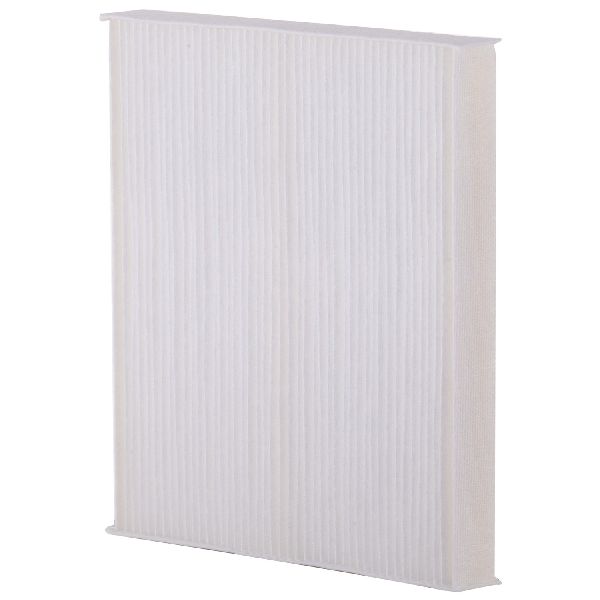
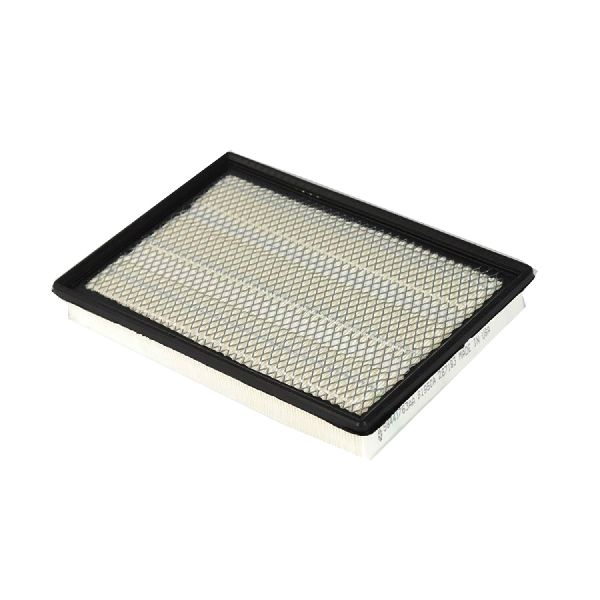
Est. part cost: $10-$15 for MAF cleaner spray - Dirty or Clogged Engine Air Filter 🟡 Medium Probability A restricted air filter prevents the engine from drawing in the air it needs, causing the MAF sensor's readings to be lower than expected for a given throttle position. This is a common maintenance item that can be overlooked.
How to confirm: Remove and inspect the engine air filter. If it is visibly dirty, clogged with debris, or has not been changed per the maintenance schedule, it should be replaced.
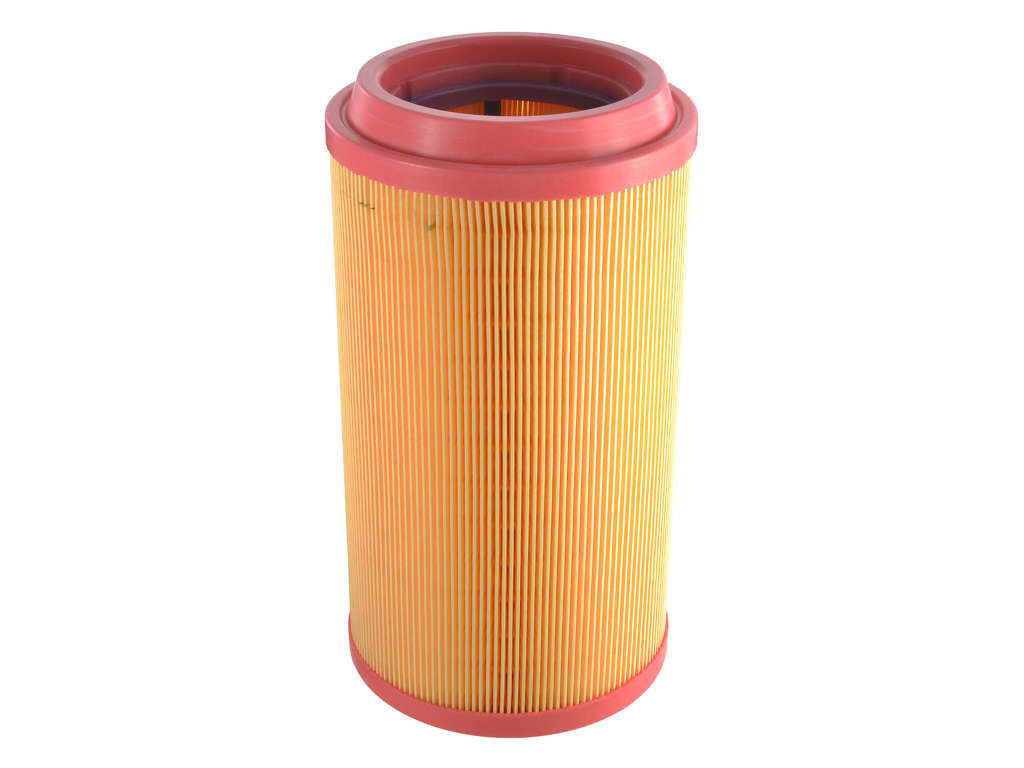
Typical fix: Replace the engine air filter. The OEM Mopar part number for the 3.0L EcoDiesel is 68441763AA. The same part number is often listed for the 3.6L and 5.7L gas engines as well.
Est. part cost: $25-$60 - Vacuum Leak in the Intake System 🟡 Medium Probability Cracks in plastic or rubber intake tubing, loose clamps, or leaking intake manifold gaskets allow 'unmetered' air to enter the engine after the MAF sensor. This makes the sensor's reading inaccurate compared to the total air entering the cylinders. On turbo-diesel engines, this is often called a 'boost leak'.
How to confirm: Visually inspect all intake ducting for cracks and ensure clamps are tight. A professional can perform a smoke test to pinpoint the exact location of a leak. A hissing sound near the engine bay at idle can also be an indicator.
Typical fix: Repair the source of the leak, which may involve tightening a clamp, replacing a cracked intake boot, or replacing a gasket.
Est. part cost: $10-$200 depending on the faulty component - Faulty MAF Sensor ⚪ Low Probability While electronic components can fail, it's less common than the sensor simply being dirty. This should be considered only after cleaning the sensor and ruling out other causes, especially the TSB on EcoDiesel models.
How to confirm: After cleaning the sensor and confirming no vacuum leaks or software updates are needed, the next step is to monitor live MAF sensor data with an OBD-II scanner. If readings are erratic or do not change with RPM, the sensor is likely faulty.
Typical fix: Replace the MAF sensor. The OEM Mopar part for the 3.0L EcoDiesel is #68444077AA. The 5.7L HEMI often uses a MAP sensor, but if a MAF is present, a common part number is #5149279AC (also called a Charge Air Temp Sensor).
Est. part cost: $150-$300
Rare But Worth Checking
- Clogged Catalytic Converter: A restricted exhaust can create backpressure that throws off the engine's airflow dynamics, leading to an unexpected MAF sensor reading. This is usually accompanied by a significant loss of power.
- Blown Fuse: The MAF sensor circuit is protected by a fuse, often shared with other engine sensors. While uncommon, a blown fuse will cause the sensor to stop working and can trigger a P0101 code.
Diagnosis Steps
- Check for Technical Service Bulletins (TSBs). For 3.0L EcoDiesel models, this is the most important first step. Contact a dealer with your VIN to see if PCM update TSB #18-008-21 or its revisions apply.
- Inspect the engine air filter. Replace if it is dirty or clogged. The Mopar part is often #68441763AA.
- Visually inspect the air intake system between the MAF sensor and the engine for any obvious cracks, loose connections, or disconnected hoses.
- Carefully remove the MAF sensor and inspect its sensing elements. If dirty, clean it with a dedicated MAF sensor cleaner and allow it to dry completely before reinstalling.
- If the code persists, use an OBD-II scanner to monitor live data from the MAF sensor. Check if the airflow reading (in grams/second) increases smoothly as you raise the engine RPM from idle to ~2500 RPM.
- Check for a blown fuse related to the engine sensors in the power distribution center (fuse box).
- If you suspect a vacuum leak that isn't visible, perform a smoke test to identify the source of the leak. Pay close attention to the intake manifold gaskets and PCV hoses.
- If all other steps fail to resolve the issue, the MAF sensor itself may be faulty and require replacement. Use the correct OEM part number for your specific engine.
Parts You'll Likely Need
- Mass Air Flow Sensor Cleaner — This is the most common and cost-effective first step, as a dirty sensor is a primary cause of P0101.
Trusted brands: CRC, Liqui Moly, WD-40 Specialist
Aftermarket price range: $10-$15 - Engine Air Filter
(OEM #68441763AA)— A clogged filter restricts airflow and is a common cause. It's a routine maintenance item that is often overlooked.
Trusted brands: Mopar, Wix, Fram
OEM price range: $40-$60
Aftermarket price range: $25-$45 - Mass Air Flow (MAF) Sensor
(OEM #68444077AA (for 3.0L EcoDiesel))— If cleaning the sensor and checking for other issues doesn't resolve the code, the sensor itself may have failed. This is the c
Related Codes That Often Appear With This One
- P0171 — System Too Lean (Bank 1) - If a vacuum leak is present, unmetered air causes a lean condition, which is often flagged alongside the P0101.
- P0174 — System Too Lean (Bank 2) - Same as P0171, but for the opposite cylinder bank on V-type engines like the Hemi or EcoDiesel.
- P0109 — Manifold Absolute Pressure/Barometric Pressure Circuit Intermittent - On 2020 EcoDiesel models, TSB 18-008-21 specifically notes that the PCM software update changes the logic to use this code instead of P0101 for certain airflow performance issues.
Technical Service Bulletins (TSBs) & Recalls
- 1800821
- 18-008-20 REV. A
Platform-Specific Known Issues
- A series of Technical Service Bulletins, including 18-008-20 Rev. A, 18-008-21, and 18-008-21 Rev. A, were issued for the 2020 Ram 1500 3.0L EcoDiesel. These bulletins involve a mandatory PCM software update to correct faulty logic that triggers P0101. The update addresses a large number of other potential DTCs as well, ranging from EGR and DPF performance to misfire detection in cold weather.
- An owner on the EcoDieselRam.com forum reported triggering a P0101 code after installing a snow plow, which presumably blocked airflow to the intake, demonstrating the system's sensitivity to airflow restrictions.
Mechanic-Grade Diagnostic Values
- MAF Sensor Live Data (g/s) at Idle — expected: Approximately 2-7 g/s. A common rule of thumb is the reading in g/s should be close to the engine's displacement in liters (e.g., a 3.0L engine should read near 3.0 g/s).. Failure: A reading significantly lower than expected suggests a dirty sensor, a vacuum/boost leak, or a clogged air filter. A reading that is stuck or does not change indicates a failed sensor or wiring issue.
- MAF Sensor Live Data (g/s) at 2500 RPM (No Load) — expected: Should rise smoothly to between 15-25 g/s, depending on engine size.. Failure: A slow or delayed rise in the g/s value as RPMs increase can indicate a contaminated sensor. A jumpy or erratic reading points to a faulty sensor or bad electrical connection.
- MAF Sensor Live Data (g/s) at Wide Open Throttle (WOT) — expected: Approximately 40-50 times the engine displacement in liters. For the 3.0L EcoDiesel, this would be roughly 120-150 g/s.. Failure: Readings significantly below this value under load strongly suggest a major airflow restriction (clogged filter/exhaust) or a large boost leak between the turbo and the engine.
- MAF Sensor Signal Wire Voltage — expected: A variable voltage, typically between 0-5V, that increases smoothly from idle (around 0.5-1.0V) as throttle and airflow increase.. Failure: Voltage that is stuck at 0V or 5V, or does not respond to changes in engine RPM, indicates a sensor or wiring fault.
Scan Tool Commands That Help
- wiTECH (or equivalent professional scanner): INTAKE AIR SYSTEM PRESSURE TEST — This is a guided diagnostic routine used to pressurize the intake system (including the turbo and charge air cooler) to find boost leaks that a standard smoke test at atmospheric pressure might miss. It is critical for turbocharged engines like the EcoDiesel.
- wiTECH (or equivalent professional scanner): POWERTRAIN VERIFICATION TEST — This is a generic post-repair function used to run the engine through a series of checks to confirm that a fault has been rectified and that all related systems are operating correctly.
Wiring & Ground Locations
- MAF Sensor Connector — On the top of the air filter housing, near the radiator, for diesel models.. This is the primary connection point for the sensor. Checking for power (12V), ground, and a signal wire at this connector is a fundamental electrical diagnostic step. Corrosion or backed-out pins here will cause a range of MAF codes.
Real Owner Repair Stories
- Motorcity Mechanic YouTube Channel (2015 Ram 1500 3.0L EcoDiesel) — Check engine light with code P0101, audible noise from engine bay under boost.
❌ Tried (didn't work) Initial diagnosis pointed towards a standard vacuum leak or faulty sensor.
✅ What actually fixed it The charge air cooler inlet duct, a large plastic pipe assembly, had separated at a bonded seam. Under turbo boost, the pipe would split open, creating a massive air leak. The entire duct assembly had to be replaced to fix the issue. - EcoDieselRam.com forum user (2020 Ram 1500 EcoDiesel) — Check engine light with code P0101 appeared after installing a new snow plow.
❌ Tried (didn't work) The user initially suspected a sensor or engine load issue.
✅ What actually fixed it Clearing the code and removing the snow plow from the front of the truck. The plow was physically blocking the grille, restricting airflow to the engine's air intake and causing the MAF sensor reading to be lower than the PCM expected for the given engine load.
"I Checked Everything" — The Actual Cause
- On turbocharged engines like the 3.0L EcoDiesel, a standard low-pressure smoke test may not reveal leaks in the charge air system (post-turbo). A leak in a charge air cooler hose or, more subtly, a cracked charge air cooler inlet duct, may only open up under boost pressure. A technician found a P0101 on a Ram diesel was caused by the plastic charge air cooler duct separating at its seam, a failure that would not be apparent without pressurizing the system or performing a close visual inspection.
OEM Part Supersession History
68444077AA→68334657AA— Part has been updated or replaced by the manufacturer. This is common for electronic components to improve reliability or sourcing.
Heads up: While listed for the 6.7L Cummins, this part is often confused for the 3.0L EcoDiesel. Using the wrong sensor, even if it fits, can cause persistent P0101 codes due to different calibration. Always verify the part number with a VIN.
Helpful Videos

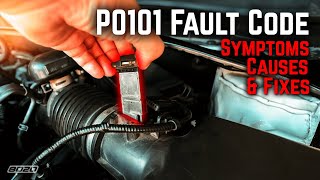
![How to Fix P0101 Engine Code in 2 Minutes [1 DIY Method / Only $9.74]](https://img.youtube.com/vi/RaWpb3www8s/mqdefault.jpg)
Used OEM Parts in Stock

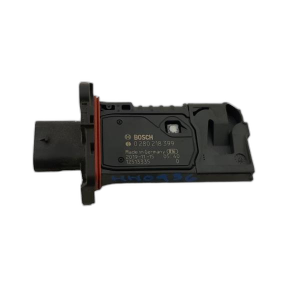


New Aftermarket Parts Available


The information in this article is provided for general reference and educational purposes only. Vehicle specifications, procedures, and part compatibility can vary by production date, trim level, and region. Always consult your vehicle's factory service manual and verify part numbers before purchasing or performing repairs. Safety-critical components such as airbags, seat belts, and braking systems should be installed by a qualified professional.
- Ram 1500:
- 🎬 Helpful Videos
- 🛍️ Shop This Part
- What's Unique About the 2020-2020 Ram 1500
- Diagnostic Flowchart
- Symptoms You May Notice
- Most Likely Causes
- Rare But Worth Checking
- Diagnosis Steps
- Parts You'll Likely Need
- Related Codes That Often Appear With This One
- Technical Service Bulletins (TSBs) & Recalls
- Platform-Specific Known Issues
- Mechanic-Grade Diagnostic Values
- Scan Tool Commands That Help
- Wiring & Ground Locations
- Real Owner Repair Stories
- "I Checked Everything" — The Actual Cause
- OEM Part Supersession History
- 🎟️ Get 5% Off