

P0101 on 2014-2018 Nissan Rogue: MAF Sensor, Snow Ingestion, and Fixes
On a 2014-2018 Nissan Rogue, code P0101 is most often caused by a dirty MAF sensor, a dirty throttle body, or a unique issue where snow gets into the air filter box. Start by cleaning the MAF sensor and throttle body. If you live in a snowy climate, check for TSBs related to snow ingestion. If replacement is necessary, use an OEM or Hitachi sensor, as these vehicles are sensitive to aftermarket electronics.
- For a P0101 on a 2014-2018 Rogue, don't immediately buy a new MAF sensor. Start with the cheapest and easiest fixes.
- First, inspect and replace the engine air filter if it's dirty.
- Second, buy a can of MAF sensor cleaner and clean the sensor.
- Third, inspect and clean the throttle body.
- If you live in a snowy climate, the cause is very likely snow getting into the air intake, as per Nissan's own TSBs.
What's Unique About the 2014-2018 Nissan ROGUE

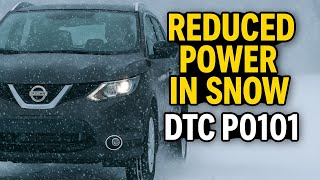
The second-generation Nissan Rogue (T32 platform) has a well-documented, unique vulnerability to setting a P0101 code due to its front-end design. During heavy snowfall, snow can be ingested directly into the air cleaner box, wetting the air filter and disrupting the MAF sensor's readings. Nissan has issued technical service bulletins (TSBs NTB15-026b and NTB18-084) to address this specific problem by installing foam blocks and other revised parts to prevent snow entry. This is a primary, platform-specific cause of P0101 in winter conditions, separate from the usual electronic or sensor failures.
Diagnostic Flowchart

Tap your situation to follow the diagnostic path that matches what you're seeing on this vehicle.
Symptoms You May Notice
- Check Engine Light is on
- Reduced engine power or hesitation during acceleration.
- Engine running rough, stalling, or idling erratically.
- Poor fuel economy.
- Jerking when changing gears or when letting off the gas.
- Black smoke from the exhaust.
- Immediately replacing the MAF sensor without cleaning it first and checking for intake leaks.
- Replacing the MAF sensor with a cheap aftermarket brand, which often does not work with Nissan's electronics and causes the code to return.
- Replacing oxygen sensors when the issue is actually unmetered air from a vacuum leak or a faulty MAF reading.
- Cleaning the throttle body but failing to perform the Idle Air Volume Relearn procedure, leading to a high or unstable idle that can be mistaken for a new problem.
Most Likely Causes


- Dirty or Contaminated Mass Airflow (MAF) Sensor 🔴 High Probability The MAF sensor's sensitive wires can become contaminated with dirt, oil, or water, causing inaccurate readings. This is a very common first point of failure for this code on most modern vehicles.
How to confirm: Remove the sensor (held by two screws) and visually inspect the small wires inside for debris. The sensor is located on the air intake tube, just after the air filter box.
Typical fix: Clean the sensor wires carefully using only dedicated MAF sensor cleaner spray. Do not touch the wires or use harsh chemicals like brake cleaner. Let it dry completely before reinstalling. This simple cleaning often resolves the issue.
Est. part cost: $10-$20 for cleaner spray. - Snow/Water Ingestion into Air Intake 🔴 High Probability As documented in Nissan TSBs NTB15-026b and NTB18-084, these Rogues can suck snow into the air cleaner case during heavy snowfall, which soaks the air filter, triggers a P0101 code, and causes reduced power.
How to confirm: Inspect the air filter and inside the air filter housing for signs of moisture, snow, water staining, or ice.
Typical fix: Dry the airbox, replace the wet air filter, and clear the code. For a permanent fix, a dealer can perform the TSB which involves installing several foam blocks with specific part numbers (e.g., 21456-6MA1A, 21456-6MA1B) and potentially a new front grille spacer to block the snow's entry path.
Est. part cost: $20-$40 for a new air filter. TSB parts cost more if not under warranty. - Dirty Throttle Body 🟡 Medium Probability Carbon can build up on the back of the throttle plate, slightly changing the airflow characteristics at idle. The ECM doesn't expect this and can set a P0101 code because the MAF reading doesn't match the expected airflow for a given throttle position, especially at idle.
How to confirm: Remove the air intake hose from the throttle body and inspect the throttle plate and bore for black carbon buildup.
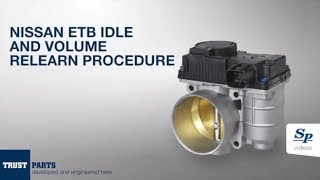
Typical fix: Clean the throttle body with a dedicated throttle body cleaner and a soft cloth. An Idle Air Volume Relearn procedure is almost always required after cleaning to prevent an unstable or high idle. This can be done with a capable scan tool or manually with a specific sequence of key turns and pedal presses, but it is timing-sensitive and may take several tries.
Est. part cost: $10-$15 for cleaner spray. - Cracked Air Intake Boot 🟡 Medium Probability A crack or tear in the flexible rubber air intake boot between the MAF sensor and the throttle body is a common source of a vacuum leak. This allows 'unmetered' air to enter the engine, causing the MAF reading to be lower than the actual airflow and triggering the code.
How to confirm: Visually inspect the intake boot for cracks, especially in the accordion-like folds. Squeeze and flex the boot to reveal hidden cracks. A smoke test is the most definitive way to find leaks.
Typical fix: Replace the cracked intake boot. Taping is a temporary fix at best.
Est. part cost: $50-$150 for an intake boot. - Clogged or Dirty Engine Air Filter 🟡 Medium Probability
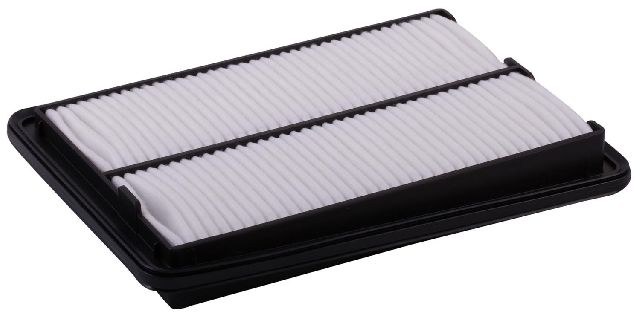
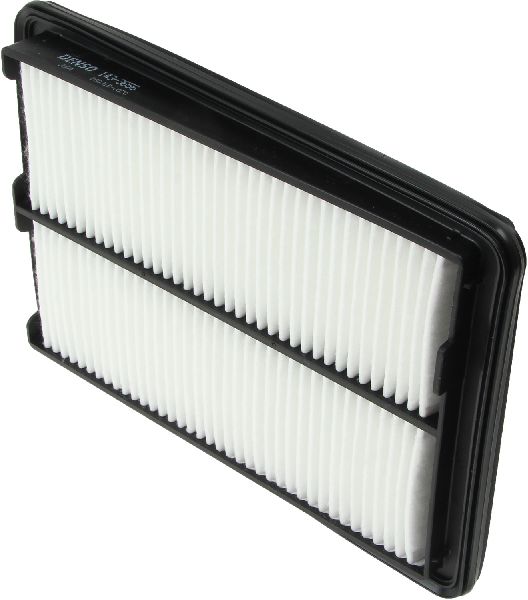
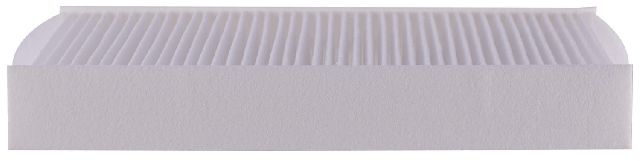
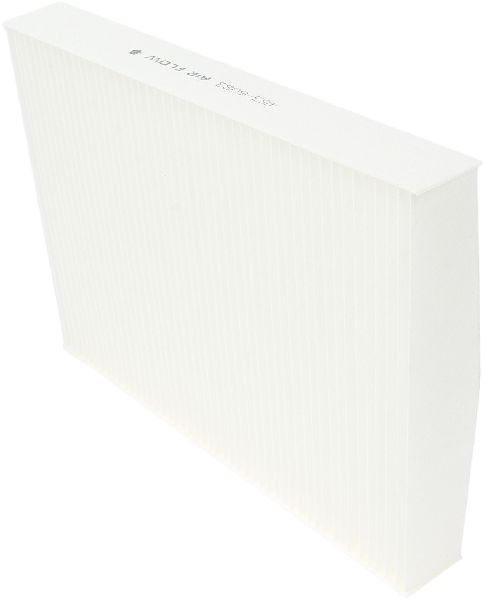
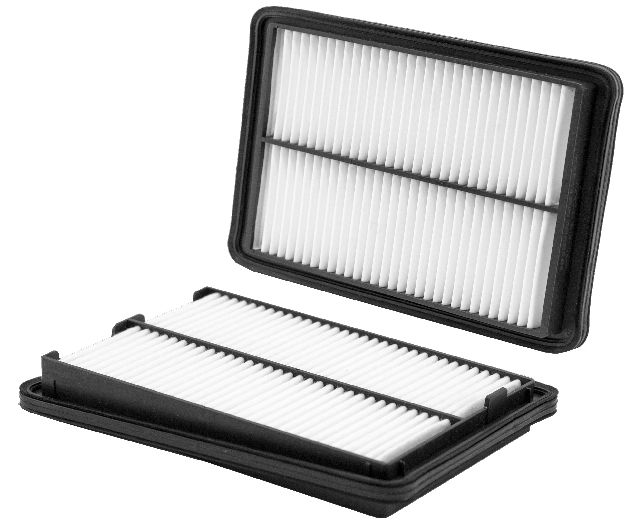
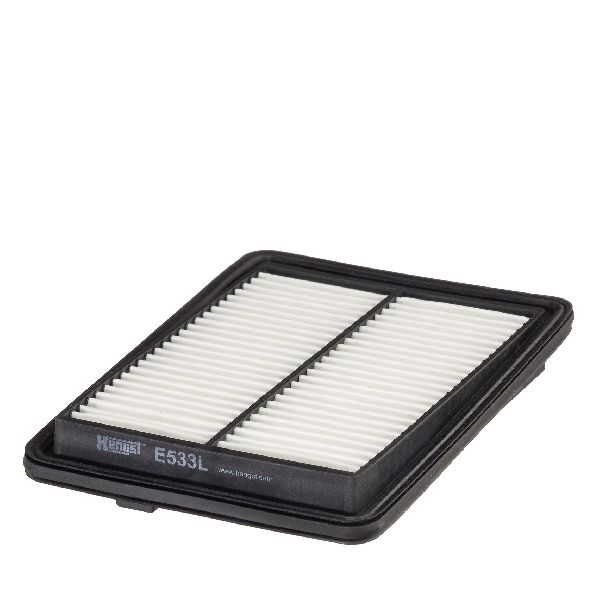
How to confirm: Visually inspect the engine air filter. If it is dark, full of debris, or wet, it is restricting airflow and needs to be replaced.
Typical fix: Replace the engine air filter. This is a simple and inexpensive maintenance item that should always be checked first when diagnosing this code.
Est. part cost: $20-$40 - Faulty MAF Sensor ⚪ Low Probability
How to confirm: If cleaning the sensor and checking all other causes does not resolve the code, the sensor itself may have failed electronically. This can be confirmed by monitoring its output with a scan tool; at idle with no load, the reading should be stable around 2.4 g/s. Sudden drops to -40 degrees on the IAT portion of the sensor data also indicate failure.
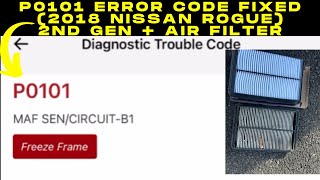
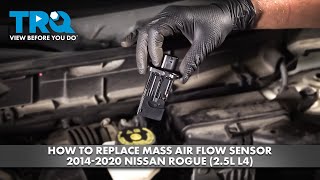
Typical fix: Replace the MAF sensor. It is strongly recommended to use an OEM (Nissan part # 22680-1MG0A) or the original equipment manufacturer, Hitachi (part # MAF0102), as many owner forums 🎬 See this step-by-step guide for replacing the MAF sensor. report that Nissan ECUs are very sensitive and often reject cheaper aftermarket sensors, causing the code to return.
Est. part cost: $200-$400 for an OEM sensor.
Rare But Worth Checking
- ECM Software Update Needed: TSB NTB19-045b states that after a repair for P0101 is performed, the ECM may need to be reprogrammed. This update doesn't fix the root cause but changes how the permanent DTC is stored and erased, preventing it from staying on after a valid repair.
- Failing PCV Valve: A stuck-open PCV (Positive Crankcase Ventilation) valve can create a vacuum leak, introducing unmetered air and potentially triggering a P0101 code. Some owners have reported replacing this as part of their troubleshooting process.
- Weak or Failing Battery: A dying battery can provide inconsistent voltage to vehicle modules. One owner reported that after trying all common fixes, replacing a 3-year-old battery finally cleared the P0101 code permanently, suggesting low voltage can affect the MAF sensor's communication.
Diagnosis Steps
- Check for Technical Service Bulletins (TSBs) related to P0101, especially NTB15-026b and NTB18-084 for snow ingestion.
- Inspect the engine air filter for dirt, debris, or signs of water/snow. Replace if necessary.
- Thoroughly inspect the air intake boot between the air filter housing and throttle body for any cracks, tears, or loose connections. Flex the boot to expose hidden cracks.
- Remove and inspect the MAF sensor. Clean it with dedicated MAF sensor cleaner spray and let it dry completely before reinstalling.
- Inspect and clean the throttle body of any carbon buildup. Be prepared to perform the Idle Air Volume Relearn procedure afterward.
- If the problem persists, confirm the absence of vacuum leaks using a smoke machine.
- With a scan tool, monitor the MAF sensor reading (in grams/second) at idle and while revving the engine. The reading should be stable at idle (approx. 2.4 g/s) and increase smoothly with RPMs. If it's erratic, unresponsive, or the IAT reads an illogical temperature, the sensor may be faulty.
- Check the MAF sensor connector and wiring for any damage, corrosion, or loose pins.
- If all other steps fail, replace the MAF sensor, preferably with a genuine Nissan or Hitachi OEM part.
- After the repair, if the code persists as a permanent DTC, consult a dealer about TSB NTB19-045b for an ECM reprogram.
Parts You'll Likely Need
- Mass Airflow (MAF) Sensor
(OEM #22680-1MG0A)— This sensor is the primary component related to the P0101 code. It may be dirty or have failed electronically. - Engine Air Filter — A clogged or wet air filter is a frequent cause of this code, either by restricting airflow or by being compromised by snow ingestion.
- MAF Sensor Cleaner — Often, the MAF sensor is just dirty and cleaning it is the only fix required, making this a crucial first step in diagnosis.
- Air Intake Boot — Cracks in the intake boot cause unmetered air to enter the engine, a common reason for the P0101 code.
Related Codes That Often Appear With This One
- P0171 — System Too Lean. A faulty MAF sensor that under-reports airflow, or a vacuum leak that introduces unmetered air, will cause the ECM to inject too little fuel, leading to a lean condition.
- P0087, P0448, P2008 — These codes are listed alongside P0101 in TSB NTB19-045b, which points to a potential ECM software update after the primary fault is repaired to ensure the permanent DTC can be cleared.
Technical Service Bulletins (TSBs) & Recalls
- NTB15-026b
- NTB18-084
- NTB19-045b
Platform-Specific Known Issues
- Snow Ingestion TSBs (NTB15-026b & NTB18-084): The most unique issue for the T32 Rogue is its tendency to suck snow into the air intake during heavy winter conditions, soaking the air filter and MAF sensor. This causes a sudden loss of power and triggers code P0101. Nissan's official fix involves installing a series of foam blocks and potentially other revised grille components to block the snow's path. TSB NTB18-084 lists specific part numbers for these foam blocks, such as SEAL 1 (21456-6MA1A) and SEAL 2 (21456-6MA1B).
- Idle Air Volume Relearn Procedure: After cleaning the throttle body or replacing the battery, the Rogue's idle speed may become high or erratic. This requires an 'Idle Air Volume Relearn' procedure. While a dealer can do this with a CONSULT scan tool, a manual method exists involving a complex, timed sequence of ignition cycles and accelerator pedal presses. It can be frustrating and may take multiple attempts to perform correctly.
- Sensitivity to Aftermarket Sensors: Multiple owner forums and mechanics emphasize that Nissan vehicles, including the Rogue, are notoriously sensitive to non-OEM electronic parts, especially MAF sensors. Many owners report that after installing a cheaper aftermarket MAF sensor, the P0101 code returned quickly. The issue was only resolved by using a genuine Nissan part or one from the original manufacturer, Hitachi.
Mechanic-Grade Diagnostic Values
- MAF Sensor Voltage at Idle — expected: 0.6V - 0.9V. Failure: Voltage is outside of the expected range or does not change with engine speed.
- MAF Sensor Voltage at 2,000 RPM — expected: 1.5V - 2.5V. Failure: Voltage does not increase smoothly with RPM or stays flat.
- MAF Sensor Reading (g/s) at Idle — expected: Approximately 2.4 g/s. Failure: Readings are significantly higher (e.g., 5-7 g/s) or are erratic/unstable.
- MAF Sensor Signal Wire Voltage (Backprobed) — expected: A stable signal that increases with throttle input.. Failure: The signal is below specification and does not increase as expected when the throttle is snapped.
Scan Tool Commands That Help
- Nissan CONSULT or capable aftermarket scanner: Idle Air Volume Learn — This function is required after cleaning or replacing the throttle body, or sometimes after replacing a battery, to reset the base idle and prevent a high or unstable idle.
- Nissan CONSULT or capable aftermarket scanner: Clear Self Learn — Used after repairs like cleaning the throttle body or replacing the MAF sensor to clear the engine's learned fuel trim and idle values, forcing it to relearn with the new/clean components.
- Nissan NERS (Nissan ECU Reprogramming Software): ECM Reprogramming — As per TSB NTB19-045b, this is used to update the ECM software to correct how a permanent DTC is stored and cleared after a valid repair has been performed.
Wiring & Ground Locations
- MAF Sensor Connector — On the MAF sensor itself, located on the air intake tube just after the air filter housing.. The connector pins can become corroded or loose, and the wires can break, causing an intermittent or total loss of signal from the MAF sensor to the ECM. It's crucial to inspect the pins and wires for damage.
- ECM Harness Connector — At the Engine Control Module (ECM). For the MAF sensor, one key wire is the signal wire which connects to terminal 51 on the ECM.. If the MAF sensor and its local connector are good, a continuity check is needed between the sensor connector and the ECM connector to find any breaks or shorts in the harness itself.
Real Owner Repair Stories
- Reddit user HuttaTheJab (2018 Nissan Rogue) — Solid Check Engine Light with code P0101.
❌ Tried (didn't work) Checked the air filter., Ensured the air intake was installed correctly., Cleaned the MAF sensor., Checked for vacuum leaks.
✅ What actually fixed it Replacing the 3-year-old battery. The user learned that a dying or weak battery can provide inconsistent voltage, preventing the MAF sensor from communicating properly with the ECM, which triggered the P0101 code. - Reddit user in r/Nissan (2011 Nissan Rogue SV AWD (Note: First generation, but same code and common issue)) — Check Engine Light with code P0101.
❌ Tried (didn't work) Replacing the MAF sensor with a cheap aftermarket one from Amazon.
✅ What actually fixed it The issue was a cracked air intake hose found after the new sensor didn't fix the problem. This allowed unmetered air to enter the engine.
"I Checked Everything" — The Actual Cause
- In one diagnostic case, a technician performed a smoke test on the intake system and found no leaks. After further testing, which included checking voltage and using a lab scope, it was determined that the MAF sensor itself was electronically faulty, even though it showed no physical signs of contamination. The sensor's signal was below specification and did not increase correctly with throttle input.
OEM Part Supersession History
22680-1MG0A→Still current— N/A
Heads up: This part number is specified for multiple Nissan vehicles from roughly 2013-2016, including the Rogue. While it may fit later models in the 2014-2018 range, always verify with VIN. The Hitachi equivalent is MAF0102. Using cheap, unbranded aftermarket sensors is a common cause for the code returning.
Model Year Variations Within This Range
- 2017-2018: The Nissan Rogue received a facelift for the 2017 model year. While the engine and MAF sensor part number largely remained the same, TSB NTB18-084 specifically addresses the snow ingestion issue on 2017 models, suggesting a potential change in the front grille or air duct design during the refresh that exacerbated this problem.
Helpful Videos

Used OEM Parts in Stock


New Aftermarket Parts Available

The information in this article is provided for general reference and educational purposes only. Vehicle specifications, procedures, and part compatibility can vary by production date, trim level, and region. Always consult your vehicle's factory service manual and verify part numbers before purchasing or performing repairs. Safety-critical components such as airbags, seat belts, and braking systems should be installed by a qualified professional.
- Nissan ROGUE:
- 🎬 Helpful Videos
- 🛍️ Shop This Part
- What's Unique About the 2014-2018 Nissan ROGUE
- Diagnostic Flowchart
- Symptoms You May Notice
- Most Likely Causes
- Rare But Worth Checking
- Diagnosis Steps
- Parts You'll Likely Need
- Related Codes That Often Appear With This One
- Technical Service Bulletins (TSBs) & Recalls
- Platform-Specific Known Issues
- Mechanic-Grade Diagnostic Values
- Scan Tool Commands That Help
- Wiring & Ground Locations
- Real Owner Repair Stories
- "I Checked Everything" — The Actual Cause
- OEM Part Supersession History
- Model Year Variations Within This Range
- 🎟️ Get 5% Off