

P0101 on 2016-2023 Mazda CX-9: MAF Sensor Range/Performance Causes and Fixes
Code P0101 on a 2016-2023 Mazda CX-9 most often points to a dirty Mass Airflow (MAF) sensor that needs cleaning or a vacuum leak. Cleaning the sensor is an easy, low-cost first step (under $20 for cleaner) and often resolves the issue. If cleaning doesn't work, inspect for intake leaks before replacing the sensor.
- Start with the simplest fix: clean the MAF sensor with dedicated cleaner and check the air filter.
- P0101 is often accompanied by P061B on Mazdas; this points to the bad airflow data causing a torque calculation error.
- Thoroughly inspect the entire intake system for cracked hoses or loose clamps, as unmetered air is a very common cause.
- If simple fixes don't work, the problem could be more complex, such as wiring, carbon buildup, or even a PCM software issue, and may require professional diagnosis.
What's Unique About the 2016-2023 Mazda CX-9
The 2.5L Turbo engine (PY-VPTS) in the second-generation CX-9 is a direct-injection platform. While P0101 is a generic code, on some Mazda SKYACTIV engines, it can be triggered by less obvious issues like significant carbon buildup on the intake valves or even worn exhaust camshafts, which cause air to back up and disrupt MAF readings. This is because any unmetered air entering the system after the MAF sensor, or air that is unable to exit properly due to restrictions, can cause the ECU to believe the MAF sensor is faulty. Additionally, as seen in TSBs for other Mazda models, PCM software logic can sometimes be a factor, leading to misinterpretation of sensor data, especially after a PCM reflash. [⭐ MANUFACTURER TSB — highest authority, Owner complaints]
Symptoms You May Notice
- Check Engine Light is on
- Rough or shaky idle
- Hesitation or bucking during acceleration, sometimes described by owners as 'bucking like a bull'.
- Engine stalling, especially when coming to a stop
- Reduced engine power and poor acceleration
- Decreased fuel economy
- Black smoke from the exhaust in some cases
- Replacing oxygen (O2) sensors before checking for vacuum leaks or cleaning the MAF sensor.
- Replacing the throttle body when the issue is unmetered air or a faulty MAF reading.
- Repeatedly replacing the MAF sensor when the root cause is a vacuum leak, carbon buildup, or a wiring issue.
Most Likely Causes
- Dirty or Contaminated MAF Sensor 🔴 High Probability All MAF sensors are exposed to airflow and can accumulate dirt, oil, and debris over time, which insulates the sensing element and causes inaccurate readings. This is the most common and easiest-to-fix cause.
How to confirm: Visually inspect the MAF sensor's delicate wires or elements. If they appear coated in grime, they need cleaning.
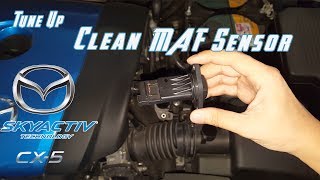
Typical fix: Remove the sensor and clean it carefully using only dedicated MAF sensor cleaner spray. 🎬 Watch this video to see how to clean the sensor. Do not touch the sensor elements or use aggressive cleaners like brake or carb cleaner. Let it dry completely before reinstalling.
Est. part cost: $10-$20 for a can of MAF cleaner. - Vacuum Leak 🟡 Medium Probability Intake hoses, gaskets, and vacuum lines can crack or become loose with age and heat cycles. This allows 'unmetered' air to enter the engine after the MAF sensor, causing a mismatch between what the MAF measures and what the engine actually receives. Common leak points include intercooler couplers and breather hoses.
How to confirm: Visually inspect all intake ducting for cracks or loose clamps. A smoke test is the most effective way to find hidden leaks. Some mechanics may spray a liquid like carb cleaner near suspected leak points with the engine running; a change in idle indicates a leak.
Typical fix: Replace the cracked hose or leaking gasket. Tighten any loose clamps.
Est. part cost: $20-$150 depending on the specific hose or gasket. - Clogged or Dirty Engine Air Filter 🟡 Medium Probability
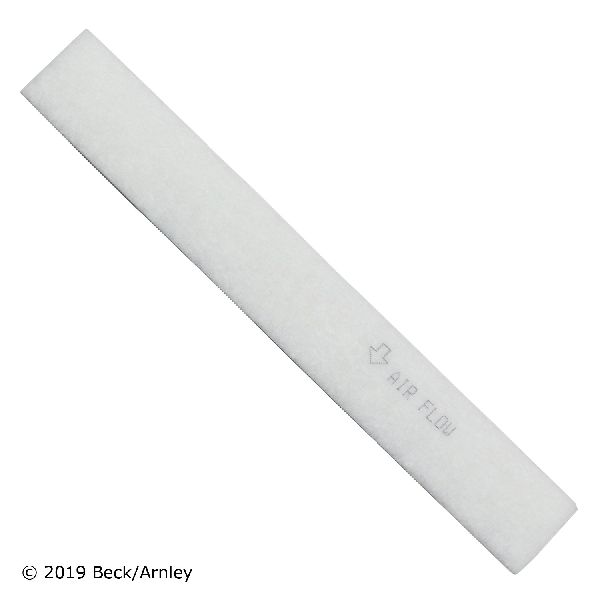
How to confirm: Remove and inspect the engine air filter. If it is visibly dirty or clogged, it can restrict airflow and cause the P0101 code.
Typical fix: Replace the engine air filter.
Est. part cost: $20-$50 - Failed MAF Sensor ⚪ Low Probability
How to confirm: If cleaning the sensor and checking for vacuum leaks does not resolve the code, the sensor itself may have failed. This can be confirmed by monitoring its output with a scan tool; the reading should be smooth and correspond to engine RPM. If it's erratic, stuck, or unresponsive, the sensor is likely bad. As one owner on a Reddit forum found, even replacing the sensor multiple times with OEM parts may not fix the issue if the root cause is elsewhere.
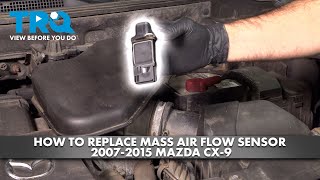
Typical fix: Replace the MAF sensor.
Est. part cost: $100-$300
Rare But Worth Checking
- Intake Manifold Carbon Buildup: On direct-injection engines like the Skyactiv-G 2.5T, severe carbon buildup on the intake valves and ports can restrict airflow to specific cylinders. This can create a pressure imbalance in the manifold, leading the ECU to believe there is an airflow measurement problem, triggering P0101. This is a known issue on some SKYACTIV engines and often requires professional cleaning (e.g., walnut blasting).
- PCM Software Issue: As documented in TSBs for other Mazda models like the Mazda3 and CX-5, P0101 can sometimes appear due to a logic error in the PCM's software, often after reprogramming. [⭐ MANUFACTURER TSB — highest authority] In some cases, a software update is required to resolve a persistent P0101 code even after mechanical repairs are performed. A Reddit user with a similar engine noted that performing an EGR initialization and injector calibration with a capable scan tool resolved their persistent P0101 after intake cleaning, suggesting learned values in the PCM can be a factor.
- Wiring or Connector Issue: A corroded connector or damaged wire leading to the MAF sensor can interrupt the signal and cause the same symptoms as a failed sensor. Always inspect the harness and connector pins for damage before replacing the sensor.
- Worn Exhaust Camshaft: On some earlier Skyactiv engines (primarily diesel, but the principle applies), worn exhaust camshaft lobes can prevent exhaust valves from opening properly. This causes exhaust gases to back up into the intake manifold, creating extra, unmetered air pressure that confuses the MAF sensor and triggers a P0101 code. While less common on the 2.5T, it's a potential cause for a persistent code when all else fails.
Diagnosis Steps
- Read the code with an OBD-II scanner and check for any other stored codes, like P061B or P0171.
- Inspect the engine air filter and replace it if it's dirty.
- Carefully inspect the air intake tube between the air filter box and the throttle body for any cracks, tears, or loose connections. Check all intercooler piping and couplers.
- Remove the MAF sensor. Visually inspect its sensing elements for dirt or contamination.
- Clean the MAF sensor using a dedicated MAF sensor cleaner spray. Let it dry completely before reinstalling. Do NOT use brake cleaner or carburetor cleaner.
- Inspect the MAF sensor connector and wiring for any signs of corrosion, damage, or loose pins.
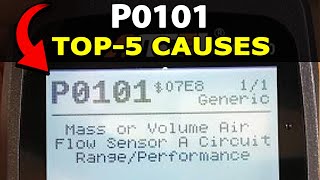
- Clear the trouble codes with the scanner and perform a test drive to see if the code returns. 🎬 Watch this guide for a step-by-step P0101 diagnostic walkthrough.
- If the code reappears, perform a smoke test to check the intake system for vacuum leaks that aren't visually apparent.
- If no leaks are found, use a scan tool to monitor the MAF sensor's live data (in grams per second). The reading should increase smoothly as you rev the engine. If it's erratic or doesn't respond, the sensor is likely faulty.
- If the sensor appears faulty based on data, replace it with a quality OEM or equivalent part.
- If the code persists after replacing the sensor, the issue is likely more complex. Investigate potential heavy carbon buildup on intake valves (may require a borescope) or consult a dealer about potential PCM software updates.
- As a final, less common check, a professional may need to inspect the exhaust camshaft for wear if all other possibilities have been exhausted.
Parts You'll Likely Need
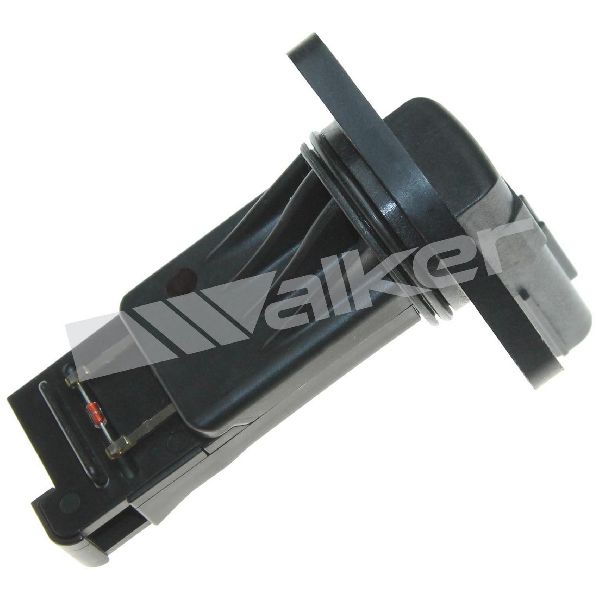
- Mass Airflow (MAF) Sensor
(OEM #PY01-13-215)— This is the primary sensor related to the code. It may fail outright, but more commonly just needs cleaning. Replacement is the next step if cleaning doesn't work.
Trusted brands: Denso, Hitachi, Bosch
OEM price range: $250-$350
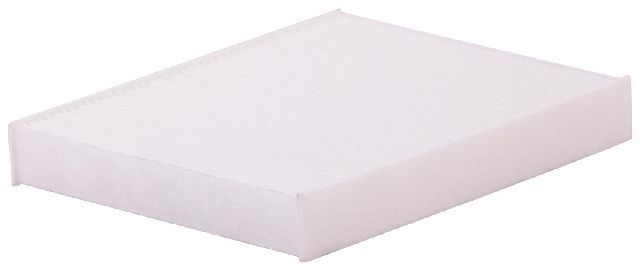
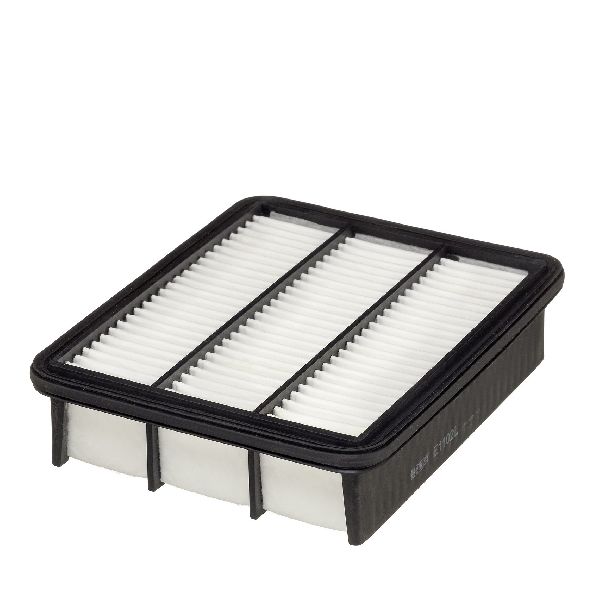
Aftermarket price range: $80-$180 - Engine Air Filter
(OEM #PY8W-13-3A0)— A clogged air filter is a simple and common cause of restricted airflow, which can trigger a P0101 code.
Trusted brands: Wix, Fram, Purolator
OEM price range: $30-$50
Aftermarket price range: $20-$40 - MAF Sensor Cleaner — Often, the sensor is just dirty. A can of specialized cleaner is the cheapest and most common fix.
Trusted brands: CRC, Liqui Moly, WD-40 Specialist
Aftermarket price range: $10-$20
Related Codes That Often Appear With This One
- P061B — This code, for 'Internal Control Module Torque Calculation Performance', is frequently cited alongside P0101 in Mazda TSBs and owner complaints. [⭐ MANUFACTURER TSB — highest authority, Owner complaints] An incorrect airflow reading from the MAF sensor can directly cause the PCM to miscalculate engine torque, triggering P061B.
- P0171 — System Too Lean (Bank 1). This code often appears with P0101 when there is a vacuum leak. Unmetered air enters the engine after the MAF sensor, causing a lean condition that the O2 sensors detect.
Technical Service Bulletins (TSBs) & Recalls
- SA-060-17: Notes that P0101 can appear on some 2012-2016 Mazdas after a PCM reprogramming with specific software versions, often with code P061B. [⭐ MANUFACTURER TSB — highest authority]
- SA386: Mentions the check engine light with P0101 and other codes may illuminate on some CX-5s after PCM reprogramming due to a calibration mislogic. [⭐ MANUFACTURER TSB — highest authority]
- 01-011-13-2766: Defines P0101 as 'MAF SENSOR CIRCUIT RANGE/PERFORMANCE PROBLEM' for some older CX-7 models. [⭐ MANUFACTURER TSB — highest authority]
Platform-Specific Known Issues
- A Reddit user with a 2016 CX-9 reported a persistent P0101 code with severe bucking that was not solved by replacing the MAF sensor multiple times with OEM parts or smoke testing for vacuum leaks, indicating a more complex underlying problem. The issue began after replacing spark plugs, suggesting a potential related disturbance.
Scan Tool Commands That Help
- FORScan / Mazda IDS: EGR Valve Initialization / Injector Calibration — After performing significant engine or intake system cleaning (like carbon cleaning), learned values in the PCM may be incorrect. A Reddit user with a 2.2D Skyactiv engine reported that running these initialization/calibration functions resolved a persistent P0101 code when part replacement did not. This forces the PCM to relearn the components' baseline parameters.
Wiring & Ground Locations
- Engine Room Ground Points — Various points in the engine bay, including near the passenger side motor mount, on the transmission housing, and on the chassis near the fuse box.. A poor ground connection for the engine harness can cause erratic sensor readings, including the MAF sensor. While a specific ground point for the MAF circuit isn't detailed, ensuring all major engine and transmission grounds are clean and secure is a crucial step in diagnosing persistent electronic issues.
Real Owner Repair Stories
- Reddit user in r/MazdaCX9 (2016 Mazda CX-9) — Check Engine Light with code P0101. Slight steady shake in Park, but 'bucking like a bull' in Drive, leading to stalling.
❌ Tried (didn't work) Replacing the MAF sensor three separate times with new OEM parts., Performing a smoke test for vacuum leaks, which found no issues., Disconnecting the battery for 20 minutes to reset the ECU.
✅ What actually fixed it The user, a service writer, posted seeking help and did not provide a final resolution, highlighting that this code can sometimes be extremely difficult to diagnose beyond the common causes. Another user suggested monitoring live data and checking for a stuck purge valve or wiring issues. - Reddit user in r/mazda (2015 Mazda with 2.2D Skyactiv engine (250k km)) — Persistent P0101 code for 1.5 years.
❌ Tried (didn't work) Cleaning the intake manifold., Replacing the vacuum pump., Replacing both the MAF and MAP sensors at a Mazda garage.
✅ What actually fixed it Using a FORScan OBD scanner, the owner performed an 'initialize egr' and 'calibrate injectors' function. Since performing these resets, the car has run smoothly with no return of the P0101 code.
"I Checked Everything" — The Actual Cause
- In a case reported on Reddit involving a 2016 CX-9, the vehicle passed a smoke test for vacuum leaks, yet the P0101 code and severe bucking persisted even after replacing the MAF sensor three times with OEM parts. This indicates the root cause was not a typical vacuum leak and likely lay in a more complex area such as wiring, PCM logic, or a mechanical issue not detectable by a smoke test.
When the Usual Fixes Don't Work
- While replacing the MAF sensor is a common fix, it is not a guaranteed solution. A Reddit user and service writer reported a 2016 CX-9 that continued to throw code P0101 with severe drivability issues after three separate OEM MAF sensor replacements and a clean smoke test, pointing to a deeper, non-sensor-related issue. Another owner of a Mazda with a similar engine architecture found that replacing the MAF and MAP sensors did not fix the code; the ultimate solution was to perform a software-based re-initialization of the EGR and injectors.
Model Year Variations Within This Range
- 2016-2023: The second-generation CX-9 (TC) was introduced in 2016 with the new 2.5L Turbo engine. While there were cosmetic and feature updates through its lifecycle, the core powertrain remained the same. However, some sources suggest avoiding the earliest 2016-2017 models due to them lacking later refinements. Production of the CX-9 ended in 2023, replaced by the CX-90.
Diagnostic Flowchart
Other Known Issues on This Vehicle
Issues unrelated to this code that are worth knowing about as an owner of this generation:
- Cracked Cylinder Head Coolant Leak 🔴 High — Affects 2016-2020 models with the 2.5T engine. Can occur between 50k-100k miles. Failure leads to coolant loss, overheating, and potential engine replacement costing thousands of dollars. (Ref: TSB 01-007/20 (later revised, e.g., MC-10232269-0001) describes cracks forming near the exhaust manifold due to stress.)
- Excessive Oil Consumption (Valve Stem Seals) 🟠 Medium — Primarily affects 2021 models with the 2.5T engine built before September 2021. Caused by defective exhaust valve stem seals, leading to a low oil light between changes. (Ref: TSB 01-011/22 (MC-10226816-0001) provides the repair procedure. A class-action lawsuit resulted in an extended warranty for this issue.)
- Rear Differential / AWD Coupling Bearing Failure 🟠 Medium — Can occur under 100,000 km. The ball bearings in the rear axle coupling can wear out, causing a humming or whining noise from the rear of the vehicle. Water intrusion into the coupling can accelerate wear.
Used vs. New Parts: Buying Guide for This Vehicle
When a used part is the smart pick: For this repair, used parts are generally not recommended for the electronic sensors. However, obtaining used structural parts like intercooler pipes or the air filter housing from a low-mileage donor vehicle can be a cost-effective option if they are cracked or damaged.
Donor-vehicle mileage cap: roughly under 60000 miles for the part to have meaningful remaining life.
What to inspect on the donor part:
- For hoses/pipes: Check for any visible cracks, especially near mounting points or connections. Squeeze the part to feel for brittleness or excessive softness.
- Ensure all mounting tabs and connector ports are intact.
- Avoid parts from vehicles that show signs of a major front-end collision.
OEM-only on this vehicle (don't cheap out):
- Mass Airflow (MAF) Sensor: Forum users and mechanics strongly advise against using cheap, unbranded aftermarket MAF sensors. These sensors often have poor quality control, leading to incorrect readings, persistent codes, and wasted diagnostic time. Sticking with the OEM Mazda part (PY01-13-215) or a reputable OEM supplier like Denso or Hitachi is highly recommended.
Aftermarket brands forum-validated for this vehicle:
- Denso (Often the OEM manufacturer)
- Hitachi
Brands owners have reported issues with on this vehicle:
- Unbranded, low-cost sensors from online marketplaces like Amazon or eBay are frequently reported to be dead-on-arrival or fail quickly.
Real Owner Stories
Aggregated from forums and TSBs cited above. Mileages and costs reflect what owners reported in those sources.
2016 Mazda CX-9 2.5L Turbo
Symptoms: Severe bucking described as 'bucking like a bull' and a persistent P0101 code. The issue began shortly after replacing spark plugs.
What fixed it: The source indicates the issue was not resolved by replacing the MAF sensor three times with OEM parts or performing smoke tests, suggesting a complex underlying issue possibly requiring a PCM software update or intake valve carbon cleaning.
Source hint: r/MazdaCX9 on Reddit: A thread titled '16 Mazda cx9. P0101 mass air flow'
2010 Mazda CX-7 (Platform Mate)
Symptoms: P0101 code appearing after the installation of an aftermarket intake.
What fixed it: Fixing vacuum leaks downstream from the MAF sensor, specifically at the intercooler couplers and breather hoses.
Source hint: Mazdas247: A 2010 thread 'Intake Installation and P0101 Code'
Related OBD-II Codes
Frequently Asked Questions
My 2016 CX-9 is bucking like a bull and has a P0101 code, but replacing the MAF sensor didn't help. What else could it be?
Is there a specific TSB for the P0101 code on the Mazda CX-9?
Can a dirty air filter cause the P0101 code on my 2.5L Turbo engine?
I have a 2021 CX-9 with this code; could it be related to the oil consumption issue?
What should I use to clean the MAF sensor on my CX-9?
Could a coolant leak be related to my engine performance issues?
Helpful Videos

Used OEM Parts in Stock


New Aftermarket Parts Available


The information in this article is provided for general reference and educational purposes only. Vehicle specifications, procedures, and part compatibility can vary by production date, trim level, and region. Always consult your vehicle's factory service manual and verify part numbers before purchasing or performing repairs. Safety-critical components such as airbags, seat belts, and braking systems should be installed by a qualified professional.
- Mazda CX-9:
- 🎬 Helpful Videos
- 🛍️ Shop This Part
- What's Unique About the 2016-2023 Mazda CX-9
- Symptoms You May Notice
- Most Likely Causes
- Rare But Worth Checking
- Diagnosis Steps
- Parts You'll Likely Need
- Related Codes That Often Appear With This One
- Technical Service Bulletins (TSBs) & Recalls
- Platform-Specific Known Issues
- Scan Tool Commands That Help
- Wiring & Ground Locations
- Real Owner Repair Stories
- "I Checked Everything" — The Actual Cause
- When the Usual Fixes Don't Work
- Model Year Variations Within This Range
- Diagnostic Flowchart
- Other Known Issues on This Vehicle
- Used vs. New Parts: Buying Guide for This Vehicle
- Real Owner Stories
- 2016 Mazda CX-9 2.5L Turbo
- 2010 Mazda CX-7 (Platform Mate)
- Related OBD-II Codes
- Frequently Asked Questions
- 🎟️ Get 5% Off