

P0101 on 2006-2010 Hummer H3: MAF Sensor Causes and Fixes
On a 2006-2010 Hummer H3, code P0101 is most often caused by a dirty Mass Air Flow (MAF) sensor. Cleaning the sensor with dedicated MAF cleaner for under $15 is the most common and effective first step to fixing the issue. A cracked intake resonator box or other vacuum leaks are also very common culprits.
- Start by cleaning the MAF sensor with dedicated cleaner; this is the most likely and cheapest fix.
- If cleaning the MAF doesn't work, your next step is to check for vacuum leaks, especially around the intake manifold gasket and PCV hoses.
- Be sure to buy the correct MAF sensor for your year and engine, as the 2006 3.5L part is different from the 2007-2010 3.7L/5.3L part.
- Don't be alarmed if stability control warnings appear with the Check Engine Light; this is a known quirk on the H3 related to this code.
What's Unique About the 2006-2010 Hummer H3

The Hummer H3, which shares its GMT345 platform with the Chevrolet Colorado and GMC Canyon, is particularly sensitive to MAF sensor contamination and vacuum leaks. Oiled aftermarket air filters are a frequent source of this contamination, causing oil to coat the sensor's delicate wires. Additionally, a P0101 code on the H3 can sometimes trigger other alarming warning lights like "Service Stabilizer System" and "Traction Failed," often putting the vehicle into a reduced power mode. Another common failure point specific to this platform is the plastic air intake resonator box, which can crack and cause a significant vacuum leak after the MAF sensor.
Symptoms You May Notice
- Check Engine Light is on
- Reduced engine power or hesitation during acceleration
- Rough or erratic idle, sometimes described as 'chugging'
- Engine stalling, especially when coming to a stop
- Poor fuel economy
- "Service Stab Sys" and "Traction Failed" messages on the driver information center
- Black smoke from the exhaust in some cases
- Vehicle enters 'Reduced Power' or 'Limp Mode'
- Hard or erratic shifting
- Replacing the oxygen sensors. While a lean code (P0171) can be related, P0101 points specifically to an airflow measurement issue, which should be diagnosed first.
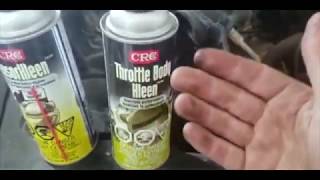
- Replacing the throttle body. While cleaning the throttle body 🎬 Watch: How to clean your MAF sensor and throttle body. is good maintenance and often done at the same time as cleaning the MAF, the throttle body itself is rarely the cause of a P0101 code.
- Replacing wheel speed sensors for the 'Service Stab Sys' message. While a faulty wheel speed sensor can trigger this warning, if it appears with a P0101 code, the root cause is almost always the engine performance issue tricking the stability system.
Most Likely Causes

- Dirty or Contaminated Mass Air Flow (MAF) Sensor 🔴 High Probability The use of aftermarket oiled air filters (like K&N) is common, and over-oiling them can lead to oil residue coating the MAF sensor's hot wire, skewing its readings. Even with standard filters, dust and debris can accumulate over time.
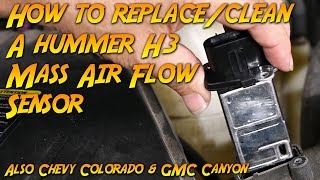
How to confirm: Visually inspect the MAF sensor wires (located in the intake tube just after the air filter box). If they appear dirty, oily, or have debris on them, they require cleaning. The sensor is typically held in by two T20 Torx screws. 🎬 See this walkthrough for cleaning or replacing the MAF sensor.
Typical fix: Remove the sensor and clean it carefully using only dedicated Mass Air Flow sensor cleaner spray. Do not touch the sensor wires with a brush or any object. Let it air dry completely before reinstalling.
Est. part cost: $10-$20 for MAF cleaner spray. - Vacuum Leak (Post-MAF) 🔴 High Probability The plastic air intake resonator box that sits between the air filter housing and the throttle body is known to crack, creating a significant source of unmetered air. Also, aging rubber and plastic components in the engine bay become brittle and crack. Common leak points include the intake manifold gasket, PCV hoses, and the main intake air duct itself.
How to confirm: A smoke test is the most effective method to find a vacuum leak. You can also perform a careful visual inspection of all hoses and the plastic resonator box for cracks or loose fittings. Spraying starter fluid or brake cleaner near suspected leak points while the engine is idling can also work; if the engine RPM changes, a leak is present.
Typical fix: Replace the cracked hose, intake resonator, or leaking gasket. The intake manifold gasket is a common failure point that can be replaced by a DIYer with moderate skills.
Est. part cost: $20-$150 depending on the failed component. - Dirty or Clogged Engine Air Filter ⚪ Low Probability
How to confirm: Visually inspect the engine air filter. If it is visibly dirty, clogged with debris, or has not been replaced in a long time, it can restrict airflow and trigger the code.
Typical fix: Replace the engine air filter.
Est. part cost: $20-$50
Rare But Worth Checking
- Faulty Mass Air Flow (MAF) Sensor: If cleaning the sensor and confirming there are no vacuum leaks does not resolve the code, the sensor itself may have failed electronically. Replacement is straightforward.
- Clogged Catalytic Converter: A restricted exhaust can cause a lack of power and trigger a P0101 code by creating backpressure that confuses the sensor readings. This can be diagnosed by performing an exhaust backpressure test. One owner on Hummer Forums fixed their P0101 and reduced power issue by replacing a clogged secondary catalytic converter after a pressure test showed 5psi at idle and 20psi at 2000 RPM.
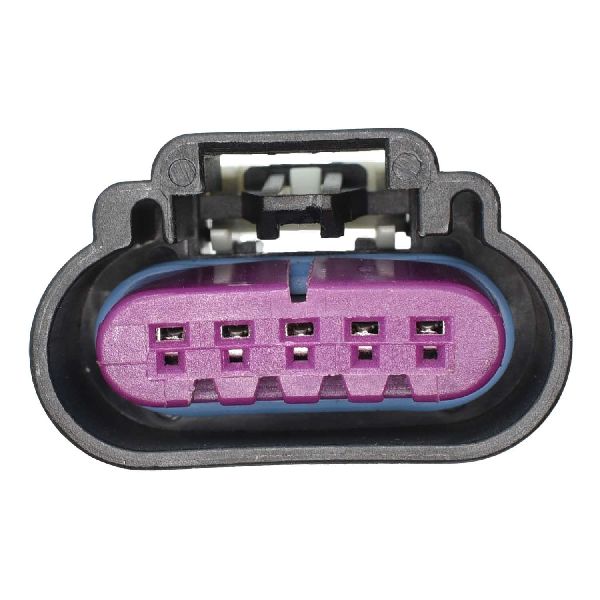
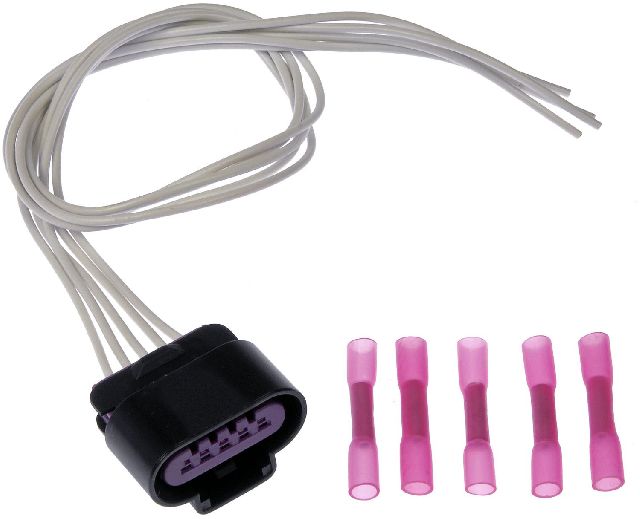
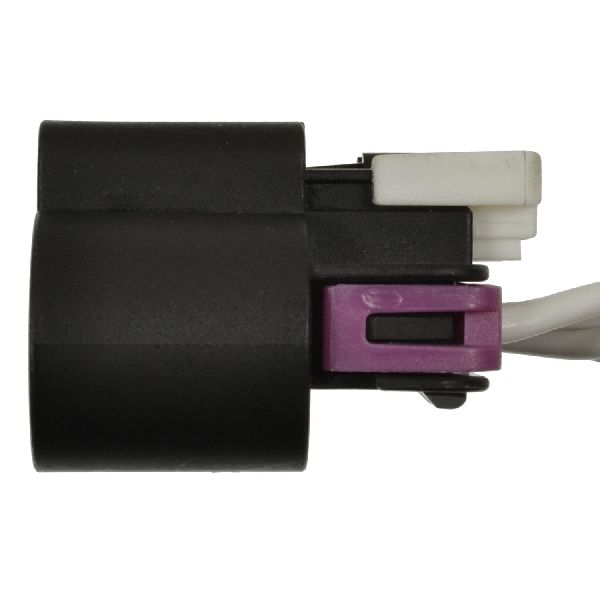
- Damaged MAF Sensor Wiring or Connector: Inspect the wiring harness and connector leading to the MAF sensor for any visible damage, corrosion, or loose pins. On GM vehicles, poor ground connections can cause multiple, seemingly unrelated sensor codes. A TSB (24-NA-158) was issued for potential water intrusion into the MAF connector during assembly, which could cause a P0102 code and require replacement of the sensor and connector.
Diagnosis Steps

- Read the codes: Use an OBD-II scanner to confirm P0101 and check for any other related codes like P0171 or P0102.
- Inspect the Air Intake System: Visually inspect the entire air intake path from the air filter box to the throttle body. Pay close attention to the plastic intake resonator box for cracks, and check for tears in the rubber boots or loose clamps.
- Inspect and Clean the MAF Sensor: Disconnect the battery. Remove the MAF sensor (two T20 Torx screws) and inspect its internal wires. Spray the wires and sensor elements generously with dedicated MAF sensor cleaner. Let it dry completely for at least 15-20 minutes before reinstalling.
- Clean the Throttle Body: While the intake tube is off, it is a good time to clean any carbon buildup from the throttle body plate and bore using throttle body cleaner and a rag.
- Check for Vacuum Leaks: If the code returns, perform a smoke test to check for vacuum leaks. Pay close attention to the intake manifold gasket and all PCV hoses. This is the most reliable method.
- Check Live Data: Using a scan tool, monitor the MAF sensor reading (in grams/second) at idle and while revving the engine. For the 3.7L I5, a normal reading at a stable warm idle (around 650 RPM) should be approximately 4-6 g/s. The reading should increase smoothly with RPM. Erratic jumps or a flat reading indicate a problem.
- Test the MAF Sensor Circuit: If the sensor readings are erratic or do not change, use a multimeter to test the wiring to the MAF sensor for 12V power, a good ground, and a 5V signal.
- Replace the MAF Sensor: If the sensor has been cleaned, there are no vacuum leaks, and the wiring is confirmed to be good, the MAF sensor itself is likely faulty and should be replaced.
Parts You'll Likely Need

- Mass Air Flow Sensor Cleaner — This is the most common first step and often the only thing needed to fix the problem.
Trusted brands: CRC, WD-40 Specialist
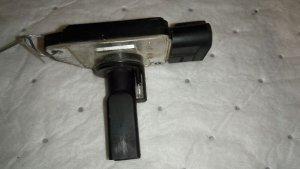
Aftermarket price range: $10-$20 - Mass Air Flow Sensor (2008-2010: 3.7L & 5.3L)
(OEM #15865791)— If cleaning the sensor doesn't work and it's determined to be faulty, replacement is necessary. This part fits the later model H3s.
Trusted brands: ACDelco (213-4222), Hitachi, Delphi
OEM price range: $75-$150
Aftermarket price range: $50-$100 - Mass Air Flow Sensor (2006-2007: 3.5L & 3.7L)
(OEM #12579352)— The 2006-2007 model years use a different sensor. If cleaning fails, replacement is the next step.
Trusted brands: ACDelco (213-4785), Hitachi
OEM price range: $80-$160
Aftermarket price range: $60-$120 - Air Intake Resonator Assembly
(OEM #15206778)— This plastic component is a very common failure point, cracking from age and engine vibration, causing a vacuum leak that triggers P0101.
Trusted brands: GM Genuine, Dorman
OEM price range: $100-$150
Aftermarket price range: $70-$110
Related Codes That Often Appear With This One
- P0171 — System Too Lean (Bank 1). A vacuum leak or a dirty MAF sensor can cause unmetered air to enter the engine or the sensor to under-report airflow, leading to a lean condition.
- P0102 — MAF Circuit Low Input. This code often appears with P0101 and points more specifically to a wiring issue or a failed sensor sending a very low signal.
- P0300 — Random/Multiple Cylinder Misfire Detected. An incorrect air/fuel mixture from the P0101 fault can lead to misfires across multiple cylinders.
Technical Service Bulletins (TSBs) & Recalls
- TSB #PIP4409F: Mentions potential for broken wiring at the MAP sensor connector, which can cause similar drivability issues.
- While not for the H3 specifically, Nissan TSB NTB12-051k shows that some P0101 codes on other vehicles can be caused by software glitches requiring an ECM reprogram, highlighting a rare but possible cause if all hardware checks out.
Platform-Specific Known Issues
- A cracked exhaust manifold on the 3.5L and 3.7L I5 engines is a very common H3 issue that can sometimes cause a P0171 lean code, which may appear alongside P0101.
Mechanic-Grade Diagnostic Values
- Mass Airflow Rate at Idle (3.7L I5) — expected: 4-7 g/s at warm idle (approx. 650 RPM). Failure: Readings that are erratic, flat, or significantly outside this range suggest a sensor or vacuum leak issue.
- Mass Airflow Rate under Load — expected: Should rise smoothly and linearly with RPM, reaching 15-25 g/s at 2500 RPM.. Failure: A slow or non-linear rise can indicate a dirty sensor or a post-MAF air leak. A jumpy or erratic reading suggests a failing sensor or wiring issue.
- MAF Sensor Connector Voltage Test (Key On, Engine Off) — expected: One pin should show 12V (Power), one pin should show continuity to ground (Ground), and one pin should show 5V (Signal Reference).. Failure: Absence of 12V power points to a fuse or wiring issue. A bad ground can cause erratic readings. Absence of 5V reference points to an ECM or wiring issue.
Scan Tool Commands That Help
- Tech2 / GDS2: MAF Sensor Live Data Graphing — This is crucial for diagnosing intermittent issues. Graphing the MAF (g/s) against RPM and Throttle Position (%) can reveal if the sensor's output is lagging, erratic, or dropping out under specific conditions, which is the core of a P0101 'Range/Performance' fault.
Wiring & Ground Locations
- MAF Sensor Ground — The MAF sensor ground is part of the G101/G106 circuit. G101 is located at the lower front of the engine block.. A poor ground connection at G101 can cause incorrect or unstable readings from the MAF sensor, directly leading to a P0101 code even if the sensor itself is good.
- G102 — On the lower left side of the engine block, rearward of G103.. This is a primary engine block ground. While not directly for the MAF, a poor connection here can introduce electrical noise and affect multiple sensors, including those the PCM uses to cross-check the MAF reading.
- G103 — On the lower left side of the engine block, forward of G102.. Another primary engine block ground point. Corrosion or looseness here can cause widespread electrical issues that mimic sensor failures.
- G105 — On the left inner front wheel well, behind the battery.. This is a major chassis ground point. Verifying it is clean and tight is good practice when diagnosing any electrical fault, as a bad engine-to-chassis ground path can cause current to seek alternate, problematic routes.
- Braided Ground Strap — There is a braided ground strap that typically connects from the engine block to the chassis, often near one of the motor mounts.. This strap ensures the engine block has a solid ground connection to the rest of the vehicle. If it's broken or corroded, the MAF sensor's ground reference can become unstable, leading to P0101.
Real Owner Repair Stories
- Hummer Forums user (Hummer H3 (year not specified)) — P0101 code and reduced power mode.
❌ Tried (didn't work) Cleaning the MAF sensor, Replacing the MAF sensor, Cleaning the throttle body, Checking for vacuum leaks
✅ What actually fixed it The secondary catalytic converter was clogged. An exhaust backpressure test showed 5psi at idle and 20psi at 2000 RPM. Replacing the clogged catalytic converter resolved the P0101 code and power loss. - ColoradoFans forum user (shared platform) (2005 Chevrolet Colorado I5) — P0101, P0171, rough idle, stalling.
❌ Tried (didn't work) Cleaned MAF and throttle body, Replaced MAF sensor, Replaced O2 sensors, Smoke tested for vacuum leaks (none found)
✅ What actually fixed it The intake manifold gasket was leaking. Even though a smoke test didn't reveal the leak initially, spraying carb cleaner around the intake manifold gasket caused the engine RPM to change, confirming the leak location. Replacing the intake manifold gasket fixed all codes and symptoms.
"I Checked Everything" — The Actual Cause
- In some cases, a smoke test may not reveal a leak at the intake manifold gasket, especially if the leak is minor or only occurs under specific temperature/vacuum conditions. A common secondary check is to carefully spray carb cleaner or starter fluid around the gasket mating surface with the engine idling. A noticeable change in engine RPM indicates a leak is present, confirming the gasket has failed despite a clean smoke test.
OEM Part Supersession History
12576410→15865791— Standard part update/revision by GM.
Heads up: Part 15865791 is for 2008-2010 models. It is not backward compatible with 2006-2007 models which use 12579352.N/A→12579352— This is the original part for the early models.
Heads up: Part 12579352 is for 2006-2007 models only. It will not work on 2008-2010 models.
Model Year Variations Within This Range
- 2006-2007: These years use MAF sensor part number 12579352 for the 3.5L and 3.7L I5 engines.
- 2008-2010: These years use MAF sensor part number 15865791 for both the 3.7L I5 and 5.3L V8 engines. This part superseded an earlier number (12576410).
Diagnostic Flowchart
Real Owner Stories
Aggregated from forums and TSBs cited above. Mileages and costs reflect what owners reported in those sources.
Hummer H3
Symptoms: Check engine light with P0101, 'Service Stab Sys', 'Traction Control', and 'Reduced Power' messages on dash. Vehicle would not rev above 2,000 RPM while driving.
What fixed it: Identified and replaced a plugged secondary catalytic converter after an exhaust back pressure test confirmed a restriction (5psi at idle, 20psi at 2,000 RPM).
Source hint: HummerForums.com thread titled 'Service Stab Sys, Traction Control, Reduced Power with P0101 code mass airflow sensor'
Hummer H3
Symptoms: P0101 accompanied by P0014, P0102, and P0300 codes, along with the 'Traction Failed' message on the dash.
What fixed it: Checked and repaired ground straps, which were identified as a potential cause for multiple simultaneous sensor codes.
Source hint: hummer4x4offroad.com
Hummer H3
Symptoms: P0101 code and drivability issues caused by unmetered air entering the system.
What fixed it: Found and repaired a crack in the intake tube located after the MAF sensor.
Source hint: reddit.com/r/MechanicAdvice
Related OBD-II Codes
Frequently Asked Questions
Why is my Hummer H3 displaying 'Service Stab Sys' and 'Traction Failed' along with the P0101 code?
I have the 3.7L I5 engine. What should the normal MAF sensor reading be at idle?
Can a cracked exhaust manifold cause a P0101 code on my H3?
Does TSB #PIP4409F apply to my P0101 code?
Where is the most common place to find a vacuum leak on the Hummer H3?
I use a K&N oiled air filter on my H3. Could this cause the P0101 code?
Helpful Videos
Used OEM Parts in Stock

New Aftermarket Parts Available


The information in this article is provided for general reference and educational purposes only. Vehicle specifications, procedures, and part compatibility can vary by production date, trim level, and region. Always consult your vehicle's factory service manual and verify part numbers before purchasing or performing repairs. Safety-critical components such as airbags, seat belts, and braking systems should be installed by a qualified professional.
- Hummer H3:
- 🎬 Helpful Videos
- 🛍️ Shop This Part
- What's Unique About the 2006-2010 Hummer H3
- Symptoms You May Notice
- Most Likely Causes
- Rare But Worth Checking
- Diagnosis Steps
- Parts You'll Likely Need
- Related Codes That Often Appear With This One
- Technical Service Bulletins (TSBs) & Recalls
- Platform-Specific Known Issues
- Mechanic-Grade Diagnostic Values
- Scan Tool Commands That Help
- Wiring & Ground Locations
- Real Owner Repair Stories
- "I Checked Everything" — The Actual Cause
- OEM Part Supersession History
- Model Year Variations Within This Range
- Diagnostic Flowchart
- Real Owner Stories
- Hummer H3
- Hummer H3
- Hummer H3
- Related OBD-II Codes
- Frequently Asked Questions
- 🎟️ Get 5% Off