

P0101 on 2011-2023 Ford F-150: Causes and Fixes for MAF Sensor Issues
On a 2011-2023 F-150, code P0101 is most often caused by a dirty Mass Airflow (MAF) sensor. The fix is often as simple as cleaning the sensor with a dedicated MAF cleaner spray, which costs about $10. If the sensor has failed, a replacement from a quality brand like Motorcraft or Hitachi costs between $70 and $150 and is a very easy DIY job. Always check for vacuum leaks and a clean air filter before replacing the sensor. NOTE: Some F-150s, particularly 2015+ models with the 5.0L V8, do not have
- Always try cleaning the MAF sensor first with a dedicated, electronics-safe cleaner before buying a new one. This solves the problem more than half the time.
- Thoroughly inspect the plastic air intake tube between the air filter and the engine for cracks or loose clamps, as this is a very common cause of P0101.
- Never use an oiled aftermarket air filter unless you are prepared to clean your MAF sensor more frequently.
- A P0101 code is a simple issue to diagnose and fix for a DIYer, requiring only basic tools and about 15-30 minutes of time.
What's Unique About the 2011-2023 Ford F-150

The Ford F-150s from 2011-2023 span three design generations, but the causes for P0101 are highly consistent on MAF-equipped engines. A key factor, especially on EcoBoost engines (like the popular 2.7L and 3.5L), is the Positive Crankcase Ventilation (PCV) system. This system can allow oil vapor back into the air intake, which then contaminates the MAF sensor's delicate sensing wire, leading to inaccurate readings. This is so common that many owners find cleaning the sensor is a regular maintenance item 🎬 Watch: How to clean the MAP and MAF on EcoBoost engines, and some install aftermarket oil catch cans to reduce the amount of oil vapor entering the intake tract. Critically, many later model F-150s, especially those with the 5.0L V8 (2015+), do not use a MAF sensor at all, relying on a MAP sensor-based speed density system instead.
Generation note: The 2011-2023 year range covers the 12th (2011-2014), 13th (2015-2020), and 14th (2021-2023) generations of the F-150. While specific part numbers for the MAF sensor may vary slightly, the location, function, and common causes for a P0101 code are similar for MAF-equipped engines. However, a major variation is that many 13th and 14th generation trucks with the 5.0L V8 engine do not have a MAF sensor. Early 3.5L EcoBoost engines may have a MAF sensor that is only used for its IAT (Intake Air Temperature) function, with airflow measured by MAP sensors. The primary MAF sensor part number BR3Z-12B579-A (Motorcraft AFLS-165) fits a wide range of the earlier years and EcoBoost engines.
Symptoms You May Notice
- Check Engine Light is on
- Rough or unstable idle
- Engine hesitation, stumbling, or jerking during acceleration
- Noticeable loss of engine power
- Poor fuel economy, sometimes a 15-20% drop
- Black smoke from the exhaust (running rich)
- Difficulty starting the engine
- Engine stalling, especially when coming to a stop
- Replacing the MAF sensor without first attempting to clean it.
- Replacing oxygen (O2) sensors, as a bad MAF reading can cause lean or rich condition codes (like P0171/P0174) to appear. The O2 sensors are often correctly reporting the problem caused by the bad MAF data.
- Replacing spark plugs or ignition coils, assuming a drivability issue is ignition-related when it's actually caused by an incorrect air-fuel mixture from the P0101 fault.
- Diagnosing a MAF sensor issue on a 2015+ 5.0L F-150, which does not have a MAF sensor and uses a MAP sensor instead.
Most Likely Causes

- Dirty Mass Airflow (MAF) Sensor 🔴 High Probability Oil vapor from the PCV system, especially on EcoBoost engines, can coat the sensor's hot wire. Over-oiled aftermarket air filters are also a very common source of contamination.
How to confirm: Visually inspect the sensor's wire element. If it appears dirty, oily, or has debris on it, it needs cleaning. This is the first and most important check.
Typical fix: Clean the sensor using a dedicated, electronics-safe MAF sensor cleaner spray. Do not use brake or carburetor cleaner, as they will damage the sensor. This $10 fix often resolves the code.
Est. part cost: $10-$15 - Intake Air (Vacuum) Leak 🔴 High Probability The plastic and rubber components of the air intake system can become brittle and crack over time, allowing unmetered air to enter the engine after the MAF sensor. The flexible, accordion-style sections of the intake tube are common failure points.
How to confirm: Visually inspect the entire air intake tract from the air filter box to the throttle body for cracks. Ensure all clamps are tight. A smoke test is the most definitive way to find a leak 🎬 Watch: How to diagnose lean condition codes and vacuum leaks that isn't visually obvious.
Typical fix: Replace the cracked intake tube or tighten any loose clamps.
Est. part cost: $50-$150 - Faulty Mass Airflow (MAF) Sensor 🟡 Medium Probability While durable, the sensor's internal electronics can fail over time due to heat cycles and vibration. This should only be suspected after cleaning the sensor and ruling out vacuum leaks.
How to confirm: If cleaning the sensor and confirming there are no vacuum leaks does not resolve the code, the sensor itself is likely faulty. It can be tested with a multimeter on older models or by observing its live data on a scan tool. A healthy MAF on a 5.0L V8 should read approximately 5-7 grams/second (g/s) at idle and should increase smoothly with RPM. A reading of -40°F for the integrated IAT sensor is a default value indicating an open circuit in the wiring, not necessarily a failed sensor.
Typical fix: Replace the MAF sensor. This is typically held in by two Torx screws and is very easy to access.
Est. part cost: $70-$200 - Clogged or Improperly Installed Air Filter ⚪ Low Probability A severely clogged filter can restrict airflow enough to cause the MAF's readings to be out of the expected range. An improperly seated filter can allow debris to bypass it and contaminate the sensor. In some cases, debris like leaves can clog the intake snorkel in the fender well before the air even reaches the filter.
How to confirm: Remove and inspect the engine air filter. Check if it is excessively dirty or if the airbox lid is not sealed correctly. Check the inlet snorkel for obstructions.
Typical fix: Replace the engine air filter and ensure the airbox is properly sealed. Clear any debris from the intake path.
Est. part cost: $20-$50
Rare But Worth Checking
- Clogged Catalytic Converter: A severely restricted exhaust can cause backpressure that skews airflow readings. This is unlikely but possible on higher-mileage vehicles and would typically be accompanied by a severe loss of power and potentially other exhaust-related codes.
- Wiring or Connector Issue: The wiring harness or connector for the MAF sensor can become damaged, corroded, or loose, causing an intermittent signal. This should be checked if a new sensor doesn't fix the issue. Wiggling the connector while watching live data can sometimes reveal a bad connection.
Diagnosis Steps

- Verify the code with an OBD-II scanner and check for any other codes. Note the freeze-frame data to see the engine conditions when the code was set.
- CRITICAL: Confirm your specific engine and model year uses a MAF sensor. Many 2015+ F-150s with the 5.0L V8 engine use a MAP sensor instead and do not have a MAF sensor.
- Visually inspect the entire air intake system between the air filter and the engine for any obvious cracks, loose hoses, or disconnected parts.
- Inspect the engine air filter to ensure it is clean and properly installed. Also check the air intake snorkel for debris.
- Unplug and remove the MAF sensor. It is located on the air intake tube and typically held by two T20 Torx screws. 🎬 See this walkthrough for removing and replacing the MAF sensor
- Carefully inspect the MAF sensor's wire or film element. If it looks dirty, spray it liberally with a dedicated MAF sensor cleaner. Let it air dry completely before reinstalling.
- While the sensor is out, inspect the electrical connector for corrosion or loose pins. Apply dielectric grease upon reassembly to protect the connection.
- Clear the trouble codes with the scanner and perform a test drive to see if the code returns.
- If the code returns, use a scan tool to monitor the MAF sensor's live data in grams per second (g/s). The reading should be stable at idle and increase smoothly as you rev the engine. Erratic jumps or no change indicates a problem. A common rule of thumb is that g/s at idle should be roughly equal to the engine displacement in liters (e.g., a 5.0L engine should read around 5 g/s).
- If the problem persists, perform a smoke test to find a hard-to-see vacuum leak.
Parts You'll Likely Need

- Mass Airflow Sensor Cleaner — This is the most common and cheapest fix, as the sensor is often just dirty, not broken.
Trusted brands: CRC, Liqui Moly, WD-40 Specialist
Aftermarket price range: $10-$15 - Mass Airflow Sensor
(OEM #BR3Z-12B579-A (Motorcraft AFLS-165))— If cleaning the sensor and checking for leaks doesn't solve the problem, the sensor itself has likely failed. This part number fits many 2011-2020 models.
Trusted brands: Motorcraft, Hitachi, Delphi, Carquest
OEM price range: $120-$200
Aftermarket price range: $70-$150 - Engine Air Intake Hose — This part is a frequent source of vacuum leaks due to cracking rubber, especially in the flexible sections.
Trusted brands: Motorcraft, Mishimoto, Spectre
OEM price range: $75-$150
Aftermarket price range: $40-$80
Related Codes That Often Appear With This One
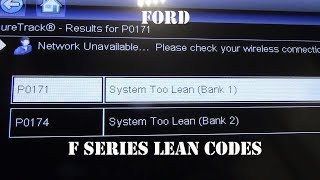
- P0171 / P0174 — These 'System Too Lean' codes are common with P0101 if there is a vacuum leak, as unmetered air is entering the engine that the MAF sensor did not measure.
- P0172 / P0175 — These 'System Too Rich' codes can appear if the MAF sensor is contaminated and under-reporting airflow, causing the PCM to inject too much fuel based on what other sensors are reporting.
- P0100, P0102, P0103, P0104 — These are all MAF-related codes indicating circuit malfunctions, low input, high input, or intermittent faults. They point more specifically to an electrical issue or a complete failure rather than the 'Range/Performance' issue of P0101.
Technical Service Bulletins (TSBs) & Recalls
- TSB 20-2207: For some 2018-2020 2.7L EcoBoost models, this addresses an oil leak into the turbocharger. This can lead to oil contamination of the entire intake system, including the MAF sensor.
- TSB 14-0082: For earlier EcoBoost models, this TSB addresses issues with the turbocharger intake air temperature/pressure sensor (which works with the MAF) and recommends replacing both the sensor and its electrical connector pigtail due to connection problems. This highlights known wiring/connector issues in the intake sensor system.
Platform-Specific Known Issues

- On 2.7L and 3.5L EcoBoost engines, the PCV system can introduce oil vapor into the intake, which is a primary cause of MAF sensor contamination. Some owners install an oil catch can between the PCV valve and the intake manifold to capture this oil before it can coat the intake tract and MAF sensor.
- TSB 20-2207 was issued for some 2018-2020 F-150s with the 2.7L EcoBoost for ex
Mechanic-Grade Diagnostic Values
- MAF Sensor Signal Voltage (Analog-type, pre-2011 models) — expected: ~0.7-1.0V at hot idle, rising smoothly with RPM to ~4.5V at wide-open throttle.. Failure: Voltage is erratic, does not change with RPM, or is outside the expected idle range.
- MAF Sensor Live Data (g/s) at Idle — expected: Approximately 1 gram/second per liter of engine displacement. (e.g., a 5.4L engine should be around 5.4 g/s).. Failure: Reading is excessively high or low at idle, or does not increase smoothly when the engine is revved.
- Intake Air Temperature (IAT) Live Data — expected: Should reflect the ambient air temperature when the engine is cold.. Failure: A reading of exactly -40°F or -40°C indicates a default value for an open circuit in the sensor or wiring.
Wiring & Ground Locations
- MAF Sensor Connector (pre-digital) — On the MAF sensor, located in the air intake tube after the air filter box.. Incorrect voltage or ground at the connector will cause P0101. On older models, pins provide power, ground, and signal voltage that can be tested with a multimeter. On some models like the 2010 5.4L, pigtail wires can have identical colors, leading to incorrect installation if not carefully marked or tested for continuity.
- Firewall to Engine Block Ground Strap — Typically runs from the firewall on the passenger side to a stud on the rear of the engine block/cylinder head.. A poor connection at this primary ground can cause unstable voltage and reference signals for multiple sensors, including the MAF, leading to erratic readings and codes like P0101.
- Passenger Kick Panel Grounds — A cluster of ground wires connected to a bolt behind the passenger side kick panel.. On some 2001-2011 models, this is a known point of corrosion that can cause a wide range of electrical issues, including sensor faults.
Real Owner Repair Stories
- Ford F150 Forum user 'Grachman' (2010 F-150 5.4L 3v) — MAF reading was stuck at a high value (15 lbs/min) at idle and did not change with RPM.
❌ Tried (didn't work) Initial diagnosis was confusing due to the fixed reading.
✅ What actually fixed it The owner was replacing the MAF connector pigtail which had two identical yellow wires. They had accidentally swapped the MAF signal and signal return wires. The fix was to identify the signal return wire (it had continuity to ground) and connect the pigtail correctly. - Ford F150 Forum user (2009-2014 F-150 (specific engine not mentioned)) — Revving idle hunt when coming to a stop, Check Engine Light.
❌ Tried (didn't work) Replacing the MAF sensor with a new Motorcraft part.
✅ What actually fixed it The issue was not fully resolved in the thread, but the key finding was that two brand new Motorcraft MAF sensors both resulted in an immediate CEL and a live data reading of -40°F for the Intake Air Temperature sensor. This -40° reading is a default value for an open circuit. The final diagnosis pointed toward a problem in the wiring harness or connector, not the sensor itself, as the original (failing) sensor did not show this reading. - Reddit user 'chippinganimal' (2021 F-150 PowerBoost (3.5L EcoBoost Hybrid) with 62,000 miles) — Rough running at low RPM, suboptimal shifting and transition from EV to gas engine.
✅ What actually fixed it The owner cleaned three separate sensors with MAF cleaner: two on the air intake tubing and one MAP sensor on top of the engine near the firewall. They also disconnected the batteries for 30 minutes to perform a Keep Alive Memory (KAM) reset. This combination of cleaning all air/pressure sensors and resetting adaptations smoothed out the engine and transmission behavior.
"I Checked Everything" — The Actual Cause
- In a documented case on a 2010 F-150, the MAF sensor gave a fixed, high reading that would not change. This issue would not be found with a smoke test, as it was not a leak. The root cause was the MAF signal wire and signal return wire (which were identical colors on the replacement pigtail) being swapped during a connector repair.
- A poor engine ground connection, such as the main strap from the firewall to the engine block, can cause erratic sensor readings and trigger a P0101 code. This electrical fault would not be detected by a physical inspection of the intake or a smoke test.
When the Usual Fixes Don't Work
- While cleaning or replacing the MAF sensor is the most common fix, numerous owner accounts show that this often fails to resolve the issue. In one case, a user with a 2010 F-150 found the true cause was two identically colored wires being swapped on a replacement connector pigtail, which caused a fixed, incorrect reading that cleaning could never solve. In another instance, multiple new Motorcraft sensors immediately triggered a CEL with a -40°F IAT reading, indicating the fault was not the sensor itself but an open circuit in the vehicle's wiring harness. These cases highlight the importance of verifying the electrical circuit's integrity before assuming the sensor itself is the sole point of failure.
OEM Part Supersession History
BR3Z-12B579-A→BR3Z-12B579-A— This part number has remained consistent and fits a wide range of Ford vehicles from 2011-2020, including F-150s with MAF sensors.
Heads up: While the part number is stable, be aware that some aftermarket versions may not perform to OEM standards. Also, ensure your vehicle requires a MAF sensor, as many 2015+ 5.0L V8s do not use one.
Model Year Variations Within This Range
- 2015-2023 (approx.): Many F-150s equipped with the 5.0L Coyote V8 in these years do not use a Mass Airflow (MAF) sensor. They use a speed-density system that relies on a Manifold Absolute Pressure (MAP) sensor located on the intake manifold. This code is not applicable to those specific vehicles.
- 2011-2014 (approx.): MAF sensors on these models may still use an analog voltage signal that can be tested with a multimeter. Around 2011, Ford began phasing in digital MAF sensors, whose output is a frequency signal that cannot be accurately tested with a standard multimeter set to DC volts.
- 2011 3.5L EcoBoost (and potentially others): On some early EcoBoost models, the sensor located in the intake tube that appears to be a MAF sensor may only be utilized by the PCM for its Intake Air Temperature (IAT) reading. The connector may have pins for a full MAF sensor, but only the two wires for the IAT circuit are present in the harness. Airflow calculations are primarily done using two other MAP sensors.
Diagnostic Flowchart
Real Owner Stories
Aggregated from forums and TSBs cited above. Mileages and costs reflect what owners reported in those sources.
High-mileage Ford F-150 — ~150000 miles
Symptoms: Experienced a persistent MAF-related code (P0102).
What fixed it: After discussing vacuum leaks and cleaning the sensor, the final fix was replacing the faulty MAF sensor itself.
Source hint: Ford Truck Enthusiasts Forums thread titled 'P0101 code help'
11th Gen Ford F-150
Symptoms: Persistent MAF code (P0102) caused by an airflow restriction before the air filter.
What fixed it: Discovered the air intake snorkel, which routes into the fender well, was clogged with leaves and debris. Clearing the debris resolved the skewed sensor readings.
Source hint: GameFAQs Cars and Trucks Message Board thread titled '11th Gen F-150 Series: Common Problems & Solutions Topic #1 (MAF Sensors)'
Ford F-150
Symptoms: Lean codes (P0171/P0174) appearing alongside an engine misfire.
What fixed it: An expert user advised that the first step to resolve the issue is to make absolutely sure there are no vacuum leaks and to clean the MAF sensor.
Source hint: Ford F150 Forum thread titled 'Dirty MAF question'
2018-2020 Ford F-150 2.7L EcoBoost
Symptoms: Oil contamination of the entire intake system, including the MAF sensor.
What fixed it: Addressed an oil leak into the turbocharger as outlined in Ford's technical service bulletin.
Source hint: TSB 20-2207
Related OBD-II Codes
Frequently Asked Questions
Does my 2015+ F-150 5.0L V8 have a MAF sensor that needs cleaning?
Is there a known issue with the 2.7L EcoBoost that causes MAF codes?
Why is my EcoBoost F-150 so prone to a dirty MAF sensor?
What should the live data reading be for a healthy MAF sensor on a 5.0L V8?
Can an aftermarket air filter cause a P0101 code on my F-150?
I have an earlier EcoBoost model. Are there known wiring issues that could cause sensor codes?
Helpful Videos
We Have This Part in Stock



The information in this article is provided for general reference and educational purposes only. Vehicle specifications, procedures, and part compatibility can vary by production date, trim level, and region. Always consult your vehicle's factory service manual and verify part numbers before purchasing or performing repairs. Safety-critical components such as airbags, seat belts, and braking systems should be installed by a qualified professional.
- Ford F-150:
- 🎬 Helpful Videos
- 🛍️ Shop This Part
- What's Unique About the 2011-2023 Ford F-150
- Symptoms You May Notice
- Most Likely Causes
- Rare But Worth Checking
- Diagnosis Steps
- Parts You'll Likely Need
- Related Codes That Often Appear With This One
- Technical Service Bulletins (TSBs) & Recalls
- Platform-Specific Known Issues
- Mechanic-Grade Diagnostic Values
- Wiring & Ground Locations
- Real Owner Repair Stories
- "I Checked Everything" — The Actual Cause
- When the Usual Fixes Don't Work
- OEM Part Supersession History
- Model Year Variations Within This Range
- Diagnostic Flowchart
- Real Owner Stories
- High-mileage Ford F-150 — ~150000 miles
- 11th Gen Ford F-150
- Ford F-150
- 2018-2020 Ford F-150 2.7L EcoBoost
- Related OBD-II Codes
- Frequently Asked Questions
- 🎟️ Get 5% Off