

P0089 on 2015-2016 Chevrolet Colorado 3.6L: Causes and Fixes for Fuel Pressure Issues
On a 2015-2016 Colorado with the 3.6L V6, code P0089 almost always points to a failing high-pressure fuel pump (HPFP). This is a common issue for this direct-injection engine. A critical secondary symptom is a strong smell of gasoline in the engine oil, which confirms internal failure of the HPFP. Expect to pay $200-$400 for a quality aftermarket pump and $400-$600 for an OEM part.
- P0089 on your 3.6L Colorado points to a high-pressure fuel system problem, not the in-tank pump.
- The most likely cause is a failing High-Pressure Fuel Pump (HPFP), a known issue for this engine.
- A strong gasoline smell in the engine oil is a definitive sign of HPFP internal failure and requires immediate attention.
- Always replace the one-time-use high-pressure fuel line when replacing the HPFP.
- Before replacing parts, check for corrosion at the fuel rail pressure sensor connector as outlined in TSB #20-NA-197.
What's Unique About the 2015-2016 Chevrolet Colorado
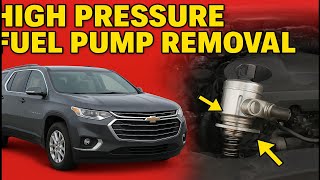
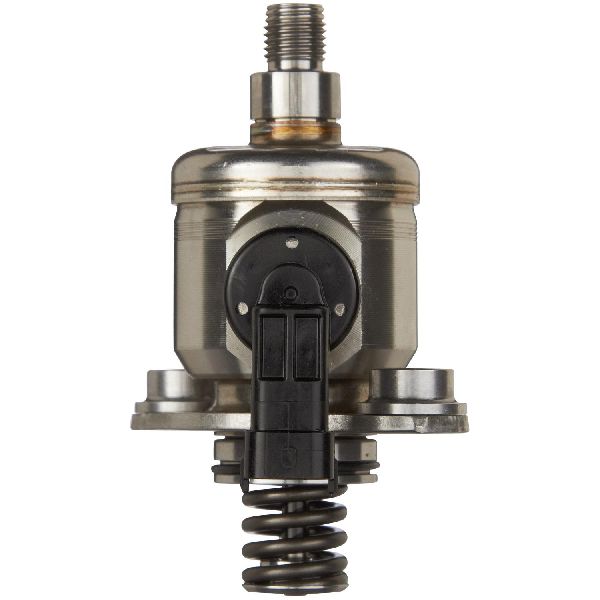
The 3.6L LFX V6 is a Gasoline Direct Injection (GDI) engine. Unlike older fuel systems, it uses two fuel pumps: a low-pressure pump in the gas tank (supplying 45-60 PSI) and a high-pressure fuel pump (HPFP) mounted on the engine that boosts pressure to over 2,000 PSI. The HPFP is mechanically driven by the camshaft and is a known failure point on this engine family across many GM vehicles. Code P0089 on the LFX engine is almost always related to a performance issue with this high-pressure pump, not the in-tank pump.
Symptoms You May Notice
- Check Engine Light is on
- Reduced engine power or 'limp mode'
- Engine stumbles or hesitates during acceleration
- Rough or unstable idle
- Engine stalling, especially under load or when coming to a stop
- Long crank times or difficulty starting
- Noticeable decrease in fuel economy
- Strong smell of fuel from the engine bay or exhaust
- Strong smell of gasoline on the engine oil dipstick (key indicator of HPFP failure)
- Black smoke from the exhaust
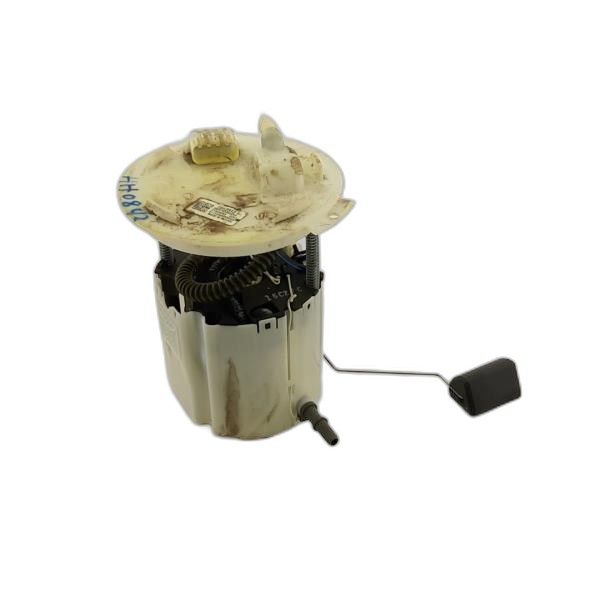
- Replacing the in-tank (low-pressure) fuel pump when the high-pressure fuel pump (HPFP) is the actual cause.
- Replacing the fuel rail pressure sensor without first verifying its readings with a scan tool and checking the connector for corrosion per TSB #20-NA-197.
Most Likely Causes
- Failing High-Pressure Fuel Pump (HPFP) 🔴 High Probability The HPFP is a well-documented common failure item on the GM 3.6L LFX engine family due to the high stress it operates under. A safety recall (GM #18268 / NHTSA #18V358) was issued for some models due to improperly welded pumps that could crack. Manufacturer service bulletin TSB Bulletin #PIP6061 notes that electrical connection concerns at the high pressure fuel pump can also set P0089, requiring an inspection of terminals and the harness.
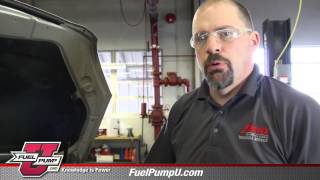
How to confirm: Use a scan tool to monitor 'Desired Fuel Rail Pressure' vs. 'Actual Fuel Rail Pressure'. If the actual pressure cannot keep up with the desired pressure, especially when revving the engine or under load 🎬 Watch: A pro mechanic's guide to diagnosing GM high-pressure pumps., the HPFP is likely weak. The most definitive sign is a strong gasoline smell on the engine oil dipstick, which confirms an internal seal failure.
Typical fix: Replace the high-pressure fuel pump, the one-time-use high-pressure fuel line, and the pump's roller tappet/follower. An oil and filter change is mandatory to remove fuel-contaminated oil.
Est. part cost: $200-$600 - Faulty Fuel Rail Pressure Sensor 🟡 Medium Probability The sensor and its connector are located in a high-heat area. GM issued TSB #20-NA-197 for corrosion and moisture intrusion in the sensor connector on 2016-2021 models, which can cause this code. Additionally, TSB Bulletin #PIP5988 suggests that for some GM vehicles, technicians should investigate replacing the fuel rail rather than the injection pump for DTC P0089.
How to confirm: With the engine off (but ignition on), the scan tool should show a plausible pressure reading. If it's erratic, reads zero, or is maxed out, the sensor is likely bad. Inspect the connector for green or white corrosion per TSB #20-NA-197.
Typical fix: Replace the fuel rail pressure sensor. If the connector is corroded, clean it and apply dielectric grease or replace the pigtail connector.
Est. part cost: $50-$150 - Leaking Fuel Injector(s) ⚪ Low Probability Sticking or leaking injectors are a known issue on some 3.6L engines, causing a loss of rail pressure. GM TSB #PIP4964F addresses this on related platforms.
How to confirm: This is harder to diagnose. It may be accompanied by cylinder-specific misfire codes (e.g., P0301, P0302). A strong smell of fuel in the engine oil is a major clue (though more often from the HPFP). A professional may need to perform an injector balance test.
Typical fix: Replace the faulty fuel injector(s) and change the engine oil if it's contaminated with fuel.
Est. part cost: $70-$200 per injector - Failing Low-Pressure (In-Tank) Fuel Pump ⚪ Low Probability While less common for P0089, the in-tank pump can fail. TSB #18-NA-103 notes failures on these trucks in cold weather, though this usually sets a P0087 (low pressure) code.
How to confirm: Use a scan tool to check the low-side fuel pressure sensor reading or use a mechanical gauge on the low-pressure line. The low-pressure pump must supply a steady pressure (typically 45-60 PSI) to the HPFP. If pressure is low, the in-tank pump is the problem.
Typical fix: Replace the in-tank fuel pump module. This requires dropping the fuel tank.
Est. part cost: $200-$450
Rare But Worth Checking
- Worn Camshaft Lobe: The HPFP is driven by a specific lobe on the camshaft. Extreme wear on this lobe can prevent the pump from generating sufficient pressure. TSB Bulletin #PIP5203C notes that an incorrect intake camshaft or camshaft actuator sprocket can lead to a service engine light with code P0089.
- Faulty Engine Control Module (ECM): It is extremely rare for the ECM to be the cause. All other possibilities should be exhausted before considering ECM replacement.
- Wiring Harness Chafing: On some GM vehicles with the 3.6L LFX, TSB PI0631H was issued for the engine harness rubbing against the transmission bellhousing, causing shorts in the fuel pressure sensor circuit. While not specific to the Colorado, it's a possibility.
Diagnosis Steps
- Connect a diagnostic scan tool capable of reading live engine data.
- Check for any other stored trouble codes, paying close attention to P0087, P0191, and misfire codes.
- Monitor the 'Desired Fuel Rail Pressure' and 'Actual Fuel Rail Pressure' PIDs. They should be very close to each other at idle (around 500-800 PSI).
- Pull the engine oil dipstick and smell it for gasoline. A strong fuel smell is a near-certain indicator of a failed internal seal on the HPFP.
- While safely parked, briefly rev the engine to 2500-3000 RPM. The actual pressure should closely follow the desired pressure as it increases. A significant lag or inability for the actual pressure to rise points to a weak HPFP or fuel restriction.
- Inspect the wiring and connector for the Fuel Rail Pressure Sensor for corrosion or damage, as noted in TSB #20-NA-197.
- If the actual pressure reading is erratic, stuck at a specific value, or seems illogical, suspect the fuel rail pressure sensor.
- If the high-pressure side seems okay, check the low-pressure fuel system for adequate pressure (45-60 PSI) feeding the HPFP.
Parts You'll Likely Need
- High-Pressure Fuel Pump (HPFP)
(OEM #12678535 (supersedes 12641847, 12633115, 12639694))— This is the most frequent point of failure for code P0089 on the 3.6L LFX engine.
Trusted brands: ACDelco, Bosch, GM Genuine
OEM price range: $400-$600
Aftermarket price range: $200-$400 - High-Pressure Fuel Line (Pump to Rail)
(OEM #12639208)— This is a one-time-use, torque-to-yield part. It MUST be replaced any time it is disconnected to ensure a safe, leak-free seal.
Trusted brands: ACDelco, Dorman
OEM price range: $30-$60
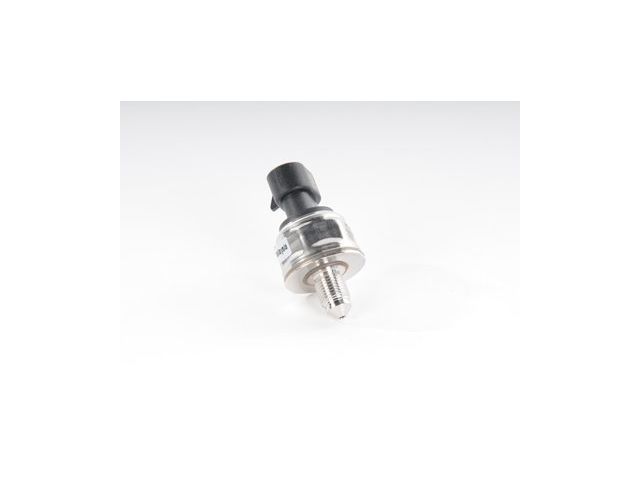
Aftermarket price range: $20-$40 - Fuel Rail Pressure Sensor
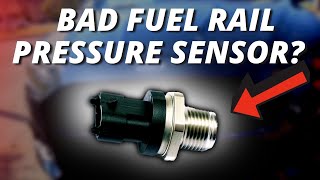
(OEM #12651990)— This sensor can fail or its connector can corrode, sending incorrect data to the ECM and causing the code. 🎬 Watch: Common symptoms of a failing fuel rail pressure sensor.
Trusted brands: ACDelco, Bosch
OEM price range: $80-$150
Aftermarket price range: $50-$100
Related Codes That Often Appear With This One
- P0087 — Stands for 'Fuel Rail Pressure Too Low'. An erratically failing HPFP can cause pressure to swing from too high to too low, setting both codes.
- P0191 — Stands for 'Fuel Rail Pressure Sensor Circuit Range/Performance', indicating a potential issue with the sensor or its wiring, which can be a direct cause of P0089. TSB #20-NA-197 addresses this combination of codes.
- P0300-P0306 — Cylinder misfire codes can occur because incorrect fuel pressure leads to poor combustion.
Technical Service Bulletins (TSBs) & Recalls
- TSB #20-NA-197: Addresses MIL illumination with various fuel pressure codes (including P0089 and P0191) due to moisture and corrosion in the fuel rail pressure
- TSB Bulletin #PIP6061: Notes that electrical connection concerns at the high pressure fuel pump may set codes P0089, P0090, P00C6, P163A, and/or P228C.
- TSB Bulletin #PIP5988: Advises technicians not to replace the injection pump for DTCs P0089 and P2293, but to replace the fuel rail instead.
- TSB Bulletin #PIP5203C: Indicates that P0089 and P228D may be set due to an incorrect intake camshaft or camshaft actuator sprocket.
Platform-Specific Known Issues
- Owner Experience: HPFP Failure: A user on the Camaro5 forum with the same LFX engine reported getting P0089 along with misfire codes and a strong gas smell. This is a classic presentation of a failed high-pressure fuel pump leaking fuel.
- Owner Experience: DIY HPFP Replacement: On an HHR forum, a user with a direct-injection GM engine fixed a P0089 and no-start condition by replacing the high-pressure fuel pump themselves. This confirms the HPFP as the direct cause and shows it can be a DIY job for the mechanically inclined.
Mechanic-Grade Diagnostic Values
- Low-Pressure Fuel System Pressure (at idle) — expected: 55-62 PSI. Failure: Pressure significantly below this range points to a weak in-tank fuel pump or a clogged fuel filter.
- High-Pressure Fuel Rail Pressure (at idle) — expected: 429-600 PSI (2.96-4.14 MPa). Failure: Readings that are unstable or significantly lower than desired pressure indicate a weak HPFP or sensor issue.
- High-Pressure Fuel Rail Pressure (light load) — expected: Up to ~1400 PSI. Failure: If the actual pressure cannot rise to meet the desired pressure under load, the HPFP is likely failing.
- Fuel Rail Pressure Sensor Signal Voltage (Engine Running) — expected: Voltage should fluctuate as fuel pressure changes.. Failure: A flat, unchanging voltage (e.g., stuck at 4.8V) while the engine is running indicates a failed sensor.
- Fuel Rail Pressure Sensor 5V Reference Circuit — expected: ~5.0 Volts. Failure: No voltage or significantly low voltage with the key on (engine off) points to a wiring or ECM issue, not a bad sensor.
- Sensor Ground Circuit Resistance — expected: Less than 5.0 Ohms. Failure: A reading higher than 5.0 Ohms to a known good chassis ground indicates high resistance or an open in the ground circuit for the sensor.
Scan Tool Commands That Help
- GDS2 / Tech2: Fuel Pressure Control — To manually command specific fuel pressures and observe if the HPFP and sensor respond. This helps isolate a weak pump from a non-responsive sensor.
- GDS2 / Tech2: Fuel Pump Driver / Control Module Test — To directly activate the low-pressure in-tank pump, bypassing the FPCM. This verifies if the pump itself is functional, isolating the problem to the pump or its control circuit.
- GDS2 / Tech2: Fuel System Depressurize — This is a critical safety function that must be used before servicing any high-pressure component (HPFP, rail, sensor, or lines) to safely bleed off pressure that can exceed 2,000 PSI.
- GDS2 / Tech2: Fuel Pump Trim Reset — This function should be performed after replacing the in-tank fuel pump or the Fuel Pump Control Module (FPCM) to clear learned fuel flow values and allow the system to recalibrate.
Wiring & Ground Locations
- SP-105 — Driver's side of the engine bay, near the battery. Requires removing the battery and its box for access.. This is a ground splice pack, not a direct-to-frame ground. It is the grounding point for the low-pressure fuel pump and its relay. Corrosion or poor contact in this splice pack can cause low fuel supply to the HPFP, mimicking other failures.
- G107 — On the front of the right (passenger side) cylinder head.. This is a primary engine ground for the 3.6L LFX. A poor connection here can cause erratic behavior from various engine sensors that rely on it for a clean ground reference.
- Engine Harness Chafe Point — Area where the main engine wiring harness passes by the transmission bellhousing.. TSB PI0631H documents that the harness can rub through on the transmission case, causing shorts in various circuits, including those for fuel system sensors. This can cause intermittent and hard-to-diagnose codes.
- Fuel Rail Pressure Sensor Connector — On the fuel rail, under the intake manifold.. This 3-wire connector is a known weak point for corrosion per TSB #20-NA-197. A replacement pigtail is available (GM P/N 19367009 or aftermarket equivalents like Echlin EC10).
"I Checked Everything" — The Actual Cause
- While a smoke test is not used for this code, a similar pattern exists where mechanical pressure tests appear normal. The root cause can be a corroded electrical connector at the fuel rail pressure sensor, as detailed in TSB #20-NA-197. The pump and sensor may be mechanically sound, but the ECM receives faulty data due to high resistance in the connector, leading to a P0089 code.
OEM Part Supersession History
12641847, 12633115, 12639694→12678535— Design revisions by GM to improve the reliability of the high-pressure fuel pump for the LFX engine.12626234, 12639260, 12647344→12658552— Represents another series of design consolidations and reliability improvements by GM for the 3.6L LFX HPFP, used in other applications like Cadillac.
Heads up: While for the same LFX engine family, always verify the correct top-level part number by VIN, as different vehicle platforms may have slightly different pump configurations.
Model Year Variations Within This Range
- 2015-2016: These model years exclusively use the 3.6L LFX V6 engine. Starting in 2017, the Colorado received the updated LGZ V6, which features different internal components, Active Fuel Management (AFM), and is not parts-compatible with the LFX.
Diagnostic Flowchart
Other Known Issues on This Vehicle
Issues unrelated to this code that are worth knowing about as an owner of this generation:
- Torque Converter Shudder 🟠 Medium — Very common issue, typically appearing between 25,000 and 80,000 miles. Feels like driving over rumble strips during light acceleration. (Ref: TSB #18-NA-355 (and others) recommend a specific transmission fluid exchange with a new type of fluid (Mobil 1 Synthetic LV ATF HP) to resolve the issue.)
- Timing Chain Stretch 🔴 High — A known issue on the 3.6L engine family, though less frequent on the LFX than earlier versions. Can occur on higher mileage vehicles (100k+ miles), especially with poor oil change history.
- Loss of Electric Power Steering 🔴 High — More common on 2015 models. Can result in a sudden loss of steering assist while driving. (Ref: Recall #15595A (NHTSA #16V054) was issued to replace the steering gear torque sensor cover assembly due to a poor electrical connection.)
- Infotainment System Glitches 🟡 Low — Common complaints of the screen freezing, randomly changing stations, or becoming unresponsive.
Used vs. New Parts: Buying Guide for This Vehicle
When a used part is the smart pick: For this specific repair, buying used parts is not recommended for the core components. A used part may be considered for non-wear items like mounting brackets if they were damaged during repair, but not for the pump or sensor itself.
Donor-vehicle mileage cap: roughly under 80000 miles for the part to have meaningful remaining life.
What to inspect on the donor part:
- If considering a used High-Pressure Fuel Pump (HPFP), it should be from a donor vehicle with less than 80,000 miles.
- Visually inspect the pump housing for any cracks or corrosion.
- Check that the electrical connector pins are clean and straight.
- CRITICAL: Inspect the cam follower roller on the bottom of the pump. It must be perfectly smooth and spin freely. Any scoring or flat spots means the part should be rejected.
OEM-only on this vehicle (don't cheap out):
- High-Pressure Fuel Line (Pump to Rail): This is a one-time-use, torque-to-yield part. It must be replaced with a new part (OEM or equivalent) whenever it is loosened to prevent catastrophic, high-pressure fuel leaks.
- High-Pressure Fuel Pump (HPFP): Due to its high failure rate and the critical role it plays, a new OEM (ACDelco, GM Genuine) or top-tier aftermarket (Bosch) pump is strongly recommended over a used unit.
Aftermarket brands forum-validated for this vehicle:
- Bosch (for HPFP and Fuel Rail Pressure Sensor)
- ACDelco / GM Genuine (OEM)
Real Owner Stories
Aggregated from forums and TSBs cited above. Mileages and costs reflect what owners reported in those sources.
2012-2015 Chevrolet Camaro 3.6L LFX V6
Symptoms: Misfire in 3 cylinders, strong gas smell, and a P0089 code.
What fixed it: Replacement of the high-pressure fuel pump (HPFP).
Source hint: Camaro5.com - 'Missfire in 3 cilynders, strong gas smell, P0089 code'
Chevrolet HHR (GM Direct-Injection Engine)
Symptoms: P0089 and P0304 codes along with a no-start condition.
What fixed it: The owner replaced the high-pressure fuel pump themselves to resolve the no-start and the codes.
Source hint: Chevy HHR Network - 'P0089 and P0304 plus no start condition'
Documented NHTSA Reports
An owner reported a scary incident where the vehicle could not maintain the speed limit and retrieved codes P228D and P0089 at 48,683 miles (NHTSA ODI #11066770). Another report (NHTSA ODI #11591751) describes a vehicle that would not accelerate past 9 mph, with technicians finding codes P0068, P0089 for the high pressure fuel pump, and P0101.
Related OBD-II Codes
Frequently Asked Questions
Is there a recall for the high-pressure fuel pump on my 2015-2016 Chevrolet Colorado?
My 2016 Colorado has a P0089 code and the connector looks corroded. Is there a specific bulletin for this?
Why does my engine oil smell like gasoline along with the P0089 code?
What parts should I replace if the HPFP has failed on my Colorado?
Can a bad in-tank pump cause P0089 in cold weather?
Is the P0089 code related to the 'rumble strip' feeling I have while driving?
Helpful Videos
Used OEM Parts in Stock
New Aftermarket Parts Available


The information in this article is provided for general reference and educational purposes only. Vehicle specifications, procedures, and part compatibility can vary by production date, trim level, and region. Always consult your vehicle's factory service manual and verify part numbers before purchasing or performing repairs. Safety-critical components such as airbags, seat belts, and braking systems should be installed by a qualified professional.
- Chevrolet Colorado:
- 🎬 Helpful Videos
- 🛍️ Shop This Part
- What's Unique About the 2015-2016 Chevrolet Colorado
- Symptoms You May Notice
- Most Likely Causes
- Rare But Worth Checking
- Diagnosis Steps
- Parts You'll Likely Need
- Related Codes That Often Appear With This One
- Technical Service Bulletins (TSBs) & Recalls
- Platform-Specific Known Issues
- Mechanic-Grade Diagnostic Values
- Scan Tool Commands That Help
- Wiring & Ground Locations
- "I Checked Everything" — The Actual Cause
- OEM Part Supersession History
- Model Year Variations Within This Range
- Diagnostic Flowchart
- Other Known Issues on This Vehicle
- Used vs. New Parts: Buying Guide for This Vehicle
- Real Owner Stories
- 2012-2015 Chevrolet Camaro 3.6L LFX V6
- Chevrolet HHR (GM Direct-Injection Engine)
- Documented NHTSA Reports
- Related OBD-II Codes
- Frequently Asked Questions
- 🎟️ Get 5% Off