

P0088 on 2007-2010 Saturn Sky 2.0L Turbo: Fuel Rail Pressure Too High Causes and Fixes
On the Saturn Sky 2.0L Turbo, code P0088 almost always points to a faulty high-pressure fuel pump (HPFP) or a bad fuel rail pressure sensor. The HPFP (OEM# 12641847) is the most common failure. The FRP sensor (OEM# 12621292) is the second most likely cause. Expect to pay $250-$500 for an OEM pump and $70-$150 for a sensor.
- P0088 on your Saturn Sky means the high-pressure fuel system is running at a pressure that is too high.
- The most likely cause is a failing High-Pressure Fuel Pump (HPFP), followed by a faulty Fuel Rail Pressure (FRP) sensor.
- Check the wiring harness on top of the engine for rodent damage before replacing parts.
- This is a common issue shared with platform mates like the Pontiac Solstice GXP, Chevy Cobalt SS, and HHR SS.
- While some pump noise ('crickets') is normal, a loud whine is a sign of failure.
What's Unique About the 2007-2010 Saturn Sky
The Saturn Sky's 2.0L LNF engine uses a Spark Ignited Direct Injection (SIDI) fuel system. Unlike traditional port injection, SIDI uses two fuel pumps: a low-pressure pump in the tank and a high-pressure fuel pump (HPFP) driven by the camshaft. This system operates at extremely high pressures, up to 2,176 PSI. Code P0088 specifically relates to a problem within this high-pressure circuit, which is a known failure point on the LNF engine platform found in the Sky, Solstice, Cobalt SS, and HHR SS.
Symptoms You May Notice
- Check Engine Light is on
- Reduced engine power or entering 'limp mode'
- Engine hesitation or stumbling during acceleration
- Rough or unstable idle
- Hard starting
- Decreased fuel economy
- Black smoke from the exhaust
- Strong smell of raw fuel, especially near the engine bay
- A loud, high-pitched whining or 'cricket' sound from the engine, indicating a failing HPFP
- Replacing the in-tank (low-pressure) fuel pump. This code is specific to the high-pressure side of the fuel system, so the low-pressure pump is not the cause.
Most Likely Causes
- High-Pressure Fuel Pump (HPFP) Failure 🔴 High Probability The LNF engine's HPFP is a mechanical pump driven by a camshaft lobe. The internal pressure regulator (solenoid) is the common failure point, causing it to produce excessive pressure. This is a widely documented failure on the LNF engine platform.
How to confirm: Using a capable OBD-II scanner, monitor the desired vs. actual fuel rail pressure. If the actual pressure is consistently and significantly higher than desired (e.g., 2000+ PSI at idle when desired is ~315-400 PSI), and the fuel rail pressure sensor tests okay, the HPFP is the likely culprit. A change in the characteristic 'ticking' sound of the pump to a louder whine can also signify failure.
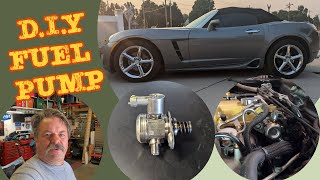
Typical fix: Replace the high-pressure fuel pump located on the rear of the cylinder head. 🎬 Watch: A step-by-step guide to replacing the Saturn Sky HPFP. The pump is often sold as a kit including a new gasket and bolts. One owner documented their experience replacing a failed pump with an aftermarket unit from ZZP for around $180, as opposed to an OEM Bosch pump which can cost over $500.
Est. part cost: $250-$500 - Faulty Fuel Rail Pressure (FRP) Sensor 🟡 Medium Probability
How to confirm: Monitor the fuel rail pressure reading with the key on, engine off. The pressure should be low. If it reads abnormally high without the engine running, the sensor is likely faulty. A good diagnostic tip from owners is to disconnect the sensor's electrical connector; if the engine runs better, it's a strong indication the sensor was sending bad data and forcing the ECM into a poor running condition.
Typical fix: Replace the fuel rail pressure sensor, which is typically threaded into the end of the fuel rail.
Est. part cost: $70-$150 - Wiring or Connector Issue ⚪ Low Probability Rodents are known to build nests on top of the engine and can chew through the wiring harnesses for the FRP sensor or HPFP solenoid. This can cause a short-to-power, sending a false high-voltage signal to the ECM and triggering a P0088 code.
How to confirm: Visually inspect the wiring harness and connectors for the fuel rail pressure sensor and the high-pressure fuel pump. Look for any signs of rodent damage, chewing, corrosion, or loose pins. Use a multimeter to check for a stable 5-volt reference and good ground at the FRP sensor connector.
Typical fix: Repair the damaged section of the wiring harness or clean/replace the faulty connector.
Est. part cost: $10-$50
Rare But Worth Checking
- Stretched Timing Chain: While less common, a significantly stretched timing chain can affect the camshaft's position, which in turn drives the HPFP. This can lead to incorrect pump timing and pressure regulation issues. This cause is more likely if other timing-related codes, such as P0016, are also present.
- Powertrain Control Module (PCM) Fault: This is extremely rare. Before condemning the PCM, all other possibilities, including the pump, sensor, and wiring, must be exhaustively ruled out.
Diagnosis Steps
- Connect an OBD-II scanner and confirm P0088 is the active code. Note any other codes present.
- Access live data on the scanner. Monitor 'Desired Fuel Rail Pressure' and 'Actual Fuel Rail Pressure'.
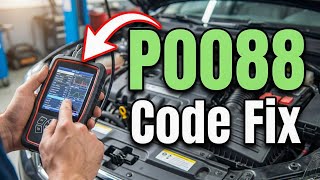
- With the engine idling, compare the two values. If the actual pressure is significantly higher than the desired pressure (e.g., desired is 315-400 PSI, actual is 2000+ PSI), a high-pressure fault is confirmed. 🎬 See how to diagnose and fix a P0088 high pressure code.
- Turn the engine off. With the key in the 'On' position, observe the actual fuel rail pressure reading. It should be low (under 100 PSI). If it reads very high, the Fuel Rail Pressure (FRP) sensor is likely faulty or its circuit is shorted.
- If the sensor reading seems plausible, pop the hood and carefully inspect the wiring harness on top of the engine, especially around the HPFP and FRP sensor, for any signs of chewing, fraying, or corrosion from rodent damage.
- Listen to the HPFP while the engine is running. While a light ticking ('crickets') is normal for these pumps, a very loud whine or grinding noise indicates a mechanical failure within the pump.
- If the wiring is intact and the FRP sensor tests good (or was replaced), the failure is almost certainly the High-Pressure Fuel Pump (HPFP). The internal regulator is not serviceable separately.
- Before replacing the HPFP, relieve the fuel pressure in the system by pulling the fuel pump fuse and running the engine until it stalls. Be aware that the high-pressure side can retain significant pressure even after this step.
Parts You'll Likely Need
- High-Pressure Fuel Pump
(OEM #12641847)— This is the most common failure point for code P0088 on the LNF engine. The pump's internal regulator fails, causing it to over-pressurize the fuel rail.
Trusted brands: ACDelco (OEM), Bosch (OEM), ZZPerformance (Aftermarket)
OEM price range: $300-$500
Aftermarket price range: $180-$350 - Fuel Rail Pressure Sensor
(OEM #12621292)— This sensor provides the pressure reading to the ECM. If it fails and sends an erroneously high signal, it will trigger P0088. It is the second most likely cause.
Trusted brands: ACDelco (OEM), Bosch, Standard Motor Products
OEM price range: $80-$150
Aftermarket price range: $50-$100
Related Codes That Often Appear With This One
- P0172 — System Too Rich (Bank 1). This can occur because the excessively high fuel pressure forces more fuel through the injectors than the ECM anticipates, leading to a rich running condition.
- P0089 — Fuel Pressure Regulator Performance. This code is closely related as it indicates a problem with the fuel pressure control, often pointing back to the same components (HPFP or sensor).
Technical Service Bulletins (TSBs) & Recalls
- 09-06-01-004: This TSB addresses the installation of an updated insulator for the high-pressure fuel pump to reduce normal operating noise, but it is not a fix for the P0088 code itself.
Platform-Specific Known Issues
- The LNF engine's HPFP makes a characteristic ticking or 'cricket' noise during normal operation. Owners should be aware of this sound so as not to mistake it for a problem. However, a significant increase in volume or a change in the sound to a high-pitched whine can be a symptom of the pump failing.
- There is a Technical Service Bulletin (TSB 09-06-01-004) related to a fuel pump insulator. While this does not directly cause code P0088, it involves accessing the HPFP area to reduce noise and may be worth addressing during a pump replacement.
Mechanic-Grade Diagnostic Values
- Fuel Rail Pressure (FRP) Sensor Signal Voltage — expected: 0.5V to 4.5V (variable with pressure). Typically 1.5V - 1.8V with Key On, Engine Off.. Failure: Stuck at a constant high voltage (e.g., ~5.0V) or a value that doesn't correspond to pressure. A reading of 4.7V or higher for 0.5 seconds can trigger a fault code.
- Fuel Rail Pressure (FRP) at Idle — expected: Should fluctuate between approximately 315-400 PSI (2.17-2.75 MPa).. Failure: Consistently reading significantly higher than desired pressure, e.g., over 2000 PSI when 400 PSI is commanded.
- High-Pressure Fuel Pump (HPFP) Control Solenoid Resistance — expected: Approximately 0.3 to 0.6 ohms.. Failure: A reading significantly outside this range, such as a dead short (near 0 ohms) or an open circuit (infinite resistance), indicates a failed solenoid.
- FRP Sensor 5V Reference Voltage — expected: A steady ~5.0V at the sensor connector with the key on.. Failure: No voltage or significantly lower voltage, indicating a wiring or ECM issue.
Scan Tool Commands That Help
- Tech2 / GDS2: Fuel System Live Data Monitoring — This is the primary diagnostic function. Use it to monitor 'Desired Fuel Rail Pressure' vs. 'Actual Fuel Rail Pressure' in real-time. A large, persistent discrepancy where actual pressure is much higher than desired is the key indicator for P0088 causes.
Wiring & Ground Locations
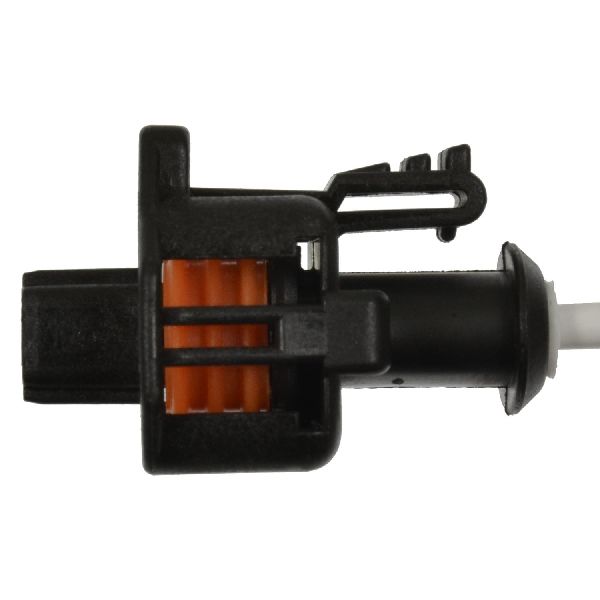
- Fuel Rail Pressure (FRP) Sensor Connector — On the end of the fuel rail, on the driver's side of the engine.. This 3-wire connector provides the signal, power, and ground for the FRP sensor. A forum user confirmed the wire colors and order: Blue/Black, Black/Blue, Yellow. Incorrect wiring of a pigtail replacement can cause short codes.
- G101 / G106 — G101 is at the front of the engine, lower block. It jumpers to G106 at the center of the frame cross rail under the crank pulley.. This ground point serves the Engine Control Module (ECM). A poor ground here can cause a host of sensor reading issues, including erratic signals from the fuel pressure sensor circuit.
- G102 — Located at the left rear of the engine.. This ground serves the ignition coils. While not directly related to fuel pressure, a poor ground in this area can create electrical noise that may interfere with sensitive sensor readings.
- G104 — Located at the right rear corner of the engine.. This is another critical engine ground. Verifying it is clean and tight is a fundamental step in diagnosing any electrical or sensor-related fault code on the engine.
Real Owner Repair Stories
- Cobalt SS Forum user (2008 HHR SS (same LNF engine and fuel system)) — Reduced power mode, codes P0087 (low pressure) and P0089. Scan tool showed only 70 PSI at idle.
❌ Tried (didn't work) Replaced the Fuel Rail Pressure sensor - this did not change the symptoms or readings.
✅ What actually fixed it The user planned to test the HPFP solenoid resistance (spec 0.3-0.6 ohms) and check for continuity on the ECM wiring to pins 5 and 73. While the final post wasn't made, the methodical diagnosis points away from the sensor and towards the pump, wiring, or ECM driver as the next logical steps, which is valuable information.
OEM Part Supersession History
12629135→12658478— GM part number update, likely for minor revisions or supplier changes. Functionally interchangeable for this application.
Heads up: Some vendors sell these as 'new takeoffs' from GM assembly line engines, which are new but don't come in retail packaging and may not include a new gasket or bolts.
Diagnostic Flowchart
Used vs. New Parts: Buying Guide for This Vehicle
When a used part is the smart pick: For this specific P0088 issue, buying a used High-Pressure Fuel Pump (HPFP) is generally NOT recommended. The HPFP is a known high-failure item on the LNF engine, and a used part from a junkyard carries a significant risk of having the same internal failure or a very short remaining service life. The cost of labor to replace it often makes gambling on a used pump unwise.
Donor-vehicle mileage cap: roughly under 30000 miles for the part to have meaningful remaining life.
What to inspect on the donor part:
- If considering a used pump, it should come from a very low-mileage, verified running vehicle that was wrecked.
- Avoid pumps from vehicles that sat for a long time, as internal seals can dry out.
- Inspect the electrical connector for corrosion and the pump body for any signs of physical damage.
OEM-only on this vehicle (don't cheap out):
- High-Pressure Fuel Pump (HPFP): While some aftermarket options exist, the OEM ACDelco/Bosch unit is the most reliable choice for a stock vehicle. A used pump is a major gamble.
- Fuel Rail Pressure (FRP) Sensor: Given the critical role and relatively low cost, using an OEM or reputable OE-supplier (like Bosch) sensor is strongly advised over a used or no-name aftermarket part.
Aftermarket brands forum-validated for this vehicle:
- ZZPerformance (ZZP): Offers both OEM-style replacement pumps and upgraded versions. They are a well-regarded vendor in the LNF community.
- WERKSracing: Offers upgraded HPFP options (e.g., LT1/LT4 pump conversions) for modified vehicles seeking higher fuel flow.
Brands owners have reported issues with on this vehicle:
- Unbranded, 'Made in China' clones sold on platforms like eBay or Amazon. These often use inferior materials and have a high failure rate. One seller specifically warns against these copies.
Real Owner Stories
Aggregated from forums and TSBs cited above. Mileages and costs reflect what owners reported in those sources.
2007-2010 Saturn Sky LNF 2.0L Turbo
Symptoms: Owner experienced fuel pressure codes (P0087/P0089, related to P0088) indicating a problem with the high-pressure fuel system.
What fixed it: The owner diagnosed and replaced the High-Pressure Fuel Pump (HPFP). The repair process is noted as being identical for a P0088 code.
Source hint: skyroadster.com forum thread titled 'P0087 & P0089 - How to replace High Pressure Fuel Pump'
2007-2010 Saturn Sky LNF 2.0L Turbo
Symptoms: Vehicle set a P0088 code due to a failing High-Pressure Fuel Pump.
What fixed it: Replaced the failed OEM High-Pressure Fuel Pump with an aftermarket unit from ZZPerformance.
Cost: $180-$180
Source hint: common_causes section of the article, describing an owner's experience with an aftermarket HPFP.
2007-2010 Saturn Sky LNF 2.0L Turbo
Symptoms: Check Engine Light with code P0088, possibly accompanied by a strong smell of raw fuel or other rich-running conditions.
What fixed it: Repaired a section of the wiring harness for the FRP sensor or HPFP solenoid that had been chewed through by rodents.
Cost: $10-$50
Source hint: common_causes section of the article, describing rodent damage to wiring.
Related OBD-II Codes
Frequently Asked Questions
I hear a 'cricket' or ticking sound from my engine. Is this related to the P0088 code?
Is there a TSB that fixes the P0088 fuel pressure issue on my Saturn Sky?
How can I definitively tell if my HPFP is bad versus the fuel rail pressure sensor?
Are there any reliable aftermarket High-Pressure Fuel Pumps for the LNF engine?
My friend's Pontiac Solstice GXP has the same P0088 code. Is it the same problem?
I found chewed wires on top of my engine. Could this cause a P0088 code?
Helpful Videos
Used OEM Parts in Stock
New Aftermarket Parts Available



The information in this article is provided for general reference and educational purposes only. Vehicle specifications, procedures, and part compatibility can vary by production date, trim level, and region. Always consult your vehicle's factory service manual and verify part numbers before purchasing or performing repairs. Safety-critical components such as airbags, seat belts, and braking systems should be installed by a qualified professional.
- Saturn Sky:
- 🎬 Helpful Videos
- 🛍️ Shop This Part
- What's Unique About the 2007-2010 Saturn Sky
- Symptoms You May Notice
- Most Likely Causes
- Rare But Worth Checking
- Diagnosis Steps
- Parts You'll Likely Need
- Related Codes That Often Appear With This One
- Technical Service Bulletins (TSBs) & Recalls
- Platform-Specific Known Issues
- Mechanic-Grade Diagnostic Values
- Scan Tool Commands That Help
- Wiring & Ground Locations
- Real Owner Repair Stories
- OEM Part Supersession History
- Diagnostic Flowchart
- Used vs. New Parts: Buying Guide for This Vehicle
- Real Owner Stories
- 2007-2010 Saturn Sky LNF 2.0L Turbo
- 2007-2010 Saturn Sky LNF 2.0L Turbo
- 2007-2010 Saturn Sky LNF 2.0L Turbo
- Related OBD-II Codes
- Frequently Asked Questions
- 🎟️ Get 5% Off