

P0088 on 2011-2015 Audi Q7 3.0T: Fuel Pressure Too High Causes and Fixes
For a 2011-2015 Audi Q7 3.0T, code P0088 is most often caused by a faulty fuel rail pressure sensor (G247) or a failing High-Pressure Fuel Pump (HPFP). Replacing the sensor is the most common starting point and costs around $50-$150 for the part. Diagnosis must begin with a scan tool to compare specified vs. actual fuel pressure.
- P0088 on a 2011-2015 Audi Q7 3.0T means fuel pressure is too high, which is a serious issue that should be addressed promptly.
- The most likely cause is a faulty fuel rail pressure sensor (G247), which is a relatively inexpensive part and a common failure item.
- Diagnosis should start by checking the sensor's reading with the engine off using a scan tool; a high reading indicates a bad sensor.
- If the sensor is good, the High-Pressure Fuel Pump (HPFP) is the next most likely cause.
- Due to the extreme pressures and fire risk, this repair is best left to a professional or a highly experienced DIY mechanic.
What's Unique About the 2011-2015 Audi Q7

The Audi 3.0T supercharged V6 engine (EA837) uses a sophisticated gasoline direct injection (GDI) system that relies on two fuel pumps: a low-pressure pump in the tank and a high-pressure fuel pump (HPFP) driven by the engine's camshaft. While P0088 is a generic code, on this specific platform, it often points to a conflict between the requested pressure and the actual reading from the fuel rail pressure sensor (G247). This makes diagnosing whether the fault lies with the sensor providing a false high reading or the HPFP's mechanical regulator actually creating excess pressure a key challenge. A strong smell of gasoline in the engine oil is a unique symptom on this engine that points towards a leaking HPFP.
Symptoms You May Notice

- Check Engine Light illuminated
- Engine running rough or misfiring
- Hesitation or stuttering during acceleration
- Reduced engine power and performance ('Limp Mode')
- Hard starting or long crank times
- Engine stalling
- High-pitched whining noise from the engine area
- Strong smell of gasoline in the engine oil
- Replacing the in-tank low-pressure fuel pump. This pump is responsible for supplying fuel to the HPFP, but it is rarely the cause of an over-pressure condition.
- Replacing the fuel injectors. While extremely high pressure can damage injectors over time, they are the victims of the high pressure, not the cause of it.
Most Likely Causes

- Faulty Fuel Rail Pressure Sensor (G247) 🔴 High Probability The G247 sensor is a common failure point on VAG engines of this era. It can send incorrect voltage signals to the ECM, leading the computer to believe the pressure is too high when it may be normal. This is a well-documented issue.
How to confirm: Using a diagnostic scan tool (like VCDS), compare the 'specified' vs. 'actual' fuel rail pressure readings with the Key On, Engine Off (KOEO). If the 'actual' pressure shows a high value (e.g., hundreds or thousands of PSI) when the engine is off, the sensor is faulty. An AudiWorld forum user noted that a reading of 121 bar with the engine off was a clear indicator of a bad sensor. Audi TSB 2027306/4 outlines a specific test procedure, advising that if the scan tool reading differs from a mechanical gauge by more than 5 bar (73 PSI), the sensor is likely bad.
Typical fix: Replace the fuel rail pressure sensor. The system must be depressurized first. The sensor is threaded into the fuel rail.
Est. part cost: $50-$150 - Failing High-Pressure Fuel Pump (HPFP) 🟡 Medium Probability The HPFP has an internal mechanism to regulate pressure. If this part of the pump fails or sticks, it can generate excessive pressure, overriding the ECM's commands. Another failure mode is the internal seals failing, causing fuel to leak into the crankcase and mix with the engine oil.
How to confirm: If the fuel pressure sensor is confirmed to be good (i.e., it reads near zero with engine off), but live data shows 'actual' pressure significantly exceeding 'specified' pressure while the engine is running, the HPFP's regulation is suspect. Additionally, check the engine oil dipstick for a strong gasoline smell, which indicates an internal HPFP leak.
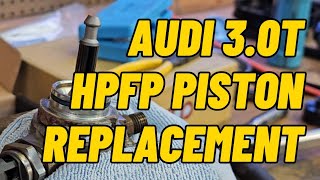
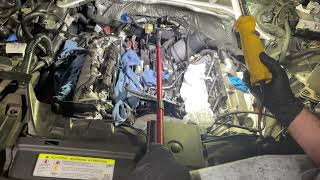
Typical fix: Replace the High-Pressure Fuel Pump. 🎬 Watch: Step-by-step guide to replacing the HPFP internal components. This is a significant job that requires removal of the supercharger. 🎬 See this walkthrough on how to remove the supercharger.
Est. part cost: $300-$600 - Wiring Harness Issue ⚪ Low Probability The wiring for the fuel pressure sensor runs through a hot engine bay, which can cause insulation to become brittle and wires to short over time, leading to erroneous signals.
How to confirm: Visually inspect the wiring and connector for the G247 sensor for any signs of damage, melting, or corrosion. Perform a continuity and short-to-ground/power test on the sensor's wiring harness as per the factory service manual. Resistance between the sensor connector and ECM should be less than 1.5 ohms.
Typical fix: Repair or replace the damaged section of the wiring harness or the connector pigtail.
Est. part cost: $20-$100
Rare But Worth Checking
- Blocked Fuel Return Line or Pressure Relief Valve: Although less common on GDI systems, a restriction in a pressure relief or return path could theoretically cause pressure to build up. This is more likely if other work was recently performed or if an HPFP failed and sent debris through the system.
- ECU Voltage Drop Issues: A specific TSB (2025746) mentioned by Ross-Tech suggests that on Q7 models, voltage drop issues related to the remote battery setup can sometimes cause this code to be stored without a real fuel system fault. This should be considered if fuel system checks reveal no faults.
Diagnosis Steps
- Connect a VAG-COM (VCDS) compatible scan tool to the OBD-II port.
- Check for stored codes. Note P0088 and any other codes present, such as P0087, P0191, or P2293.
- With the Key On, Engine Off (KOEO), monitor the live data for 'Fuel Rail Pressure (Actual)'. It should be very low (under 100 PSI / 7 Bar). If it reads a high value, the Fuel Rail Pressure Sensor (G247) is almost certainly faulty.
- If the KOEO reading is normal, start the engine and monitor both 'Specified' and 'Actual' fuel rail pressure at idle. At idle, pressure should be around 40-50 bar (580-725 PSI).
- If 'Actual' pressure is significantly and consistently higher than 'Specified' pressure, the issue is likely with the High-Pressure Fuel Pump's internal regulation.
- Remove the oil filler cap or dipstick and check for a strong smell of gasoline. If fuel odor is present, it's a strong indicator of a failed HPFP leaking internally into the crankcase.
- If the sensor and pump appear to be functioning, carefully inspect the wiring harness and connector for the G247 sensor for any signs of damage, corrosion, or loose connections.
- If the cause is still unclear, consider the possibility of a voltage drop issue as mentioned in TSB 2025746, especially if the battery is not in optimal condition.
Parts You'll Likely Need

- Fuel Rail Pressure Sensor
(OEM #06J906051D (supercedes 06J906051F, also see 06E906051K))— This sensor is the most common point of failure for a P0088 code on the 3.0T engine, as it can send false high-pressure readings to the ECM. Part number 06J906051D is a common revision, though 06E906051K is also used in this application.
Trusted brands: Bosch (OEM supplier), Genuine VW/Audi
OEM price range: $100-$180
Aftermarket price range: $50-$100 - High-Pressure Fuel Pump (HPFP)
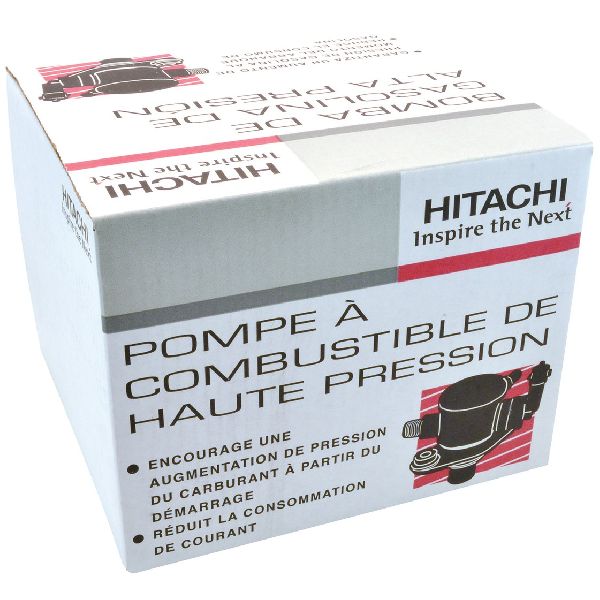
(OEM #07L127026AL)— If the sensor is good, the next likely culprit is the HPFP's internal regulator failing, causing it to produce excessive pressure or leak fuel into the oil. Replacement requires supercharger removal.
Trusted brands: Hitachi (OEM supplier), Pierburg, Genuine VW/Audi
OEM price range: $500-$700
Aftermarket price range: $300-$500
Related Codes That Often Appear With This One
- P0087 — Fuel Rail/System Pressure - Too Low. These codes can appear together if the HPFP or sensor is failing erratically, causing pressure to swing between being too high and too low.
- P0191 — Fuel Rail Pressure Sensor 'A' Circuit Range/Performance. This code specifically points to a problem with the sensor's signal, making it a strong companion code to P0088 when the sensor is the root cause.
- P2293 — Fuel Pressure Regulator 2 Performance. This code often appears with P0088 on gasoline direct injection engines, indicating a problem with the mechanical regulation of the HPFP.
Technical Service Bulletins (TSBs) & Recalls
- TSB 2027306/4: Details the diagnostic procedure for testing the Fuel Rail Pressure Sensor (G247) and its wiring when codes like P0087 or P0088 are present. It advises comparing scan tool data to a mechanical gauge; a difference over 5 bar suggests a sensor fault.
- TSB 2040752/10: Although often associated with low pressure (P0087), this TSB lists P0088 as a possible code related to HPFP failure and metallic particle contamination, outlining the extensive repair needed if metal is found.
- TSB 2025746: Notes that P0088 can sometimes be triggered by voltage drop issues on Q7 models due to their remote battery setup, a crucial check if no fuel system faults are found.
Platform-Specific Known Issues
- A Ross-Tech forum thread for a 2012 Q7 TDI with P0088 highlights the diagnostic process, showing how scan tool data (MVBs) are used to watch pressure rise during cranking, even though this case was for a diesel, the troubleshooting logic is similar.
- An AudiWorld forum user with a Q7 experiencing P0088 was advised to start by manually verifying fuel pressure to confirm the sensor's reading before suspecting the HPFP regulator or timing components.
Mechanic-Grade Diagnostic Values

- G247 Fuel Rail Pressure Sensor - Supply Voltage — expected: 4.8 - 5.2 V (between Pin 1 and Pin 3 on sensor connector, ignition on). Failure: Significantly lower or no voltage points to a wiring or ECM 5V reference circuit issue, not a bad sensor.
- High-Pressure Fuel System (Warm Idle) — expected: 40 - 50 bar (580 - 725 PSI). Failure: Consistently reading much higher than specified value on a scan tool points to HPFP regulation failure.
- Low-Pressure Fuel System (LPFP output) — expected: 4.0 - 7.0 bar (58 - 101 PSI). Failure: While not a direct cause of P0088, verifying the low-side pressure is a foundational diagnostic step.
- VCDS - Low-Pressure Fuel Pump Duty Cycle (Idle) — expected: Should be below 60%. Failure: A value consistently over 70% suggests the LPFP is working too hard, possibly due to a restriction, but is not a typical cause for P0088.
- Wiring Harness Resistance (Sensor to ECM) — expected: Max 1.5 Ohms. Failure: Higher resistance indicates corrosion or a damaged wire in the harness.
Hidden / Shadow Codes Worth Checking
- P008800: This is the VAG-specific version of the code often seen on VCDS or ODIS scanners. The '00' suffix indicates it's the primary fault type without additional subtype information, confirming it's a direct 'Too High' reading. (see via VCDS, ODIS, or other advanced VAG-compatible scan tools.)
- Freeze Frame Data: Not a code, but critical data stored with the P0088 fault. It will show the exact 'Specified' vs 'Actual' fuel pressure, engine RPM, load, and temperature at the moment the fault was triggered, which is invaluable for diagnosis. (see via VCDS, ODIS, or most professional scan tools.)
Scan Tool Commands That Help
- VCDS (VAG-COM): Advanced Measuring Values / Measuring Blocks — This is the primary diagnostic function. Log 'Fuel high pressure: specified value' and 'Fuel high pressure: actual value' in real-time (common groups are 106, 140, 141, or 230). A large, persistent deviation where 'actual' exceeds 'specified' is the key indicator.
- VCDS (VAG-COM): Output Tests — Can be used to cycle the fuel pressure regulating solenoid on the HPFP. Listening for an audible click can help verify if the solenoid is electrically responsive or completely dead.
- VCDS (VAG-COM): Heat Soak Test (Manual Procedure) — After getting the engine to full operating temperature, shut it off. Turn the ignition back on (KOEO) and monitor the 'Actual' fuel rail pressure. Due to heat expansion, the pressure should rise and hold steady. A rapid drop indicates a leak, while an unchanging or zero reading points to a sensor issue.
Wiring & Ground Locations
- Main Engine Ground Strap — A braided strap running from the engine block to the chassis frame rail, typically located to the left of the alternator.. A corroded or loose main engine ground can cause floating voltages and erratic signals for all engine sensors, including the G247 pressure sensor and HPFP regulator, mimicking component failure.
- Service Ground Disconnect — Under the driver's side dead pedal / floor covering, there is a main chassis ground connection point. Disconnecting this nut is a common technician trick to de-power the entire vehicle without accessing the battery under the seat.. Provides a safe and quick way to disconnect all electrical power before working on the fuel system or alternator.
- G247 Sensor Connector — On the end of the fuel rail, under the supercharger.. This is where voltage and resistance tests are performed. Pin 1 is 5V Reference, Pin 2 is Signal, and Pin 3 is Sensor Ground.
- Ground Point 640 — In the engine compartment on the left (driver's) side.. This is a specified grounding point for various engine bay components. Corrosion here could contribute to the electrical issues noted in TSB 2025746.
Real Owner Repair Stories
- Ross-Tech Forums User (2011 Audi Q5 2.0T (shares HPFP design principles)) — P0088 code (fuel pressure too high) appeared immediately after replacing the cylinder head and camshafts with aftermarket parts. The car ran smoothly but the actual fuel pressure was double the specified value.
❌ Tried (didn't work) Replacing the fuel pressure sensor (G247)., Replacing the HPFP with a new one (this corrected the pressure but caused poor running and hard starts).
✅ What actually fixed it The user reinstalled the original HPFP. They then physically rotated the entire HPFP housing to the limit allowed by its mounting bolts. This slightly retarded the pump's timing relative to the camshaft lobe, which brought the actual fuel pressure down enough to clear the P0088 code permanently. The root cause was suspected to be an out-of-spec aftermarket camshaft lobe profile. - AudiWorld Forums User (TDI) (Audi Q7 TDI (different engine, but relevant failure logic)) — P0088 and P0087 codes appeared after replacing the HPFP.
❌ Tried (didn't work) Replacing the HPFP (this fixed the original low-pressure code but created the new high-pressure code).
✅ What actually fixed it The fuel rail pressure relief valve was found to be blocked, likely by debris from the original HPFP failure. Replacing the relief valve resolved the P0088 code.
OEM Part Supersession History
07L127026J, 07L127026Q, 07L127026AB, 07L127026AK→07L127026AL— Standard part evolution for improved reliability and performance.
Model Year Variations Within This Range
- 2014-2015: Later models in this range could be equipped with the 'EA837 EVO' engine (e.g., CREC engine code), which featured updates like combined direct and port injection. While the fundamental HPFP system is the same, be aware of minor engine code differences when ordering parts.
Diagnostic Flowchart
Other Known Issues on This Vehicle
Issues unrelated to this code that are worth knowing about as an owner of this generation:
- Water Pump & Thermostat Failure 🔴 High — Common, especially on pre-2013 models. Often fails between 50k-100k miles. Can cause overheating. (Ref: Multiple service actions and part updates were issued over the years.)
- PCV Valve / Oil Separator Failure 🟠 Medium — Common failure around 60,000-80,000 miles. Can cause high oil consumption, rough idle, and whistling noises. Replacement requires supercharger removal.
- Carbon Buildup on Intake Valves 🟠 Medium — Inevitable on all direct-injection engines. Typically requires cleaning every 60k-80k miles to prevent misfires, hesitation, and performance loss.
- Timing Chain Tensioner Wear 🔴 High — Less common than other issues, but severe. A 1-3 second rattle on cold startup is the primary symptom. If ignored, can lead to catastrophic engine failure. Repair is engine-out and very expensive. (Ref: TSB 151628 addresses this symptom.)
- Supercharger Intercooler Leaks 🟠 Medium — The two intercooler cores housed within the supercharger can develop leaks, allowing coolant to be ingested by the engine. This can cause misfires (especially in cylinders 3 and 6) and unexplained coolant loss.
Used vs. New Parts: Buying Guide for This Vehicle
When a used part is the smart pick: For purely mechanical, non-wear items. A complete used fuel rail assembly, including the rail itself and lines, can be a cost-effective replacement if the original is damaged or suspected of being clogged. However, the electronic sensors on it should be viewed with caution.
Donor-vehicle mileage cap: roughly under 80000 miles for the part to have meaningful remaining life.
What to inspect on the donor part:
- For a fuel rail, ensure there is no visible corrosion, damage to the threads, or signs of being dropped.
- For an HPFP, check the cam follower bucket interface for scoring or wear. Avoid any pump that shows signs of being opened or tampered with.
- Ask for the donor vehicle's VIN to check for accident history. Avoid parts from major collision vehicles.
OEM-only on this vehicle (don't cheap out):
- Fuel Rail Pressure Sensor (G247): Forum and repair stories strongly indicate that cheap aftermarket sensors are unreliable and fail quickly. It is critical to use a Genuine Audi/VW part or one from the OEM supplier (Bosch).
Aftermarket brands forum-validated for this vehicle:
- Hitachi (OEM supplier for the HPFP)
- Bosch (OEM supplier for the G247 sensor)
- Pierburg (Reputable supplier of fuel system components)
Brands owners have reported issues with on this vehicle:
- Unbranded, no-name electronic sensors (like the G247) from online marketplaces like eBay or AliExpress. They are a common source of repeat failures.
Real Owner Stories
Aggregated from forums and TSBs cited above. Mileages and costs reflect what owners reported in those sources.
2012 Audi Q7 3.0T
Symptoms: The owner was advised to verify fuel pressure manually after the vehicle triggered a P0088 code to differentiate between a sensor error and a physical regulator or timing issue.
What fixed it: Diagnostic verification of the fuel rail pressure sensor (G247) readings against a mechanical gauge.
Source hint: AudiWorld Forums
2012 Audi Q7 TDI
Symptoms: Crank but no start condition with extreme pressure readings reported to the scan tool during the diagnostic process.
What fixed it: Troubleshooting the high pressure readings using MVBs (Measured Value Blocks) on a scan tool to monitor pressure rise during cranking.
Source hint: Ross-Tech Forums - Q7 TDI P0088 Crank no start
Related OBD-II Codes
Frequently Asked Questions
My 2012 Q7 is showing P0088; is there a TSB for testing the fuel pressure sensor?
Can a weak battery cause a P0088 code on my Audi Q7?
I have a P0088 code and smell gas in my oil. What does this mean for my 3.0T engine?
How can I tell if my G247 sensor is bad without a mechanical gauge?
Does the P0088 code on a 3.0T Q7 require removing the supercharger for repair?
Is P0088 related to metallic contamination in the fuel system?
Helpful Videos
Used OEM Parts in Stock


New Aftermarket Parts Available

The information in this article is provided for general reference and educational purposes only. Vehicle specifications, procedures, and part compatibility can vary by production date, trim level, and region. Always consult your vehicle's factory service manual and verify part numbers before purchasing or performing repairs. Safety-critical components such as airbags, seat belts, and braking systems should be installed by a qualified professional.
- Audi Q7:
- 🎬 Helpful Videos
- 🛍️ Shop This Part
- What's Unique About the 2011-2015 Audi Q7
- Symptoms You May Notice
- Most Likely Causes
- Rare But Worth Checking
- Diagnosis Steps
- Parts You'll Likely Need
- Related Codes That Often Appear With This One
- Technical Service Bulletins (TSBs) & Recalls
- Platform-Specific Known Issues
- Mechanic-Grade Diagnostic Values
- Hidden / Shadow Codes Worth Checking
- Scan Tool Commands That Help
- Wiring & Ground Locations
- Real Owner Repair Stories
- OEM Part Supersession History
- Model Year Variations Within This Range
- Diagnostic Flowchart
- Other Known Issues on This Vehicle
- Used vs. New Parts: Buying Guide for This Vehicle
- Real Owner Stories
- 2012 Audi Q7 3.0T
- 2012 Audi Q7 TDI
- Related OBD-II Codes
- Frequently Asked Questions
- 🎟️ Get 5% Off