

OBD-II Code P2293: Fuel Pressure Regulator 2 Performance
What P2293 means, why it triggers, and how to fix it
What Does P2293 Mean?

The Powertrain Control Module (PCM) detected a fuel pressure mismatch. It commanded a specific pressure, but the actual pressure measured in the fuel rail is either too high or too low. This code primarily affects gasoline direct injection (GDI) and modern diesel engines relying on high-pressure fuel systems.
Technical definition: Fuel Pressure Regulator 2 Performance. The PCM detected that actual fuel pressure from the rail sensor does not match the desired commanded pressure. The '2' designates the high-pressure side of the fuel system, typical in direct injection engines.
Can I Drive With P2293?
No — Do Not Drive. This code indicates a serious fuel delivery problem that causes stalling, a no-start condition, or severe engine damage. Stop driving immediately. Continuing to drive destroys the high-pressure fuel pump, fuel injectors, or catalytic converter due to extreme air-fuel imbalances.
Common Causes

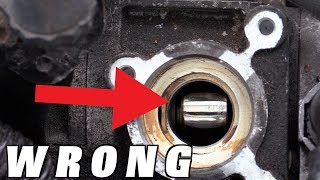
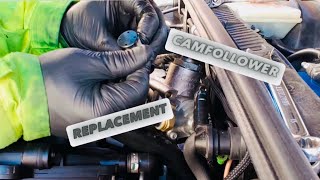
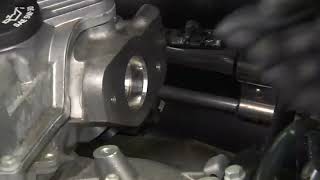
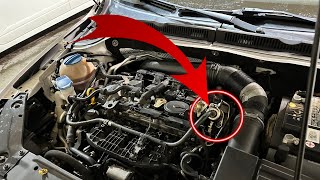
- Worn High-Pressure Fuel Pump (HPFP) Cam Follower (Very Common) — On Volkswagen and Audi 2.0T FSI models, a metal tappet called a cam follower drives the HPFP. This part erodes rapidly, preventing the pump from generating enough pressure and triggering the code. 🎬 Watch: How to diagnose a failed cam follower and camshaft.
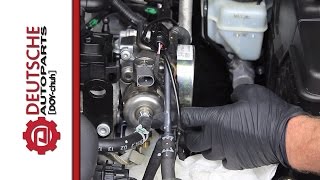
- Failed High-Pressure Fuel Pump (HPFP) (Common) — The high-pressure fuel pump fails internally. A worn pump cannot supply the 1,500-2,000+ PSI required for a direct injection engine to run efficiently.
- Faulty Fuel Pressure Sensor (Common) — The sensor reading the fuel pressure is broken or providing inaccurate data. If it sends incorrect information, the PCM assumes a pressure problem and sets the code, even if actual pressure is fine.
- Insufficient Low-Pressure Fuel Supply (Less Common) — A weak in-tank low-pressure fuel pump or a clogged fuel filter starves the high-pressure pump. This prevents the HPFP from building the required pressure.
- Leaking Fuel Injector(s) (Less Common) — A fuel injector stuck open constantly bleeds fuel into the engine cylinder. This leak causes a drop in overall fuel rail pressure, triggering P2293 and often causing black exhaust smoke. 🎬 See this walkthrough on diagnosing and repairing a stuck injector.
- Wiring or Electrical Issues (Rare) — Damaged wires, poor grounds, or a bad connection to the fuel pressure sensor or fuel pump control module cause incorrect signals. Poor grounds are a known issue on Nissan diesel models.
- PCM/ECU Software Issue (Rare) — Corrupted calibration data or outdated software causes the PCM to misinterpret sensor readings or send incorrect commands.
Symptoms

- Engine Stalls or Won't Start — The engine shuts off while driving, especially when coming to a stop, or fails to start entirely due to insufficient fuel pressure.
- Poor Engine Performance and Power Loss — The car feels sluggish, weak, and unresponsive during acceleration. The vehicle often enters a reduced-power "Limp Mode."
- Check Engine Light is on — The dashboard warning light illuminates. An EPC (Electronic Power Control) light also illuminates on VW and Audi vehicles.
- Hesitation or Stumbling on Acceleration — The engine stumbles, misfires, or hesitates before picking up speed when pressing the gas pedal.
- Rough or Uneven Idle — Engine speed fluctuates at idle and drops low enough to cause stalling.
- Reduced Fuel Economy — The vehicle consumes more gas because the fuel system fails to deliver the correct air-fuel mixture.
Diagnostic Flowchart
Tap your situation to follow the diagnostic path that matches what you're seeing on this code.
Common Fixes & Costs
- Replace the HPFP Cam Follower (VW/Audi) — Parts: $40-$60, Labor: $150-$200, ~1.5 hr book time (Intermediate)
- Replace the High-Pressure Fuel Pump (HPFP) — Parts: $300-$900, Labor: $200-$500, ~2.5 hr book time (Professional)
- Replace the Fuel Rail Pressure Sensor — Parts: $50-$150, Labor: $100-$200, ~1 hr book time (Intermediate)
- Replace Clogged Fuel Filter and/or Low-Pressure Fuel Pump — Parts: $70-$350, Labor: $150-$300, ~2.0 hr book time (Intermediate)
- Replace a Leaking Fuel Injector — Parts: $100-$400 per injector, Labor: $200-$500, ~2.5 hr book time (Professional)
DIY vs Professional
- Replace HPFP Cam Follower (VW/Audi) — Beginner:
Tools: T30 Torx bit, 13mm and 17mm spanners, socket set, torque wrench. - Replace Fuel Rail Pressure Sensor — Beginner:
Tools: Socket set, wrenches, pick tool. - Replace High-Pressure Fuel Pump (HPFP) — Beginner:
Tools: Socket set, torque wrench, fuel line disconnect tools. - Replace a Leaking Fuel Injector — Beginner:
Tools: Injector puller tool, socket set, torque wrench, new injector seals.
Used vs. New Parts: Buying Guide
When a used part is worth it: For a high-cost item like an HPFP, a used part from a low-mileage donor vehicle offers significant savings, though remaining lifespan is unknown.
Donor-vehicle mileage cap: roughly under 60000 miles for the part to have meaningful remaining life.
Donor quality checklist:
- Verify the exact part number, as revisions are not interchangeable.
- Ask for the VIN of the donor car to check history.
- Inspect for physical damage, corrosion, or stripped fittings.
Decision logic:
- If The part is a known wear item (like a VW cam follower) → Always buy new. The cost is low and the risk of premature failure is too high.
- If The vehicle is high-mileage (>120k miles) and you are on a tight budget → A used HPFP is a reasonable risk.
- If The part is for a high-performance or modified vehicle → Favor a new or professionally remanufactured part with a warranty.
Warranty tradeoff: Used parts offer a 30-90 day warranty. Remanufactured parts offer a 1-year warranty. New OEM parts carry a 1-2 year warranty.
Worst-case if a used part fails: $500-$1000 if a used HPFP fails shortly after installation due to repeat labor costs.
What Happens If You Wait — Timeline
- 0-2 weeks: Intermittent Check Engine Light after hard acceleration. No other noticeable symptoms. (MPG impact: 0-2%% · Added cost: $0)
- 2 weeks - 3 months: Check Engine Light is constant. Noticeable hesitation when accelerating. Engine feels sluggish under load. (MPG impact: 5-10%% · Added cost: $50-$150 in wasted fuel.)
- 3-6 months: Engine frequently stalls at idle. Difficulty starting. On VW/Audi FSI, the cam follower wears through, scoring the camshaft lobe. (MPG impact: 10-20%% · Added cost: $800-$1500 (HPFP requires replacement).)
- 6+ months: Catastrophic failure. The cam follower disintegrates, sending metal fragments into the engine. The camshaft lobe and HPFP are destroyed. (MPG impact: 20-30%+% · Added cost: $2000-$4000+ (Requires replacement of HPFP, camshaft, and engine cleaning).)
Cost of Not Fixing It
- 0-1 month: Noticeable drop in fuel economy (5-15%), poor acceleration, and stalling in traffic. (Added cost: $50-$100 in wasted fuel.)
- 1-6 months: Continued driving with improper fuel pressure overheats and destroys the catalytic converter. (Added cost: $1000-$2500)
- 6+ months: On VW/Audi FSI engines, a completely failed cam follower destroys the high-pressure fuel pump and intake camshaft lobe. Severe lean conditions cause piston damage. (Added cost: $1500-$4000+)
Diagnosis Steps

- Read Trouble Codes & Review Freeze Frame Data
Use an OBD-II scanner to confirm P2293. Document codes like P310B (low-pressure fault), P0087 (low rail pressure), or P0300-series (misfires). Analyze freeze frame data to identify engine load and RPM when the fault occurred.
Tools: OBD-II Scanner (Beginner) - Monitor High-Pressure Fuel Rail Pressure (Live Data)
Use an advanced scan tool to graph "Desired" vs. "Actual" fuel rail pressure. Under hard acceleration, "Actual" pressure must closely follow "Desired" pressure (rising to over 110 Bar / 1600 PSI). If it lags or drops by more than 15 Bar (217 PSI), you have a confirmed mechanical performance issue.
Tools: Advanced OBD-II Scanner with Live Data (Intermediate) - Inspect the HPFP Cam Follower (VW/Audi FSI)
For VW or Audi 2.0T FSI engines, remove the high-pressure fuel pump to inspect the cam follower. If it is worn, dished, or has a hole, replace it immediately and check the camshaft lobe for scoring.
Tools: Socket Set, Torque Wrench, T30 Torx, 17mm Spanner (Advanced) - Check Low-Side Fuel Pressure
Verify the HPFP is receiving adequate fuel. Connect a mechanical fuel pressure gauge to the low-pressure service port. Pressure must meet the manufacturer's specification (typically 58-87 PSI at idle). A drop under load indicates a weak in-tank pump or clogged filter.
Tools: Fuel Pressure Gauge (Intermediate) - Test the Fuel Pressure Sensor Voltage
Back-probe the fuel pressure sensor connector with a multimeter. The signal wire reads ~0.5V with key on/engine off, increasing to ~4.5V at maximum pressure. If voltage is stuck at 5.0V or 0V, the sensor or wiring is faulty.
Tools: Multimeter, Back-probe Pins, Wiring Diagram (Advanced) - Check Sensor and Regulator Circuit Resistance
With the battery off, check the resistance of the fuel pressure regulator coil (typically 1-5 Ohms). Check the ground circuit for the sensor and regulator; values must be below 0.1 Ohms to rule out a bad ground.
Tools: Multimeter, Wiring Diagram (Advanced) - Check for Leaking Injectors (Pro Tip)
Shut off a hot engine and monitor fuel rail pressure with a scan tool. Pressure must hold steady. A rapid drop indicates a leak. Removing spark plugs after a pressure drop reveals a fuel-soaked plug, identifying the leaking injector.
Tools: Advanced Scan Tool, Spark Plug Socket (Professional) - Analyze HPFP Regulator Duty Cycle (Pro Tip)
Connect an oscilloscope to the HPFP regulator control wire and an amp clamp around the power feed. Command different pressures with a scan tool. A missing waveform points to a PCM/wiring issue; a good waveform with no pressure change confirms mechanical pump failure.
Tools: Oscilloscope, Amp Clamp, Advanced Scan Tool (Professional)
When This Code Triggers (Freeze-Frame Conditions)
- Engine Load: 40-70% (The performance issue becomes most apparent when the engine is under a significant, but not full-throttle, load.)
- RPM: 2000-3000 RPM (The code frequently sets under load, such as during moderate acceleration or climbing a hill, where fuel pressure demand peaks.)
- Vehicle Speed: 45-65 mph (Triggered during highway cruising or acceleration when the fuel system must sustain high pressure over time.)
- Engine Coolant Temp: 180-200°F (82-93°C) (The fault occurs once the engine is fully warmed up and enters closed-loop fuel control.)
Related Codes
- P0087 — Means 'Fuel Rail/System Pressure - Too Low.' P0087 is a direct indicator of low pressure, while P2293 is a performance code. They frequently appear together.
- P310B — Means 'Low Pressure Fuel Regulation'. If low-side pressure is stable but high-side pressure drops under load, the problem is on the high-pressure side.
- P2294 — Means 'Fuel Pressure Regulator 2 Control Circuit.' P2294 points specifically to an electrical problem (broken wire, short). P2293 points to mechanical performance.
- P0089 — Means 'Fuel Pressure Regulator Performance'. Often appears with P2293 on diesel vehicles, pointing to a suction control valve or ground issue.
- P0300-P0308 — Misfire codes. A lack of fuel pressure starves the engine, causing lean misfires. Misfire codes alongside P2293 confirm a genuine mechanical problem.
Climate & Environmental Factors
- Cold Weather: Extremely cold temperatures thicken engine oil, reducing lubrication to the cam follower on startup. A weak battery in cold weather causes low voltage to pumps and sensors, triggering erratic readings.
- High Altitude: Reduced air density at altitude means the engine produces less power, making the symptoms of low fuel pressure (sluggishness, hesitation) more noticeable to the driver.
How to Talk to a Mechanic About This Code
Say this: "I have a P2293 code. Before replacing any major parts, please log the desired versus actual fuel rail pressure under load to confirm the failure. Also, check the low-pressure fuel system's performance to ensure the high-pressure pump isn't being starved. If it's a VW or Audi, inspect the cam follower."
Directs the mechanic to perform a data-driven diagnosis rather than replacing the most expensive part. Prevents misdiagnosis and unnecessary costs.
Avoid saying:
- 'Just fix whatever's wrong'
- 'My check engine light is on, can you look at it?'
- 'My car is stalling, I think it's the fuel pump'
Questions to ask before authorizing the repair:
- Can you show me the scan tool logs of the desired vs. actual fuel pressure?
- What was the low-side fuel pressure reading at idle and under load?
- For my VW/Audi, what did the cam follower look like? Do you have a picture?
- Have you checked for any Technical Service Bulletins (TSBs) or warranty extensions?
Where to Take It: Dealer vs Independent vs Chain
- Dealer:
Recommended only if the vehicle is under warranty or requires a manufacturer-specific software fix.
Best for: Vehicles under a powertrain warranty or specific warranty extension (like the BMW HPFP program)., Complex software updates requiring proprietary tools.
Downsides: Highest labor rates., Quick to replace an entire assembly rather than a smaller failed component. (Typical cost: +50% vs. baseline) - Independent Shop:
Best fit for out-of-warranty repairs. A reputable European auto specialist provides accurate diagnosis and cost-effective repair.
Best for: Out-of-warranty vehicles, especially European brands., Shops specializing in your brand with deep experience in common P2293 causes.
Downsides: Quality varies. Crucial to find a shop with ASE-certified technicians specializing in your make. (Typical cost: +0% vs. baseline) - Chain Shop:
AVOID. The risk of misdiagnosis (e.g., replacing the HPFP when the cam follower is the issue) is very high.
Best for: Simple, routine maintenance like oil changes and tires.
Downsides: Technicians lack specialized tools and in-depth knowledge for complex GDI diagnostics., High risk of misdiagnosis and unnecessary repairs. (Typical cost: -10% vs. baseline)
When to Walk Away From the Repair
If the estimated repair cost exceeds 40-50% of the car's private-party value, seriously consider selling or trading it in.
- Car worth $5000, fix is $2500: Borderline. The repair cost is 50% of the car's value. Get a second opinion and weigh the car's overall condition.
- Car worth $15000, fix is $2000: Fix it. The repair cost is well below the 40% threshold.
- Car worth $3000, fix is $2200: Walk away. The repair cost is over 70% of the car's value. It is not a sound financial decision.
What Scan Tool You Need for This Code
Minimum: A scanner that reads and graphs live data streams, specifically 'Desired Fuel Rail Pressure' and 'Actual Fuel Rail Pressure'.
A basic $20 code reader cannot show live performance data needed to determine if the pressure sensor is correctly reporting a mechanical failure or if the sensor itself is faulty.
Budget: Veepeak BLE+ or OBDLink CX (~$50) — Bluetooth dongles pair with apps (Torque Pro, BimmerLink) to read and graph fuel pressure PIDs.
Mid-range: Foxwell NT710 or Autel MaxiCOM MK808S (~$250-400) — Handheld units offering full-system diagnostics, manufacturer-specific codes, and robust live data graphing.
Professional: Ross-Tech VCDS (VW/Audi) or Autel MaxiSys Series (~$450-1500) — VCDS is the gold standard for VW/Audi. Autel provides full bidirectional control and OEM-level diagnostics.
Rent vs buy: Buying a budget-friendly scanner that reads live data is a better investment than using a free, basic rental scanner from an auto parts store.
How to Clear the Code After You Fix It
- Reconnect the battery if disconnected.
- Use an OBD-II scan tool to clear the P2293 fault code from the PCM.
- Perform a complete drive cycle to allow readiness monitors to run and self-test the repair.
Drive cycle (~30 minutes): A generic drive cycle includes a cold start, 3 minutes of idling, 15 minutes of mixed city driving, followed by 10 minutes of steady highway speed (55-60 mph). The vehicle must then be shut off and allowed to cool.
Readiness monitors affected: Catalyst Monitor, Oxygen (O2) Sensor Monitor, Fuel System Monitor
Before emissions retest: drive at least 50 miles to fully set monitors.
Watch out for:
- Clearing the code without performing a drive cycle leaves readiness monitors incomplete, resulting in an automatic emissions failure.
- The code returns quickly if the underlying mechanical fault is not fixed.
Will This Fail Emissions / State Inspection?
Yes — this code typically fails an OBD-II emissions inspection.
- California: P2293 is an automatic failure. All readiness monitors must be set to 'Ready' to pass, requiring a complete drive cycle after repair.
- New York: An active Check Engine Light and P2293 results in an immediate inspection failure.
- Texas: In the 17 counties requiring emissions testing, a vehicle with P2293 fails the OBD-II inspection.
Most Commonly Affected Vehicles

- Volkswagen GTI, Jetta, Passat, Tiguan, CC (2006-2016) — Extremely common on 2.0T FSI (EA113) engines due to cam follower wear. Later TSI (EA888) engines have a roller follower but still suffer HPFP failure.
- Audi A3, A4, A5, Q5, TT (2005-2016) — Shares the FSI/TSI engines with VW. For 2006-2007 models, a mid-year change to the fuel pressure sensor means using the wrong part number instantly triggers P2293.
- BMW 135i, 335i, 535i, X5 (N54/N55 engines) (2007-2015) — Well-known for HPFP failures. BMW extended the warranty on the HPFP for many of these models to 10 years/120,000 miles.
- Chevrolet / GM Equinox, Malibu, Cobalt, HHR (2010-2017) — Appears on GM models equipped with direct injection (like the 2.4L Ecotec), pointing to a failing HPFP or fuel pressure sensor.
- Ford Focus, Fusion, Escape, F-150 (2011-2019) — Appears on direct-injected EcoBoost engines due to HPFP or sensor failure.
- Nissan Navara, X-Trail (Diesel) (2010-2015) — On diesel models, P2293 occurs alongside P0089. This points to a faulty ECU harness ground or suction control valve.
- Hyundai / Kia Sonata, Optima, Veloster (Turbo GDI) (2011-2019) — Triggered by a failing HPFP or faulty fuel pressure regulators causing high or low fuel rail pressure readings.
- Honda Amaze, City, WR-V (Diesel) (2018-2022) — Triggered by a faulty fuel regulator or wiring shorts in the fuel system on i-DTEC diesel models.
Manufacturer-Specific Notes
- Volkswagen / Audi: The cam follower on 2.0T FSI (EA113) engines is the number one cause of P2293. It is a maintenance item requiring inspection every 30,000-40,000 miles to prevent catastrophic HPFP and camshaft failure.
- Volkswagen / Audi: For 2006-2007 2.0T engines, installing the incorrect fuel pressure sensor (e.g., 116 bar vs 136 bar) causes P2293 immediately. Always verify the part number against the VIN.
- BMW: BMW issued an extended warranty (SIB B13 03 09) covering the HPFP on N54 engines for 10 years or 120,000 miles. Check dealer coverage before paying for repairs.
- Nissan: On V6 diesel Navara models, P2293 and P0089 trace back to a poor ground connection for the ECU harness, causing erratic sensor readings rather than pump failure.
Real Owner Stories
2007 VW GTI MK5 with P2293
Check Engine Light and EPC light illuminated with P2293. The car lost power and stalled.
What they tried:
- Replaced the HPFP and cam follower, which temporarily fixed the issue.
- Replaced the fuel filter.
- Discovered a leak from the high-pressure gas line fitting at the HPFP.
Outcome: Tightening the brass fitting on the HPFP, which was not torqued sufficiently during installation, cleared the code.
Lesson: Meticulously check all fittings and connections for leaks after replacing fuel system components. A loose fitting mimics a major component failure.
2006 Audi A4 2.0T with P2293 & P310B
Vehicle experienced power loss under hard acceleration with codes P2293 and P310B.
What they tried:
- Dealership replaced the HPFP, cam follower, and camshaft.
- Owner used VCDS to log fuel pressure, confirming low-pressure was stable but high-pressure dropped dramatically under load.
- Dealership misdiagnosed a faulty low-pressure fuel pump; owner replaced it, but the problem remained.
- Traced to the incorrect fuel pressure sensor on the rail.
Outcome: Replacing the fuel pressure sensor with the correct part number for the specific year resolved the pressure reading discrepancy.
Lesson: Use logging tools to compare specified vs. actual pressure. Always verify part numbers, especially on VW/Audi models with mid-year sensor changes.
2012 Audi A4 with P2293 & Misfires
After replacing the cam follower and HPFP, the car misfired on cylinder 4 (P0304) and threw P2293 under hard acceleration.
What they tried:
- Reinstalled the old HPFP.
- Performed a compression check.
- Logged specified vs. actual fuel pressure.
Outcome: Diagnosed as a stuck-open fuel injector on cylinder 4. The stuck injector caused a constant loss of rail pressure (P2293) and flooded the cylinder (P0304).
Lesson: When P2293 pairs with a single-cylinder misfire code, suspect a leaking fuel injector on that cylinder. The injector leak causes the pressure drop.
How to Prevent This Code From Triggering
- Inspect/Replace HPFP Cam Follower (VW/Audi 2.0T FSI) (Every 30,000-40,000 miles (stock) or 10,000-20,000 miles (tuned).) — Proactively replacing this $50 part prevents it from failing and destroying the HPFP and camshaft, avoiding a $1500+ repair.
- Use High-Quality, Top-Tier Gasoline (Every fill-up) — Top-tier fuels contain detergents that keep high-pressure injectors and pump internals clean, preventing deposit buildup.
- Perform Regular Oil Changes with OEM-Spec Oil (Every 5,000-7,500 miles) — Clean, correct-viscosity oil is critical for lubricating the camshaft lobe that drives the HPFP.
- Replace the Fuel Filter (Every 40,000-60,000 miles) — A clean fuel filter ensures the low-pressure pump adequately supplies the HPFP, preventing overheating and premature failure.
Frequently Asked Questions
What does the '2' in 'Fuel Pressure Regulator 2' mean?
In direct injection systems, 'Regulator 2' or 'B' refers to the high-pressure side of the fuel system. The low-pressure in-tank pump is the primary stage. The engine computer actively controls this second stage to meet performance demands.
Is it dangerous to drive with a P2293 code?
Yes. A sudden loss of fuel pressure causes unexpected engine stalling in traffic. Continuing to drive also causes expensive damage to the high-pressure fuel pump, catalytic converter, or internal engine components.
What are common misdiagnosis pitfalls for P2293?
A major mistake is replacing the expensive high-pressure fuel pump without checking the low-pressure fuel supply first. On VW/Audi FSI engines, failing to inspect the inexpensive cam follower is another costly error. Overlooking a leaking fuel injector that causes a pressure drop is also common.
My mechanic replaced the high-pressure fuel pump, but the code came back. What now?
If a new HPFP didn't fix it, the root cause remains. Common culprits include a worn cam follower, a damaged camshaft lobe, a faulty fuel pressure sensor, or a failing low-pressure fuel pump starving the new HPFP. A leaking fuel injector can also bleed off pressure.
Can a bad battery or faulty ground cause a P2293 code?
Yes. The fuel system relies on precise electronic control. A bad ground connection for the ECU or fuel pump control module causes erratic voltage and unpredictable behavior, triggering performance codes. A proper ground circuit must have less than 0.1 Ohms of resistance.
What is a cam follower and why does it fail so often on VWs?
A cam follower is a small metal tappet sitting between the engine's camshaft and the high-pressure fuel pump. The camshaft pushes it to drive the pump. On certain VW/Audi 2.0T engines, this part wears down rapidly, creating a gap that causes fuel pressure loss.
Can I just replace the fuel pressure sensor to fix P2293?
Only if the sensor is actually faulty. If live data shows the 'Actual' pressure is truly low while the 'Desired' pressure is high, the sensor is working correctly and reporting a real mechanical failure. Proper diagnosis prevents wasting money on unneeded sensors.
Helpful Videos


The information in this article is provided for general reference and educational purposes only. Vehicle specifications, procedures, and part compatibility can vary by production date, trim level, and region. Always consult your vehicle's factory service manual and verify part numbers before purchasing or performing repairs. Safety-critical components such as airbags, seat belts, and braking systems should be installed by a qualified professional.
- 🎬 Helpful Videos
- What Does P2293 Mean?
- Can I Drive With P2293?
- Common Causes
- Symptoms
- Diagnostic Flowchart
- Common Fixes & Costs
- DIY vs Professional
- Used vs. New Parts: Buying Guide
- What Happens If You Wait — Timeline
- Cost of Not Fixing It
- Diagnosis Steps
- When This Code Triggers (Freeze-Frame Conditions)
- Related Codes
- Climate & Environmental Factors
- How to Talk to a Mechanic About This Code
- Where to Take It: Dealer vs Independent vs Chain
- When to Walk Away From the Repair
- What Scan Tool You Need for This Code
- How to Clear the Code After You Fix It
- Will This Fail Emissions / State Inspection?
- Most Commonly Affected Vehicles
- Manufacturer-Specific Notes
- Real Owner Stories
- 2007 VW GTI MK5 with P2293
- 2006 Audi A4 2.0T with P2293 & P310B
- 2012 Audi A4 with P2293 & Misfires
- How to Prevent This Code From Triggering
- Frequently Asked Questions
- What does the '2' in 'Fuel Pressure Regulator 2' mean?
- Is it dangerous to drive with a P2293 code?
- What are common misdiagnosis pitfalls for P2293?
- My mechanic replaced the high-pressure fuel pump, but the code came back. What now?
- Can a bad battery or faulty ground cause a P2293 code?
- What is a cam follower and why does it fail so often on VWs?
- Can I just replace the fuel pressure sensor to fix P2293?
- 🎟️ Get 5% Off