

P0087 on 2012-2019 Volkswagen Passat (TDI & TSI): Low Fuel Pressure Causes & Fixes
On a 2012-2019 Passat, P0087 means low fuel pressure. For TSI engines, suspect the high-pressure fuel pump (HPFP) or its cam follower. For TDI engines, this often points to a failing in-tank lift pump or a more serious HPFP failure. Diagnosis is critical to avoid replacing expensive parts unnecessarily.
- P0087 indicates dangerously low fuel pressure and the vehicle should not be driven.
- Diagnosis MUST differentiate between the low-pressure (in-tank pump, filter) and high-pressure (HPFP) systems to avoid unnecessary, expensive repairs.
- For TSI engines, the HPFP cam follower is a critical inspection point and a common, inexpensive part that can cause major problems.
- For TDI engines, this code could signal an impending or current catastrophic failure of the HPFP, which requires a very expensive, full fuel-system repair. Check for warranty extensions related to 'Dieselgate'.
What's Unique About the 2012-2019 Volkswagen Passat

The 2012-2019 Passat used both gasoline direct injection (TSI EA888) and common rail diesel (TDI EA288) engines, which have distinct, well-documented failure points for this code. For TSI engines, a primary cause is the wear of the HPFP's cam follower, a known issue in many VW/Audi engines that can lead to camshaft damage if ignored. For TDI models, the code is notoriously associated with the catastrophic failure of the Bosch CP4 high-pressure fuel pump. This pump can disintegrate internally, sending metal debris throughout the entire fuel system, resulting in an extremely expensive, multi-part repair. A VW Technical Service Bulletin (TSB 01-20-05) also notes that the HPFP can go 'out of time' or 'out of sync', a unique issue for this platform that can trigger P0087. Manufacturer service bulletin TSB Bulletin #TT 01 20 05_4 confirms that DTCs P053F, P0087, P0088, and P1025 may set specifically due to the high pressure fuel pump being out of sync.
Symptoms You May Notice
- Check Engine Light (CEL) illuminated
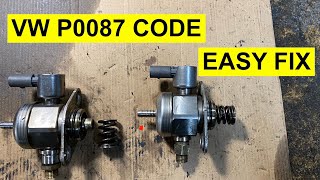
- EPC (Electronic Power Control) light may illuminate (more common on TSI) 🎬 Watch: Diagnosing P0087 on a TSI engine
- Engine hesitation or stumbling, especially under acceleration
- Significant loss of power or going into "limp mode"
- Engine cranks but fails to start
- Engine stalls unexpectedly
- Rough or unstable idle
- Engine runs rough and feels like it has no turbo.
- Replacing the High-Pressure Fuel Pump (HPFP) without first testing the low-pressure fuel system. A weak in-tank pump, clogged filter, or faulty control module is a cheaper fix and a common cause.
- Replacing the fuel pressure sensor (G247) when the fuel pump is the actual cause of low pressure.
- On TSI engines, replacing the HPFP without also replacing the worn cam follower, which will quickly destroy the new pump.
Most Likely Causes


- Failing High-Pressure Fuel Pump (HPFP) 🔴 High Probability The HPFP is a known failure point on both TDI (Bosch CP4) and TSI engines. The TDI's CP4 pump is infamous for failing and sending metal shavings through the fuel system, a catastrophic and expensive failure.
How to confirm: Use a diagnostic scan tool (VCDS) to monitor requested vs. actual fuel rail pressure under load. A significant drop in actual pressure points to a weak HPFP. For TDI models, a technician will inspect the fuel metering valve (N290) or the fuel filter for metallic particles, a definitive sign of HPFP failure.
Typical fix: Replacement of the HPFP. On TDI models with metal contamination, this requires replacing the pump, fuel rail, all injectors, fuel lines, and in-tank pump, plus cleaning the tank—a repair often costing $5,000-$9,000.
Est. part cost: $300-$800 for the pump itself. A full TDI system kit can be over $3,000. - Failing In-Tank Low-Pressure Fuel Pump (LPFP) 🟡 Medium Probability The LPFP must supply the HPFP with a steady volume of fuel at a specific pressure (typically 4-7 Bar or 58-101 PSI). If the in-tank pump weakens, it starves the HPFP, which then cannot build adequate high pressure, triggering P0087.
How to confirm: A technician will test the low-side fuel pressure using a mechanical gauge at the HPFP inlet, as scan tool readings can be misleading. A YouTube guide for a Passat TDI demonstrates testing the pump with a 12V source after confirming power from the control module with VCDS.
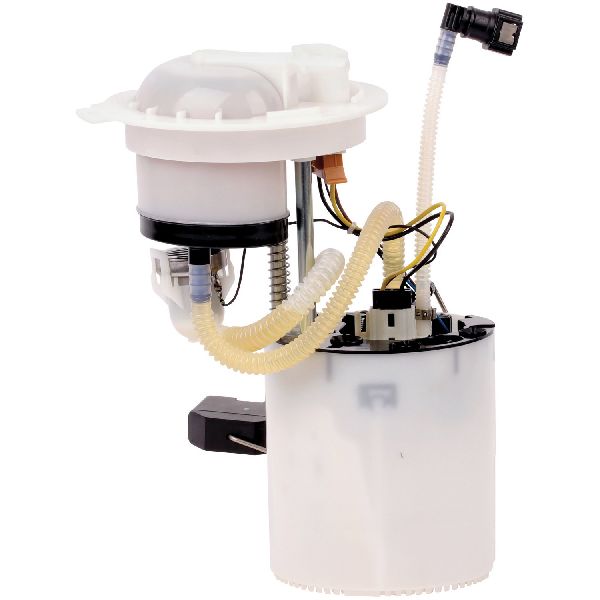
Typical fix: Replacement of the in-tank fuel pump assembly.
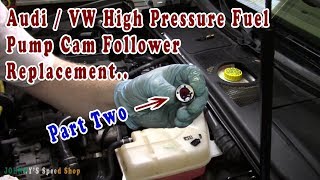
Est. part cost: $150-$400 - Worn HPFP Cam Follower (TSI Engines) 🟡 Medium Probability On TSI engines, the HPFP is driven by a lobe on the camshaft via a small metal cap called a cam follower. This is a known wear item and should be inspected regularly (e.g., every 30,000-40,000 miles). If it wears through completely, it can destroy the HPFP plunger and the camshaft lobe, leading to a much more expensive repair.
How to confirm: Physical inspection is required. The HPFP must be removed to access and inspect the cam follower for wear, pitting, or holes. A worn follower will often be concave or have a hole worn through it.
Typical fix: Replace the cam follower. If the follower has failed, the HPFP and camshaft lobe must also be inspected for damage and replaced if necessary.
Est. part cost: $20-$50 for the follower (OEM P/N: 06L109311). - Clogged Fuel Filter 🟡 Medium Probability A clogged filter restricts fuel flow from the tank, starving the fuel pumps. This is a common maintenance oversight that can lead to low-pressure codes. For TDI models, the recommended change interval is every 20,000 miles.
How to confirm: If the fuel filter hasn't been replaced per the maintenance schedule, it should be replaced as a first step. For TDIs, the old filter should be cut open and inspected for metal shavings, which would indicate HPFP failure.
Typical fix: Replace the fuel filter.
Est. part cost: $20-$60
Rare But Worth Checking
- Faulty Fuel Rail Pressure Sensor (G247): This sensor reports pressure to the ECM. While not a common failure, it can send an inaccurate low reading, triggering P0087 even if the pressure is correct. Comparing the sensor's reading on a scan tool to a mechanical gauge can help diagnose this.
- Faulty Fuel Pump Control Module (J538): This module controls the voltage to the in-tank fuel pump. A failure can prevent the pump from running at the correct speed. A Reddit user with a 2018 Passat reported this as the ultimate fix after replacing both pumps, a fix corroborated by another user with a Golf R.
- HPFP 'Out of Time' (Sync Issue): A VW TSB (TT 01 20 05_4, also listed as 2058123/4) mentions that codes P0087 and P0088 can be set if the high-pressure fuel pump is out of sync, which could relate to incorrect installation or timing issues.
Diagnosis Steps

- Connect an OBD-II scanner and check for any other accompanying codes, especially misfires (P030x) or regulator codes (P2293, P0088). Manufacturer bulletin TSB Bulletin #VIN4APIN20211116 notes that P0087 can appear in the ECM alongside codes P0149, P053F, or any combination of misfire codes P0300 through P0304.
- Using a scan tool with live data (like VCDS), monitor 'Requested' vs. 'Actual' fuel rail pressure. For TSI, idle pressure should be ~50 Bar; for TDI, it can exceed 1,800 Bar under load. A large deviation points to a problem.
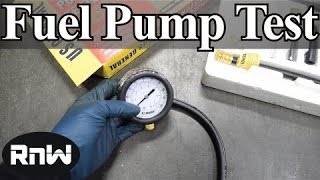
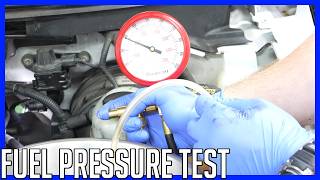
- Perform a low-pressure fuel system test. Use a mechanical fuel pressure gauge to test the output of the in-tank pump. Expect 4.0 to 7.0 Bar (~58 to 101 PSI). Do not rely solely on the scan tool's low-pressure reading. 🎬 Watch: How to test fuel pressure with a gauge
- For TDI engines: Remove the fuel filter and empty its contents into a clean, clear container. Inspect for any metallic glitter, which is a definitive sign of HPFP failure.
- For TSI engines: Remove the HPFP and physically inspect the cam follower for wear, pitting, or holes. Also inspect the tip of the HPFP plunger and the camshaft lobe for scoring or damage. This is a critical step.
- If both low and high-pressure systems seem mechanically sound, investigate the Fuel Pump Control Module (J538). Check for power and ground at the module and command the pump on/off with a scan tool to verify module function.
- Inspect wiring and connectors for the fuel pumps, control module, and pressure sensor for any visible damage or corrosion.
Parts You'll Likely Need
- High-Pressure Fuel Pump (HPFP)
(OEM #03L130755AB (TDI, CKRA) / 06H127025N (TSI))— This is the most common major component failure for P0087 on both TSI and TDI engines.
Trusted brands: Bosch, Hitachi
OEM price range: $500-$900
Aftermarket price range: $250-$600 - HPFP Cam Follower (TSI Only)
(OEM #06L109311)— A mandatory replacement part for TSI engines when addressing P0087, as a worn follower is a primary cause of HPFP failure.
Trusted brands: INA, VW Genuine
OEM price range: $40-$80
Aftermarket price range: $25-$50 - In-Tank Low-Pressure Fuel Pump (LPFP) — This pump feeds the HPFP. If it weakens, it starves the high-pressure side, causing the code. It must be tested before condemning the HPFP.
Trusted brands: VDO, Bosch, Topran
OEM price range: $250-$400
Aftermarket price range: $150-$250 - Fuel Filter — A clogged filter is a common maintenance item that can restrict fuel flow and trigger P0087. It's an inexpensive first step in diagnosis.
Trusted brands: Mann, Mahle, Bosch
OEM price range: $40-$60
Aftermarket price range: $20-$40
Related Codes That Often Appear With This One
- P0088 — Stands for "Fuel Rail/System Pressure - Too High." It can appear with P0087 if the fuel pressure regulator is failing erratically, as noted in TSB TT 01 20 05_4.
- P0300-P0308 — These are misfire codes. Insufficient fuel pressure leads to a lean running condition, causing the engine to misfire. Manufacturer bulletin TSB Bulletin #VIN4APIN20210930 lists P0087 alongside P0149 and P053F as common codes found in the ECM.
- P2293 — Stands for "Fuel Pressure Regulator 2 Performance." This is very common on TSI engines alongside P0087 and often points directly to a worn cam follower and damaged HPFP.
- P0191 — Stands for "Fuel Rail Pressure Sensor 'A' Circuit Range/Performance." A VW TSB for TDI models (23-17-04, also listed as 2041057) groups this code with P0087 as an indicator of potential HPFP failure.
Technical Service Bulletins (TSBs) & Recalls

- TSB 23-17-04 / 2041057: Groups P0087 and P0191 as indicators of potential HPFP failure on TDI models, outlining inspection for metal particles.
- TSB TT 01 20 05_4 / 2058123/4: Notes that P0087/P0088 can be set if the HPFP is 'out of time' or 'out of sync'.
- VW Tech Tip TT 20-18-05: Advises using a mechanical gauge to test low-side fuel pressure, as scan tool values may be unreliable.
- TSB 2027458 / 01-11-19: Mentions an improved Fuel Pressure Sensor (G410) for some 2.0T engines.
- TSB Bulletin #VIN4APIN20211116: Notes that a MIL-on condition with P0087, P0149, and P053F may be present in the ECM, sometimes accompanied by misfire codes P0300 through P0304.
- TSB Bulletin #VIN4APIN20210930: Confirms reports of P0087, P0149, and P053F in the ECM, which may be associated with other vehicle concerns such as suspension noise or clutch pedal operation issues.
Platform-Specific Known Issues
- TDI CP4 HPFP Failure: The Bosch CP4 pump used in TDI models is notorious for failing and disintegrating, sending metal particles through the entire fuel system. This is not just a pump replacement; it requires a full system decontamination that can cost thousands of dollars. VW issued TSB 23-17-04 regarding the diagnosis of this issue.
- TSI Cam Follower Wear: Earlier TSI engines were more prone to this, but it remains a key inspection point for any TSI engine with P0087. Failure to replace a worn follower can lead to camshaft and HPFP destruction.
- Dieselgate Warranty Extension: For TDI models affected by the emissions scandal, Volkswagen extended the warranty on many engine and fuel system components. Owners should check with a VW dealer to see if their vehicle's fuel system is still covered under this extended warranty.
Mechanic-Grade Diagnostic Values
- Low-Pressure Fuel System (LPFP) Output — expected: 4.0 to 7.0 Bar (~58 to 101 PSI), depending on ECM request.. Failure: Pressure significantly below 4.0 Bar (58 PSI) indicates a weak in-tank pump, clogged filter, or faulty control module.
- High-Pressure Fuel Rail (G247 Sensor) at idle (TSI) — expected: ~50 Bar (~725 PSI). Failure: Actual pressure is significantly lower than specified/requested pressure (e.g., reading 25 Bar when 50 is requested).
- High-Pressure Fuel Rail (TDI) under load — expected: Can exceed 1,800 Bar (~26,000 PSI). Failure: Actual pressure fails to meet requested pressure under acceleration, often by 100 Bar or more, triggering limp mode.
- VCDS Advanced Measuring Value (TDI) — expected: In a freeze frame for P0087, a large discrepancy between requested pressure (e.g., 808.0 bar) and actual pressure (e.g., 600.0 bar) can be seen.. Failure: A significant, persistent gap between requested and actual pressure values during logging confirms a fuel delivery shortfall.
- VCDS Advanced Measuring Value (TDI, Post-Contamination) — expected: After a misfueling event (gasoline in a diesel), the high pressure fuel valve duty cycle may drop to ~18% before triggering limp mode.. Failure: Resetting the learned values for IDE02703 (High pressure fuel valve: activation) via VCDS may be required after repairs.
Scan Tool Commands That Help
- VCDS (or equivalent VW diagnostic tool): Engine -> Output Tests -> Fuel Pump Electronics — This command directly activates the in-tank low-pressure fuel pump (LPFP). It is used to confirm if the pump runs when commanded by the ECM, helping to isolate a failed pump from a control module or wiring issue. It is also used to prime the fuel system after replacing a filter or pump.
- VCDS (UDS Modules): Engine -> Basic Settings -> "Transfer Fuel Pump (FP) test" — On newer vehicles with UDS controllers, this is the function used to run the in-tank fuel pump for testing and priming purposes, replacing the older Group 035 basic setting.
- VCDS: Reset learned values for IDE02703 (High pressure fuel valve: activation) — In a rare case reported after gasoline was put in a TDI, the fuel valve learned incorrect values and kept causing P0087. Clearing the code and resetting these specific learned values resolved the issue after the fuel system was flushed.
Real Owner Repair Stories
- Reddit user post (2018 VW Passat) — Car lost all power, went into limp mode, then crank-no-start. P0087 code present.
❌ Tried (didn't work) Replaced the in-tank low-pressure fuel pump (LPFP)., Replaced the high-pressure fuel pump (HPFP).
✅ What actually fixed it The Fuel Pump Control Module (J538) was faulty. Replacing the module resolved the code and the car ran correctly. This was corroborated by another user with a VW Golf R who had the exact same experience and fix. - Go-Parts Diagnostic Case Study (2013 Passat TDI) — Engine would not start, P0087 code stored.
❌ Tried (didn't work) Initial diagnosis focused on the high-pressure system due to the nature of the code.
✅ What actually fixed it Using VCDS, the requested rail pressure was 248 bar but the actual was zero. An output test to activate the in-tank pump produced no sound. Power was confirmed at the pump connector, but applying 12V directly to the pump did nothing. The in-tank low-pressure fuel pump (LPFP) had failed completely. Replacing it fixed the issue. - YouTube video by 'Motorcarnut' (2011 VW Tiguan (TSI engine, same platform)) — P0087 code with random misfires.
❌ Tried (didn't work) Inspecting the cam follower, which was not broken.
✅ What actually fixed it Upon removing the High-Pressure Fuel Pump (HPFP), the internal plunger tip was found to have physically broken off from the pump body. This is a mechanical failure inside the pump itself, preventing it from building pressure. Replacing the entire HPFP assembly was the fix. - NHTSA ODI #10888050 — An owner reported that while driving on a 50 MPH road, the vehicle lost power and went into limp mode. Fault codes pulled were P0087, which was later diagnosed as a failed high pressure fuel pump.
- NHTSA ODI #10551179 — An owner described a situation where their vehicle was diagnosed with P0087 (fuel/system pressure too low) and expressed concern that Volkswagen vehicles are experiencing this problem frequently.
When the Usual Fixes Don't Work
- While the high-pressure fuel pump (HPFP) is a primary suspect for P0087, a notable number of owners have replaced both the low and high-pressure pumps only to find the issue persisted. In a documented case on a 2018 Passat, the final solution was replacing the Fuel Pump Control Module (J538), which regulates the in-tank pump. This indicates that a failure in the control electronics can perfectly mimic a mechanical pump failure, making it a critical, and often overlooked, diagnostic step.
OEM Part Supersession History
06H127025E, 06H127025G, 06H127025K, 06H127025M, 06H127025N, 06H127025P→06H127025Q (and later revisions like T)— Multiple revisions were made to the TSI engine's HPFP to improve durability and performance.
Heads up: Some older engine codes (e.g., CBFA) may require new adapter fittings when installing the latest revision pump. It is critical to verify fitment by VIN or check if the adapter union (e.g., 06L127065) is needed.03L130755AA, 03L130755L→03L130755AB— Revisions to the TDI engine's Bosch CP4 pump.
Heads up: These part numbers are generally interchangeable for the CKRA engine, but it is always best practice to use the latest revision (03L130755AB) or the Bosch equivalent (0445010565/0445010566).
Model Year Variations Within This Range
- Approx. 2016-2019 (TSI): Later Passat models feature the EA888 Gen3 engine, which uses a more durable roller-style cam follower for the HPFP. While the HPFP can still fail, the classic 'worn-through flat tappet follower' issue is less common compared to the earlier Gen2 engines in the 2012-2015 models.
Diagnostic Flowchart
Real Owner Stories
Aggregated from forums and TSBs cited above. Mileages and costs reflect what owners reported in those sources.
2018 VW Passat
Symptoms: Fuel rail/system pressure too low, resulting in significant loss of power or going into limp mode.
What fixed it: Replaced the faulty fuel pump control module after replacing both the LPFP and HPFP without success.
Source hint: Reddit: 2018 Vw Passat P0087 Code - fuel rail/system pressure - too low
VW Passat TDI
Symptoms: Catastrophic failure of the CP4 pump requiring replacement of the entire fuel system.
What fixed it: Full fuel system replacement (pump, fuel rail, injectors, lines, in-tank pump, and tank cleaning) due to metal contamination.
Cost: $4000-$10000
Source hint: TDIClub: CP4 Failure Cost Discussion
2014 VW 1.8TSI
Symptoms: Fuel pressure low and misfires. Live data showed high-pressure at 50 bar at idle, but a puzzling low-pressure reading of 11 bar when 5 bar was specified.
What fixed it: Diagnosed that the VCDS specified low-pressure value was bogus and should be ignored, requiring a mechanical gauge test instead.
Source hint: Ross-Tech Forums: 2014 1.8TSI fuel pressure low + misfires
2015 Audi A3 2.0T (EA888 Gen3)
Symptoms: Intermittent P0087 at warm idle.
What fixed it: Advanced troubleshooting of resistance and voltage at the HPFP regulating valve (N276) after replacing the HPFP and follower did not resolve the issue.
Source hint: Ross-Tech Forums: 2015 Audi A3 2.0T (EA888 Gen3) – Intermittent P0087 at Warm Idle
Related OBD-II Codes
Frequently Asked Questions
Is the P0087 code on my Passat TDI covered under the Dieselgate warranty?
What does TSB 23-17-04 mean for my Passat TDI?
My 2018 Passat TSI has a P0087 code. Should I trust the low-pressure readings on my VCDS scan tool?
How much does it cost to fix a failed CP4 HPFP on a Passat TDI?
I have a TSI engine. Do I need to check the cam follower?
Could a faulty sensor cause P0087 on my 2.0T Passat?
Helpful Videos
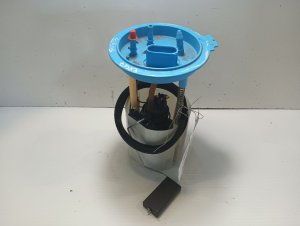
Used OEM Parts in Stock
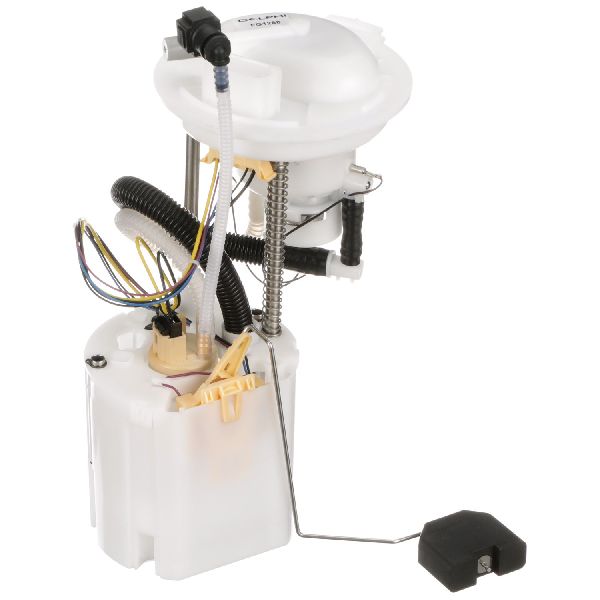
New Aftermarket Parts Available


The information in this article is provided for general reference and educational purposes only. Vehicle specifications, procedures, and part compatibility can vary by production date, trim level, and region. Always consult your vehicle's factory service manual and verify part numbers before purchasing or performing repairs. Safety-critical components such as airbags, seat belts, and braking systems should be installed by a qualified professional.
- Volkswagen Passat:
- 🎬 Helpful Videos
- 🛍️ Shop This Part
- What's Unique About the 2012-2019 Volkswagen Passat
- Symptoms You May Notice
- Most Likely Causes
- Rare But Worth Checking
- Diagnosis Steps
- Parts You'll Likely Need
- Related Codes That Often Appear With This One
- Technical Service Bulletins (TSBs) & Recalls
- Platform-Specific Known Issues
- Mechanic-Grade Diagnostic Values
- Scan Tool Commands That Help
- Real Owner Repair Stories
- When the Usual Fixes Don't Work
- OEM Part Supersession History
- Model Year Variations Within This Range
- Diagnostic Flowchart
- Real Owner Stories
- 2018 VW Passat
- VW Passat TDI
- 2014 VW 1.8TSI
- 2015 Audi A3 2.0T (EA888 Gen3)
- Related OBD-II Codes
- Frequently Asked Questions
- 🎟️ Get 5% Off