

P0087 on 2012-2018 Ford Focus ST: Low Fuel Rail Pressure Causes and Fixes
On a 2012-2018 Ford Focus ST, code P0087 is most often caused by a failing High-Pressure Fuel Pump (HPFP). Replacing the HPFP is the most common fix, with parts costing between $200 for an aftermarket brand like Bosch and over $500 for an OEM Motorcraft part. It is also highly recommended to replace the HPFP's cam follower (tappet) at the same time to prevent premature failure of the new pump.
- P0087 on a Focus ST means the high-pressure fuel system is failing to provide enough fuel, usually due to a bad High-Pressure Fuel Pump (HPFP).
- Symptoms are severe and include a sudden loss of power during acceleration, rough idle, and potential stalling.
- Diagnosis involves using a scan tool to watch the 'Actual Fuel Rail Pressure' and see if it drops under load.
- The most likely fix is replacing the HPFP. While you're there, inspecting the cam follower is a good idea.
- Consider replacing the fuel rail pressure sensor first if you want to try a cheaper potential fix before committing to the more expensive HPFP replacement.
What's Unique About the 2012-2018 Ford Focus

The Ford Focus ST's 2.0L EcoBoost is a direct-injection engine, meaning it has two fuel pumps: a low-pressure pump in the tank and a high-pressure fuel pump (HPFP) on the engine. This P0087 code almost always points to an issue on the high-pressure side of the system. The HPFP on this platform is a known failure point, often leading to symptoms like a sudden loss of power under acceleration as the pump can no longer meet the fuel demand. A worn cam follower (tappet) that drives the HPFP is also a common point of failure and can cause the P0087 code, sometimes damaging the new pump if not replaced.
Symptoms You May Notice
- Sudden loss of power or hesitation, especially during acceleration or above 3,500 RPM.
- Vehicle enters "limp mode," limiting engine power and boost.
- Check Engine Light is on.
- Engine stalling, sometimes unexpectedly, especially at low speeds or idle.
- Rough or fluctuating idle, with RPMs bouncing between 900-2000 RPM in some cases.
- Hard starting or long crank times.
- Noticeable decrease in fuel economy.
- Replacing the low-pressure fuel pump when the high-pressure pump is the actual cause.
- Assuming a transmission problem due to the severe hesitation and lack of power, when it is actually the engine being starved of fuel.
- Replacing the HPFP when the cheaper and easier-to-replace fuel rail pressure sensor was the actual culprit.
Most Likely Causes

- Failing High-Pressure Fuel Pump (HPFP) 🔴 High Probability The HPFP is a widely documented common failure item on the 2.0L EcoBoost engine. The internal components can wear out, leading to an inability to generate the required pressure under load.
How to confirm: Use an OBD-II scanner (like Forscan for Fords) to monitor live data for "Desired Fuel Rail Pressure" and "Actual Fuel Rail Pressure". At idle, they should be close. During a test drive, command high pressure by accelerating. If the actual pressure drops significantly (e.g., into the 100s of PSI) while desired pressure stays high (e.g. 2000+ PSI), the pump is weak.
Typical fix: Replace the high-pressure fuel pump located on top of the engine. It is critical to also replace the cam follower (tappet) that the pump rides on. Failure to do so can cause the new pump to fail prematurely. Some owners also recommend an oil change after replacement to remove any potential fuel or metal contamination.
Est. part cost: $200-$600 - Faulty Fuel Rail Pressure Sensor 🟡 Medium Probability This sensor provides the reading that triggers the code. If it sends an inaccurate low-pressure signal, the PCM will set code P0087 even if the pump is healthy. It's a common failure point on EcoBoost engines.
How to confirm: Compare the live data from the sensor with a mechanical pressure gauge reading on the fuel rail. If the sensor reading is significantly lower than the mechanical gauge, the sensor is faulty. A more practical approach is to replace the sensor first, as it is cheaper and easier to access than the HPFP. The sensor is located on the fuel rail, and can often be replaced by simply loosening the intake manifold bolts and tilting it back for access.
Typical fix: Replace the fuel rail pressure sensor. A 27mm or 1 1/16" deep socket is typically required.
Est. part cost: $50-$150 - Weak Low-Pressure Fuel Pump (LPFP) or Faulty Low-Pressure Sensor ⚪ Low Probability The HPFP cannot generate high pressure if it is not being fed enough fuel from the in-tank low-pressure pump. While less common than HPFP failure, a weak LPFP or a faulty low-pressure sensor can starve the high-pressure side. Ford issued TSB SSM 48397 for platform mates, pointing to a faulty Fuel Low Pressure (FLP) sensor as a common cause for P0087.
How to confirm: Check the low-pressure fuel system pressure using a scan tool. On a Focus ST, the low-pressure side should maintain a steady pressure of around 80-85 PSI under load. If the reading is stuck (e.g., at 109 PSI) or drops significantly, the issue could be the in-tank pump or the low-pressure sensor.
Typical fix: First, replace the low-pressure fuel sensor (Motorcraft BU5Z-9F972-B), which is a known issue and located on a fuel line behind the engine. If the problem persists, replace the in-tank fuel pump assembly.
Est. part cost: $50-$100 for the sensor, $150-$350 for the pump assembly.
Rare But Worth Checking
- Worn HPFP Cam Follower / Camshaft Lobe: The HPFP is driven by a cam follower (tappet) that rides on a camshaft lobe. This follower can wear out, break, or even wear down the camshaft lobe itself, preventing the pump from actuating fully. This is why it's crucial to inspect and replace the follower when replacing the HPFP. In a 2018 Ford Escape, a user reported a completely blown-out tappet causing a recurring P0087.
- Clogged Fuel Filter: The fuel filter is integrated into the in-tank fuel pump assembly and is not serviced separately. A severely clogged filter or debris in the tank can restrict flow to the HPFP, but this is less common than pump failure itself.
- Wiring Harness Issues: Ford issued a recall (14S17) for some 2013-2014 Focus ST models related to faulty wiring splices that could cause stalling and other drivability issues. A user on the ScannerDanner forum fixed a P0087 on a Ford Fusion by finding and repairing pushed-out connector pins at the PCM from a previous accident repair.
Diagnosis Steps
- Connect an OBD-II scanner and confirm P0087 is present. Check for any other codes, especially P008A, P00C6, or misfire codes.
- Using the scanner's live data function, monitor 'Desired Fuel Rail Pressure' and 'Actual Fuel Rail Pressure'.
- Also monitor 'Low Pressure Fuel System Pressure' if available. It should be steady around 80-85 PSI on a Focus ST under load. If it is stuck at a high value (like 109 PSI), suspect a bad low-pressure sensor.
- Start the engine. At idle, the desired and actual high pressures should be relatively close (e.g., 240-500 PSI).
- Safely perform a test drive with the scanner recording data. Under moderate to heavy acceleration, watch the actual fuel rail pressure. If it fails to rise with the desired pressure or drops off sharply, the HPFP is the primary suspect.
- If the high-pressure readings seem erratic or incorrect even at idle, and the low-pressure side is healthy, consider the high-pressure fuel rail sensor 🎬 Watch: A real-world diagnosis of the P0087 code. as a possible cause.
- Before replacing the HPFP, it is critical to inspect the cam follower (tappet) for wear. A worn follower can be completely destroyed, with missing pieces. Also inspect the camshaft lobe for scoring or wear. A damaged lobe requires major engine repair.
- When replacing the HPFP, always install a new cam follower. It is an inexpensive part that insures the new pump against premature failure.
Parts You'll Likely Need

- High-Pressure Fuel Pump (HPFP)
(OEM #CM5Z-9350-B (Motorcraft CM5250))— This is the most frequent failure point on the 2.0L EcoBoost engine that directly causes the P0087 code.
Trusted brands: Motorcraft, Bosch (HPP0023)
OEM price range: $450-$600
Aftermarket price range: $200-$350 - Fuel Rail Pressure Sensor (High Pressure)
(OEM #CM5Z-9F972-A (Motorcraft CM5229))— This sensor can fail and send incorrect readings to the PCM, falsely triggering the code. It's a common secondary suspect and often replaced as a diagnostic step due to its lower cost.
Trusted brands: Motorcraft, Bosch, Standard Motor Products
OEM price range: $100-$150
Aftermarket price range: $50-$90 - HPFP Cam Follower (Tappet) — This inexpensive part is a critical wear item. A worn follower can be destroyed, causing the P0087 code and damaging a brand new HPFP if not replaced at the same time.
Trusted brands: Motorcraft, Mahle
OEM price range: $20-$40
Aftermarket price range: $15-$30
Related Codes That Often Appear With This One
- P008A — This code stands for "Low Pressure Fuel System Pressure - Too Low". If seen with P0087, it strongly suggests the problem is with the in-tank low-pressure fuel pump or a restriction before the HPFP.
- P0300-P0304 — These are misfire codes. A lack of fuel pressure can cause a lean condition, leading to engine misfires.
- P00C6 — This code for "Fuel Rail Pressure Too Low - Engine Cranking" can appear alongside P0087 and often points towards issues with the low-pressure fuel system, per a Ford TSB for related vehicles.
Technical Service Bulletins (TSBs) & Recalls
- SSM 48397: Affects 2013-2015 Lincoln MKZ with 2.0L EcoBoost, directly linking P0087 to a faulty or biased Fuel Low Pressure (FLP) sensor. This indicates a known issue on the shared engine platform.
Platform-Specific Known Issues
- Recall 18S32: Ford recalled 2012-2018 Focus models with the 2.0L GTDI (EcoBoost) engine for a malfunctioning Canister Purge Valve (CPV) that could cause excessive vacuum in the fuel system, potentially affecting drivability and fuel delivery.
- Recall 14S17: Affecting 2013-2014 Focus STs, this recall addressed faulty wiring harness splices that could lead to stalling and erratic engine behavior.
- TSB for Low-Pressure System: While not for the Focus specifically, a TSB for other 2.0L EcoBoost vehicles (Fusion, Escape, MKC, MKZ) notes that codes P0087, P00C6, and others can be caused by low-pressure fuel system issues, highlighting the low-pressure sensor as a potential culprit.
Mechanic-Grade Diagnostic Values
- Low-Pressure Fuel System Pressure (via Scan Tool) — expected: ~80-85 PSI under load. Some owners report normal operation as low as 70 PSI under a full-throttle pull.. Failure: Pressure is stuck at a static value (e.g., 60.8 PSI or 109 PSI) regardless of engine load, or it drops significantly below 70 PSI.
- High-Pressure Fuel System Pressure (via Scan Tool) — expected: Highly variable. ~240-500 PSI at idle, rising to over 2,200 PSI under load.. Failure: Actual pressure is stuck near low-side pressure (e.g., ~100 PSI) and does not rise with desired pressure during acceleration.
- High-Pressure Fuel Rail Sensor (FRP) Voltage — expected: With ignition on, engine off, backprobing the signal wire should show ~0.5-0.7V.. Failure: Voltage is erratic, does not correspond to pressure changes, or if the sensor is unplugged, the signal wire voltage does not jump to a 5V bias/diagnostic voltage.
Hidden / Shadow Codes Worth Checking
- B10C0: Fuel Pump Module Control Circuit/Open. While not a 'shadow' code in the traditional sense, this Body Control Module (BCM) code can be set alongside P0087 and points directly to an issue with the Fuel Pump Driver Module (FPDM) or its circuit, which might be missed if only checking for PCM codes. (see via A scan tool capable of reading BCM codes, such as FORScan or the Ford IDS.)
Scan Tool Commands That Help

- FORScan / Ford IDS: KOER (Key On, Engine Running) Self-Test — This can be used to command the fuel system through a series of tests to check for pressure response. It may trigger codes that are not present during normal driving, helping to isolate an intermittent fault.
- FORScan / Ford IDS: PCM Reset / KAM Reset — After replacing a major fuel system component like the HPFP or a sensor, resetting the Keep Alive Memory (KAM) forces the PCM to relearn fuel trims and sensor baselines, which can be necessary for the system to operate correctly with the new part.
Wiring & Ground Locations
- Fuel Pump Driver Module (FPDM) — On the Focus ST, the FPDM is located under the rear passenger-side seat, beneath the carpet and a foam insulator. On related platforms like the Fiesta ST, it can be under the front seat.. The FPDM controls the voltage to the in-tank low-pressure fuel pump. A failure in the module or its wiring can cause the LPFP to underperform, starving the HPFP and triggering P0087.
- Fuel Pump Fuse F23 (BCM) — In the Body Control Module (BCM), which is located in the passenger footwell behind the kick panel. It is typically a 20A fuse.. This fuse provides power to the fuel pump circuit. A blown fuse will cut power to the pump entirely.
- Fuel Pump Relay (BCM) — The fuel pump relay is integrated into the Body Control Module (BCM) itself and is not a serviceable, plug-in relay.. If the relay fails, the entire BCM must be replaced to restore fuel pump operation. This is an expensive and unlikely, but possible, cause.
- High-Pressure Fuel Rail Sensor Connector — On the fuel rail on the top of the engine.. Wiring diagram indicates a 3-wire connector. Pin 1: 5V Reference (VREF), Pin 2: Signal (to PCM), Pin 3: Signal Return/Ground. Checking for 5V at Pin 1 and good ground at Pin 3 is a key diagnostic step.
- PCM Connector C175E — The main Powertrain Control Module (PCM) connector, located on the PCM at the left side of the transmission.. The HPFP volume control solenoid is controlled by pins 1 (FVR) and 2 (FVRRTN) on this connector. The high-pressure sensor signal returns to the PCM via this connector as well. Loose or pushed-out pins can cause P0087.
Real Owner Repair Stories
- ScannerDanner Forum (Ford Fusion (with similar 2.0L EcoBoost engine)) — Long crank time, poor acceleration, P0087.
❌ Tried (didn't work) Replaced low-pressure fuel sensor, Replaced high-pressure fuel sensor, Replaced high-pressure fuel pump (with a used part)
✅ What actually fixed it The vehicle had been in a previous accident. The technician removed the PCM connector and found two pins were pushed out of the socket. After reseating the pins properly, the fuel pressure returned to normal and the code was resolved. - Reddit user on r/FocusST (2015 Ford Focus ST) — Car falls on its face at 3500 RPM, loss of power, P0087.
❌ Tried (didn't work) Initial diagnosis pointed to HPFP or sensors.
✅ What actually fixed it The user found a disconnected PCV valve hose on the back of the intake manifold. After reconnecting the hose and clearing a forgotten throttle body connector, the P0087 code was resolved. The user also performed a PCM/KAM reset using IDS software. - Fiesta ST Forum user (Ford Fiesta ST (similar GDI fuel system)) — P0087 code.
❌ Tried (didn't work) Replacing the low-pressure fuel pump, Replacing the HPFP tappet
✅ What actually fixed it The user's low-pressure fuel sensor was stuck reading 108 PSI at all times. Replacing the faulty low-pressure fuel sensor (on the fuel line before the HPFP) resolved the issue, with new readings showing a healthy 70-100 PSI depending on load.
Documented NHTSA Reports
- NHTSA ODI #11387363: An owner reported that the vehicle would not give any gas or go over 20 miles per hour, sometimes shutting off or having a hard time driving forward, with code P0087 appearing on a diagnostic.
- NHTSA ODI #11165783: A report describes a check engine light with code P0087 appearing after ignition while stationary, noting that the car takes about 5 seconds to start half the time and the turbo is disabled.
OEM Part Supersession History
CP9Z-9350-B, CM5Z-9350-CA→CM5Z-9350-B— Standard part revision and consolidation by Ford.
Heads up: CM5Z-9350-B is the primary service part for the 2012-2018 Focus 2.0L. It is also listed for the 2018-2022 EcoSport 2.0L, indicating broad compatibility across this engine platform.
Model Year Variations Within This Range
- 2013-2018: There were no significant changes to the 2.0L EcoBoost engine, fuel system, or power output throughout the Focus ST's North American lifecycle (2013-2018). A 2015 facelift brought cosmetic, steering, and suspension revisions, and SYNC 3 was introduced in 2016, but the P0087 diagnostic procedure remains consistent across all years.
Diagnostic Flowchart
Real Owner Stories
Aggregated from forums and TSBs cited above. Mileages and costs reflect what owners reported in those sources.
Ford Focus ST
Symptoms: Unable to solve the P0087 code after replacing the HPFP and rail pressure sensor.
What fixed it: The community suggested checking the low-pressure fuel pump and filter after the high-pressure components did not resolve the issue.
Source hint: Reddit r/FocusST - "P0087 trouble"
2015 Ford Focus ST
Symptoms: No boost, low fuel rail pressure dropping into the 100s PSI under load.
What fixed it: Diagnosed as a classic High-Pressure Fuel Pump (HPFP) failure using Forscan data logs.
Source hint: Reddit r/FocusST - "2015 Focus ST no boost, low FRP. P0087"
Ford Focus ST
Symptoms: Sudden power loss above 3,500 RPM.
What fixed it: Replaced the High-Pressure Fuel Pump (HPFP), which is the primary culprit debated on the forums.
Source hint: focusst.org
2014 Ford Fusion 2.0L
Symptoms: Persistent P0087 code on a shared 2.0L EcoBoost platform.
What fixed it: Fixed pushed-out pins in the PCM connector resulting from a prior accident.
Source hint: ScannerDanner Forum - "FORD DTC CODE P0087"
Ford Focus
Symptoms: An owner reported the car sometimes shuts off and has a hard time driving forward, unable to exceed 20 MPH.
What fixed it: Diagnostic codes P0087, P0783, and P2872 were identified, preventing highway driving.
Source hint: NHTSA ODI #11387363
Ford Focus
Symptoms: Long crank times (about 5 seconds) and the turbo being disabled.
What fixed it: A CEL code P0087 was populated after ignition while the car was stationary.
Source hint: NHTSA ODI #11165783
Related OBD-II Codes
Frequently Asked Questions
Does Recall 18S32 apply to my P0087 code on my 2012-2018 Focus ST?
I have a 2013 Focus ST with P0087 and stalling issues. Could it be a wiring problem?
What should the low-pressure fuel system read on my Focus ST under load?
Do I need to replace anything else when changing the High-Pressure Fuel Pump (HPFP)?
What part number do I need for the low-pressure fuel sensor?
How can I test if the HPFP is failing using Forscan?
Helpful Videos

Used OEM Parts in Stock


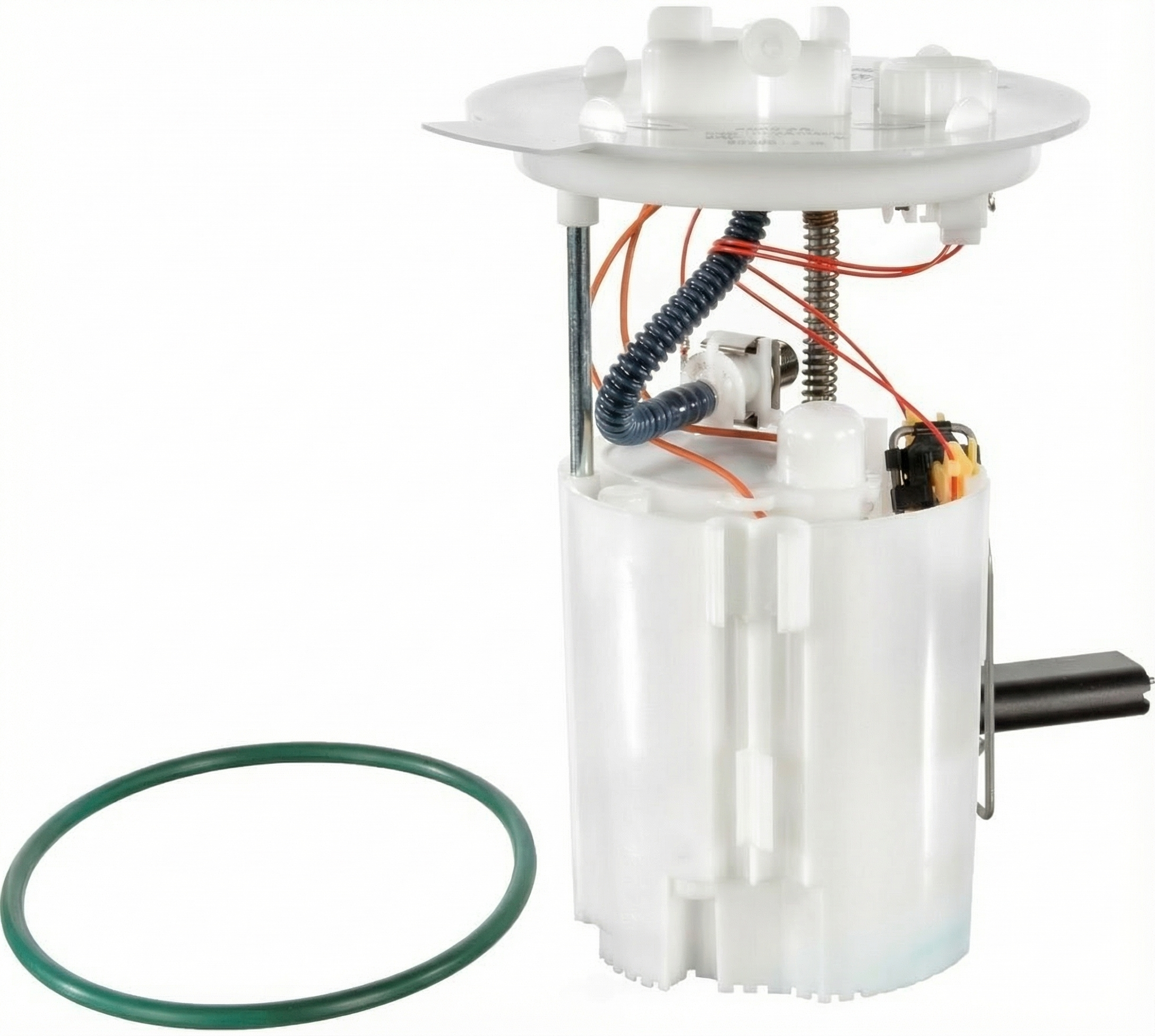
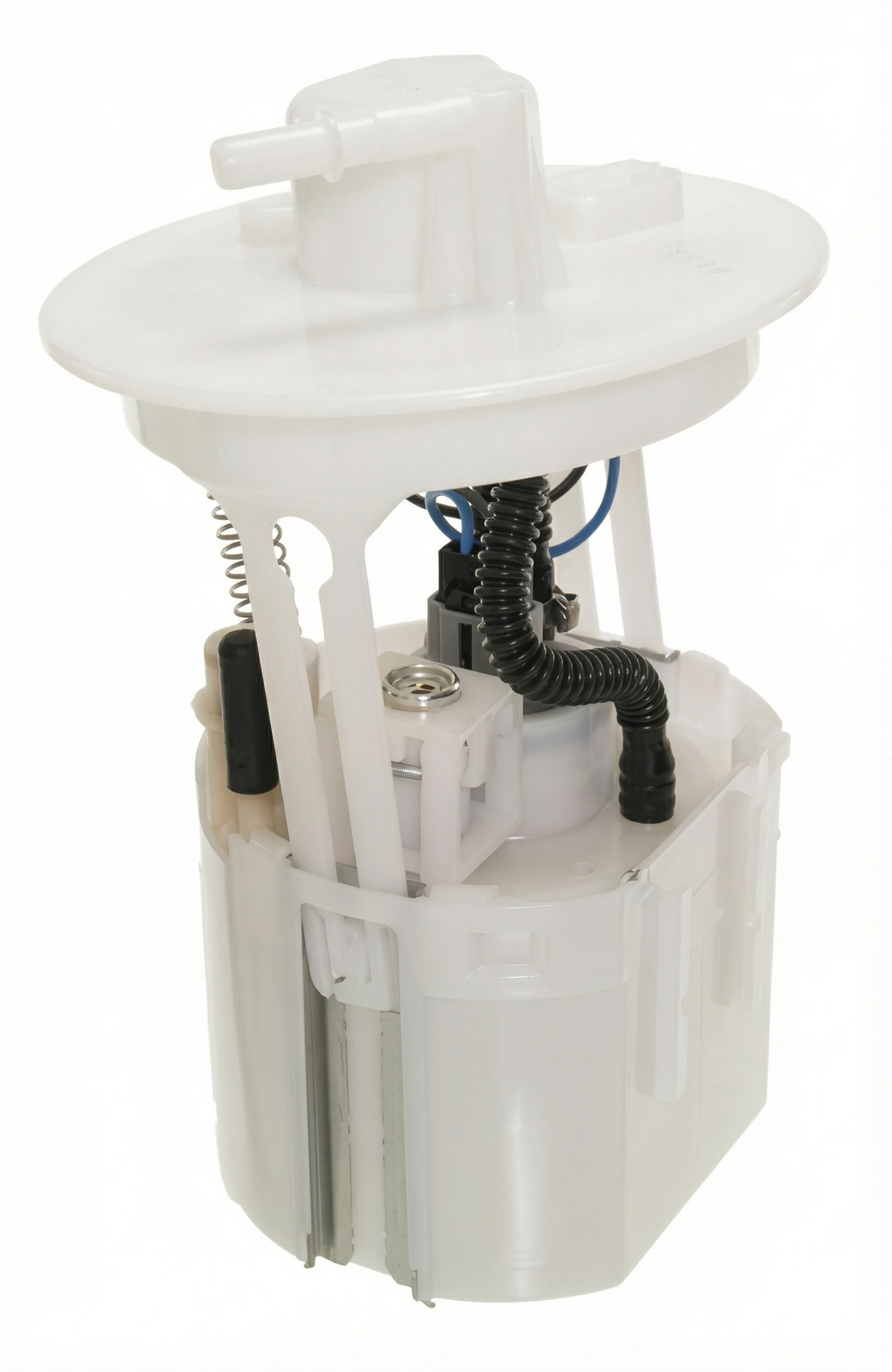

New Aftermarket Parts Available

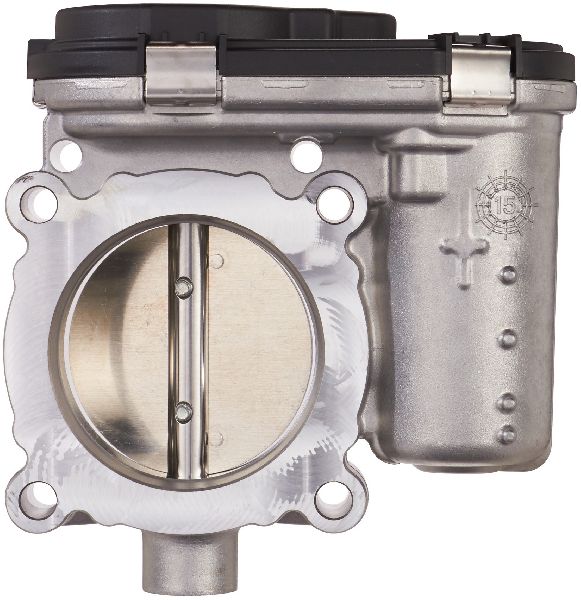
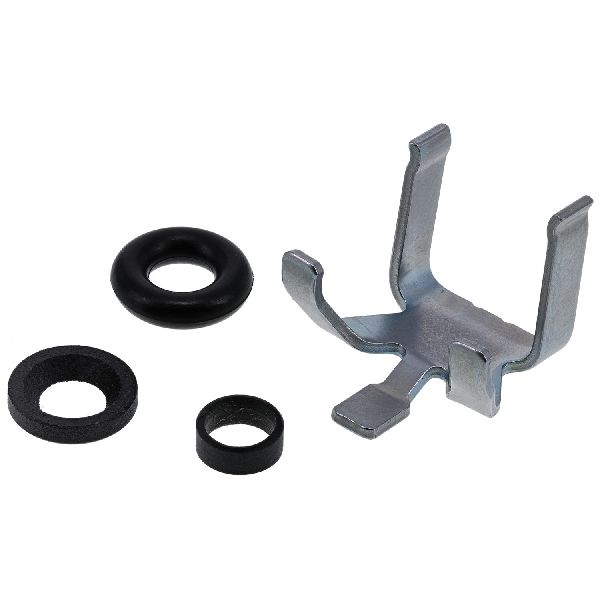

The information in this article is provided for general reference and educational purposes only. Vehicle specifications, procedures, and part compatibility can vary by production date, trim level, and region. Always consult your vehicle's factory service manual and verify part numbers before purchasing or performing repairs. Safety-critical components such as airbags, seat belts, and braking systems should be installed by a qualified professional.
- Ford Focus:
- 🎬 Helpful Videos
- 🛍️ Shop This Part
- What's Unique About the 2012-2018 Ford Focus
- Symptoms You May Notice
- Most Likely Causes
- Rare But Worth Checking
- Diagnosis Steps
- Parts You'll Likely Need
- Related Codes That Often Appear With This One
- Technical Service Bulletins (TSBs) & Recalls
- Platform-Specific Known Issues
- Mechanic-Grade Diagnostic Values
- Hidden / Shadow Codes Worth Checking
- Scan Tool Commands That Help
- Wiring & Ground Locations
- Real Owner Repair Stories
- Documented NHTSA Reports
- OEM Part Supersession History
- Model Year Variations Within This Range
- Diagnostic Flowchart
- Real Owner Stories
- Ford Focus ST
- 2015 Ford Focus ST
- Ford Focus ST
- 2014 Ford Fusion 2.0L
- Ford Focus
- Ford Focus
- Related OBD-II Codes
- Frequently Asked Questions
- 🎟️ Get 5% Off