

P0073 on 2005-2015 Volkswagen Passat: Ambient Air Temperature Sensor Fixes
This code almost always means the Ambient Air Temperature Sensor has failed or its wiring is damaged. It's an inexpensive part located in the front bumper area, making for a straightforward DIY fix for around $20-$50. The sensor's exposed location makes wiring damage a very common culprit.
- P0073 on the Passat is most often caused by a failed ambient air temp sensor or, just as commonly, broken wiring right at the sensor's connector.
- The sensor is located in the front lower grille, making it and its wiring vulnerable to road debris and corrosion.
- Symptoms include a Check Engine Light, incorrect temperature on the dash, and the A/C not blowing cold.
- It's a simple and inexpensive DIY repair; always inspect the wiring carefully before replacing the sensor.
- The part numbers for the sensor (6RD820535) and connector (1J0973702) are common across many VW and Audi models.
What's Unique About the 2005-2015 Volkswagen Passat

On the B6 and B7 Passat, the AAT sensor is located in the front lower grille area, making it highly susceptible to damage from road debris, front-end impacts, and corrosion from moisture and road salt. While the sensor itself is a common failure point across many brands, its exposed location on the Passat makes wiring damage a more frequent cause compared to other vehicles where the sensor might be better protected. The wires can become brittle and break directly at the connector from vibration and weather exposure.
Generation note: This guide covers the Volkswagen Passat B6 (2005-2010) and B7 (2011-2015) generations. The location and function of the ambient air temperature sensor are similar for both generations, and they often share the same part numbers for the sensor and its connector. These models are based on the VW Group PQ46 platform.
Symptoms You May Notice

- Incorrect outside temperature reading on the dashboard or infotainment display (often showing a very low, default temperature like -40°F).
- Automatic climate control (Climatronic) system not working correctly (e.g., blowing hot air when set to cold, or not adjusting fan speed properly).
- Check Engine Light is illuminated.
- A/C compressor will not engage because the system falsely detects freezing temperatures.
- Slightly increased fuel consumption in some cases, as the engine computer may make minor adjustments based on the faulty temperature reading.
- Replacing the sensor without checking the wiring. It's common for the wires to break right near the connector, which can be missed without a careful inspection.
- Assuming the A/C system has a refrigerant leak or a bad compressor, when the root cause is the AAT sensor preventing the compressor from engaging.
Most Likely Causes

- Failed Ambient Air Temperature Sensor 🔴 High Probability The sensor is a simple thermistor that can fail internally over time due to heat cycles and exposure to the elements like moisture and road salt, leading to an open circuit.
How to confirm: With the ignition off, unplug the sensor and measure its resistance with a multimeter. An open circuit (infinite resistance or 'OL') confirms the sensor has failed. You can also check live data with an OBD-II scanner; a reading of -40°F or similar default value points to a failed sensor.
Typical fix: Replace the ambient air temperature sensor.
Est. part cost: $20-$50 - Damaged Wiring or Connector 🟡 Medium Probability The sensor and its wiring are located in the front bumper area, making them vulnerable to damage from road debris, parking blocks, minor front-end collisions, and corrosion. Wires often become brittle and break right at the back of the connector.
How to confirm: Visually inspect the wiring harness leading to the sensor for any breaks, chafing, or corrosion, paying close attention to the point where the wires enter the connector. Check the connector for corroded or bent pins. Use a multimeter to check for continuity between the connector and the corresponding pins at the PCM. A jumper wire can be used to temporarily bridge the two pins in the harness connector; if the temperature reading on the scan tool changes drastically (e.g., to a very high value), the wiring is likely intact and the sensor is bad.
Typical fix: Repair the broken wire(s) using butt connectors and heat shrink tubing. If the connector is damaged, replace the connector pigtail.
Est. part cost: $10-$30
Rare But Worth Checking
- Faulty Powertrain Control Module (PCM): This is extremely rare. Before condemning the PCM, all other possibilities (sensor, wiring, connectors) must be thoroughly ruled out. A PCM failure will typically be accompanied by other, more serious trouble codes.
Diagnosis Steps

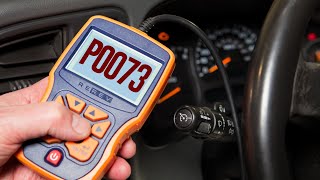
- Read the trouble codes with an OBD-II scanner to confirm P0073 is present. 🎬 Watch: Understanding the P0073 code and how to fix it
- View the live data stream for the Ambient Air Temperature Sensor. A reading that is stuck at a very low temperature (e.g., -40°F/°C) strongly suggests an open circuit, which is consistent with a P0073 code.
- Locate the sensor. On the Passat B6/B7, it is typically found in the lower front bumper grille, to one side of the center, often clipped into the bumper reinforcement or a small bracket.
- Visually inspect the sensor, its connector, and the wiring harness for any obvious signs of damage, corrosion, or breaks. Tug gently on the wires at the back of the connector to see if they are broken internally.
- Disconnect the sensor. Inspect the connector terminals for corrosion or damage. Clean as necessary and apply dielectric grease upon reassembly to prevent future moisture intrusion.
- With the ignition off, use a multimeter set to Ohms (Ω) to test the resistance of the sensor itself. A healthy sensor will show some resistance that changes with temperature. An 'OL' or infinite reading indicates the sensor is internally open and needs replacement.
- If the sensor tests good, check the wiring. Test for 5V reference voltage at the connector with the key on. Then, test for continuity on both wires from the sensor connector back to the PCM. Repair any open circuits found.
- After replacing the sensor or repairing the wiring, clear the code. It may be necessary to drive the vehicle for a short period for the new temperature reading to register and the climate control to function correctly. Some sources suggest a 30-minute idle period or driving over 25 mph for the sensor to calibrate.
Parts You'll Likely Need

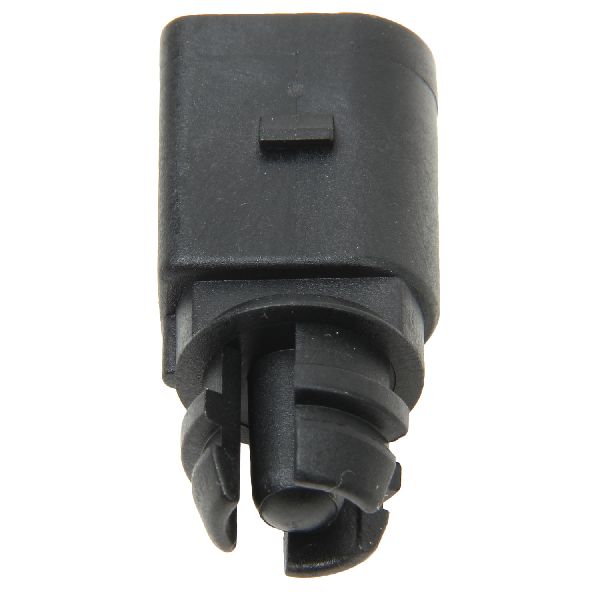
- Ambient Air Temperature Sensor
(OEM #6RD820535, 8Z0820535)— This sensor is the most common cause of the P0073 code due to internal failure from exposure to the elements.
Trusted brands: Bosch, Hella, Rein, Febi Bilstein
OEM price range: $30-$50
Aftermarket price range: $15-$35 - Ambient Air Temperature Sensor Connector Pigtail
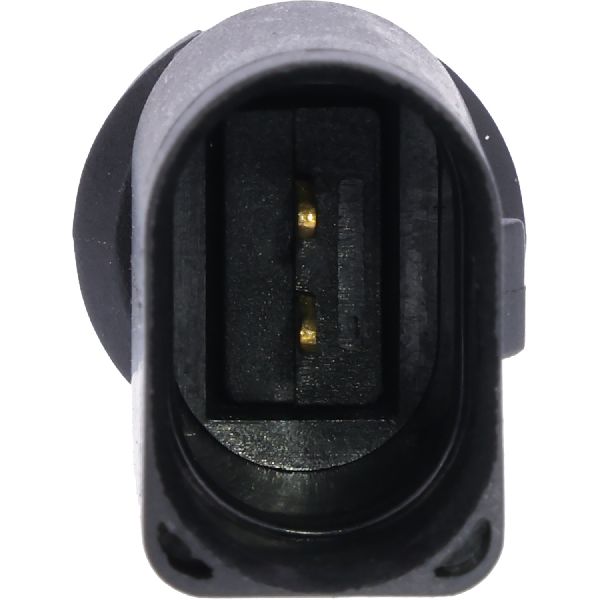
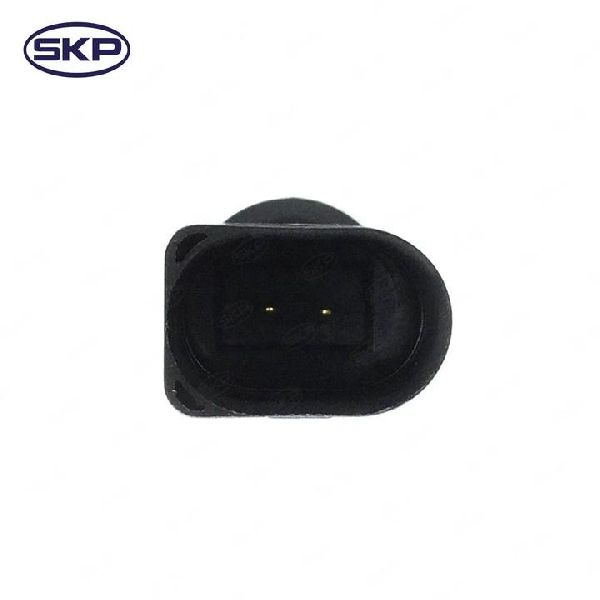
(OEM #1J0973702)— If the wiring is broken at the connector or the connector itself is damaged, replacing the pigtail is the standard repair. This is a very common 2-pin connector used across many VW/Audi applications.
Trusted brands: Dorman, URO Parts, Vemo, Kufatec
OEM price range: $20-$40
Aftermarket price range: $10-$25
Related Codes That Often Appear With This One
- P0070 — P0070 indicates a general malfunction in the ambient air temperature sensor circuit, while P0073 specifically points to a 'high input' fault. They often appear together as they relate to the same component and circuit.
- P0072 — P0072 is 'Ambient Air Temperature Sensor Circuit Low', which can occur if the wiring has an intermittent short to ground before developing a permanent open circuit that triggers P0073.
- 00779 — This is the VW-specific VAG-COM/VCDS fault code for the Outside Air Temp Sensor (G17) showing an 'Open or Short to Plus', which is the direct equivalent of the generic P0073 code.
Platform-Specific Known Issues
- Forum Owner Experience: Wire Break at Connector: A common failure point discussed on VWVortex and TDIClub forums is the two wires breaking right where they enter the plastic connector for the AAT sensor. Due to its location, years of vibration and exposure cause the wires to fatigue and snap, often inside the insulation, making a visual-only inspection insufficient. Owners recommend gently pulling on each wire to confirm its integrity before buying a new sensor.
Mechanic-Grade Diagnostic Values
- Ambient Air Temperature Sensor (G17) Resistance — expected: Approx. 1kΩ at 20°C (68°F), 2.5kΩ at 0°C (32°F), 6.5kΩ at -20°C (-4°F). Resistance is inversely proportional to temperature.. Failure: Infinite resistance ('OL') indicates an open circuit and a failed sensor.
- Voltage at Sensor Connector (Harness Side) — expected: Approximately 5V reference on one pin and a ground path on the other, with the key on, engine off.. Failure: Voltage significantly above 5V or absence of reference voltage points to a wiring short to power or an open in the reference circuit. A reading over 4.5V is often the trigger for the P0073 code.
Hidden / Shadow Codes Worth Checking
- 00779: This is the VAG-COM/VCDS specific fault code for 'Outside Air Temp Sensor (G17): Open or Short to Plus'. It is the direct equivalent to the generic OBD-II code P0073. (see via A VW/Audi-specific scan tool like VCDS, OBDeleven, or a high-end professional scanner is required to see this native fault code.)
Scan Tool Commands That Help
- VCDS, OBDeleven, or similar: Basic Settings for Climatronic / HVAC — After replacing the sensor or repairing wiring, if the automatic A/C system does not function correctly, performing a basic settings or recalibration of the HVAC flaps can resolve lingering issues. On some B7 models, this can be initiated by pressing and holding the 'AC' and 'Front Defrost/Air Direction Forward' buttons simultaneously until the lights on the buttons start to blink.
Wiring & Ground Locations
- G17 Sensor Connector (T2dc) — At the ambient air temperature sensor, located in the lower front bumper grille area.. This is the primary connection point to test the sensor and the harness. For B6 models, Pin 1 is Brown/Blue and goes to a junction, while Pin 2 is Brown/Yellow and also goes to a junction before heading to the instrument cluster. For B7 models, Pin 1 is Brown/Blue wire going to Pin T14c/2, and Pin 2 is a Brown wire providing ground.
- Instrument Cluster Connector (T32c on B7) — The 32-pin connector at the rear of the instrument panel cluster (J285).. The signal from the G17 sensor is processed here. On B7 Passats, the signal wire (Brown/Blue) from the G17 sensor ultimately arrives at Pin 26 (T32c/26) of this connector. Checking for continuity to this pin is a definitive wiring test.
- Ground Point 685 — Located at the front of the right longitudinal member (frame rail) in the engine bay.. This is a primary chassis ground point for components at the front of the vehicle. While the G17 sensor often grounds through the control module, a poor main ground in this area can cause erratic electrical behavior in various front-end systems.
OEM Part Supersession History
8Z0820535→8Z0820535A, 6RD820535— Standard part evolution and consolidation across multiple VW/Audi platforms.1J0973702→1K0973702— Minor design update to the connector housing.
Heads up: The connectors are generally interchangeable, but the newer 1K0 version may have slightly different locking tab ergonomics. Both fit the 8Z0820535 style sensor.
Model Year Variations Within This Range
- 2005-2010 (B6) vs 2011-2015 (B7): While the principle is identical, the specific wiring paths and connector designations in official diagrams differ slightly. For the B6, the G17 wires (e.g., Brown/Blue, Brown/Yellow) route through connector T14c to the Climatronic unit (J255) and Instrument Cluster (J285). For the B7, the G17 wires (e.g., Brown/Blue) route through connector T14c to the Instrument Cluster (J285) at pin T32c/26. The physical repair process remains the same.
Diagnostic Flowchart
Other Known Issues on This Vehicle
Issues unrelated to this code that are worth knowing about as an owner of this generation:
- Timing Chain Tensioner Failure (2.0T TSI) 🔴 High — Common on early EA888 engines (approx. 2008-2013). Failure can occur without warning, often between 60,000 and 100,000 miles, leading to catastrophic engine damage. (Ref: VW TSB 15-12-01 (2028302) and Tech Tip 10-18-01TT describe checking for a stretched chain or faulty tensioner. A class-action lawsuit led to a warranty extension for some vehicles, but many are now expired.)
- DSG Mechatronic Unit Failure 🔴 High — Affects vehicles with the DSG automatic transmission. Symptoms like harsh shifting, flashing 'PRNDS' light, or loss of drive can appear, often starting around 80,000 miles. (Ref: A recall was issued for some models for a software update to prevent drive loss. Failures are often electrical (solenoids, circuit board) or hydraulic.)
- High-Pressure Fuel Pump (HPFP) Failure (TDI) 🔴 High — A known issue on TDI diesel engines where the pump can fail, sending metal fragments through the entire fuel system, requiring a very expensive repair. (Ref: VW extended the warranty on the HPFP for certain 2009-2012 TDI models to 10 years/120,000 miles, contingent on a misfueling guard being installed. This was also a subject of an NHTSA investigation (EA11-003).)
- Engine Oil Leaks 🟠 Medium — Commonly occurs from the valve cover gasket and camshaft chain tensioner gasket on various engines across the 2005-2010 model years.
- Carbon Buildup on Intake Valves (FSI/TSI) 🟠 Medium — Direct-injection engines like the 2.0T are prone to carbon accumulation on the intake valves, leading to misfires, hesitation, and loss of power, typically noticeable after 60,000 miles.
- Cam Follower Wear (2.0T FSI) 🔴 High — On the earlier EA113 2.0T FSI engine, the cam follower for the high-pressure fuel pump can wear through, causing damage to the camshaft and fuel pump. This requires regular inspection.
Used vs. New Parts: Buying Guide for This Vehicle
When a used part is the smart pick: For the connector pigtail. If the damage to your harness is more than a few inches back from the connector, getting a used pigtail from a junkyard gives you a longer section of OEM-spec wire to work with, which can be easier than splicing multiple short extensions.
Donor-vehicle mileage cap: roughly under 150000 miles for the part to have meaningful remaining life.
What to inspect on the donor part:
- For a connector pigtail, inspect for at least 6-8 inches of flexible, uncracked wire insulation.
- Check that the plastic connector housing is not brittle, cracked, or missing its locking tab.
- Ensure the internal metal pins are clean, straight, and free of any green or white corrosion.
Aftermarket brands forum-validated for this vehicle:
- For the sensor: Hella, Bosch, Rein, Febi Bilstein.
- For the connector pigtail: Dorman, URO Parts, Kufatec.
Brands owners have reported issues with on this vehicle:
- Unnamed, no-brand sensors from online marketplaces should be avoided. They often have poor accuracy and a high failure rate, even if they initially clear the code.
Real Owner Stories
Aggregated from forums and TSBs cited above. Mileages and costs reflect what owners reported in those sources.
2012 Passat TDI
Symptoms: The P0073 code was present, and replacing the ambient air temperature sensor did not fix the problem.
What fixed it: The issue was two broken wires right where they enter the plastic sensor connector. Splicing in a new connector pigtail (1J0973702) resolved the code.
Source hint: VWVortex & TDIClub Forums
2010 Volkswagen CC
Symptoms: The Check Engine Light was on for code P0073, and the automatic climate control was not working correctly.
What fixed it: The wires leading to the sensor had corroded and broken at a harness clip near the sensor in the front bumper area. Repairing the broken wires fixed the issue.
Source hint: YouTube - KIT's Auto and Truck Repair
Related OBD-II Codes
Frequently Asked Questions
Where is the ambient air temperature sensor located on my 2005-2015 Passat?
My dashboard says it's -40°F outside and my A/C is blowing hot air. Is this related to code P0073?
I replaced the ambient air temperature sensor but the P0073 code is still there. What's wrong?
My car is a 2011 Volkswagen CC, not a Passat. Does this P0073 information still apply?
How do I test the ambient air temperature sensor to see if it's bad?
After fixing the P0073 issue, does the system need to be recalibrated?
Helpful Videos
We Have This Part in Stock



The information in this article is provided for general reference and educational purposes only. Vehicle specifications, procedures, and part compatibility can vary by production date, trim level, and region. Always consult your vehicle's factory service manual and verify part numbers before purchasing or performing repairs. Safety-critical components such as airbags, seat belts, and braking systems should be installed by a qualified professional.
- Volkswagen Passat:
- 🎬 Helpful Videos
- 🛍️ Shop This Part
- What's Unique About the 2005-2015 Volkswagen Passat
- Symptoms You May Notice
- Most Likely Causes
- Rare But Worth Checking
- Diagnosis Steps
- Parts You'll Likely Need
- Related Codes That Often Appear With This One
- Platform-Specific Known Issues
- Mechanic-Grade Diagnostic Values
- Hidden / Shadow Codes Worth Checking
- Scan Tool Commands That Help
- Wiring & Ground Locations
- OEM Part Supersession History
- Model Year Variations Within This Range
- Diagnostic Flowchart
- Other Known Issues on This Vehicle
- Used vs. New Parts: Buying Guide for This Vehicle
- Real Owner Stories
- 2012 Passat TDI
- 2010 Volkswagen CC
- Related OBD-II Codes
- Frequently Asked Questions
- 🎟️ Get 5% Off