

OBD-II Code P0072: Ambient Air Temperature Sensor Circuit Low
The Ultimate 2026 Guide: What P0072 Means, Why It Triggers, and Exactly How to Fix It
- P0072 disables your automatic climate control and A/C compressor, but the vehicle remains 100% safe to drive.
- Exposed, corroded wiring causes over 60% of P0072 codes, making circuit testing mandatory before spending $20-$100 on a new sensor.
- A dashboard temperature display stuck exactly at -40°F confirms the Powertrain Control Module is detecting a short-to-ground in the sensor circuit.
- Check Technical Service Bulletins (TSBs) first; 2015-2018 Subaru Outbacks require a $20 foam insulation kit rather than a sensor replacement to fix this code.
What Does P0072 Mean?

P0072 means the Powertrain Control Module (PCM) is receiving an abnormally low voltage signal from the Ambient Air Temperature (AAT) sensor. The computer interprets this near-zero voltage as an impossibly cold outside temperature, defaulting to exactly -40°F (-40°C). The PCM uses this sensor primarily to regulate the automatic climate control system, but also relies on it for rationality checks against engine sensors and minor cold-start fuel trim calculations.
Technical definition: The SAE/OBD-II definition is "Ambient Air Temperature Sensor Circuit Low Input". This diagnostic trouble code (DTC) sets when the AAT sensor's signal circuit voltage drops below the specified minimum threshold (typically under 0.2 to 0.5 volts), indicating a short to ground.
Can I Drive With P0072?
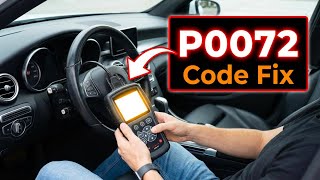
Yes. You can safely drive with a P0072 code. It does not affect core engine operation or safety. However, your automatic climate control will malfunction, the A/C compressor will not engage 🎬 Watch: How to test and replace the sensor to restore A/C., and features like remote start or auto start/stop will be disabled.
Common Causes

- Damaged, Corroded, or Shorted Wiring/Connector (Very Common) — The AAT sensor sits in vulnerable locations like behind the front grille or inside a side mirror. Constant exposure to moisture, road salt, and debris makes corroded connector pins and shorted wires the leading cause of P0072.
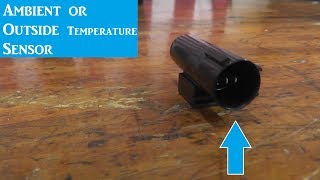
- Faulty Ambient Air Temperature (AAT) Sensor (Common) — The sensor itself (a thermistor) fails internally by developing a short circuit, sending a consistently low voltage signal. 🎬 See this walkthrough on fixing the AAT sensor circuit low code. While common, it is frequently misdiagnosed when the actual problem is the wiring harness.
- Insufficient Sensor Insulation (Heat Soak) (Common On Specific Models) — On 2015-2018 Subaru Outback and Legacy models, the sensor lacks adequate shielding from engine heat. Radiator heat "soaks" the sensor at idle, triggering a false P0072. A specific TSB fixes this with an insulation kit.
- Sensor Covered by Debris (Less Common) — A thick buildup of mud, snow, or ice completely insulates the sensor from outside air, preventing accurate readings and trapping moisture against the electrical connector.
- Aftermarket Accessories or Incorrect Modifications (Less Common) — Installing aftermarket grilles, bumpers, or mirrors frequently pinches or damages the AAT sensor wiring harness. If the code appears immediately after a modification, a pinched wire is the culprit.
- Poor Connection at a Control Module (Uncommon) — The issue sometimes stems from a poor pin connection far from the sensor. On certain Volkswagens, an intermittent P0072 traces back to a faulty connection at the main instrument cluster. GM vehicles suffer from a problematic inline connector (X315) near the radiator.
- Faulty Control Module (PCM, BCM, DDM) (Rare) — Rarely, the control module interpreting the signal (PCM, Body Control Module, or Driver Door Module) fails internally. A short in the module's input circuit causes it to read the voltage incorrectly.
- Software or Calibration Glitch (Rare) — A vehicle's software calibration can corrupt after a failed update or battery disconnect, causing the module to misinterpret a normal voltage signal. This requires a dealer software re-flash.
Symptoms
- Check Engine Light On — The PCM illuminates the Malfunction Indicator Lamp (MIL) on your dashboard immediately upon detecting the short to ground.
- Incorrect Outside Temperature Display — The dashboard or infotainment temperature display sticks at a default low value, exactly -40°F (-40°C), or shows blank dashes.
- Automatic Climate Control Malfunction — The automatic A/C and heating system fails. The A/C compressor will not engage because the computer believes the outside air is freezing.
- Radiator Fan Runs Constantly — On specific vehicles (like certain Volkswagens), a failed AAT sensor reading triggers the PCM to run the radiator cooling fans at maximum speed as a fail-safe measure.
- Other Warning Lights (e.g., TPMS) — On integrated systems where the AAT circuit routes through the instrument cluster, a fault triggers shared module logic errors, illuminating unrelated warnings like the Tire Pressure Monitoring System (TPMS) light.
- Reduced Fuel Economy or Rough Idle (also visible on scanner) — The PCM uses AAT data for minor cold-start fuel trim adjustments. An incorrect -40°F reading forces a richer fuel mixture, causing a temporary rough idle and a 1-5% drop in MPG.
Diagnostic Flowchart
Tap your situation to follow the diagnostic path that matches what you're seeing on this code.
Common Fixes & Costs
- Repairing Damaged Wiring or Connector — Parts: $15-$40, Labor: $100-$200, ~1.2 hr book time (Intermediate)
- Replacing the Ambient Air Temperature Sensor — Parts: $20-$60, Labor: $50-$150, ~0.8 hr book time (DIY)
- Installing Manufacturer Insulation Kit (Subaru) — Parts: $15-$25, Labor: $100-$150 (if front bumper removal is needed), ~1.0 hr book time (DIY)
- Cleaning Debris and Corrosion — Parts: $5-$15 (electrical contact cleaner), Labor: $0, ~0.2 hr book time (DIY)
- Reprogramming or Replacing a Control Module — Parts: $500-$1200, Labor: $150-$300, ~2.0 hr book time (Professional)
Used vs. New Parts: Buying Guide
When a used part is worth it: It never makes sense to buy a used Ambient Air Temperature sensor. New OEM or quality aftermarket sensors cost $20-$100 and include a warranty. The risk of a used electronic sensor failing immediately outweighs the negligible savings.
Donor-vehicle mileage cap: roughly under 10000 miles for the part to have meaningful remaining life.
Donor quality checklist:
- Source from a vehicle with very low mileage scrapped for reasons unrelated to front-end damage.
- Ensure the part number is an exact match for your vehicle's VIN.
- Avoid parts from regions with heavy road salt use to prevent pre-existing corrosion.
Decision logic:
- If A new OEM or reputable aftermarket sensor is available → Always buy new to secure a warranty and guarantee a fresh internal thermistor.
- If The part is a simple wiring pigtail/connector → Buy new. Fresh connectors ensure a weather-tight seal and clean contacts.
- If You are on an extreme budget and the new part is unusually expensive → A used part is an absolute last resort; accept the high risk of a short service life.
Warranty tradeoff: Used parts carry a 30-day warranty at best. New aftermarket parts from brands like NTK offer limited lifetime warranties, while OEM parts carry at least a 1-year warranty.
Worst-case if a used part fails: $150-$300 if a used sensor fails, factoring in the cost of a replacement sensor and repeated diagnostic labor.
What Happens If You Wait — Timeline
- 0-1 month: Check Engine Light illuminates. Automatic climate control is disabled (A/C won't engage). Dashboard temperature display sticks at -40°F. No direct engine damage occurs. (MPG impact: 0-1%% · Added cost: $0)
- 1-6 months: A minor drop in fuel economy occurs as the PCM uses the default -40°F reading for cold-start fuel calculations, forcing a slightly rich mixture. (MPG impact: 1-5%% · Added cost: $10-$50 in wasted fuel)
- 6-12 months: The vehicle automatically fails state OBD-II emissions inspections. A simple frayed wire left exposed to the elements corrodes further, making the eventual repair more complex. (MPG impact: 1-5%% · Added cost: $50-$200 (Inspection fees + expanding harness repair))
- 12+ months (Worst-Case Scenario): A damaged wiring harness (especially in a door jamb) eventually shorts against another circuit, potentially destroying a sensitive control module like the Body Control Module (BCM). (MPG impact: 1-5%% · Added cost: $500-$1500 (Cost of diagnosing and replacing a damaged control module))
Cost of Not Fixing It
- Immediate (0-1 month): Total loss of automatic climate control. The A/C compressor will not engage, and heating will not regulate properly, causing significant cabin discomfort. (Added cost: $0)
- 1-6 months: A minor decrease in fuel economy (1-5%) occurs on vehicles where the PCM uses AAT data for cold-start fuel calculations, forcing a slightly rich air-fuel mixture. (Added cost: $10-$50 in wasted fuel)
- 6+ months: Guaranteed failure of state OBD-II emissions inspections. Continued exposure of a damaged wiring harness accelerates corrosion, leading to complex electrical shorts. (Added cost: $50-$200 for re-inspection fees and expanded wiring repairs)
Diagnosis Steps

- Visual Inspection
Locate the AAT sensor behind the front grille, in the lower bumper, or under a side-view mirror. Inspect the sensor, connector, and exposed wiring for physical damage, green/white corrosion, frayed insulation, or heavy debris.
Tools: Flashlight (Beginner) - Check for Technical Service Bulletins (TSBs)
Search online for TSBs related to P0072 for your specific year, make, and model. Manufacturers release bulletins for known issues (like Subaru's heat soak or Ford's mirror wiring) that bypass standard diagnostic steps.
Tools: Smartphone or Computer (Beginner) - Scan Live Data to Confirm the Fault
Use an OBD-II scanner to view the live data stream for the Ambient Air Temperature sensor PID. A P0072 code consistently shows a temperature reading of -40°F and a voltage reading below 0.5V.
Tools: OBD-II Scanner (Beginner) - Perform a Harness 'Wiggle Test'
With the ignition on and your scanner displaying AAT live data, gently wiggle the wiring harness at the sensor connector and along accessible points. If the temperature or voltage reading flickers, you have an intermittent break or short in the wiring.
Tools: OBD-II Scanner (Beginner) - Perform a Jumper Wire Test
Disconnect the sensor with the ignition on. Insert a small jumper wire (or paperclip) to connect the two terminals in the wiring harness connector. Watch the live data on your scanner. If the temperature jumps from -40°F to the highest possible value (e.g., 250°F), the wiring and PCM are perfect. The sensor itself is the problem.
Tools: OBD-II Scanner, Jumper wire or paperclip (Intermediate) - Test the Circuit at the Connector
If the jumper test fails, use a multimeter to test the electrical connector. One pin must have a 5-volt reference signal from the PCM, and the other must show a clear path to ground. A missing 5V reference confirms a wiring short between the connector and the control module.
Tools: Multimeter (Intermediate) - Test the Sensor's Resistance
Set your multimeter to Ohms (Ω) and measure the resistance across the two terminals on the unplugged sensor. A common value for a Type 3 NTC thermistor is ~10,000 Ohms at 77°F (25°C). A reading near zero confirms an internal short circuit.
Tools: Multimeter (Intermediate) - Advanced: Cross-Reference Resistance to Temperature
Compare the sensor's resistance to a manufacturer temperature/resistance chart. For a typical 10k NTC thermistor: 32°F = ~32.6 kΩ; 50°F = ~19.9 kΩ; 95°F = ~6.5 kΩ. Readings significantly outside this curve confirm sensor failure.
Tools: Multimeter, Temperature/Resistance Chart (Advanced) - Advanced: Check for Shorts to Other Circuits
On vehicles with the sensor in a heated mirror, a short occurs between the AAT signal wire and the mirror heater circuit. With the sensor disconnected, check for resistance between the AAT signal wire and the mirror heater wire. Low resistance indicates a short.
Tools: Multimeter, Wiring Diagram (Advanced)
When This Code Triggers (Freeze-Frame Conditions)
- Engine State: Ignition On or Engine Running (The code sets as a continuous monitor as soon as the ignition is turned on and the PCM detects the low voltage.)
- Engine Coolant Temp (ECT): Matches Ambient (Cold Soak) (A key rationality test runs after an 8+ hour cold soak; the PCM compares AAT, ECT, and IAT readings. A massive discrepancy triggers the code.)
- Vehicle Speed: 0-70 mph (The fault logs under any driving condition, from idle to highway speeds, because the circuit monitor runs continuously.)
- Engine Load: 15-50% (The fault is independent of engine load but captures this data in the freeze frame when the code triggers.)
Related Codes
- P0073 — The direct opposite of P0072. P0073 (Circuit High) sets when voltage is above the maximum threshold, indicating an open circuit (broken wire or unplugged sensor). P0072 indicates a short to ground.
- P0071 — P0071 (Sensor Range/Performance) is a logic fault set when the sensor's reading is irrational (e.g., stuck at 75°F while driving). P0072 is a hard electrical fault. P0071 often precedes P0072 as a wire begins to fail.
- P0070 — P0070 is a general fault code for the AAT sensor circuit, set when the PCM sees a major disagreement between temperature sensors after a cold soak. P0072 is a more specific electrical fault pointing directly to low voltage.
- P0074 — P0074 (Circuit Intermittent) sets when the signal is unstable or cutting out rapidly. This is caused by a loose connection or water intrusion. A 'wiggle test' easily diagnoses a P0074.
Climate & Environmental Factors
- Road Salt / High Humidity: Salt spray and moisture accelerate corrosion on the sensor's connector pins and penetrate wire insulation, creating a direct short to ground. This is the primary trigger in coastal areas and harsh winter climates.
- Extreme Cold: Cold temperatures make old wiring insulation brittle and prone to cracking. Once cracked, moisture enters the harness and shorts the circuit.
- Physical Debris: Snow, ice, or mud packs around the sensor, insulating it from ambient air and trapping moisture directly against the electrical connector, promoting rapid corrosion.
How to Talk to a Mechanic About This Code
Say this: "I have a P0072 code for the ambient air temperature sensor. I'd like a diagnosis that specifically tests the sensor, its connector, and the wiring for a short to ground before any parts are replaced."
This signals you know the most common cause is a wiring issue, not just a bad sensor. It prevents a shop from simply replacing the cheapest part without proper diagnosis, which leads to the code returning.
Avoid saying:
- 'My check engine light is on, can you look at it?'
- 'My A/C isn't working and the temperature is wrong.'
- 'Just fix whatever is needed.'
Questions to ask before authorizing the repair:
- Did you find a specific TSB for my vehicle related to this code?
- Can you confirm you tested for 5-volt reference and ground at the sensor connector?
- If the sensor is bad, what resistance did it measure?
- If the wiring is bad, can you show me exactly where the short or damage is located?
- What is the warranty on this specific repair, including both parts and labor?
Where to Take It: Dealer vs Independent vs Chain
- Dealer:
Best for warranty work or known TSBs. Overkill for a simple out-of-warranty sensor or wiring fault.
Best for: Vehicles still under bumper-to-bumper or emissions warranty., Known manufacturer-specific TSBs that require a special part (e.g., Subaru insulation kit, Ford mirror wiring)., Complex electrical issues where the fault traces to a control module (BCM, DDM).
Downsides: Highest labor rates., May default to replacing a whole assembly (like a $600 mirror) instead of performing a targeted $50 wiring repair. (Typical cost: +50% vs. baseline) - Independent Shop:
Best overall fit for most P0072 scenarios. A reputable independent shop effectively diagnoses a sensor vs. wiring problem at a reasonable cost.
Best for: Out-of-warranty vehicles where cost is a factor., Diagnosing and repairing common wiring and sensor issues., Vehicles with a straightforward sensor location (e.g., behind the grille).
Downsides: Quality varies greatly; seek out shops with strong reviews in electrical diagnostics., May lack access to the latest manufacturer-specific software updates. (Typical cost: +0% vs. baseline) - Chain Shop:
Use with caution. Acceptable if you have already diagnosed a bad sensor and just need it replaced, but avoid for initial diagnosis.
Best for: Simple, pre-diagnosed part replacements.
Downsides: Technician skill varies dramatically; often lacks experience for electrical diagnosis beyond reading the code., High likelihood of misdiagnosing the issue as a bad sensor without checking the wiring. (Typical cost: -10% vs. baseline)
When to Walk Away From the Repair
If the total estimated repair cost exceeds 40% of the vehicle's current private-party value, seriously consider selling the car as-is.
- Car worth $4000, fix is $200: Fix it. A P0072 repair is low-cost and restores key functions like A/C, making the car pass inspection and increasing resale value.
- Car worth $12000, fix is $650: Fix it. Even a complex dealer repair (e.g., mirror harness replacement) is well below the threshold for a vehicle of this value.
- Car worth $2500, fix is $1500: Walk away. This implies a major electrical problem (like a bad control module) was found. The cost is too high for the car's value.
What Scan Tool You Need for This Code
Minimum: An OBD-II scanner that can read and display Live Data PIDs (Parameter IDs).
A basic $20 code reader only tells you the code 'P0072'. It cannot show live voltage and temperature data, which is essential for performing the 'wiggle test' or 'jumper wire test' to determine if the fault is the sensor or the wiring.
Budget: BlueDriver Pro or XTool A30D (~$90-120) — These Bluetooth scanners connect to your smartphone and provide detailed live data streams. You can watch the AAT sensor's voltage and temperature readings in real-time to confirm the fault and test the circuit.
Mid-range: Innova 5610 or Topdon Artdiag Pro (~$300-350) — These handheld scanners offer robust features, including bidirectional controls and the ability to graph live data, making it easier to spot intermittent drops in the sensor's signal during a wiggle test.
Professional: Autel MaxiCOM MK808 or XTOOL D8S (~$500-900) — Provides professional-level diagnostic capabilities, including topology mapping to visualize how the AAT sensor communicates with various modules, which is helpful for complex issues on brands like VW or Dodge.
Rent vs buy: For a one-time diagnosis, rent a scanner. AutoZone and O'Reilly Auto Parts have tool loaner programs where you pay a deposit for a scanner capable of reading live data, and get a full refund upon return. Buy a scanner only if you plan to do your own car repairs more than once a year.
How to Clear the Code After You Fix It
- Use an OBD-II scan tool to erase the DTCs from the PCM's memory.
- Perform a complete drive cycle to allow the vehicle's readiness monitors to run and confirm the fix.
Drive cycle (~20 minutes): Start the engine and idle for 2-3 minutes. Drive in mixed city/highway conditions, including steady-state cruising and stop-and-go traffic. This allows the PCM to compare the AAT sensor with the Intake Air Temperature (IAT) sensor as the engine warms up.
Readiness monitors affected: Comprehensive Component Monitor (CCM)
Before emissions retest: drive at least 50 miles to fully set monitors.
Watch out for:
- Replacing the sensor without testing the wiring first guarantees the code will return if the harness is shorted.
- Clearing the code without performing a repair results in the Check Engine Light reappearing immediately upon startup.
- Ignoring Technical Service Bulletins (TSBs) leads to unnecessary part replacement when a simple insulation kit or wiring repair is the manufacturer-specified fix.
Will This Fail Emissions / State Inspection?
Yes — this code typically fails an OBD-II emissions inspection.
- California: An active P0072 code causes an automatic smog check failure. The Check Engine Light must be off and readiness monitors set to 'Ready'.
- New York: The NYS DMV emissions inspection includes an OBD-II scan. An illuminated Check Engine Light for P0072 is an automatic failure.
- Texas: In the 17 Texas counties requiring emissions testing, a vehicle with P0072 fails the OBD portion of the inspection.
Most Commonly Affected Vehicles

- Subaru Outback, Legacy (2015-2018) — Addressed by TSB 07-171-18R. Engine heat soaks the sensor, causing a false P0072. The fix is installing an updated foam insulation kit (Part No. 52829AL000), not replacing the sensor.
- Ford F-Super Duty, Fusion, Maverick (2013-2025) — TSB 25-2545 requires replacing the AAT sensor and wiring pigtail in the passenger-side mirror on 2023-2025 Super Duty trucks. Wiring in the flexible door harness is a frequent failure point across all modern Fords.
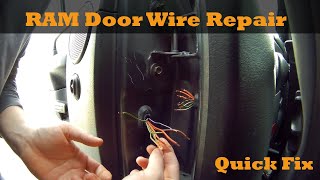
- Dodge / Ram / Jeep Ram 1500/2500, Grand Cherokee (2013-2024) — The AAT sensor sits in the driver's side mirror. P0072 is almost always caused by broken wires inside the flexible door jamb harness rather than a failed sensor.
- Volkswagen Jetta, Golf, Passat (2012-2018) — Triggered by a poor connection at the main instrument cluster's 32-pin connector. This specific fault often causes an intermittent TPMS light to illuminate simultaneously.
- General Motors (Chevrolet/GMC) Silverado, Sierra, Equinox (2014-2024) — GM TSB PIT5535D advises inspecting the X315 inline harness connector near the radiator support for corrosion or poor pin fitment before replacing any parts.
- Honda Accord, Civic, Pilot (2008-2022) — The AAT sensor is located behind the front bumper. Failures are straightforward and usually isolated to physical damage from road debris or a failed sensor.
- Nissan Altima, Rogue, Pathfinder (2013-2023) — Sensors are located near the hood latch in front of the radiator. Failures are typically due to direct water intrusion into the connector.
Manufacturer-Specific Notes
- Subaru: For 2015-2018 Legacy and Outback models, P0072 is caused by engine heat affecting the sensor. The official fix is adding a foam insulation kit (Part No. 52829AL000) per TSB 07-171-18R. Do this before replacing the sensor.
- Ford: The AAT sensor is in the passenger-side mirror. Wiring in the door jamb is the primary failure point. TSB 25-2545 for 2023-2025 Super Duty trucks details a repair involving a new sensor and pigtail in the mirror.
- Dodge/Ram/Jeep: The sensor is in the driver's side mirror, and its signal passes through the Driver Door Module (DDM). A P0072 is frequently caused by broken wires in the door harness, making diagnosis more complex than a simple sensor check.
- Volkswagen: An intermittent P0072 accompanied by a TPMS warning light points to a poor connection at the main instrument cluster harness, which receives the AAT signal, rather than a sensor failure.
- General Motors (Chevrolet/GMC): TSB PIT5535D addresses inaccurate temperature displays. GM advises checking the X315 inline connector near the radiator support for corrosion before replacing parts.
Real Owner Stories
2017 Subaru Outback with P0072 on a hot day
Owner experienced a Check Engine Light and the A/C stopped working during hot weather. The dashboard temperature display was incorrect.
Outcome: The owner removed the front bumper, installed the new insulation piece around the existing sensor per the TSB instructions, and cleared the code. The P0072 code did not return, and A/C function was restored.
Lesson: Always check for TSBs before buying parts. For 2015-2018 Subaru Outback/Legacy, P0072 is a design issue fixed with a $20 insulation kit, not a new sensor.
2019 Ram 1500 with P0072 and -40°F display
The truck's Check Engine Light came on, the outside temperature read -40°F, and the A/C would not engage. The sensor is located in the driver's side mirror.
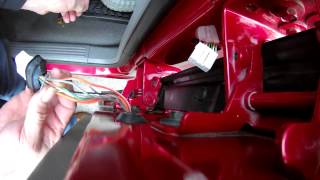
Outcome: The owner pulled back the rubber boot between the door and the truck body, located the broken wire, and repaired it using a butt connector and heat shrink tubing. The total cost was a few dollars, avoiding a costly new mirror assembly.
Lesson: On vehicles with mirror-mounted sensors, broken wires in the door jamb harness are a very common cause for P0072. Inspect this flexible harness before replacing the sensor.
Volkswagen Jetta with intermittent P0072 and TPMS light
The owner had an intermittent Check Engine Light for P0072, and simultaneously, the TPMS warning light would flash and stay on. The temperature display showed dashes.
Outcome: The owner removed the instrument cluster, disconnected the main connector, cleaned the pins with electrical contact cleaner, and re-seated it firmly. This completely resolved both the P0072 code and the TPMS warning light.
Lesson: If P0072 is accompanied by seemingly unrelated warning lights (like TPMS on a VW), the fault lies at a shared control module or connector, not the sensor circuit itself.
Jeep JK Wrangler with P0072 after installing aftermarket grille
Immediately after swapping the factory front grille for a blacked-out aftermarket one, the Check Engine Light came on with code P0072.
Outcome: Upon re-inspecting the grille area, the owner found the AAT sensor wire had been pinched by the new grille during installation, causing a short to ground. They freed the pinched wire, taped it, and the code cleared permanently.
Lesson: If a trouble code appears immediately after performing a modification, re-inspect your work. A pinched wire or unplugged connector is highly likely.
How to Prevent This Code From Triggering
- Apply dielectric grease to the connector's weather seal (Whenever the connector is disconnected for service) — Dielectric grease is a non-conductive sealant. Applying it to the rubber gasket blocks moisture, road salt, and dirt from entering, preventing the pin corrosion that causes P0072.
- Inspect and secure the AAT sensor wiring harness (During every oil change or under-hood service) — The sensor's exposed location makes its wiring vulnerable. Ensuring the harness is securely clipped prevents the insulation from rubbing against sharp edges and shorting out.
- Install protective wire loom or wrap on exposed wiring (Once, as a proactive measure) — Adding split-loom conduit or specialty automotive tape provides a physical barrier against abrasion, road debris, and rodents that chew on soy-based wire insulation.
- Gently clean the sensor and surrounding area (After driving in heavy snow, mud, or after a car wash) — A sensor packed with ice or mud traps moisture against the connector, leading to corrosion. Clearing debris ensures accurate readings and allows the connector to dry.
Frequently Asked Questions
Where is the ambient air temperature sensor located?
It is usually mounted behind the front grille, in the lower bumper, or near the radiator. On many modern Ford, Ram, and Jeep vehicles, it is located inside the passenger or driver side-view mirror.
Can a bad ambient temp sensor stop my A/C from working?
Yes. The climate control system uses this sensor to prevent the A/C evaporator from freezing. If the computer reads -40°F, it completely disables the A/C compressor.
I replaced the sensor, but the P0072 code came back. What now?
You likely have a shorted wire or corroded connector. Perform a jumper wire test to verify the circuit integrity between the connector and the PCM. Also, check for vehicle-specific TSBs.
Why does my car's temperature display show exactly -40°F?
P0072 indicates the sensor's voltage dropped below 0.5 volts. The vehicle's computer interprets this minimum voltage as the lowest possible temperature in its programming, which is exactly -40°F.
Can P0072 cause my TPMS light to come on?
Yes, on certain vehicles like Volkswagen Jettas. The ambient temperature signal routes through the main instrument cluster, and a fault here triggers shared logic errors, illuminating the TPMS light.
Is it hard to replace the ambient air temperature sensor myself?
Grille-mounted sensors take less than 15 minutes to replace with basic hand tools. Mirror-mounted sensors are intermediate repairs requiring door panel removal and careful wiring routing.
Can this code affect my car's auto start/stop feature?
Yes. Auto start/stop systems require accurate ambient temperature data to manage cabin climate loads. A P0072 code automatically disables the start/stop feature as a fail-safe.
Key Takeaways
- P0072 disables your automatic climate control and A/C compressor, but the vehicle remains 100% safe to drive.
- Exposed, corroded wiring causes over 60% of P0072 codes, making circuit testing mandatory before spending $20-$100 on a new sensor.
- A dashboard temperature display stuck exactly at -40°F confirms the Powertrain Control Module is detecting a short-to-ground in the sensor circuit.
- Check Technical Service Bulletins (TSBs) first; 2015-2018 Subaru Outbacks require a $20 foam insulation kit rather than a sensor replacement to fix this code.
Helpful Videos

The information in this article is provided for general reference and educational purposes only. Vehicle specifications, procedures, and part compatibility can vary by production date, trim level, and region. Always consult your vehicle's factory service manual and verify part numbers before purchasing or performing repairs. Safety-critical components such as airbags, seat belts, and braking systems should be installed by a qualified professional.
- 🎬 Helpful Videos
- What Does P0072 Mean?
- Can I Drive With P0072?
- Common Causes
- Symptoms
- Diagnostic Flowchart
- Common Fixes & Costs
- Used vs. New Parts: Buying Guide
- What Happens If You Wait — Timeline
- Cost of Not Fixing It
- Diagnosis Steps
- When This Code Triggers (Freeze-Frame Conditions)
- Related Codes
- Climate & Environmental Factors
- How to Talk to a Mechanic About This Code
- Where to Take It: Dealer vs Independent vs Chain
- When to Walk Away From the Repair
- What Scan Tool You Need for This Code
- How to Clear the Code After You Fix It
- Will This Fail Emissions / State Inspection?
- Most Commonly Affected Vehicles
- Manufacturer-Specific Notes
- Real Owner Stories
- 2017 Subaru Outback with P0072 on a hot day
- 2019 Ram 1500 with P0072 and -40°F display
- Volkswagen Jetta with intermittent P0072 and TPMS light
- Jeep JK Wrangler with P0072 after installing aftermarket grille
- How to Prevent This Code From Triggering
- Frequently Asked Questions
- Where is the ambient air temperature sensor located?
- Can a bad ambient temp sensor stop my A/C from working?
- I replaced the sensor, but the P0072 code came back. What now?
- Why does my car's temperature display show exactly -40°F?
- Can P0072 cause my TPMS light to come on?
- Is it hard to replace the ambient air temperature sensor myself?
- Can this code affect my car's auto start/stop feature?
- Key Takeaways
- 🎟️ Get 5% Off