

P0068 on 2012-2017 Kia Sportage 2.4L GDI: MAP/Throttle Correlation Causes and Fixes
For a 2012-2017 Kia Sportage with the 2.4L GDI engine, code P0068 is most often caused by a faulty Manifold Absolute Pressure (MAP) sensor or a significant vacuum leak. A bad MAP sensor is a very common failure point on this engine, with a typical life expectancy of 125,000-150,000 miles, and is a relatively inexpensive and easy part to replace. Cleaning the throttle body and performing a throttle relearn procedure is another common fix.
- P0068 on this Sportage means the MAP sensor and throttle position readings don't agree.
- The most likely cause is a faulty MAP sensor; it's a known high-failure part on this engine.
- Before replacing parts, always perform a thorough inspection for vacuum leaks, especially around the air intake hose and gaskets.
- A dirty throttle body is another common cause; cleaning it is a simple and effective troubleshooting step.
- Always use the correct OEM part numbers for replacement: MAP Sensor (39300-2B000) and Throttle Body Gasket (28312-2G700).
What's Unique About the 2012-2017 Kia Sportage
On this specific Kia 2.4L GDI engine and its platform mates (Hyundai Sonata/Tucson, Kia Sorento/Optima), the P0068 code is very frequently traced back to a failed MAP sensor. While vacuum leaks and dirty throttle bodies are common causes on many vehicles, mechanics and owner experiences suggest the MAP sensor itself has a high failure rate on this platform. The diagnostic process should prioritize checking the MAP sensor and its seal after a basic inspection for obvious air leaks.
Generation note: The 2012-2017 year range covers the end of the third generation (SL, 2011-2016) and the beginning of the fourth generation (QL, 2017-2022). Both generations used the 2.4L GDI engine, and the primary causes and parts (like the MAP sensor and throttle body) for this code are largely the same across these model years.
Symptoms You May Notice
- Check Engine Light is on
- Rough, unstable, or surging idle
- Hesitation or lack of power during acceleration
- Reduced fuel economy
- Engine may stall when coming to a stop or at low speeds
- Engine may be hard to start
- Strong smell of gasoline from running rich
- Replacing the Throttle Position Sensor (TPS) by itself. On this engine, the TPS is part of the complete electronic throttle body assembly and is not sold separately.
- Replacing oxygen sensors. While O2 sensors are related to the air-fuel mixture, they are not the cause of a correlation fault between the MAP and TPS.
- Replacing the MAP sensor when a vacuum leak is the true cause. Always check for vacuum leaks before replacing parts.
Most Likely Causes
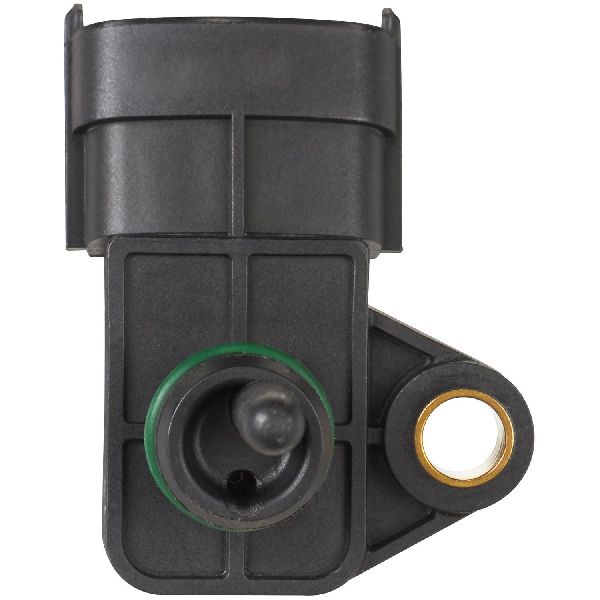
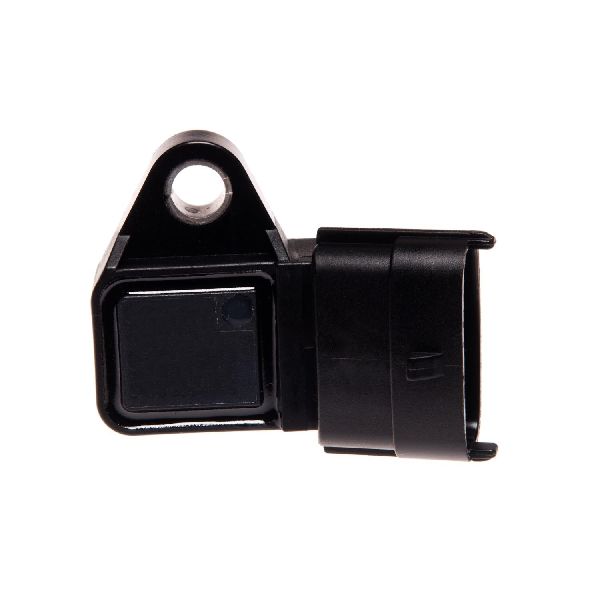
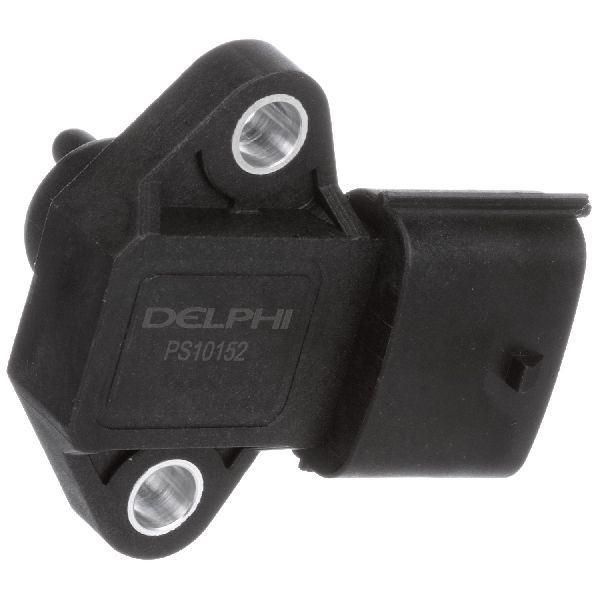
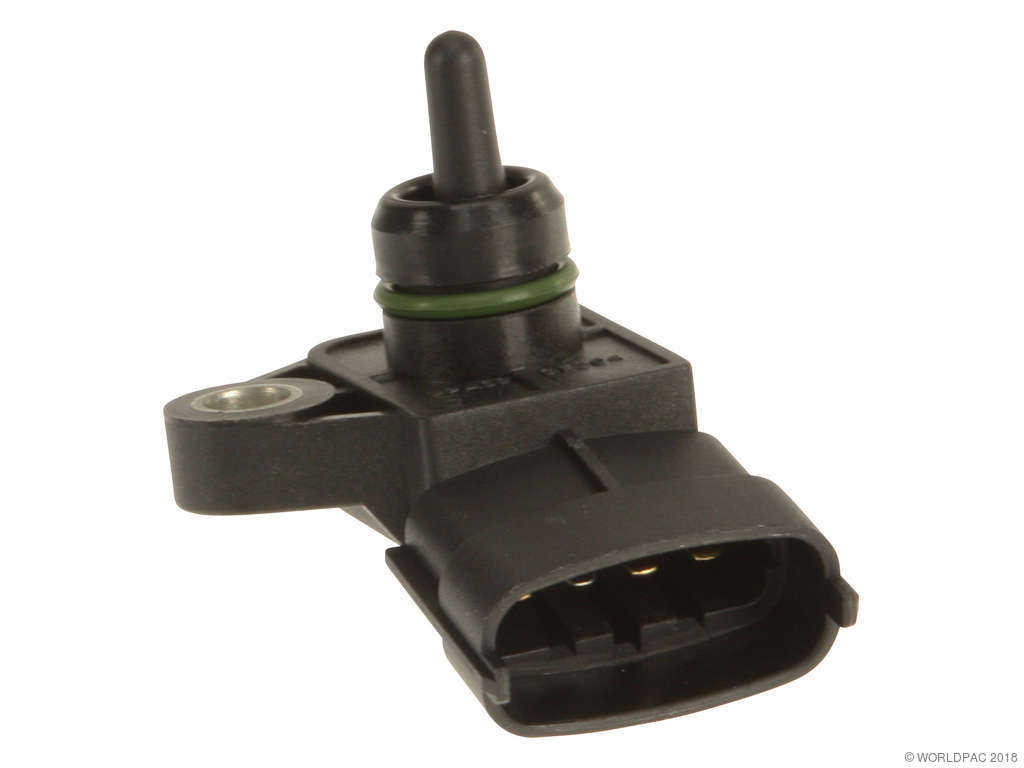
- Faulty Manifold Absolute Pressure (MAP) Sensor 🔴 High Probability This specific part is cited as a very frequent point of failure for this code on the Sportage and its platform mates with the 2.4L GDI engine. The average life expectancy is around 125,000-150,000 miles.
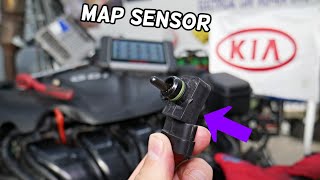
How to confirm: After ruling out vacuum leaks, test the sensor's voltage with a scan tool or multimeter. The voltage should change smoothly as engine vacuum changes. A video guide shows the sensor is located on the intake manifold and held by a single 10mm bolt. 🎬 Watch: How to locate and remove the MAP sensor.
Typical fix: Replace the MAP sensor. It is recommended to also replace the small O-ring that seals it to the intake manifold.
Est. part cost: $65-$105 - Vacuum Leak 🟡 Medium Probability Vacuum leaks introduce unmetered air into the engine, directly causing a mismatch between what the MAP sensor reads and what the throttle position implies. Common failure points include the PCV valve or its hose, a cracked air intake hose, or hardened gaskets.
How to confirm: Perform a smoke test to find the source of the leak. Common areas include a cracked air intake hose, a bad throttle body gasket, a leaking MAP sensor O-ring, or a failed PCV valve/hose.
Typical fix: Replace the cracked hose or faulty gasket that is causing the leak.
Est. part cost: $10-$50 - Dirty Throttle Body 🟡 Medium Probability Gasoline Direct Injection (GDI) engines can be prone to carbon buildup on the back of the intake valves and in the throttle body. This buildup around the throttle plate can restrict its movement or prevent it from closing properly, causing airflow to be different than expected by the PCM.
How to confirm: Remove the air intake hose from the throttle body and visually inspect the throttle plate and bore for black carbon deposits.
Typical fix: Clean the throttle body bore and plate with a dedicated throttle body cleaner and a soft brush or rag. Do not force the electronic throttle plate open by hand; have a helper press the accelerator pedal with the ignition on (engine off) to open it. A throttle relearn procedure must be performed after cleaning.
Est. part cost: $10-$20 - Damaged Wiring or Connector ⚪ Low Probability
How to confirm: Visually inspect the wiring harnesses and connectors for the MAP sensor and the electronic throttle body. Look for any signs of fraying, corrosion, or damage. The MAP sensor wiring is located near the radiator fan and can sometimes get damaged if not properly secured.
Typical fix: Repair the damaged section of wire or replace the faulty connector pigtail.
Est. part cost: $15-$40
Rare But Worth Checking
- Faulty Electronic Throttle Body Assembly: If cleaning the throttle body doesn't resolve the issue and the MAP sensor is confirmed to be good, the internal Throttle Position Sensor (TPS) may have failed. The TPS is integrated into the throttle body and is replaced as a complete assembly.
- Faulty Powertrain Control Module (PCM): This is extremely rare. The PCM should only be considered as the cause after every other possibility, including all sensors, wiring, vacuum leaks, and potential software updates, has been thoroughly tested and ruled out.
Diagnosis Steps
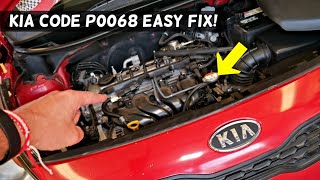
- Use an OBD-II scanner to confirm P0068 is the primary code and check for any other related codes 🎬 See this guide on diagnosing P0068 and related sensor codes. like P0106 or P0069.
- Check for any applicable Technical Service Bulletins (TSBs) for your vehicle's VIN. A software update may be the required fix.
- Visually inspect the entire air intake system, from the air filter box to the throttle body, for any obvious cracks, loose clamps, or disconnected hoses.
- Inspect the wiring and electrical connectors at the MAP sensor and the throttle body. Pay close attention to the MAP sensor harness for potential damage from the radiator fan.
- With the engine running, listen for hissing sounds that could indicate a vacuum leak. Carefully spray throttle body cleaner around the intake manifold gasket, throttle body gasket, and PCV valve/hose connections. If the engine idle changes, you've found a leak.
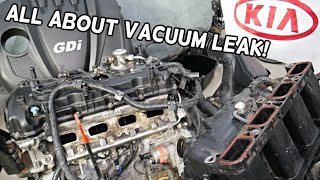
- For a more definitive test, use a smoke machine to pressurize the intake system and watch for smoke exiting from any leak points. 🎬 Watch: Common vacuum leak locations on Kia engines.
- Remove the air intake duct and inspect the throttle body. If significant carbon buildup is present, clean it thoroughly using throttle body cleaner.
- If no leaks or dirt are found, the MAP sensor is the next suspect. Remove the sensor (held by one 10mm bolt on the intake manifold) and inspect its O-ring for damage. Given its high failure rate, replacement is often the most straightforward diagnostic step.
- After any repair involving the throttle body or battery, clear the codes and perform a throttle position sensor relearn procedure. A common manual procedure for Kia/Hyundai is as follows:
- a. Turn the ignition key to the 'ON' position (do not start the engine). For push-button start, press the button twice without your foot on the brake.
- b. Wait 15 seconds. You may hear the throttle body making whirring sounds.
- c. Turn the ignition key to 'OFF'.
- d. Wait 5-10 seconds.
- e. Repeat this ON/OFF cycle a total of 5 times.
- f. On the final step, start the engine and let it idle for 10-15 minutes to allow the ECU to fully adapt.
- Drive the vehicle to see if the code returns.
Parts You'll Likely Need
- Manifold Absolute Pressure (MAP) Sensor
(OEM #39300-2B000 (or superseding part 39300-2B100))— This is the most frequently failed component for this code on the 2.4L GDI engine.
Trusted brands: Kia/Hyundai (Genuine OEM), Bosch, Delphi, NTK
OEM price range: $70-$105
Aftermarket price range: $30-$70 - Throttle Body Gasket
(OEM #28312-2G700)— This gasket should be replaced whenever the throttle body is removed for cleaning or replacement to prevent vacuum leaks.
Trusted brands: Kia (Genuine OEM), Fel-Pro, Mahle
OEM price range: $5-$12
Aftermarket price range: $3-$8 - Electronic Throttle Body Assembly
(OEM #35100-2G700)— Replaced if cleaning the original throttle body does not fix the issue, indicating a failure of the internal, non-serviceable Throttle Position Sensor (TPS).
Trusted brands: Kia/Hyundai (Genuine OEM), Aisan, Cardone (Remanufactured)
OEM price range: $250-$350
Aftermarket price range: $150-$250
Related Codes That Often Appear With This One
- P0069 — This code for 'Manifold Absolute Pressure - Barometric Pressure Correlation' is often seen with P0068 because they both rely on the MAP sensor's readings. A faulty MAP sensor can trigger both codes.
- P0106 — This code for 'MAP/Barometric Pressure Circuit Range/Performance' also points directly to a problem with the MAP sensor's signal or a significant vacuum leak, which are the primary causes of P0068.
Technical Service Bulletins (TSBs) & Recalls
- While no specific TSB for the Sportage and P0068 was found, other Kia models like the 2019-2020 Forte have a TSB (FUE047) for this code that requires a PCM software update. This confirms that a dealer-level software update could be a potential fix, and owners should inquire about any available updates for their specific vehicle. Manufacturer TSB Bulletin #TSB_FUE047 specifically addresses Electronic Throttle Control (ETC) issues on other Kia models that may exhibit a MIL with DTC P0068, P0101, or P0106.
Mechanic-Grade Diagnostic Values
- MAP Sensor 5V Reference Wire Voltage — expected: 4.5V - 5.0V with Key On, Engine Off (KOEO).. Failure: Voltage significantly lower than 4.5V or absent indicates a wiring or PCM issue.
- MAP Sensor Ground Wire Voltage — expected: Less than 0.10V (100mV) when back-probed.. Failure: Voltage higher than 0.1V indicates a poor ground connection, which can skew sensor readings.
- MAP Sensor Signal Wire Voltage — expected: At KOEO, approx. 4.5V (atmospheric pressure). At warm idle, approx. 1.1V - 1.5V. Voltage should decrease as vacuum increases.. Failure: Voltage does not change with engine vacuum, is stuck high or low, or does not match expected values for the measured vacuum.
- Throttle Position Sensor (TPS) Signal Voltage — expected: Approximately 0.5V at closed throttle, sweeping smoothly up to approximately 4.5V at wide-open throttle (WOT).. Failure: Voltage that is jumpy, has dead spots, or is outside the expected range indicates a failing TPS (which is part of the throttle body assembly).
Scan Tool Commands That Help
- Kia GDS (Global Diagnostic System): Actuation Test - ETC Motor — To functionally test the electronic throttle body. The command allows the technician to open and close the throttle plate electronically, confirming the motor and sensor are responding correctly without manual intervention.
- Kia GDS (Global Diagnostic System): Reset Adaptive Values — This is a critical step after cleaning or replacing the throttle body, or replacing the MAP sensor. It clears the long-term learned values from the PCM, forcing it to relearn the new parameters of the cleaned/replaced components.
- Kia GDS (Global Diagnostic System): Flight Record / Trigger Module — For intermittent P0068 codes that are difficult to reproduce. This function records sensor data during a drive cycle, allowing a technician to review the MAP and TPS data at the exact moment the fault was triggered.
Wiring & Ground Locations
- MAP Sensor Connector — On the top of the intake manifold, typically held by a single 10mm bolt.. This is the connection point for testing sensor voltages. Based on a 2016 2.4L GDI diagram, the PCM supplies 5V on Pin 103 (L wire). The sensor signal is sent back to the PCM, and the third wire is the ground. Verifying power, ground, and signal integrity here is a key diagnostic step.
- Engine Block / Intake Manifold Grounds — Bolted directly to the engine block, cylinder head, or intake manifold itself.. The MAP and TPS sensors rely on a clean ground reference to provide accurate voltage signals to the PCM. A corroded or loose engine ground can cause floating or incorrect readings, potentially triggering a correlation code even if the sensors are good.
Real Owner Repair Stories
- Reddit user, r/Hyundai (2022 Hyundai Sonata 1.6T (similar GDI platform)) — High idle (1100 RPM) and P0507 code (Idle Air Control System RPM Higher Than Expected), which can be related to P0068 via a large vacuum leak.
❌ Tried (didn't work) Dealer performed a TSB software update.
✅ What actually fixed it The entire valve cover was replaced. The PCV valve, which is integrated into the valve cover and not sold separately, had failed internally, creating a significant, hidden vacuum leak. - BAT Auto Technical forum user (2007 Kia Rio 1.6L (different engine but same code and principle)) — P0068 code returned after replacing parts.
❌ Tried (didn't work) Replacing the MAP sensor with an aftermarket part., Replacing the Throttle Position Sensor with an aftermarket part.
✅ What actually fixed it The thread discussion highlighted that aftermarket sensors can be out of specification even when brand new. The strong recommendation was to use only genuine OEM Kia parts for critical sensors to avoid chasing phantom issues caused by low-quality replacements. The original poster did not confirm the final fix, but this insight is a critical diagnostic lesson. - NHTSA ODI #11390539 — An owner reported that their vehicle experienced a rough idle and a check engine light with codes P0108 and P0068. Despite being driven to the dealer, the issue was initially difficult to identify.
- NHTSA ODI #11723229 — An owner reported multiple engine codes including P0017, P000B, P0068, and P0014, expressing frustration with the manufacturer's ability to rectify the recurring problems.
"I Checked Everything" — The Actual Cause
- In a related case on a Hyundai GDI engine, a persistent high idle and related codes were caused by a failed PCV valve that is integrated into the valve cover. A standard smoke test of vacuum lines and gaskets may not reveal this type of internal leak, leading a technician to believe there are no vacuum leaks. The fix was to replace the entire valve cover assembly.
Model Year Variations Within This Range
- 2012-2016 vs 2017: The 2012-2016 models are part of the third generation (SL), while the 2017 model is the first year of the fourth generation (QL). While they share the 2.4L GDI engine, there may be differences in the PCM software, wiring harness connectors, or ground locations between generations. Always verify part numbers and TSBs against the specific VIN.
Diagnostic Flowchart
Used vs. New Parts: Buying Guide for This Vehicle
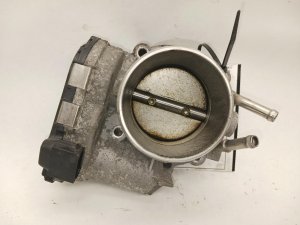
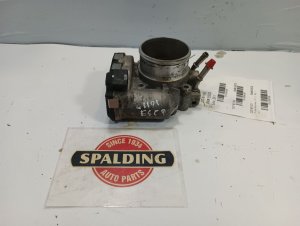
When a used part is the smart pick: For this repair, a used OEM throttle body assembly from a low-mileage, accident-damaged vehicle can be a cost-effective and reliable alternative to a new aftermarket unit. Used intake hoses or other physical plastic components are also good candidates if they are free of cracks and damage.
Donor-vehicle mileage cap: roughly under 75000 miles for the part to have meaningful remaining life.
What to inspect on the donor part:
- For a MAP sensor, ensure the connector pins are clean and straight.
- For a throttle body, inspect the bore for cleanliness and ensure the throttle plate moves freely (if it's a mechanical-return type). Check for any signs of damage to the electrical connector.
- Verify the donor vehicle's mileage and ensure it wasn't salvaged due to engine failure.
OEM-only on this vehicle (don't cheap out):
- Manifold Absolute Pressure (MAP) Sensor
- Electronic Throttle Body Assembly
Aftermarket brands forum-validated for this vehicle:
- Bosch (often an OEM supplier)
- Delphi
- NTK
Brands owners have reported issues with on this vehicle:
- Unbranded, 'white-box' sensors from online marketplaces should be avoided. Forum discussions frequently mention issues with these parts being out-of-spec from the factory, causing the code to persist after repair.
Related OBD-II Codes
Frequently Asked Questions
My 2015 Sportage has a P0068 code. Is the MAP sensor a common problem?
I cleaned the throttle body on my Kia Sportage to fix P0068. Do I need to do anything else?
Is there a TSB or software update for the P0068 code on my 2012-2017 Sportage?
My mechanic suspects a vacuum leak is causing the P0068 code. What are the common leak spots on this engine?
Where is the MAP sensor located on the 2.4L GDI engine in my Sportage?
Can carbon buildup cause the P0068 code on my GDI Sportage?
Helpful Videos
Used OEM Parts in Stock
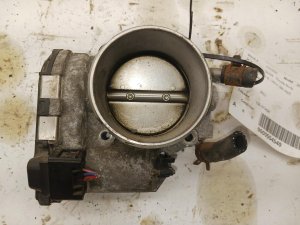


New Aftermarket Parts Available


The information in this article is provided for general reference and educational purposes only. Vehicle specifications, procedures, and part compatibility can vary by production date, trim level, and region. Always consult your vehicle's factory service manual and verify part numbers before purchasing or performing repairs. Safety-critical components such as airbags, seat belts, and braking systems should be installed by a qualified professional.
- Kia Sportage:
- 🎬 Helpful Videos
- 🛍️ Shop This Part
- What's Unique About the 2012-2017 Kia Sportage
- Symptoms You May Notice
- Most Likely Causes
- Rare But Worth Checking
- Diagnosis Steps
- Parts You'll Likely Need
- Related Codes That Often Appear With This One
- Technical Service Bulletins (TSBs) & Recalls
- Mechanic-Grade Diagnostic Values
- Scan Tool Commands That Help
- Wiring & Ground Locations
- Real Owner Repair Stories
- "I Checked Everything" — The Actual Cause
- Model Year Variations Within This Range
- Diagnostic Flowchart
- Used vs. New Parts: Buying Guide for This Vehicle
- Related OBD-II Codes
- Frequently Asked Questions
- 🎟️ Get 5% Off