

P0068 on 2007-2013 Chevrolet Silverado 1500: Airflow Correlation Causes and Fixes
On a 2007-2013 Silverado with a 4.8L or 5.3L V8, P0068 is almost always caused by a dirty throttle body. A thorough cleaning with specialized cleaner (around $15) and an idle relearn procedure usually fixes it. This is a 2/5 DIY difficulty. If cleaning doesn't work, suspect a vacuum leak, often from failed intake manifold gaskets.
- Start by cleaning the throttle body. This is the most common fix for P0068 on this truck and costs very little.
- Be prepared for the truck to enter 'Reduced Engine Power' mode, which makes it unsafe for highway driving.
- Do not replace any sensors until you have ruled out a dirty throttle body and vacuum leaks.
- After cleaning or replacing the throttle body, you may need to perform an idle relearn procedure for the engine to idle correctly.
What's Unique About the 2007-2013 Chevrolet Silverado 1500
On these GMT900-era Silverados, the P0068 code is very frequently linked to carbon and oil residue from the PCV system building up inside the throttle body. This buildup can restrict airflow or cause the throttle plate to stick, leading to the sensor correlation error. This is a well-documented issue, and GM even released a Technical Service Bulletin (TSB #PIP4578B) about it. The TSB notes that as carbon builds up, the ECM learns to open the throttle more at idle to compensate, but eventually, the discrepancy becomes too large, triggering the code. Cleaning the throttle body is the most common and effective first step, often solving the problem without needing to replace any expensive parts.
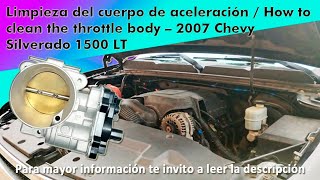
🎬 Watch: How to clean the throttle body to fix a rough idle.Generation note: This range covers the second generation (GMT900, 2007-2013) and the 'Classic' first generation (GMT800, sold in 2007). The causes, particularly the tendency for the throttle body to get dirty from the PCV system, are common to the V8 engines used across both generations in this period. The GMT900 platform was introduced for the 2007 model year.
Symptoms You May Notice
- "Reduced Engine Power" message on the dash
- Check Engine Light is on
- Rough or unstable idle
- Hesitation or stumbling during acceleration.
- Poor engine performance and reduced power.
- Occasional stalling at stops.
- Increased fuel consumption.
- Replacing the Mass Airflow (MAF) sensor without cleaning the throttle body first.
- Replacing the Accelerator Pedal Position (APP) sensor. P0068 relates to sensors on the engine, not the pedal in the cabin. 🎬 See this guide on fixing P0068 and rough idle issues.
Most Likely Causes
- Dirty or Carbon-Fouled Throttle Body 🔴 High Probability The PCV (Positive Crankcase Ventilation) system routes oil vapors into the intake, which bake onto the throttle body over time, restricting airflow and causing the throttle plate to stick. This is the most common cause for P0068 on these trucks.
How to confirm: Remove the air intake tube connected to the throttle body. Visually inspect the throttle plate and bore for a thick, black layer of carbon buildup. The buildup is often worst on the backside of the plate.
Typical fix: Thoroughly clean the throttle body and plate with a dedicated throttle body cleaner and a soft brush or rag. An idle relearn procedure is often required afterward using a scan tool or by following a specific drive cycle.
Est. part cost: $10-$20 - Vacuum Leak 🟡 Medium Probability Intake manifold gaskets on these Vortec engines are a known failure point and can degrade over time, causing unmetered air to enter the engine. PCV hoses and the brake booster hose can also crack or become disconnected. A known failure point is the plastic PCV tube barb on the driver's side of the intake manifold, which can break off.
How to confirm: With the engine running, listen for hissing sounds around the intake manifold. A common DIY method is to carefully spray carburetor cleaner or unlit propane around the intake manifold gaskets; if the engine RPMs change or surge, a leak is present. A professional will use a smoke machine to inject smoke into the intake system and visually identify where it escapes.
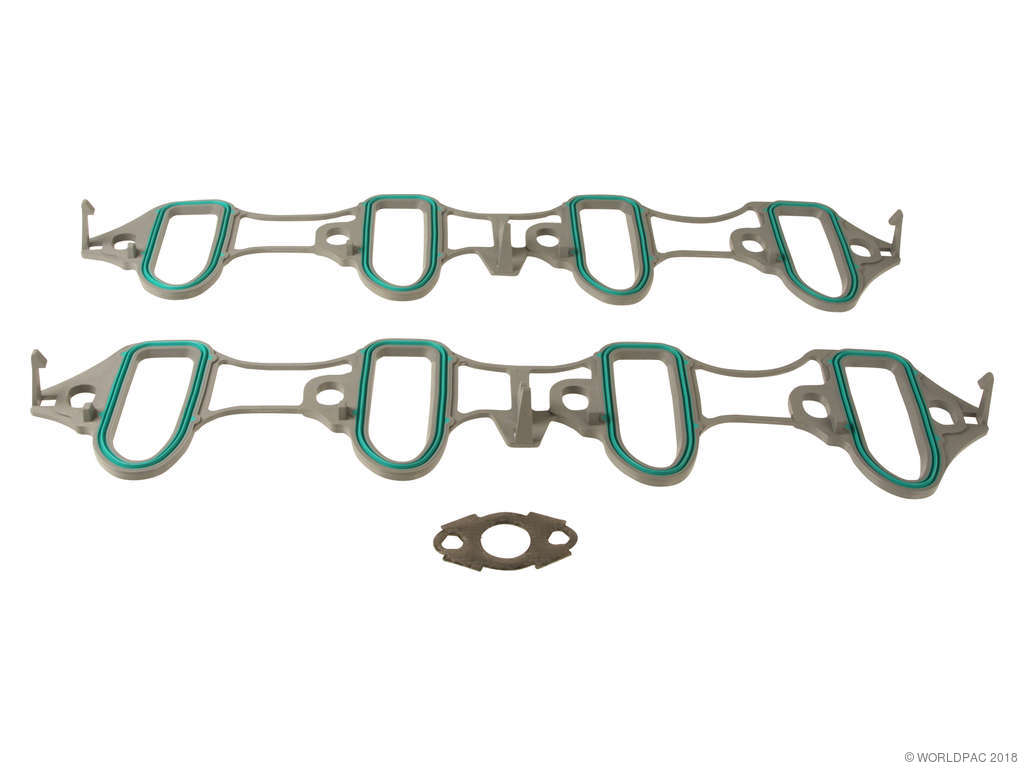
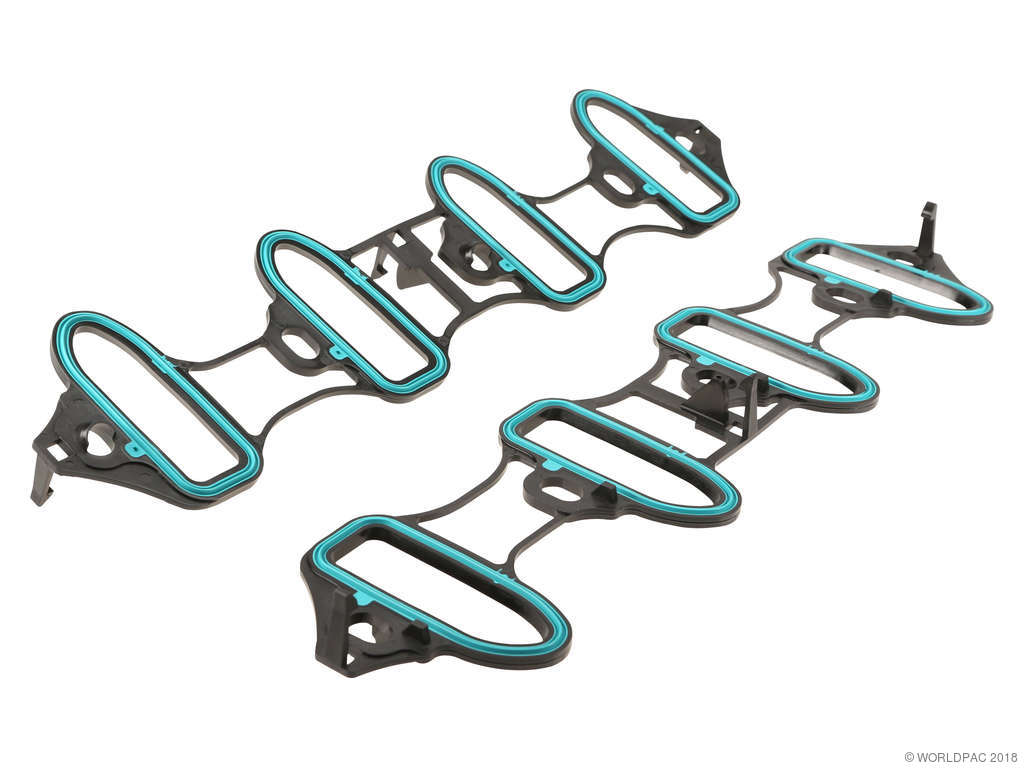
Typical fix: Replace the leaking gasket or hose. An aftermarket intake manifold gasket set like the Fel-Pro MS96916 is a popular choice. 🎬 Watch: Step-by-step intake manifold gasket replacement walkthrough.
Est. part cost: $5-$150 - Faulty Manifold Absolute Pressure (MAP) Sensor ⚪ Low Probability
How to confirm: Use a scan tool to monitor the MAP sensor voltage with the key on, engine off (KOEO). It should read near 4.5-5.0 volts. At idle, it should drop significantly to around 1.0-1.5 volts. Compare readings to specifications.
Typical fix: Replace the MAP sensor. It is typically located on the top of the intake manifold. The ACDelco 213-4681 (a common replacement) is a frequently cited part number.
Est. part cost: $30-$70 - Dirty or Faulty Mass Airflow (MAF) Sensor ⚪ Low Probability Oiled aftermarket air filters are a common cause of MAF sensor contamination, which skews airflow readings. The sensor's delicate hot wires can become coated, leading to incorrect g/s readings.
How to confirm: Inspect the sensor's hot wires (located inside the sensor housing after the air filter) for dirt or debris. Use a scan tool to monitor the g/s (grams per second) reading; it should be smooth and increase linearly with RPM. Clean with dedicated MAF sensor cleaner only.
Typical fix: Clean the sensor with dedicated MAF sensor cleaner. If cleaning doesn't work, replace the sensor.
Est. part cost: $15-$120
Rare But Worth Checking
- Damaged Wiring or Connectors: Check the wiring harnesses for the MAP, MAF, and throttle body for any signs of chafing, corrosion, or loose pins, especially if other work has recently been done in the engine bay.
- Damaged Throttle Body: In rare cases, the internal electronics of the throttle position sensor (which is part of the throttle body) can fail, or the throttle blade itself can be damaged or bent.
- Cracked Intake Manifold: In at least one documented case for a 2011 Silverado, the cause was a hairline crack in the plastic intake manifold itself. A smoke test did not reveal the leak, but it would open under specific engine load and temperature conditions, causing an intermittent P0068. The fix was a complete intake manifold replacement.
Diagnosis Steps
- Check for any other stored trouble codes that could provide more clues. Codes like P0121, P1516, or P0106 are strong indicators.
- Visually inspect the entire air intake system from the air filter to the throttle body for any loose clamps, cracked hoses, or disconnected lines.
- Remove the intake duct from the throttle body and inspect for heavy carbon buildup. If dirty, this is your most likely cause.
- Clean the throttle body thoroughly using a dedicated cleaner and a soft brush. Do not use harsh tools that could scratch the bore.
- After cleaning, perform an Idle Relearn Procedure. This can sometimes be done by a specific drive cycle, but a scan tool (like a Tech 2) is the most reliable method to reset the learned idle values as recommended by GM.
- If the throttle body was clean, inspect and clean the Mass Airflow (MAF) sensor using MAF sensor cleaner. Ensure you are not using an over-oiled air filter.
- If the code persists, check for vacuum leaks. A smoke machine is the most effective tool. Pay close attention to the intake manifold gaskets and PCV hoses. The carb cleaner spray test is a less precise alternative.
- Using a scan tool, monitor live data from the MAP, MAF, and TPS sensors to check for any readings that are erratic or out of specification.
- If a sensor is providing faulty data, test its wiring and connector for power, ground, and signal integrity before replacing the sensor itself.
Parts You'll Likely Need
- Throttle Body Cleaner
(OEM #ACDelco 19355209 (X66-A))— This is required for the most common fix: cleaning carbon buildup from the throttle body.
Trusted brands: CRC, ACDelco
OEM price range: $15-$25
Aftermarket price range: $10-$20 - Throttle Body Assembly
(OEM #12678223)— If cleaning doesn't resolve the issue or the internal electronics (TPS) have failed, the entire assembly must be replaced.
Trusted brands: ACDelco, Delphi
OEM price range: $150-$250
Aftermarket price range: $80-$150 - Manifold Absolute Pressure (MAP) Sensor
(OEM #12644228 (superseded by ACDelco 213-4681))— If the sensor itself has failed, it will provide incorrect data to the ECM, causing the correlation fault.
Trusted brands: ACDelco, Bosch
OEM price range: $50-$70
Aftermarket price range: $30-$50 - Intake Manifold Gasket Set
(OEM #89060413)
Related Codes That Often Appear With This One
- P0121 — Throttle Position Sensor (TPS) Performance. Both codes relate directly to the throttle body's operation and are often set together. This code is explicitly mentioned in TSB PIP4578B.
- P1516 — Throttle Actuator Control (TAC) Module Performance. This is a GM-specific code indicating a problem with the electronic throttle control system, which is the root system for P0068. It is also mentioned in TSB PIP4578B.
- P0106 — Manifold Absolute Pressure (MAP) Sensor Performance. This code can be set if the MAP sensor is the source of the conflicting data.
- P0506 / P0507 — Idle Air Control System RPM Lower/Higher Than Expected. These codes can appear after cleaning the throttle body if the idle relearn procedure is not performed, as the ECM's learned adjustments are now incorrect for the clean throttle body.
Technical Service Bulletins (TSBs) & Recalls
- PIP4578B: Notes that carbon buildup in the throttle body can cause this code and associated symptoms like idle surge or reduced power mode. It explicitly lists P0068, P0121, and P1516 together and stresses the importance of performing an 'idle learn reset' with a scan tool after cleaning the throttle body to prevent other codes from appearing. According to TSB Bulletin #PIP4578B, this issue is particularly prevalent on high mileage vehicles and may also trigger DTCs P2101, P2119, and P2176.
Platform-Specific Known Issues
- High mileage vehicles are prone to this code due to carbon buildup in the throttle body, which can lead to an idle surge or the truck entering reduced engine power mode, as documented in GM TSB #PIP4578B.
- Owners frequently report that cleaning the throttle body resolves the P0068 code and the associated 'Reduced Engine Power' message, but the issue may return after a year or so if driving conditions (e.g., short trips) promote carbon buildup.
- Use of oiled aftermarket air filters can contaminate the MAF sensor, leading to incorrect airflow readings that contribute to or directly cause the P0068 code.
Mechanic-Grade Diagnostic Values
- MAP Sensor Voltage (Key On, Engine Off) — expected: 4.5 - 5.0 Volts (at or near sea level). Failure: Voltage is significantly lower than 4.5V.
- MAP Sensor Voltage (Warm Engine at Idle) — expected: 1.0 - 1.5 Volts. Failure: Voltage does not drop from the KOEO reading or is stuck high.
- MAF Sensor Reading (Warm Engine at Idle) — expected: 4.0 - 7.0 grams/second (g/s). Failure: Reading is stuck, erratic, or significantly outside the expected range for the given RPM.
- Throttle Position Sensor 1 (TPS1) Voltage (Closed Throttle) — expected: ~0.4 - 0.8 Volts. Failure: Voltage is outside this range at closed throttle.
- Throttle Position Sensor 1 (TPS1) Voltage (Wide-Open Throttle) — expected: ~4.5 Volts. Failure: Voltage does not reach this level at WOT or has dead spots during the sweep.
- Throttle Body Low Reference (Ground) Circuit Resistance — expected: Less than 5.0 Ohms to a known good ground. Failure: Resistance is higher than 5.0 Ohms, indicating a poor ground connection.
Scan Tool Commands That Help
- Tech 2 / GDS2 (or equivalent professional scan tool): Idle Learn Reset (also called Throttle/Idle Learn) — This is mandatory after cleaning or replacing the throttle body. The ECM has learned airflow values to compensate for carbon buildup; this command erases those learned values and forces the ECM to relearn the idle characteristics with the clean throttle body, preventing high idle and repeat codes.
- Manual Procedure (No Scan Tool): Idle Relearn Procedure — If a scan tool is not available, a manual procedure can be attempted. Start and idle the engine in Park for 3 minutes. Turn the ignition off for 60 seconds. Start and idle the engine in Park for another 3 minutes. The idle should stabilize. If not, a drive cycle at speeds over 44 MPH with several decelerations and extended idles may be required. Note: This method is less reliable than a scan tool reset and can sometimes lead to persistent high idle issues.
Wiring & Ground Locations
- G103 — On the front of the passenger side (right) cylinder head.. This is a primary engine ground. A loose or corroded connection at G103 can cause erratic or incorrect readings from multiple engine sensors, including the MAP and TPS, leading to correlation codes like P0068.
- G104 — On the rear of the driver's side (left) cylinder head.. This is another critical engine ground. Similar to G103, a poor connection here can introduce electrical noise and voltage offsets, causing sensor data to become unreliable.
- Throttle Body Connector — The 6-pin or 8-pin electrical connector on the throttle body assembly itself.. This connector carries the 5V reference, ground, and signal wires for the dual throttle position sensors. Corrosion, moisture, or backed-out pins in this connector are a direct cause of throttle position sensor codes and can contribute to P0068.
Real Owner Repair Stories
- gmtrucks.com forum user (2011 Silverado 5.3L) — P0068 code, reduced engine power, rough idle.
❌ Tried (didn't work) Cleaned the throttle body, Replaced the throttle body, Replaced the MAF sensor, Performed a smoke test (which showed no leaks)
✅ What actually fixed it The intake manifold was found to have a hairline crack that was not detectable by a smoke test. Replacing the entire intake manifold finally resolved the code. - GM-Trucks.com forum user (2009 Chevrolet Suburban) — Initially P0121, then after cleaning the throttle body, got P0122, P0222, P0223, and P0507 with a very high idle (3000 RPM).
❌ Tried (didn't work) A manual idle relearn procedure (3 min on, 1 min off, 3 min on) did not work initially., Driving the vehicle for 10 miles resulted in uncontrolled acceleration and continued high idle.
✅ What actually fixed it After disconnecting the battery overnight, clearing the codes, and re-attempting the manual relearn procedure, the idle slowly came down from 2000 RPM to 1000 RPM and eventually stabilized after a 20-minute drive. This highlights that even a successful cleaning can cause severe, temporary relearn issues that may require multiple attempts or a battery disconnect to resolve without a scan tool.
"I Checked Everything" — The Actual Cause
- A known case on a 2011 Silverado involved a hairline crack in the plastic intake manifold. A standard smoke test failed to find the leak, likely because the crack only opened up under specific thermal expansion and engine load conditions. After replacing multiple sensors and the throttle body with no success, the final fix was the replacement of the entire intake manifold assembly.
OEM Part Supersession History
12644228→ACDelco 213-4681— Standard part evolution and consolidation by the manufacturer.12678223→12740727— Part update for newer model years. The new part number is primarily for 2014+ vehicles.
Heads up: While part 12678223 is listed for the 2007-2013 generation, it is also superseded by 12740727 for newer trucks. For the 2007-2013 model range, sticking with the specified OEM number (12678223) or a direct cross-reference is safest to ensure correct software compatibility.
Model Year Variations Within This Range
- 2007 ('Classic' GMT800 only): Some early 2007 models sold as the 'Classic' body style (GMT800 platform) may use a separate Throttle Actuator Control (TAC) module located on the firewall, whereas the newer GMT900 models integrate TAC functions into the main Engine Control Module (ECM). A failure of this external module can be a cause for P0068 and related codes on these specific trucks.
- 2007-2013 (GMT900): These models are particularly known for the PCV system design that allows oil vapor to heavily coat the throttle body, making it the primary cause of P0068. Additionally, the plastic intake manifold on these models has a known failure point where the PCV barb can crack, creating a hard-to-find vacuum leak.
Diagnostic Flowchart
Other Known Issues on This Vehicle
Issues unrelated to this code that are worth knowing about as an owner of this generation:
- AFM/DOD Lifter Failure & Excessive Oil Consumption 🔴 High — Very common, especially on 2007-2011 models, but can occur at any mileage. Often starts with oil consumption and progresses to ticking noises and misfires. (Ref: Multiple TSBs exist, including PIP4568Q, addressing misfires and lifter noise. A lawsuit was also filed regarding oil consumption.)
- Cracked Dashboard 🟠 Medium — Extremely common across the entire GMT900 lineup. Cracks typically form near the passenger airbag and driver-side instrument cluster cowling. Can happen at any mileage, regardless of sun exposure. (Ref: No recall was ever issued, but it was the subject of multiple class-action lawsuits.)
- Fuel Level Sensor Failure 🟠 Medium — Commonly occurs after 100,000 miles, causing the fuel gauge to read empty or fluctuate erratically.
- Faulty Oil Pressure Sensor/Sender 🟡 Low — Common failure leading to the oil pressure gauge reading zero or fluctuating wildly. The sensor is located in a difficult-to-reach spot behind the intake manifold.
- 4L60-E Transmission Failure (2007-2008 models) 🔴 High — The 4-speed automatic used in early GMT900s is known for issues like failed 3-4 clutch packs, torque converter problems, and solenoid failures, often before 150,000 miles. The 6-speed 6L80 that replaced it in 2009 is generally more robust.
Used vs. New Parts: Buying Guide for This Vehicle
When a used part is the smart pick: A used throttle body from a reputable salvage yard can be a cost-effective option, as can a used intake manifold if the original is cracked. These are durable mechanical parts where failure is often due to external factors (cracks) or cleanable buildup rather than internal wear.
Donor-vehicle mileage cap: roughly under 80000 miles for the part to have meaningful remaining life.
What to inspect on the donor part:
- For a throttle body, inspect the connector for any corrosion or broken plastic and ensure the throttle plate moves smoothly by hand.
- For an intake manifold, check for any visible cracks, especially around the PCV barb and mounting flanges. Ensure all threaded inserts are intact.
- Verify the donor vehicle was not in a severe front-end collision that could have damaged the components.
- Ask for the donor vehicle's mileage to stay under the recommended threshold.
OEM-only on this vehicle (don't cheap out):
- Throttle Body Assembly
- MAP Sensor
- MAF Sensor
Aftermarket brands forum-validated for this vehicle:
- Fel-Pro for intake manifold gaskets.
- ACDelco (Professional line) for all electronic sensors and the throttle body assembly itself.
- Bosch is also a reliable OEM-quality brand for sensors.
Brands owners have reported issues with on this vehicle:
- Unbranded, no-name electronic sensors and throttle bodies from online marketplaces. These frequently have high failure rates or cause compatibility issues with the ECM, particularly with the throttle relearn procedure.
- While Dorman offers a wide range of parts, some forum users report mixed experiences with their electronic components compared to OEM/ACDelco.
Real Owner Stories
Aggregated from forums and TSBs cited above. Mileages and costs reflect what owners reported in those sources.
2012 Chevrolet Silverado 1500
Symptoms: The owner experienced the P0068 code and sought advice on whether it was a vacuum leak or a faulty MAP/TPS sensor.
What fixed it: The discussion suggested inspecting for vacuum leaks or a faulty MAP/TPS sensor.
Source hint: SilveradoSS.com - 'P0068 Code': A 2012 thread
2007-2013 Chevrolet Silverado 1500 V8 — ~120000 miles
Symptoms: Idle surge and the truck entering 'Reduced Engine Power' mode.
What fixed it: Thoroughly cleaning the throttle body and performing an 'idle learn reset' with a scan tool.
Source hint: GM TSB #PIP4578B
2007-2013 Chevrolet Silverado 1500 V8
Symptoms: P0068 code occurring specifically during wide-open throttle runs.
What fixed it: Inspecting the throttle blade for damage.
Source hint: EFILive Forum - 'p0068 on n/a 6.0'
Related OBD-II Codes
Frequently Asked Questions
Does GM TSB #PIP4578B apply to my high-mileage Silverado if I'm seeing 'Reduced Engine Power'?
I cleaned my throttle body but the code is still there. Is there a specific part I should use for the intake manifold gasket?
Can my aftermarket oiled air filter be causing the P0068 code on my 5.3L V8?
Is there a specific MAP sensor part number recommended for the 2007-2013 Silverado 1500?
Why does the P0068 code keep returning a year after I clean the throttle body?
Do I need a special tool to reset the idle after cleaning the throttle body on my Silverado?
Helpful Videos
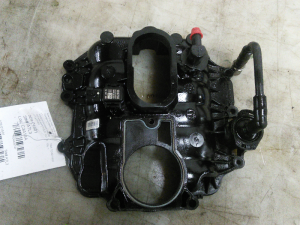
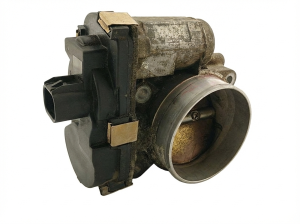
Used OEM Parts in Stock


New Aftermarket Parts Available


The information in this article is provided for general reference and educational purposes only. Vehicle specifications, procedures, and part compatibility can vary by production date, trim level, and region. Always consult your vehicle's factory service manual and verify part numbers before purchasing or performing repairs. Safety-critical components such as airbags, seat belts, and braking systems should be installed by a qualified professional.
- Chevrolet Silverado 1500:
- 🎬 Helpful Videos
- 🛍️ Shop This Part
- What's Unique About the 2007-2013 Chevrolet Silverado 1500
- Symptoms You May Notice
- Most Likely Causes
- Rare But Worth Checking
- Diagnosis Steps
- Parts You'll Likely Need
- Related Codes That Often Appear With This One
- Technical Service Bulletins (TSBs) & Recalls
- Platform-Specific Known Issues
- Mechanic-Grade Diagnostic Values
- Scan Tool Commands That Help
- Wiring & Ground Locations
- Real Owner Repair Stories
- "I Checked Everything" — The Actual Cause
- OEM Part Supersession History
- Model Year Variations Within This Range
- Diagnostic Flowchart
- Other Known Issues on This Vehicle
- Used vs. New Parts: Buying Guide for This Vehicle
- Real Owner Stories
- 2012 Chevrolet Silverado 1500
- 2007-2013 Chevrolet Silverado 1500 V8 — ~120000 miles
- 2007-2013 Chevrolet Silverado 1500 V8
- Related OBD-II Codes
- Frequently Asked Questions
- 🎟️ Get 5% Off