

P0068 on 2011-2016 Chevrolet Cruze 1.4L: MAP/MAF Correlation Causes and Fixes
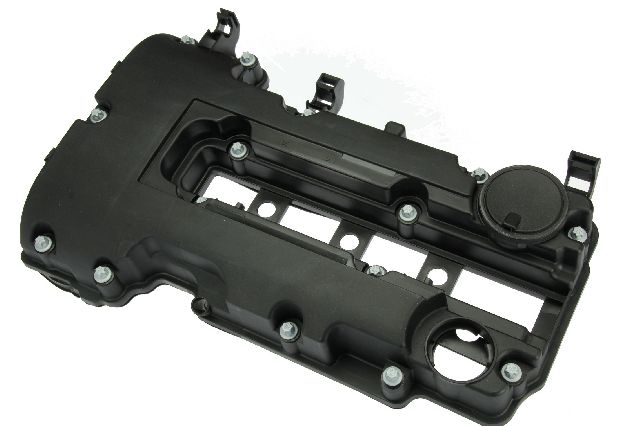
On a 2011-2016 Cruze 1.4L Turbo, P0068 is almost always caused by a failed PCV system, creating a vacuum leak. This is usually a torn diaphragm in the valve cover (OEM Part No. 25198874) or a bad check valve in the intake manifold (OEM Part No. 25200449). The intake failure often causes the valve cover failure. Expect to replace the valve cover (~$70-$150) or the intake manifold (~$150-$300) for a permanent fix.
- Do not immediately replace any sensors. The P0068 code on a 1.4L Cruze is most likely a physical problem (vacuum leak), not an electrical one.
- Start your diagnosis by listening for a hissing sound from the valve cover with the engine running. This is the easiest way to identify the most common failure.
- If you replace the valve cover, it is wise to also inspect the check valve inside the intake manifold, as its failure often causes the valve cover to fail.
- Codes P0171, P1101, and P0106 are your confirmation. If you see them alongside P0068, you almost certainly have a PCV-related vacuum leak.
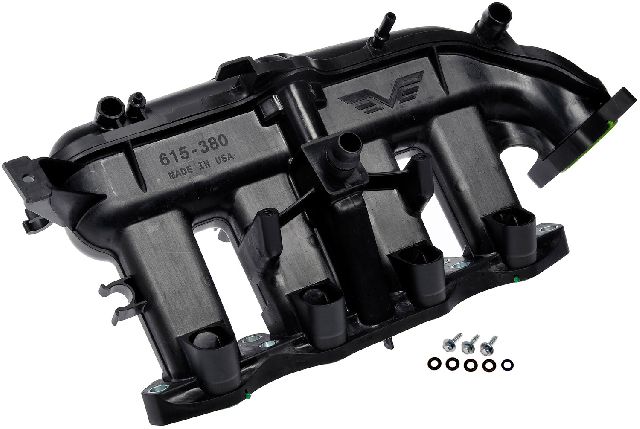
- Aftermarket intake manifolds (like Dorman 615-380) often have an improved PCV check valve design and can be a more durable repair than another OEM manifold.
What's Unique About the 2011-2016 Chevrolet Cruze
The 1.4L Turbo (LUJ) engine in the first-generation Cruze is notorious for PCV (Positive Crankcase Ventilation) system failures that directly cause code P0068 and its common companions, P0171 and P1101. Unlike many cars where this code might point to a simple sensor failure, on the Cruze it's highly probable the issue is a vacuum leak from one of two specific design weaknesses: a check valve inside the intake manifold that fails, or a rubber diaphragm in the valve cover that tears. The failure of the intake manifold's check valve often leads to over-pressurization of the crankcase, which in turn ruptures the weaker valve cover diaphragm, creating a second failure point. Technicians familiar with this engine often diagnose the PCV system before suspecting the sensors themselves.
Symptoms You May Notice
- Check Engine Light is on
- "Reduced Engine Power" message on the dash
- Rough, unstable, or high idle.
- Hissing, whistling, or squealing sound from the engine bay at idle.
- Hesitation or stumbling on acceleration.
- Poor fuel economy.
- Engine may stall when coming to a stop.
- Chirping sound from the serpentine belt area (caused by air being sucked past a worn crankshaft seal, a secondary effect of the PCV failure).
- Replacing the Mass Airflow (MAF) sensor. While involved in the calculation, the MAF sensor is rarely the root cause of P0068 on this specific engine.
- Replacing the Throttle Position Sensor (TPS) or the entire throttle body. While a dirty throttle body can be a cause, complete failure is less common than the PCV system issues.
Most Likely Causes
- Torn PCV Diaphragm in Valve Cover 🔴 High Probability The rubber diaphragm is under constant vacuum and heat cycles, causing it to become brittle and tear over time. This failure is often precipitated by a failed check valve in the intake manifold, which exposes the diaphragm to excessive crankcase pressure.
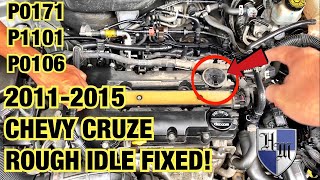
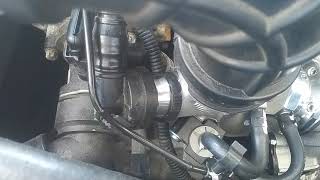
How to confirm: With the engine running, listen for a distinct hissing or whistling sound coming from the round, black cap on the valve cover. 🎬 See how to identify the hissing sound from a failed diaphragm. You can also try to place your finger over the small hole on this cap; if the hissing stops and the engine idle changes, the diaphragm is torn. Another test is to remove the oil dipstick while the engine is running; a large amount of suction indicates a failed diaphragm.
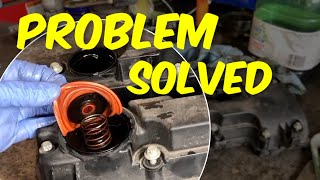
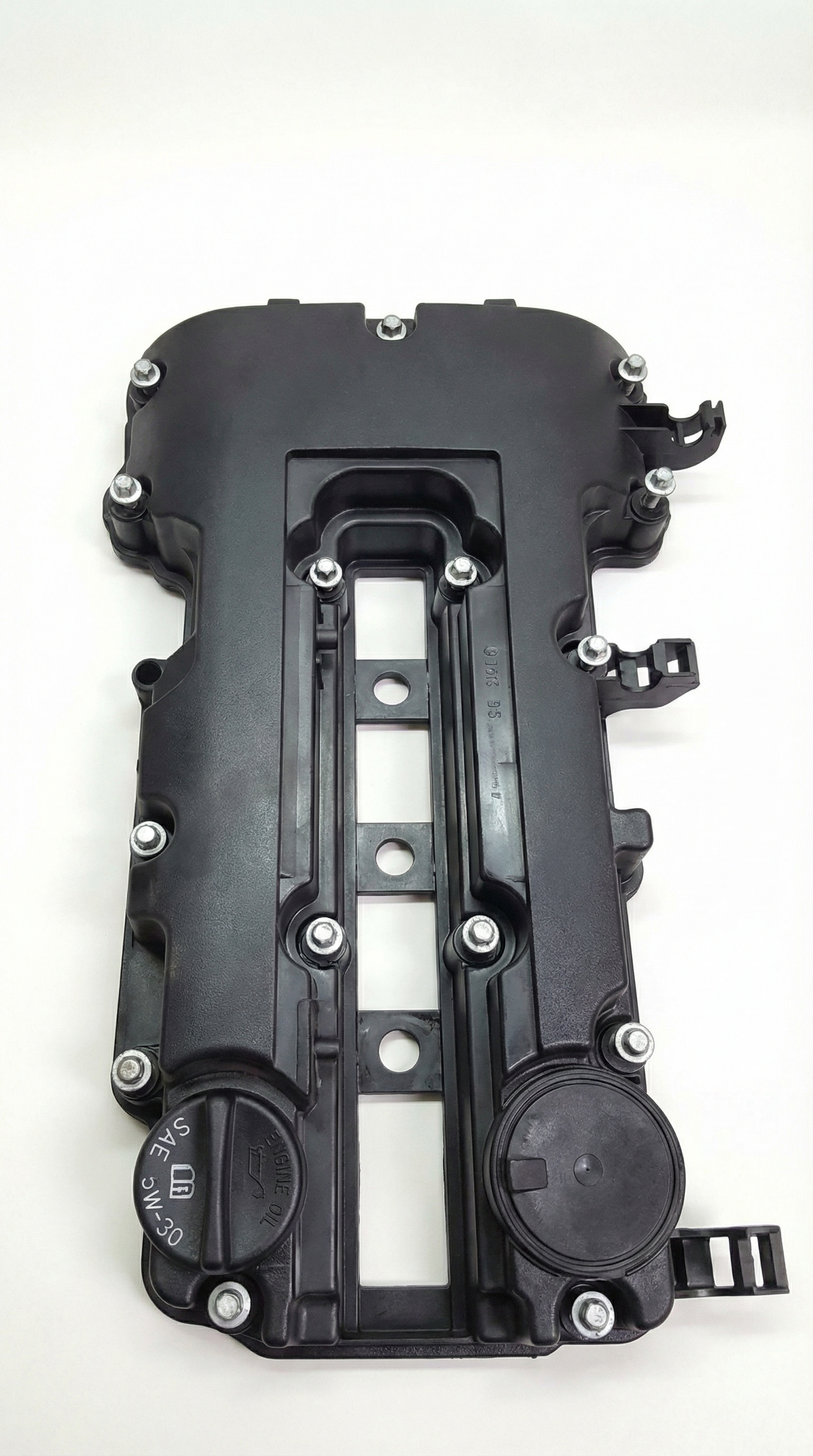
Typical fix: Replace the entire valve cover assembly. The diaphragm is not sold separately by GM, though some aftermarket repair kits exist. The most reliable fix is a full cover replacement.
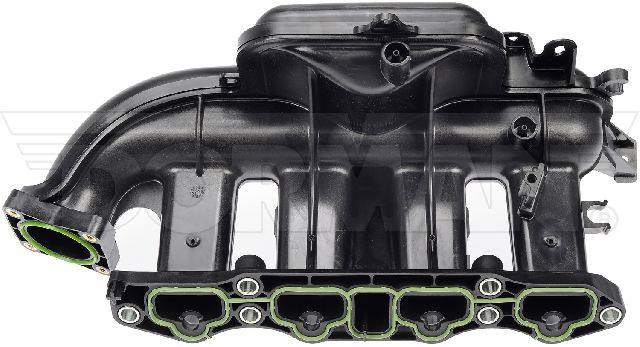
Est. part cost: $70-$150 - Failed PCV Check Valve in Intake Manifold 🔴 High Probability A small, orange-colored, non-return check valve is integrated into the plastic intake manifold. It can become dislodged or fail, allowing high-pressure turbo boost to enter the crankcase. This over-pressurizes the system and is a primary cause for the subsequent failure of the valve cover diaphragm.
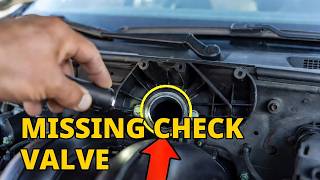
How to confirm: Remove the throttle body and look into the intake manifold opening. You should see a small, orange-colored check valve. If it is missing, broken, or stuck open, the manifold has failed.
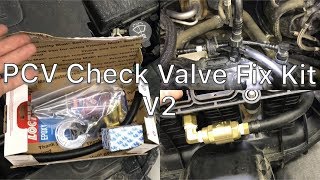
Typical fix: Replace the entire intake manifold. Aftermarket versions from brands like Dorman (p/n 615-380) often feature an improved check valve design with a retaining pin to prevent it from becoming dislodged. 🎬 Watch: How to install an aftermarket PCV bypass fix kit. Alternatively, several aftermarket PCV fix kits are available that bypass the internal check valve with an external one.
Est. part cost: $150-$300 - Faulty Manifold Absolute Pressure (MAP) Sensor 🟡 Medium Probability The MAP sensor on this engine is a known failure item. However, its symptoms are identical to the PCV vacuum leaks, making it a common misdiagnosis if the PCV system isn't checked first.
How to confirm: After confirming there are no vacuum leaks, test the sensor's voltage with a multimeter. With the key on and engine off, it should read around 4.5-5.0 volts. At idle, it should drop to 1.0-2.0 volts. If readings are stuck or incorrect, the sensor is likely bad.
Typical fix: Replace the MAP sensor. It is located on the intake manifold and secured by a single Torx screw, making for an easy replacement.
Est. part cost: $25-$60 - Loose Intake Manifold Bolts ⚪ Low Probability Vibration and thermal expansion can cause the intake manifold mounting bolts to loosen over time, creating a vacuum leak at the gasket. This is noted in GM Technical Service Bulletin PIP5529.
How to confirm: Check the torque on all intake manifold bolts. If they are loose, you have found a likely source of unmetered air. The TSB recommends torquing to 15 lb-ft (20 Nm).
Typical fix: Torque the intake manifold bolts to the proper specification. Gasket replacement is typically not necessary unless it is damaged.
Est. part cost: $0 - Dirty Throttle Body ⚪ Low Probability Carbon and oil vapor (coke) from the PCV system can build up on the throttle plate, restricting airflow and causing a mismatch between the throttle position and the actual air entering the engine.
How to confirm: Remove the air intake tube connected to the throttle body. Inspect the throttle plate and bore for a thick, black, greasy buildup.
Typical fix: Clean the throttle body thoroughly with a dedicated throttle body cleaner and a soft cloth. A throttle relearn procedure may be required afterward.
Est. part cost: $5-$15
Rare But Worth Checking
- Swapped MAP and O2 Sensor Connectors: The electrical connectors for the MAP sensor (on the intake manifold) and the upstream O2 sensor are physically similar and located near each other. It is possible to accidentally swap them during previous repairs, which will cause immediate running issues and set this code.
- Cracked or disconnected PCV hoses: While less common than the internal failures, the external PCV hoses and tubes can become brittle and crack, creating a vacuum leak. One such hose connects the valve cover to the turbocharger inlet pipe.
Diagnosis Steps
- Scan for all stored trouble codes. Note if P0171, P1101, or P0106 are present 🎬 Watch: A complete walkthrough for diagnosing and fixing these common codes. with P0068, as this combination strongly points to a PCV system failure.
- With the engine running, listen for a distinct hissing or whistling sound from the top of the engine, specifically the round cap on the valve cover.
- Confirm PCV valve cover failure by placing a finger over the vent hole on the valve cover cap. If the idle smooths out or the sound stops, the diaphragm is torn and the valve cover must be replaced.
- If no noise is present, inspect for other vacuum leaks. Check intake hoses for cracks and ensure clamps are tight. You can carefully spray brake cleaner or carb cleaner around gasket areas; a change in engine RPM indicates a leak.
- If no external leaks are found, remove the throttle body and visually inspect the inside of the intake manifold for the presence of the orange PCV check valve. If it is missing or damaged, the intake manifold must be replaced.
- If all PCV components and vacuum lines are intact, inspect and clean the throttle body of any carbon buildup.
- As per TSB PIP5529, check the torque of the intake manifold bolts. If loose, re-torque to 15 lb-ft (20 Nm).
- If the code persists, test the MAP sensor's electrical circuit and signal. If the sensor provides incorrect voltage readings, replace it.
- Finally, check that the MAP sensor and upstream O2 sensor electrical connectors are not swapped.
Parts You'll Likely Need
- Engine Valve Cover
(OEM #25198874)— This is the most common failure. The integrated PCV diaphragm tears, creating a large vacuum leak. The entire cover must be replaced. - Intake Manifold
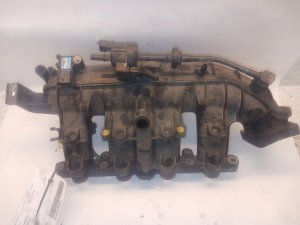
(OEM #25200449)— The second most common failure. The internal PCV check valve dislodges or breaks, causing boost pressure to enter the crankcase, which then damages the valve cover diaphragm.
Related Codes That Often Appear With This One
- P0171 — System Too Lean. This code is triggered by the unmetered air entering the engine from the PCV vacuum leak, which is the root cause of P0068.
- P1101 — Intake Air Flow System Performance. This is a manufacturer-specific code that is set for the same reason as P0068—a discrepancy in airflow, almost always due to the PCV system failure.
- P0106 — Manifold Absolute Pressure (MAP) Sensor Performance. This code is often set when the MAP sensor readings are erratic or don't align with what the ECM expects, which is a direct result of the vacuum leaks that also cause P0068.
Technical Service Bulletins (TSBs) & Recalls
- GM TSB PIP5529 / PIP5529A / PIP5529B: Addresses multiple codes including P0068, P0171, P0106, and P1101, along with symptoms like stalling or hesitation. It directs technicians to inspect for and re-torque loose intake manifold bolts to 15 lb-ft (20 Nm) if other diagnostics do not find a cause.
- Bulletin #PIP5529A and #PIP5529B: These manufacturer service bulletins provide additional diagnostics and repair guidance for resolving MIL illumination due to combinations of codes including P0068, P0101, P0106, P0171, P0131, P0137, P0324, P0326, P0331, and P0506.
Platform-Specific Known Issues
- The Causal Chain of Failure: A critical detail for this platform is the order of operations. The check valve inside the intake manifold often fails first, but may not immediately trigger a code. It allows boost pressure into the crankcase, which then stresses and eventually ruptures the diaphragm in the valve cover. The torn diaphragm creates the large vacuum leak that finally triggers P0068, P0171, and P1101. Simply replacing the valve cover without also replacing the faulty intake manifold will lead to a repeat failure of the new valve cover.
- Aftermarket PCV Fix Kits: Several aftermarket companies (e.g., 'CruzeKits') offer external PCV valve kits that bypass the faulty internal check valve in the intake manifold. This can be a cheaper alternative to replacing the entire manifold, but requires modifying the PCV plumbing. It is a popular solution discussed in owner forums.
Mechanic-Grade Diagnostic Values
- MAP Sensor Voltage (Key On, Engine Off) — expected: 4.5V - 5.0V. Failure: Voltage is significantly lower or shows 0V.
- MAP Sensor Voltage (Engine at Idle) — expected: 1.0V - 2.0V. Failure: Voltage is stuck high (near KOEO reading) or is erratic.
- Throttle Angle at Idle (Scan Tool Data) — expected: 8% - 14%. Failure: A reading below 8% indicates unmetered air is entering the engine (e.g., a vacuum leak), causing the ECM to close the throttle plate more than usual to maintain idle speed.
- Crankcase Vacuum at Idle — expected: 11 to 18 inches of WATER (inH₂O). Failure: Very high vacuum (strong suction at oil cap) indicates a ruptured valve cover diaphragm. Positive pressure indicates a blocked PCV orifice or failed check valve.
Scan Tool Commands That Help
- GDS2 / Professional Scan Tool: Throttle Body Idle Air Flow Compensation Reset — Must be performed after cleaning or replacing the throttle body, or after fixing a major vacuum leak. The ECM learns to compensate for issues over time, and this function erases those incorrect learned values, preventing the code from returning after the mechanical repair.
- GDS2 / Professional Scan Tool: Intake System Learned Values Reset — After any repair affecting intake airflow (like replacing the valve cover or intake manifold), this reset clears old adaptive values, allowing the ECM to learn the new airflow characteristics more quickly.
Wiring & Ground Locations
- G101 — Located at the left front of the engine, lower block. It is part of the main negative battery cable harness.. This is a primary ground for the Engine Control Module (ECM). A poor connection here can cause erratic behavior from all engine sensors, including the MAP and MAF.
- G103 — Located on the left front shock tower in the engine compartment.. This ground point serves the underhood fuse block and other components. While not a direct ECM ground, poor connections here can introduce electrical noise.
- G105 — Located at the left front corner of the engine compartment, behind the cooling fan relays.. Grounds various front-end components. A loose or corroded G105 can cause unpredictable electrical issues.
- MAP Sensor Connector — On the MAP sensor, which is on the intake manifold.. For testing, the typical wire colors are: Gray (5V Reference from ECM), Orange/Black (Low Reference/Ground from ECM), and Light Green (Signal to ECM). Verifying voltage and ground at these pins is a key diagnostic step.
Real Owner Repair Stories
- BobIsTheOilGuy forum user 'Rat407' (2012 Chevrolet Cruze 1.4L, 66k miles) — Not specified, but implied repeat failure of PCV system.
❌ Tried (didn't work) A previous replacement of the intake manifold and valve cover had already been performed at 35k miles, indicating the OEM parts failed again.
✅ What actually fixed it The user installed an aftermarket PCV relocation/fix kit to bypass the failure-prone check valve in the intake manifold. They also had to replace the valve cover again because the intake manifold failure had caused the diaphragm to rupture. - NHTSA ODI #11591751 (Chevrolet Tahoe) — An owner reported that the vehicle would not accelerate past 9 mph; a technician found code P0068 for the throttle body along with P0089 and P0101.
- NHTSA ODI #11098674 (Chevrolet Traverse) — A driver reported that the vehicle would slow to just about a stop while driving, with a scanner showing codes P0017, P0018, P0019, P0068, P0089, P0106, and P228C.
- NHTSA ODI #10980487 (Chevrolet Impala) — An owner noted that an aftermarket secondary air check valve caused issues resulting in codes P0068, P0340, P0651, and P2135.
OEM Part Supersession History
55573746→25198874— GM updated the valve cover assembly. The new part number is the current replacement.GM OEM Intake Manifold (e.g., 25200449)→Dorman OE FIX 615-380— The Dorman aftermarket part was specifically redesigned with a retaining pin for the internal PCV check valve to prevent it from dislodging, which is the primary failure mode of the original equipment design.
Heads up: While a direct fit, some user reviews suggest potential long-term issues with the Dorman part's venting, while others report success. Another popular alternative is an external PCV bypass kit (e.g., from CruzeKits or ZZP) which avoids replacing the manifold altogether.
Diagnostic Flowchart
Used vs. New Parts: Buying Guide for This Vehicle
When a used part is the smart pick: For this specific P0068 repair, buying used parts is generally not recommended. The primary failure points—the valve cover diaphragm and the intake manifold check valve—are wear-and-tear items. A used part from a junkyard has an unknown history and is likely to fail in the same way as the original part, possibly in a short amount of time.
Donor-vehicle mileage cap: roughly under 30000 miles for the part to have meaningful remaining life.
What to inspect on the donor part:
- If considering a used intake manifold, you MUST visually inspect the internal orange check valve to ensure it is present and intact. This is difficult to do without removing the throttle body.
- For a valve cover, there is no reliable way to inspect the internal diaphragm, making it a high-risk used purchase.
OEM-only on this vehicle (don't cheap out):
- While not strictly 'OEM-only', using a new OEM (ACDelco) or a well-regarded redesigned aftermarket part (like Dorman OE FIX) is strongly advised over a standard used part for both the valve cover and intake manifold to ensure a lasting repair.
Aftermarket brands forum-validated for this vehicle:
- Dorman (615-380 Intake Manifold): Specifically for their redesigned intake manifold that addresses the check valve failure.
- CruzeKits / SuperCruzesStore: Known for providing external PCV fix kits that bypass the problematic internal check valve, offering a more permanent solution.
- ZZPerformance: Offers a PCV upgrade kit with a catch can that also bypasses the stock system.
Brands owners have reported issues with on this vehicle:
- Unbranded, low-cost valve covers and intake manifolds from online marketplaces may use inferior materials for the diaphragms and check valves, leading to premature failure.
Real Owner Stories
Aggregated from forums and TSBs cited above. Mileages and costs reflect what owners reported in those sources.
2011-2016 Chevrolet Cruze 1.4L Turbo
Symptoms: My dash lit up with the 'unholy trinity' of codes - P0068, P0171, and P1101. The engine was also making a distinct hissing sound at idle.
What fixed it: Learned from others that the check valve in the intake manifold fails first, which then blows out the diaphragm in the valve cover. Had to replace both the intake manifold and the valve cover to finally fix it.
Source hint: r/cruze on Reddit
2011-2016 Chevrolet Cruze 1.4L Turbo
Symptoms: Check Engine Light came on for P0068 and I had a really rough, unstable idle, especially when coming to a stop.
What fixed it: Found a step-by-step diagnosis guide on the forums. It confirmed the PCV diaphragm was torn. I ended up replacing the valve cover and the entire intake manifold to be safe.
Source hint: CruzeTalk.com
2011-2016 Chevrolet Cruze 1.4L Turbo
Symptoms: Kept getting P0068 and a whistling noise from the engine. I knew the intake manifold check valve was gone but didn't want to pay for a whole new manifold.
What fixed it: Instead of replacing the whole intake manifold, I installed an aftermarket PCV fix kit. It bypasses the bad internal check valve with an external one and solved the problem.
Source hint: vehicle_specific_issues - Aftermarket PCV Fix Kits
Related OBD-II Codes
Frequently Asked Questions
I replaced my valve cover for code P0068, but the Check Engine Light came back. What did I miss?
Is there a cheaper way to fix the PCV system than replacing the entire intake manifold?
My mechanic wants to replace the MAP sensor for P0068. Is that the right first step?
I hear a chirping sound from the engine belt area along with a P0068 code. Are they related?
What is GM TSB PIP5529 and does it apply to my P0068 code?
What are the 'unholy trinity' of codes for the Chevy Cruze 1.4L?
What is the correct OEM part number for the valve cover on my 2011-2016 Cruze 1.4L?
Helpful Videos
Used OEM Parts in Stock
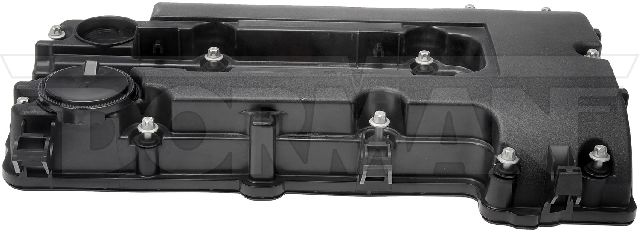
New Aftermarket Parts Available


The information in this article is provided for general reference and educational purposes only. Vehicle specifications, procedures, and part compatibility can vary by production date, trim level, and region. Always consult your vehicle's factory service manual and verify part numbers before purchasing or performing repairs. Safety-critical components such as airbags, seat belts, and braking systems should be installed by a qualified professional.
- Chevrolet Cruze:
- 🎬 Helpful Videos
- 🛍️ Shop This Part
- What's Unique About the 2011-2016 Chevrolet Cruze
- Symptoms You May Notice
- Most Likely Causes
- Rare But Worth Checking
- Diagnosis Steps
- Parts You'll Likely Need
- Related Codes That Often Appear With This One
- Technical Service Bulletins (TSBs) & Recalls
- Platform-Specific Known Issues
- Mechanic-Grade Diagnostic Values
- Scan Tool Commands That Help
- Wiring & Ground Locations
- Real Owner Repair Stories
- OEM Part Supersession History
- Diagnostic Flowchart
- Used vs. New Parts: Buying Guide for This Vehicle
- Real Owner Stories
- 2011-2016 Chevrolet Cruze 1.4L Turbo
- 2011-2016 Chevrolet Cruze 1.4L Turbo
- 2011-2016 Chevrolet Cruze 1.4L Turbo
- Related OBD-II Codes
- Frequently Asked Questions
- 🎟️ Get 5% Off