

P0068 on 2007-2013 Chevrolet Avalanche: MAP/MAF Throttle Position Correlation Fixes
On a 2007-2013 Avalanche, P0068 is almost always caused by a dirty electronic throttle body. A thorough cleaning with specialized cleaner often fixes it for under $20. If that fails, check for vacuum leaks, especially from the intake manifold gaskets, which are a known failure point on these engines.
- Start by cleaning the throttle body. This is the most likely and cheapest fix for P0068 on your Avalanche.
- If cleaning the throttle body doesn't work, your next step should be to check for vacuum leaks, as failing intake gaskets are common.
- Do not replace expensive sensors like the MAF, MAP, or the entire throttle body until you have ruled out a dirty throttle body and vacuum leaks.
- This code will likely put your truck into 'Reduced Engine Power' mode, so address it promptly for safety and drivability.
- After cleaning or replacing the throttle body, an idle relearn procedure may be required to restore a smooth idle.
What's Unique About the 2007-2013 Chevrolet Avalanche
On this generation of GM trucks (GMT900), including the Avalanche with the 5.3L or 6.0L V8, the P0068 code is very frequently caused by carbon and oil buildup (coking) inside the electronic throttle body. This residue, often from the PCV system, can make the throttle plate stick or, more commonly, restrict the small amount of air that is supposed to pass around it at idle. This restriction causes the actual airflow (measured by MAF) to be lower than what the PCM expects for a given idle throttle position, triggering the correlation fault. 🎬 Watch: Understanding the causes and fixes for the P0068 code. A GM Technical Service Bulletin (TSB #PIP4578B) specifically addresses this code appearing on higher-mileage vehicles, reinforcing that a dirty throttle body is the primary suspect.
Symptoms You May Notice
- Check Engine Light is on
- "Reduced Engine Power" message on the dash
- Rough or unstable idle
- Hesitation or stumbling during acceleration
- Engine may stall when coming to a stop
- A feeling that the engine is choking or has a dead spot when pressing the gas pedal
- Replacing the MAF or MAP sensor before thoroughly cleaning the throttle body. A dirty throttle body is the most common cause by a wide margin on this specific vehicle.
- Replacing the entire throttle body assembly when only a cleaning and idle relearn procedure is required.
Most Likely Causes
- Dirty or Carbon-Fouled Throttle Body 🔴 High Probability The PCV (Positive Crankcase Ventilation) system on these V8 engines can route oil vapors into the intake, which bake onto the throttle body over time, causing buildup. This is a well-documented issue on GMT900 trucks.
How to confirm: Remove the air intake tube from the throttle body. Visually inspect the throttle plate and bore for a ring of black, sticky carbon buildup. The buildup is often heaviest on the side facing the intake manifold.
Typical fix: Thoroughly clean the throttle body bore and plate using a dedicated throttle body cleaner and a soft brush or rag. Do not use harsh tools. A throttle idle relearn procedure is required afterward.
Est. part cost: $10-$20 for cleaner - Vacuum Leak 🟡 Medium Probability The intake manifold gaskets on the 5.3L and 6.0L V8s are known to become brittle and fail over time, creating a significant vacuum leak. PCV hoses, especially where they connect to the intake, can also crack and leak.
How to confirm: Perform a smoke test by introducing smoke into the intake system and watching for leaks, especially around the intake manifold where it meets the cylinder heads. Alternatively, with the engine running, cautiously spray short bursts of carburetor cleaner around the gasket areas; a change in engine RPM indicates a leak.
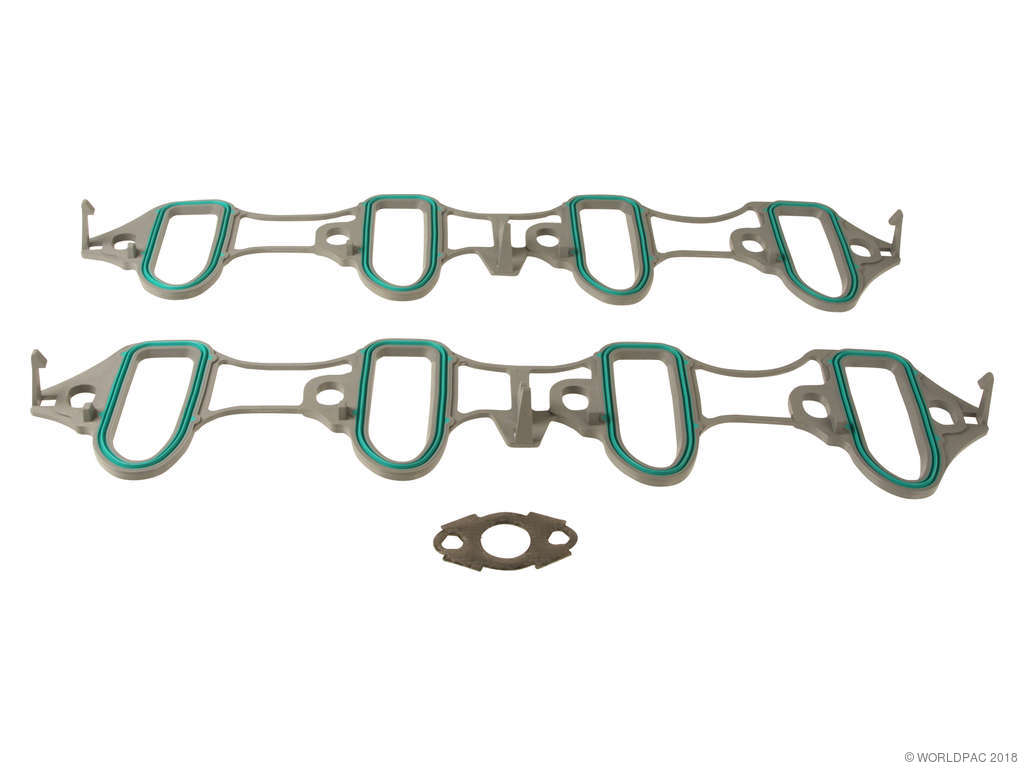
Typical fix: Replace the leaking gasket or hose. Intake manifold gasket replacement is a common repair for this engine, often done with a Fel-Pro MS96587 set. 🎬 See this walkthrough on replacing the intake manifold gasket set.
Est. part cost: $40-$100 for gaskets, $15-$50 for a PCV hose - Dirty or Faulty Mass Airflow (MAF) Sensor ⚪ Low Probability Oiled aftermarket air filters are a primary cause of MAF sensor contamination, which skews airflow readings. The sensor can also fail with age.
How to confirm: Inspect the sensor's hot wires for debris. Use a scan tool to monitor MAF readings; at idle, a 5.3L V8 should read approximately 4-7 grams/second (g/s). Readings that are illogical or don't increase smoothly with RPM suggest a problem. Cleaning is a good first step.
Typical fix: Clean the sensor with dedicated MAF sensor cleaner only. Do not touch the internal wires. If cleaning doesn't work and readings are still incorrect, replace the sensor.
Est. part cost: $10 for cleaner, $70-$150 for a new sensor - Faulty Manifold Absolute Pressure (MAP) Sensor ⚪ Low Probability
How to confirm: Use a scan tool to compare the MAP sensor reading to the BARO (Barometric Pressure) reading with the key on, engine off; they should be nearly identical. At idle, the voltage should drop to around 1.0-1.5 volts. A reading that is stuck high or doesn't change suggests a failure.
Typical fix: Replace the MAP sensor. It is typically located on top of the intake manifold, near the back.
Est. part cost: $30-$80
Rare But Worth Checking
- Cracked Intake Manifold: A hairline crack in the plastic intake manifold can cause a vacuum leak that is difficult to detect with a smoke test but will still trigger the code. This is usually a last resort after all other causes have been ruled out.
- Wiring Issues: Damaged or corroded wiring or connectors for the MAP, MAF, or TPS sensors can cause intermittent signal loss, triggering the code. A visual inspection of the harnesses and checking ground locations like G103 (front passenger cylinder head) and G104 (rear driver's cylinder head) is recommended.
Diagnosis Steps
- Check for any other stored trouble codes that could provide more clues.
- Perform a thorough visual inspection of the engine bay. Look for any disconnected vacuum hoses, cracked air intake ducts, or loose connections. Pay special attention to the PCV tube and its connections.
- Remove the air intake duct and inspect the electronic throttle body for carbon buildup. If any is present, remove the throttle body and clean it thoroughly with dedicated throttle body cleaner and a soft cloth.
- Inspect and clean the Mass Airflow (MAF) sensor using dedicated MAF sensor cleaner. Do not touch the sensor elements.
- After cleaning, perform a throttle idle relearn procedure. This can be done with a capable scan tool or by following a manual procedure: let the engine idle for 3 minutes, turn it off for 60 seconds, then let it idle for another 3 minutes.
- If the code returns, use a scan tool to monitor live data from the MAP, MAF, and TPS sensors. Check if their values are logical at idle, during throttle snaps, and while driving. MAF should be ~5.3 g/s for a 5.3L engine at idle.
- If a vacuum leak is suspected, perform a smoke test to pinpoint the source. Pay close attention to the intake manifold gaskets and the PCV hose system.
- If all else fails and sensors have been verified to have good wiring and ground connections, consider replacing the sensor that provides the most illogical data (MAP or MAF). Replacing the entire throttle body (which includes a new TPS) may be necessary if it's faulty.
Parts You'll Likely Need
- Throttle Body Cleaner
(OEM #ACDelco 10-2010 (X66A))— This is required for the most common fix: cleaning carbon buildup from the throttle body.
Trusted brands: CRC, ACDelco
OEM price range: $15-$20
Aftermarket price range: $10-$15 - Intake Manifold Gasket Set
(OEM #ACDelco 19301685)— These gaskets are a common failure point on the 5.3L/6.0L V8, causing vacuum leaks that trigger P0068.
Trusted brands: ACDelco, Fel-Pro (MS96587)
OEM price range: $60-$100
Aftermarket price range: $40-$80 - Electronic Throttle Body Assembly
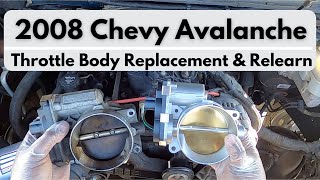
(OEM #12631186 (supersedes older numbers))— If cleaning doesn't resolve the issue or the internal sensors (TPS) have failed, 🎬 Watch: How to replace the throttle body and perform a relearn. the entire assembly must be replaced.
Trusted brands: ACDelco, Bosch, Hitachi
OEM price range: $200-$300
Aftermarket price range: $120-$220 - MAP Sensor
(OEM #12644228)— If the sensor itself fails, it will provide incorrect pressure readings to the PCM.
Trusted brands: ACDelco, Bosch
OEM price range: $50-$80
Aftermarket price range: $30-$60
Related Codes That Often Appear With This One
- P0171 / P0174 — These 'System Too Lean' codes strongly suggest unmetered air is entering the engine, pointing to a vacuum leak as the root cause for P0068.
- P1516 / P2101 — These are GM-specific codes related to the Throttle Actuator Control (TAC) system. Their presence alongside P0068 points directly to a problem with the electronic throttle body itself, whether it's dirty, sticking, or failing electrically.
- P2176 — This code means the idle position has not been learned by the computer. It often appears after a throttle body has been cleaned or replaced if the idle relearn procedure was not performed correctly.
Technical Service Bulletins (TSBs) & Recalls
- PIP4578B: Addresses P0068 in conjunction with reduced engine power mode on high-mileage vehicles, often pointing to throttle body issues.
Platform-Specific Known Issues
- A Technical Service Bulletin (TSB #PIP4578B) exists for this generation of GM trucks, which specifically mentions P0068 along with idle surge and reduced power modes on high-mileage vehicles. The bulletin's primary recommendation is to inspect and clean the throttle body.
Mechanic-Grade Diagnostic Values
- Mass Airflow (MAF) Sensor Reading at Idle — expected: Approximately 5.3 to 5.7 grams/second (g/s) for a 5.3L engine at warm idle. A general acceptable range is 4-7 g/s.. Failure: Readings significantly below 4 g/s can indicate a dirty sensor, vacuum leak, or faulty sensor.
- Manifold Absolute Pressure (MAP) Sensor Voltage (KOEO) — expected: 4.5 - 5.0 Volts with Key On, Engine Off. This should correspond to the Barometric Pressure (BARO) reading.. Failure: Voltage significantly outside this range, or stuck low, points to a sensor or wiring fault.
- Manifold Absolute Pressure (MAP) Sensor Voltage at Idle — expected: 1.0 - 2.1 Volts at warm idle.. Failure: Voltage that remains high (near the KOEO reading) indicates a major vacuum leak or a faulty sensor that isn't responding to engine vacuum.
- Throttle Position Sensor (TPS) Voltage Sweep — expected: A smooth voltage increase from approximately 0.5V - 0.9V at closed throttle to 4.5V - 4.9V at wide-open throttle.. Failure: Any spikes, dropouts, or non-linear readings during a slow, steady press of the accelerator pedal indicate a failing TPS.
- Throttle Actuator Motor Resistance — expected: Between 2 and 15 ohms when measured across the two motor terminals on the throttle body.. Failure: A reading of Over Limit (OL) indicates an open circuit, while a reading under 1 ohm indicates a short circuit within the motor.
Scan Tool Commands That Help
- GDS2 / Tech2 or capable bidirectional scanner: Idle Learn / Throttle Relearn — This function is mandatory after cleaning or replacing the electronic throttle body. It resets the learned idle position, preventing codes like P2176 and ensuring the PCM knows the new baseline for the throttle plate angle.
- GDS2 / Tech2: Throttle Actuator Control (TAC) Module Test — If codes P1516 or P2101 are present with P0068, this specific test can command the throttle motor to sweep open and closed, allowing a technician to monitor the TPS sensor responses in live data to confirm if the throttle body is functioning correctly or has a mechanical/electrical failure.
Wiring & Ground Locations
- G103 — On the front of the passenger side cylinder head.. This is a primary engine control ground. A poor connection here can cause erratic voltage and signal issues for multiple sensors, including the MAP, MAF, and TPS, leading to correlation faults.
- G104 — On the rear of the driver's side cylinder head.. This is another critical engine ground. Like G103, corrosion or a loose connection can introduce noise and instability into the sensor circuits monitored by the ECM.
- MAP Sensor Connector — On the MAP sensor, located at the top rear of the intake manifold.. For testing, the pinout is critical. On a typical GMT900 V8: Pin A (Orange/Black wire) is Ground, Pin B (Light Green wire) is the Signal, and Pin C (Gray wire) is the 5V Reference from the ECM.
Real Owner Repair Stories
- Chevrolet Forum user '06blusilvy' (2006 Silverado 1500 5.3L) — Long term fuel trims at +20% to +23% (indicating a lean condition), noticeable performance issues, and a rich running condition with a rough idle.
❌ Tried (didn't work) Initial diagnosis showed MAF reading low at 0.5 lb/min when it should be ~0.75 lb/min (5.6 g/s)., Cleaning the MAF sensor with dedicated cleaner improved readings, but not enough to resolve the issue completely.
✅ What actually fixed it Replacing the Mass Airflow (MAF) sensor entirely. This brought the long-term fuel trims back down to 3% or less and resolved the idle and performance problems. - GM-Trucks.com user 'noosaj' (GM Truck with electronic throttle control) — Reduced Engine Power message, inability to control throttle with the accelerator pedal.
❌ Tried (didn't work) Inspecting wiring to the Throttle Position Sensor (TPS)., Unplugging and replugging the TPS connector, which only gave temporary, limited throttle control up to 2500 RPM.
✅ What actually fixed it Replacing the entire throttle body assembly, which includes the non-separable Throttle Actuator Control (TAC) motor and TPS. This resolved all codes and restored normal operation.
"I Checked Everything" — The Actual Cause
- A common diagnostic dead-end occurs when a smoke test for vacuum leaks comes back clean. A known, hard-to-find cause for P0068 is a hairline crack in the plastic intake manifold. This crack may remain sealed when the engine is cold (during the smoke test) but expands and opens up as the engine reaches operating temperature, allowing unmetered air to enter and triggering the correlation code. The only fix is to replace the intake manifold.
OEM Part Supersession History
12580760→12679524— Standard part revision and consolidation by the manufacturer.
Heads up: This is the correct throttle body for the 5.3L/6.0L V8. The part number 12631186, cited in the Pass 2 data, is for 2.4L 4-cylinder engines and is incompatible.
Model Year Variations Within This Range
- 2007-2011: The PCV (Positive Crankcase Ventilation) system design is a key contributor to the throttle body coking that causes P0068. In a TSB addressing oil consumption, GM released an updated driver's side valve cover (GM P/N 12570427 for 2007-2008, 12642655 for 2009-2011) with improved baffling to reduce the amount of oil pulled through the PCV hose into the intake. Vehicles built before Feb 1, 2011, may have the older, less effective design, making them more prone to severe throttle body contamination. Later models (2010+) may also have a fixed orifice PCV restrictor in the valve cover instead of a traditional, replaceable PCV valve.
Diagnostic Flowchart
Other Known Issues on This Vehicle
Issues unrelated to this code that are worth knowing about as an owner of this generation:
- Active Fuel Management (AFM) Lifter Failure 🔴 High — Very common, typically between 80,000 and 150,000 miles. Affects cylinders 1, 4, 6, and 7. (Ref: Multiple TSBs exist, but no recall. Often results in misfire codes (e.g., P0300, P0307) and a distinct ticking noise.)
- Cracked Dashboard 🟠 Medium — Extremely common across all mileage ranges, especially in sun-exposed climates. Cracks typically form above the instrument cluster and around the passenger airbag. (Ref: No recall; subject of class-action lawsuits due to potential safety concerns with airbag deployment.)
- Excessive Oil Consumption 🟠 Medium — Common on 5.3L engines, often linked to the AFM system and a faulty PCV system in the driver-side valve cover. (Ref: TSBs exist suggesting an updated valve cover design. Can lead to fouled spark plugs and engine damage if oil level is not monitored.)
- Faulty Fuel Level Sensor 🟡 Low — Commonly occurs after 100,000 miles, causing the fuel gauge to read incorrectly or stick on empty. (Ref: No recall. Requires dropping the fuel tank to replace the fuel pump module, which contains the sensor.)
Used vs. New Parts: Buying Guide for This Vehicle
When a used part is the smart pick: A used intake manifold from a reputable salvage yard is a reasonable choice, as it is a simple plastic component with a low failure rate (barring cracks). Inspect carefully for any signs of cracking or damage around mounting points and sensor ports before purchasing.
Donor-vehicle mileage cap: roughly under 80000 miles for the part to have meaningful remaining life.
What to inspect on the donor part:
- For an intake manifold, check for hairline cracks, especially near bolt holes and seams.
- For a used throttle body, look for excessive scoring in the bore and ensure the throttle plate moves without binding. However, the internal electronics are a gamble.
- Verify the donor vehicle was not in a front-end collision that could have damaged the parts.
OEM-only on this vehicle (don't cheap out):
- Electronic Throttle Body: Due to the integrated and calibrated sensors (TPS) and actuator motor, an OEM (ACDelco) or high-quality OEM supplier (Bosch, Hitachi) part is strongly recommended to avoid compatibility and performance issues.
- MAP and MAF Sensors: Cheap aftermarket sensors are notorious for having incorrect calibration curves, which can cause the P0068 code to persist or return. Stick with ACDelco or Delphi for these critical sensors.
Aftermarket brands forum-validated for this vehicle:
- Fel-Pro: Widely regarded as a high-quality, and often superior, choice for the intake manifold gaskets (Part #MS96587). Their designs are often improved for the repair environment compared to the original OEM plastic gaskets.
Brands owners have reported issues with on this vehicle:
- Unbranded, low-cost electronic sensors (MAP, MAF, Throttle Bodies) from online marketplaces. While tempting, they have a high rate of being dead-on-arrival or failing prematurely, leading to repeated repairs.
Real Owner Stories
Aggregated from forums and TSBs cited above. Mileages and costs reflect what owners reported in those sources.
2011 Chevrolet Silverado 1500 5.3L V8
Symptoms: P0068 code, reduced power message, and a rough idle.
What fixed it: A thorough throttle body cleaning immediately resolved all symptoms.
Source hint: gmtrucks.com
2008 GMC Sierra 1500 V8 — 75000 miles
Symptoms: Experienced the infamous GMT900 cracked dash.
What fixed it: Not specified (illustrates common platform issues alongside engine codes).
Source hint: Reddit (r/gmcsierra)
GMT900 Platform 6.0L V8
Symptoms: The engine was throwing P0068 during wide-open-throttle (WOT) pulls.
What fixed it: Investigation into vacuum leaks, which can cause the code even in performance applications.
Source hint: EFILive Forum
Related OBD-II Codes
Frequently Asked Questions
Is there a Technical Service Bulletin for the P0068 code on my high-mileage Chevrolet Avalanche?
What is the most common cause for the 'Reduced Engine Power' message on a GMT900 Avalanche with a P0068?
I cleaned my throttle body to fix P0068; do I need to do anything else for my Avalanche to run correctly?
Could my aftermarket oiled air filter be causing the P0068 code on my 5.3L V8?
Are there specific intake parts I should check for vacuum leaks on my 2007-2013 Avalanche?
My Avalanche has a P0068 and a ticking noise; are these related?
Helpful Videos

Used OEM Parts in Stock


New Aftermarket Parts Available


The information in this article is provided for general reference and educational purposes only. Vehicle specifications, procedures, and part compatibility can vary by production date, trim level, and region. Always consult your vehicle's factory service manual and verify part numbers before purchasing or performing repairs. Safety-critical components such as airbags, seat belts, and braking systems should be installed by a qualified professional.
- Chevrolet Avalanche:
- 🎬 Helpful Videos
- 🛍️ Shop This Part
- What's Unique About the 2007-2013 Chevrolet Avalanche
- Symptoms You May Notice
- Most Likely Causes
- Rare But Worth Checking
- Diagnosis Steps
- Parts You'll Likely Need
- Related Codes That Often Appear With This One
- Technical Service Bulletins (TSBs) & Recalls
- Platform-Specific Known Issues
- Mechanic-Grade Diagnostic Values
- Scan Tool Commands That Help
- Wiring & Ground Locations
- Real Owner Repair Stories
- "I Checked Everything" — The Actual Cause
- OEM Part Supersession History
- Model Year Variations Within This Range
- Diagnostic Flowchart
- Other Known Issues on This Vehicle
- Used vs. New Parts: Buying Guide for This Vehicle
- Real Owner Stories
- 2011 Chevrolet Silverado 1500 5.3L V8
- 2008 GMC Sierra 1500 V8 — 75000 miles
- GMT900 Platform 6.0L V8
- Related OBD-II Codes
- Frequently Asked Questions
- 🎟️ Get 5% Off