

P0037 on 2005-2009 Subaru Legacy 2.5L Turbo: Rear O2 Sensor Heater Fixes
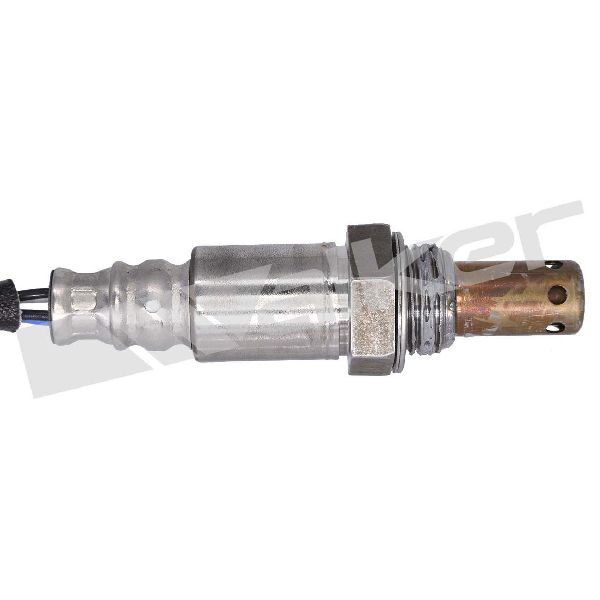
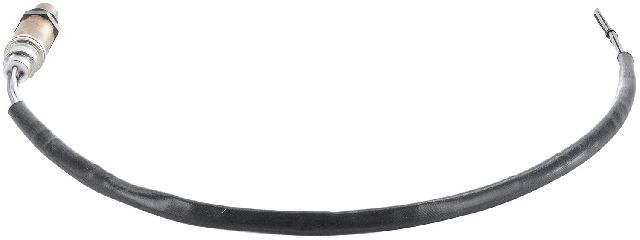
On a 2005-2009 Subaru Legacy with the 2.5L turbo engine, code P0037 almost always means the rear oxygen sensor's internal heater has failed. The fix is to replace the sensor, which costs about $70-$120 for an aftermarket part (Denso 234-4732 is a common choice) or $180-$250 for an OEM part. The job can be tough if the old sensor is rusted in place, so be prepared with penetrating oil and a proper O2 sensor socket.
- P0037 on your Legacy GT almost certainly points to a bad rear O2 sensor.
- This is a safe code to drive with in the short term, but it will cause an automatic emissions failure and disable your cruise control.
- The biggest challenge is often removing the old, rusted sensor, not diagnosing the problem. Be prepared with penetrating oil and the correct 22mm (7/8") O2 sensor socket.
- Before ordering, verify the correct OEM part number for your car's transmission (Manual vs. Automatic) or use a trusted aftermarket equivalent like Denso 234-4732.
What's Unique About the 2005-2009 Subaru Legacy
On the turbocharged EJ255 engine, the rear O2 sensor lives in a high-heat environment, which contributes to the eventual failure of the internal heater element. Owners frequently report this specific code, and it's considered a very common and straightforward repair. The most significant challenge unique to this platform isn't the diagnosis, but the physical removal of the sensor, which often seizes in the exhaust pipe due to rust and heat cycling. Forum threads are filled with owners battling stuck sensors.
Symptoms You May Notice
- Check Engine Light is on
- Cruise control light is flashing and the system is disabled
- Vehicle will fail an emissions test
- Slightly reduced fuel economy
- Replacing the front Air/Fuel Ratio sensor (Sensor 1). P0037 is specific to the rear sensor (Sensor 2).
- Replacing the catalytic converter. This code points to an electrical fault in the sensor's heater, not the performance of the catalyst itself.
Most Likely Causes
- Failed Rear Oxygen Sensor Heater Element 🔴 High Probability The internal heating element is a common failure point on O2 sensors over time, and the high exhaust temperatures of the turbocharged engine can accelerate this wear. It is the most frequent cause of P0037.
How to confirm: Unplug the sensor and use a multimeter to test the resistance between the two heater pins (usually the two same-colored wires, often black). A good sensor will have low resistance (e.g., 2.8-5.5 ohms), while a failed sensor will show an open circuit (infinite resistance, 'OL') or a reading in the thousands of ohms (kΩ).
Typical fix: Replace the rear (downstream) oxygen sensor.
Est. part cost: $70-$250 - Damaged Wiring or Connector 🟡 Medium Probability The wiring harness runs near the hot exhaust and transmission, making it susceptible to melting or physical damage from road debris. One owner on LegacyGT.com found their wire was melted and frayed, which caused the code to persist even after replacing the sensor.
How to confirm: Visually inspect the entire length of the sensor's wiring harness and the connector plug for any signs of melting, chafing, or corrosion. If the sensor tests good, check for 12V power and ground at the vehicle-side connector with the key on. A heat shield rubbing on the wire can also cause a short.
Typical fix: Repair the damaged section of wire or clean/replace the connector.
Est. part cost: $5-$50 - Blown Fuse ⚪ Low Probability
How to confirm: Check the fuse panel in the engine bay for a fuse labeled 'A/F Heater' or similar. On this platform, it is often identified as fuse 'SBF 5'. A visual inspection or continuity test will confirm if it's blown.
Typical fix: Replace the blown fuse. If it blows again immediately, it indicates a short circuit in the wiring that must be found and repaired.
Est. part cost: $1-$5
Rare But Worth Checking
- Faulty Engine Control Module (ECM): This is extremely rare. Before considering the ECM, all other possibilities (sensor, wiring, fuse) must be exhaustively ruled out by a professional.
Diagnosis Steps
- Read the code with an OBD-II scanner to confirm P0037 is the only code present. Note that the cruise control light will also be flashing.
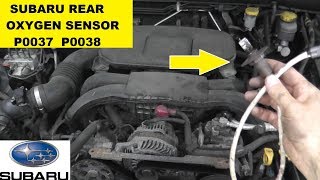
- Visually inspect the rear oxygen sensor, which is located on the exhaust pipe after the catalytic converter. Look for obvious damage to the sensor or its wiring harness, paying close attention to signs of melting or fraying.
- Locate the electrical connector, typically found on a bracket on top of the transmission bellhousing. Inspect it for corrosion or damage.
- Check the 'A/F Heater' fuse (often SBF #5) in the main fuse box under the hood.
- If the fuse and wiring appear intact, disconnect the sensor. Use a multimeter to measure the resistance across the two heater pins on the sensor side (usually same-colored wires). A reading of 'OL' or very high resistance (kΩ/MΩ) confirms a burned-out heater element, and the sensor must be replaced. A good sensor should read a low resistance, typically under 10 ohms.
- If the sensor's resistance is within spec, test the vehicle-side of the connector. With the ignition key in the 'ON' position (engine off), one pin should have 12V power and the other should have a good ground.
- If power or ground is missing, the fault is in the vehicle's wiring harness or ECM circuit. If power and ground are present and the sensor resistance is good, the issue may be intermittent and require more advanced diagnostics.
Parts You'll Likely Need
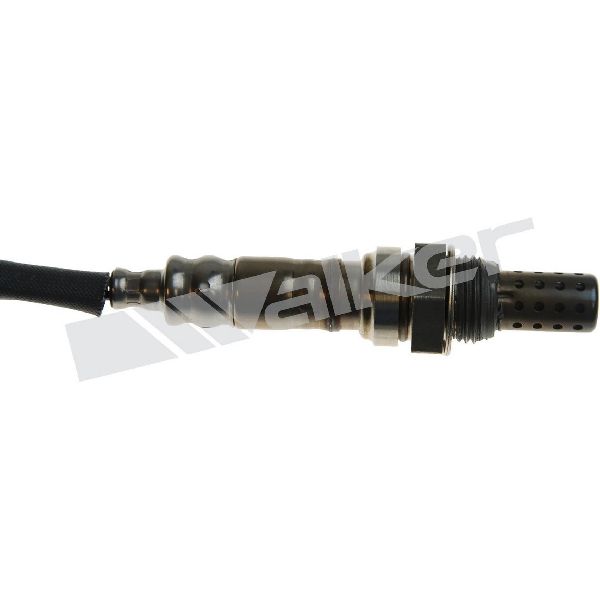
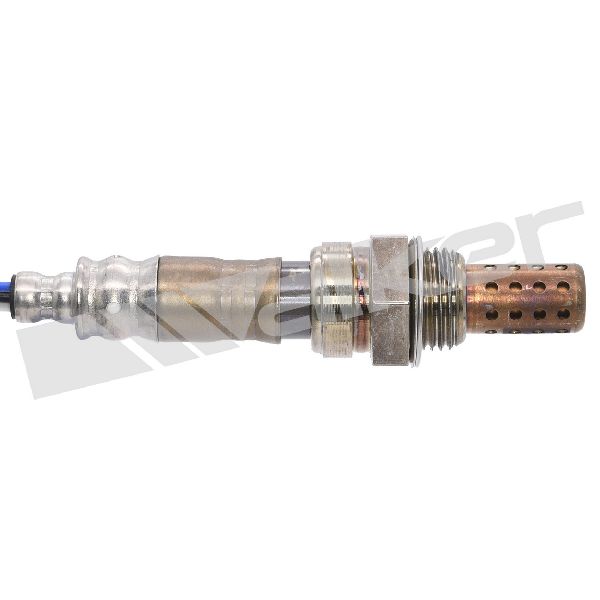
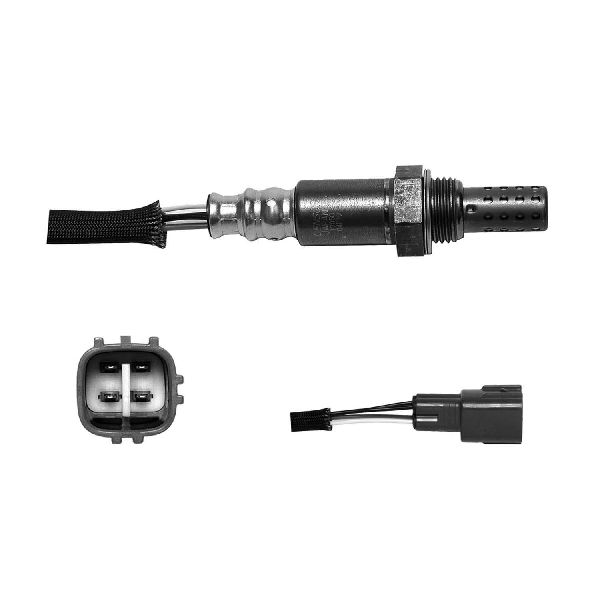
- Rear Oxygen Sensor (Bank 1, Sensor 2)
(OEM #22690AA70A (for Auto Trans) / 22690AA69A (for Manual Trans))— This is the most common cause of P0037, as the internal heater element fails over time.
Trusted brands: Denso (OEM supplier, p/n 234-4732 is a widely used replacement), NTK
OEM price range: $180-$250
Aftermarket price range: $70-$120
Platform-Specific Known Issues
- The rear O2 sensor is notoriously difficult to remove due to rust and seizing in the exhaust bung. Liberal use of penetrating oil (like PB Blaster or Kroil), allowing it to soak overnight, is highly recommended. A proper 22mm (or 7/8") slotted O2 sensor socket or a flare nut wrench is essential to avoid rounding off the sensor body. In severe cases, applying heat from a torch to the exhaust bung (not the sensor) may be necessary to break it free.
Mechanic-Grade Diagnostic Values
- Rear O2 Sensor Heater Resistance — expected: 5 to 15 Ohms at room temperature. A new Denso or OEM sensor typically measures between 5 and 8 Ohms.. Failure: An open circuit ('OL' on a multimeter) or very high resistance (e.g., in the kilo-ohms range) indicates a burned-out heater element. Readings over 50 Ohms are generally considered bad.
- Voltage at Harness Connector (Heater Power Pin) — expected: Approximately 12V (battery voltage) with Key On, Engine Off.. Failure: 0V or significantly low voltage points to a problem upstream (fuse, relay, or wiring).
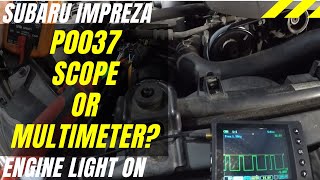
- Voltage at Harness Connector (Heater Ground Control Pin) — expected: This is a Pulse-Width Modulated (PWM) ground signal from the ECM. On a multimeter, it may show an average voltage of 2-3V when active. An oscilloscope is required to see the actual square wave signal.. Failure: A constant 0V or 12V indicates a problem with the ECM driver or a short in the wiring.
Scan Tool Commands That Help
- Subaru Select Monitor (or equivalent professional scanner): Readiness Monitor Status for 'O2 Heater Diagnosis' — After replacing the sensor, a technician can monitor the status of the self-test during a drive cycle to confirm the repair was successful without waiting for the Check Engine Light to potentially return.
Wiring & Ground Locations
- Rear O2 Sensor Connector — An all-gray, 4-pin electrical connector located on a bracket on the passenger side of the transmission bellhousing, near the firewall.. This is the primary point for testing the sensor's resistance and the harness-side power and ground signals.
- Heater Circuit Wires (Harness Side) — Within the gray connector, the power wire is typically Black with a Yellow stripe, and the ECM-controlled ground is a Green wire.. Knowing the specific wire colors allows for accurate testing of power and the control signal from the ECM.
- ECU Grounds — The main grounds for the ECU are located on top of the intake manifold.. A poor ground at this location can cause incorrect voltage references for multiple sensors, including the O2 sensor circuits. This is a critical check if other strange electrical issues are present.
- Main Engine/Chassis Ground — A primary ground strap runs from the engine block (often near the starter on the engine/transmission mating surface) to the chassis.. A corroded or broken main ground can cause a variety of electrical faults, including intermittent sensor circuit codes.
Real Owner Repair Stories
- YouTube user 'GoldGuy' (Subaru Impreza (similar EJ engine platform)) — Check Engine Light, car running rich during cruise.
❌ Tried (didn't work) Initially installed a cheap, unbranded oxygen sensor from eBay.
✅ What actually fixed it Replacing the cheap eBay sensor with a quality Denso-branded sensor resolved the Check Engine Light, although further tuning was needed for the rich condition on his modified car. This highlights the common issue of poor quality aftermarket sensors causing problems. - YouTube channel 'OMGWrench' (2010 Subaru Impreza 2.0L (EJ204)) — Check Engine Light, P0037 code.
❌ Tried (didn't work) Initial diagnosis confirmed power and a controlled ground were present at the connector, ruling out a simple wiring break.
✅ What actually fixed it A resistance test of the sensor's heater element showed 39 kOhms (39,000 Ohms), which is extremely high. This high resistance caused very low current flow, triggering the 'Circuit Low' code. A new sensor measured 5.5 Ohms and fixed the problem.
OEM Part Supersession History
22690AA70A→22690AA70A (current)— This is the correct part for automatic transmission models within this range.
Heads up: Do not use on manual transmission vehicles.22690AA69A→22690AA69A (current)— This is the correct part for manual transmission models within this range.
Heads up: Do not use on automatic transmission vehicles.
Model Year Variations Within This Range
- 2005-2009: The only significant variation for this repair is the rear oxygen sensor part number, which is different between vehicles equipped with an automatic transmission (22690AA70A) and those with a manual transmission (22690AA69A).
Diagnostic Flowchart
Other Known Issues on This Vehicle
Issues unrelated to this code that are worth knowing about as an owner of this generation:
- Premature Turbo Failure (Clogged Banjo Bolt Filter) 🔴 High — Very common, especially on vehicles over 75k miles with inconsistent oil change history. Can lead to catastrophic engine damage if metal fragments circulate. (Ref: No official recall, but it is a widely documented issue. Owners are strongly advised to remove the mesh filter from the turbo oil feed line banjo bolt as a preventative measure.)
- Piston Ringland Failure 🔴 High — A known weakness of the EJ255/EJ257 pistons, often triggered by detonation from bad fuel, aggressive tunes, or lugging the engine at low RPM. Can occur at any mileage and requires an engine rebuild.
- Clogged AVCS Banjo Bolt Filters 🟠 Medium — Similar to the turbo feed line, banjo bolts for the Active Valve Control System (AVCS) also contain filters that can clog, leading to rough running, timing-related codes (P0011, P0021), and potential oil starvation issues.
- Head Gasket Failure 🟠 Medium — While more famous on the non-turbo EJ25 engines, the turbo EJ255 can also suffer from head gasket leaks, often presenting as external oil or coolant leaks rather than internal failure.
- Wheel Bearing Failure 🟡 Low — Premature failure of front or rear wheel bearings is common, causing a loud humming or grinding noise that changes with vehicle speed.
Used vs. New Parts: Buying Guide for This Vehicle
When a used part is the smart pick: For this repair, a used part is generally not recommended as oxygen sensors are wear items with a finite lifespan. However, sourcing a used wiring harness pigtail from a junkyard is a smart choice if your vehicle-side connector or wiring is damaged.
Donor-vehicle mileage cap: roughly under 50000 miles for the part to have meaningful remaining life.
What to inspect on the donor part:
- Inspect the sensor tip for heavy white or black deposits, which indicate contamination.
- Ensure the electrical connector pins are clean, straight, and free of corrosion.
- Check that the wiring insulation is flexible and not cracked, brittle, or melted.
OEM-only on this vehicle (don't cheap out):
- No parts for this specific P0037 repair are strictly OEM-only, as the OEM supplier (Denso) sells the identical part in the aftermarket.
Aftermarket brands forum-validated for this vehicle:
- Denso (OEM supplier for this part)
- NTK / NGK
Brands owners have reported issues with on this vehicle:
- Bosch (While a major brand, many Subaru owners report CELs, poor performance, or short lifespan when using their sensors on this platform)
- Unbranded, generic 'no-name' parts from online marketplaces like eBay or Amazon
Real Owner Stories
Aggregated from forums and TSBs cited above. Mileages and costs reflect what owners reported in those sources.
2005 Legacy GT 2.5L Turbo
Symptoms: I have a CEL and cruise flashing. I checked the codes and it is P0031 and P0037. Oxygen Sensor Bank 1 Sensor 1 Heater circuit low, and Oxygen Sensor Bank 1 Sensor 2 heater circuit low. I replaced both Sensors with the Denso brand. The code will not go away. I have cleared the codes and they immediately come back on as soon as I turn the car on.
What fixed it: The owner's report indicates that replacing the sensors alone did not fix the issue, suggesting a blown fuse (SBF 5) or a short in the wiring harness that needs to be addressed.
Source hint: LegacyGT.com owner report in article context
2005 Legacy GT 2.5L Turbo
Symptoms: Limp mode (fault code) p0037. The owner found the wiring was melted and frayed.
What fixed it: Repairing the damaged/melted section of the wiring harness, as simply replacing the sensor did not initially fix the issue.
Source hint: LegacyGT.com thread titled 'Limp mode (fault code) p0037 05 legacy gt turbo'
2008 Legacy GT 2.5L Turbo
Symptoms: Vehicle threw a P0037 code; owner sought info on O2 sensor change.
What fixed it: Successfully replaced the rear sensor using Denso part number 234-4732.
Source hint: LegacyGT.com thread titled 'MY08 LGT threw a P0037 code (O2 sensor info/change inside)'
Related OBD-II Codes
Frequently Asked Questions
Why is my cruise control light flashing along with the Check Engine Light on my 2005-2009 Legacy GT?
Which fuse should I check for the P0037 heater circuit on my Legacy?
Where is the rear oxygen sensor connector located on the EJ255 engine?
Is there a specific aftermarket part number recommended for the 2008 Legacy GT to fix P0037?
Why is it so difficult to remove the rear O2 sensor on my Subaru?
Can a heat shield cause the P0037 code on my Legacy?
Helpful Videos
We Have This Part in Stock


The information in this article is provided for general reference and educational purposes only. Vehicle specifications, procedures, and part compatibility can vary by production date, trim level, and region. Always consult your vehicle's factory service manual and verify part numbers before purchasing or performing repairs. Safety-critical components such as airbags, seat belts, and braking systems should be installed by a qualified professional.
- Subaru Legacy:
- 🎬 Helpful Videos
- 🛍️ Shop This Part
- What's Unique About the 2005-2009 Subaru Legacy
- Symptoms You May Notice
- Most Likely Causes
- Rare But Worth Checking
- Diagnosis Steps
- Parts You'll Likely Need
- Platform-Specific Known Issues
- Mechanic-Grade Diagnostic Values
- Scan Tool Commands That Help
- Wiring & Ground Locations
- Real Owner Repair Stories
- OEM Part Supersession History
- Model Year Variations Within This Range
- Diagnostic Flowchart
- Other Known Issues on This Vehicle
- Used vs. New Parts: Buying Guide for This Vehicle
- Real Owner Stories
- 2005 Legacy GT 2.5L Turbo
- 2005 Legacy GT 2.5L Turbo
- 2008 Legacy GT 2.5L Turbo
- Related OBD-II Codes
- Frequently Asked Questions
- 🎟️ Get 5% Off