

P0037 on 2012-2018 Ford Focus 2.0L: Downstream O2 Sensor Heater Circuit Causes and Fixes
For a 2012-2018 Ford Focus, code P0037 almost always means the internal heater in the downstream (post-catalytic converter) oxygen sensor has failed. Replacing the sensor is the typical fix, costing around $40-$70 for an aftermarket part and is a straightforward DIY job requiring a 22mm (7/8") O2 sensor socket.
- P0037 points specifically to the heater in the downstream (post-catalytic converter) O2 sensor.
- The most likely cause is a failed O2 sensor, which is a common wear-and-tear item.
- Before buying parts, check fuse F38 (15A) in the engine bay and visually inspect the sensor's wiring for melting or chafing.
What's Unique About the 2012-2018 Ford Focus
This is a standard OBD-II code and the issue is not unique to the third-generation Ford Focus. The cause is typically a universal failure point: the heating element within the oxygen sensor burns out over time. The repair process is straightforward, with the sensor's electrical connector conveniently located at the top rear of the engine bay, making it easy to disconnect before accessing the sensor itself from underneath the vehicle. The wiring harness is known to be susceptible to damage from exhaust heat, so a visual inspection is critical before replacing parts.
Symptoms You May Notice
- Check Engine Light is on
- Failure to pass an emissions/smog test
- Slightly reduced fuel economy (often not noticeable)
- Rough idle or hesitation (rare for this specific code)
- Fuel or sulphur smell from the exhaust (rare)
- Replacing the upstream (Bank 1, Sensor 1) oxygen sensor. The code P0037 specifically refers to Sensor 2, which is the downstream sensor located after the catalytic converter.
Most Likely Causes
- Failed Downstream Oxygen Sensor 🔴 High Probability The internal heating element of an O2 sensor has a finite lifespan and eventually burns out from repeated heat cycles, which is a common failure on most vehicles. It is the most cited cause, with some sources estimating an 80% probability.
How to confirm: Disconnect the sensor and measure the resistance between the two heater circuit pins (usually the two same-colored wires, often white). A normal reading is typically between 2-20 Ohms. An open circuit (infinite resistance) or a value far outside this range indicates a failed heater element.
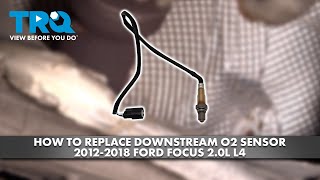
Typical fix: Replace the Bank 1, Sensor 2 (downstream) oxygen sensor. This requires a special 22mm (7/8") slotted socket to accommodate the wire.
Est. part cost: $40-$120 - Damaged Wiring or Connector 🟡 Medium Probability The wiring harness runs close to the hot exhaust system. Over time, clips can fail, allowing wires to touch the exhaust and melt, or road debris can cause damage.
How to confirm: Visually inspect the entire wiring harness from the sensor to the connector at the top of the engine bay. Look for any signs of melting, chafing, corrosion in the connector, or broken wires. Perform a wiggle test on the harness while monitoring voltage to check for intermittent faults.
Typical fix: Repair the damaged section of the wiring harness or clean/replace the connector.
Est. part cost: $5-$50 - Blown Fuse ⚪ Low Probability
How to confirm: Check the fuse for the O2 sensor heater circuit. For the 2012-2014 Focus, this may be fuse F38 (15A) in the engine compartment fuse box (BJB), labeled for the HO2S heater. Always verify with your owner's manual. Visually inspect the fuse and test for continuity with a multimeter.
Typical fix: Replace the blown fuse. If the new fuse blows immediately, it indicates a short circuit in the wiring or the sensor itself that must be found.
Est. part cost: $1-$5
Rare But Worth Checking
- Faulty Powertrain Control Module (PCM): This is extremely rare. The PCM's internal driver for the heater circuit can fail. This should only be considered after all other possibilities (sensor, wiring, fuses) have been exhaustively tested and ruled out.
Diagnosis Steps
- Read the code with an OBD-II scanner to confirm P0037 is the only code present.
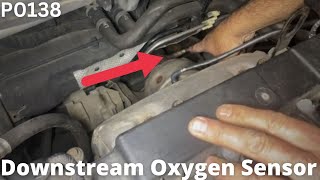
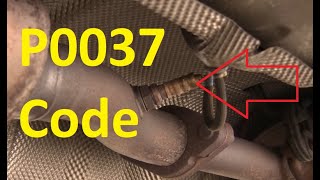
- Visually inspect the downstream O2 sensor's wiring harness and connector. The connector is at the top-rear of the engine, and the wiring runs down to the sensor in the exhaust pipe. Look for any signs of melting, chafing, or corrosion.
- Check the fuse for the O2 sensor heater circuit. For 2012-2014 models, this is likely fuse F38 (15A) in the engine bay fuse box. Consult your owner's manual for the exact location.
- If the wiring and fuse are good, test the sensor's heater circuit. Disconnect the sensor and use a multimeter to measure the resistance across the two heater pins on the sensor side (pins 1 and 4, typically two white wires). A reading between 2-20 Ohms is expected. A reading of infinite resistance (OL) means the heater is burned out and the sensor needs replacement.
- To confirm the vehicle is supplying power, turn the ignition to 'ON' (engine off) and carefully test for battery voltage (~12V) at the corresponding pins on the harness-side connector (Pin 4, GRN/ORG wire). If no voltage is present, re-check the wiring and fuse for an open circuit.
- If voltage is present at the harness and the sensor's resistance test failed, the sensor is faulty. If no voltage is present at the harness, there is a wiring or fuse issue. If all tests pass, the issue may be intermittent or, in rare cases, a faulty PCM driver.
- After replacing the part, clear the code with a scanner and perform a drive cycle to ensure the light does not return.
Parts You'll Likely Need
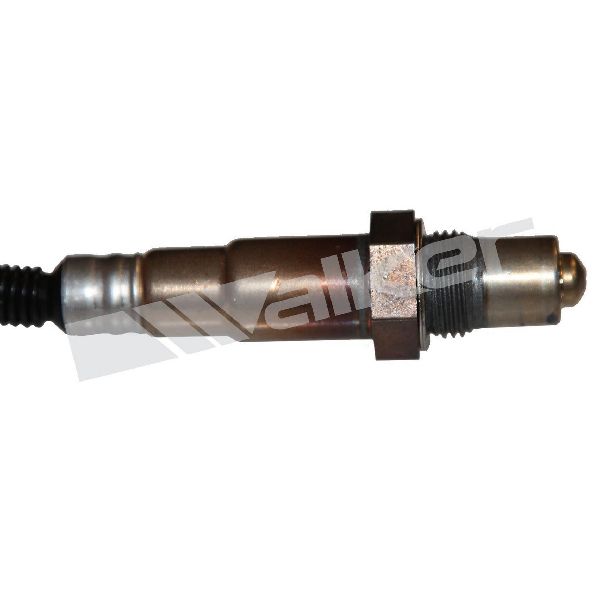
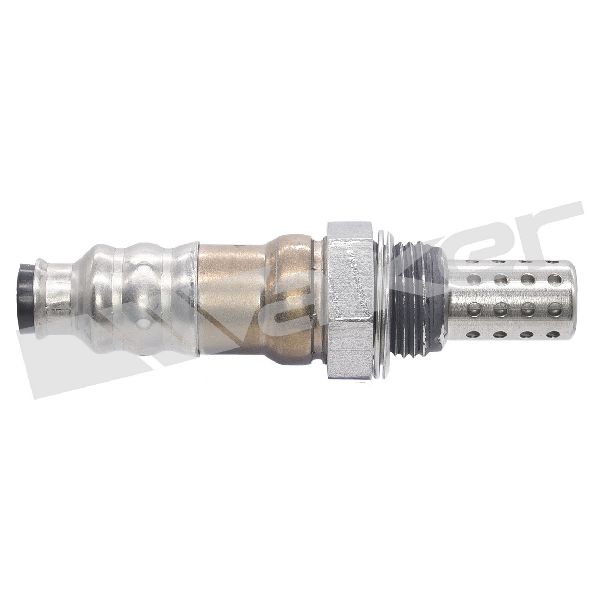
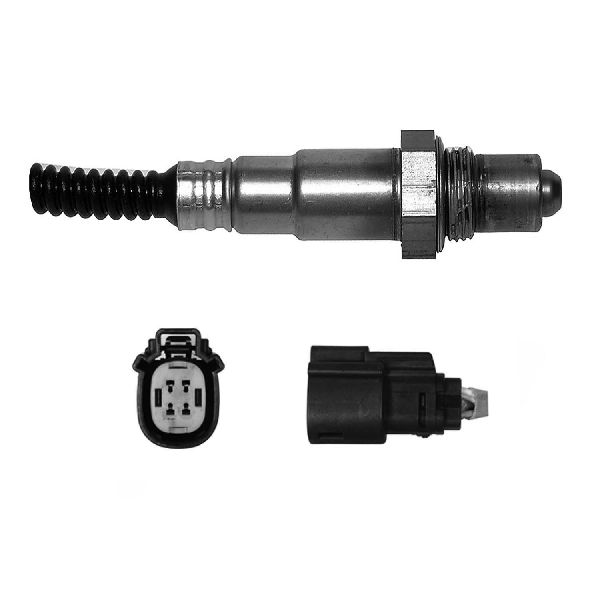
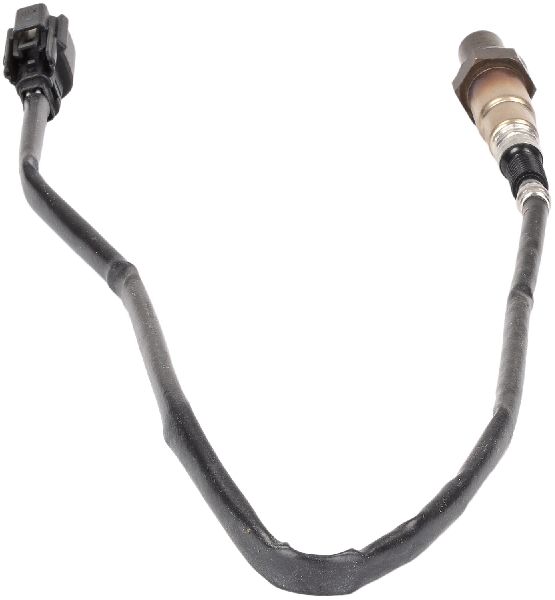
- Downstream Oxygen Sensor (Bank 1, Sensor 2)
(OEM #DY-1179)— This is the most common failure point for code P0037, as the internal heating element burns out over time.
Trusted brands: Motorcraft, Bosch, Denso, NTK
OEM price range: $70-$120
Aftermarket price range: $40-$70
Technical Service Bulletins (TSBs) & Recalls
- TSB 18-2062: Addresses various drivability concerns and MIL illumination on 2012-2014 Focus 2.0L models due to wiring harness issues. While not directly for P0037, it highlights a known weakness in the engine wiring.
Platform-Specific Known Issues
- Wiring Harness Vulnerability: While not specific to the O2 sensor circuit, Ford issued TSB 18-2062 for 2012-2014 Focus models due to various drivability issues caused by wiring harness problems. This suggests a general susceptibility to wiring faults in the engine bay that owners should be aware of when diagnosing electrical codes like P0037.
Mechanic-Grade Diagnostic Values
- Downstream O2 Sensor Heater Element Resistance — expected: 2-20 Ohms across the heater pins (typically pins 1 and 4).. Failure: Open circuit (OL or infinite resistance) or a reading significantly outside the expected range.
- Heater Circuit Supply Voltage (Key On, Engine Off) — expected: ~12V (Battery Voltage) at Pin 4 (Green/Orange wire) of the harness-side connector.. Failure: Low or no voltage indicates a problem with the fuse or supply wiring.
- Heater Circuit Current Draw — expected: 0.5 - 2.0 Amps when the heater is commanded on.. Failure: Zero amps indicates an open circuit; significantly higher amps indicates a short circuit.
- PCM Fault-Setting Logic — expected: The PCM expects the control circuit voltage to be below a certain threshold when the heater is off.. Failure: Code P0037 is set if the PCM sees the control circuit voltage *exceed* 57% of battery voltage when the heater is commanded OFF, indicating a short to power.
- Live Data Graph (Downstream O2 Sensor) — expected: A healthy sensor will show a relatively stable voltage, typically between 0.5V and 0.8V, after the engine is warm.. Failure: A common symptom of a failed sensor (even if the heater is the primary fault) can be a flat-line reading on a scan tool that does not fluctuate.
Hidden / Shadow Codes Worth Checking
- Pending Code: The PCM will store a pending P0037 code on the first drive cycle where a fault is detected. The Malfunction Indicator Lamp (Check Engine Light) will not illuminate until the fault is detected on a second consecutive drive cycle. (see via Most standard OBD-II scanners can read pending codes in a separate menu from active/stored codes.)
Scan Tool Commands That Help
- Ford IDS / Professional Scan Tool: HO2S Heater Active Command / Actuation Test — This bidirectional control allows a technician to manually command the O2 sensor heater circuit ON and OFF. It is used to verify the PCM driver is working and to easily test for voltage and current at the sensor connector without having to wait for the PCM to activate the circuit automatically.
Wiring & Ground Locations
- Downstream HO2S Connector (C134) — The sensor is in the exhaust pipe after the catalytic converter. The electrical connector is located at the top-rear of the engine bay, near the firewall.. This is the primary connection point to test the sensor and the vehicle-side harness. Pin 4 (GRN/ORG) is the 12V+ supply from fuse F38. Pin 1 (WHT/BLU) is the ground-side control from the PCM.
- Fuse F38, Battery Junction Box (BJB) — In the main fuse box in the engine compartment.. This 15A fuse provides power to the heater element. If it's blown, the heater will not operate. If it blows repeatedly, there is a short circuit in the wiring or sensor.
- Ground G104 — Located on the left front of the engine compartment, typically on the frame rail under the air filter box.. This is a major chassis ground point in the engine bay. While not directly in the O2 sensor's control circuit (which is controlled by the PCM), a poor main ground can cause a variety of unpredictable electrical issues and voltage drops that could potentially affect sensor readings or PCM operation.
- PCM Connector C175B, Pin 20 — At the Powertrain Control Module (PCM).. This is the specific pin on the PCM that provides the switched ground to control the heater circuit via the White/Blue wire. A test at this pin is the final step to confirm a wiring break or a faulty PCM driver.
OEM Part Supersession History
CV6Z-9G444-A (Engineering Number)→DY-1179 (Motorcraft Service Part Number)— Standard Ford practice where an engineering number used during vehicle assembly is replaced by a service part number for retail sale.
Heads up: The numbers refer to the same part. No supersession or revision issues were found for DY-1179 during the 2012-2018 period.
Diagnostic Flowchart
Other Known Issues on This Vehicle
Issues unrelated to this code that are worth knowing about as an owner of this generation:
- DPS6 'PowerShift' Automatic Transmission Failure 🔴 High — Extremely common throughout the entire generation. Issues include shuddering, hesitation, rough shifting, and complete failure of clutch packs or the Transmission Control Module (TCM). (Ref: Multiple TSBs and a warranty extension program (14M02) were issued.)
- Faulty Canister Purge Valve 🟠 Medium — Common issue causing engine stalling, rough idle, and difficulty starting after refueling. (Ref: Recalls 18V735 and 19V515000 were issued for this problem, involving a PCM software update.)
- Collapsed Passenger-Side Engine Mount 🟠 Medium — The hydraulic-filled passenger-side engine mount frequently fails, causing excessive vibration to be felt in the cabin at idle and during acceleration.
- Loss of Power Steering Assist 🔴 High — A notable number of complaints exist for sudden failure of the electronic power steering rack, resulting in a 'Steering Assist Fault' warning and significant effort required to steer.
Used vs. New Parts: Buying Guide for This Vehicle
When a used part is the smart pick: For this repair, a used part is almost never a smart choice. Oxygen sensors are a wear-and-tear component with a finite lifespan. The cost savings of a used sensor are minimal and not worth the risk of premature failure and having to do the labor twice.
Donor-vehicle mileage cap: roughly under 50000 miles for the part to have meaningful remaining life.
What to inspect on the donor part:
- If buying used is unavoidable, source from the lowest mileage vehicle possible.
- Inspect the sensor tip for heavy white, crusty deposits (coolant contamination) or black, sooty buildup (rich running condition), both of which indicate a hard life.
- Ensure the wiring and connector are free from any cuts, melting, or corrosion.
Aftermarket brands forum-validated for this vehicle:
- NTK
- Denso
- Bosch
Brands owners have reported issues with on this vehicle:
- Unnamed or 'white-box' ultra-low-cost brands from online marketplaces have a higher likelihood of having incorrect heater resistance values, leading to the code returning even with a new part.
Real Owner Stories
Aggregated from forums and TSBs cited above. Mileages and costs reflect what owners reported in those sources.
2012-2018 Ford Focus 2.0L
Symptoms: Check engine light on with code P0037; user tested the sensor and found an open heater circuit.
What fixed it: Replaced the downstream O2 sensor with a Bosch or NTK part.
Source hint: focusfanatics.com thread titled 'P0037 - O2 Sensor Heater Control Circuit Low Bank 1 Sensor 2'
2012-2018 Ford Focus 2.0L
Symptoms: Check engine light code P0037 appeared; vehicle was taken to a shop for diagnosis.
What fixed it: The owner replaced the bad sensor themselves in under an hour after a shop confirmed it was faulty.
Source hint: reddit.com/r/FordFocus thread titled 'Check engine light code P0037'
Related OBD-II Codes
Frequently Asked Questions
Does TSB 18-2062 apply to my 2012-2014 Ford Focus if I have code P0037?
Where is the fuse for the O2 sensor heater on a 2012-2014 Focus?
Which specific oxygen sensor do I need to replace for a P0037 code on my 2.0L Focus?
What tools do I need to change the downstream O2 sensor on this vehicle?
Could my Focus's rough idle be caused by P0037?
Are there other common engine issues on the 2012-2018 Focus I should check while fixing this?
Helpful Videos
We Have This Part in Stock



The information in this article is provided for general reference and educational purposes only. Vehicle specifications, procedures, and part compatibility can vary by production date, trim level, and region. Always consult your vehicle's factory service manual and verify part numbers before purchasing or performing repairs. Safety-critical components such as airbags, seat belts, and braking systems should be installed by a qualified professional.
- Ford Focus:
- 🎬 Helpful Videos
- 🛍️ Shop This Part
- What's Unique About the 2012-2018 Ford Focus
- Symptoms You May Notice
- Most Likely Causes
- Rare But Worth Checking
- Diagnosis Steps
- Parts You'll Likely Need
- Technical Service Bulletins (TSBs) & Recalls
- Platform-Specific Known Issues
- Mechanic-Grade Diagnostic Values
- Hidden / Shadow Codes Worth Checking
- Scan Tool Commands That Help
- Wiring & Ground Locations
- OEM Part Supersession History
- Diagnostic Flowchart
- Other Known Issues on This Vehicle
- Used vs. New Parts: Buying Guide for This Vehicle
- Real Owner Stories
- 2012-2018 Ford Focus 2.0L
- 2012-2018 Ford Focus 2.0L
- Related OBD-II Codes
- Frequently Asked Questions
- 🎟️ Get 5% Off