

P0037 on 2013-2016 Dodge Dart 1.4L: O2 Sensor Heater Circuit Low Causes and Fixes
This code almost always means the downstream oxygen sensor (Bank 1, Sensor 2) has failed and needs to be replaced. It's a common DIY repair with the part costing between $50 for an aftermarket sensor and around $170 for an OEM Mopar part. Before replacing, check fuse F87 in the underhood fuse box.
- P0037 on your 1.4L Dart points specifically to the heater circuit in the *downstream* O2 sensor (the one after the catalytic converter).
- The most likely fix, by far, is replacing the sensor itself. This is a common failure item.
- Before buying a new sensor, it's wise to do a quick visual check of the wiring for obvious damage and check fuse F87 (10A Red) in the underhood fuse box.
- This is a DIY-friendly repair. The sensor is accessible from under the car, and a special 22mm O2 sensor socket makes the job much easier.
- Use the correct part number: Mopar part #68142340AA or a direct-fit equivalent from a reputable brand like NTK or Denso to avoid compatibility issues.
What's Unique About the 2013-2016 Dodge Dart
For the 1.4L MultiAir Turbo Dart, the P0037 code is a straightforward issue without many platform-specific quirks. The downstream O2 sensor is relatively easy to access from underneath the car, just after the catalytic converter. While some Dodge vehicles have TSBs related to this code, none are specific to the Dart, indicating it's not a systemic manufacturing issue but rather a common wear-and-tear failure of the sensor itself. However, owners on forums note that this platform can be sensitive to aftermarket sensors, with a preference for OEM (Mopar) or OEM-supplier (NTK/NGK, Denso) parts to avoid compatibility issues.
Symptoms You May Notice
- Check Engine Light is on
- Failing an emissions test
- Potentially a slight decrease in fuel economy
- In rare cases, a rotten egg smell from the exhaust if the catalytic converter is affected
- Replacing the upstream (Sensor 1) oxygen sensor instead of the downstream (Sensor 2) sensor. The code P0037 specifically points to the downstream sensor after the catalytic converter.
- Using a cheap, universal-fit oxygen sensor. Owners report that Mopar vehicles, including the Dart, can be sensitive to sensor brands, and using a non-OEM or non-OEM-equivalent part can lead to persistent codes.
Most Likely Causes
- Failed Downstream (Bank 1, Sensor 2) Oxygen Sensor 🔴 High Probability The internal heater element of O2 sensors is a common failure point over time due to constant heat cycles. This is a typical wear item on most vehicles, including the Dart.
How to confirm: Disconnect the sensor and measure the resistance across the two heater circuit pins (usually the two same-colored wires) with a multimeter. An open circuit (infinite resistance) or a resistance value far outside the manufacturer's specification indicates a failed heater element. The PCM may set this code if it detects a resistance of 40 ohms or more.
Typical fix: Replace the Bank 1, Sensor 2 oxygen sensor. An O2 sensor socket (22mm or 7/8") is highly recommended for removal.
Est. part cost: $50-$180 - Damaged Wiring or Connector 🟡 Medium Probability The sensor's wiring is routed under the car near hot exhaust components and is exposed to road debris, which can cause wires to melt, chafe, or break over time. Forum users have noted that wiring harnesses on Darts can be susceptible to damage.
How to confirm: Visually inspect the wiring harness and connector leading to the downstream O2 sensor for any signs of melting, corrosion, or physical damage. Use a multimeter to check for 12V power and a good ground at the connector with the key on, engine off.
Typical fix: Repair the damaged section of the wiring harness or replace the connector pigtail.
Est. part cost: $10-$50 - Blown Fuse for O2 Heater Circuit ⚪ Low Probability
How to confirm: Locate the underhood fuse box near the battery. Identify fuse F87, which is a 10 Amp red mini fuse. This fuse protects the O2 sensor heaters, purge solenoid, and wastegate. Visually inspect the fuse or test it for continuity with a multimeter.
Typical fix: Replace the blown fuse. If it blows again, a short circuit exists in the wiring or the sensor itself that must be diagnosed.
Est. part cost: $1-$5
Rare But Worth Checking
- Faulty Powertrain Control Module (PCM): This is extremely rare and should only be considered after all other possibilities (sensor, wiring, fuses) have been exhaustively ruled out. The driver circuit within the PCM can fail, but it is not a common occurrence.
Diagnosis Steps
- Read the code with an OBD-II scanner to confirm P0037 is present.
- Locate the underhood fuse box and inspect fuse F87 (10A). If it's blown, replace it and see if the code returns. If it blows again, suspect a short circuit.
- Perform a visual inspection of the downstream O2 sensor, which is located under the car, on the exhaust pipe just after the catalytic converter. Look for damaged wires, melted insulation, or a corroded connector.
- If wiring and fuse are okay, disconnect the sensor's electrical connector.
- With the ignition on (engine off), use a multimeter to verify that one pin in the harness-side connector has 12V power (from the ASD relay) and another has a good ground.
- Using the multimeter, measure the resistance between the two heater pins on the sensor itself (often the two wires of the same color). A reading of infinite resistance (open) or a very high resistance (over 40 ohms) means the heater is burned out and the sensor must be replaced.
- If the sensor's resistance is within spec and the wiring has power/ground, there may be a more complex wiring issue between the connector and the PCM, or a rare PCM fault.
Parts You'll Likely Need
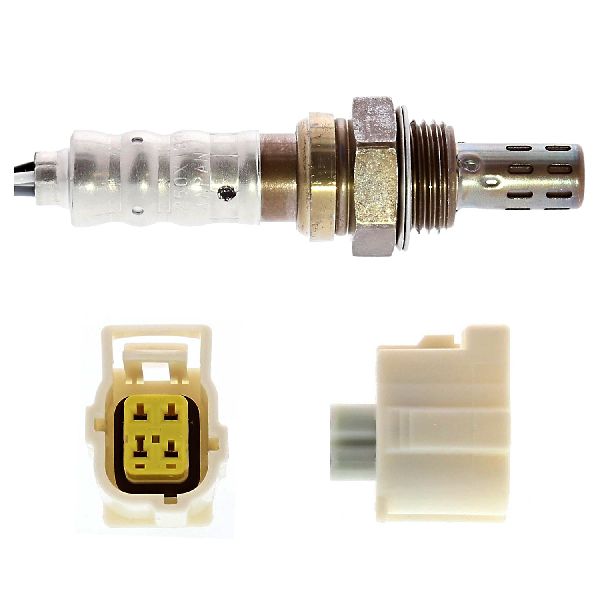
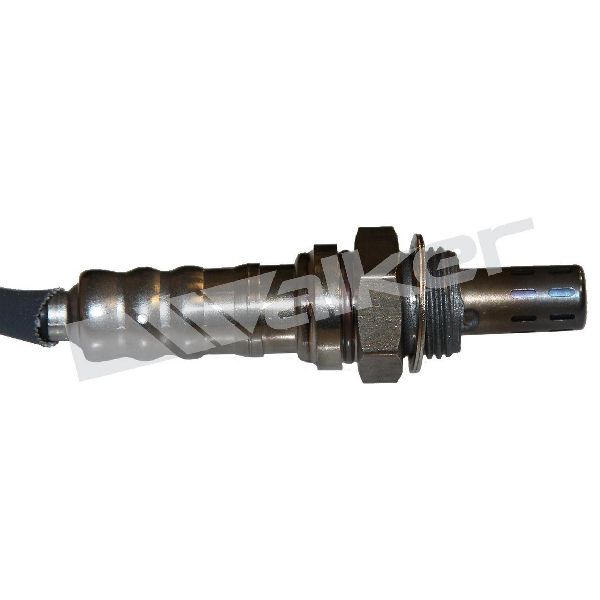
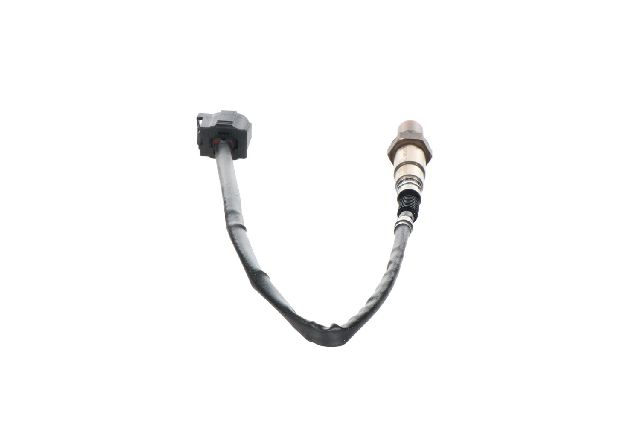
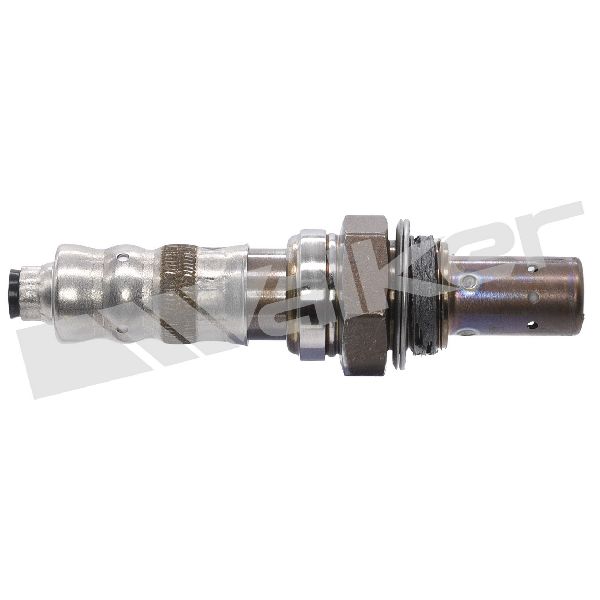
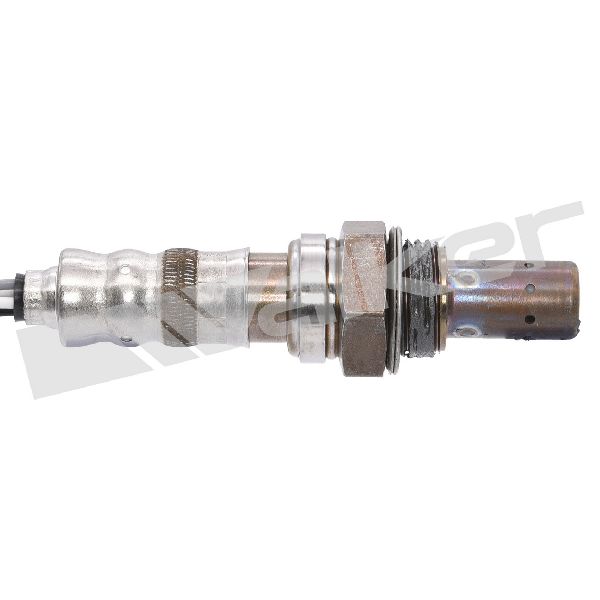
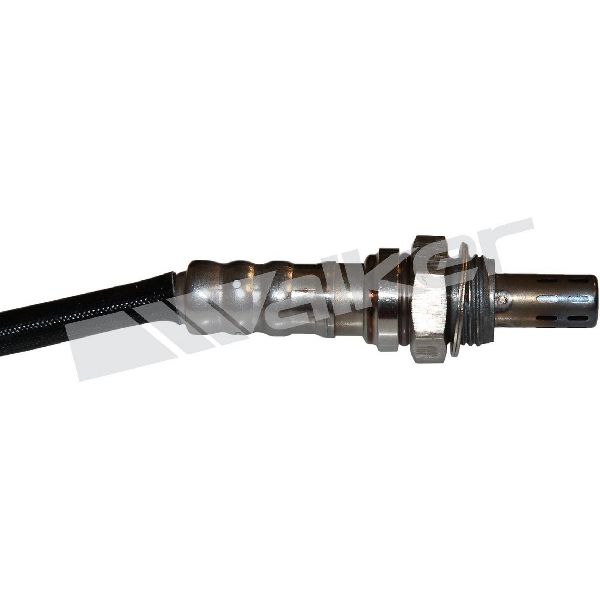
- Downstream Oxygen Sensor (Bank 1, Sensor 2)
(OEM #68142340AA)— The internal heater element failing is the most common cause of P0037.
Trusted brands: Mopar, Denso, Bosch, NTK/NGK
OEM price range: $130-$197
Aftermarket price range: $50-$100
Related Codes That Often Appear With This One
- P0038 — This code for 'O2 Sensor Heater Circuit High' can appear if the wiring issue is intermittent, causing both low and high voltage readings at different times.
- P0136 — This code indicates a malfunction in the O2 sensor circuit itself (Bank 1, Sensor 2), which can be triggered alongside the heater circuit fault.
- P0054 — This code for 'O2 Sensor Heater Resistance (Bank 1, Sensor 2)' is another related fault that points directly to the sensor's internal heater element.
Technical Service Bulletins (TSBs) & Recalls
- 25-002-14: Confirms P0037 as 'O2 Sensor Heater Circuit Low 1/2' for the Dodge brand (on Ram models).
- 18-092-15: Confirms P0037 as 'O2 Sensor 1/2 Heater Circuit Low' for the Dodge brand (on Dakota models).
- 25-004-12: Confirms P0037 as 'O2 Sensor Heater Circuit Low 1/2' for the Dodge brand (on Ram models).
- 25-003-13: Confirms P0037 as 'O2 Sensor Heater Circuit Low 1/2' for the Dodge brand (on Ram models).
Platform-Specific Known Issues
- While not directly related to P0037, Dodge Darts with the 2.4L engine were subject to Emissions Recall U90 for catalyst efficiency, which involved replacing the catalyst and sometimes the O2 sensors. This does not apply to the 1.4L Turbo but highlights a known sensitivity in the emissions system for the Dart platform.
- Forum discussions suggest that the 1.4L Dart can be particular about the brand of O2 sensor used. To avoid repeat failures or new codes, it is often recommended to use the OEM Mopar part or a direct-fit from an OEM supplier like NTK or Denso.
Mechanic-Grade Diagnostic Values
- Downstream O2 Sensor Heater Element Resistance — expected: Between 2.8 and 5.5 Ohms at ambient temperature.. Failure: Infinite resistance (open circuit) or resistance significantly outside the expected range.
- Voltage at O2 Sensor Harness Connector (Heater Power) — expected: ~12V (Battery Voltage) with key on, engine off.. Failure: Near 0V, indicating an open in the power feed from the fuse/ASD relay.
- Resistance to Ground on Harness Connector (Heater Control) — expected: High resistance (OL) with sensor disconnected.. Failure: Low resistance, indicating a short to ground in the control wire to the PCM.
- Continuity of Wiring Harness — expected: Below 3.0 Ohms for the signal and return circuits between the sensor connector and the PCM connector.. Failure: Resistance above 3.0 Ohms, indicating high resistance in the harness.
Scan Tool Commands That Help
- wiTECH or equivalent professional scan tool: O2 Sensor Heater Actuator Test — This command allows the technician to manually turn the O2 sensor heater on and off to verify the integrity of the control circuit, PCM driver, and the heater element itself while monitoring voltage or current.
Wiring & Ground Locations
- Downstream O2 Sensor (1/2) Connector — Underneath the vehicle, on the exhaust pipe after the catalytic converter. The connector is typically mounted to a small bracket nearby.. This is the primary connection point for all testing. The heater circuit wires are typically the two wires of the same color (e.g., both white or both black).
- Fuse F87 — In the underhood fuse box (Power Distribution Center) near the battery.. This 10A fuse provides the 12V power to the heater elements for both the upstream and downstream O2 sensors, as well as the wastegate solenoid. A failure here will cause codes for multiple components.
- Engine Ground Strap — A braided strap connecting the engine block/transmission to the chassis frame, often on the driver's side.. While not a direct cause of P0037 alone, a corroded or loose main engine ground can cause a variety of electrical issues and sensor faults due to poor grounding. It's a known issue on Darts leading to no-start conditions and should be inspected.
- Heater Circuit Wiring — The power feed wire is typically Gray. On some diagrams, it originates as a Brown/Gray wire from fuse F87 before changing color. The control (ground) side is managed by the PCM.. Knowing the wire colors is essential for correctly testing for 12V power and checking for shorts or opens between the connector and the PCM.
Real Owner Repair Stories
- YouTube channel 'MotorCityMechanic' (2013 Dodge Dart 1.4L Turbo) — Check Engine Light with multiple circuit codes, including for O2 sensors and the turbo wastegate solenoid.
❌ Tried (didn't work) Initial diagnosis pointed to multiple failed components.
✅ What actually fixed it The wiring harness for the O2 sensors and wastegate had been improperly routed and was rubbing against a metal bracket, causing the power feed wire (Gray) to short to ground. This repeatedly blew the F87 fuse. The fix was to repair the damaged wire and properly secure the harness away from the bracket. - Reddit user in r/dodgedart (2013 Dodge Dart) — O2 sensor code, needed to pass inspection.
❌ Tried (didn't work) Attempting to guess the wire order after the connector was destroyed.
✅ What actually fixed it The user's harness-side connector was mangled. The final resolution involved sourcing a replacement connector pigtail from a junkyard to correctly splice the wires, as the dealership could not provide a pinout diagram for the connector itself.
OEM Part Supersession History
68142340AA→N/A— This part number appears to be the current and original part for the specified vehicle range.
Heads up: Aftermarket part numbers 234-4748 (Denso) and 250-241003 are listed as direct replacements.
Diagnostic Flowchart
Other Known Issues on This Vehicle
Issues unrelated to this code that are worth knowing about as an owner of this generation:
- Manual Transmission Clutch Failure 🔴 High — Common on 2013-2015 models with the C635 manual transmission. The clutch pedal may stick to the floor due to a faulty slave/master cylinder system. (Ref: Subject of a class-action lawsuit and extended warranty programs.)
- Excessive Oil Consumption 🟠 Medium — More commonly reported on the 2.4L engine, but also noted by some 1.4L owners. Can be caused by issues with the MultiAir system or PCV o-rings. (Ref: TSBs exist for the 2.4L engine recommending an oil consumption test.)
- MultiAir Actuator (Brick) Failure 🔴 High — A known failure point on the MultiAir engines, leading to misfires, rough running, and stalling. Often requires replacement of the entire actuator assembly.
- DDCT Automatic Transmission Problems 🟠 Medium — The Dual Dry Clutch Transmission (DDCT) available with the 1.4L engine can suffer from shifting issues, hesitation, and premature failure. (Ref: Recall M37 was issued for a potentially faulty transaxle clutch slave cylinder on some 2013 models.)
- Electrical and Battery Issues 🟡 Low — Owners report various electrical gremlins, including rapid battery drain, flashing odometers, and malfunctioning Uconnect systems, sometimes caused by a weak battery or failing Bluetooth module.
- Faulty Thermostat 🟡 Low — A common cause for a check engine light, often with code P0128, especially in colder climates.
Used vs. New Parts: Buying Guide for This Vehicle
When a used part is the smart pick: A used part is generally not recommended for the oxygen sensor itself, as it is a wear item with a finite lifespan. However, sourcing a used harness-side connector pigtail from a junkyard is a very smart and cost-effective solution if the original connector is damaged.
Donor-vehicle mileage cap: roughly under 80000 miles for the part to have meaningful remaining life.
What to inspect on the donor part:
- For a connector pigtail, ensure the locking tabs are intact and not brittle.
- Check for any signs of melting, corrosion on the pins, or frayed wires.
- Ensure you get at least 4-6 inches of wire to make splicing easy.
Aftermarket brands forum-validated for this vehicle:
- NTK/NGK
- Denso
Brands owners have reported issues with on this vehicle:
- Bosch sensors are frequently cited by Dodge Dart owners as being problematic and causing persistent or new codes on this platform.
Real Owner Stories
Aggregated from forums and TSBs cited above. Mileages and costs reflect what owners reported in those sources.
2013 Dodge Dart 1.4L MultiAir Turbo
Symptoms: The owner experienced bucking at part throttle and noted the downstream sensor location was a common failure point for heater circuit codes.
What fixed it: Replacement of the downstream O2 sensor with an NTK or OEM unit, avoiding Bosch sensors which the vehicle 'does not like.'
Source hint: dodge-dart.org thread titled 'bucking at mostly part throttle'
2013-2016 Dodge Dart 1.4L MultiAir Turbo
Symptoms: Emissions readiness monitors for the O2 status and purge system were not reaching a 'ready' state.
What fixed it: Checking and potentially replacing fuse F87 in the underhood fuse box which controls the O2 sensor heater circuit.
Source hint: dodge-dart.org thread titled 'o2 status not ready purge not ready'
Related OBD-II Codes
Frequently Asked Questions
Which fuse should I check for a P0037 code on my 1.4L Turbo Dart?
Is there a specific brand of oxygen sensor I should use for the 1.4L MultiAir Turbo?
Does the Emissions Recall U90 for catalyst efficiency apply to my 1.4L Turbo Dart?
Where exactly is the sensor for P0037 located on the Dart?
Can a P0037 code be caused by the same fuse that controls the wastegate?
What resistance should I look for when testing the O2 sensor heater on my Dart?
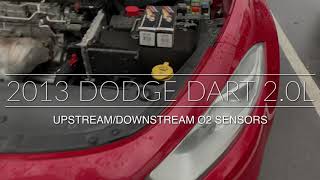
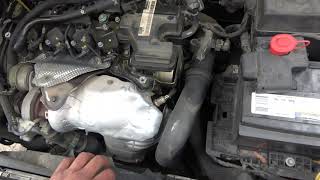
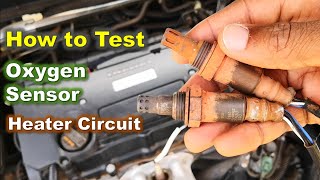
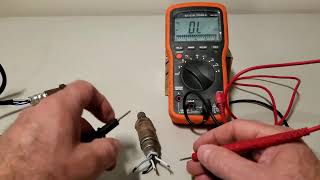
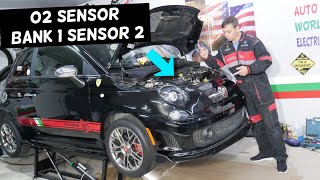
Helpful Videos
We Have This Part in Stock

The information in this article is provided for general reference and educational purposes only. Vehicle specifications, procedures, and part compatibility can vary by production date, trim level, and region. Always consult your vehicle's factory service manual and verify part numbers before purchasing or performing repairs. Safety-critical components such as airbags, seat belts, and braking systems should be installed by a qualified professional.
- Dodge Dart:
- 🎬 Helpful Videos
- 🛍️ Shop This Part
- What's Unique About the 2013-2016 Dodge Dart
- Symptoms You May Notice
- Most Likely Causes
- Rare But Worth Checking
- Diagnosis Steps
- Parts You'll Likely Need
- Related Codes That Often Appear With This One
- Technical Service Bulletins (TSBs) & Recalls
- Platform-Specific Known Issues
- Mechanic-Grade Diagnostic Values
- Scan Tool Commands That Help
- Wiring & Ground Locations
- Real Owner Repair Stories
- OEM Part Supersession History
- Diagnostic Flowchart
- Other Known Issues on This Vehicle
- Used vs. New Parts: Buying Guide for This Vehicle
- Real Owner Stories
- 2013 Dodge Dart 1.4L MultiAir Turbo
- 2013-2016 Dodge Dart 1.4L MultiAir Turbo
- Related OBD-II Codes
- Frequently Asked Questions
- 🎟️ Get 5% Off