

P0036 on 2007-2010 Pontiac G5: Downstream O2 Sensor Heater Circuit Fixes
On a 2007-2010 Pontiac G5, code P0036 almost always means the downstream oxygen sensor (Bank 1, Sensor 2) has failed. Before replacing it, check the 10A 'EXH' fuse in the under-hood fuse box. A new sensor costs about $40-$90 and is a DIY-friendly fix. Also inspect the wiring harness near the exhaust for melting and the connector for corrosion, as these are also common failure points.
- P0036 on a Pontiac G5 points to an issue with the downstream O2 sensor's heater circuit.
- The most likely fix is replacing the downstream O2 sensor itself, with ACDelco Part No. 213-1574 being a common OEM replacement.
- Before buying parts, always check the 10A 'EXH' fuse in the under-hood fuse box.
- Thoroughly inspect the sensor's wiring for any signs of melting
What's Unique About the 2007-2010 Pontiac G5
The Pontiac G5 is mechanically identical to the more common Chevrolet Cobalt, and shares its GM Delta platform with the Chevrolet HHR and Saturn Ion. This is a benefit, as parts and repair information for the Cobalt are abundant and apply directly to the G5. There are no major platform-specific quirks for this code; it's a straightforward issue common to many vehicles. The most reported issues across the platform are a failed sensor, a blown fuse, or wiring that has melted on the exhaust shield or corroded at the connector.
Symptoms You May Notice
- Check Engine Light illuminated
- Inability to pass an emissions test
- Slightly increased emissions
- Replacing the O2 sensor without first checking the 'EXH' fuse and wiring. A blown fuse or melted wire will cause the new sensor to not work either.
- Replacing the wrong oxygen sensor. This code is for Sensor 2, the downstream sensor located after the catalytic converter, not the upstream sensor (Sensor 1) in the exhaust manifold.
- Using a cheap, incompatible aftermarket sensor. Some users on Chevrolet HHR forums (a platform mate) report that certain brands, like Bosch, can be problematic and recommend sticking with ACDelco or Denso.
Most Likely Causes
- Failed Downstream Oxygen Sensor 🔴 High Probability The internal heater element is a common failure point on all oxygen sensors due to thousands of heat cycles. It is the most frequent cause for P0036 on this platform.
How to confirm: After confirming the fuse and wiring are intact, test the resistance of the heater circuit in the sensor itself using a multimeter. 🎬 Watch how to diagnose the heater circuit using a multimeter. The two wires of the same color (often black on GM sensors) are for the heater. An open circuit (infinite resistance) confirms the heater has failed. A healthy heater circuit should have a resistance typically between 3 and 25 ohms.
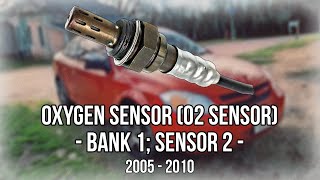
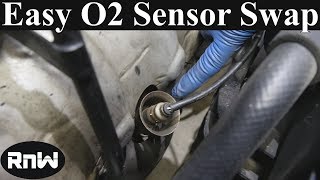
Typical fix: Replace the downstream (Bank 1, Sensor 2) oxygen sensor. 🎬 Watch this step-by-step guide to replacing the downstream sensor.
Est. part cost: $40-$90 - Damaged Wiring or Connector 🟡 Medium Probability The wiring for the downstream sensor runs underneath the car near the hot exhaust, making it susceptible to melting, chafing, or damage from road debris. Several owners on CobaltSS.net have reported the wiring harness coming loose, dragging on the ground, and shorting out. The connector itself is also a known failure point due to corrosion.
How to confirm: Visually inspect the entire length of the wiring harness from the sensor to where it connects to the main harness. Look for melted plastic, bare wires, or signs of chafing against the heat shield or chassis. Unplug the connector and check the pins for green or white crusty residue, which indicates corrosion.
Typical fix: Repair the damaged section of wire with heat-shrink butt connectors or replace the connector pigtail. A user on CobaltSS.net fixed their P0036/P0037 codes when a dealer found and cleaned a corroded connector after a new sensor failed to solve the issue.
Est. part cost: $10-$30 - Blown Fuse ⚪ Low Probability A short circuit in the sensor or its wiring can cause the protective fuse to blow. This is a common occurrence if the wiring has melted to the exhaust or shorted internally.
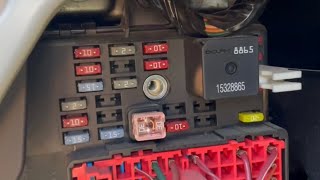
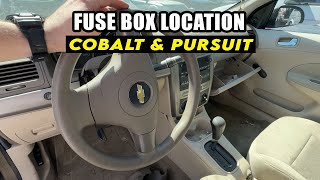
How to confirm: Check the fuse box located under the hood. 🎬 See this video to quickly find both fuse box locations. On the G5/Cobalt platform, this is a 10A fuse labeled 'EXH'. Some scanner tools or generic repair guides may refer to it as 'EMS' (Emissions), but forum users confirm it is the 'EXH' fuse on these cars.
Typical fix: Replace the blown fuse. Note that if the fuse blows again immediately, it indicates a persistent short circuit in the wiring or the sensor itself that must be found and fixed.
Est. part cost: $1-$5
Rare But Worth Checking
- Faulty Powertrain Control Module (PCM): This is extremely rare and should be considered a last resort. The PCM should only be suspected after all other possibilities (sensor, wiring, fuses) have been exhaustively tested and ruled out. A PCM failure would likely present with other codes and more severe symptoms as well.
Diagnosis Steps
- Read the code with an OBD-II scanner to confirm P0036 is the active fault.
- Locate the under-hood fuse box and check the 10A fuse labeled 'EXH'. Replace if blown.
- If the fuse is good, safely raise the vehicle to access the downstream O2 sensor, located on the exhaust pipe after the catalytic converter.
- Visually inspect the sensor's wiring harness and connector. Look for any signs of melting, chafing, corrosion, or dragging on the ground.
- If the wiring looks good, disconnect the sensor. Use a multimeter set to Ohms (Ω) to test the resistance between the two heater pins on the sensor side of the connector (typically the two wires of the same color, often black). A reading of infinite resistance (OL) means the heater is burned out and the sensor needs replacement. A normal reading is typically between 3 and 25 ohms.
- With the key on and engine off, use a multimeter to check for 12V power on the heater circuit power supply pin on the vehicle harness side of the connector (often a pink wire on GM vehicles). Check the other pin for a good ground, which is controlled by the PCM.
- If power, ground, and wiring are all confirmed to be good, the oxygen sensor itself is faulty.
- Replace the downstream oxygen sensor, clear the code, and perform a drive cycle to confirm the fix.
Parts You'll Likely Need
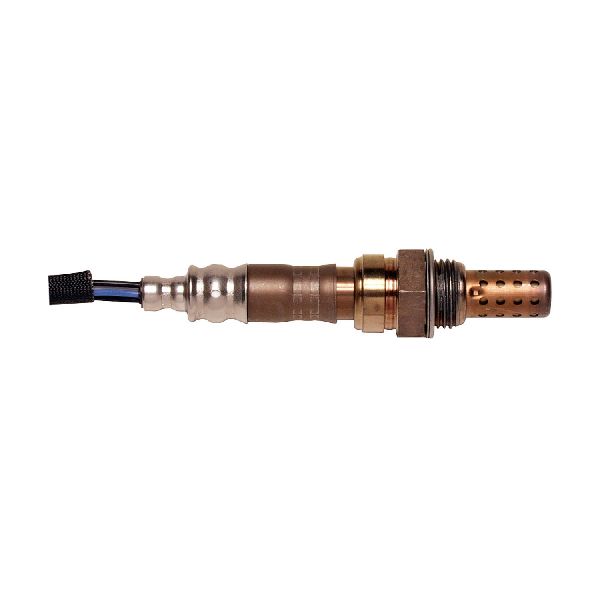
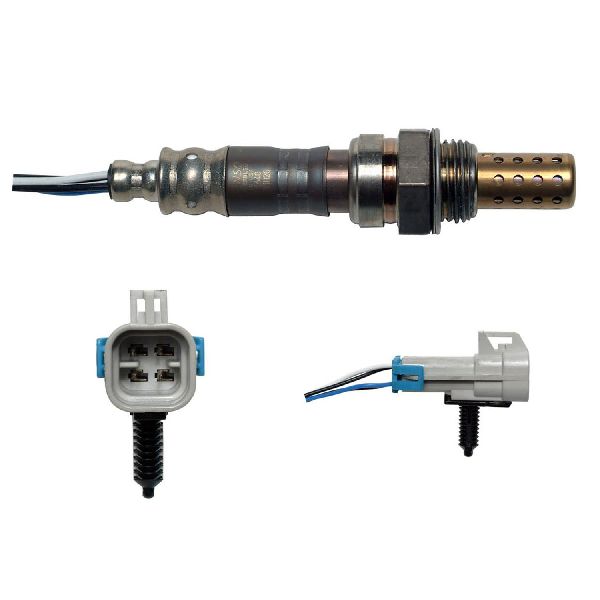
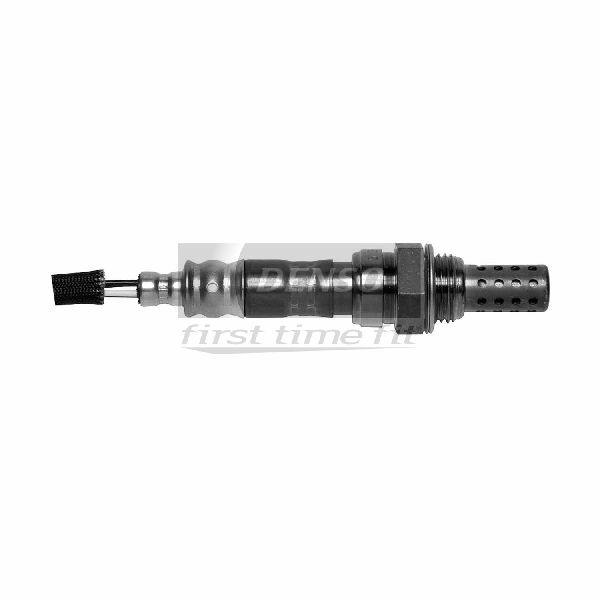
- Downstream Oxygen Sensor (Bank 1, Sensor 2)
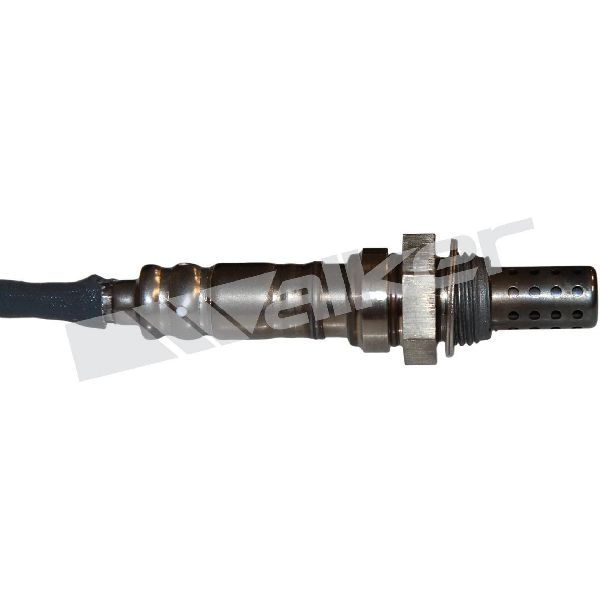
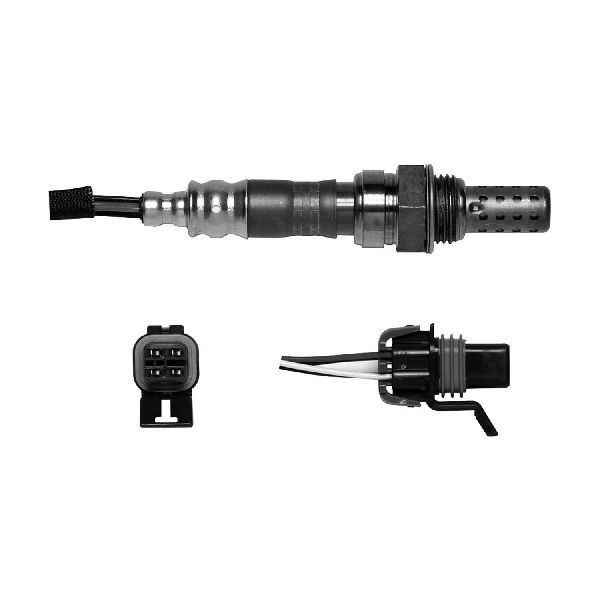
(OEM #ACDelco 213-1574 (GM Original Equipment))— The internal heater element is the most common failure point that triggers code P0036.
Trusted brands: ACDelco (OEM), Denso, NGK/NTK
OEM price range: $70-$130
Aftermarket price range: $40-$90
Related Codes That Often Appear With This One
- P0141 — P0141 is an almost identical code, also for 'O2 Sensor Heater Circuit Malfunction (Bank 1, Sensor 2)'. Some scanner tools may display one or the other, or both, for the same fault.
- P0054 — P0054 indicates 'HO2S Heater Resistance (Bank 1, Sensor 2)'. This code often appears alongside P0036 as it points to the same component's failure, just measuring a different electrical characteristic of the fault.
Platform-Specific Known Issues
- A user on the Cobalt SS Network forums with codes P0036 and P0037 found the issue was not the sensor but a corroded O2 sensor connector. The dealer cleaned the connector to fix the problem. Thread: 'P0036 / p0037', URL: cobaltss.net/forums/problems-service-maintenance-69/p0036-p0037-a-302302/
- Another user on the same forum noted that their wiring harness for the rear O2 sensor had come loose, dragged on the ground, and eventually shorted out, blowing the 'EXH' fuse and causing multiple O2 and MAF sensor codes. Thread: 'Is there a common failure point on O2 wiring harness', URL: cobaltss.net/forums/2-2l-l61-tech-43/there-common-failure-point-o2-wiring-harness-341355/
Mechanic-Grade Diagnostic Values
- Downstream O2 Sensor Heater Element Resistance — expected: 3 to 25 Ohms at ambient temperature. A common value for a healthy GM sensor is around 5-7 Ohms.. Failure: A reading of infinite resistance (OL - Open Loop) or zero Ohms (short circuit) indicates a failed heater element requiring sensor replacement.
- Heater Circuit Power Supply at Connector (Harness Side) — expected: Approximately 12V (battery voltage) with Key On, Engine Off.. Failure: No voltage or significantly low voltage points to a blown fuse (EXH 10A) or an open/short in the power supply wire (typically Pink) from the fuse block.
- Heater Circuit Ground at Connector (Harness Side) — expected: The ground is supplied and controlled by the PCM. When the heater is commanded on, this pin should show a path to ground. A test light connected to battery positive should illuminate when probing this pin while the PCM is commanding the heater on.. Failure: No path to ground when commanded on indicates a wiring issue between the connector and the PCM, or a failed driver in the PCM (rare).
Scan Tool Commands That Help
- Tech 2 / GDS2: O2 Heater Test or Actuator Test — This bidirectional control allows a technician to manually command the O2 sensor heater circuit ON and OFF. It is used to verify that the PCM driver is functional and that the circuit has integrity. While monitoring voltage on the ground control wire, actuating the heater should cause the voltage to drop to near zero as the PCM provides the ground path.
Wiring & Ground Locations
- Downstream HO2S Connector (X126) — Underneath the vehicle, on the exhaust pipe after the catalytic converter. The connector is a 4-way female gray connector (ACDelco Pigtail Part #PK593NJ).. This is the primary point for testing the sensor and the vehicle-side harness. Pins are susceptible to corrosion and the harness is prone to heat damage from the exhaust.
- G107 — On the right rear of the cylinder head, near the exhaust manifold.. This is a primary engine ground. While not directly for the O2 sensor heater (which is grounded via the PCM), a poor engine ground can cause electrical noise and voltage offset issues that can sometimes lead to erroneous sensor codes.
- G105 — On the lower left front of the transmission case.. This is a crucial ground for the transmission and engine block. A loose or corroded G105 can cause a wide range of seemingly unrelated electrical issues and diagnostic trouble codes.
- Heater Circuit Wires — Within the 4-wire connector. Power is typically a Pink wire. The ground control from the PCM is often a Tan/White wire. The other two wires (e.g., Tan and Purple) are for the O2 sensor signal itself.. Correctly identifying the two heater circuit wires (Power and Ground Control) is essential for accurate voltage and resistance testing. On the sensor side, the two heater wires are typically the same color (e.g., two black wires).
Real Owner Repair Stories
- CobaltSS.net forum user (Chevrolet Cobalt (platform mate)) — Check Engine Light with codes P0036 and P0037.
❌ Tried (didn't work) Replacing the downstream oxygen sensor.
✅ What actually fixed it The dealer found the O2 sensor connector pins were corroded. Cleaning the connector terminals resolved the issue without replacing any more parts. - CobaltSS.net forum user (Chevrolet Cobalt 2.2L L61 (platform mate)) — Check Engine Light with multiple O2 sensor and MAF sensor codes after hitting road debris.
❌ Tried (didn't work) Initial visual inspection missed the core issue.
✅ What actually fixed it The wiring harness for the rear O2 sensor had been torn from its clips, dragged on the ground, and the wires shorted together. This blew the 'EXH' fuse. Repairing the wiring and replacing the fuse fixed all related codes.
OEM Part Supersession History
GM 12578624→ACDelco 213-1574— Standard part number update and consolidation across multiple vehicle platforms.
Heads up: While the connector style is common, GM used both case ground and isolated ground sensors that look identical. Using the wrong type will cause it not to function correctly. 213-1574 is the correct case ground sensor for this application.
Model Year Variations Within This Range
- 2007-2008: The base engine is the 2.2L L61.
- 2009-2010: The base engine was updated to the 2.2L LAP, which is architecturally similar but adds dual Variable Valve Timing (VVT). This change does not affect the diagnosis of P0036, as the downstream O2 sensor and its circuit remained the same.
Diagnostic Flowchart
Other Known Issues on This Vehicle
Issues unrelated to this code that are worth knowing about as an owner of this generation:
- Electric Power Steering (EPS) Motor Failure 🔴 High — Very common. Can cause a sudden loss of power steering assist, especially at low speeds. Onset can occur at any mileage. (Ref: NHTSA Recall #10V073000. GM issued a recall to replace the electric power steering motor free of charge.)
- Ignition Switch Failure 🔴 High — Widespread and part of a massive GM recall. A heavy keychain or jarring event could cause the switch to move out of the 'Run' position, shutting off the engine and disabling airbags. (Ref: NHTSA Recall #14V047000. GM recalled vehicles to replace the ignition switch.)
- Fuel Line / Fuel Pump Module Crack 🔴 High — Common enough to warrant a recall in specific states. The plastic port on the fuel pump module can crack, leading to a fuel leak and fire risk. (Ref: NHTSA Recall #12V459000. This recall was for vehicles sold or registered in specific warm-weather states.)
- Timing Chain Rattle / Failure 🟠 Medium — A well-documented issue on 2.2L L61 and 2.4L LE5 Ecotec engines. A rattling noise on cold startup is the primary symptom, caused by worn plastic guides or a faulty tensioner. If ignored, it can lead to catastrophic engine failure. (Ref: No specific recall, but the problem is widely documented by mechanics and in TSBs for the Ecotec engine family.)
- Shift Cable Adjustment Clip Failure 🟡 Low — Affected some 2009 models. The clip could fail, causing a mismatch between the gear indicated on the shift lever and the actual gear the transmission is in. (Ref: NHTSA Recall #09V073000.)
Used vs. New Parts: Buying Guide for This Vehicle
When a used part is the smart pick: A used wiring harness connector pigtail from a junkyard is a perfectly acceptable and cost-effective repair if your original connector is damaged or corroded. A complete used engine harness is also a viable option if multiple sections are damaged.
Donor-vehicle mileage cap: roughly under 120000 miles for the part to have meaningful remaining life.
What to inspect on the donor part:
- For a connector pigtail, ensure the plastic isn't brittle and the locking tab is intact.
- Check the wire leads for at least 6 inches of flexible, uncracked insulation.
- Inspect the metal terminals inside the connector for any signs of green or white corrosion.
OEM-only on this vehicle (don't cheap out):
- While not strictly 'OEM-only', it is highly recommended to use OEM (ACDelco) or reputable OEM-supplier brands (Denso, NTK) for the oxygen sensor itself. Cheaper, no-name aftermarket sensors have a higher rate of failure and can cause compatibility issues.
Aftermarket brands forum-validated for this vehicle:
- Denso
- NGK / NTK
Brands owners have reported issues with on this vehicle:
- Bosch (Some forum users on platform-mate vehicles have reported issues with compatibility or premature failure, though this can be model-specific).
Real Owner Stories
Aggregated from forums and TSBs cited above. Mileages and costs reflect what owners reported in those sources.
2008 Chevrolet Cobalt 2.2L
Symptoms: Solid (non-blinking) check engine light illuminated during a night-run.
What fixed it: The context indicates the most common fix for this platform is replacing the downstream O2 sensor after checking the EXH fuse.
Source hint: reddit r/MechanicAdvice
Chevrolet Cobalt SS (Platform Mate)
Symptoms: P0036 and P0037 codes persisted even after potential sensor issues were considered.
What fixed it: A dealer found and cleaned a corroded O2 sensor connector.
Source hint: cobaltss.net thread titled 'P0036 / p0037'
Chevrolet Cobalt 2.2L L61
Symptoms: Multiple O2 and MAF sensor codes appeared after the wiring harness for the rear O2 sensor came loose and dragged on the ground.
What fixed it: Repairing the shorted wiring and replacing the blown 'EXH' fuse.
Source hint: cobaltss.net thread titled 'Is there a common failure point on O2 wiring harness'
Related OBD-II Codes
Frequently Asked Questions
Which fuse should I check for a P0036 code on my Pontiac G5?
Is there a specific brand of oxygen sensor recommended for the G5 and its platform mates?
Where is the Bank 1, Sensor 2 oxygen sensor located on the 2.2L/2.4L G5?
Could my P0036 code be related to the GM ignition switch or power steering recalls?
What are the specific wire colors for the O2 sensor heater on a GM vehicle like the G5?
Can a loose wiring harness cause P0036 on this car?
Helpful Videos
We Have This Part in Stock


The information in this article is provided for general reference and educational purposes only. Vehicle specifications, procedures, and part compatibility can vary by production date, trim level, and region. Always consult your vehicle's factory service manual and verify part numbers before purchasing or performing repairs. Safety-critical components such as airbags, seat belts, and braking systems should be installed by a qualified professional.
- Pontiac G5:
- 🎬 Helpful Videos
- 🛍️ Shop This Part
- What's Unique About the 2007-2010 Pontiac G5
- Symptoms You May Notice
- Most Likely Causes
- Rare But Worth Checking
- Diagnosis Steps
- Parts You'll Likely Need
- Related Codes That Often Appear With This One
- Platform-Specific Known Issues
- Mechanic-Grade Diagnostic Values
- Scan Tool Commands That Help
- Wiring & Ground Locations
- Real Owner Repair Stories
- OEM Part Supersession History
- Model Year Variations Within This Range
- Diagnostic Flowchart
- Other Known Issues on This Vehicle
- Used vs. New Parts: Buying Guide for This Vehicle
- Real Owner Stories
- 2008 Chevrolet Cobalt 2.2L
- Chevrolet Cobalt SS (Platform Mate)
- Chevrolet Cobalt 2.2L L61
- Related OBD-II Codes
- Frequently Asked Questions
- 🎟️ Get 5% Off