

P0036 on 2006-2010 Dodge Charger 5.7L HEMI: O2 Sensor Heater Circuit Causes and Fixes
On a 2006-2010 Dodge Charger with the 5.7L HEMI, code P0036 almost always points to a failed downstream oxygen sensor on the driver's side (Bank 1, Sensor 2). The internal heating element of the sensor is the culprit. The most common fix is replacing the sensor itself, which is a DIY-friendly job with parts costing between $25 and $80.
- The P0036 code on your 5.7L HEMI Charger points to a problem with the heater inside the driver's side, downstream (post-catalytic converter) oxygen sensor.
- The most probable cause is simply a failed O2 sensor. This is a common wear-and-tear item.
- Before buying a new sensor, take a minute to check the corresponding fuse and visually inspect the sensor's wiring for any obvious melting or damage, as this can save you from a misdiagnosis.
- Replacing the sensor is a manageable DIY task for most home mechanics with basic tools and an O2 sensor socket.
- Ignoring this code will lead to a failed emissions test and may cause a slight drop in fuel efficiency, but it is unlikely to cause immediate or severe engine damage.
What's Unique About the 2006-2010 Dodge Charger
On the 5.7L HEMI platform of this era, the P0036 code is straightforward. Unlike some other vehicles where wiring issues are the primary culprit, for the Charger, the sensor itself is the most frequent point of failure. The wiring is routed near hot exhaust components, so damage is possible, but owners and mechanics consistently report that replacing the Bank 1, Sensor 2 O2 sensor resolves the code in the vast majority of cases. This issue is also common on platform mates like the Chrysler 300C and Dodge Magnum with the same engine.
Symptoms You May Notice
- Check Engine Light is illuminated.
- Failure to pass an emissions/smog test.
- Slight potential for reduced fuel economy.
- In some cases, a rotten egg or sulfur smell from the exhaust if the issue is ignored long-term and affects the catalytic converter.
- Replacing the wrong oxygen sensor (e.g., replacing the upstream Sensor 1 or the sensor on the passenger side, Bank 2).
- Replacing the catalytic converter, which is monitored by this sensor but is not the cause of a heater circuit code.
- Using incompatible aftermarket O2 sensor brands. Forum users consistently report that Mopar vehicles of this era can be sensitive to non-OEM sensors, with Bosch being a frequently cited problematic brand.
Most Likely Causes
- Failed Bank 1, Sensor 2 Oxygen Sensor 🔴 High Probability The internal heater element within the oxygen sensor is a common failure point due to age and constant exposure to extreme heat cycles. It's a wear-and-tear component.
How to confirm: Disconnect the sensor and test the resistance across the two heater circuit wires (often the same color, e.g., both black or both white) with a multimeter. An open circuit (infinite resistance, 'OL') or a short (near-zero resistance) confirms the heater element has failed. 🎬 See this quick guide on testing the O2 heater circuit. A healthy sensor for this engine typically has a resistance between 2.0 and 30.0 ohms at room temperature.
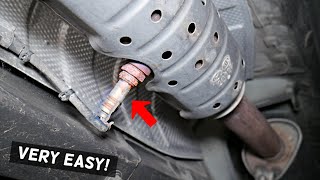
Typical fix: Replace the Bank 1, Sensor 2 oxygen sensor. This is the downstream sensor on the driver's side.
Est. part cost: $25 - $80 - Damaged Wiring or Connector 🟡 Medium Probability The sensor's wiring harness is routed near the hot exhaust system and can become brittle, melt, or get damaged from road debris, leading to an open or short circuit.
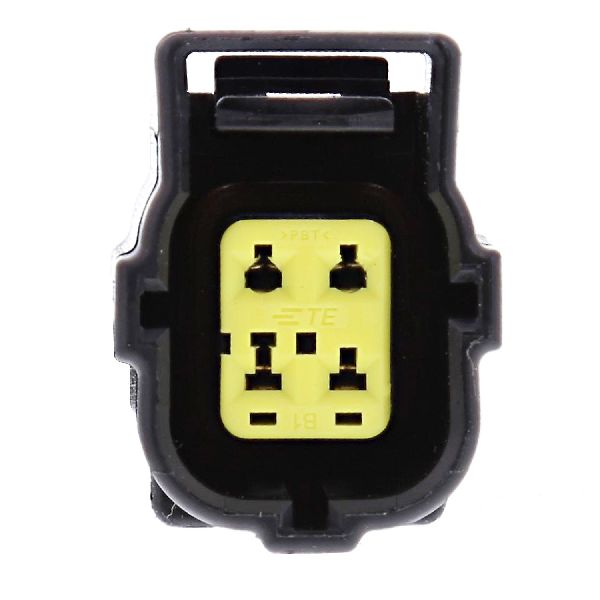
How to confirm: Visually inspect the wiring harness leading to the O2 sensor for any signs of melting, chafing, frayed wires, or corrosion at the connector plug. Check for battery voltage (approx. 12V) on the power wire at the connector with the key on, engine off.
Typical fix: If the damage is minimal, repairing the wire may be possible. More commonly, a new connector pigtail is spliced in, or if the damage is part of the sensor itself, the sensor is replaced.
Est. part cost: $10 - $30 for a pigtail connector - Blown Fuse or Faulty TIPM ⚪ Low Probability A short circuit in the heater element or its wiring can cause the associated fuse to blow. Power for the O2 heaters is supplied by the Totally Integrated Power Module (TIPM), which is a known failure point on this platform and can cause various electrical issues.
How to confirm: Consult the owner's manual or the diagram on the fuse box lid to locate fuses for the O2 sensors or engine management. On similar Chrysler products, fuses F21, F22, F57, F64, F72, F77, and F78 in the under-hood Power Distribution Center (TIPM) are related to O2 heaters. Visually inspect the fuses. If no power is present at the O2 sensor connector and the fuses are good, the TIPM itself may be faulty.
Typical fix: Replace the blown fuse with a new one of the same amperage. If the new fuse blows immediately, it indicates a persistent short circuit that must be diagnosed. If the TIPM is suspect, professional diagnosis is recommended.
Est. part cost: $1 - $5 for a fuse, $200-$800 for a rebuilt TIPM
Rare But Worth Checking
- Faulty Powertrain Control Module (PCM): This is extremely rare and should only be considered after all other possibilities (sensor, wiring, fuses, TIPM) have been exhaustively ruled out. A PCM failure is unlikely to only cause a single O2 heater code.
Technical Service Bulletins (TSBs) & Recalls
While the Charger is the primary focus, manufacturer records for other vehicles in the same family highlight the persistence of this heater circuit fault. For instance, TSB Bulletin #25-002-14 and TSB Bulletin #25-003-13 (Electrical System) both explicitly list P0036 as an "O2 Sensor 1/2 Heater Circuit Malfunction." Additionally, TSB Bulletin #25-003-13 (Exterior Lighting) and TSB Bulletin #25-004-12 note that this code can sometimes be associated with soot-related issues in specific engine configurations, further confirming the 1/2 sensor heater circuit as a documented point of failure within the manufacturer's service literature.
Diagnosis Steps
- Confirm the presence of the P0036 code using an OBD-II scanner.
- Check the O2 sensor-related fuses in the under-hood Power Distribution Center (TIPM). Replace if blown.
- Perform a thorough visual inspection of the Bank 1, Sensor 2 (driver's side, downstream) oxygen sensor wiring and connector. Look for any signs of melting, fraying, or physical damage.
- If wiring appears intact, disconnect the sensor connector.
- Test the resistance of the heater element within the sensor itself using a multimeter. A reading between 2.0 and 30.0 ohms is expected. A reading of infinite resistance (open) or near-zero resistance (short) indicates a failed sensor that needs replacement.
- If the sensor's heater element tests good, check for power (battery voltage) and a PCM-controlled ground at the vehicle-side connector. With the key on, one pin should have ~12V. The ground is pulsed by the PCM when the heater is active.
- If all wiring, fuses, and the sensor test good, the issue may be an intermittent connection or a fault in the TIPM or PCM driver circuit. Given the high failure rate of the sensor itself, replacement is often the most practical next step if it's of an advanced age.
Parts You'll Likely Need
- Oxygen Sensor (Bank 1, Sensor 2)
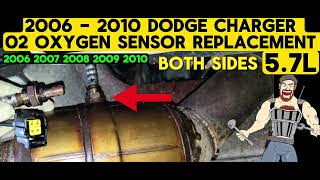
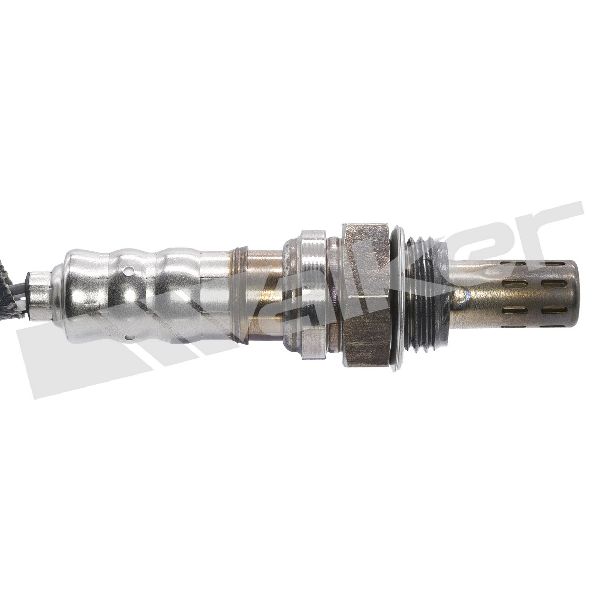
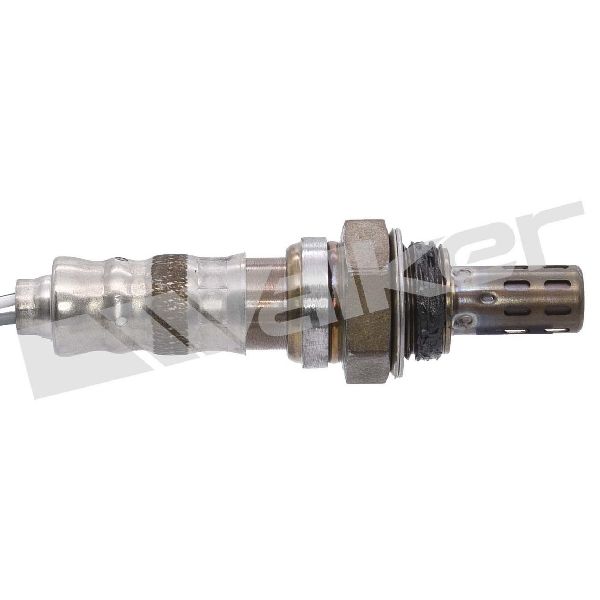
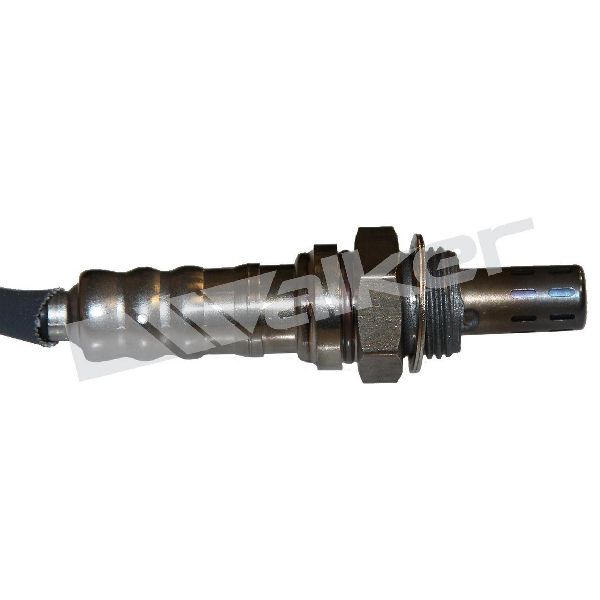
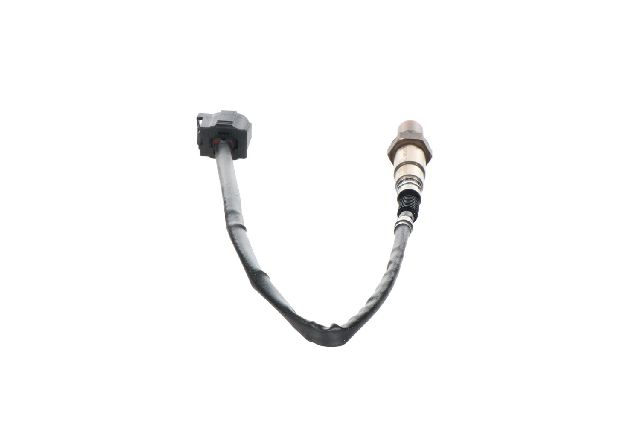
(OEM #56029049AA)— This is the downstream (post-catalytic converter) oxygen sensor for the driver's side. The internal heater element is the most common failure point, triggering the P0036 code. 🎬 Watch: Step-by-step O2 sensor replacement tutorial for the 5.7L HEMI.
Trusted brands: Mopar (OEM), NTK (often the OEM supplier), Denso
OEM price range: $60-$110
Aftermarket price range: $25-$60
Related Codes That Often Appear With This One
- P0037 (HO2S Heater Control Circuit Low)
- P0038 (HO2S Heater Control Circuit High)
- P0054 (HO2S Heater Resistance)
Mechanic-Grade Diagnostic Values
- O2 Sensor Heater Element Resistance — expected: 2.0 to 30.0 Ohms at room temperature (approx. 70°F / 21°C). Failure: A reading of 'OL' (over limit/infinite resistance) indicates an open circuit. A reading near 0 Ohms indicates a short circuit.
- O2 Sensor Heater Power Supply Voltage — expected: Battery voltage (approx. 12V) at the vehicle-side harness connector with Key On, Engine Off.. Failure: Voltage near 0V indicates an open in the power supply from the TIPM or a blown fuse.
- O2 Sensor Heater Ground Control — expected: The PCM pulses the ground to control the heater. With a lab scope, voltage should cycle between battery voltage (heater off) and near 0V (heater on). A multimeter may show an average voltage.. Failure: A constant 12V indicates an open in the ground circuit or a faulty PCM driver. A constant 0V could indicate a short to ground in the wiring.
Hidden / Shadow Codes Worth Checking
- Mode 6, Test ID for O2 Sensor Heater: Before a hard code like P0036 is set, the PCM runs a non-continuous monitor test on the O2 heater circuit. The results of this test can be viewed to see if the circuit is marginal or failing before the Check Engine Light is triggered. (see via A professional scan tool capable of viewing Mode 6 data is required.)
Scan Tool Commands That Help
- wiTECH or equivalent professional scan tool: O2 Heater Test — This bidirectional command allows a technician to manually activate the O2 sensor heater circuit while monitoring voltage and current. It is used to confirm that the PCM driver and wiring are capable of controlling the heater, helping to isolate the fault to the sensor itself.
Wiring & Ground Locations
- O2 Heater Power Source — Power is supplied from the Totally Integrated Power Module (TIPM), which is the main fuse box in the engine compartment.. A fault within the TIPM, a known issue on Chrysler platforms, can cut power to the O2 heater circuit, mimicking a sensor or wiring failure.
- O2 Heater Ground Control — The ground for the heater circuit is controlled (pulsed) by a driver within the Powertrain Control Module (PCM).. If the sensor and power supply are good, a lack of ground control points towards a wiring issue between the sensor and PCM, or a rare PCM failure.
- G105 (5.7L) — Rear of the engine.. A poor engine ground can cause a variety of electrical issues, including erratic sensor behavior. While not a direct cause of a circuit code, ensuring major grounds are clean and tight is a good practice during diagnosis.
- G300 — On the floor pan under the driver seat.. This is a major chassis ground point. A loose or corroded ground here can lead to widespread, difficult-to-diagnose electrical problems.
Real Owner Repair Stories
- DodgeForum.com / RamForum.com user reports (Various Dodge/Ram trucks with 5.7L HEMI, including 2006-2010 era) — Persistent O2 sensor codes (including heater circuit codes) immediately returning after clearing.
❌ Tried (didn't work) Replacing the O2 sensor with a Bosch brand sensor.
✅ What actually fixed it Replacing the aftermarket sensor with an OEM Mopar or NTK branded O2 sensor. Multiple owners report that these vehicles are sensitive to sensor brands and that Bosch sensors, in particular, often do not work correctly. - RamForum.com user 'Greenfeet83' (2006 Dodge Ram 1500 5.7L (similar electrical architecture)) — P0038 (Heater Circuit High) code immediately returns after clearing.
❌ Tried (didn't work) Replacing the O2 sensor with a new one from a parts store.
✅ What actually fixed it The user found no voltage at the heater circuit. The diagnosis pointed towards a lack of power from the source. The suspected root cause, also linked to failing headlights, was a faulty Totally Integrated Power Module (TIPM/fuse box), a known issue on these vehicles.
OEM Part Supersession History
56029049AA→N/A— This part number appears to be stable and has not been superseded for this application.
Diagnostic Flowchart
Other Known Issues on This Vehicle
Issues unrelated to this code that are worth knowing about as an owner of this generation:
- MDS Lifter Failure ('Hemi Tick') 🔴 High — Common, especially on engines with high idle hours or inconsistent oil changes. Often occurs between 70,000 and 130,000 miles. Can lead to camshaft destruction.
- Dropped Valve Seats 🔴 High — A known design flaw primarily affecting pre-2009 'pre-Eagle' 5.7L HEMI engines. Can occur without warning, often after a hot shutdown, causing catastrophic engine damage. (Ref: Chrysler acknowledged the issue in a TSB but no recall was issued.)
- Shift Interlock Failure ('Pink Thingy') 🟡 Low — Extremely common on 2005-2007 models. A small plastic lever in the shifter assembly breaks, preventing the vehicle from being shifted out of Park.
- Front Suspension Component Wear 🟠 Medium — Tie-rod ends, ball joints, and tension strut bushings are known to wear out prematurely, sometimes under 100,000 miles, causing clunking or rattling noises over bumps. (Ref: Multiple TSBs exist for various model years and components, such as 02-007-14 for police vehicles and 02-005-23 for later models.)
- Premature Engine Failure (2006 Model Year) 🔴 High — The 2006 model year has a higher-than-average number of complaints related to sudden and complete engine failure, often requiring a full replacement.
Used vs. New Parts: Buying Guide for This Vehicle
When a used part is the smart pick: For this specific repair, a used part is NEVER recommended. Oxygen sensors are wear-and-tear components with a finite service life, similar to spark plugs or brake pads. Installing a used sensor is likely to result in a repeat failure in the near future.
What to inspect on the donor part:
- Do not purchase a used oxygen sensor.
OEM-only on this vehicle (don't cheap out):
- Oxygen Sensor (strongly recommended)
Aftermarket brands forum-validated for this vehicle:
- NTK (often the OEM supplier for Mopar)
- Denso
Brands owners have reported issues with on this vehicle:
- Bosch (widely reported by owners of Mopar vehicles to cause compatibility issues and repeat codes)
Real Owner Stories
Aggregated from forums and TSBs cited above. Mileages and costs reflect what owners reported in those sources.
2006-2010 Dodge Charger 5.7L HEMI
Symptoms: Check Engine Light illuminated; owners confirmed Bank 1 is the driver's side and Sensor 2 is downstream.
What fixed it: Replacing the Bank 1, Sensor 2 O2 sensor. Many users recommended using a specific O2 sensor socket for the installation.
Source hint: ChargerForums.com - Multiple threads discuss P0036
2005-2010 Chrysler 300, Dodge Charger, or Dodge Magnum (LX Platform)
Symptoms: P0036 and related O2 sensor codes; potential for melted wiring near the exhaust.
What fixed it: Checking for melted wiring as a first step, then replacing the failed oxygen sensor.
Source hint: LXForums.com - P0036 and related O2 sensor codes
Related OBD-II Codes
Frequently Asked Questions
Where is the Bank 1, Sensor 2 oxygen sensor located on my 5.7L HEMI Charger?
Could a problem with my Charger's TIPM cause the P0036 code?
What resistance should I see when testing the O2 sensor on my 2006-2010 Charger?
Is there a TSB for the front suspension clunking I hear along with this engine light?
Can I use a used O2 sensor from a salvage yard to fix this?
Does the 'Hemi Tick' or MDS lifter failure cause P0036?
Helpful Videos
We Have This Part in Stock


The information in this article is provided for general reference and educational purposes only. Vehicle specifications, procedures, and part compatibility can vary by production date, trim level, and region. Always consult your vehicle's factory service manual and verify part numbers before purchasing or performing repairs. Safety-critical components such as airbags, seat belts, and braking systems should be installed by a qualified professional.
- Dodge Charger:
- 🎬 Helpful Videos
- 🛍️ Shop This Part
- What's Unique About the 2006-2010 Dodge Charger
- Symptoms You May Notice
- Most Likely Causes
- Rare But Worth Checking
- Technical Service Bulletins (TSBs) & Recalls
- Diagnosis Steps
- Parts You'll Likely Need
- Related Codes That Often Appear With This One
- Mechanic-Grade Diagnostic Values
- Hidden / Shadow Codes Worth Checking
- Scan Tool Commands That Help
- Wiring & Ground Locations
- Real Owner Repair Stories
- OEM Part Supersession History
- Diagnostic Flowchart
- Other Known Issues on This Vehicle
- Used vs. New Parts: Buying Guide for This Vehicle
- Real Owner Stories
- 2006-2010 Dodge Charger 5.7L HEMI
- 2005-2010 Chrysler 300, Dodge Charger, or Dodge Magnum (LX Platform)
- Related OBD-II Codes
- Frequently Asked Questions
- 🎟️ Get 5% Off