

P0036 on 2014-2018 Chevrolet Silverado 1500: Heater Circuit Causes and Fixes
On a 2014-2018 Silverado with the 5.3L V8, code P0036 almost always means the downstream oxygen sensor on the driver's side has failed. Replacing the sensor is the most common fix. An aftermarket part costs around $40-$80, while an OEM ACDelco part is about $100-$180.
- P0036 points to a problem with the heater in the driver's side, downstream (after-cat) O2 sensor.
- The most likely fix is replacing the oxygen sensor itself, preferably with an OEM ACDelco or Denso part.
- Before buying parts, always perform a quick visual inspection of the wiring for obvious damage like melting or chafing, as this is a common issue.
- Check the O2 sensor fuses (F46 and F50 in the underhood fuse box) before assuming the sensor is bad.
- You can continue to drive the truck, but you will fail an emissions test and may experience very slightly reduced fuel economy until the code is fixed.
What's Unique About the 2014-2018 Chevrolet Silverado 1500
On this generation of Silverado (K2XX platform), the P0036 code is a common and straightforward issue. The primary causes are either the sensor itself failing from age and heat cycles or damage to the exposed wiring harness underneath the truck. While the code is generic, the physical routing of the harness makes it susceptible to heat from the exhaust or road debris, which is a frequent point of failure noted by owners. Some owners report finding the sensor wires broken or chafed right at the connector.
Symptoms You May Notice
- Check Engine Light is on
- Inability to pass a vehicle emissions test
- Slightly reduced fuel economy (often not noticeable by the driver)
- Rough running or hesitation on a cold start that clears up as the engine warms.
- Replacing the wrong oxygen sensor (e.g., the upstream sensor or the sensor on the passenger side). P0036 is specifically for Bank 1 (driver's side) and Sensor 2 (downstream/post-catalytic converter).
- Replacing the sensor without checking the wiring first. A quick visual inspection can save money and time if a damaged wire is the true cause.
Most Likely Causes
- Failed Bank 1, Sensor 2 Oxygen Sensor 🔴 High Probability The internal heater element within the oxygen sensor is a common failure point due to constant heat cycles and age. It's the most frequent reason for a P0036 code.
How to confirm: Disconnect the sensor and measure the resistance between the two heater circuit pins on the sensor side using a multimeter (typically the two wires of the same color, often black). An open circuit (infinite resistance/OL) confirms the heater element has failed. A healthy heater typically has a resistance of around 3-15 ohms. Some sources state a more specific 4-8 ohms is ideal.
Typical fix: Replace the Bank 1, Sensor 2 (driver's side, downstream) oxygen sensor.
Est. part cost: $40 - $180 - Damaged Wiring or Connector 🟡 Medium Probability The O2 sensor harness is routed under the truck near the hot exhaust and is exposed to the elements. Wires can become brittle, melt, or get damaged by road debris, causing an open or short in the heater circuit. In some cases, the wire breaks right at the connector body due to vibration and exposure.
How to confirm: Visually inspect the entire wiring harness from the O2 sensor to where it joins the main loom. Look for melted insulation, chafing, corrosion in the connector, or broken wires. Test for 12V power and ground at the vehicle-side connector with the key on, engine off.
Typical fix: Repair the damaged section of wire with a new pigtail connector or by soldering and heat-shrinking the broken wires. Secure the harness away from the exhaust.
Est. part cost: $15 - $30 for a pigtail connector - Blown Fuse ⚪ Low Probability A short circuit in the sensor's heater element or in the wiring can cause the fuse to blow, which protects the circuit.
How to confirm: Locate the underhood fuse block. Check the fuses for the oxygen sensors. For 2014-2018 models, check fuses F46 and F50. 🎬 Watch: How to find and replace your O2 sensor fuses
Typical fix: Replace the blown fuse. If the fuse blows again immediately, it indicates a persistent short circuit in the wiring or the sensor itself that must be found and repaired.
Est. part cost: <$5
Rare But Worth Checking
- Faulty Engine Control Module (ECM): This is extremely rare. Before suspecting the ECM, all other possibilities (sensor, wiring, fuses) must be exhaustively ruled out. An ECM fails when the internal driver for the heater circuit burns out.
Diagnosis Steps
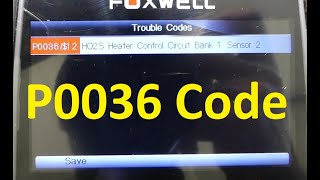
- Confirm the code P0036 is present using an OBD-II scanner.
- Visually inspect the oxygen sensor, its connector, and wiring harness on the driver's side, after the catalytic converter. Look for any signs of melting, chafing, or physical damage, paying close attention to the area where wires enter the connector.
- Check the fuses for the oxygen sensor heater circuit in the underhood fuse block (positions F46 and F50).
- If the visual inspection and fuses are good, disconnect the sensor.
- Using a multimeter set to Ohms, measure the resistance of the heater circuit on the sensor itself (between the two same-colored wires). A reading of infinite resistance (OL) or zero indicates a failed sensor. A good sensor should read between 3-15 Ohms.
- With the sensor still disconnected, turn the ignition to 'On' (engine off). Use a multimeter to check for 12-volt power and a good ground signal on the vehicle-side of the connector harness.
- If power or ground is missing, trace the wiring back to find the break or short. If power and ground are present and the sensor's resistance was out of spec, the sensor is faulty and needs to be replaced.
- If the sensor and wiring both test good, the issue may be with the ECM, but this is highly unlikely and should be the last resort.
Parts You'll Likely Need
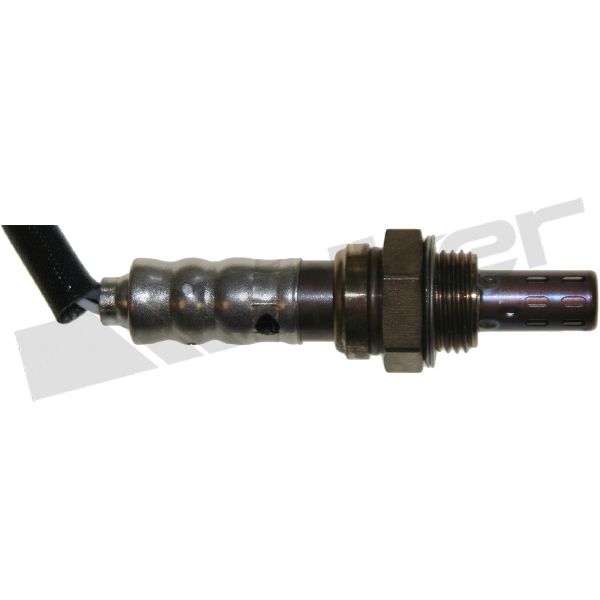
- Oxygen Sensor (Bank 1, Sensor 2)
(OEM #12676736)— The internal heater element is the most common failure point that triggers code P0036.
Trusted brands: ACDelco (OEM), Denso (Often the OEM supplier), NGK/NTK, Bosch
OEM price range: $100-$180
Aftermarket price range: $40-$80
Related Codes That Often Appear With This One
- P0141 — This code is also for 'O2 Sensor Heater Circuit (Bank 1, Sensor 2)'. It is a very similar code and often appears with P0036, pointing to the same faulty component.
- P0054 — This code indicates 'HO2S Heater Resistance (Bank 1, Sensor 2)'. It specifically points to the resistance of the heater element being out of range and is commonly triggered alongside P0036 by the same failed sensor. 🎬 Watch: Diagnosing common Bank 1 Sensor 2 trouble codes
- P0138 — This code means 'O2 Sensor Circuit High Voltage (Bank 1 Sensor 2)'. It can appear with P0036 if a wiring harness issue causes a short that affects multiple wires for the same sensor.
- P013A — This code means 'O2 Sensor Slow Response - Rich to Lean (Bank 1 Sensor 2)'. A failing heater can cause the sensor to be slow to respond, triggering this code alongside the heater circuit code.
Platform-Specific Known Issues
- Wiring Damage at Connector: A recurring theme in owner forums and repair videos is finding the heater circuit wire (often a black wire) broken or frayed right at the point where it enters the plastic sensor connector. This is often caused by engine vibration and heat over time. A visual inspection may not be enough; gently tugging on the wires at the connector may reveal a break hidden by the insulation.
Technical Service Bulletins (TSBs) & Recalls
- Bulletin #PIT5336: A manufacturer service bulletin notes that technicians may find Diagnostic Trouble Codes including P0036, P0054, and P0138 on various GM vehicles, indicating a known pattern of heater circuit and sensor performance issues across the manufacturer's lineup.
Mechanic-Grade Diagnostic Values
- O2 Sensor Heater Element Resistance — expected: 3 to 15 Ohms at ambient temperature.. Failure: An open circuit (OL/infinite resistance) or a short circuit (near 0 Ohms).
- Heater Circuit Power Supply Voltage — expected: Battery voltage (approximately 12V) at the vehicle-side harness connector with Key On, Engine Off.. Failure: 0V, indicating a blown fuse or an open in the power supply wire.
- Heater Circuit Ground — expected: A good ground connection at the vehicle-side harness connector.. Failure: High resistance to ground, indicating a break in the ground wire or a corroded ground point.
- ECM Connector X2, Pin 40 (Heater Control) — expected: This is the low side driver from the ECM. Voltage will vary as the ECM commands the heater on/off.. Failure: No activity or a constant ground/open when the heater should be active.
Scan Tool Commands That Help
- GDS2 (GM Global Diagnostic System 2): O2 Sensor Heater Test — This bidirectional command allows a technician to manually activate the heater circuit for Bank 1 Sensor 2. It is used to verify if the ECM driver is functional and if the circuit can carry a load, helping to distinguish between a wiring fault and a faulty ECM after the sensor has been tested or replaced.
Wiring & Ground Locations
- ECM Connector X2 (Black) — The E92 ECM is located in the engine bay, typically on the driver's side near the firewall or inner fender.. This connector contains the pin for the Bank 1 Sensor 2 heater control. Specifically, Pin 40 (VT/GY wire) is the Heated Oxygen Sensor Heater Low Control for B1S2. Testing at this pin can confirm if the ECM is sending the control signal.
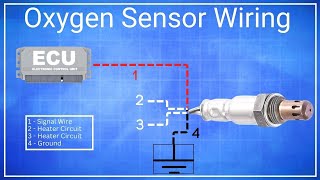
- HO2S B1S2 Connector — Underneath the truck on the driver's side, screwed into the exhaust pipe just after the catalytic converter.. This is the main connection point for the sensor. The heater circuit pins are typically Pin A (Pink/Black - 12V ignition power) and Pin B (Violet/Gray - Heater control from ECM). Verifying power, ground, and signal integrity at this connector is the primary diagnostic step.
- Frame Ground (Driver's Side) — Under the truck on the driver's side frame rail, often near the A-pillar or battery tray area.. Multiple circuits, including sensor grounds, often terminate at shared frame ground points. A corroded or loose ground at this location can cause intermittent and difficult-to-diagnose electrical issues, including sensor heater faults.
Real Owner Repair Stories
- GM-Trucks.com forum user 'Ddub711' (2017 GMC Sierra 2500 6.0L V8 (platform-mate with similar systems), 48,835 miles) — Check Engine Light with multiple codes: P0036, P0138, P0141, P013A, P013E, P0054.
❌ Tried (didn't work) Replaced the Bank 1 Sensor 2 O2 sensor with a Bosch direct-fit part. The codes were cleared but returned immediately after a key cycle.
✅ What actually fixed it The user replaced the aftermarket Bosch sensor with an OEM ACDelco sensor, which resolved the issue and the codes did not return. Another user noted that permanent codes may take several drive cycles to clear from memory even after the fix is complete. - NHTSA ODI #11221744: An owner of a related GM model reported an ongoing issue where the dashboard goes blank while driving, accompanied by a string of codes including P0036, P0138, and P0141.
OEM Part Supersession History
12663317→12676736— Part consolidation and potential minor internal revisions for durability or performance.
Heads up: Both parts are generally interchangeable for the 2014-2018 model years, but using the latest part number (12676736) is always recommended to get the most recent design.
Model Year Variations Within This Range
- 2014-2018: No significant variations have been documented regarding the cause or diagnosis of P0036 on the L83 engine within this year range. The wiring, sensor type, and ECM logic for the downstream O2 heater circuit remained consistent.
Diagnostic Flowchart
Other Known Issues on This Vehicle
Issues unrelated to this code that are worth knowing about as an owner of this generation:
- AFM/DFM Lifter Failure 🔴 High — Widespread issue, can occur at any mileage but is more common from 50,000 to 120,000 miles. Affects 2014-2021 models with 5.3L and 6.2L engines. (Ref: TSB 15-06-01-002N, GM Service Update N212353840)
- 8-Speed Transmission Shudder ('Chevy Shake') 🟠 Medium — Very common on 2015-2019 models with 8L45/8L90 transmissions, often appearing between 30,000-70,000 miles. Feels like driving over rumble strips. (Ref: TSB 18-NA-355 (recommends fluid flush with Mobil 1 LV ATF HP))
- A/C Condenser Failure 🟠 Medium — Common on 2014-2017 models, leading to a sudden loss of air conditioning due to refrigerant leaks from the condenser.
- Cracked Dashboard 🟡 Low — Common cosmetic issue on 2014-2015 models where the plastic dashboard develops cracks, typically on the passenger side near the airbag or over the instrument cluster.
- High-Pressure Fuel Pump Failure 🔴 High — The L83 is a direct-injection engine, and failure of the high-pressure fuel pump (HPFP) is a known issue, though less frequent than lifter failure. Can cause stalling and no-start conditions.
- Excessive Oil Consumption 🟠 Medium — Often a precursor to AFM lifter failure, many 5.3L L83 engines consume oil at a higher-than-normal rate.
Used vs. New Parts: Buying Guide for This Vehicle
When a used part is the smart pick: For this repair, a used part is only recommended for the wiring pigtail connector if the original is damaged. A used oxygen sensor is never recommended.
Donor-vehicle mileage cap: roughly under 80000 miles for the part to have meaningful remaining life.
What to inspect on the donor part:
- For a pigtail connector, inspect for any brittleness, cracking, or melting of the plastic.
- Ensure the wire insulation is flexible and not heat-hardened.
- Check that the internal pins are clean, free of corrosion, and not bent or pushed out.
- Verify the locking tab is intact and functional.
OEM-only on this vehicle (don't cheap out):
- Oxygen Sensor - Due to the sensitivity of the GM engine control system, using an OEM ACDelco or an original OEM supplier like Denso or NTK is strongly advised to prevent immediate or recurring codes.
Aftermarket brands forum-validated for this vehicle:
- Denso
- NTK
Brands owners have reported issues with on this vehicle:
- Bosch (specifically for this GM application, as reported in forums)
Real Owner Stories
Aggregated from forums and TSBs cited above. Mileages and costs reflect what owners reported in those sources.
2017 GMC Sierra 1500 5.3L L83
Symptoms: Replaced the B1S2 sensor with a Bosch part and had multiple codes, including P0036, return immediately.
What fixed it: Switching to an OEM ACDelco or Denso sensor as advised by other owners to meet GM's sensitivity requirements.
Source hint: GM-Trucks.com Thread 'Code P0036 and many others keep coming back'
2014-2018 Chevrolet Silverado 1500 5.3L L83
Symptoms: Check engine light on; heater circuit wire found frayed right at the point where it enters the plastic sensor connector.
What fixed it: Repairing the damaged section of wire with a new pigtail connector or by soldering and heat-shrinking the broken wires.
Source hint: vehicle_specific_issues: Wiring Damage at Connector
GM Vehicle Owner Report
Symptoms: An owner reported ongoing issues including the dashboard going blank while driving and a series of fault codes including P0036, P0037, P0138, and P0141 (NHTSA ODI #11221744).
What fixed it: While this specific report involved multiple electrical failures and accelerator pedal replacements, it highlights how P0036 often appears alongside other sensor circuit codes during major electrical faults.
Source hint: NHTSA ODI #11221744
Related OBD-II Codes
Frequently Asked Questions
Which fuses should I check on my 2014-2018 Silverado if I have a P0036 code?
I replaced the sensor on my 2017 Sierra but the P0036 code came back immediately. Why?
Where is the Bank 1, Sensor 2 oxygen sensor located on the 5.3L L83 engine?
Is there a specific wiring issue I should look for on this generation of Silverado?
Could my P0036 code be related to the 'Chevy Shake' or transmission issues?
Can a P0036 code cause my Silverado to run poorly during a cold start?
Helpful Videos
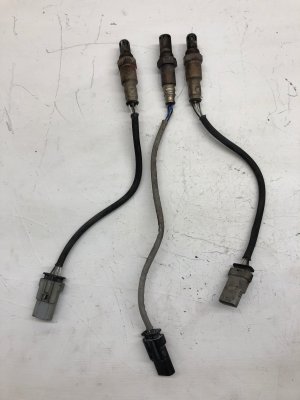
Used OEM Parts in Stock

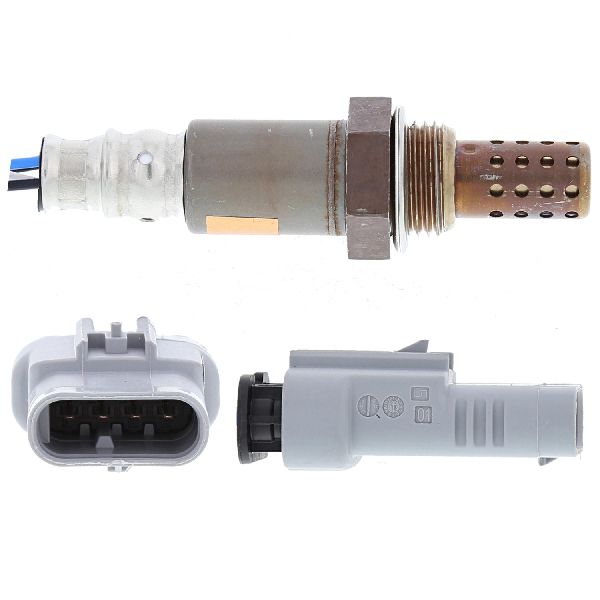
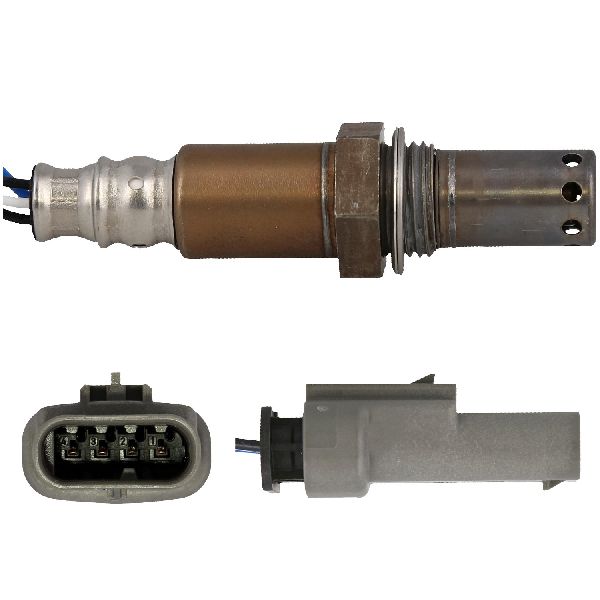
New Aftermarket Parts Available


The information in this article is provided for general reference and educational purposes only. Vehicle specifications, procedures, and part compatibility can vary by production date, trim level, and region. Always consult your vehicle's factory service manual and verify part numbers before purchasing or performing repairs. Safety-critical components such as airbags, seat belts, and braking systems should be installed by a qualified professional.
- Chevrolet Silverado 1500:
- 🎬 Helpful Videos
- 🛍️ Shop This Part
- What's Unique About the 2014-2018 Chevrolet Silverado 1500
- Symptoms You May Notice
- Most Likely Causes
- Rare But Worth Checking
- Diagnosis Steps
- Parts You'll Likely Need
- Related Codes That Often Appear With This One
- Platform-Specific Known Issues
- Technical Service Bulletins (TSBs) & Recalls
- Mechanic-Grade Diagnostic Values
- Scan Tool Commands That Help
- Wiring & Ground Locations
- Real Owner Repair Stories
- OEM Part Supersession History
- Model Year Variations Within This Range
- Diagnostic Flowchart
- Other Known Issues on This Vehicle
- Used vs. New Parts: Buying Guide for This Vehicle
- Real Owner Stories
- 2017 GMC Sierra 1500 5.3L L83
- 2014-2018 Chevrolet Silverado 1500 5.3L L83
- GM Vehicle Owner Report
- Related OBD-II Codes
- Frequently Asked Questions
- 🎟️ Get 5% Off