

P0036 on 2007-2013 Chevrolet Silverado 1500 4.8L: O2 Heater Circuit Causes and Fixes
Code P0036 on a 2007-2013 Silverado 1500 almost always means the Bank 1, Sensor 2 oxygen sensor has failed. This is the downstream sensor on the driver's side. Replacing it is the most common fix, costing about $40-$80 for an aftermarket part and $100-$180 for an OEM ACDelco sensor. Before replacing, check the 'O2 SENS' fuses (F8 and F18) in the underhood fuse box.
- P0036 points to a fault in the heater circuit for the oxygen sensor located on the driver's side, after the catalytic converter.
- The most likely cause is a failed oxygen sensor. This is a common wear item and is the fix in the majority of cases.
- Before buying parts, always inspect the wiring harness for damage and check the O2 sensor fuses (F8 and F18) in the underhood fuse block.
- Replacing the sensor is a DIY-friendly task, typically requiring an O2 sensor socket and basic hand tools. Soaking the old sensor with penetrating oil can make removal easier.
What's Unique About the 2007-2013 Chevrolet Silverado 1500
On this generation of Silverado (GMT900), the P0036 code is a very common and straightforward fault. The primary culprits are either the sensor itself failing from age and heat cycles, or damage to the under-truck wiring harness from road debris or heat exposure. Unlike some other platforms, there are no widespread, tricky issues related to this specific code on the 2007-2013 models, making diagnosis relatively simple. Importantly, the 4.8L V8 was not equipped with Active Fuel Management (AFM), so it does not suffer from the oil consumption issues that often plague the 5.3L and 6.2L engines and can lead to premature sensor and catalyst failure.
Symptoms You May Notice
- Check Engine Light is on
- Vehicle will not pass an emissions inspection
- Slightly reduced fuel economy (often not noticeable by the driver)
- In some rare cases, the ECM may enter a failsafe mode, but this is not typical for a P0036 alone.
- Replacing the wrong oxygen sensor (e.g., Sensor 1, or the sensor on Bank 2).
- Replacing the sensor without first checking for a blown fuse or damaged wiring, leading to the code returning immediately.
Most Likely Causes
- Failed Bank 1, Sensor 2 Oxygen Sensor 🔴 High Probability The internal heater element in the oxygen sensor is a common failure point due to constant heat cycles and age. It's a standard wear-and-tear item.
How to confirm: Disconnect the sensor and measure the resistance between the two heater circuit pins (usually the two wires of the same color, often black) with a multimeter. An open circuit (infinite resistance or 'OL') or a reading far outside the typical 4-10 ohm range indicates a failed heater. A healthy sensor will typically read around 4.9 ohms.
Typical fix: Replace the Bank 1, Sensor 2 oxygen sensor. This is the downstream sensor on the driver's side, located after the catalytic converter. Applying penetrating oil to the old sensor's threads before removal is highly recommended.
Est. part cost: $40-$180 - Damaged Wiring or Connector 🟡 Medium Probability The wiring harness for the downstream O2 sensor is routed underneath the truck, making it vulnerable to damage from road debris, ice, water, and heat from the exhaust system. Wires can become frayed, melted, or broken right at the connector.
How to confirm: Visually inspect the entire wiring harness from the sensor to where it connects to the main loom. Look for breaks, chafing, or melted sections. Check the connector for corrosion, backed-out pins, or broken wires right at the connector body. With the key on, engine off, use a multimeter to verify 12V power and a good ground at the vehicle-side of the connector.
Typical fix: Repair the damaged section of wire. If the damage is at the connector, replace the connector pigtail. An ACDelco pigtail part number is PT1069. Secure the harness away from the exhaust or any moving parts using zip ties.
Est. part cost: $10-$40 - Blown Fuse ⚪ Low Probability A short circuit in the sensor's heater element or in the wiring can cause the dedicated O2 sensor fuse to blow.
How to confirm: Locate and inspect the O2 sensor fuses in the underhood fuse block. For the GMT900 platform, these are typically fuse F8 (10A) and F18 (15A), which may be labeled 'O2 SENS' or similar. If a fuse is blown, it confirms a short in the circuit.
Typical fix: Replace the blown fuse. If the fuse blows again immediately, it indicates a persistent short circuit in the wiring or within the new O2 sensor that must be found and repaired. One owner reported a fuse that blew repeatedly only when using remote start, indicating an intermittent short.
Est. part cost: $1-$5
Rare But Worth Checking
- Faulty Engine Control Module (ECM): This is extremely rare. The ECM's internal driver for the heater circuit can fail, but all other potential causes should be exhaustively ruled out before considering ECM replacement.
Technical Service Bulletins (TSBs) & Recalls
While the Silverado is the primary focus, manufacturer records for the same brand provide insight into how these codes are handled. Manufacturer TSB Bulletin #PIT5336 notes that technicians may find a Service Engine Soon Malfunction Indicator Lamp on with codes including P0036, P0054, and P0138, requiring systematic electrical diagnosis.
Diagnosis Steps
- Confirm the code P0036 is present using an OBD-II scanner.
- Visually inspect the Bank 1, Sensor 2 oxygen sensor and its wiring harness. Bank 1 is the driver's side on a V8 Silverado; Sensor 2 is located after the catalytic converter. Look for obvious damage like melted, chafed, or broken wires, especially near the connector.
- Check the O2 sensor fuses in the underhood fuse block. On a 2007-2013 Silverado, check fuses F8 and F18. Replace if blown.
- If the fuse and wiring appear intact, disconnect the sensor's electrical connector.
- Test the heater circuit resistance on the sensor side of the connector. Using a multimeter set to Ohms, measure between the two heater pins (typically the two same-colored wires, e.g., both black). A reading of approximately 4-10 Ohms is expected. An open circuit (infinite resistance) or near-zero resistance confirms the sensor's heater has failed.
- If the sensor resistance is good, test the vehicle-side connector. With the key on and engine off, check for 12-volt power on the power wire and a good ground on the ground wire.
- If there is no power or ground, the issue is in the wiring harness or the fuse block. If power and ground are present and the sensor tested good, the problem may be intermittent or a poor connection at the connector terminals.
Parts You'll Likely Need
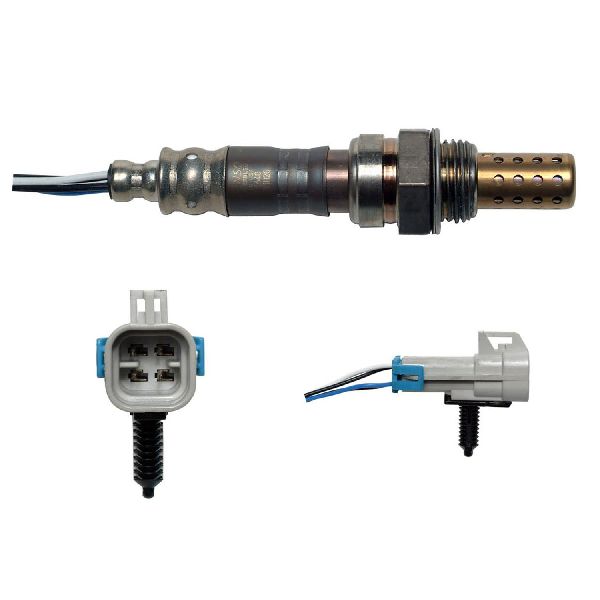
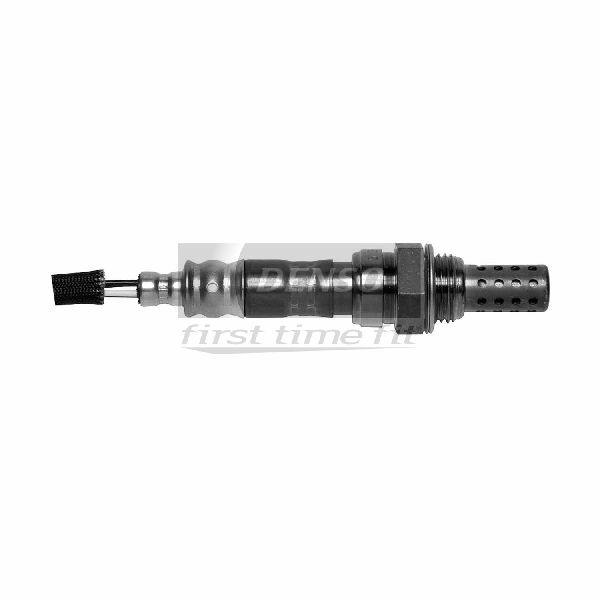
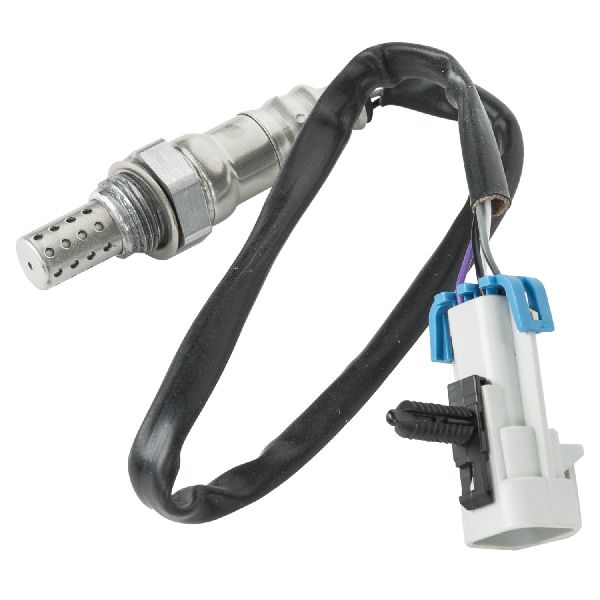
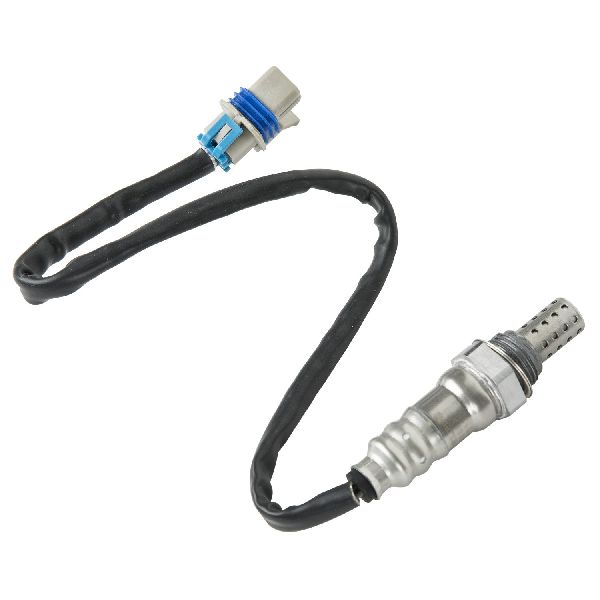
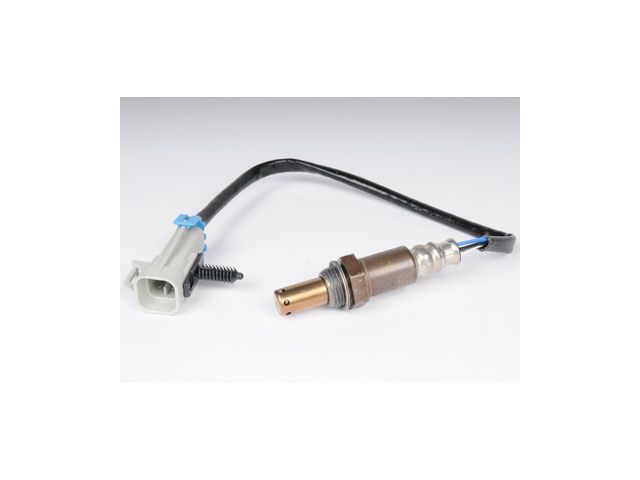
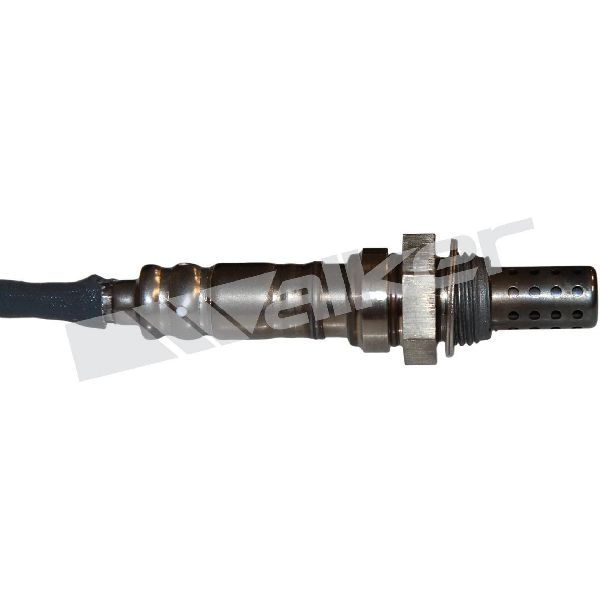
- Oxygen Sensor, Bank 1 Sensor 2 (Downstream, Driver's Side)
(OEM #213-4229)— The internal heater element is the most common failure point that triggers code P0036.
Trusted brands: ACDelco, Denso, NGK/NTK, Bosch
OEM price range: $100-$180
Aftermarket price range: $40-$80 - Oxygen Sensor Connector Pigtail
(OEM #ACDelco PT1069)— If the wiring is damaged or corroded directly at the sensor connector, replacing the pigtail is the most reliable repair.
Trusted brands: ACDelco, Dorman
OEM price range: $25-$40
Aftermarket price range: $15-$30
Related Codes That Often Appear With This One
- P0054 — This code for 'HO2S Heater Resistance (Bank 1, Sensor 2)' is often set alongside P0036 because both codes relate to the electrical integrity of the same heater circuit.
- P0141 — This is another heater circuit malfunction code for Bank 1, Sensor 2. It's functionally very similar to P0036 and often points to the same root causes.
- P0138 — This code for 'O2 Sensor Circuit High Voltage (Bank 1 Sensor 2)' can appear with heater circuit codes if there is a wiring short or internal sensor failure affecting multiple circuits.
Mechanic-Grade Diagnostic Values
- O2 Sensor Heater Element Resistance — expected: 4-10 Ohms is typical for OEM; some sources state a wider possible range of 2-20 Ohms.. Failure: An open circuit ('OL' on multimeter) or near-zero resistance (a dead short) indicates a failed heater element.
- Heater Circuit Supply Voltage — expected: Approximately 12 Volts (battery voltage) with Key On, Engine Off.. Failure: Significantly less than 12V or 0V indicates a problem with the fuse or wiring from the fuse block.
- O2 Sensor Signal Voltage (for general sensor health, not heater) — expected: Fluctuating rapidly between 0.1V and 0.9V on a warm engine.. Failure: Voltage that is stuck high, stuck low, or changes very slowly indicates a lazy or failed sensor.
Wiring & Ground Locations
- F8 (10A) and F18 (15A) — Underhood Fuse Block. F8 is labeled 'OXYGEN SENSOR', F18 is often labeled for emissions components.. These fuses provide power to the O2 sensor heater circuits. A short in the sensor or wiring will blow one of these fuses, causing the P0036 code.
- Sensor Connector Wires — At the 4-wire connector for the Bank 1 Sensor 2 O2 sensor.. On the sensor side, the two wires of the same color (typically black or white) are for the heater circuit and are used for resistance testing. On the harness side, you test for 12V power (typically a Pink wire on GM vehicles) and ground.
- G300 / G301 / G302 — Various points under the vehicle near the driver and passenger seats, often on body mounts or under the seat itself.. While the O2 heater circuit is often grounded through the ECM, poor chassis grounds can cause a host of intermittent electrical issues. These are major grounds in the vicinity of the B1S2 sensor harness routing and should be checked for corrosion and tightness if chasing a difficult electrical fault.
Real Owner Repair Stories
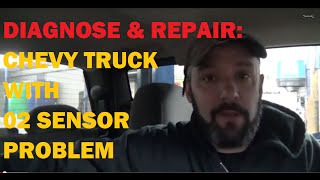
- YouTube: South Main Auto LLC (2007 Chevrolet 1500 Classic 5.3L (Diagnosis is identical for 4.8L)) — Check Engine Light with codes P0036, P0054, and P0141.
❌ Tried (didn't work) Initial diagnosis pointed towards a failed sensor, but testing was performed before replacement.
✅ What actually fixed it A broken black wire for the heater circuit was discovered right at the sensor-side of the electrical connector. The wire's insulation was intact, but the copper inside was broken. The fix was to replace the entire Bank 1 Sensor 2 oxygen sensor, as repairing the wire at that location is not practical. - NHTSA ODI #11221744 — In a cross-manufacturer report for a different Chevrolet model, an owner described an ongoing issue where the dashboard would go blank while driving, accompanied by a string of codes including P0036, P0138, and P0141.
OEM Part Supersession History
12609457→ACDelco 213-4229— This is the GM Genuine Parts service part number that corresponds to the original equipment part number.
Heads up: These numbers are interchangeable. 213-4229 is the service part you will typically buy from a parts store or dealer.
Diagnostic Flowchart
Other Known Issues on This Vehicle
Issues unrelated to this code that are worth knowing about as an owner of this generation:
- Cracked Dashboard 🟡 Low — Extremely common across all GMT900 trucks and SUVs, especially in warmer climates. Cracks typically form near the passenger airbag and instrument cluster surround. (Ref: No recall was issued, and a class-action lawsuit was dismissed.)
- Fuel Level Sensor Failure 🟠 Medium — Common failure around 100,000 miles, causing the fuel gauge to read erratically or show empty. Requires dropping the fuel tank to replace the fuel pump module.
- 4L60-E Transmission Failures (2007-2008 models) 🔴 High — The 4L60-E used in early GMT900s has known weak points, including the 3-4 clutch pack and sun shell, which can fail, especially over 100,000 miles or with heavy use.
- Failing Oil Pressure Sending Unit 🟠 Medium — The oil pressure sensor and the small filter screen beneath it are known to fail or clog, causing the oil pressure gauge to read zero or fluctuate wildly.
- Active Fuel Management (AFM) Lifter Failure 🔴 High — This does NOT affect the 4.8L V8. However, it is a defining and very common issue on the 5.3L and 6.2L engines, often occurring after 80,000 miles. It can cause misfires, ticking noises, and eventually catastrophic engine damage. (Ref: Multiple TSBs exist, including 10-06-01-008G, which addresses related oil consumption.)
Used vs. New Parts: Buying Guide for This Vehicle
When a used part is the smart pick: A used part is generally NOT recommended for the oxygen sensor itself, as it is a wear item with a finite lifespan. However, sourcing a used connector pigtail with a few inches of wire from a junkyard is a smart and cost-effective choice if your vehicle's harness-side connector is damaged.
Donor-vehicle mileage cap: roughly under 150000 miles for the part to have meaningful remaining life.
What to inspect on the donor part:
- For a connector pigtail, ensure the plastic is not brittle or cracked.
- Check that the locking tabs are intact.
- Inspect the wire insulation for flexibility; avoid any that are stiff or cracking.
- Look inside the connector to ensure the metal pins are clean and free of corrosion.
OEM-only on this vehicle (don't cheap out):
- No parts for this specific repair are strictly 'OEM-only'.
Aftermarket brands forum-validated for this vehicle:
- Denso
- NGK / NTK
- Bosch (often OEM supplier)
Brands owners have reported issues with on this vehicle:
- Ultra low-cost, unbranded sensors from online marketplaces often have high failure rates and may not perform to OEM specifications, causing the code to return.
Real Owner Stories
Aggregated from forums and TSBs cited above. Mileages and costs reflect what owners reported in those sources.
2007 Chevrolet Silverado 1500
Symptoms: Code P0036, P0054, and P0141 present.
What fixed it: Repair of a broken wire found right at the sensor connector.
Source hint: YouTube: South Main Auto LLC - Chevy Truck Bank 1 Sensor 2 02 Problems P0036, P0054, P0141
2017 Chevrolet Silverado (GMT900 Platform Related)
Symptoms: Multiple O2 sensor codes including P0036, P0138, and P0141 returning immediately after sensor replacement.
What fixed it: Thorough inspection of fuses and wiring connections, as the sensor itself was not the root cause.
Source hint: GM-Trucks.com: Code P0036 and many others keep coming back after replacing O2 sensor
Related OBD-II Codes
Frequently Asked Questions
Where is the Bank 1 Sensor 2 oxygen sensor located on my 4.8L V8 Silverado?
Which fuses should I check for a P0036 code on a GMT900 Silverado?
Does the common AFM lifter failure issue affect my 4.8L V8 engine?
What is the typical resistance for a healthy O2 sensor heater on this truck?
Is there a specific replacement part number for a damaged O2 sensor connector?
Can a blown fuse cause P0036 to return even after I replace the sensor?
Helpful Videos
![How to Fix CHEVROLET P0036 Engine Code in 2 Minutes [1 DIY Method / Only $19.64]](https://img.youtube.com/vi/l62zn5542H0/mqdefault.jpg)

We Have This Part in Stock

The information in this article is provided for general reference and educational purposes only. Vehicle specifications, procedures, and part compatibility can vary by production date, trim level, and region. Always consult your vehicle's factory service manual and verify part numbers before purchasing or performing repairs. Safety-critical components such as airbags, seat belts, and braking systems should be installed by a qualified professional.
- Chevrolet Silverado 1500:
- 🎬 Helpful Videos
- 🛍️ Shop This Part
- What's Unique About the 2007-2013 Chevrolet Silverado 1500
- Symptoms You May Notice
- Most Likely Causes
- Rare But Worth Checking
- Technical Service Bulletins (TSBs) & Recalls
- Diagnosis Steps
- Parts You'll Likely Need
- Related Codes That Often Appear With This One
- Mechanic-Grade Diagnostic Values
- Wiring & Ground Locations
- Real Owner Repair Stories
- OEM Part Supersession History
- Diagnostic Flowchart
- Other Known Issues on This Vehicle
- Used vs. New Parts: Buying Guide for This Vehicle
- Real Owner Stories
- 2007 Chevrolet Silverado 1500
- 2017 Chevrolet Silverado (GMT900 Platform Related)
- Related OBD-II Codes
- Frequently Asked Questions
- 🎟️ Get 5% Off