

P0036 on 2006-2011 Chevrolet HHR: O2 Sensor Heater Circuit Causes and Fixes
This code indicates a fault in the heater circuit of the downstream oxygen sensor (Bank 1, Sensor 2). The most common fix is to replace the sensor itself, which is a relatively inexpensive part. Before replacing, check the 15A fuse in position #33 of the under-hood fuse box, as this is a common and easy first step.
- P0036 on your HHR means the heater inside the rear oxygen sensor has failed.
- The most likely solution is to replace the downstream (post-catalytic converter) O2 sensor, preferably with an ACDelco or Denso brand part.
- Before buying parts, always check fuse #33 (15A) in the fuse box under the hood first, as it's a simple and free check that often resolves the issue.
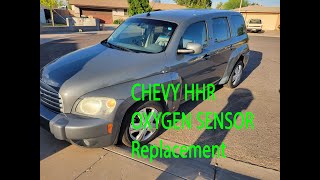
- This is a DIY-friendly repair for those with basic tools, but the sensor can be difficult to remove if it's rusted into the exhaust pipe. Use penetrating oil and a special O2 sensor socket.
- Driving with this code will not harm your engine, but you won't be able to pass an emissions test.
What's Unique About the 2006-2011 Chevrolet HHR
For the Chevrolet HHR and its platform mates (Cobalt, G5, Ion), this code is straightforward. The 2.2L and 2.4L Ecotec engines use a conventional and well-understood emissions system. The most common point of failure is simply the oxygen sensor itself reaching the end of its service life. However, owners on forums like Chevy HHR Network have noted that checking the under-hood fuse box is a critical first step. In some cases, owners have had issues with non-OEM sensors, particularly Bosch, causing the code to return, suggesting that using an ACDelco or Denso sensor is advisable.
Symptoms You May Notice
- Check Engine Light is on.
- Inability to pass an emissions inspection.
- Replacing the upstream (Sensor 1) oxygen sensor instead of the downstream (Sensor 2) sensor.
- Replacing the catalytic converter when the code only points to the sensor's heater circuit, not its performance reading.
- Ignoring a blown fuse and replacing the sensor, only to have the code remain.
Most Likely Causes
- Failed Downstream Oxygen Sensor 🔴 High Probability The heater element inside the sensor is a common wear item and can burn out over time, creating an open circuit. This is the most frequent cause of P0036.
How to confirm: Disconnect the sensor and measure the resistance across the two same-colored heater wires (often both white on aftermarket sensors) with a multimeter. A reading of infinite resistance (OL) indicates a burned-out heater. A good sensor will typically have a resistance between 4 and 15 Ohms.
Typical fix: Replace the downstream (post-catalytic converter) oxygen sensor. Using a dedicated O2 sensor socket is highly recommended, as the sensor can be seized in the exhaust pipe.
Est. part cost: $45-$85 - Blown O2 Sensor Heater Fuse 🟡 Medium Probability
How to confirm: Locate the fuse box in the engine compartment. Inspect fuse #33 (typically a 15A fuse labeled 'EXH'). A visual check or a continuity test with a multimeter will confirm if it's blown. This is a common point of failure noted by owners.
Typical fix: Replace the blown fuse. If the new fuse blows immediately, it indicates a short circuit in the wiring harness that must be found and repaired.
Est. part cost: $1-$5 - Damaged Wiring or Connector ⚪ Low Probability The wiring harness runs underneath the vehicle and is exposed to road debris, moisture, and exhaust heat. Wires can melt on the exhaust, chafe against the chassis, or corrode at the connector.
How to confirm: Visually inspect the wiring harness leading to the downstream O2 sensor for any signs of physical damage, melting on the exhaust pipe, or corrosion in the connector pins. On platform-mate Cobalts, melted wires are a known cause.
Typical fix: Repair the damaged section of wire or replace the connector pigtail.
Est. part cost: $10-$30
Rare But Worth Checking
- Faulty Engine Control Module (ECM): This is very rare. The ECM's internal driver for the heater circuit can fail. This should only be considered after definitively ruling out the sensor, fuse, and wiring.
Diagnosis Steps
- Read the code with an OBD-II scanner to confirm P0036 is present.
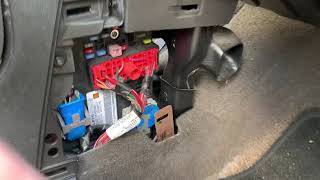
- Open the under-hood fuse box, located on the passenger side of the engine bay. 🎬 Watch: How to find the HHR fuse box location
- Locate and inspect fuse #33 (15A). If it is blown, replace it and see if the code returns. If it blows again, inspect the wiring for a short.
- If the fuse is good, safely raise the vehicle and locate the downstream oxygen sensor, which is screwed into the exhaust pipe after the catalytic converter.
- Visually inspect the sensor's wiring harness and connector for any obvious signs of damage, such as chafing, melting, or broken wires. Pay close attention to where the harness passes near hot exhaust components.
- Disconnect the sensor. Use a multimeter set to Ohms (Ω) to measure the resistance between the two heater pins on the sensor side of the connector (these are typically the two wires of the same color, often white or black).
- A reading of 'OL' or infinite resistance means the heater is burned out and the sensor must be replaced. A normal reading is typically between 4 and 15 Ohms.
- If the sensor resistance is good, turn the ignition key to the 'ON' position (engine off). Carefully use a multimeter to check for 12V power on one of the pins in the vehicle-side harness connector and for a good ground on another. The power is supplied from the fuse you checked in step 3.
- If power or ground is missing, the fault lies in the vehicle's wiring or the ECM. If power and ground are present and the sensor's resistance is good, the issue may be an intermittent connection or a faulty replacement sensor (if not OEM/Denso).
Parts You'll Likely Need
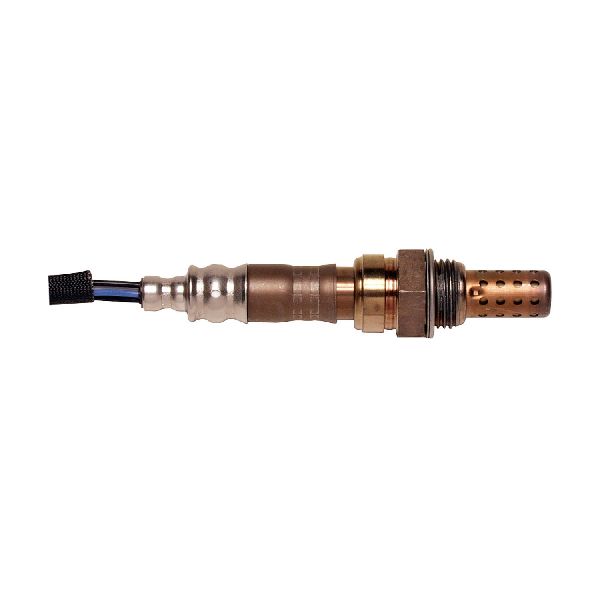
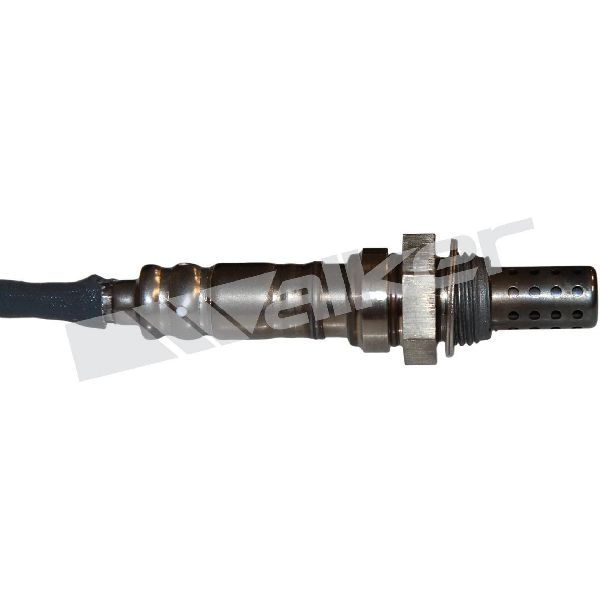
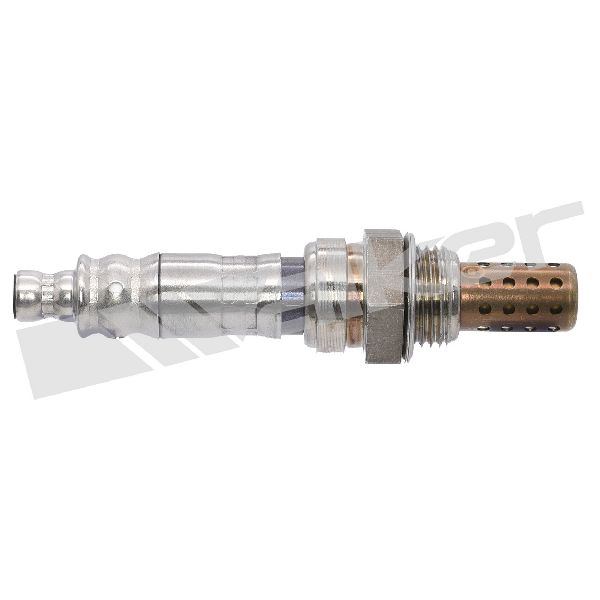
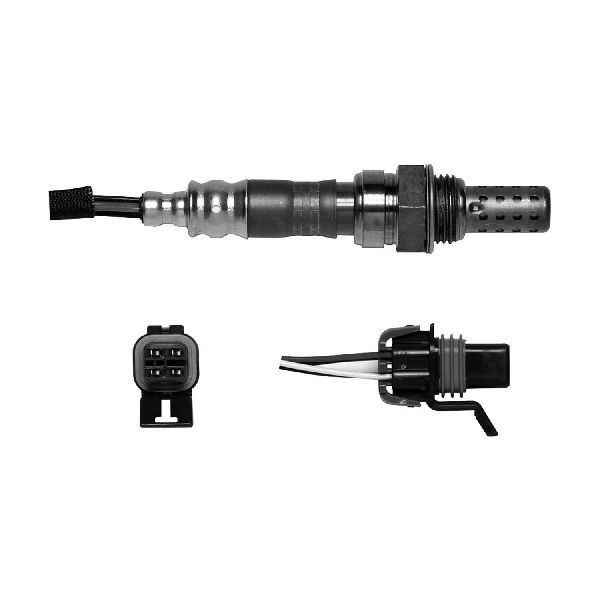
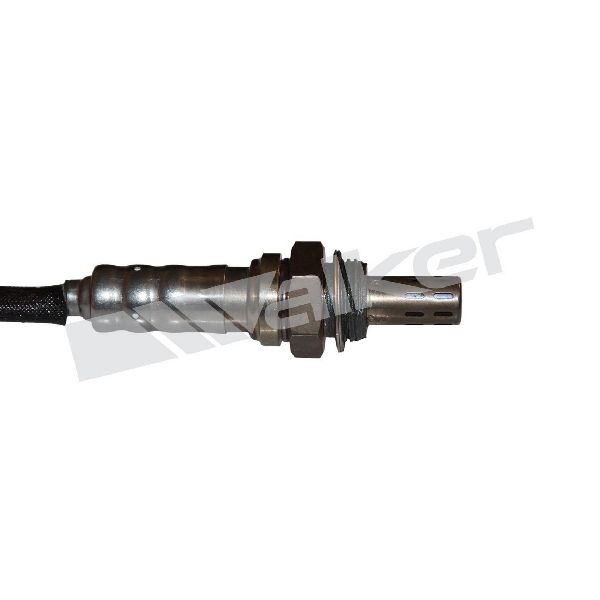
- Downstream Oxygen Sensor (Bank 1, Sensor 2)
(OEM #12569429)— The internal heater element fails from age and heat cycles, which is the most common cause of code P0036.
Trusted brands: ACDelco (OE), Denso (P/N: 234-4066), Walker Products
OEM price range: $70-$120
Aftermarket price range: $45-$85
Related Codes That Often Appear With This One
- P0054 — This code for 'HO2S Heater Resistance' is often set alongside P0036 as they both relate to the electrical integrity of the same heater element in the Bank 1, Sensor 2 oxygen sensor.
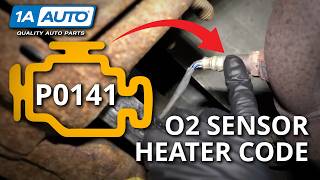
- P0141 — This is another generic code for 'O2 Sensor Heater Circuit Malfunction (Bank 1, Sensor 2)'. It is functionally identical to P0036 and points to the same fault.
Technical Service Bulletins (TSBs) & Recalls
- Bulletin #PIT5336: A manufacturer service bulletin notes that technicians may find P0036 along with a wide range of other oxygen sensor heater and performance codes (such as P0030, P0053, and P0054) resulting in a Service Engine Soon lamp.
- PIC4125A / Harness Chafing: While not directly for P0036, GM TSB PIC4125A (later superseded) addresses an issue where the engine harness may contact the purge solenoid bracket, causing wires to chafe and ground out. This could potentially lead to various electrical issues, including emissions sensor codes, and highlights a known area for wiring inspection.
Platform-Specific Known Issues
- Owner Experience: Bosch Sensor Issues: On the Chevy HHR Network forum, a user reported getting codes P0036, P0141, and P0054. They replaced the sensor, the light returned a month later, they replaced it again, and the light came back on immediately. Other members noted that Bosch brand O2 sensors are known to cause problems on these vehicles and recommended sticking with ACDelco or Denso.
- Owner Experience: Fuse First: A user on the Chevy HHR Network forum replaced multiple sensors (O2, MAF) and spark plugs trying to solve a list of codes including P0036, only to later discover a blown fuse labeled 'Exh' in the fuse block solved the heater circuit codes. This highlights the importance of checking fuses before replacing parts.
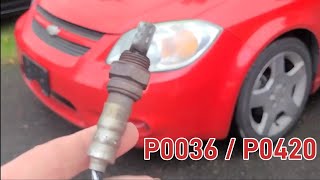
- Repair Story: Melted Wires on Platform Mate: A YouTube video repairing P0036 on a Chevrolet Cobalt SS showed the cause to be melted O2 sensor wires that were making contact with each other. 🎬 See this walkthrough of a Cobalt SS sensor repair This demonstrates the importance of a thorough visual inspection of the harness for heat damage.
Mechanic-Grade Diagnostic Values
- HO2S Heater Resistance — expected: 3.3 - 4.1 Ω at 20°C (68°F). Failure: A reading of infinite resistance (Open Loop) or a value significantly outside the specified range.
- HO2S Heater Current Draw — expected: 0.3 - 2.9 Amps. Failure: The ECM will set a fault if the current is less than 0.3A (open circuit) or greater than 2.9A (short circuit) for more than 8 seconds.
- Heater Circuit Power Supply — expected: 11 - 18 Volts with engine running. Failure: Voltage below 11V indicates a problem with the power supply from the fuse block or a charging system issue.
Scan Tool Commands That Help
- Tech 2 / GDS2: HO2S Heater On/Off Command — This bidirectional command allows a technician to manually turn the O2 sensor heater on and off to verify the integrity of the entire circuit. If the heater can be commanded on and current draw is observed on the scan tool (or with an amp clamp), it proves the wiring, fuse, and ECM driver are all functional, isolating the fault to an intermittent sensor.
Wiring & Ground Locations
- B1S2 Connector Pin A (Vehicle Side) — At the 4-pin connector for the downstream oxygen sensor.. This pin carries the Pink/Black (PNK/BLK) wire, which supplies 12V ignition power to the heater element from the underhood fuse #33. A lack of voltage here points to a blown fuse or a break in the wire between the fuse box and the sensor.
- B1S2 Connector Pin B (Vehicle Side) — At the 4-pin connector for the downstream oxygen sensor.. This pin has the Gray/White (GRY/WHT) wire, which is the heater control circuit. The ECM provides a pulse-width modulated ground on this wire to control the heater. A short to ground on this wire will blow the fuse, while an open circuit will prevent the heater from working.
- G107 — On the front left corner of the transmission housing.. This is a major powertrain ground point. While the O2 heater is controlled directly by the ECM, a poor G107 ground can cause electrical noise and voltage offsets that may affect the ECM's operation and its ability to accurately control and monitor various components, including the O2 sensor circuits.
- G108 — On the right rear of the engine block.. This is another critical engine block ground. A loose or corroded connection here can lead to a wide range of seemingly unrelated electrical issues and diagnostic trouble codes as the ECM and other modules may not have a stable ground reference.
- ECM Connector X1, Pin 56 — At the Engine Control Module, which is typically located near the underhood fuse box.. The Gray/White (GRY/WHT) heater control wire from the downstream O2 sensor terminates at this pin on the ECM. A technician can test for continuity between the sensor connector and this pin to rule out a break in the control wire.
Real Owner Repair Stories
- Chevy HHR Network Forum (2011 Chevrolet HHR 2.2L) — Check Engine Light with code P0054 (HO2S Heater Resistance).
❌ Tried (didn't work) Replacing the complete exhaust pipe/catalytic converter assembly, including both O2 sensors., Replacing the downstream O2 sensor a second time with another new part.
✅ What actually fixed it The user was advised to check the 'EXH' fuse (#33) in the underhood fuse box and to specifically avoid Bosch brand O2 sensors, as they are known to cause issues. The fix was confirmed to be related to the circuit's electrical integrity (fuse/wiring) rather than the sensor itself, as multiple new sensors did not solve the problem. - NHTSA ODI #11221744 (Chevrolet Malibu) — An owner reported an ongoing issue where the dashboard would go blank while driving, accompanied by a string of codes including P0036, P0037, P0138, and P0141. The report notes that the accelerator pedal was replaced three times within a two-month timeframe as part of the troubleshooting process.
OEM Part Supersession History
12569429→ACDelco 213-3138, ACDelco 213-1570 (also shows as an upstream part for other vehicles)— Standard part lifecycle updates and consolidation.
Heads up: The original part number 12569429 is the most direct fit. While 213-1570 is listed as a replacement in some catalogs, it is also specified as an *upstream* sensor for other GM vehicles (Colorado/Canyon), which can cause confusion. It is critical to verify the application via VIN. The connector pigtail is available separately as ACDelco PT919.
Diagnostic Flowchart
Other Known Issues on This Vehicle
Issues unrelated to this code that are worth knowing about as an owner of this generation:
- Electric Power Steering (EPS) Motor Failure 🔴 High — Extremely common. Can cause a sudden loss of power steering assist. Multiple recalls and special coverage extensions were issued. (Ref: Recall #14115A / NHTSA #14V153000 covers many HHRs for this issue, offering replacement.)
- Worn Front Lower Control Arm Bushings 🟠 Medium — Very common, typically noticeable between 60,000 and 100,000 miles. Causes clunking noises over bumps, poor alignment, and uneven tire wear.
- Cracked Exhaust Flex Pipe 🟠 Medium — Common failure point, leading to a loud exhaust leak. The flex pipe is part of the catalytic converter assembly, but repair sections are available. (Ref: Federal emissions warranty might cover this under 8 years/80,000 miles, but many fail after this period.)
- Clogged or Leaking Sunroof Drains 🟡 Low — Frequent issue for sunroof-equipped models. The drain tubes get clogged with debris or disconnect, causing water to leak into the front footwells or headliner.
- Faulty Ignition Switch / Cylinder 🔴 High — Part of the massive GM ignition switch recall. The switch can move out of the 'Run' position while driving, causing the engine to stall and disabling airbags. (Ref: Recall #14V047000 / GM #14299.)
Used vs. New Parts: Buying Guide for This Vehicle
When a used part is the smart pick: For this repair, a used part is almost never a smart choice. The oxygen sensor is a wear item with a finite lifespan, and its failure is due to age and heat cycles. A used sensor from a junkyard is likely to have a similar or higher number of heat cycles and could fail shortly after installation. The only exception might be sourcing a used connector pigtail if the original is physically damaged, but new pigtails (like ACDelco PT919) are readily available and recommended.
Donor-vehicle mileage cap: roughly under 30000 miles for the part to have meaningful remaining life.
What to inspect on the donor part:
- For a connector pigtail, ensure the plastic is not brittle or cracked.
- Check for any signs of corrosion (green powder) on the pins.
- Ensure the locking tab is intact and functional.
Aftermarket brands forum-validated for this vehicle:
- ACDelco (Original Equipment)
- Denso (P/N: 234-4066)
- NGK / NTK
Brands owners have reported issues with on this vehicle:
- Bosch: Multiple forum reports on Chevy HHR Network indicate that Bosch-branded O2 sensors can be problematic for this platform, often causing the code to return immediately or shortly after installation.
Real Owner Stories
Aggregated from forums and TSBs cited above. Mileages and costs reflect what owners reported in those sources.
Chevrolet HHR
Symptoms: The owner was dealing with a list of codes including P0036 and replaced multiple parts including O2 sensors, the MAF sensor, and spark plugs without success.
What fixed it: Replacing a blown 15A fuse labeled 'Exh' in the engine compartment fuse block.
Source hint: Chevy HHR Network forum thread
Chevrolet HHR
Symptoms: The owner experienced codes P0036, P0141, and P0054. After replacing the sensor with a Bosch unit, the light returned a month later; a second Bosch replacement failed immediately.
What fixed it: Switching to an ACDelco or Denso brand sensor as recommended by forum members to resolve compatibility issues.
Source hint: Chevy HHR Network forum thread
Chevrolet Cobalt SS
Symptoms: The vehicle triggered a P0036 code due to electrical issues in the heater circuit.
What fixed it: Repairing O2 sensor wires that had melted and were making contact with each other.
Source hint: YouTube video repairing P0036 on a Chevrolet Cobalt SS
Related OBD-II Codes
Frequently Asked Questions
Which fuse should I check for a P0036 code on my Chevrolet HHR?
Are there specific oxygen sensor brands I should avoid for my HHR 2.2L/2.4L?
Where is the sensor located that triggers the P0036 code?
Could my HHR's cracked exhaust flex pipe be related to emissions codes?
Does the wiring harness on the HHR have known failure points for this code?
Helpful Videos
We Have This Part in Stock


The information in this article is provided for general reference and educational purposes only. Vehicle specifications, procedures, and part compatibility can vary by production date, trim level, and region. Always consult your vehicle's factory service manual and verify part numbers before purchasing or performing repairs. Safety-critical components such as airbags, seat belts, and braking systems should be installed by a qualified professional.
- Chevrolet HHR:
- 🎬 Helpful Videos
- 🛍️ Shop This Part
- What's Unique About the 2006-2011 Chevrolet HHR
- Symptoms You May Notice
- Most Likely Causes
- Rare But Worth Checking
- Diagnosis Steps
- Parts You'll Likely Need
- Related Codes That Often Appear With This One
- Technical Service Bulletins (TSBs) & Recalls
- Platform-Specific Known Issues
- Mechanic-Grade Diagnostic Values
- Scan Tool Commands That Help
- Wiring & Ground Locations
- Real Owner Repair Stories
- OEM Part Supersession History
- Diagnostic Flowchart
- Other Known Issues on This Vehicle
- Used vs. New Parts: Buying Guide for This Vehicle
- Real Owner Stories
- Chevrolet HHR
- Chevrolet HHR
- Chevrolet Cobalt SS
- Related OBD-II Codes
- Frequently Asked Questions
- 🎟️ Get 5% Off