

P0036 on 2009-2012 Audi Q5 3.2L V6: Heater Circuit Causes and Fixes
P0036 on a 2009-2012 Audi Q5 3.2L V6 indicates a fault in the heater circuit of the downstream oxygen sensor on Bank 1 (passenger side). The most common fix is replacing the sensor itself. Expect to pay between $70 for an aftermarket part and $150 for an OEM part. It is a DIY-friendly repair with moderate difficulty, requiring a 22mm offset O2 sensor socket for access.
- P0036 specifically points to a problem with the heater in the downstream oxygen sensor on the passenger side.
- The most likely cause is a failed oxygen sensor, which is a common wear item. Use a quality OEM replacement like Bosch or NTK.
- Before replacing the sensor, always perform a quick visual inspection of the wiring for melting or damage, and check the related fuse, particularly fuse #10 in the plenum E-box.
- This fault will not cause serious driving issues but should be
What's Unique About the 2008-2017 Audi Q5
The 3.2L V6 FSI (engine code CALB) was available in the Audi Q5 from model years 2009 to 2012. For this longitudinally mounted V6, Bank 1 is consistently identified as the passenger side. The P0036 code points specifically to the downstream (post-catalytic converter) sensor on that side. While the code itself is generic, owners and technicians report that the oxygen sensors on this platform are common wear items. Accessing the downstream sensor is generally considered straightforward, though it may require working from underneath the vehicle. The connector is typically found on a bracket near the transmission housing.
Generation note: The 2008-2017 Audi Q5 covers the first generation (Typ 8R). However, the specified CALB 3.2L V6 FSI engine was only offered in North America from model years 2009 through 2012. This guide is specific to those years.
Symptoms You May Notice
- Check Engine Light is on
- Vehicle will fail an emissions test
- Potential for a slight decrease in fuel economy
- In rare cases, a smell of rotten eggs from the exhaust if the fuel mixture is significantly affected.
- Replacing the wrong oxygen sensor (e.g., replacing the upstream Sensor 1, or the sensor on Bank 2/driver's side).
- Replacing the catalytic converter. This code is specific to the sensor's heater circuit, not the converter's efficiency.
Most Likely Causes
- Failed Bank 1, Sensor 2 Oxygen Sensor 🔴 High Probability The internal heater element of the oxygen sensor is a common failure point due to constant, extreme heat cycles and exposure to exhaust gases. It is a standard wear-and-tear item. Some owners of budget aftermarket sensors have reported premature failure within weeks or months.
How to confirm: Disconnect the sensor and measure the resistance across the two heater circuit pins (usually the same color wires). A reading of infinite resistance (Open Loop/OL) confirms the heater has failed. A typical good resistance is between 2-30 ohms.
Typical fix: Replace the Bank 1, Sensor 2 oxygen sensor. This is the downstream sensor on the passenger side. Using an OEM-quality brand like Bosch or NTK is highly recommended.
Est. part cost: $70-$150 - Damaged Wiring or Connector 🟡 Medium Probability The sensor wiring is routed near the hot exhaust and transmission components. Plastic clips can become brittle and break, allowing wires to touch hot surfaces and melt, causing a short circuit. The connector itself, often clipped to the transmission, is also exposed to under-vehicle debris and moisture.
How to confirm: Visually inspect the entire wiring harness leading from the O2 sensor to its connector for any signs of melting, chafing, or corrosion at the connector pins. Use a multimeter to check for 12V power at the heater circuit wire in the harness-side connector with the ignition on.
Typical fix: Repair the damaged section of the wiring harness or clean/replace the connector terminals. Secure the harness away from the exhaust using high-temperature zip ties.
Est. part cost: $5-$50 - Blown Fuse for Heater Circuit ⚪ Low Probability
How to confirm: Locate the fuse boxes and identify the fuse for the oxygen sensor heater circuits. On the Q5, there are fuse panels on the left and right sides of the dashboard and in the right side of the luggage compartment. A fuse in the plenum chamber (under the windshield cowl) may also be involved. Specifically, check fuse #10 (15A) in the plenum chamber E-box, which is often tied to the lambda probe heaters.
Typical fix: Replace the blown fuse. If the new fuse blows immediately, it indicates a persistent short circuit in the wiring or the sensor itself that must be addressed before proceeding.
Est. part cost: $1-$5
Rare But Worth Checking
- Faulty Engine Control Module (ECM): This is extremely rare. The ECM's O2 sensor heater driver can fail, but all other possibilities (sensor, wiring, fuse) should be exhaustively ruled out before considering ECM replacement.
Diagnosis Steps
- Read the code with an OBD-II scanner to confirm P0036 is the only code present.
- Visually inspect the wiring and connector for the Bank 1, Sensor 2 (passenger side, downstream) oxygen sensor. Look for any signs of melting, fraying, or corrosion.
- Check the relevant fuses. On the Q5, this includes panels on both sides of the dash, the right side of the luggage compartment, and specifically fuse #10 in the E-box located in the plenum chamber under the windshield cowl.
- If the wiring and fuse are okay, disconnect the sensor's electrical connector.
- Use a multimeter to test for 12V power on the heater circuit supply wire in the harness-side connector (key on, engine off).
- Use a multimeter set to Ohms to measure the resistance between the two heater pins on the sensor itself. A reading of 'OL' or infinite resistance indicates a failed heater element. A good sensor should read between 2-30 Ohms.
- If resistance is within spec, the issue may be intermittent or in the wiring. However, a faulty sensor remains the most likely culprit.
- Replace the Bank 1, Sensor 2 oxygen sensor. A 22mm (or 7/8") offset oxygen sensor socket is highly recommended for this job.
- Apply anti-seize compound to the threads of the new sensor before installation.
- Clear the trouble code and perform a drive cycle to ensure the code does not return.
Parts You'll Likely Need
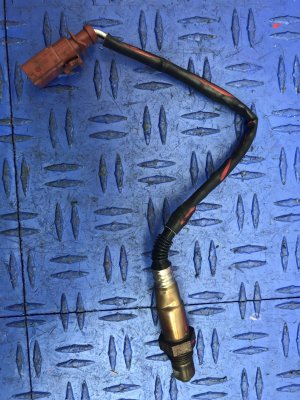
- Oxygen Sensor (Bank 1, Sensor 2)
(OEM #06E906265Q)— This is the downstream (post-catalyst) oxygen sensor for the passenger side. Its internal heater element is the most common failure point for code P0036.
Trusted brands: Bosch (OEM supplier, part #18026), NTK (OEM supplier, part #25197), Denso
OEM price range: $120-$150
Aftermarket price range: $70-$110 - 22mm Offset Oxygen Sensor Socket — This special tool allows for removal and installation of the oxygen sensor in tight spaces where a standard wrench will not fit.
Trusted brands: Schwaben, Lisle, OEMTools
Aftermarket price range: $10-$25
Platform-Specific Known Issues
- Access and Location: On the Q5 3.2L, the Bank 1 Sensor 2 is on the passenger side exhaust pipe, after the catalytic converter. Access is from underneath the vehicle. The electrical connector is usually clipped to a bracket on the transmission housing, which can be tricky to release without breaking the plastic clip.
- Aftermarket Part Quality: Forum users and customer reviews have noted that very cheap, unbranded aftermarket oxygen sensors for this application can fail quickly, sometimes within a month, causing the P0036 code to return. It is strongly recommended to use OEM brands like Bosch or NTK for longevity.
Mechanic-Grade Diagnostic Values
- O2 Sensor Heater Element Resistance — expected: 2.0 to 16.0 Ohms when measured cold at the sensor connector pins.. Failure: An open circuit (infinite resistance/OL) or a reading over 20 Ohms indicates a failed heater element.
- Wiring Harness Resistance (Sensor Connector to ECM) — expected: Less than 1.5 Ohms.. Failure: A reading higher than 1.5 Ohms indicates excessive resistance from corrosion or wire damage.
- VCDS Live Data - O2 Heater Resistance — expected: With a VCDS tool in engine measuring blocks, a healthy sensor heater will show a resistance value that drops below 0.5 kOhms (500 Ohms) within a short time of running the engine around 1800 RPM.. Failure: A sensor that shows a very high initial resistance (e.g., 2.5 kOhms) and is slow to drop, or never drops, is faulty or a low-quality aftermarket part. The ECU expects a fast response (approx. 10 seconds after startup).
- Heater Circuit Power Supply (at harness connector) — expected: Battery voltage (approx. 12V) with Key On, Engine Off.. Failure: No voltage indicates a problem upstream of the sensor, such as a blown fuse or a break in the power wire.
Scan Tool Commands That Help
- VCDS (VAG-COM): Engine > Measuring Blocks (Groups 30-49) — Use this to monitor the live resistance of the O2 sensor heaters (B1S1, B1S2, etc.). This can help differentiate between a truly failed sensor and an intermittent wiring issue, and can also identify slow-responding aftermarket sensors that may not meet the ECU's timing requirements, even if they work electrically.
Wiring & Ground Locations
- Ground Connection (in engine compartment, left) — On the left front long member in the engine compartment.. This is a primary engine ground point. A corroded or loose connection here can cause a variety of sensor issues, including erratic O2 sensor heater performance and related fault codes.
- Ground Connection (in plenum chamber, right) — Located in the plenum chamber (under the windshield cowl), on the right side.. The E-box containing fuses and relays for engine electronics is in this area. A bad ground near this location can affect the power supply or control circuits for the O2 sensor heaters.
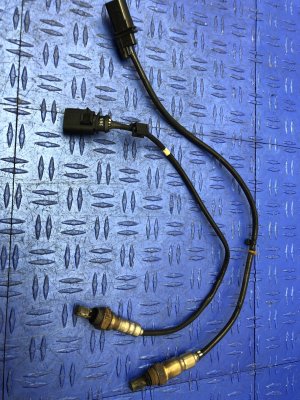
- O2 Sensor Heater Circuit Design — Wiring between ECM, Sensor 1, and Sensor 2 on the same bank.. On some Audi models, the ECU uses a single circuit to control and monitor both the pre-cat (Sensor 1) and post-cat (Sensor 2) heaters on one bank. It monitors the combined current draw. A failure in either sensor will cause the total current to drop, but the generic OBD-II code may not be able to distinguish which of the two sensors failed. This makes manual resistance testing of both sensors on that bank crucial before replacing a part.
Real Owner Repair Stories
- AudiWorld Forums User (2012 Audi Q5 3.2L) — Check Engine Light on.
❌ Tried (didn't work) The user was quoted $1000 by a dealer to replace one O2 sensor, citing difficult access.
✅ What actually fixed it Another user confirmed the correct part numbers (Rear: 06E906265Q / NTK 25197) and advised that the job is not as difficult as the dealer claimed, suggesting the owner go to an independent shop for a more reasonable quote. The fix is replacing the correct downstream O2 sensor.
OEM Part Supersession History
06E906265Q→06E906265Q is the current, latest revision for this application.— N/A
Heads up: While the part number itself has been stable, it is critical to use a high-quality OEM (Bosch, NTK) or genuine Audi sensor. Forum and parts reviewer feedback indicates that budget aftermarket sensors, while physically compatible, often have incorrect heater resistance or slow response times, leading to the P0036 code returning.
Diagnostic Flowchart
Other Known Issues on This Vehicle
Issues unrelated to this code that are worth knowing about as an owner of this generation:
- Intake Valve Carbon Buildup 🔴 High — Extremely common due to the direct injection (FSI) design. Typically requires manual cleaning (walnut blasting) every 60,000-80,000 miles to resolve rough idle, misfires, and performance loss.
- Upper Timing Chain Tensioner Wear 🔴 High — The upper tensioners can fail, causing a brief 'chain rattle' on cold starts. If ignored, this can lead to jumped timing and catastrophic engine failure. While less common than on the 2.0T engine, it is a significant concern for the 3.2L V6.
- PCV Valve (Oil Separator) Failure 🟠 Medium — The diaphragm in the PCV valve is known to tear, causing a large vacuum leak that often results in a loud whistling noise at idle and lean fault codes (P0171/P0174).
- Plastic Cooling System Components 🟠 Medium — The engine utilizes numerous plastic cooling components, including the water pump and various pipes, that can become brittle over time and lead to coolant leaks.
Used vs. New Parts: Buying Guide for This Vehicle
When a used part is the smart pick: For this repair, using a used part is not recommended. The primary failure is the internal heater element of the oxygen sensor, which is a wear-and-tear item with a finite lifespan. A used sensor from a junkyard has unknown remaining life and is very likely to fail soon, if it doesn't trigger the code immediately.
What to inspect on the donor part:
- Not applicable as used sensors are not advised.
OEM-only on this vehicle (don't cheap out):
- Oxygen Sensor
Aftermarket brands forum-validated for this vehicle:
- Bosch (OEM supplier, part #18026)
- NTK (OEM supplier, part #25197)
Brands owners have reported issues with on this vehicle:
- Unbranded or generic 'universal' sensors that require splicing, as well as very low-cost complete sensors, have been reported by owners to fail prematurely or not meet the ECU's specific resistance and heat-up time requirements.
Real Owner Stories
Aggregated from forums and TSBs cited above. Mileages and costs reflect what owners reported in those sources.
2012 Audi Q5 3.2L
Symptoms: Check engine light is on.
What fixed it: The dealer diagnosed a failed O2 sensor, though the owner expressed concern over a $1000 repair estimate due to the labor involved in accessing the sensor.
Cost: $1000
Source hint: AudiWorld Forums: 'O2 sensor'
Related OBD-II Codes
Frequently Asked Questions
Where is the Bank 1 Sensor 2 oxygen sensor located on my 3.2L Q5?
Which fuse should I check for a P0036 code on my Audi Q5?
What are the recommended replacement part numbers for the downstream O2 sensor?
Can I use a standard wrench to replace the sensor on this vehicle?
Why did my new aftermarket O2 sensor fail after only a few weeks?
Is the P0036 code related to the common carbon buildup issue on the 3.2L FSI engine?
Helpful Videos
We Have This Part in Stock


The information in this article is provided for general reference and educational purposes only. Vehicle specifications, procedures, and part compatibility can vary by production date, trim level, and region. Always consult your vehicle's factory service manual and verify part numbers before purchasing or performing repairs. Safety-critical components such as airbags, seat belts, and braking systems should be installed by a qualified professional.
- Audi Q5:
- 🎬 Helpful Videos
- 🛍️ Shop This Part
- What's Unique About the 2008-2017 Audi Q5
- Symptoms You May Notice
- Most Likely Causes
- Rare But Worth Checking
- Diagnosis Steps
- Parts You'll Likely Need
- Platform-Specific Known Issues
- Mechanic-Grade Diagnostic Values
- Scan Tool Commands That Help
- Wiring & Ground Locations
- Real Owner Repair Stories
- OEM Part Supersession History
- Diagnostic Flowchart
- Other Known Issues on This Vehicle
- Used vs. New Parts: Buying Guide for This Vehicle
- Real Owner Stories
- 2012 Audi Q5 3.2L
- Related OBD-II Codes
- Frequently Asked Questions
- 🎟️ Get 5% Off