

P0036 on 2007-2016 Audi A5 3.2L V6: Causes and Fixes for the O2 Sensor Heater Circuit
This code indicates a fault in the heater circuit of the downstream oxygen sensor on Bank 1 (passenger side). The most common fix is replacing the Bank 1, Sensor 2 oxygen sensor itself. Expect to pay between $70-$150 for an aftermarket part and $200-$250 for an OEM sensor.
- P0036 specifically points to a problem in the heater circuit for the oxygen sensor on the passenger side, after the catalytic converter.
- The most probable cause is a failed sensor, but wiring and fuses should always be checked before replacement.
- This is not a critical fault; the car remains drivable but will have increased emissions and fail an inspection.
What's Unique About the 2007-2016 Audi A5
The 3.2L FSI V6 engine was primarily used in the earlier years of this A5 generation (approx. 2007-2011) before being replaced by the 3.0T supercharged V6. The issue is not unique to this platform, as O2 sensor heater failures are common across many vehicles. However, due to the sensor's location under the vehicle, the wiring and connectors are susceptible to heat damage from the exhaust and corrosion from road debris, which can mimic a sensor failure. On some Audi models, the exhaust routing can make access to the downstream sensor and its connector particularly tight, sometimes requiring the removal of other components for access.
Generation note: The 2007-2016 Audi A5 covers the B8 and facelifted B8.5 generations. The 3.2L V6 FSI engine was primarily available in the pre-facelift B8 models (roughly 2007-2011). The diagnosis and repair for this code are consistent for all years the 3.2L engine was offered.
Symptoms You May Notice
- Check Engine Light is on.
- Vehicle will fail an emissions test.
- Slight decrease in fuel economy in some cases, though often not noticeable as the downstream sensor has minimal impact on fuel trim.
- Engine performance is typically not affected.
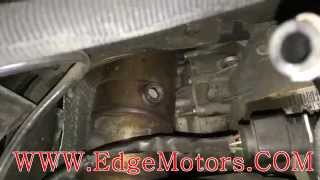
- Replacing the wrong oxygen sensor (e.g., replacing the Bank 2 sensor or the upstream Bank 1 sensor). Bank 1 is Passenger Side, Sensor 2 is Post-Catalyst. 🎬 Watch this quick guide to find Bank 1 Sensor 2 fast.
- Replacing the sensor when the actual fault is in the wiring or a blown fuse.
Most Likely Causes
- Failed Bank 1, Sensor 2 Oxygen Sensor 🔴 High Probability The internal heating element of an oxygen sensor has a finite lifespan and will eventually burn out due to constant heat cycles. This is a common failure on most vehicles as they age.
How to confirm: After a visual inspection of the wiring, test the resistance of the heater circuit within the sensor using a multimeter. Disconnect the sensor and measure between the two heater pins (often the same color wires). A healthy heater circuit typically has a low resistance (e.g., 4-10 ohms), while a failed one will show an open circuit (infinite resistance).
Typical fix: Replace the Bank 1, Sensor 2 (passenger side, downstream) oxygen sensor.
Est. part cost: $70-$250 - Damaged Wiring or Connector 🟡 Medium Probability The sensor and its wiring are located under the car, exposed to high exhaust temperatures, water, and road debris, which can cause wires to melt, break, or connectors to corrode. The wiring harness can also be damaged by contact with suspension components or during other under-car maintenance.
How to confirm: Visually inspect the entire wiring harness from the sensor to the main loom for any signs of melting, chafing, or breaks. Check the connector for corrosion, moisture, or pushed-out pins. Use a multimeter to check for 12V power and ground at the connector with the key on, engine off.
Typical fix: Repair the damaged section of the wiring harness or clean/replace the connector. Use heat-shrink tubing for durable wire repairs.
Est. part cost: $5-$50 - Blown Fuse for O2 Sensor Heater Circuit ⚪ Low Probability A short circuit in the wiring or the sensor itself can cause the corresponding fuse to blow as a protective measure. This is not specific to the A5 but is a possibility in any vehicle.
How to confirm: Locate the fuse boxes (there are multiple: in the engine bay, on both sides of the dashboard, and in the trunk) and identify the fuse for the oxygen sensor heaters. Consult the owner's manual or fuse diagram for the exact location. Visually inspect the fuse or test it for continuity with a multimeter.
Typical fix: Replace the blown fuse. If the new fuse blows immediately, it indicates a persistent short circuit that must be diagnosed and repaired before replacing the fuse again.
Est. part cost: $1-$5
Rare But Worth Checking
- Faulty Engine Control Module (ECM): This is extremely rare. The ECM's internal driver for the heater circuit can fail, but all other potential causes, especially the sensor and wiring, should be exhaustively ruled out before considering ECM replacement.
Diagnosis Steps
- Verify the code P0036 is present using an OBD-II scanner. Check for any other codes that may be present.
- Visually inspect the wiring harness and connector for the Bank 1, Sensor 2 (passenger side, post-catalytic converter) oxygen sensor. Look for any signs of melting, corrosion, or physical damage.
- If the wiring looks good, disconnect the sensor.
- With the ignition key on (engine off), use a multimeter to check for 12-volt power and a good ground connection at the vehicle-side connector pins leading to the heater circuit. Refer to a wiring diagram for your specific vehicle to identify the correct pins.
- If power and ground are present, measure the resistance across the two heater circuit pins on the O2 sensor itself. 🎬 See how to diagnose and fix the P0036 heater circuit code. A reading of infinite resistance (open circuit) or a value outside the manufacturer's spec (typically 4-10 ohms) confirms the sensor's internal heater has failed.
- If power or ground is missing at the connector, trace the wiring back to find the break or check the relevant fuse in one of the vehicle's fuse boxes (dash sides, engine bay, trunk).
- If the sensor and wiring test good, the issue may be an intermittent connection or, in very rare cases, the ECM itself.
- After repair, clear the fault code and perform a test drive to ensure the Check Engine Light does not return.
Parts You'll Likely Need
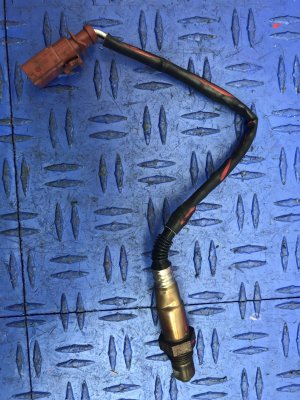
- Oxygen Sensor (Bank 1, Sensor 2)
(OEM #06E906265Q)— This is the downstream (post-catalyst) sensor for the passenger side. The internal heater element is the most common point of failure for code P0036. This part number is also cross-referenced as NTK 25197 or Bosch 18026.
Trusted brands: Bosch, NTK, Denso, Walker
OEM price range: $200-$250
Aftermarket price range: $70-$150
Platform-Specific Known Issues
- Forum user on AudiWorld reported needing to confirm the location as the exhaust pipes can be confusing. For the 3.2L V6, Bank 1 (passenger side) post-cat sensor is indeed on the passenger side of the vehicle, under the car.
- Access can be tight. While a simple repair in theory, rusted or seized sensors can make removal difficult. Using a dedicated O2 sensor socket and penetrating oil is highly recommended.
Mechanic-Grade Diagnostic Values
- O2 Sensor Heater Element Resistance — expected: 4 - 10 Ohms (some sources allow up to 20 Ohms). Failure: Infinite resistance (open circuit) or near-zero resistance (short circuit).
- Voltage at Heater Circuit Supply Pin (at sensor connector) — expected: ~12 Volts (Battery Voltage) with Key On, Engine Off.. Failure: No voltage or significantly low voltage, indicating a problem with the fuse or wiring.
- ECU-Reported Heater Resistance (via VCDS) — expected: Should be within a specific range defined by the ECU (e.g., under ~50 Ohms).. Failure: A very high value, such as 235 Ohms reported in one forum post, indicates a fault as seen by the ECU.
Hidden / Shadow Codes Worth Checking
- P0037: HO2S Heater Control Circuit Low (Bank 1 Sensor 2). This indicates a short to ground in the heater circuit. (see via Standard OBD-II scanner. It is not a hidden code but provides more specific diagnostic information if present alongside P0036.)
- P0038: HO2S Heater Control Circuit High (Bank 1 Sensor 2). This indicates a short to power in the heater circuit. (see via Standard OBD-II scanner. It is not a hidden code but provides more specific diagnostic information if present alongside P0036.)
Scan Tool Commands That Help
- VCDS (VAG-COM): Read Measuring Value Blocks (MVB) for Oxygen Sensors — Use this to view the live data that the ECU is seeing from the sensor circuit. You can monitor the ECU's calculated heater resistance, which can confirm a fault without needing to physically access the sensor for a multimeter test. A wildly out-of-spec resistance reading in VCDS points directly to a failed sensor or circuit.
Wiring & Ground Locations
- O2 Sensor Heater Wires — On the oxygen sensor's own pigtail and connector.. The two wires for the heater element are typically the same color (e.g., both white or both black). These are the pins you must test for resistance on the sensor side and for voltage/ground on the harness side.
- G12 — Ground connection located at the left rear of the engine compartment.. A poor engine ground can cause a variety of electrical issues, including erroneous sensor faults. While not the first place to check, it's a relevant ground point for the engine management system.
- G671 — Ground connection on the left front cross member.. This is a primary chassis ground point. A corroded or loose connection here can affect any component grounded to the front subframe or chassis.
- Exhaust System Ground Strap — A braided metal strap connecting the exhaust system to the vehicle's chassis or subframe.. The O2 sensor uses the exhaust pipe as a ground reference. If this strap is corroded or broken (common in salt-belt regions), the sensor can't get a stable ground, leading to heater circuit and performance codes.
Model Year Variations Within This Range
- 2007-2011: The CALA 3.2L V6 engine was primarily offered in the pre-facelift B8 generation of the A5. While minor running changes may have occurred, the engine management system (Simos 8.1) and the diagnostic procedure for P0036 remained consistent throughout its availability in this model.
Diagnostic Flowchart
Other Known Issues on This Vehicle
Issues unrelated to this code that are worth knowing about as an owner of this generation:
- Intake Valve Carbon Buildup 🔴 High — Commonly requires cleaning every 60,000-80,000 miles. Caused by the FSI (direct injection) design where fuel doesn't wash over the intake valves.
- Timing Chain Tensioner Failure 🔴 High — Can occur after 60,000 miles. Symptoms include a rattling noise from the engine on cold starts. Failure can be catastrophic for the engine.
- Excessive Oil Consumption 🟠 Medium — Some 3.2L FSI engines, particularly earlier versions, can suffer from oil consumption issues, sometimes related to piston ring design or cylinder wall scoring.
- Leaking Gaskets and Seals 🟠 Medium — Valve cover gaskets, cam girdle seals, and vacuum pump seals are known to leak oil over time. Oil in spark plug wells is a common symptom of a leaking cam girdle seal, which is a labor-intensive repair.
Used vs. New Parts: Buying Guide for This Vehicle
When a used part is the smart pick: Almost never for an oxygen sensor, as it is a wear-and-tear part with a finite lifespan. A used sensor could fail shortly after installation. It might only be considered for a quick, temporary test to see if the code clears before purchasing a new part.
Donor-vehicle mileage cap: roughly under 50000 miles for the part to have meaningful remaining life.
What to inspect on the donor part:
- No visible physical damage to the sensor tip or body.
- Connector pins must be clean, straight, and free of corrosion.
- Wiring pigtail should be flexible, not brittle, melted, or chafed.
- Ask for the donor vehicle's mileage if possible.
OEM-only on this vehicle (don't cheap out):
- While not strictly OEM-only, using a no-name, unbranded oxygen sensor is highly discouraged. They are known to have high failure rates, incorrect resistance values, or slow response times, which can cause the code to return or other performance issues to appear.
Aftermarket brands forum-validated for this vehicle:
- Bosch
- NTK
- Denso
Brands owners have reported issues with on this vehicle:
- Any unbranded or generic 'white-box' parts from online marketplaces should be avoided. Stick to reputable brands to prevent repeat repairs.
Real Owner Stories
Aggregated from forums and TSBs cited above. Mileages and costs reflect what owners reported in those sources.
Audi A6 (C6) 3.2L FSI V6
Symptoms: Owner was confused about which side of the engine was which when trying to diagnose oxygen sensor codes.
What fixed it: Confirmed Bank 1 is the passenger side and Bank 2 is the driver side to ensure the correct sensor was replaced.
Source hint: AudiWorld forum thread 'VCDS 3.2SFI Bank 2 - which side?'
Audi A4 (B8) 3.2L FSI V6
Symptoms: Owner needed assistance locating the specific downstream sensor on the B8 platform.
What fixed it: Used diagrams to identify the Bank 1 downstream sensor location for replacement.
Source hint: AudiWorld forum thread 'Oxygen sensor location bank 1 downstream'
Audi A5 3.2L V6 FSI
Symptoms: Check Engine Light on; owner noted that while the repair is theoretically simple, the sensor was difficult to remove due to being seized in the exhaust.
What fixed it: Used a dedicated O2 sensor socket and penetrating oil to remove the old sensor and replaced it with a new unit.
Source hint: Vehicle Specific Issues section / AudiWorld forum report
Related OBD-II Codes
Frequently Asked Questions
Where is the Bank 1 Sensor 2 oxygen sensor located on my Audi A5 3.2L V6?
Which aftermarket brands are recommended for replacing the O2 sensor on my A5?
Will P0036 cause my Audi A5 to fail an emissions test?
Can I use a sensor from a 3.2L Audi Q5 or A4 to fix this code?
Is the P0036 code related to the common carbon buildup issue on the 3.2L FSI engine?
What should the resistance be for a healthy heater circuit on my Audi's O2 sensor?
Helpful Videos

We Have This Part in Stock


The information in this article is provided for general reference and educational purposes only. Vehicle specifications, procedures, and part compatibility can vary by production date, trim level, and region. Always consult your vehicle's factory service manual and verify part numbers before purchasing or performing repairs. Safety-critical components such as airbags, seat belts, and braking systems should be installed by a qualified professional.
- Audi A5:
- 🎬 Helpful Videos
- 🛍️ Shop This Part
- What's Unique About the 2007-2016 Audi A5
- Symptoms You May Notice
- Most Likely Causes
- Rare But Worth Checking
- Diagnosis Steps
- Parts You'll Likely Need
- Platform-Specific Known Issues
- Mechanic-Grade Diagnostic Values
- Hidden / Shadow Codes Worth Checking
- Scan Tool Commands That Help
- Wiring & Ground Locations
- Model Year Variations Within This Range
- Diagnostic Flowchart
- Other Known Issues on This Vehicle
- Used vs. New Parts: Buying Guide for This Vehicle
- Real Owner Stories
- Audi A6 (C6) 3.2L FSI V6
- Audi A4 (B8) 3.2L FSI V6
- Audi A5 3.2L V6 FSI
- Related OBD-II Codes
- Frequently Asked Questions
- 🎟️ Get 5% Off