

P0031 on 2005-2010 Pontiac G6 3.6L V6: Causes and Fixes for the O2 Sensor Heater Circuit
On a Pontiac G6 with the 3.6L V6, code P0031 almost always means the heater element inside the Bank 1, Sensor 1 oxygen sensor has failed. This is the upstream sensor on the rear exhaust manifold (closer to the firewall). Before replacing the sensor, check the O2 heater fuse (often 15-20A) in one of the three fuse boxes. Expect to pay $50-$120 for an aftermarket sensor and $150-$250 for an OEM part. The repair is DIY-friendly but can be challenging due to tight access.
- P0031 on the G6 3.6L V6 points to the upstream oxygen sensor on the rear bank (near the firewall).
- The most likely cause is a failed heater element inside the oxygen sensor itself.
- Before replacing the sensor, always check the corresponding fuse (often 15-20A) and inspect the wiring for visible damage.
- If P0031 and P0051 (for Bank 2) are both present, the problem is almost certainly a shared fuse or relay, not two bad sensors.
- This repair can be done DIY, but access to the rear sensor is tight. An O2 sensor socket is highly recommended.
- Ignoring this code will lead to poor fuel mileage and can cause expensive damage to the catalytic converter over time.
What's Unique About the 2005-2010 Pontiac G6
For the Pontiac G6 with the transverse (sideways-mounted) 3.6L V6 engine, 'Bank 1' is the cylinder bank located at the rear of the engine bay, against the firewall. This makes accessing and replacing the 'Sensor 1' (upstream) oxygen sensor more difficult than on engines where it is located at the front. While the code itself is generic, the physical location of the part on this specific platform is the primary challenge for diagnosis and repair.
Symptoms You May Notice
- Check Engine Light is on
- Decreased fuel economy
- Rough or unstable idle, especially when the engine is cold
- Hesitation during acceleration
- Failing a vehicle emissions test
- Faint exhaust or 'rotten egg' smell if the engine runs excessively rich.
- Replacing the wrong oxygen sensor. The 3.6L V6 has four sensors. P0031 specifically refers to the upstream sensor on the rear bank (Bank 1). Always verify the code before purchasing parts.
- Replacing the O2 sensor when the actual fault is a blown fuse. This is common when P0031 and P0051 are present at the same time.
Most Likely Causes
- Failed Bank 1, Sensor 1 Oxygen Sensor 🔴 High Probability The internal heater element is a common failure point on oxygen sensors after 80,000+ miles due to constant heat cycles.
How to confirm: Unplug the sensor and measure the resistance between the two heater circuit pins (usually the two wires of the same color) with a multimeter. An open circuit (infinite resistance) or a reading far from the manufacturer's spec (typically 4-30 ohms) confirms failure.
Typical fix: Replace the Bank 1, Sensor 1 (rear upstream) oxygen sensor.
Est. part cost: $50-$120 - Damaged Wiring or Connector 🟡 Medium Probability The wiring harness is close to the hot exhaust manifold and can become brittle, melted, or corroded over time. A real-world repair on a similar vehicle found incorrect wire colors in the service manual, emphasizing the need for careful circuit testing.
How to confirm: Visually inspect the wiring harness and connector leading to the sensor for any signs of melting, chafing, corrosion, or loose pins. Check for 12-volt power and a good ground at the connector with the ignition on.
Typical fix: Repair the damaged section of the wiring harness and clean or replace the connector. Use heat-shrink tubing for durable repairs.
Est. part cost: $5-$30 - Blown Fuse for the Heater Circuit ⚪ Low Probability
How to confirm: Locate the fuse boxes. The G6 has three: one in the engine bay, one on the passenger side of the center console, and one in the trunk. Check the owner's manual for the specific fuse, often labeled 'O2 HTR' or 'A/F SENSOR' (typically 15A or 20A). Visually inspect the fuse. A critical clue is if codes P0031 (Bank 1) and P0051 (Bank 2) appear together; this almost always points to a single blown fuse or failed relay powering both sensors.
Typical fix: Replace the blown fuse with a new one of the exact same amperage. If the new fuse blows immediately, it indicates a short circuit in the wiring or sensor that must be found.
Est. part cost: $1-$5
Rare But Worth Checking
- Faulty Powertrain Control Module (PCM): This is very uncommon. The PCM's internal driver for the heater circuit can fail. This should only be considered after all other possibilities (sensor, wiring, fuse) have been definitively ruled out.
- Poor Ground Connection: A corroded or loose engine or chassis ground can create high resistance in the heater circuit, triggering a low voltage code. An ACDelco technical tip for a similar issue on another vehicle pointed to a bad ground near the engine mount as the cause.
Diagnosis Steps
- Read the codes with an OBD-II scanner. If P0031 is present along with P0051, immediately suspect a shared fuse or relay and proceed to Step 2.
- Locate the fuse for the oxygen sensor heater circuit. Check the fuse boxes in the engine compartment, passenger-side console, and trunk. Inspect the fuse (often labeled 'O2 HTR' and rated 15-20A) and replace if blown.
- Raise and safely support the vehicle on jack stands to access the exhaust.
- Locate Bank 1, Sensor 1. It is the upstream sensor (before the catalytic converter) on the rear exhaust manifold, closer to the firewall.
- Visually inspect the sensor's electrical connector and wiring for any signs of melting, corrosion, or physical damage. Pay close attention to where the harness may contact hot exhaust components.
- Disconnect the sensor. With the ignition key in the 'On' position (engine off), use a multimeter to verify that one pin in the harness-side connector has 12V power and another has a good ground.
- Using the multimeter set to Ohms, measure the resistance across the two heater pins on the sensor itself (often the two wires of the same color). A reading of infinite resistance (open circuit) or zero (short circuit) confirms the sensor's heater has failed. A good sensor typically reads between 4-30 ohms.
- If the sensor, wiring, and fuse test good, investigate less common causes like a poor engine ground connection before considering a faulty PCM.
Parts You'll Likely Need
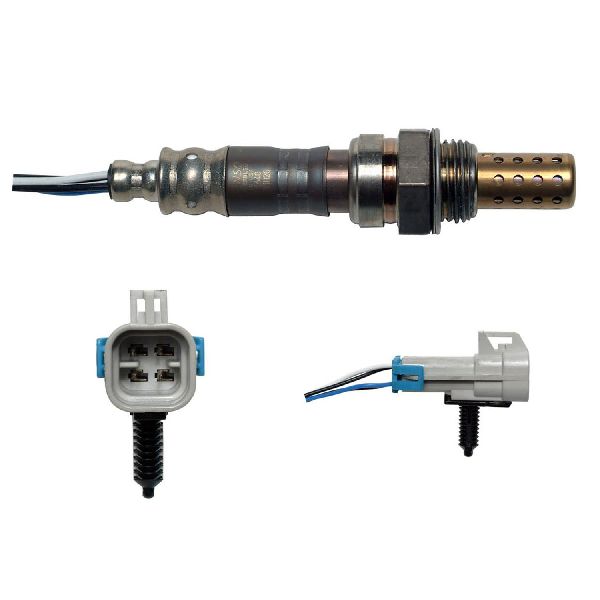
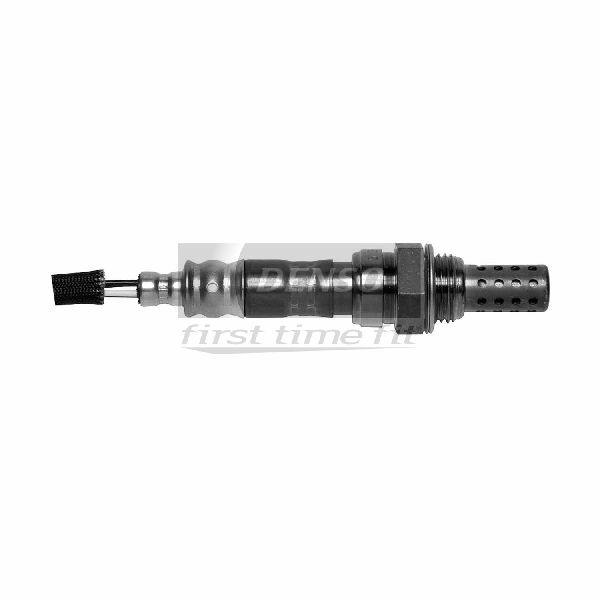
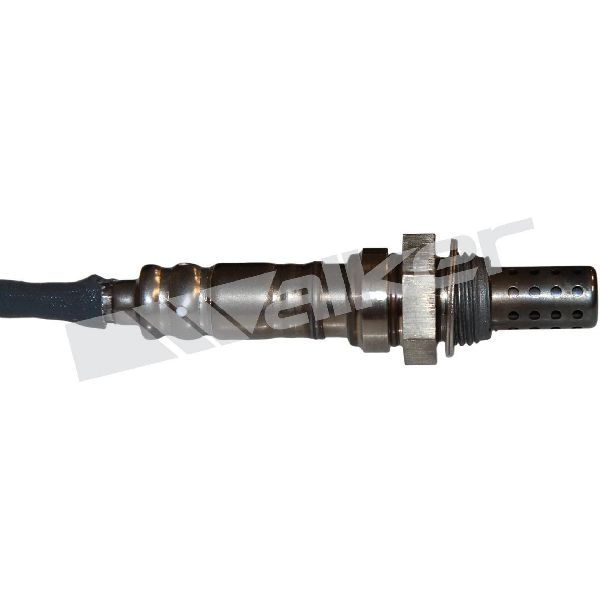
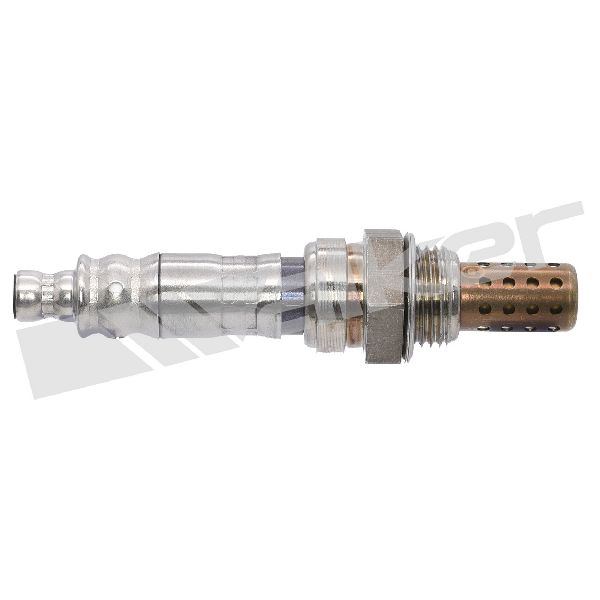
- Oxygen Sensor (Bank 1, Sensor 1)
(OEM #GM 12606671)— This is the upstream sensor for the rear cylinder bank. Its internal heater element is the most common failure point for code P0031.
Trusted brands: ACDelco (OEM), Denso (Often the original supplier for GM), Bosch, NGK/NTK
OEM price range: $150-$250
Aftermarket price range: $50-$120
Related Codes That Often Appear With This One
- P0051 (HO2S Heater Control Circuit Low - Bank 2, Sensor 1): If seen with P0031, this strongly indicates a problem with a shared power source, such as a fuse or relay, rather than two independently failed sensors.
- P0131 (O2 Sensor Circuit Low Voltage - Bank 1, Sensor 1): This code refers to the sensor's signal, not the heater. A failed heater (P0031) can prevent the sensor from reaching operating temperature, causing it to send a low voltage signal and triggering P0131 as a secondary code.
Technical Service Bulletins (TSBs) & Recalls
- Saturn TSB 00-03-10-002G: While not specific to Pontiac, this TSB for the platform-mate Saturn Aura lists P0031 as a potential diagnostic code, indicating it's a known issue within the GM family for this engine type, though specific details of the bulletin are not widely available.
Platform-Specific Known Issues
- Access to the Bank 1 (rear) upstream sensor is notoriously tight on the G6 3.6L. The job often requires removing other components for clearance or using specialized tools like a 7/8" (22mm) offset or crowfoot O2 sensor socket. Soaking the sensor threads in penetrating oil beforehand is highly recommended to prevent stripping.
Mechanic-Grade Diagnostic Values
- O2 Sensor Heater Power Supply Voltage — expected: 12V (or battery voltage) with key on, engine off.. Failure: Voltage below 11V or no voltage indicates an issue with the fuse or power supply wire.
- O2 Sensor Heater Element Resistance — expected: Typically between 4 and 30 Ohms at room temperature. (Vehicle-specific value not found, this is a general approximation).. Failure: Infinite resistance (Open circuit) or near-zero resistance (Short circuit) indicates a failed sensor heater.
- A/F Sensor Heater Current Draw — expected: Greater than 0.8 A when active.. Failure: Current less than 0.8 A will trigger a P0031 'low' code.
Wiring & Ground Locations
- G106 — On the front of the engine, at a transmission stud, near the Park/Neutral Position (PNP) switch.. This is a primary engine ground. A poor connection here can cause a voltage drop across multiple systems, including the O2 sensor heater circuit, leading to a 'low circuit' code.
- G103 — On the top of the left (driver's side) front strut tower in the engine compartment.. This is a key chassis ground point. Issues here can create floating grounds and unpredictable electrical problems for components grounded to the chassis, including the ECM which controls the O2 heater.
- G104 — On the left front of the engine compartment, on the core support.. Another critical chassis ground. Verifying this ground is clean and tight is essential when diagnosing any circuit code, as it provides the return path for many components.
- HO2S B1S1 Connector — On the wiring harness leading to the upstream oxygen sensor on the rear exhaust manifold.. This is the primary test point. You will test for 12V power, ground, and sensor resistance at this connector. The two wires for the heater element are typically the same color (e.g., two black wires or two white wires).
Real Owner Repair Stories
- YouTube video regarding a Toyota with similar codes (Toyota Aurion (similar V6 layout)) — Check engine light with codes P0031 and P0051.
❌ Tried (didn't work) Clearing the codes (they returned immediately)., Replacing the oxygen sensors.
✅ What actually fixed it The final fault was a loose and slightly corroded main engine ground strap. After cleaning the ground point and tightening the connection, the codes were cleared and did not return. - Forum discussion on a similar vehicle (Toyota 4.7L V8) — P0031, P0051, plus random misfire (P0300) and other O2 sensor circuit codes (P2238, P2241). Truck was running noticeably rich.
❌ Tried (didn't work) Replacing both upstream and downstream O2 sensors with new Denso parts.
✅ What actually fixed it A mechanic discovered a short in the wiring harness leading to the Engine Control Unit (ECU). The wires were repaired, resolving all codes.
When the Usual Fixes Don't Work
- In cases where both P0031 and P0051 are present, the root cause is often not the two oxygen sensors failing simultaneously. As seen in real repair stories, the problem is more likely a shared component in the circuit, such as a blown fuse, a faulty relay, or a compromised main engine ground connection that serves both sensor heater circuits. Replacing the sensors without first checking shared power and ground sources is a common and costly misdiagnosis.
OEM Part Supersession History
GM 12606671→ACDelco 213-4229— Branding change and ongoing production.
Heads up: GM Genuine Parts may have formerly appeared as ACDelco GM Original Equipment (OE), they are functionally identical for this application. Note that part 213-4229 is listed for many GM vehicles, but often as a downstream sensor. Always verify fitment for the specific Bank 1 Sensor 1 position on the G6 3.6L.
Model Year Variations Within This Range
- 2005-2006: The 3.6L LY7 V6 engine was not available in the Pontiac G6 during these model years. It was introduced for the 2007 model year on the GTP trim. Therefore, this guide is only applicable to 2007-2010 G6 models with the 3.6L engine.
- 2007-2010: The Pontiac G6 exclusively used the port-injected LY7 version of the 3.6L V6. The improved direct-injected LLT version, found in other GM products from 2008 onwards, was never factory-installed in the G6.
Diagnostic Flowchart
Used vs. New Parts: Buying Guide for This Vehicle
When a used part is the smart pick: A used part is a smart choice for the wiring harness pigtail connector. If the original connector is melted, corroded, or damaged during sensor removal, a replacement pigtail from a salvage yard is a cost-effective and reliable repair.
Donor-vehicle mileage cap: roughly under 150000 miles for the part to have meaningful remaining life.
What to inspect on the donor part:
- Inspect the plastic for brittleness or cracking.
- Check the connector's locking tab to ensure it's intact.
- Look for any signs of green or white corrosion on the metal pins.
- Ensure there is at least 4-6 inches of wire attached to make splicing easier.
OEM-only on this vehicle (don't cheap out):
- Powertrain Control Module (PCM): While a used PCM can be purchased, it must be reprogrammed with the vehicle's specific VIN and software. It is often more reliable to purchase a remanufactured, pre-programmed unit from a reputable supplier.
Aftermarket brands forum-validated for this vehicle:
- Denso
- NGK / NTK
- ACDelco (OEM supplier)
Brands owners have reported issues with on this vehicle:
- Unbranded, low-cost sensors from online marketplaces are frequently reported on forums as being dead-on-arrival or failing within a few months.
Real Owner Stories
Aggregated from forums and TSBs cited above. Mileages and costs reflect what owners reported in those sources.
Similar GM Vehicle
Symptoms: A P0031 code was present, but initial diagnosis was difficult because the service manual listed incorrect wire colors for the circuit.
What fixed it: The ultimate fix was repairing the damaged wiring harness leading to the oxygen sensor after proper circuit testing identified the fault.
Source hint: iATN (International Automotive Technicians Network)
Pontiac G6 (General Forum Report)
Symptoms: After replacing an oxygen sensor with a cheap, no-name brand, the code returned quickly or the new sensor was dead on arrival, leading the owner to chase other non-existent problems.
What fixed it: The issue was resolved by using a reputable OEM-quality brand sensor such as Denso, NGK, or ACDelco.
Source hint: reddit.com/r/AskMechanics
Related OBD-II Codes
Frequently Asked Questions
Where is the Bank 1, Sensor 1 oxygen sensor located on my 2005-2010 Pontiac G6 3.6L?
I have both P0031 and P0051 codes showing. What's the most likely problem?
What special tools are needed to replace the rear upstream O2 sensor on the G6 3.6L V6?
What brand of oxygen sensor should I buy for my G6? Are the cheap ones on the internet okay?
My wiring connector to the O2 sensor is melted. What's the best way to fix it?
Is there a Technical Service Bulletin (TSB) from GM for code P0031 on this engine?
We Have This Part in Stock


The information in this article is provided for general reference and educational purposes only. Vehicle specifications, procedures, and part compatibility can vary by production date, trim level, and region. Always consult your vehicle's factory service manual and verify part numbers before purchasing or performing repairs. Safety-critical components such as airbags, seat belts, and braking systems should be installed by a qualified professional.
- Pontiac G6:
- 🛍️ Shop This Part
- What's Unique About the 2005-2010 Pontiac G6
- Symptoms You May Notice
- Most Likely Causes
- Rare But Worth Checking
- Diagnosis Steps
- Parts You'll Likely Need
- Related Codes That Often Appear With This One
- Technical Service Bulletins (TSBs) & Recalls
- Platform-Specific Known Issues
- Mechanic-Grade Diagnostic Values
- Wiring & Ground Locations
- Real Owner Repair Stories
- When the Usual Fixes Don't Work
- OEM Part Supersession History
- Model Year Variations Within This Range
- Diagnostic Flowchart
- Used vs. New Parts: Buying Guide for This Vehicle
- Real Owner Stories
- Similar GM Vehicle
- Pontiac G6 (General Forum Report)
- Related OBD-II Codes
- Frequently Asked Questions
- 🎟️ Get 5% Off