

P0031 on 2007-2017 Mitsubishi Lancer: Heater Circuit Low Causes and Fixes
On a 2007-2017 Lancer, code P0031 almost always means the front oxygen sensor (Bank 1, Sensor 1) has failed. Replacing the sensor is the most common fix. Expect to pay $60-$120 for an aftermarket sensor and $150-$250 for an OEM part. It's a DIY-friendly job with the right O2 sensor socket. Before replacing, check the O2 sensor fuse and inspect wiring for damage near the hot exhaust manifold.
- P0031 on a Lancer points directly to a problem with the heater circuit in the front (upstream) oxygen sensor.
- The most likely fix is to replace the sensor itself. This is a common failure due to age.
- Before buying a new sensor, perform a quick visual inspection of the wiring for obvious damage and check the related fuse.
- You can confirm a bad sensor at home by testing the heater circuit's resistance with a multimeter; expect a reading between 4.5 and 8.0 Ohms if it's good.
- This is a manageable DIY repair with basic tools and an O2 sensor socket.
What's Unique About the 2007-2017 Mitsubishi Lancer
For the 2007-2017 Lancer platform, which uses a 4-cylinder engine (like the 4B11 or 4B12), there is only one exhaust bank, so 'Bank 1 Sensor 1' is simply the upstream (pre-catalytic converter) oxygen sensor. The issue is straightforward and rarely involves complex platform-specific quirks. The most common point of failure is simply the heater element inside the sensor burning out after years of service, which is a common maintenance item on many vehicles of this age. Power for the heater is supplied by the MFI relay, and the ECM grounds the circuit to activate it.
Symptoms You May Notice
- Check Engine Light is on
- Decreased fuel economy
- Rough or unstable idle, especially when the engine is cold
- Failing a vehicle emissions test
- Occasional engine stall on the first start, particularly in cold weather
- Replacing the downstream (post-catalytic converter) oxygen sensor. P0031 specifically refers to Sensor 1, which is always the upstream sensor.
- Replacing the catalytic converter. This code is for the sensor's electrical heater circuit, not the efficiency of the converter.
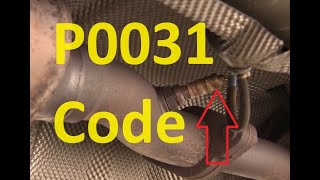
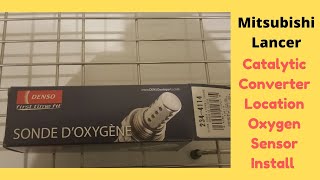
- Assuming a new sensor is needed without testing. 🎬 Watch: Common causes and fixes for the P0031 code A simple blown fuse or damaged wire could be the actual problem.
Most Likely Causes
- Failed Upstream Oxygen Sensor 🔴 High Probability The internal heater element is a common wear-and-tear item that simply burns out over time, similar to a light bulb. This is the most frequent cause of P0031 on high-mileage Lancers, as confirmed in numerous owner forums.
How to confirm: Disconnect the sensor and measure the resistance across the two heater circuit pins (usually the two wires of the same color, often black) with a multimeter. An open circuit (infinite resistance) or a reading far outside the manufacturer's spec (typically 4.5-8.0 Ohms for this vehicle) confirms a failed heater. A user on EvolutionM.net confirmed their sensor was good with a reading of 6.2 Ohms.
Typical fix: Replace the upstream (Bank 1, Sensor 1) oxygen sensor.
Est. part cost: $60-$250 - Damaged Wiring or Connector 🟡 Medium Probability The wiring harness is exposed to high heat from the exhaust and road debris, which can cause wires to melt, chafe, or break. The connector (C-44 in service manuals) can also become corroded or filled with debris, leading to a poor connection.
How to confirm: Visually inspect the entire wiring harness from the sensor to where it enters the main loom. Check for melted insulation, frayed wires, or loose pins in the connector. With the key on, engine off, check for battery voltage (~12V) at terminal 1 of the harness-side connector. The ground signal is controlled by the ECM at terminal 34 of the ECM connector.
Typical fix: Repair the damaged section of the wire or replace the connector pigtail.
Est. part cost: $5-$30 - Blown Fuse or Faulty Relay ⚪ Low Probability
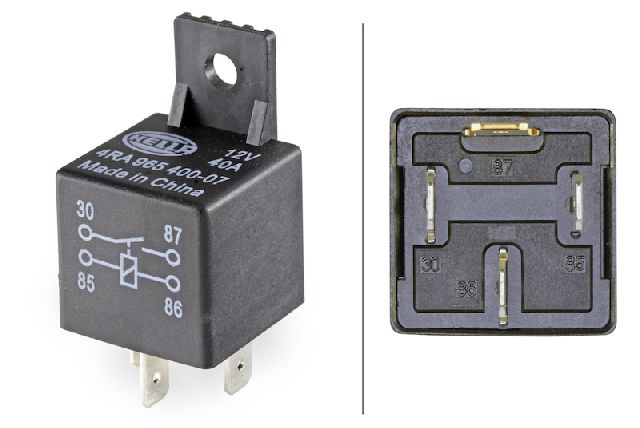
How to confirm: Check the fuse box for a blown fuse related to the emissions system or O2 sensors. According to service documents, power is supplied via the MFI (Multi-Port Fuel Injection) relay, which is a shared power source. If other MFI-related components are also malfunctioning, the relay could be suspect. Swap the relay with a known good one to test.
Typical fix: Replace the blown fuse or faulty relay.
Est. part cost: $1-$20
Rare But Worth Checking
- Faulty Engine Control Module (ECM): This is very rare. The ECM contains the driver circuit (a power transistor) that controls the O2 sensor heater by providing the ground path. Before condemning the ECM, all other possibilities (sensor, wiring, fuses) must be exhaustively ruled out. A failure of the ECM's internal driver for this circuit is the least likely cause.
Diagnosis Steps
- Read the code with an OBD-II scanner to confirm P0031 is present.
- Visually inspect the upstream oxygen sensor's wiring harness and connector (labeled C-44 in service manuals) for any signs of melting, chafing, or corrosion. Ensure the connector is securely plugged in.
- Locate and check the fuse for the O2 sensor heater circuit in the engine bay fuse box. This circuit is often powered by the MFI relay.
- Disconnect the oxygen sensor. Identify the two wires for the heater circuit (typically the two that are the same color, often black).
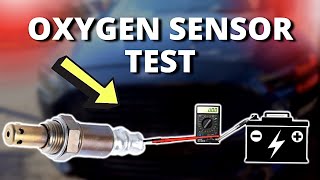
- Use a multimeter set to Ohms (Ω) to measure the resistance between the two heater pins on the sensor itself. A reading of infinite resistance (OL) means the heater is burned out. A normal reading is typically between 4.5 and 8.0 Ohms. 🎬 See how to test an oxygen sensor with a multimeter
- With the sensor still disconnected and the ignition key in the 'ON' position (engine off), use a multimeter to check for battery voltage (~12V) at terminal 1 of the vehicle's harness connector.
- If power is present at the harness and the sensor's resistance is bad, replace the oxygen sensor.
- If power is missing at the harness, trace the wiring back towards the MFI relay (connector A-30X) and ECM (connector B-108) to find the open or short circuit.
- After repairs, clear the trouble code with the scanner and perform a drive cycle to ensure the code does not return.
Parts You'll Likely Need
- Upstream Oxygen Sensor / Air-Fuel Ratio Sensor
(OEM #1588A228)— This is the most common failure point for code P0031. The internal heater element fails with age and use.
Trusted brands: Denso (e.g., 234-5051 is often cross-referenced), NGK/NTK, Walker Products
OEM price range: $180-$250
Aftermarket price range: $60-$150
Related Codes That Often Appear With This One
- P0171 — A slow-to-warm-up oxygen sensor can't provide accurate data, leading the ECM to miscalculate fuel trims and potentially set a System Too Lean (P0171) code.
- P0037 — This code is for the downstream O2 sensor heater circuit (Bank 1, Sensor 2). If both appear together, it could suggest a shared power or ground issue, like a problem with the MFI relay, or simply that both sensors have failed around the same time due to age.
- P0130 — This code indicates a general malfunction in the O2 sensor circuit (Bank 1, Sensor 1). It can sometimes appear alongside P0031 if the sensor is failing in multiple ways.
Platform-Specific Known Issues
- Owner Experience with Intermittent Code: An owner on EvolutionM.net reported the P0031 code would appear intermittently, sometimes for days at a time, especially after sitting in the cold, before disappearing on its own. This 'lazy' sensor behavior is a strong indicator of a failing heater element that is on the verge of complete failure.
- DIY Resistance Check: A forum user documented their troubleshooting process, noting that the service manual specifies a resistance between 4.5 and 8.0 Ohms for the heater circuit. They measured their sensor at 6.2 Ohms, confirming it was within spec and that their problem likely lay elsewhere (in their case, a potential battery voltage issue under specific conditions). This confirms the viability of the resistance test for diagnosis.
Mechanic-Grade Diagnostic Values
- O2 Sensor Heater Element Resistance — expected: 4.5 - 8.0 Ω at 20°C (68°F). Failure: A reading of OL (infinite resistance) or a value outside the specified range.
- ECM DTC Trigger (Heater ON) — expected: Current > 0.17 Amps. Failure: The ECM will set P0031 if the heater current remains below 0.17 Amps for 2 seconds while the heater is commanded on.
- ECM DTC Trigger (Heater OFF) — expected: Voltage > 2.0 Volts. Failure: The ECM will set P0031 if the heater circuit voltage is below 2.0 Volts for 2 seconds while the heater is commanded off.
- System Voltage Operating Condition — expected: 11.0 - 16.5 Volts. Failure: The diagnostic monitor may not run if system voltage is outside this range, potentially masking the issue or causing erratic behavior.
Scan Tool Commands That Help
- Advanced bidirectional scanners (e.g., Autel, MUT-III): O2 Heater Actuation Test / Active Test — Can be used to manually command the heater circuit on and off to verify the ECM driver, relay, and wiring are functioning. This helps isolate a faulty sensor from a control-side problem without having to physically access the wiring for testing.
Wiring & Ground Locations
- C-44 — Engine compartment, on the wiring harness side of the upstream oxygen sensor connector.. This is the primary connector for the Bank 1 Sensor 1 oxygen sensor. All voltage and resistance tests of the sensor and harness begin here.
- B-108 — Engine compartment, connector for the Engine Control Module (ECM).. The ECM provides the ground signal for the O2 heater circuit via terminal 34 of this connector. A bad pin or connection here can mimic a failed sensor.
- A-30X — Underhood fuse/relay box, connector for the MFI (Multi-Port Fuel Injection) relay.. The MFI relay supplies battery voltage to the O2 sensor heater circuit. A problem with this relay or its connector will cut power to the heater.
- G14 — Behind the driver's side kick panel.. This is a major chassis ground point for interior and dash-area components. While the O2 heater grounds through the ECM, a poor main ground for the ECM itself can cause widespread electrical issues, including this code.
Real Owner Repair Stories
- EvolutionM.net forum members (Mitsubishi Lancer (Evo, but diagnosis is applicable)) — Intermittent P0031 Check Engine Light, especially after 15 minutes of driving.
❌ Tried (didn't work) Clearing the code (it would return), Initial sensor resistance test passed (measured 6.2 Ohms, within 4.5-8.0 Ohm spec)
✅ What actually fixed it For one user, the final fix was finding and repairing a damaged wire in the harness between the ECU and the O2 sensor connector. The intermittent nature was caused by the sensor's heater failing only when it got hot after extended driving, a condition missed during a cold test.
OEM Part Supersession History
1588A140→1588A228 (likely, but confirm with VIN)— Standard part updates and consolidation.
Heads up: Multiple part numbers exist for this sensor depending on engine (2.0L vs 2.4L) and emissions package (Federal vs. California). 1588A228 is common for the 2.0L non-turbo. Always verify the correct part number with the vehicle's VIN before purchasing to avoid incompatibility.
Model Year Variations Within This Range
- 2007-2017: The specific OEM part number for the upstream oxygen sensor can vary based on the engine installed (2.0L 4B11 or 2.4L 4B12) and the vehicle's original emissions certification (Federal or California). While the P0031 code diagnosis remains the same, using the wrong sensor can result in persistent codes or performance issues.
Diagnostic Flowchart
Other Known Issues on This Vehicle
Issues unrelated to this code that are worth knowing about as an owner of this generation:
- Clear Coat Peeling / Paint Failure 🟠 Medium — Very common, especially on darker colors and horizontal surfaces (roof, trunk). Often begins as white spots and progresses to peeling after 5-10 years. (Ref: TSB-20-42A-005 addresses paint stains from transport film but not widespread peeling.)
- CVT Transmission Overheating / Failure 🔴 High — A significant number of owners of models with the JATCO JF011E CVT report overheating, 'slow down' warnings, and eventual failure, sometimes before 100,000 miles.
- ETACS ECU Failure 🟠 Medium — Failures can cause bizarre electrical issues like wipers, lights, or horn activating randomly. A recall was issued for 2009-2010 models due to a manufacturing defect causing voltage instability. (Ref: Safety Recall for 2009-2010 models.)
- Blower Motor Resistor Failure 🟡 Low — Common issue where the fan only works on the highest setting. This is typically caused by a failed blower motor resistor, which is a relatively cheap and easy part to replace.
- Subframe Corrosion 🔴 High — Affects earlier models in the generation (approx. 2008) particularly in regions that use road salt. Severe rust can compromise the subframe's integrity. A recall was issued for this problem on previous generation Lancers, but the issue has been noted by owners of this generation as well.
Used vs. New Parts: Buying Guide for This Vehicle
When a used part is the smart pick: For this repair, a used part is only recommended for the wiring harness connector pigtail if the original is damaged. A used MFI relay is also a low-risk choice for testing purposes.
Donor-vehicle mileage cap: roughly under 80000 miles for the part to have meaningful remaining life.
What to inspect on the donor part:
- For a connector pigtail, ensure the plastic is not brittle or cracked and that there is at least 6 inches of wire with clean copper.
- For a relay, check for signs of water intrusion or corrosion on the pins.
OEM-only on this vehicle (don't cheap out):
- While not strictly 'OEM-only', using a high-quality OE-supplier brand is critical for the oxygen sensor itself.
Aftermarket brands forum-validated for this vehicle:
- Denso (often the original equipment manufacturer)
- NGK / NTK
Brands owners have reported issues with on this vehicle:
- Unnamed or generic 'white-box' sensors from online marketplaces are frequently reported on forums to fail quickly or be dead-on-arrival.
Real Owner Stories
Aggregated from forums and TSBs cited above. Mileages and costs reflect what owners reported in those sources.
2008 Mitsubishi Lancer Evolution X
Symptoms: The P0031 code would appear intermittently, sometimes staying for days after the car sat in the cold, before disappearing on its own.
What fixed it: Replacement of the 'lazy' front O2 sensor.
Source hint: evolutionm.net: Thread titled 'SES P0031 issue' (Nov 2008)
2009 Mitsubishi Lancer Evolution X
Symptoms: The Check Engine Light (SES) was on with code P0031. The owner performed a resistance check on the sensor's heater circuit.
What fixed it: The sensor was confirmed good with a 6.2 Ohm reading, leading the owner to investigate battery voltage issues under specific conditions.
Source hint: evolutionm.net: Thread titled 'P0031 code keeps coming back' (Feb 2009)
2011 Mitsubishi Lancer Evolution X
Symptoms: The OBD-II scanner reported P0031 (O2 sensor low voltage) after the wiring harness was physically damaged.
What fixed it: Repairing the physically torn wiring harness.
Source hint: evolutionm.net: Thread titled 'P0031 (o2 sensor low voltage)' (Feb 2011)
Related OBD-II Codes
Frequently Asked Questions
What is the specific resistance range I should look for when testing the O2 sensor on my Lancer?
Is there a specific fuse or relay I should check for P0031 on a 2007-2017 Lancer?
Where is the connector for the upstream O2 sensor located in the service manual?
My Lancer is stalling on the first start in cold weather; could this be related to P0031?
Does the P0031 code on my Lancer mean the ECM is definitely bad?
Helpful Videos
We Have This Part in Stock


The information in this article is provided for general reference and educational purposes only. Vehicle specifications, procedures, and part compatibility can vary by production date, trim level, and region. Always consult your vehicle's factory service manual and verify part numbers before purchasing or performing repairs. Safety-critical components such as airbags, seat belts, and braking systems should be installed by a qualified professional.
- Mitsubishi Lancer:
- 🎬 Helpful Videos
- 🛍️ Shop This Part
- What's Unique About the 2007-2017 Mitsubishi Lancer
- Symptoms You May Notice
- Most Likely Causes
- Rare But Worth Checking
- Diagnosis Steps
- Parts You'll Likely Need
- Related Codes That Often Appear With This One
- Platform-Specific Known Issues
- Mechanic-Grade Diagnostic Values
- Scan Tool Commands That Help
- Wiring & Ground Locations
- Real Owner Repair Stories
- OEM Part Supersession History
- Model Year Variations Within This Range
- Diagnostic Flowchart
- Other Known Issues on This Vehicle
- Used vs. New Parts: Buying Guide for This Vehicle
- Real Owner Stories
- 2008 Mitsubishi Lancer Evolution X
- 2009 Mitsubishi Lancer Evolution X
- 2011 Mitsubishi Lancer Evolution X
- Related OBD-II Codes
- Frequently Asked Questions
- 🎟️ Get 5% Off