

P0031 on 2017-2026 Chrysler Pacifica: O2 Sensor Heater Circuit Low Causes and Fixes
P0031 on a 3.6L Pacifica almost always means the heater element inside the Bank 1, Sensor 1 oxygen sensor has failed. This is the upstream sensor on the rear cylinder bank (near the firewall). Replacing the sensor is the most common fix, costing about $50-$80 for an aftermarket part or $100-$160 for an OEM Mopar sensor. Before replacing, check for a relevant PCM software update, especially on 2021 models.
- P0031 points to a fault in the heater circuit of the upstream oxygen sensor on the rear cylinder bank (Bank 1).
- The most likely cause is a failed O2 sensor, which needs to be replaced.
- Before replacing any parts, check for a blown fuse and ask a dealer if TSB 18-050-22 REV. A (a software update) applies to your vehicle.
- Accessing this specific sensor is tight against the firewall and can be challenging for a DIY repair.
- Do not ignore this code, as it will cause poor fuel mileage and can eventually lead to expensive catalytic converter damage.
What's Unique About the 2017-2026 Chrysler Pacifica
The 3.6L Pentastar V6 is a very common engine across the Chrysler, Dodge, and Jeep lineup, so parts are widely available. On the transverse-mounted Pacifica, Bank 1 (the rear cylinder bank) is located against the firewall. This makes accessing the Bank 1, Sensor 1 (upstream) O2 sensor more challenging than the front sensor, often requiring work from underneath the vehicle. Additionally, a Technical Service Bulletin (TSB #18-050-22 REV. A) exists for 2021 PHEV models, suggesting a PCM software update could resolve a false P0031 code, making it important to check for software updates before replacing parts.
Symptoms You May Notice
- Check Engine Light (MIL) is on
- Decreased fuel economy
- Rough idle, especially on cold starts
- Failure to pass an emissions test
- Blinking Check Engine Light (if the condition causes a severe misfire)
- Replacing the wrong oxygen sensor (e.g., Bank 2 instead of Bank 1, or downstream instead of upstream). Bank 1 is the rear bank, against the firewall.
- Replacing the O2 sensor without first checking the fuse and wiring for damage.
- Immediately replacing the sensor on a 2021 model without first checking if TSB 18-050-22 REV. A applies.
Most Likely Causes
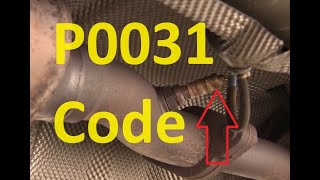
- Failed Oxygen Sensor 🔴 High Probability The internal heater element is a common wear item that burns out from constant, rapid heat cycles, much like a light bulb filament. This is the most frequent cause of P0031 🎬 Watch: A breakdown of common causes and fixes for P0031, especially on vehicles with over 80,000 miles.
How to confirm: Disconnect the sensor and use a multimeter to measure the resistance between the two heater circuit pins (usually the two same-colored wires). A healthy sensor for this platform should read between 3 and 15 Ohms. An open circuit (infinite resistance) or a dead short (near zero resistance) confirms the sensor's heater has failed.
Typical fix: Replace the Bank 1, Sensor 1 (upstream, rear) oxygen sensor.
Est. part cost: $50-$160 - Damaged Wiring or Connector 🟡 Medium Probability The wiring harness for the rear O2 sensor is routed in a tight space near hot exhaust components, making it susceptible to melting, chafing, or corrosion over time. The connector can also become brittle and break.
How to confirm: Visually inspect the entire wiring harness from the sensor to the main engine harness. Check the connector for corrosion, backed-out pins, or signs of melting. Perform a voltage check on the harness-side connector with the key on, engine off; you should see ~12V at the heater power pin.
Typical fix: Repair the damaged section of wire or replace the connector pigtail.
Est. part cost: $15-$50 - Blown Fuse ⚪ Low Probability
How to confirm: Check the fuse box (Totally Integrated Power Module or TIPM) for a blown fuse related to the O2 sensor heaters. A wiring diagram for your specific year is recommended to identify the correct fuse. For example, on similar platforms, fuse M25 has been cited for O2 heaters.
Typical fix: Replace the blown fuse. If it blows again immediately, it indicates a short circuit in the wiring or in one of the O2 sensors that must be diagnosed.
Est. part cost: $1-$5
Rare But Worth Checking
- Outdated PCM Software: Chrysler issued TSB 18-050-22 REV. A for 2021 Pacifica PHEV models, which indicates that a PCM software update can resolve erroneously set P0031 and many other codes. It is crucial to check with a dealer if any software updates are available for your VIN before replacing hardware, as similar logic faults could exist for non-hybrid models.
- Faulty Powertrain Control Module (PCM): In very rare cases, the driver circuit within the PCM that controls the O2 sensor heater can fail. This should only be considered after all other possibilities (sensor, wiring, fuses) have been definitively ruled out. A 2018 recall for some Pacificas involved replacing the PCM for a faulty voltage regulator, indicating PCM hardware is not infallible.
Diagnosis Steps
- Confirm the code P0031 is present using an OBD-II scanner.
- Check with a Chrysler dealer if TSB 18-050-22 REV. A (for 2021 PHEV) or any other PCM software updates apply to your vehicle's VIN. A software update may be the fix.
- Inspect the O2 sensor heater fuse(s) in the under-hood fuse box. Replace if blown.
- Visually inspect the wiring harness and connector for the Bank 1, Sensor 1 O2 sensor. This sensor is on the rear of the engine, near the firewall, and is often best accessed from below. Look for any signs of melting, chafing, or corrosion.
- If wiring looks good, disconnect the sensor. Use a multimeter set to Ohms to measure the resistance across the two heater pins on the sensor side of the connector. A reading outside the typical specification of 3-15 ohms (often open/infinite when failed) indicates a bad sensor.
- With the key on and engine off, use a multimeter to check for battery voltage (~12V) at the corresponding heater circuit power pin on the harness-side connector.
- If power is present and sensor resistance is bad, replace the oxygen sensor.
- If power is not present at the harness, there is a break in the power wire or a blown fuse/bad relay that needs to be traced and repaired.
- If power is present and the sensor tests good, check the ground control wire for continuity back to the PCM. A break here would also cause the code.
Parts You'll Likely Need
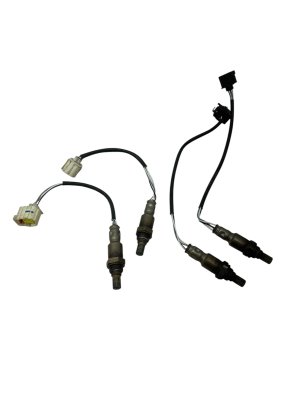
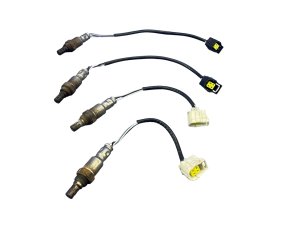
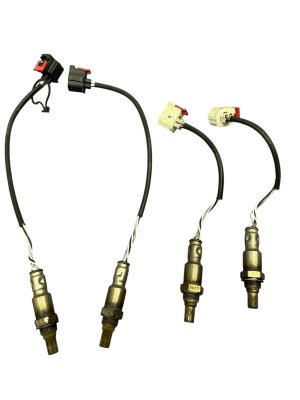
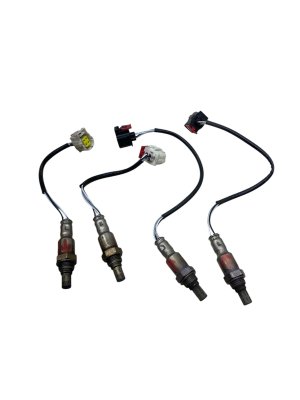
- Upstream Oxygen Sensor (Bank 1, Sensor 1)
(OEM #05149171AB)— The internal heater element fails, which is the most common trigger for code P0031. This part number supersedes 5149171AA and 68066160AA.
Trusted brands: Mopar, NTK, Denso
OEM price range: $100-$160
Aftermarket price range: $50-$90
Related Codes That Often Appear With This One
- P0032 — This is the code for the same circuit having high voltage. Seeing both P0031 and P0032 can indicate an intermittent wiring problem or a sensor that is failing and fluctuating between a short and an open circuit. Both are mentioned in TSB 18-050-22 REV. A.
- P0135 — This is a more generic code for a malfunction in the same heater circuit (Bank 1, Sensor 1). P0031 is the more specific 'low circuit' fault.
- P0051 — This is the same 'heater circuit low' code but for Bank 2, Sensor 1 (the front, upstream sensor). If you see both P0031 and P0051 together, it strongly points to a shared problem like a blown fuse that powers both upstream sensor heaters.
Technical Service Bulletins (TSBs) & Recalls
- 18-050-22 REV. A: Specifically for 2021 Pacifica PHEV models, this TSB addresses a potential false MIL illumination for P0031 (and a long list of other codes) that can be resolved with a PCM software update.
Platform-Specific Known Issues
- Access to the Bank 1 (rear) upstream O2 sensor is restricted by the firewall and may require removing the upper intake or accessing it from below the vehicle, increasing labor time compared to the more accessible Bank 2 sensor.
Mechanic-Grade Diagnostic Values
- O2 Sensor Heater Element Resistance — expected: 3 to 15 Ohms at ambient temperature (approx. 70°F/21°C). Some sources cite ranges as wide as 3-30 Ohms for Pentastar applications.. Failure: A reading of infinite resistance (Open Loop / 'OL') or near-zero resistance (dead short) confirms a failed heater element.
- Heater Circuit Power Supply Voltage (KOEO) — expected: Approximately battery voltage (12.0-12.6V) at the power supply pin on the harness-side connector with Key On, Engine Off.. Failure: A reading near 0V indicates a blown fuse or an open in the power supply wire.
- Heater Circuit Ground Control Signal — expected: On Chrysler systems, the PCM provides a pulse-width modulated (PWM) ground. On an oscilloscope, this appears as a square wave. On a multimeter set to DC volts, it may appear as a fluctuating or averaged voltage.. Failure: A steady 0V or steady battery voltage on the control wire when the heater should be active indicates a problem with the PCM driver or the wiring.
- Heater Circuit Current Draw — expected: Approximately 0.8 to 1.5 Amps. One diagnostic source calculated an expected draw of 0.85A based on a 14-Ohm resistance.. Failure: A 'Circuit Low' code implies current is significantly below the expected range (near zero), while a 'Circuit High' code (P0032) can be set when current exceeds a threshold, sometimes around 10 amps.
Hidden / Shadow Codes Worth Checking
- Mode $06, TID $81, CID $01 (example): While not a 'shadow code,' advanced scan tools can access Mode $06 data. This allows a technician to view the raw test results from the PCM's self-diagnostic monitor for the O2 sensor heater circuit, including values like resistance or response time, sometimes before a full DTC is set. The specific Test ID (TID) and Component ID (CID) can vary by year and software version. (see via A professional-grade OBD-II scan tool with Mode $06 functionality.)
Scan Tool Commands That Help
- wiTECH (or equivalent high-end scanner): O2 Heater Actuation Test — This bidirectional command allows a technician to manually turn the O2 sensor heater circuit on and off, often in duty cycle increments (e.g., 25%). It is used to definitively test if the PCM driver, wiring, fuse, and relay are functioning correctly, isolating the fault to the sensor itself if the circuit can be commanded on successfully.
Wiring & Ground Locations
- Bank 1 Sensor 1 Connector — On the rear of the engine near the firewall, connected to the upstream oxygen sensor in the exhaust manifold. The heater circuit wires are typically the two same-colored wires in the four-wire connector.. This is the primary point for testing both the sensor side (resistance) and the harness side (voltage/ground). Corrosion or damage here is a common cause of the code.
- Engine Harness Chafe Point — While not one single point, common areas include where the harness runs along the back of the cylinder head near the firewall and behind the driver's side wheel well where it may rub the frame.. Engine vibration can cause the harness to rub through its insulation, leading to a short to ground on the heater control wire, which would trigger P0031.
- G103 (Ground) — On the right (passenger) side of the engine block.. This is a main grounding point for the engine wiring harness. While not exclusively for the O2 sensor, a loose or corroded connection here can introduce electrical noise and unstable grounds for multiple components, potentially contributing to sensor circuit codes.
OEM Part Supersession History
68066160AA→5149171AA, which was then superseded by 05149171AB.— Standard part evolution for design improvements, material changes, or supplier consolidation.
Heads up: No incompatibility is noted; the parts are considered interchangeable. The same part number (05149171AB) is used for multiple sensor locations across many Chrysler, Dodge, and Jeep vehicles.
Model Year Variations Within This Range
- 2021 PHEV Models: A specific Technical Service Bulletin (TSB 18-050-22 REV. A) indicates the Powertrain Control Module (PCM) may be overly sensitive and set a false P0031. The fix is a PCM software update, not a hardware replacement.
- All years (2017-2026): Fuse locations and specific wiring colors may vary slightly between model years. It is always recommended to consult a wiring diagram specific to the vehicle's year for accurate electrical diagnosis.
Diagnostic Flowchart
Other Known Issues on This Vehicle
Issues unrelated to this code that are worth knowing about as an owner of this generation:
- Harsh Shifting / Lurching 9-Speed Transmission 🔴 High — Very common, especially on 2017-2021 models. Can occur at low mileage (e.g., ~20,000-30,000 miles). (Ref: Multiple software update TSBs exist (e.g., 21-006-21) to fix torque calculation errors. In some cases, hardware replacement is required.)
- Engine Stop-Start (ESS) System Failure 🟠 Medium — Extremely common across all model years. The 'Service Stop/Start System' message often appears due to a failing auxiliary battery. (Ref: No specific recall, but it's a widely known issue. Owners on forums like pacificaforums.com and Reddit discuss replacing the small 'Aux 14 AGM' battery or even performing mods to bypass it.)
- Pentastar Rocker Arm / Lifter Tick 🔴 High — A known issue across the entire Pentastar engine family, typically appearing at higher mileage (e.g., 80,000+ miles). It presents as an audible ticking sound from the top of the engine. (Ref: While warranty extensions (like X56 for older models) existed for related head issues, this specific rocker arm failure is a well-documented weak point that can lead to misfires and camshaft damage if ignored.)
- Cracked/Leaking Oil Filter Housing 🟠 Medium — Common on all 3.6L Pentastar engines. The plastic housing, located in the engine valley, can crack from heat cycles, causing a significant oil leak. (Ref: No recall, but it is a frequent repair. The fix involves replacing the entire oil filter housing and cooler assembly, which is labor-intensive.)
- Uconnect Infotainment System Glitches 🟡 Low — Reported intermittently on various model years. Symptoms include the screen blacking out, freezing, or becoming unresponsive. (Ref: Software updates are often the first attempted fix, but in some cases, the head unit requires replacement.)
Used vs. New Parts: Buying Guide for This Vehicle
When a used part is the smart pick: For an oxygen sensor, a used part is almost never a smart choice as it is a wear-and-tear item with a finite lifespan. However, if extensive diagnosis points to a faulty engine wiring harness or Powertrain Control Module (PCM), a used part from a reputable salvage yard can be a cost-effective alternative to a new OEM part.
Donor-vehicle mileage cap: roughly under 75000 miles for the part to have meaningful remaining life.
What to inspect on the donor part:
- For a wiring harness: Inspect thoroughly for any cuts, melted sections, brittle insulation, or previous repairs. Ensure all connector locking tabs are intact and pins are not corroded.
- For a PCM: Ensure the part number matches exactly and check for any signs of water damage or physical impact to the casing.
OEM-only on this vehicle (don't cheap out):
- Oxygen Sensor: While not strictly 'OEM-only,' using the Mopar part or a direct OEM supplier like NTK or Denso is very strongly recommended. Chrysler platforms can be sensitive to the voltage and resistance characteristics of other aftermarket brands.
Aftermarket brands forum-validated for this vehicle:
- NTK (a brand of NGK) and Denso are both original equipment suppliers to many automakers and are widely regarded by mechanics as the best aftermarket alternatives for oxygen sensors, matching OEM fit and performance.
Brands owners have reported issues with on this vehicle:
- While Bosch is a top-tier brand for many European vehicles, some professional mechanics and forum users have reported compatibility issues or premature failures when using their universal or non-OEM-equivalent sensors on Chrysler vehicles.
Real Owner Stories
Aggregated from forums and TSBs cited above. Mileages and costs reflect what owners reported in those sources.
2021 Chrysler Pacifica PHEV
Symptoms: False MIL illumination for P0031 and a long list of other codes.
What fixed it: PCM software update per TSB 18-050-22 REV. A.
Source hint: TSB 18-050-22 REV. A
2017-2026 Chrysler Pacifica 3.6L V6 — ~85000 miles
Symptoms: Check Engine Light on; the internal heater element burned out from constant heat cycles.
What fixed it: Replace the Bank 1, Sensor 1 (upstream, rear) oxygen sensor.
Source hint: pacificaforums.com
Related OBD-II Codes
Frequently Asked Questions
I have a 2021 Pacifica PHEV with a Check Engine Light and code P0031. Is there a specific fix for this model?
Where is the Bank 1, Sensor 1 O2 sensor located on my Pacifica, and is it hard to reach?
What resistance should I look for when testing the O2 sensor heater on my 3.6L Pentastar?
Could a blown fuse be causing my P0031 code?
My Pacifica has a blinking Check Engine Light along with P0031. What does that mean?
Is the P0031 code related to the 'Service Stop/Start System' message on my dashboard?
Helpful Videos
We Have This Part in Stock

The information in this article is provided for general reference and educational purposes only. Vehicle specifications, procedures, and part compatibility can vary by production date, trim level, and region. Always consult your vehicle's factory service manual and verify part numbers before purchasing or performing repairs. Safety-critical components such as airbags, seat belts, and braking systems should be installed by a qualified professional.
- Chrysler Pacifica:
- 🎬 Helpful Videos
- 🛍️ Shop This Part
- What's Unique About the 2017-2026 Chrysler Pacifica
- Symptoms You May Notice
- Most Likely Causes
- Rare But Worth Checking
- Diagnosis Steps
- Parts You'll Likely Need
- Related Codes That Often Appear With This One
- Technical Service Bulletins (TSBs) & Recalls
- Platform-Specific Known Issues
- Mechanic-Grade Diagnostic Values
- Hidden / Shadow Codes Worth Checking
- Scan Tool Commands That Help
- Wiring & Ground Locations
- OEM Part Supersession History
- Model Year Variations Within This Range
- Diagnostic Flowchart
- Other Known Issues on This Vehicle
- Used vs. New Parts: Buying Guide for This Vehicle
- Real Owner Stories
- 2021 Chrysler Pacifica PHEV
- 2017-2026 Chrysler Pacifica 3.6L V6 — ~85000 miles
- Related OBD-II Codes
- Frequently Asked Questions
- 🎟️ Get 5% Off