

P0030 on 2010-2012 Subaru Outback 2.5L: A/F Sensor Heater Circuit Fault Causes and Fixes
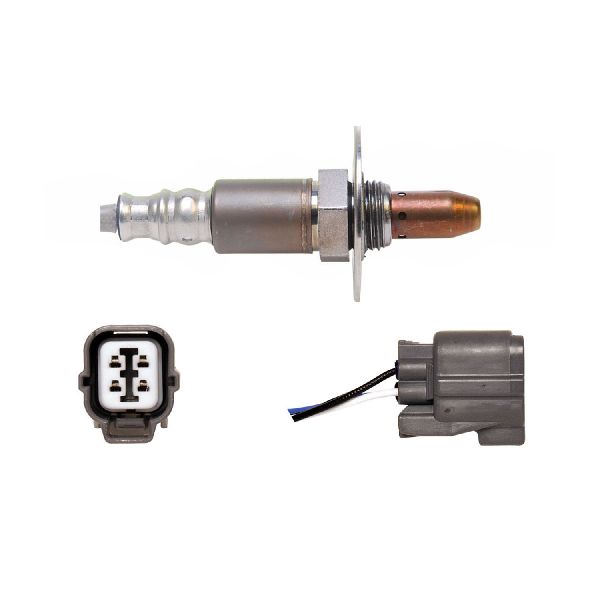
On a 2010-2012 Subaru Outback, P0030 almost always means the internal heater in the front Air/Fuel Ratio (A/F) sensor has failed. The fix is to replace the sensor with a Denso (OEM) or genuine Subaru part. The specific Denso part number is 234-9123. The repair costs about $150-$250 for the part and is a 2/5 difficulty DIY job.
- P0030 on your Outback points directly to a fault in the heater for the front Air/Fuel Ratio sensor.
- The most common fix by far is to replace the sensor itself.
- Use a high-quality replacement sensor from a brand like Denso (Part #234-9123) or a genuine Subaru part to ensure compatibility and longevity.
- Before replacing, perform a simple resistance test on the two same-colored wires of the sensor; a reading of 'OL' (open) confirms it's bad, while a good sensor should read under 5 ohms.
What's Unique About the 2010-2012 Subaru Outback
The 2010-2012 Outback uses a wideband Air/Fuel (A/F) sensor in the front position (Bank 1, Sensor 1), not a conventional oxygen sensor. These sensors provide more precise feedback to the engine computer but can be sensitive to brand quality. The original equipment manufacturer (OEM) is Denso. Owners and mechanics on forums like Reddit and Ultimate Subaru strongly recommend using a Denso or genuine Subaru replacement, as cheaper unbranded sensors are known to fail prematurely or not perform correctly on this platform, leading to persistent codes or poor performance.
Symptoms You May Notice
- Check Engine Light is on.
- Reduced fuel economy.
- Rough or uneven idle, especially when the engine is cold.
- Failure to pass an emissions test.
- Hesitation during acceleration before the engine is fully warmed up.
- Replacing the rear oxygen sensor (Sensor 2) instead of the front Air/Fuel sensor (Sensor 1).
- Replacing the catalytic converter when no catalyst efficiency codes (like P0420) are present.
- Using a cheap, unbranded sensor which fails to communicate properly with the Subaru ECU, causing the code to return.
Most Likely Causes
- Failed Air/Fuel Ratio Sensor Heater Element 🔴 High Probability The internal heater element is a common failure point due to age and countless heat cycles. It's the most frequent cause for P0030 on virtually all vehicles, including this Outback.
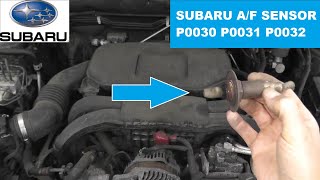
How to confirm: Disconnect the sensor and use a multimeter set to Ohms (Ω). Measure the resistance between the two heater circuit pins (the two wires of the same color, usually black). A good sensor will have a very low resistance, typically under 5 Ohms (readings of 1.4-5.0 Ohms are common). 🎬 See this walkthrough on testing and replacing the A/F sensor. An infinite resistance reading (OL) confirms the heater has burned out.
Typical fix: Replace the front Air/Fuel Ratio sensor (Bank 1, Sensor 1) with a quality Denso or OEM part.
Est. part cost: $120-$250 - Damaged Wiring or Connector 🟡 Medium Probability The wiring harness runs close to hot exhaust components and can become brittle, melted, or corroded over time. The connector is located at the top-front of the engine (passenger side) and is exposed to the elements, where moisture can intrude.
How to confirm: Visually inspect the wiring harness from the sensor to the main engine harness for any signs of melting, chafing, or breaks. Check the electrical connector for corrosion, moisture, or pushed-out pins.
Typical fix: Repair the damaged section of wire or replace the connector pigtail.
Est. part cost: $10-$40 - Blown Fuse ⚪ Low Probability A short circuit in the heater element or its wiring can cause the corresponding fuse to blow as a protective measure. This is less common than the sensor failing outright.
How to confirm: Locate and check the fuse for the O2 sensor heater circuit. In many Subarus, this may be labeled 'A/F Heater' or similar in the fuse box inside the engine compartment. Consult the owner's manual for the specific fuse location.
Typical fix: Replace the blown fuse. If it blows again immediately, a short circuit is present that must be diagnosed and repaired.
Est. part cost: $1-$5
Rare But Worth Checking
- Faulty Engine Control Module (ECM): This is extremely rare, but has been documented by owners. Before condemning the ECM, all other possibilities must be exhaustively ruled out. A faulty ECM driver for the heater circuit can fail to provide the necessary ground, preventing the heater from working even with a good sensor and wiring. One owner on a forum confirmed this was their issue after replacing the sensor did not resolve the code.
Diagnosis Steps
- Scan the vehicle for any other stored trouble codes. Note if codes like P0031, P0032, or P0134 are also present. 🎬 Watch: Understanding Subaru A/F sensor codes P0030, P0031, and P0032.
- Visually inspect the front A/F sensor's wiring harness and connector for any obvious damage, such as melting, corrosion, or rodent damage. The connector is at the top front of the engine, passenger side.
- Check the fuse related to the oxygen sensor heater circuit, often labeled 'A/F Heater' in the engine bay fuse box. Replace if blown.
- If the fuse and wiring appear intact, disconnect the A/F sensor.
- With the key on and engine off, use a multimeter to check for 12-volt power at the appropriate pin on the vehicle-side harness connector. This confirms the power supply from the ECM is good.
- Switch the multimeter to measure resistance (Ohms). Test the resistance across the two heater pins on the sensor itself (these are the two wires of the same color, usually black). A good sensor will have a low resistance, typically under 5 Ohms. An infinite reading (OL) means the heater element is broken and the sensor must be replaced.
Parts You'll Likely Need
- Front Air/Fuel Ratio Sensor (Bank 1, Sensor 1)
(OEM #22641AA51A)— The internal heater element fails from age and heat cycles, which is the direct cause of the P0030 code.
Trusted brands: Denso (OEM Manufacturer, Part #234-9123), NGK/NTK, Genuine Subaru
OEM price range: $200-$280
Aftermarket price range: $120-$180
Related Codes That Often Appear With This One
- P0031 — This code indicates the heater circuit signal is low, which is often a result of the same root cause (a failed heater element or wiring issue).
- P0032 — This code indicates the heater circuit signal is high, typically pointing to a short circuit in the wiring or within the sensor itself.
- P0134 — This code means 'O2 Sensor Circuit No Activity Detected'. If the heater fails (P0030), the sensor won't warm up and won't produce a signal, which can trigger P0134 as a secondary code.
Technical Service Bulletins (TSBs) & Recalls
- No specific Technical Service Bulletin (TSB) for P0030 on this exact model was found during research. However, Subaru has issued related service programs, like WXW-80 for other models, addressing potential cracks in the A/F sensor element, which highlights the sensor as a known service item.
Platform-Specific Known Issues
- The front A/F sensor can be extremely difficult to remove due to rust seizing it in the exhaust manifold. Soaking the threads with a quality penetrating oil (like PB Blaster) while the exhaust is warm (not hot) is highly recommended before attempting removal. A special 22mm O2 sensor socket is often required for proper leverage. 🎬 Watch: Pro tips for removing a stuck or seized sensor.
- Accessing the sensor itself requires working from underneath the vehicle on the passenger side, though the connector is accessible from the top of the engine bay.
- The Subaru ECU is notoriously sensitive to the brand of A/F sensor used. Owners overwhelmingly report success with Denso (the OEM) or genuine Subaru parts, while universal or budget brands often lead to the code returning.
Mechanic-Grade Diagnostic Values
- A/F Sensor Heater Element Resistance — expected: 2-6 Ohms. One video demonstration on a 2011 Outback showed a good sensor at 5.0 Ohms.. Failure: Infinite resistance (OL) or a reading significantly outside the expected range.
- Heater Circuit Power Supply — expected: Battery voltage (~12V) at the vehicle-side harness connector with Key On, Engine Off.. Failure: No voltage indicates a blown fuse or an open in the power supply wire from the main relay/ECM.
- A/F Sensor Heater Duty Cycle (Live Data) — expected: A percentage value that changes based on engine temperature and load. Should not be 0% when the engine is cold.. Failure: A steady 0% reading when the engine is cold suggests the ECM is not commanding the heater to turn on, which could be an ECM fault.
Scan Tool Commands That Help
- Subaru Select Monitor (SSM): Current Data Display / O2 Heater Diagnosis — Use this to view the live status of the heater circuit as reported by the ECM. It will show as 'Complete' or 'Incomplete', which can help confirm if the ECM is running the self-test for the circuit.
Wiring & Ground Locations
- A/F Sensor Connector (Bank 1, Sensor 1) — Top-front of the engine, to the left (passenger side) of the upper radiator hose. It is a grey connector, typically located next to the black connector for the rear O2 sensor.. This is the primary connection point for testing both the sensor's heater resistance and the power/ground supply from the vehicle harness.
- Engine Control Module (ECM) — Located on the right side of the dash, typically accessible from the passenger footwell.. The ECM provides the power and ground control for the A/F sensor heater circuit. In rare cases of ECM failure, this is the component that needs to be tested and replaced.
- Engine Ground Straps — There are two main chassis ground straps. One on the driver's side and one on the passenger side, connecting the cylinder head to the chassis. The passenger side strap bolt also serves as a mounting point for the O2 sensor wiring loom holder.. While not a direct cause of P0030, poor engine grounding can cause a variety of strange electrical issues. The ECU itself is grounded to the intake manifold, which relies on these straps for a good connection to the chassis and battery negative. Ensuring these grounds are clean and tight is a critical step in ruling out intermittent electrical problems.
Real Owner Repair Stories
- YouTube channel 'Project Farm' (2010-2014 Subaru Outback (exact year not specified)) — Check Engine Light with code P0031 (Heater Circuit Low), which is functionally related to P0030.
❌ Tried (didn't work) Attempting to remove the seized O2 sensor with a standard O2 sensor socket and breaker bar, even with penetrating oil.
✅ What actually fixed it The sensor was so seized in the exhaust manifold that the manifold had to be unbolted and dropped from the engine (six 14mm bolts on each side). With the manifold on a workbench, the old sensor's top was cut off to allow a standard deep well socket to be hammered on, which finally provided enough grip to break it loose. The new sensor was then installed and the manifold was re-mounted.
OEM Part Supersession History
22641AA51A→This part number appears to be stable for the specified model years.— N/A
Heads up: The Denso direct-fit aftermarket part is 234-9123. Do not confuse this with similar Denso parts like 234-9124 or 234-9097 which are for different engines or model years. Always verify fitment with the specific vehicle VIN.
Diagnostic Flowchart
Used vs. New Parts: Buying Guide for This Vehicle
When a used part is the smart pick: For this repair, a used part is almost never a good choice for the sensor itself. However, sourcing a used connector pigtail from a junkyard is a viable option if only the connector or a small section of the harness is damaged.
Donor-vehicle mileage cap: roughly under 100000 miles for the part to have meaningful remaining life.
What to inspect on the donor part:
- For a wiring pigtail, ensure the plastic is not brittle and the locking tab is intact.
- Check for any signs of melting or heat damage on the wires and connector body.
- Verify there is no corrosion on the electrical pins inside the connector.
OEM-only on this vehicle (don't cheap out):
- Air/Fuel Ratio Sensor
Aftermarket brands forum-validated for this vehicle:
- Denso (OEM)
- NGK/NTK
Brands owners have reported issues with on this vehicle:
- Unbranded or 'universal' sensors are highly discouraged for this vehicle, as they frequently cause persistent codes or performance issues.
Real Owner Stories
Aggregated from forums and TSBs cited above. Mileages and costs reflect what owners reported in those sources.
2010 Outback
Symptoms: Check engine light was on for code P0031, which is directly related to the P0030 heater circuit fault.
What fixed it: Replaced the upstream oxygen sensor (Bank 1, Sensor 1) with a Denso brand sensor.
Cost: $100-$100
Source hint: YouTube comment from 'Driven Companion' on video 'Subaru Outback Oxygen Sensor Replacement (2010-2014) - P0031 & P0030 Engine Codes'
Subaru H6 (similar platform)
Symptoms: Intermittent P0030 code.
What fixed it: The owner confirmed the sensor was faulty by testing the heater circuit. The bad sensor had an open circuit (no reading), while a known-good sensor on the other bank read 1.4 ohms. The fix was replacing the faulty sensor.
Source hint: ScannerDanner Forum: Subaru P0030, Open loop, No FT data
Subaru (unspecified model)
Symptoms: Persistent code after sensor replacement.
What fixed it: A user identifying as a Subaru Sr. Master Tech advised that the fix is to use a genuine Subaru or a Denso A/F sensor, corroborating that the ECU is sensitive to off-brand parts.
Source hint: Reddit r/subaru: Do Subarus need specific O2 sensors or is generic replacement okay?
Related OBD-II Codes
Frequently Asked Questions
What brand of Air/Fuel sensor should I use for my 2011 Outback to fix P0030?
Where is the front A/F sensor (Bank 1, Sensor 1) located on my 2.5L Outback?
The A/F sensor on my Outback is seized and won't come out. What should I do?
How can I test the A/F sensor heater on my Subaru to confirm it's the problem?
Is there an official TSB from Subaru for the P0030 code on the 2010-2012 Outback?
I replaced the sensor and checked the fuse, but P0030 came back. What else could it be?
Helpful Videos

We Have This Part in Stock


The information in this article is provided for general reference and educational purposes only. Vehicle specifications, procedures, and part compatibility can vary by production date, trim level, and region. Always consult your vehicle's factory service manual and verify part numbers before purchasing or performing repairs. Safety-critical components such as airbags, seat belts, and braking systems should be installed by a qualified professional.
- Subaru Outback:
- 🎬 Helpful Videos
- 🛍️ Shop This Part
- What's Unique About the 2010-2012 Subaru Outback
- Symptoms You May Notice
- Most Likely Causes
- Rare But Worth Checking
- Diagnosis Steps
- Parts You'll Likely Need
- Related Codes That Often Appear With This One
- Technical Service Bulletins (TSBs) & Recalls
- Platform-Specific Known Issues
- Mechanic-Grade Diagnostic Values
- Scan Tool Commands That Help
- Wiring & Ground Locations
- Real Owner Repair Stories
- OEM Part Supersession History
- Diagnostic Flowchart
- Used vs. New Parts: Buying Guide for This Vehicle
- Real Owner Stories
- 2010 Outback
- Subaru H6 (similar platform)
- Subaru (unspecified model)
- Related OBD-II Codes
- Frequently Asked Questions
- 🎟️ Get 5% Off