

P0030 on 2003-2009 Mazda 3: Heater Circuit Failure Causes and Fixes
This code almost always means the front (upstream) oxygen sensor has failed. The internal heater burns out, requiring sensor replacement. Before replacing, check the 15A 'ENGINE' fuse. Expect to pay $70-$150 for a quality aftermarket sensor (like Denso) and $180-$250 for an OEM part. It's a common DIY repair with a 2/5 difficulty.
- P0030 means the heater in your front oxygen sensor has failed.
- The most likely fix is to replace the upstream (Bank 1, Sensor 1) oxygen sensor.
- Before buying a new sensor, check the 15A 'ENGINE' fuse in the engine bay fuse box to avoid an unnecessary repair.
- Verify the correct part for your car's specific year and emissions type (Federal vs. California), as there are 4-wire and 5-wire versions. Denso is a highly recommended brand.
- Driving with this code won't cause immediate damage, but it will hurt your gas mileage and cause you to fail an emissions test.
What's Unique About the 2003-2009 Mazda 3
For the first-generation Mazda 3, the P0030 code is a very common and straightforward issue. The primary challenge for owners is ensuring they purchase the correct replacement sensor, as there are variations depending on the specific model year and whether the vehicle was built to Federal or California emissions standards (PZEV). California-spec cars often use a 5-wire wideband sensor, while Federal-spec cars may use a 4-wire narrowband sensor. Always verify the part by VIN or by inspecting the original sensor's connector and wire count before purchasing.
Symptoms You May Notice
- Check Engine Light is on
- Decreased fuel economy
- Rough idle or hesitation, especially when the engine is cold
- Failing an emissions test
- Slightly sluggish performance until the engine warms up fully
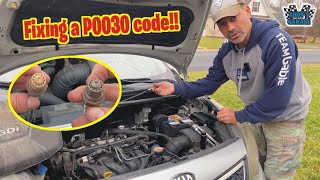
- Replacing the downstream (post-catalytic converter) oxygen sensor. P0030 specifically refers to Sensor 1 🎬 Watch: A breakdown of P0030 causes and common fixes, which is always the upstream sensor.
- Immediately replacing the sensor without checking the fuse first. A blown fuse is a simple and cheap fix that is often overlooked.
- Using a cheap, no-name universal oxygen sensor. These often have incorrect resistance values or poor longevity, causing the code to return. Sticking with OEM or a reputable brand like Denso or NTK is highly recommended.
Most Likely Causes
- Failed Upstream Oxygen Sensor 🔴 High Probability The internal heater element is a common failure point in oxygen sensors due to constant, extreme heat cycles and vibration. It is the most frequent cause for P0030 on this platform.
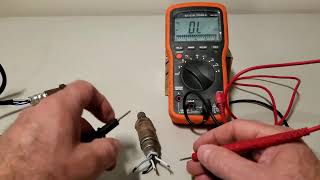
How to confirm: After confirming power and ground to the sensor, test the resistance of the heater circuit within the sensor itself using a multimeter set to Ohms. 🎬 See how to test if your sensor's heater is bad Disconnect the sensor and measure between the two pins with the same colored wires. A good sensor should have a low resistance, typically between 5-6 ohms when cold (20°C/68°F). Some real-world measurements on working or new sensors have shown values from 2.8 to 11 ohms. An infinite resistance reading (OL) means the circuit is open and the sensor is bad.
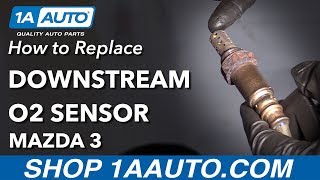
Typical fix: Replace the Bank 1, Sensor 1 (upstream) oxygen sensor. Using an O2 sensor socket is highly recommended. 🎬 Watch: Step-by-step guide to replacing the Mazda 3 sensor
Est. part cost: $70-$250 - Blown Fuse for Heater Circuit 🟡 Medium Probability
How to confirm: Locate and inspect the fuse for the O2 sensor heater circuit. On the Mazda 3, this is typically the 15A 'ENGINE' fuse located in the engine compartment fuse box near the battery. Check the diagram on the fuse box cover. If the fuse is blown, replace it.
Typical fix: Replace the blown 15A fuse. If it blows again immediately, this indicates a short circuit in the wiring or within the oxygen sensor itself, which will require further diagnosis.
Est. part cost: $1-$5 - Damaged Wiring or Connector ⚪ Low Probability The wiring harness is routed near the hot exhaust manifold and can become brittle, melt, or suffer from corrosion at the connector over time.
How to confirm: Visually inspect the wiring harness and connector leading to the upstream O2 sensor for any signs of melting, chafing, corrosion, or loose pins. Use a multimeter to check for 10-12V power and a good ground at the harness-side connector with the key on, engine off. A lack of voltage points to a wiring or fuse issue, not a bad sensor.
Typical fix: Repair the damaged section of the wiring harness or clean/replace the connector. Ensure the repaired harness is secured away from hot exhaust components.
Est. part cost: $10-$50
Rare But Worth Checking
- Faulty Engine Control Module (ECM/PCM): This is very uncommon. The ECM's internal driver for the heater circuit can fail. This should only be considered after all other possibilities (sensor, fuse, wiring) have been definitively ruled out by proper testing.
Diagnosis Steps
- Read the code with an OBD-II scanner to confirm P0030 is present.
- Locate the engine compartment fuse box near the battery. Find the 15A fuse labeled 'ENGINE' (or similar, check the lid diagram) and visually inspect it. Replace if blown.
- If the fuse is good, locate the upstream oxygen sensor on the exhaust manifold. It's between the engine and the firewall. Inspect its wiring harness and connector for any visible damage like melting, fraying, or green corrosion.
- Disconnect the sensor's electrical connector. Turn the ignition key to the 'ON' position (engine off). Use a multimeter to verify that one of the pins in the harness-side connector has battery voltage (~12V) and another has a good ground. This confirms the vehicle's wiring is likely okay.
- With the sensor still disconnected, switch your multimeter to measure resistance (Ohms). Probe the two heater circuit pins on the sensor side (these are usually the two wires of the same color). A good sensor will read a low resistance, typically around 5-6 ohms, though values between 2.8 and 11 ohms have been reported on functional sensors. If the meter shows 'OL' (Open Loop/infinite resistance), the heater inside the sensor is broken, and the sensor must be replaced.
- If the sensor's resistance is within spec but the code persists after clearing, there may be an intermittent wiring issue or, in very rare cases, a problem with the ECM driver circuit.
Parts You'll Likely Need
- Upstream Oxygen Sensor (Air/Fuel Ratio Sensor)
(OEM #L32F-18-861A (2.3L Calif-ESV), LFH2-18-862 (Varies by year/engine/emissions))— This is the component that contains the heater element that fails and triggers the P0030 code. It is the most common point of failure.
Trusted brands: Denso (often the OEM supplier), NGK/NTK, Bosch
OEM price range: $180-$270
Aftermarket price range: $70-$150
Mechanic-Grade Diagnostic Values
- A/F Sensor Heater Circuit Resistance — expected: 3 to 11 Ohms. A common factory spec is 5-6 Ohms, but real-world tests on new parts show a wider range.. Failure: An 'OL' or infinite reading on a multimeter indicates an open circuit (bad sensor).
- Heater Circuit Power Supply Voltage — expected: 10-12 Volts DC with Key On, Engine Off (KOEO).. Failure: Voltage significantly below 10V or 0V indicates a problem with the fuse or power supply wiring, not the sensor itself.
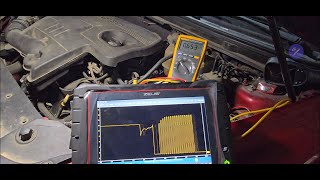
- Upstream O2 Sensor Signal Voltage (Narrowband) — expected: Fluctuating rapidly between 0.1V and 0.9V on a fully warmed-up engine at idle.. Failure: A flat, unchanging voltage (e.g., stuck at 0.45V) or a signal that does not fluctuate indicates a lazy or dead sensor.
Wiring & Ground Locations
- PCM Pin 2A — At the Powertrain Control Module connector.. This is a terminal for the A/F sensor heater control circuit. A short or open on the wire to this pin can cause P0030.
- PCM Pin 2AC — At the Powertrain Control Module connector.. This is a terminal for the A/F sensor heater control circuit. A disconnection in the harness leading to this pin can trigger the code.
- PCM Pins 2Z, 2AD — At the Powertrain Control Module connector.. These pins are also designated for the front O2 sensor and can be checked for continuity or shorts during advanced diagnosis.
- Engine/Chassis Grounds — Key locations include a point on the passenger side strut tower, the passenger motor mount, the top of the transmission housing, and the driver-side fender.. A poor engine or chassis ground can cause a variety of electrical issues, including erratic sensor behavior or incorrect voltage readings in the O2 sensor heater circuit.
Real Owner Repair Stories
- OzBargain Forums user 'tunzafun001' (2007 Mazda 3) — Initial codes P0131 and P2251, then after sensor replacement, P0030 and P0134 appeared instantly on startup.
❌ Tried (didn't work) Replacing the original O2 sensor with a cheap eBay part.
✅ What actually fixed it The user diagnosed the new eBay sensor and found its heater resistance was 3 ohms and it physically heated up, yet it still threw the P0030 code immediately. The community consensus was that the cheap aftermarket sensor was incompatible or faulty out of the box, even though it passed a basic resistance test. The resolution required using a quality, compatible sensor. - JustAnswer technician (General Mazda with P0030) — P0030 code returned after replacing the O2 sensor.
❌ Tried (didn't work) Replacing the O2 sensor.
✅ What actually fixed it When the code returns after a sensor replacement, the fault is indicated to be in the wiring. The final fix requires carefully checking the sensor's connecting plug for corrosion and tracing the wiring loom back to the ECU, checking for fractures or damage. It may also require cleaning the control pins on the ECU itself.
OEM Part Supersession History
l32f18861→L32F-18-861A— Standard part revision by the manufacturer.
Heads up: This part is typically for the 2.3L engine with California emissions. Always verify by VIN.
Model Year Variations Within This Range
- 2006-2009: For the 2006 model year, the 2.0L LF-DE engine was updated with variable valve timing (VVT), a feature previously exclusive to the 2.3L engine.
- 2004-2005 vs 2006-2009: There are known mechanical differences between early (04-05) and late (06-09) 2.3L L3-VE engines. Swapping an engine between these ranges may require swapping the timing cover due to different crank position sensor mounting holes, and the intake camshafts may also differ.
Diagnostic Flowchart
Real Owner Stories
Aggregated from forums and TSBs cited above. Mileages and costs reflect what owners reported in those sources.
2006 Mazda 3i touring — 94000 miles
Symptoms: Check engine light came on.
What fixed it: The owner was advised by the dealership that the oxygen sensor needed to be replaced.
Cost: ~$465
Source hint: Car Talk Community
2007 Mazda 3 2.3L — 210000 miles
Symptoms: Check Engine Light (CEL) was on, with multiple codes including P0030, P0128, P0126, P0131, P0134 and P2251.
What fixed it: The user did not report a specific fix for the P0030 code, but ended up getting a coolant flush.
Source hint: r/mazda3
2007 Mazda 3
Symptoms: Initially got a P0131 code, replaced the sensor, and then immediately got a P0030 code.
What fixed it: The community diagnosed the new code as a faulty heater circuit in the cheap replacement sensor itself, highlighting the risk of using low-quality aftermarket parts.
Source hint: OzBargain Forums
Mazda 3
Symptoms: Experienced codes P0030, P0130, and P0134 simultaneously.
What fixed it: The user replaced the O2 sensor three times without fixing the codes, illustrating the importance of diagnosing the circuit (fuses, wiring) before repeatedly replacing parts.
Source hint: Mazda Forum
Related OBD-II Codes
Frequently Asked Questions
Which fuse should I check for a P0030 code on my 2003-2009 Mazda 3?
Where is the upstream oxygen sensor located on the 2.0L or 2.3L engine?
I replaced the O2 sensor on my Mazda 3 but the P0030 code came back. What else could it be?
How can I test if the upstream O2 sensor is actually bad before buying a new one?
What voltage should I see at the O2 sensor harness connector on my Mazda 3?
Are other vehicles prone to this exact same P0030 issue?
Helpful Videos

We Have This Part in Stock

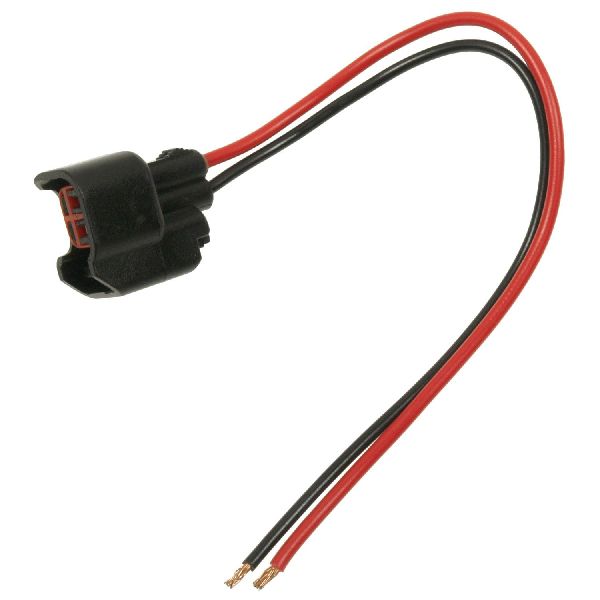
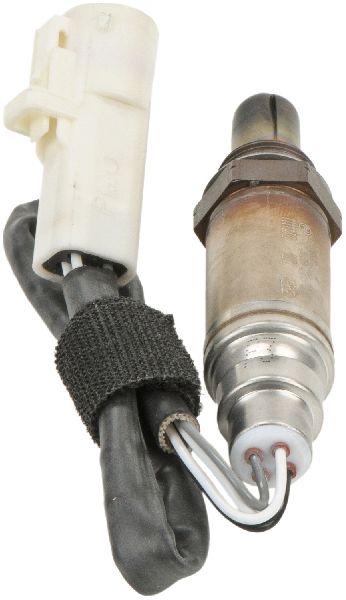

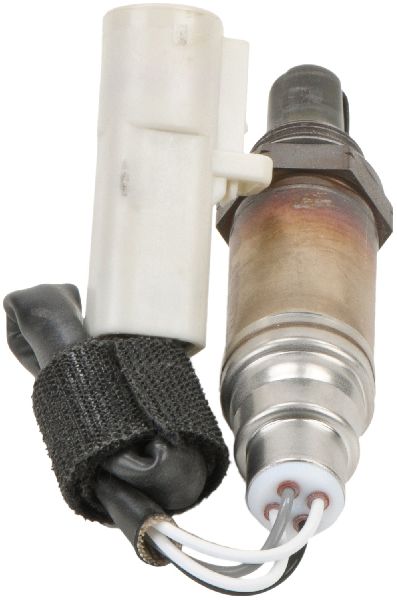

The information in this article is provided for general reference and educational purposes only. Vehicle specifications, procedures, and part compatibility can vary by production date, trim level, and region. Always consult your vehicle's factory service manual and verify part numbers before purchasing or performing repairs. Safety-critical components such as airbags, seat belts, and braking systems should be installed by a qualified professional.
- Mazda 3:
- 🎬 Helpful Videos
- 🛍️ Shop This Part
- What's Unique About the 2003-2009 Mazda 3
- Symptoms You May Notice
- Most Likely Causes
- Rare But Worth Checking
- Diagnosis Steps
- Parts You'll Likely Need
- Mechanic-Grade Diagnostic Values
- Wiring & Ground Locations
- Real Owner Repair Stories
- OEM Part Supersession History
- Model Year Variations Within This Range
- Diagnostic Flowchart
- Real Owner Stories
- 2006 Mazda 3i touring — 94000 miles
- 2007 Mazda 3 2.3L — 210000 miles
- 2007 Mazda 3
- Mazda 3
- Related OBD-II Codes
- Frequently Asked Questions
- 🎟️ Get 5% Off