

P0030 on 2012-2017 Kia Rio, Forte, & Soul 1.6L: HO2S Heater Circuit Causes and Fixes
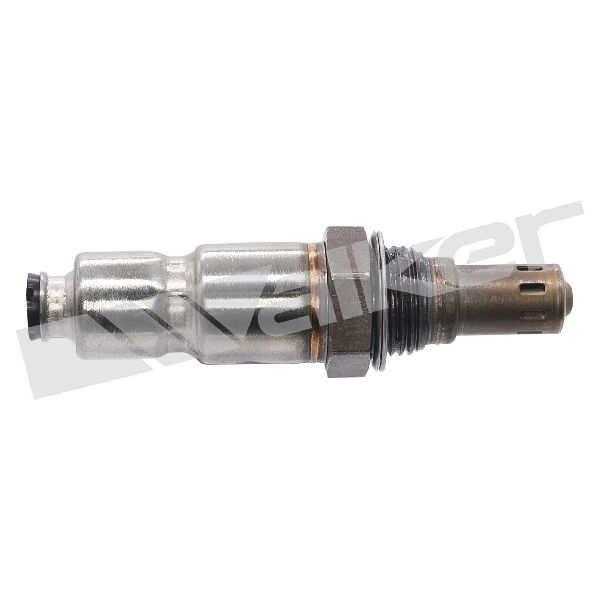
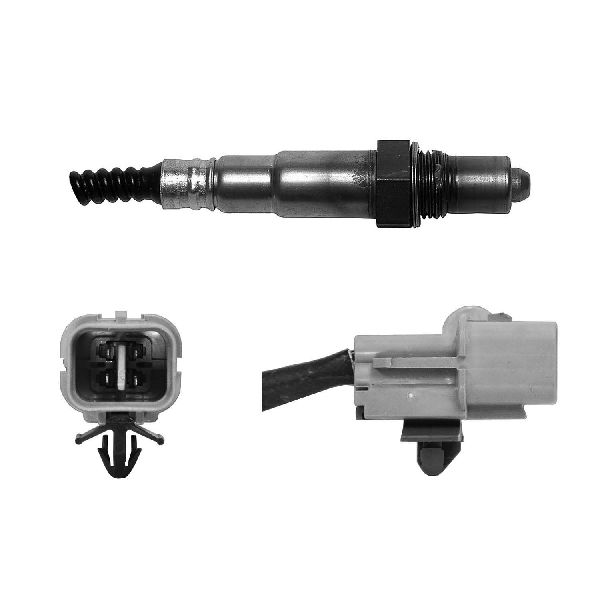
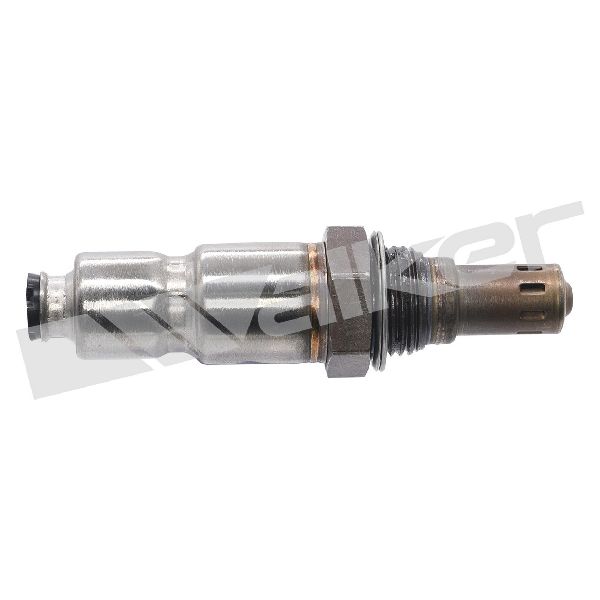
P0030 on these Kia models almost always means the upstream oxygen sensor (Bank 1, Sensor 1) has failed. The internal heater element burns out, which is the most common fix. Before replacing, check the 15A 'SENSOR 1' fuse in the engine bay. Expect to pay $60-$120 for an aftermarket sensor and $150-$230 for an OEM part.
- P0030 means the heater in your upstream oxygen sensor (Bank 1, Sensor 1) isn't working.
- The most likely fix is to replace the upstream oxygen sensor. It's a common wear item.
- Before buying any parts, check the 15A 'SENSOR 1' fuse in the engine bay fuse box.
- This is a DIY-friendly repair. The sensor is easy to access on the front of the engine, but you will need a special 22mm (7/8") slotted socket.
- Part numbers can vary between model years, especially around 2013/2014. Always confirm the correct part for your specific vehicle using the VIN.
What's Unique About the 2012-2017 Kia Rio/Forte/Soul

On the 1.6L Gamma GDI engine, this code is very straightforward. Since it's an inline 4-cylinder, there is only one exhaust bank, so 'Bank 1' is the only one. 'Sensor 1' is the upstream sensor, which is conveniently located right at the front of the engine bay on the exhaust manifold, making it much easier to access and replace than on many V-style engines. The failure is typically a standard wear-and-tear issue of the sensor's internal heater and not indicative of a larger systemic problem with the engine platform.
Generation note: This range covers the 3rd gen Rio (UB, 2012-2017), but spans two generations for the Forte (1st gen TD ending 2013, 2nd gen YD from 2014) and Soul (1st gen AM ending 2013, 2nd gen PS from 2014). While the engine is the same, the upstream O2 sensor part number may differ. For example, 2012-2013 Soul models use a different part than 2014-2016 models. Always verify the part number with your vehicle's VIN.
Symptoms You May Notice
- Check Engine Light is on
- Slightly reduced fuel economy
- Car may fail an emissions test
- Rough idle (less common, but reported when other heater codes are also present)
- Replacing the downstream (Sensor 2) oxygen sensor. P0030 specifically points to Sensor 1, which is the upstream sensor before the catalytic converter.
Most Likely Causes

- Failed Upstream Oxygen Sensor (Bank 1, Sensor 1) 🔴 High Probability The internal heater element is a common wear-and-tear component that fails after thousands of heat cycles. This is the most frequent cause of P0030.
How to confirm: After checking the fuse, test the resistance of the heater circuit on the sensor itself using a multimeter. The two same-colored wires are for the heater. A good sensor should have a resistance between 2.5 and 4.0 Ohms at room temperature. An 'OL' (Over Limit) or infinite resistance reading means the circuit is open and the sensor is bad.
Typical fix: Replace the upstream oxygen sensor. A special 22mm (7/8") slotted O2 sensor socket is highly recommended.
Est. part cost: $60-$230 - Blown Fuse 🟡 Medium Probability Electrical shorts or surges can blow the fuse that protects the sensor's heater circuit. A short within the old sensor's heater element can also cause the fuse to blow.
How to confirm: Check the fuse box in the engine compartment. Look for a 15A fuse often labeled 'SENSOR 1' or similar (on some platform mates, it may be 'SNSR 3'). Visually inspect if the fuse is blown or test for continuity.
Typical fix: Replace the blown fuse. If it blows again after installing a new sensor, there is a short circuit in the wiring that needs to be traced.
Est. part cost: $1-$5 - Damaged Wiring or Connector ⚪ Low Probability The wiring harness is close to the hot exhaust and can become brittle, melt, or fray over time, causing a short or open circuit.
How to confirm: Visually inspect the entire length of the oxygen sensor's wiring harness and its connector for any signs of melting, chafing, corrosion, or loose pins.
Typical fix: Repair the damaged section of wire or replace the connector pigtail.
Est. part cost: $10-$50
Rare But Worth Checking
- Faulty Powertrain Control Module (ECM): This is extremely rare. The ECM driver for the heater circuit can fail, but this should only be considered after all other possibilities (sensor, fuse, wiring) have been completely ruled out by a professional.
Diagnosis Steps

- Connect an OBD-II scanner to confirm P0030 is the active code.
- Check the engine bay fuse box for a blown fuse, typically a 15A fuse labeled 'SENSOR 1' or similar. Replace if necessary.
- Visually inspect the upstream oxygen sensor's wiring and connector. The sensor is located on the exhaust manifold at the front of the engine. Look for any signs of melting, fraying, or corrosion.
- If the fuse and wiring are good, disconnect the sensor. Using a multimeter, measure the resistance between the two same-colored wires on the sensor side of the connector. A good sensor should read between 2.5 and 4.0 Ohms. A reading of 'OL' or infinite resistance indicates a failed heater element.
- If resistance is good, check for 12V power at the heater circuit pin on the harness-side connector with the key on, engine off.
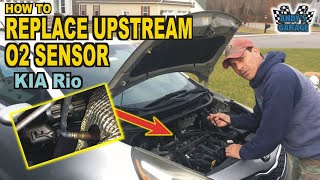
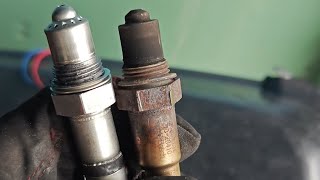
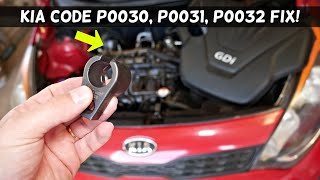
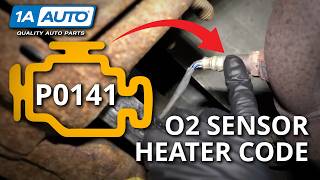
- If power and ground are present and the sensor's resistance is within spec, the issue may be an intermittent connection or a rare ECM fault. 🎬 Watch a mechanic explain these common Kia heater circuit codes.
Parts You'll Likely Need

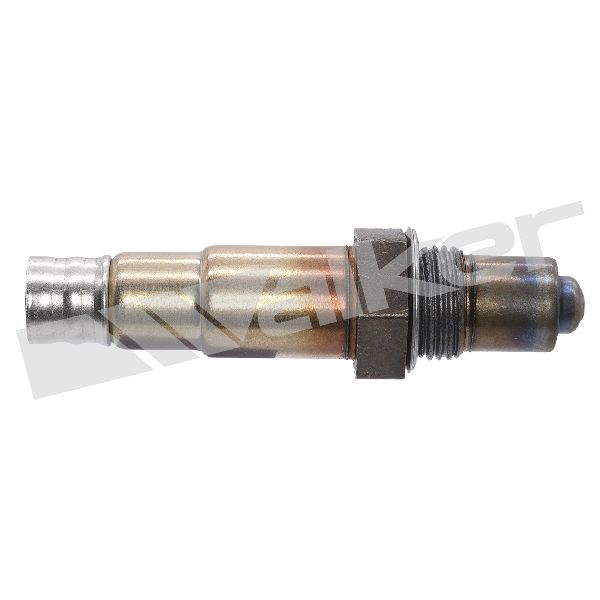
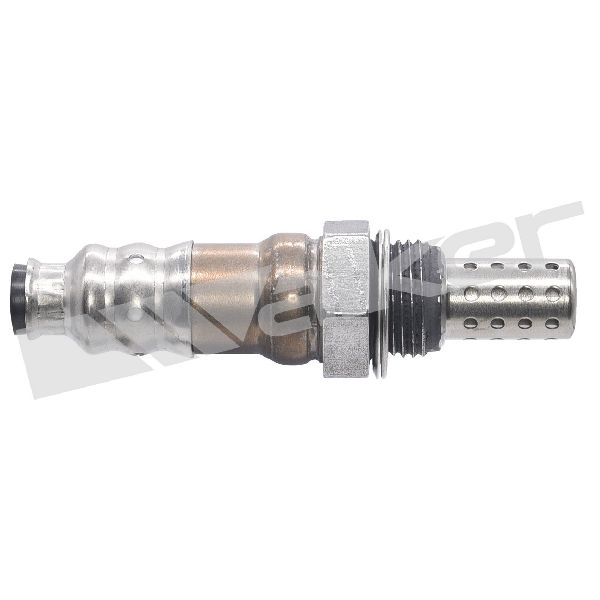
- Upstream Oxygen Sensor (Bank 1 Sensor 1)
(OEM #39210-2B210, 39210-2B310, 39210-2B410)— This is the most common cause of a P0030 code, as the internal heater element fails over time. Part number 39210-2B210 is cited for 2012-2015 Rio and 2012-2013 Soul models. Other numbers like 39210-2B310 or 39210-2B410 may be used on newer Forte/Soul models. Always verify with a VIN.
Trusted brands: Denso, NGK/NTK, Bosch, Mando (OEM Supplier)
OEM price range: $150-$230
Aftermarket price range: $60-$120 - 22mm (7/8") Slotted Oxygen Sensor Socket — This special tool is highly recommended to remove and install the oxygen sensor without damaging the sensor's wire.
Trusted brands: Lisle, OEMTOOLS, GearWrench
Aftermarket price range: $10-$25
Related Codes That Often Appear With This One
- P0031 — This code for 'HO2S Heater Circuit Low' often appears with P0030 when the sensor's heater circuit shorts out.
- P0131 — This code for 'O2 Sensor Circuit Low Voltage' can appear if the sensor fails completely, affecting both the heater and the sensing element.
- P0135 — This is another manufacturer's designation for the same fault: 'O2 Sensor Heater Circuit Malfunction (Bank 1, Sensor 1)'. Some scan tools may display this code instead of or in addition to P0030.
Technical Service Bulletins (TSBs) & Recalls
- While no TSB is issued specifically for P0030, related bulletins provide important context. TSB ENG222 details the official procedure for diagnosing the excessive oil consumption common to the 1.6L GDI engine, a condition which can foul and damage O2 sensors over time.
- Recall SC176 involved an ECU update to prevent catalytic converter damage from high exhaust temperatures on 2012-2016 models, highlighting the thermal stress these exhaust components endure.
Platform-Specific Known Issues
- A user on a Kia forum with a 2014 Rio reported multiple heater circuit codes (P0030, P0031, etc.) along with a rough idle. Replacing both the upstream and downstream O2 sensors was required to resolve the issue.
Mechanic-Grade Diagnostic Values
- Upstream O2 Sensor (B1S1) Heater Resistance — expected: 2.5 - 4.0 Ohms at 68°F (20°C). Failure: A reading of infinity ('O.L.') indicates an open circuit (failed heater). A reading near zero indicates a short circuit.
- Heater Circuit Power Supply at Harness Connector (KOEO) — expected: Battery Voltage (~12V). Failure: 0V indicates a blown 'SENSOR 1' 15A fuse, a bad relay, or an open in the power wire from the fuse box.
- Heater Circuit Ground at Harness Connector (Engine Running) — expected: The ECM provides a pulsed ground. A test light connected to battery positive should pulse or blink.. Failure: No pulse or a steady light indicates a wiring issue or a faulty ECM driver.
- O2 Sensor Heater Duty Cycle (Scan Tool Live Data) — expected: Should show an active, changing percentage when the engine is started from cold.. Failure: A reading of 0% or 100% that does not change may indicate a short, open, or ECM fault.
Scan Tool Commands That Help
- Kia GDS (Global Diagnostic System): Actuation Test / Full Component Activation for HO2S Heater — After verifying power and ground are good at the harness, this command forces the ECM to activate the heater circuit. A technician can then monitor current draw with an amp clamp to confirm if the PCM driver and the sensor's heater are functioning under command.
- Kia GDS (Global Diagnostic System): Resetting Adaptive Values — After replacing the oxygen sensor, it is good practice to use this function to clear the old fuel trim and sensor performance data, allowing the ECM to learn the characteristics of the new sensor more quickly.
Wiring & Ground Locations
- SENSOR 1 Fuse (15A) — Located in the main fuse and relay box in the engine compartment.. This fuse provides the 12V power to the heater element inside the oxygen sensor. If it blows, the heater will not operate, and code P0030 will be set.
- B1S1 Connector (e.g., E39 on some models) — On the engine harness, typically clipped to a bracket near the top-front of the engine, connecting the main harness to the O2 sensor's pigtail.. This is the primary point for testing voltage from the fuse box, ground control from the ECM, and resistance of the sensor's heater element.
- Engine Ground Strap (e.g., GC101/GF04) — A braided metal strap connecting the engine block or cylinder head to the vehicle's chassis/frame, often near the alternator or starter.. While not a direct cause, a corroded or loose main engine ground can create a voltage offset and cause a variety of bizarre, intermittent electrical issues, including affecting the ECM's ability to properly monitor and control the O2 sensor heater circuit.
Real Owner Repair Stories
- Kia-Forums user (2014 Kia Rio LX Sedan 1.6L GDI) — Rough idle, multiple codes including P0030, P0031, P0036, P0037.
❌ Tried (didn't work) Initially, only the upstream sensor was considered.
✅ What actually fixed it The owner reported that replacing BOTH the upstream (Bank 1 Sensor 1) and the downstream (Bank 1 Sensor 2) oxygen sensors resolved all codes and the rough idle. This suggests a possible scenario where a short in one sensor could affect the shared circuit of the other.
OEM Part Supersession History
39210-2B210→N/A, but multiple PNs exist for the model range.— Model year and generation changes.
Heads up: The primary difference between early (e.g., 2012-2013 Soul) and later (2014+) sensors is often the connector type and keying. A 2014 sensor will not physically plug into a 2013 harness, and vice-versa, even though they are for the same engine. Always verify the part number with the vehicle's VIN.
Model Year Variations Within This Range
- 2012-2013 vs 2014-2017: The OEM part number for the upstream oxygen sensor changes, primarily due to a different electrical connector design between the first and second generation of the Soul/Forte within this year range. For example, a 2013 Soul uses a different connector than a 2014 Soul.
Diagnostic Flowchart
Other Known Issues on This Vehicle
Issues unrelated to this code that are worth knowing about as an owner of this generation:
- Excessive Oil Consumption & Potential Engine Failure 🔴 High — Widespread issue for 1.6L Gamma GDI engines, often becoming noticeable after 60,000 miles. Can lead to oil starvation, internal damage, and catastrophic failure. (Ref: Subject of class-action lawsuits ('In re: Hyundai and Kia Engine Litigation II') and Kia TSB ENG222, which provides dealers a procedure for conducting an oil consumption test.)
- Catalytic Converter Failure 🔴 High — These models are prone to premature catalytic converter failure, which can be caused by high exhaust gas temperatures from abnormal combustion or contamination from excessive oil consumption. (Ref: Kia issued Recall SC176 for 2012-2016 1.6L GDI models to perform a software update to protect the catalytic converter from overheating.)
- HECU (Hydraulic Electronic Control Unit) Fire Risk 🔴 High — Affects certain 2012-2017 Rio models. An electrical short can occur in the HECU, creating a fire risk while parked or driving. (Ref: NHTSA Recall 23V-652. The remedy involves installing new fuses. Owners were advised to park outdoors and away from structures until the repair is performed.)
- Oil Control Valve (OCV) Clogging 🟠 Medium — The OCVs for the variable valve timing system can get clogged with sludge, especially if oil change intervals are extended. This can cause codes like P0014 but is a common maintenance issue.
Used vs. New Parts: Buying Guide for This Vehicle
When a used part is the smart pick: For this repair, a used part is almost never a smart choice. Oxygen sensors are wear-and-tear items with a finite lifespan, similar to spark plugs or brake pads. The internal heater element that causes P0030 is the most common failure point from age and heat cycles.
Donor-vehicle mileage cap: roughly under 40000 miles for the part to have meaningful remaining life.
What to inspect on the donor part:
- If forced to use a used part in an emergency, source it from the lowest-mileage vehicle possible.
- Inspect the wiring for any signs of brittleness, melting, or previous repairs.
- Check the sensor tip for heavy, black soot (indicating a rich-running donor) or white, chalky deposits (indicating coolant/oil contamination), both of which suggest a hard life.
Aftermarket brands forum-validated for this vehicle:
- Denso
- NGK / NTK
- Bosch
Brands owners have reported issues with on this vehicle:
- Unnamed, no-brand sensors from online marketplaces are a significant gamble. They often have incorrect heater resistance values, leading to immediate or premature failure and the code returning.
Real Owner Stories
Aggregated from forums and TSBs cited above. Mileages and costs reflect what owners reported in those sources.
2014 KIA Rio LX Sedan 1.6L GDI
Symptoms: Check engine light with codes P0030, P0031, P0075. Idles rough, gets progressively worse as it runs, shudders when stopped with foot on the brake. Acting like it wants to pull forward.
What fixed it: Replacing both the upstream and downstream O2 sensors (Bank 1 Sensor 1 and Bank 1 Sensor 2).
Source hint: Kia-Forums.com / Reddit r/MechanicAdvice
2012-2017 Hyundai Accent (RB) 1.6L GDI
Symptoms: P0030 failure pattern where the primary cause is the upstream O2 sensor's internal heater failing.
What fixed it: Replacement of the upstream O2 sensor.
Source hint: Platform mate data for 2012-2017 Hyundai Accent (RB)
Kia Forte GT (Tuned) — 33000 miles
Symptoms: P0030 code and a failed O2 sensor occurring earlier than typical wear-and-tear intervals.
What fixed it: Replacement of the failed O2 sensor.
Source hint: Reddit r/ForteGT - P0030 code
Related OBD-II Codes
Frequently Asked Questions
Does Kia TSB ENG222 apply to my 1.6L GDI engine if I have a P0030 code?
I heard about a recall for catalytic converter damage on 2012-2016 models; is this related to my O2 sensor code?
Where is the fuse for the upstream O2 sensor heater located on a Kia Rio or Soul?
Can I use a used O2 sensor from a salvage yard to fix P0030?
My 2014 Rio is idling rough and has P0030; could it be more than just one sensor?
Is there a fire risk associated with my 2012-2017 Kia Rio?
Helpful Videos
We Have This Part in Stock


The information in this article is provided for general reference and educational purposes only. Vehicle specifications, procedures, and part compatibility can vary by production date, trim level, and region. Always consult your vehicle's factory service manual and verify part numbers before purchasing or performing repairs. Safety-critical components such as airbags, seat belts, and braking systems should be installed by a qualified professional.
- Kia Rio/Forte/Soul:
- 🎬 Helpful Videos
- 🛍️ Shop This Part
- What's Unique About the 2012-2017 Kia Rio/Forte/Soul
- Symptoms You May Notice
- Most Likely Causes
- Rare But Worth Checking
- Diagnosis Steps
- Parts You'll Likely Need
- Related Codes That Often Appear With This One
- Technical Service Bulletins (TSBs) & Recalls
- Platform-Specific Known Issues
- Mechanic-Grade Diagnostic Values
- Scan Tool Commands That Help
- Wiring & Ground Locations
- Real Owner Repair Stories
- OEM Part Supersession History
- Model Year Variations Within This Range
- Diagnostic Flowchart
- Other Known Issues on This Vehicle
- Used vs. New Parts: Buying Guide for This Vehicle
- Real Owner Stories
- 2014 KIA Rio LX Sedan 1.6L GDI
- 2012-2017 Hyundai Accent (RB) 1.6L GDI
- Kia Forte GT (Tuned) — 33000 miles
- Related OBD-II Codes
- Frequently Asked Questions
- 🎟️ Get 5% Off