

P0030 on 2012-2017 Hyundai Accent: Heater Circuit Fault Explained
This code points to a problem with the heater circuit for the upstream oxygen sensor (Bank 1, Sensor 1). In most cases, the fix is to replace the sensor itself, which has an internal heater that has failed. This is a common and relatively inexpensive repair. Before replacing, check the 'SNSR' or 'ECU #1' fuse in the engine bay fuse box.
- P0030 on your Accent almost always means the heater inside the upstream oxygen sensor has failed.
- Before buying a new sensor, always perform a quick visual check of the wiring for obvious damage and check the related fuse (e.g., 'SNSR 1', 'ECU #1') in the engine bay.
- The correct sensor is Bank 1, Sensor 1, which is located on the exhaust manifold before the catalytic converter.
- This is a DIY-friendly repair for most home mechanics with basic tools, though a special 22mm slotted socket for oxygen sensors can make the job much easier.
What's Unique About the 2012-2017 Hyundai Accent
The 2012-2017 Hyundai Accent (generation RB) uses the 1.6L Gamma GDI engine (engine code G4FD). For this single-bank inline-four engine, "Bank 1, Sensor 1" is the only upstream oxygen sensor, making it easy to locate on the exhaust manifold. There isn't a significant platform-specific issue that makes these cars prone to P0030, but like any vehicle, the heater element within the O2 sensor is a common wear-and-tear item that eventually fails due to thermal stress.
Symptoms You May Notice
- Check Engine Light is on
- Decreased fuel economy
- Rough or unstable idle on cold starts
- Automatic failure of a state emissions test
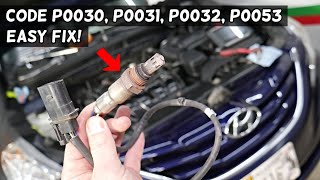
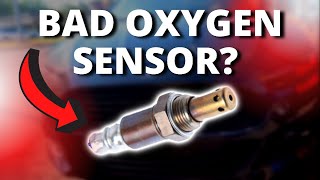
- Slight hesitation on acceleration before the engine is fully warm 🎬 Watch: Learn more about common symptoms of a bad sensor
- Replacing the downstream (Sensor 2) oxygen sensor instead of the upstream (Sensor 1) sensor.
- Replacing the oxygen sensor without first checking for a blown fuse or damaged wiring, which can lead to the new sensor also not working.
- Using a cheap, universal oxygen sensor that is not fully compatible, leading to the code returning.
Most Likely Causes
- Failed Oxygen Sensor Heater Element 🔴 High Probability The internal heater element is a common point of failure over time due to constant heating and cooling cycles.
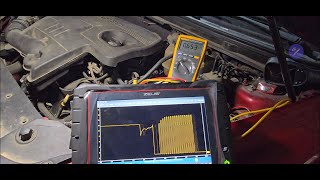
How to confirm: Disconnect the sensor and measure the resistance across the two heater pins (usually the two wires of the same color) with a multimeter. An infinite resistance reading (OL) indicates an open/failed circuit. 🎬 See this guide on how to test sensor heater circuits A typical Hyundai sensor should have a resistance of approximately 8.1 - 11.1 Ω at room temperature (around 68-70°F).
Typical fix: Replace the Bank 1, Sensor 1 (upstream) oxygen sensor.
Est. part cost: $50-$150 - Damaged Wiring or Connector 🟡 Medium Probability The wiring is close to the hot exhaust manifold and can become brittle, melt, or get damaged by road debris. The plastic connector can also become brittle and fail.
How to confirm: Visually inspect the wiring harness and connector leading to the oxygen sensor for any signs of melting, corrosion, chafing, or loose pins. Check for 12V power at the connector's power wire (Pin 4) with the key on, engine off. The ECM controls the heater via the ground side.
Typical fix: Repair the damaged section of the wiring harness or replace the connector pigtail.
Est. part cost: $10-$30 - Blown Fuse ⚪ Low Probability A short circuit in the heater wiring or the sensor itself can cause the associated fuse to blow.
How to confirm: Locate the fuse for the oxygen sensor heater circuit in the engine bay fuse box. It is often a 10A or 15A fuse labeled 'ECU #1', 'SNSR 1', or 'A/F Heater'. Visually inspect the fuse and test for continuity.
Typical fix: Replace the blown fuse. If it blows again, there is an underlying short circuit in the sensor or wiring that must be diagnosed.
Est. part cost: $1-$5
Rare But Worth Checking
- Faulty Engine Control Module (ECM): This is extremely rare. The ECM's internal driver for the heater circuit can fail. All other possibilities, especially the sensor, wiring, and fuse, must be exhaustively ruled out before considering the ECM as the cause.
Diagnosis Steps
- Read the trouble code with an OBD-II scanner to confirm P0030 is present.
- Visually inspect the Bank 1, Sensor 1 (upstream) oxygen sensor wiring harness and connector for any signs of damage, melting, or corrosion.
- Check the fuse box in the engine compartment for a blown fuse related to the sensor heater circuit. Look for fuses labeled 'SNSR 1', 'ECU #1', or similar, typically 10A or 15A.
- If the wiring and fuse are okay, disconnect the sensor. With the ignition on (engine off), use a multimeter to verify that there is battery voltage (approx. 12V) being supplied to the heater circuit power wire at the harness connector, specifically between terminal 4 and chassis ground.
- With the sensor still disconnected, use a multimeter to measure the resistance of the heater circuit on the sensor itself, across terminals 3 and 4. A reading of 'OL' or infinite resistance means the heater element is broken and the sensor must be replaced. A healthy sensor should show a resistance between 8.1 and 11.1 Ω at room temperature. Some service documents specify a target of approximately 9.0 Ω at 68°F.
- If the sensor's resistance is within spec and power is present at the harness, check the ground side of the circuit for continuity back to the ECM. The ECM uses a pulse-width modulated ground to control the heater, supplied via Pin 7 of the ECM connector [EGG-K].
- If all tests pass, the fault may be intermittent or, in very rare cases, an issue with the ECM driver circuit.
Parts You'll Likely Need
- Upstream Oxygen Sensor (Air/Fuel Ratio Sensor)
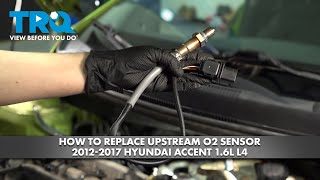
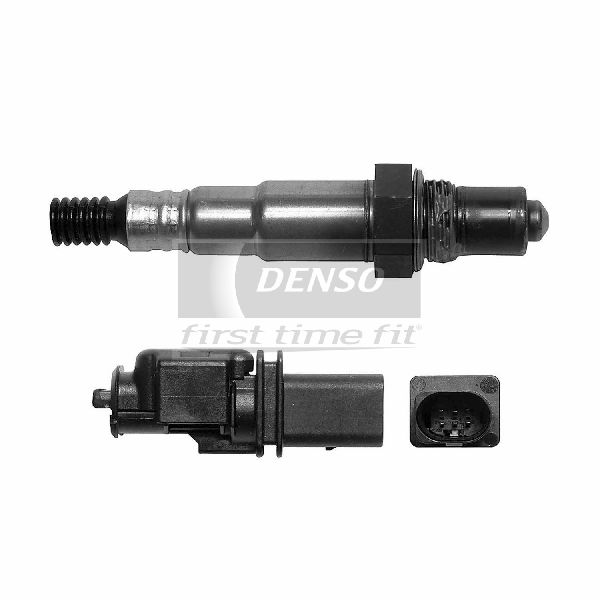
(OEM #39210-2B210 (supersedes 39210-2E400 for some applications, verify by VIN))— This is Bank 1, Sensor 1. 🎬 Watch: Step-by-step walkthrough for replacing the upstream O2 sensor The internal heater element is the most common failure point that triggers code P0030.
Trusted brands: Hyundai (OEM), NGK/NTK, Denso, Bosch
OEM price range: $120-$180
Aftermarket price range: $50-$110
Platform-Specific Known Issues
- Some owners have reported issues with cheaper, non-OEM specification oxygen sensors causing the code to persist or return quickly. It is recommended to use a direct-fit sensor from a reputable brand like Denso, NGK/NTK, or an OEM part.
Mechanic-Grade Diagnostic Values
- O2 Sensor Heater Element Resistance — expected: Approx. 9.0 Ω at 20°C (68°F).. Failure: An open circuit (OL on multimeter) or a resistance value greater than 1100 Ω.
- O2 Sensor Heater Power Supply Voltage — expected: Battery voltage (approx. 12V) with Ignition ON, Engine OFF.. Failure: 0V or significantly low voltage, indicating a blown fuse or wiring issue upstream.
- ECM Power Ground at ECM Connector — expected: Max. 50 mV between ground pins and chassis ground.. Failure: Higher voltage indicates a poor ground connection for the ECM.
Wiring & Ground Locations
- HO2S Connector (Harness Side) — On the wiring harness connecting to the upstream O2 sensor, near the exhaust manifold.. Pin 4 is the power supply from the main relay. Pin 3 is the ground control from the ECM. These are the primary test points for the circuit.
- HO2S Connector (Sensor Side) — The connector integrated with the oxygen sensor itself.. Terminals 3 and 4 are the pins for the internal heater element. Resistance is measured across these two pins to confirm if the heater has failed.
- ECM Connector [EGG-K], Pin 7 — At the Engine Control Module (ECM).. This specific pin provides the pulse-width modulated ground control for the O2 sensor heater. A continuity test from Pin 3 at the sensor connector to this pin can verify the control wire's integrity.
- Main Engine Ground Strap — A braided metal strap connecting the engine block to the vehicle's chassis/frame.. A corroded or broken main ground strap can cause numerous, hard-to-diagnose electrical issues, including incorrect sensor readings or fault codes like P0030, by creating an unstable ground reference for the entire engine management system.
Real Owner Repair Stories
- Go-Parts repair documentation citing forum data (2010-2014 Hyundai Sonata 2.4L GDI (similar platform)) — Check Engine Light with code P0030.
❌ Tried (didn't work) Initial diagnosis pointed directly to the sensor.
✅ What actually fixed it Replacement of the Bank 1, Sensor 1 (upstream) O2 sensor. The key takeaway was the physical difficulty of the repair; the sensor was seized in the exhaust manifold and required extensive soaking with penetrating oil to remove due to its tight location near the firewall. - NHTSA ODI #11675752 (Cross-manufacturer reference) — An owner of a similar Hyundai platform reported the Check Engine Light triggered by P0030 (HO2S Heater Control Circuit Bank 1, Sensor 1) alongside other codes like P0301 and P0302, requiring the vehicle to be towed to a dealer for diagnosis.
OEM Part Supersession History
39210-2E400 (and others)→39210-2B210— Part consolidation and potential design updates.
Heads up: While other sensors may physically fit, using a part other than the specified OEM number or a high-quality direct-fit equivalent (from brands like NGK/NTK or Denso) is known to cause the code to persist or return.
Diagnostic Flowchart
Other Known Issues on This Vehicle
Issues unrelated to this code that are worth knowing about as an owner of this generation:
- Engine Misfires / Ignition Coil Failure 🟠 Medium — Commonly reported between 30k-60k miles, often recurring. Can be caused by faulty coils, plugs, or wiring harness chafing.
- GDI Intake Valve Carbon Buildup 🟠 Medium — A systemic issue with all GDI engines. Becomes noticeable after 60k-100k miles, causing rough idle, hesitation, and reduced fuel economy. Requires manual cleaning (e.g., walnut blasting).
- Engine Wiring Harness Chafing 🔴 High — The harness can rub against a bracket near the brake master cylinder, causing shorts that can lead to blown fuses, misfires, or stalling.
- Engine Failure / Connecting Rod Bearing Wear 🔴 High — While more prominent on other Hyundai engines, the 1.6L Gamma GDI was included in class-action lawsuits and warranty extensions for premature bearing wear that could lead to engine seizure. (Ref: Warranty Extension (TXXM), Service Campaign 966/982 (KSDS Update))
- Failing Rear Shock Absorbers 🟡 Low — Rear shocks are known to leak and wear out prematurely, leading to a bouncy ride, clunking noises, and cupped tire wear.
Used vs. New Parts: Buying Guide for This Vehicle
When a used part is the smart pick: A used part is a reasonable choice for a replacement wiring harness pigtail or a fuse from the fuse box. These components do not have a typical wear life like a sensor does.
Donor-vehicle mileage cap: roughly under 150000 miles for the part to have meaningful remaining life.
What to inspect on the donor part:
- For a wiring pigtail, inspect for any signs of brittleness, cracking, or melting in the plastic connector and wire insulation.
- Ensure the connector's locking tab is intact and functional.
- Check for clean, corrosion-free metal terminals inside the connector.
OEM-only on this vehicle (don't cheap out):
- Oxygen Sensor: While not strictly 'OEM-only', it is highly inadvisable to use a used oxygen sensor as it is a primary wear item. A new sensor is the correct fix.
Aftermarket brands forum-validated for this vehicle:
- NGK/NTK
- Denso
- Bosch
Brands owners have reported issues with on this vehicle:
- Generic 'universal' oxygen sensors that require splicing wires are a common cause of persistent issues and should be avoided.
Real Owner Stories
Aggregated from forums and TSBs cited above. Mileages and costs reflect what owners reported in those sources.
2014 Hyundai Accent
Symptoms: Check Engine Light was on for a year. Current codes are P0130, P2626, P0030, and P0132. Vehicle also burns about a quart of oil per 1500 miles.
What fixed it: The issue was not resolved; the mechanic suspected the O2 sensor was being fouled by the vehicle's high oil consumption.
Source hint: reddit.com/r/MechanicAdvice - 2014 Hyundai Accent O2 Sensor CEL?
2017 Hyundai Accent — 82000 miles
Symptoms: Check engine light came on, revealing code P0030.
What fixed it: The post does not mention a fix; the owner was seeking advice after previously replacing the catalytic converter and crankshaft sensor.
Source hint: car-killer.com - [Solved] Should I fix or get rid of my Hyundai Accent?
Related OBD-II Codes
Frequently Asked Questions
Is there a specific brand of oxygen sensor I should use for my 2012-2017 Hyundai Accent to fix P0030?
Where is the fuse for the O2 sensor heater located on the 1.6L Gamma GDI engine?
Can the common engine wiring harness chafing issue on the Accent cause a P0030 code?
What should the resistance reading be for a healthy upstream oxygen sensor on this vehicle?
Does the 1.6L Gamma GDI engine have any warranty extensions that might be relevant if I have engine issues alongside P0030?
Why does my Accent hesitate when cold but run better once warm with this code?
Helpful Videos
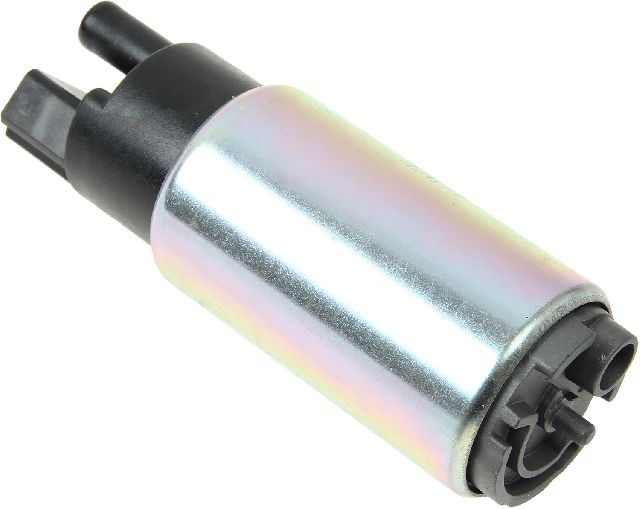
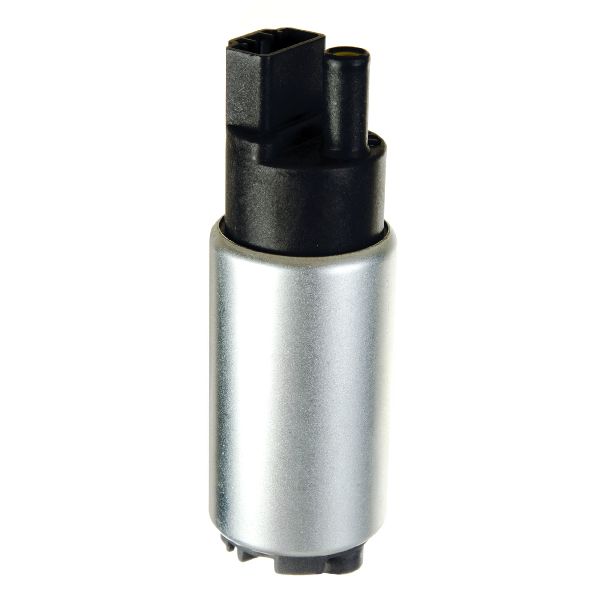
We Have This Part in Stock


The information in this article is provided for general reference and educational purposes only. Vehicle specifications, procedures, and part compatibility can vary by production date, trim level, and region. Always consult your vehicle's factory service manual and verify part numbers before purchasing or performing repairs. Safety-critical components such as airbags, seat belts, and braking systems should be installed by a qualified professional.
- Hyundai Accent:
- 🎬 Helpful Videos
- 🛍️ Shop This Part
- What's Unique About the 2012-2017 Hyundai Accent
- Symptoms You May Notice
- Most Likely Causes
- Rare But Worth Checking
- Diagnosis Steps
- Parts You'll Likely Need
- Platform-Specific Known Issues
- Mechanic-Grade Diagnostic Values
- Wiring & Ground Locations
- Real Owner Repair Stories
- OEM Part Supersession History
- Diagnostic Flowchart
- Other Known Issues on This Vehicle
- Used vs. New Parts: Buying Guide for This Vehicle
- Real Owner Stories
- 2014 Hyundai Accent
- 2017 Hyundai Accent — 82000 miles
- Related OBD-II Codes
- Frequently Asked Questions
- 🎟️ Get 5% Off