

P0030 on 2016-2020 Genesis G80 3.3L: O2 Sensor Heater Circuit Fault Causes and Fixes
On a 2016-2020 Genesis G80 with the 3.3L twin-turbo engine, code P0030 almost always means the heater inside the Bank 1, Sensor 1 oxygen sensor has failed. This is the upstream sensor on the passenger side. Replacing the sensor is the typical fix, costing around $70-$170 for an aftermarket part or $180-$330 for an OEM sensor. Before replacement, it is wise to check the related fuse.
- P0030 on your G80 3.3T points to a fault in the passenger-side upstream O2 sensor's heater.
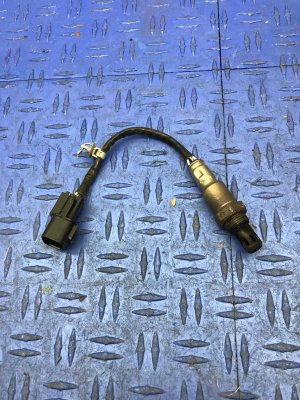
- The most likely fix is to replace the Bank 1, Sensor 1 O2 sensor (Part #39210-3L000).
- Always check the 'SNSR' or 'O2 HTR' fuse in the engine bay fuse box before buying parts.
- While you can drive with the light on, doing so for an extended period risks damaging the expensive catalytic converter.
- The wiring near the sensor is prone to heat damage; a visual inspection is crucial.
What's Unique About the 2016-2020 Genesis G80
The Genesis G80's 3.3L twin-turbo V6 (Lambda II G6DP) positions the Bank 1 (passenger side) oxygen sensor in a high-heat environment near the turbocharger and exhaust manifold. While the sensor's internal heater failing is a common wear-and-tear issue on most cars, the wiring harness on this platform is particularly susceptible to heat degradation over time. A recall (NHTSA ID: 22V063000, Hyundai recall 003G) on this engine for a leaking left turbocharger oil feed pipe highlights the potential for fluid leaks to damage sensor wiring, making a thorough visual inspection critical.
Symptoms You May Notice
- Check Engine Light is illuminated
- Decreased fuel economy
- Failure to pass an emissions test
- Slightly rough idle on a cold start
- Engine running in a fixed, less efficient fuel map during initial warm-up 🎬 See a breakdown of P0030 causes and fixes
- Replacing the wrong oxygen sensor (e.g., the downstream Sensor 2, or the upstream sensor on the driver's side, Bank 2). Always confirm Bank 1 is the passenger side on the 3.3L T-GDi engine.
- Replacing the sensor without first checking for a blown fuse.
Most Likely Causes
- Failed Bank 1, Sensor 1 Oxygen Sensor 🔴 High Probability The internal heating element is a common failure point due to constant, extreme heat cycles from the nearby turbocharger. This is the most frequent cause of P0030.
How to confirm: After confirming power and ground at the sensor connector, test the resistance of the heater circuit pins on the sensor itself using a multimeter. A healthy sensor should have a resistance between 3.3 and 4.1 Ω at room temperature (18-20°C / 64-82°F). An infinite resistance reading (open circuit) or a reading far outside this range confirms the heater has failed. 🎬 Watch: How to test and fix the heater circuit
Typical fix: Replace the Bank 1, Sensor 1 (Upstream, Passenger Side) oxygen sensor. The OEM part number is 39210-3L000.
Est. part cost: $70-$330 - Damaged Wiring or Connector 🟡 Medium Probability The sensor wiring is routed near the hot exhaust manifold and turbocharger, making it vulnerable to melting, chafing, or becoming brittle and cracking over time. Oil leaks from the known turbo feed line issue can also saturate and ruin the wiring.
How to confirm: Visually inspect the entire wiring harness leading to the Bank 1, Sensor 1 O2 sensor. Look for any signs of melting, frayed wires, or oil contamination. Check for secure connection and undamaged pins at the connector.
Typical fix: Repair the damaged section of wiring or replace the connector pigtail.
Est. part cost: $15-$50 - Blown Fuse for O2 Sensor Heater Circuit ⚪ Low Probability A short circuit within the oxygen sensor itself or its wiring can cause the dedicated fuse to blow as a protective measure. This should always be the first check.
How to confirm: Locate the fuse panel in the engine bay and identify the fuse for the oxygen sensor heaters (often labeled 'SNSR' or 'O2 HTR'). For the 2017-2020 G80, this is typically the 'SENSOR 2' 15A fuse in the engine compartment fuse box. Visually inspect the fuse or test it for continuity with a multimeter.
Typical fix: Replace the blown fuse. If the new fuse blows immediately, it indicates a persistent short circuit in the wiring or the sensor that must be found and fixed.
Est. part cost: $1-$5
Rare But Worth Checking
- Faulty Engine Control Module (ECM): This is extremely rare. The ECM's internal driver for the heater circuit can fail, but this should only be considered after all other possibilities (sensor, wiring, fuse) have been exhaustively ruled out.
Diagnosis Steps
- Connect an OBD-II scanner to confirm P0030 is the active code.
- Locate the fuse box in the engine compartment and inspect the fuse for the oxygen sensor heater circuit. On a 2018 G80, this is the 15A 'SENSOR 2' fuse. Replace if blown. This is the quickest and cheapest check.
- If the fuse is good, safely raise the vehicle and locate the Bank 1, Sensor 1 oxygen sensor. It is the upstream sensor (before the catalytic converter) on the passenger side of the engine.
- Visually inspect the sensor's wiring harness and connector for any signs of melting, corrosion, oil contamination, or physical damage.
- Disconnect the sensor. With the ignition on and engine off, use a multimeter to verify that the heater circuit in the vehicle-side connector is receiving battery voltage (around 12V) and has a good ground.
- If power and ground are present, measure the resistance across the two heater circuit pins on the O2 sensor itself. A healthy heater will have a resistance between 3.3 and 4.1 ohms at ambient temperature. An open circuit (infinite resistance) or short (near zero ohms) confirms the sensor's heater has failed.
- If the sensor tests good but power or ground is missing at the connector, you must trace the wiring back to the ECM to find the break or short.
- If the sensor's heater circuit is confirmed to be faulty, replace the Bank 1, Sensor 1 oxygen sensor (OEM Part #39210-3L000) using a 22mm (or 7/8") oxygen sensor socket.
Parts You'll Likely Need
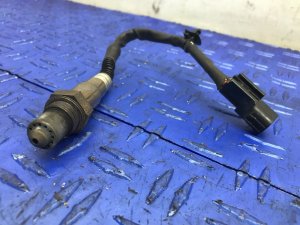
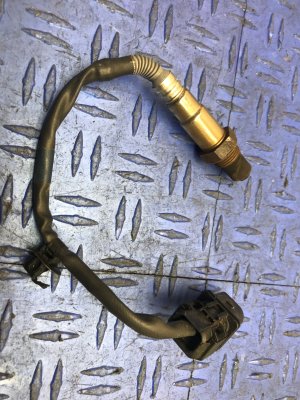
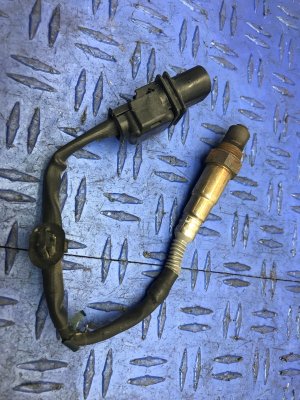
- Bank 1, Sensor 1 Oxygen Sensor
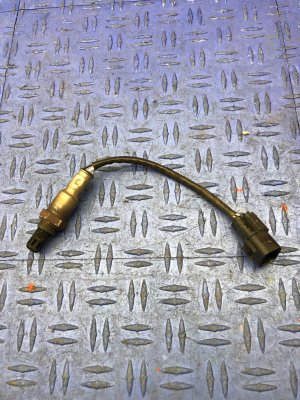
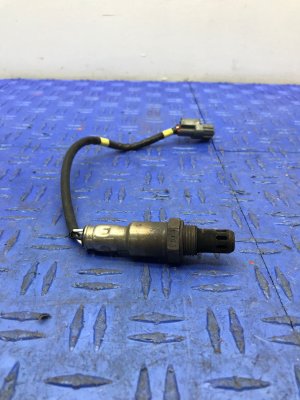
(OEM #39210-3L000)— This is the upstream (pre-catalytic converter) oxygen sensor for the passenger side cylinder bank. Its internal heater element is the most common failure point for code P0030.
Trusted brands: Hyundai/Genesis OE, Denso, Bosch, NGK/NTK
OEM price range: $180-$280
Aftermarket price range: $70-$170
Related Codes That Often Appear With This One
- P0031 — This code indicates low voltage in the same heater circuit and is often caused by a short to ground in the sensor or wiring.
- P0032 — This code indicates high voltage in the same heater circuit, which could be caused by a short to power in the wiring harness.
- P0050 — This is the identical heater circuit fault but for Bank 2 (driver's side). Seeing both codes together could point to a shared issue, like a blown fuse that powers both sensor heaters.
- P0135 — This is an alternative SAE code for the exact same fault: 'O2 Sensor Heater Circuit Malfunction (Bank 1 Sensor 1)'.
Platform-Specific Known Issues
- Access to the Bank 1 sensor can be tight due to the proximity of the turbocharger and heat shields. A proper 22mm (7/8") offset oxygen sensor socket is highly recommended for removal and installation. 🎬 Watch: Step-by-step guide to replacing an oxygen sensor
- Due to the known issue with the turbo oil feed line leaking, it is critical to inspect this area for oil contamination when diagnosing P0030, as a saturated sensor or wiring harness will fail.
Mechanic-Grade Diagnostic Values
- O2 Sensor Heater Circuit Power Supply — expected: ~12.6V with Key On, Engine Off; ~13.7-14.7V with engine running.. Failure: Low or no voltage indicates a problem with the fuse, relay, or the power supply wire from the main relay.
- O2 Sensor Heater Circuit Resistance (at sensor connector) — expected: 3.3 - 4.1 Ω at 18-20°C (64-82°F). Failure: An Open Loop (OL) or infinite resistance reading indicates a broken internal heater element. A reading near zero indicates a short circuit.
Scan Tool Commands That Help
- Hyundai GDS (Global Diagnostic System): O2 Sensor Heater Test — This bidirectional command allows a technician to manually activate the O2 sensor heater circuit. If the heater activates and draws current (viewable in live data), it confirms the ECM driver and wiring are likely intact, pointing more strongly to an intermittent sensor failure.
- Advanced OBD-II Scanner: Live Data - O2 Heater Current/Duty Cycle — When diagnosing, monitoring the live data for the Bank 1 Sensor 1 heater circuit can show if the ECM is commanding the heater on and if current is flowing. A 0% duty cycle or 0 amps when the heater should be active points to a circuit fault or a bad ECM driver.
Wiring & Ground Locations
- Engine Compartment Fuse Box — Located on the driver's side of the engine bay, near the battery.. This box contains the 'SENSOR 2' 15A fuse which provides power to the heater circuits for the oxygen sensors. It is the first and easiest electrical component to check.
- C134 Connector — This is the main 4-pin connector for the Bank 1, Sensor 1 oxygen sensor, located near the sensor on the passenger side of the transmission bell housing.. This is the primary test point for checking voltage, ground, and resistance. The heater circuit pins are typically the two wires of the same color (e.g., two black or two white wires). Damage or corrosion here is a common cause of the fault.
- G01 / G04 Engine Grounds — Main engine grounds are typically located on the fenders or strut towers within the engine bay. For example, a common ground point is on the left fender.. The O2 sensor heater circuit relies on a solid ground connection to complete its circuit. A loose or corroded engine ground can cause intermittent or high resistance faults for multiple sensors, including the O2 heater, leading to P0030.
Real Owner Repair Stories
- Genesis Owners Forum (2018 Genesis G80 3.3T) — Check Engine Light with code P0030.
❌ Tried (didn't work) Initially replaced the Bank 1 Sensor 1 O2 sensor, but the code returned.
✅ What actually fixed it Upon closer inspection, the wiring pigtail connector for the O2 sensor had become brittle from heat and was not making a secure connection. Replacing the connector pigtail with a new one and ensuring a tight fit permanently resolved the code.
OEM Part Supersession History
39210-3L000→No official supersession found. This part number remains the current OEM part for the specified vehicle and position.— N/A
Model Year Variations Within This Range
- 2016-2020: No significant variations related to the P0030 fault have been documented within this generation. The engine (3.3L Lambda II T-GDi), sensor part number, and wiring layout remained consistent. The primary change was the vehicle's rebranding from 'Hyundai Genesis' in 2016 to 'Genesis G80' for 2017-2020.
Diagnostic Flowchart
Other Known Issues on This Vehicle
Issues unrelated to this code that are worth knowing about as an owner of this generation:
- Intake Valve Carbon Buildup 🟠 Medium — Common on GDI engines, typically becomes noticeable after 40,000-80,000 miles, causing rough idle and misfires. Preventative cleaning with products like Seafoam or CRC is recommended by some owners.
- Low-Pressure Fuel Pump Failure 🔴 High — A widespread issue leading to stalling and loss of power, especially in high ambient temperatures. Affects many 2021-2023 models but the issue is known on earlier platforms too. (Ref: NHTSA Campaign 23V-630 (and expansion 022G))
- Leaking Turbocharger Oil Feed Pipe (Left Side) 🔴 High — The original flexible oil feed line can deteriorate and leak oil onto the hot exhaust manifold, creating a fire risk. (Ref: NHTSA ID: 22V063000 / Hyundai Recall 003G / 019G)
- Oxidation of Black Window Trim 🟡 Low — The black chrome trim around the windows on G80 Sport and G70 models is known to fade, spot, or oxidize over time. (Ref: A TSB exists for the G70, but the issue is also common on the G80.)
- Panoramic Sunroof Creak/Rattle 🟡 Low — A common complaint where the panoramic sunroof assembly develops creaks or rattles over bumps.
- Electrical Gremlins / Wiring Harness Issues 🟠 Medium — Some owners report difficult-to-diagnose electrical issues, sometimes requiring replacement of the main engine wiring harness to fix.
Used vs. New Parts: Buying Guide for This Vehicle
When a used part is the smart pick: A used wiring harness pigtail is a viable option if the original connector is damaged (cracked, melted, broken lock tab). It is often more cost-effective than repairing individual pins or buying a whole new engine harness.
Donor-vehicle mileage cap: roughly under 80000 miles for the part to have meaningful remaining life.
What to inspect on the donor part:
- For a pigtail: Ensure the plastic is not brittle, the locking tab is intact, and there are at least 6 inches of clean, un-spliced wire.
- Check for any signs of melting, oil saturation, or corrosion on the connector pins.
- Avoid parts from vehicles with fire or flood damage.
OEM-only on this vehicle (don't cheap out):
- Engine Control Module (ECM) - Due to the need for vehicle-specific programming (VIN flashing), a used ECM is not a plug-and-play solution and should only be sourced and programmed by a qualified specialist or dealer.
Aftermarket brands forum-validated for this vehicle:
- For Oxygen Sensors: Denso, Bosch, and NGK/NTK are highly regarded OEM suppliers and their aftermarket versions are considered reliable replacements.
Brands owners have reported issues with on this vehicle:
- Unbranded, low-cost 'generic' oxygen sensors from online marketplaces are frequently reported to fail prematurely or provide inaccurate readings, causing the code to return or new codes to appear.
Real Owner Stories
Aggregated from forums and TSBs cited above. Mileages and costs reflect what owners reported in those sources.
2019 Genesis G70 3.3L T-GDi
Symptoms: Check engine light appeared and the car entered limp mode after driving following an exhaust component installation; the code was P0030 for the heater circuit on the upstream bank 1 sensor.
What fixed it: The owner identified the issue as the heater circuit on the upstream O2 sensor.
Source hint: reddit r/GenesisG70
Genesis G80 3.3L T-GDi
Symptoms: Owner received a P0030 code and performed a resistance test on the Bank 1 Sensor 1.
What fixed it: The resistance test showed an open circuit; replacing the Bank 1 Sensor 1 oxygen sensor resolved the issue.
Source hint: genesisowners.com - Thread: 'P0030 code, what to check?'
Related OBD-II Codes
Frequently Asked Questions
Which fuse should I check first for a P0030 code on my 2017-2020 Genesis G80?
What is the specific OEM part number for the Bank 1 Sensor 1 oxygen sensor on the 3.3L T-GDi engine?
Can an oil leak cause the P0030 code on my G80?
Is there a specific tool recommended for replacing the sensor due to the tight space near the turbo?
What resistance should I see when testing the heater circuit on a new sensor?
Does the Kia Stinger share this same O2 sensor issue?
Helpful Videos


We Have This Part in Stock

The information in this article is provided for general reference and educational purposes only. Vehicle specifications, procedures, and part compatibility can vary by production date, trim level, and region. Always consult your vehicle's factory service manual and verify part numbers before purchasing or performing repairs. Safety-critical components such as airbags, seat belts, and braking systems should be installed by a qualified professional.
- Genesis G80:
- 🎬 Helpful Videos
- 🛍️ Shop This Part
- What's Unique About the 2016-2020 Genesis G80
- Symptoms You May Notice
- Most Likely Causes
- Rare But Worth Checking
- Diagnosis Steps
- Parts You'll Likely Need
- Related Codes That Often Appear With This One
- Platform-Specific Known Issues
- Mechanic-Grade Diagnostic Values
- Scan Tool Commands That Help
- Wiring & Ground Locations
- Real Owner Repair Stories
- OEM Part Supersession History
- Model Year Variations Within This Range
- Diagnostic Flowchart
- Other Known Issues on This Vehicle
- Used vs. New Parts: Buying Guide for This Vehicle
- Real Owner Stories
- 2019 Genesis G70 3.3L T-GDi
- Genesis G80 3.3L T-GDi
- Related OBD-II Codes
- Frequently Asked Questions
- 🎟️ Get 5% Off