

P0030 on 2002-2008 Ford Fiesta 1.4L: Heater Circuit Fault Causes and Fixes
This code almost always means the heating element inside the upstream oxygen sensor (Bank 1, Sensor 1) has failed. Replacing the sensor is the most common fix. Expect to pay $40-$90 for an aftermarket sensor and $100-$180 for an OEM part. It can be a tough DIY job if the old sensor is seized, but it is a very common and well-understood issue for this vehicle.
- P0030 on your Fiesta almost certainly means you need a new upstream (pre-catalytic converter) oxygen sensor.
- Before buying a new sensor, it's wise to quickly check the fuse for the O2 sensor heater circuit.
- Invest in a quality replacement sensor from a known brand like Bosch, Denso, or Motorcraft to avoid further issues.
- Be prepared for a difficult removal of the old sensor. Use plenty of penetrating fluid and the correct O2 sensor socket.
- Do not replace the downstream (post-catalytic converter) sensor for this code; it will not solve the problem.
What's Unique About the 2002-2008 Ford Fiesta
For the Mk5 Fiesta (2002-2008), the P0030 code is a straightforward and very common issue, almost always pointing directly to a failed original oxygen sensor. While there are no specific recalls or bulletins for the Fiesta for this code, Ford has issued Technical Service Bulletins (TSBs) for similar O2 sensor heater circuit codes on other models from the same era, like the Escape and Fusion, indicating a known pattern of this type of failure across the brand. The simplicity of the inline-4 engine means there is only one 'Bank 1', making diagnosis less complicated than in V-type engines.
Symptoms You May Notice
- Check Engine Light is on
- Reduced fuel mileage
- Rough or unstable idle, especially when first starting the engine
- Failing a vehicle emissions test
- Engine may run in a default 'fixed' fuel mix mode until the sensor warms up.
- Replacing the wrong sensor (Sensor 2, the downstream sensor, will not fix this code).
- Using a very cheap, low-quality universal oxygen sensor. These can fail quickly or have incorrect resistance values, sometimes causing new trouble codes like P0130 to appear immediately after replacement.
Most Likely Causes
- Failed Upstream Oxygen Sensor 🔴 High Probability The internal heating element within the sensor is a common failure point due to age and constant heat cycles. Forum discussions among Fiesta owners confirm this is the most frequent culprit.
How to confirm: Disconnect the sensor and use a multimeter to measure the resistance between the two heater circuit wires (often the two wires of the same color, typically white). An infinite resistance reading ('OL' or open circuit) confirms the heater has failed. A good sensor will have a low resistance, typically between 4 and 30 Ohms.
Typical fix: Replace the Bank 1, Sensor 1 (upstream) oxygen sensor.
Est. part cost: $40-$90 - Blown Fuse 🟡 Medium Probability
How to confirm: Check the fuse box located in the engine bay. On a Mk5/Mk6 Fiesta, the relevant fuse is often a 15A fuse labeled for the heater circuit, but its exact numbering can be confusing. One owner on Reddit noted difficulty locating the specific fuse, as it may be shared and not explicitly labeled 'O2'. Always check all related fuses in both the engine bay and passenger compartment fuse boxes.
Typical fix: Replace the blown fuse. If the fuse blows again, it indicates a short circuit in the wiring or the sensor itself that needs to be diagnosed.
Est. part cost: $1-$5 - Damaged Wiring or Connector ⚪ Low Probability The wiring is close to the hot exhaust and can become brittle, melt, or fray over time. The connector can also suffer from corrosion.
How to confirm: Visually inspect the wiring harness leading to the upstream O2 sensor for any signs of melting, chafing, or broken wires. Check that the connector is securely plugged in and that the pins are clean and free of corrosion.
Typical fix: Repair the damaged section of the wiring harness or clean/replace the connector.
Est. part cost: $5-$50
Rare But Worth Checking
- Faulty Powertrain Control Module (PCM): This is extremely rare. The PCM's internal driver for the heater circuit can fail, but you should exhaust all other possibilities before considering the PCM as the cause.
Diagnosis Steps
- Read the code with an OBD-II scanner to confirm P0030 is the primary fault.
- Visually inspect the Bank 1, Sensor 1 (upstream, in the exhaust manifold) wiring and connector for obvious damage like melting, fraying, or corrosion.
- Locate and check the fuse for the oxygen sensor heater circuit. Refer to your owner's manual or the fuse box diagram. If it's blown, replace it and see if the code returns.
- If the fuse is good, turn the ignition off and disconnect the oxygen sensor.
- Using a multimeter set to measure resistance (Ohms), test the heater circuit on the sensor side of the connector. Probe the two wires that are the same color (usually white). A reading of 'OL' or infinite resistance means the heater is broken and the sensor must be replaced. A good sensor will typically have a low resistance, often between 4 and 30 Ohms.
- If the sensor's resistance is good, check for 12V power at the heater circuit pin on the vehicle's harness connector with the key on, engine off.
- If power and the sensor are good, the final step is to check for a problem in the ground wire or the PCM driver, which may require a professional.
- The most likely outcome of this diagnosis is a failed sensor heater, requiring sensor replacement.
Parts You'll Likely Need
- Upstream Oxygen Sensor (Bank 1, Sensor 1)
(OEM #3N21-9F472-AA, 3M51-9F472-AB)— This is the component that contains the heater circuit reported by the P0030 code. The internal heater element failing from age is the most common cause of the fault.
Trusted brands: Bosch, Denso, NTK, Motorcraft
OEM price range: $100-$180
Aftermarket price range: $40-$90
Related Codes That Often Appear With This One
- P0135 — This code is also for 'O2 Sensor Heater Circuit Malfunction (Bank 1 Sensor 1)'. It is functionally identical to P0030 and they often appear together, as seen in Ford TSB TSB-14-0129 for other models.
- P0130 — This code indicates an 'O2 Sensor Circuit Malfunction'. It can sometimes appear if a failing heater circuit causes erratic sensor readings, or if a poor quality replacement sensor is used, as noted by an owner on the RAC forum who experienced this after fitting a cheap eBay sensor.
- P0053 — This is a more specific Ford code for 'HO2S Heater Resistance (Bank 1, Sensor 1)'. If you see this alongside P0030, it strongly confirms the issue is the resistance of the heater element itself, rather than a wiring short or power supply problem.
Technical Service Bulletins (TSBs) & Recalls
- TSB-14-0129: While for the 2013 Ford Escape, it shows Ford acknowledging P0030 in conjunction with other O2 sensor codes, pointing to a known type of issue.
- TSB 16-0143: Pertains to 2010 Ford Fusion Hybrids but directly calls out a service procedure for P0030, further establishing manufacturer awareness of this fault code.
Platform-Specific Known Issues
- The upstream oxygen sensor can be very difficult to remove from the exhaust manifold after years of heat cycles. A Reddit user noted it took 'a lot of effort to unscrew the old one'. Penetrating oil and a proper 22mm (7/8") oxygen sensor socket are highly recommended. In severe cases, mechanics or DIYers have had to cut the old sensor body off to fit a standard socket over the hex base.
Mechanic-Grade Diagnostic Values
- O2 Sensor Heater Element Resistance — expected: 4 - 30 Ohms (A common range; one Ford example cited 5-6 Ohms). Failure: Infinite resistance ('OL' on multimeter), indicating an open circuit.
- Heater Circuit Power Supply (KOEO) — expected: 12 Volts (Battery Voltage). Failure: 0 Volts, indicating a blown fuse or an open in the power feed wire.
- Scan Tool Heater Command Test (Live Data) — expected: When heater is commanded 'ON', status PID changes to 'Yes' or 'Active' and voltage on a specific PID may drop significantly (e.g., from ~4V to ~0.4V).. Failure: Status does not change to 'Yes'/'Active' or voltage does not drop, indicating the PCM command is not being executed or the circuit is open.
Hidden / Shadow Codes Worth Checking
- P0053: HO2S Heater Resistance (Bank 1, Sensor 1) Out of Limits. This is a more specific fault than P0030, directly indicating the sensor's internal resistance is the problem. (see via May be displayed alongside P0030 on more advanced OBD-II scanners or Ford-specific tools like FORScan or IDS.)
Scan Tool Commands That Help
- FORScan / Ford IDS / Advanced OBD-II Scanners: HO2S Heater Actuation Test / Output State Control — Use this after confirming the fuse is good. This command directly tells the PCM to turn the heater circuit on and off. By monitoring live data (voltage, current, heater status PID), you can confirm if the PCM is sending the signal and if the circuit is complete, helping to isolate the fault between the PCM, wiring, or the sensor itself.
Wiring & Ground Locations
- B72-I (Heated Oxygen Sensor 1) — The upstream oxygen sensor, located in the exhaust manifold before the catalytic converter.. This is the component monitored by the P0030 code, as identified in vehicle wiring diagrams.
- Sensor Connector Heater Pins — On the 4-pin sensor connector, the heater circuit corresponds to the two wires of the same color (typically white). On some Ford connectors, these may be pins 3 and 4.. These are the specific pins to probe with a multimeter to test the sensor's internal heater resistance and to check for 12V power from the vehicle harness.
Real Owner Repair Stories
- Reddit user 'mikefromengland' (2002 Ford Fiesta, 99k miles) — P0030 code, running poorly especially when cold.
❌ Tried (didn't work) Initial diagnosis
✅ What actually fixed it Replacing the upstream oxygen sensor resolved the problem. The user noted that removing the old, seized sensor required 'a lot of effort'. - YouTube channel 'mechanicRHP' (2017 Ford Fiesta 1.6L (newer model but highly relevant principle)) — P0030, P0131, P2237 codes present.
❌ Tried (didn't work) A previous mechanic had already replaced the original sensor with a quality aftermarket NTK sensor.
✅ What actually fixed it The mechanic diagnosed that even though the aftermarket NTK sensor's heater resistance tested 'good' (not open), it was not warming up to OEM specifications, causing the fault. Replacing the NTK sensor with a genuine Ford/Motorcraft OEM part resolved all codes permanently.
OEM Part Supersession History
3N21-9F472-AA→3M51-9F472-AB— Part evolution and consolidation. The 3M51 part number appears to be a widely used replacement for many Ford 4-cylinder applications of this era.
Heads up: While many aftermarket brands cross-reference to these numbers, owner and mechanic experience suggests genuine Motorcraft parts are less likely to cause secondary or performance-related codes.
Model Year Variations Within This Range
- 2002-2008: This range includes the pre-facelift (Mk6, ~2002-2005) and post-facelift (Mk6.5, ~2005-2008). While there were significant cosmetic and interior changes, the powertrain is considered identical. Therefore, the cause, diagnosis, and fix for P0030 are the same across the entire generation. Owners should be aware that parts suppliers in different regions (UK vs. Europe) may use different 'Mk' numbers, which can cause confusion when ordering parts.
Diagnostic Flowchart
Other Known Issues on This Vehicle
Issues unrelated to this code that are worth knowing about as an owner of this generation:
- Leaking Thermostat Housing 🔴 High — Very common failure. The plastic housing is known to crack or warp with age, causing coolant leaks. Often occurs after 60,000 miles.
- Power Steering Pump Failure 🟠 Medium — The hydraulic power steering pump can become noisy (whining, groaning) and eventually fail, leading to stiff steering. This is more common on higher mileage vehicles.
- IB5 Manual Gearbox Bearing/Synchro Wear 🟠 Medium — The IB5 5-speed gearbox can suffer from input shaft bearing failure (whining noise) and synchromesh wear, particularly for 1st and 2nd gear, causing grinding or difficulty shifting.
- Body Rust 🟡 Low — Rust is common, especially on earlier models. Key areas include the rear wheel arches, sills, door bottoms, and around the ORVM (wing mirror) mounts.
- EAC (Electronic Accelerator Control) Failure 🟠 Medium — A known issue on 1.25 and 1.4 petrol engines where the 'EAC FAIL' message appears, causing poor throttle response. It is often due to a faulty throttle position sensor or corroded wiring connectors.
Used vs. New Parts: Buying Guide for This Vehicle
When a used part is the smart pick: It is strongly recommended to never use a used oxygen sensor. They are a sensitive emissions component and a wear-and-tear item with a finite lifespan. The cost savings are minimal compared to the high probability of premature failure or incorrect performance.
What to inspect on the donor part:
- Not applicable, as used parts are not recommended.
OEM-only on this vehicle (don't cheap out):
- Upstream Oxygen Sensor (Bank 1, Sensor 1)
Aftermarket brands forum-validated for this vehicle:
- Bosch
- Denso
- NTK (Note: While a top brand, one documented case showed it underperforming compared to OEM on a Fiesta, so proceed with caution)
Brands owners have reported issues with on this vehicle:
- Unbranded 'universal' sensors
- Suspiciously low-priced sensors from online marketplaces
Real Owner Stories
Aggregated from forums and TSBs cited above. Mileages and costs reflect what owners reported in those sources.
2002 Ford Fiesta 1.4L Petrol
Symptoms: Check engine light on with a P0030 code; the car is not running well, especially when the engine is cold.
What fixed it: Replacing the upstream oxygen sensor (Bank 1, Sensor 1).
Source hint: r/MechanicAdvice - '2002 ford fiesta p0030 code' (https://www.reddit.com/r/MechanicAdvice/comments/3we6j8/2002_ford_fiesta_p0030_code/)
2004 Ford Fiesta 1.25L Petrol
Symptoms: Original P0030 code was present; after installing a cheap replacement sensor, the car threw a P0130 code.
What fixed it: The owner's experience highlighted the need for quality parts rather than cheap alternatives to resolve sensor circuit issues.
Source hint: RAC Forum - 'Ford Fiesta 1.25 2004 O2 Sensor' (https://www.rac.co.uk/forum/vehicle-troubleshooting/ford/fiesta/207033-ford-fiesta-1-25-2004-o2-sensor)
2002-2008 Ford Fiesta Mk6
Symptoms: P0030 code triggered; owner had significant difficulty locating the specific fuse for the heater circuit as it wasn't clearly labeled.
What fixed it: Troubleshooting the heater circuit and checking for the correct 15A fuse in the engine bay.
Source hint: Ford Owners Club - 'Ford Fiesta Mk6 O2 Sensor Heater Circuit P0030'
Related OBD-II Codes
Frequently Asked Questions
I'm having trouble finding the fuse for the O2 heater on my Mk6 Fiesta; where is it?
Does TSB 14-0129 or TSB 16-0143 apply to my 2002-2008 Fiesta?
What resistance should I see when testing the upstream sensor on my 1.4L Petrol Fiesta?
Is it true that the O2 sensor is hard to remove on this specific model?
Can I use a cheap aftermarket sensor to fix the P0030 code?
My Fiesta shows 'EAC FAIL' along with engine issues; is this related to P0030?
Helpful Videos
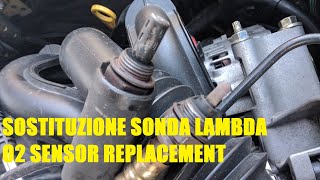
We Have This Part in Stock
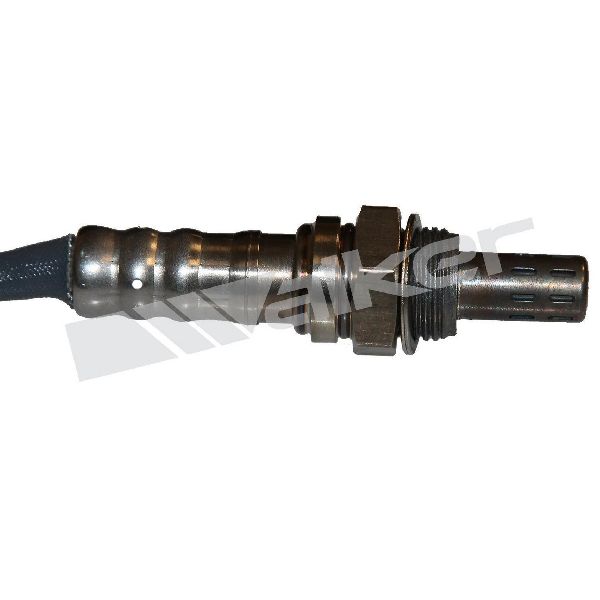
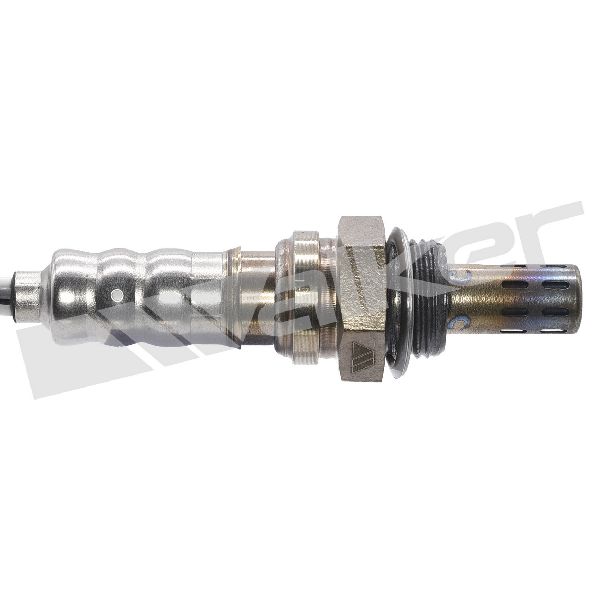

The information in this article is provided for general reference and educational purposes only. Vehicle specifications, procedures, and part compatibility can vary by production date, trim level, and region. Always consult your vehicle's factory service manual and verify part numbers before purchasing or performing repairs. Safety-critical components such as airbags, seat belts, and braking systems should be installed by a qualified professional.
- Ford Fiesta:
- 🎬 Helpful Videos
- 🛍️ Shop This Part
- What's Unique About the 2002-2008 Ford Fiesta
- Symptoms You May Notice
- Most Likely Causes
- Rare But Worth Checking
- Diagnosis Steps
- Parts You'll Likely Need
- Related Codes That Often Appear With This One
- Technical Service Bulletins (TSBs) & Recalls
- Platform-Specific Known Issues
- Mechanic-Grade Diagnostic Values
- Hidden / Shadow Codes Worth Checking
- Scan Tool Commands That Help
- Wiring & Ground Locations
- Real Owner Repair Stories
- OEM Part Supersession History
- Model Year Variations Within This Range
- Diagnostic Flowchart
- Other Known Issues on This Vehicle
- Used vs. New Parts: Buying Guide for This Vehicle
- Real Owner Stories
- 2002 Ford Fiesta 1.4L Petrol
- 2004 Ford Fiesta 1.25L Petrol
- 2002-2008 Ford Fiesta Mk6
- Related OBD-II Codes
- Frequently Asked Questions
- 🎟️ Get 5% Off