

P0030 on 2011-2016 Ford F-250 Super Duty 6.2L: Heater Circuit Fault Causes & Fixes
For the 2011-2016 Ford F-250 with the 6.2L V8, code P0030 almost always means the heater element inside the Bank 1, Sensor 1 (passenger side, upstream) oxygen sensor has failed. Replacing the sensor is the most common fix, costing between $50 for an aftermarket part and $150 for an OEM Motorcraft sensor. Before replacement, check fuse 53 in the under-hood fuse box.
- P0030 on a 2011-2016 F-250 6.2L points to a fault in the heater circuit for the passenger side, pre-catalytic converter oxygen sensor.
- The most likely cause is a failed heater element inside the oxygen sensor itself, which requires replacing the sensor.
- Before replacing the sensor, always check fuse #53 (20A) in the under-hood fuse box and inspect the wiring harness for damage, as these are less expensive potential fixes.
- This is a common DIY repair with a difficulty of 2 out of 5. The main challenge can be accessing the sensor and removing it if it's seized in the exhaust manifold.
- Driving with this code will not cause immediate damage, but it will reduce fuel efficiency and cause the truck to fail an emissions test.
What's Unique About the 2011-2016 Ford F-250 Super Duty
On the Ford F-250 with the 6.2L V8, this code is a straightforward electrical fault. There are no widespread, unique design flaws that make this truck more susceptible to P0030 than other vehicles. The primary cause is simply the eventual failure of the oxygen sensor's internal heater element due to age and countless heat cycles. The location of the sensor on the passenger-side exhaust manifold makes it vulnerable to typical under-vehicle conditions like water, salt, and road debris, which can degrade the sensor and its wiring connector over time. A critical, though not common, issue on 6.2L-equipped Ford trucks is the potential for the main engine wiring harness to sag and melt on the exhaust manifold or header, causing a short circuit that can blow fuses and trigger P0030 along with other codes.
Symptoms You May Notice
- Check Engine Light is on
- Decreased fuel economy
- Slightly rough running or hesitation when the engine is cold
- Failure to pass a state emissions/smog test
- Replacing the oxygen sensor without first checking the wiring and fuses. If a new sensor doesn't fix the problem, the issue is likely in the wiring harness or a blown fuse.
- Assuming the sensor is bad when the actual problem is a lack of power or ground at the connector due to a wiring or fuse issue.
Most Likely Causes
- Failed Bank 1, Sensor 1 Oxygen Sensor 🔴 High Probability The internal heater element is a common failure point on all heated oxygen sensors after years of heat cycles and exposure to the elements. It's considered a wear-and-tear item.
How to confirm: Disconnect the sensor and use a multimeter to check the resistance across the two heater circuit pins (usually the two same-colored wires). A good sensor should have a resistance reading between 3 and 25 ohms when cold. An infinite resistance reading (Open Loop/OL) or a reading well outside this range confirms the heater has failed.
Typical fix: Replace the Bank 1, Sensor 1 (passenger side, upstream) oxygen sensor.
Est. part cost: $50-$150 - Damaged Wiring or Connector 🟡 Medium Probability The wiring harness for the O2 sensor is located under the vehicle, exposed to heat from the exhaust, road debris, and moisture, which can cause wires to melt, fray, or corrode over time. On some 6.2L trucks, the main harness can sag onto the exhaust manifold, causing multiple wires to short to ground.
How to confirm: Visually inspect the wiring harness and connector leading to the sensor for any signs of melting, chafing, corrosion, or broken wires. With the key on and engine off, check for 12-volt power on the power supply wire and a good ground signal on the control wire at the connector. The PCM provides a pulsed ground signal to activate the heater.
Typical fix: Repair the damaged section of wiring or replace the pigtail connector. The Motorcraft pigtail is part number WPT-1253.
Est. part cost: $15-$40 - Blown Fuse ⚪ Low Probability A short circuit in the heater element of any of the O2 sensors or its wiring can cause the corresponding fuse to blow. If the fuse is blown, it's wise to inspect all O2 sensor wiring, not just Bank 1, Sensor 1.
How to confirm: Check fuse #53 (20A) in the under-hood power distribution box. It is often labeled for 'Universal exhaust gas oxygen sensors'. Visually inspect the fuse or test it for continuity with a multimeter.
Typical fix: Replace the blown fuse. If it blows again, a short circuit in one of the O2 sensor heater circuits must be diagnosed and repaired.
Est. part cost: $1-$5
Rare But Worth Checking
- Faulty Powertrain Control Module (PCM): This is extremely rare for just a P0030 code. The PCM should only be considered after all other possibilities, including the sensor, wiring, and fuses, have been thoroughly tested and ruled out. A failed PCM driver for the heater circuit is the specific issue. These PCMs are known to have issues with injector and coil drivers, but O2 heater driver failure is less common.
Diagnosis Steps
- Retrieve the trouble code using an OBD-II scanner to confirm P0030 is the primary code.
- Locate the Bank 1, Sensor 1 oxygen sensor. On the 6.2L V8, it is on the passenger side, in the exhaust manifold before the catalytic converter.
- Visually inspect the wiring harness and connector for any obvious damage, such as melting on the exhaust, corrosion in the plug, or frayed wires. Pay close attention to the main harness routing near the exhaust manifolds.
- Check fuse #53 (20A) in the engine compartment fuse box. Replace if blown. If it blows again, you have a short circuit to diagnose.
- If the fuse is good, disconnect the sensor. With the ignition on (engine off), use a multimeter to verify that you have ~12V power on one pin of the vehicle-side connector and check for ground on the corresponding heater circuit pin (the PCM provides this ground).
- If power and ground are present at the connector, test the resistance of the heater circuit on the sensor itself. Use a multimeter across the two same-colored pins. A reading between 3-25 ohms is good. A reading of OL (Open Loop) means the heater element is broken and the sensor must be replaced.
- If the sensor tests good but there is no power or ground at the connector, the wiring issue is between the fuse box/PCM and the connector. Test continuity of the heater control wire (Green/Brown) from the sensor connector to Pin 24 of PCM connector C175T.
- After replacing the sensor or repairing the wiring, clear the code with the scanner and perform a drive cycle to ensure the light does not return.
Parts You'll Likely Need
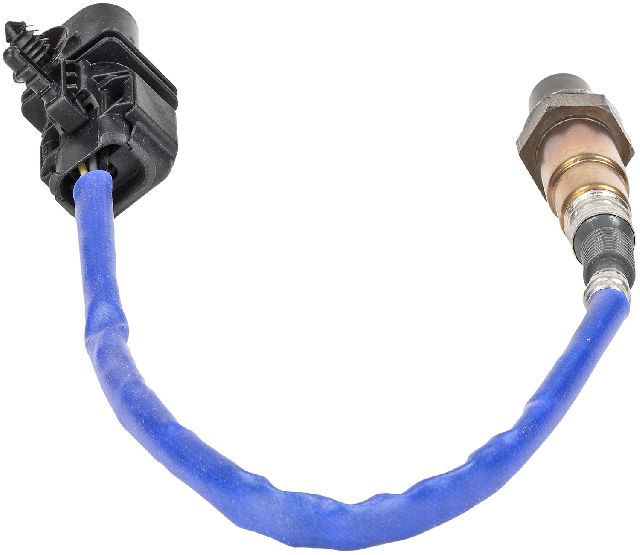
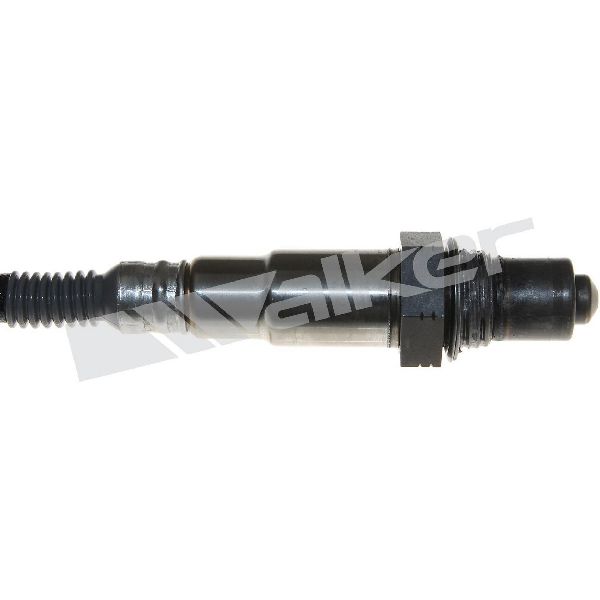
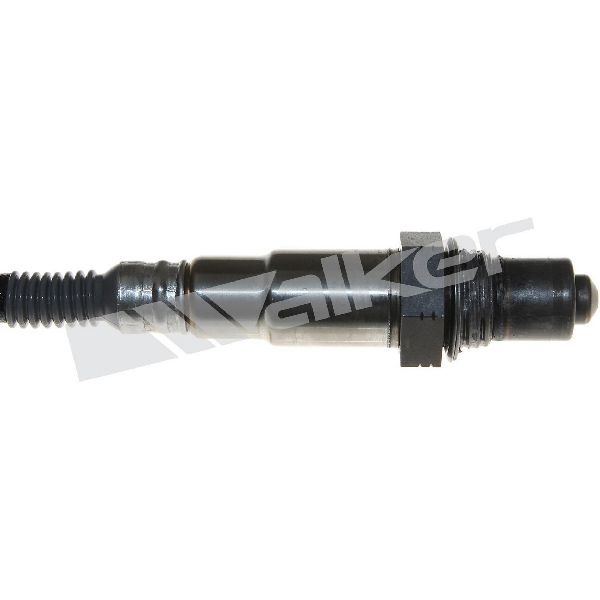
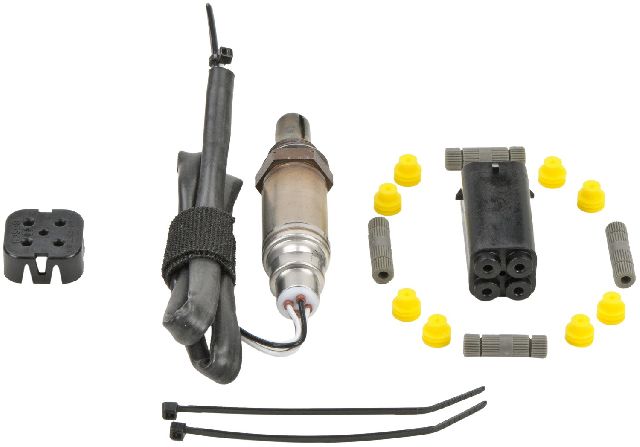
- Bank 1 Sensor 1 Oxygen Sensor (Upstream, Passenger Side)
(OEM #BL3Z-9F472-A)— This is the most common failure point for code P0030, as the internal heater element wears out over time.
Trusted brands: Motorcraft, Bosch, Denso, NGK/NTK
OEM price range: $100-$150
Aftermarket price range: $50-$90
Technical Service Bulletins (TSBs) & Recalls
- TSB 20-2365: While for a newer model year (2020) and covering a wider range of O2 sensor codes, this TSB acknowledges a problem with water intrusion into the O2 sensor harness connectors on the transmission harness of F-Super Duty trucks, leading to heater circuit faults. This corroborates that the wiring harness is a potential point of failure.
- Bulletin #TSB-14-0129: Across other Ford platforms, the manufacturer notes that P0030 can be stored in the PCM memory along with other heater circuit codes like P0135, causing the Malfunction Indicator Lamp to illuminate.
- Bulletin #TSB 16-0143: This manufacturer service bulletin describes instances where vehicles exhibit an illuminated MIL with DTCs P0030 and/or P0130, requiring specific service procedure steps to correct the condition.
Platform-Specific Known Issues
- Owner Experience: Seized Sensor: An owner on Ford-Trucks.com shared their experience replacing a cracked exhaust manifold, a job which also requires removing the O2 sensor. They recommended soaking the sensor threads with a high-quality penetrating oil like Kroil for several days before attempting removal to prevent it from seizing or breaking off in the manifold. Accessing the sensor may require removing the inner fender liner.
Mechanic-Grade Diagnostic Values
- HO2S Heater Element Resistance — expected: 3 - 25 Ohms (when cold). Failure: Infinite resistance (OL) indicates an open circuit; a reading far outside the expected range indicates a fault.
- HO2S Heater Power Supply at Connector — expected: ~12 Volts (Battery Voltage). Failure: 0 Volts indicates a blown fuse or a break in the power supply wire.
- HO2S Heater Control Circuit at PCM — expected: Continuity between sensor connector and Pin 24 of PCM connector C175T.. Failure: No continuity (OL) indicates a break in the Green/Brown wire.
Hidden / Shadow Codes Worth Checking
- P0053: HO2S Heater Resistance (Bank 1, Sensor 1). This is a more specific fault code than P0030 and indicates the PCM has detected that the resistance of the heater element itself is out of specification. (see via A professional scan tool, including Ford's IDS, can retrieve this and other related codes that may not be visible on all basic OBD-II readers.)
Scan Tool Commands That Help
- Ford IDS (Integrated Diagnostic System): Key On Engine Off (KOEO) Self-Test — This on-demand test commands the PCM to check all its inputs and outputs, including the O2 sensor heater circuits. It will actively try to run the heater and will flag a fault if it detects an open, short, or out-of-range current draw, helping to confirm the P0030 code without having to run the engine.
- Ford IDS (Integrated Diagnostic System): Datalogger (Live Data) — Monitor the specific PIDs (Parameter IDs) for 'HO2S Heater Status' or 'Heater Fault'. A professional scan tool can show if the PCM is commanded the heater on and if it detects a fault in real-time, which is useful for diagnosing intermittent issues.
Wiring & Ground Locations
- C175T, Pin 24 — On the Powertrain Control Module (PCM), which is typically located on the driver's side fender in the engine bay.. This is the specific pin on the PCM that controls the ground for the Bank 1, Sensor 1 heater circuit. The wire color is Green/Brown (GN-BN). Testing continuity to this pin from the sensor connector is the definitive way to rule out a broken control wire.
- C175T, Pin 15 — On the Powertrain Control Module (PCM).. This is the sensor's ground reference pin, with a Grey/Blue (GY-BU) wire. While not part of the heater circuit, a problem with this ground could cause other O2 sensor-related codes and is worth noting during diagnosis.
- Fuse 53 (Power Distribution Box) — In the under-hood fuse box, also known as the Power Distribution Box.. This 20A fuse provides the 12V power to the heater elements for the oxygen sensors. If this fuse is blown, none of the heaters will work, and multiple heater codes may be present.
Real Owner Repair Stories
- TSW OFFROAD YouTube Channel (2010-2014 Ford F-150 Raptor (6.2L V8)) — Check engine light, AdvanceTrac fault, wrench light, and multiple codes including P0030 (HO2S Heater), P0013 (Camshaft Position), P0103/P0104 (MAF), and P0443 (EVAP).
❌ Tried (didn't work) Initial diagnosis could lead one to replace individual components like the O2 sensor or MAF sensor.
✅ What actually fixed it The main wiring harness had sagged and was resting on the exhaust header, melting the insulation and causing multiple wires to short to ground. This blew two ECU-related fuses (fuses 43 and 76 in this specific case). The fix was to pull the harness away, inspect and repair the melted wires, and replace the blown fuses. - NHTSA ODI #11404251 — An owner reported a "no start" condition and upon running diagnostics, discovered numerous codes including P0030, P0300, P0301, P0302, P0303, P0304, and P0141. The owner proceeded to check for loose wires, fuses, and plugs to identify the source of the electrical faults.
Diagnostic Flowchart
Other Known Issues on This Vehicle
Issues unrelated to this code that are worth knowing about as an owner of this generation:
- Cracked Exhaust Manifold / Broken Studs 🟠 Medium — Common, especially on trucks used for heavy towing or with high mileage. Often presents as a ticking noise at cold start that quiets down as the engine warms up.
- Faulty Electronic Throttle Body (ETB) 🟠 Medium — A known issue affecting many Ford vehicles of this era, including the 6.2L. Can occur at various mileages. (Ref: Customer Satisfaction Program 16B32 / TSB 16-0139)
- Transmission Molded Lead Frame Failure (6R140) 🟠 Medium — Common enough that Ford issued a warranty extension. Can cause erratic shifting, loss of speed signal, and warning lights. (Ref: Customer Satisfaction Program 19N01 (Warranty Extension), TSB 13-06-10)
- Broken Valve Springs 🔴 High — Less common than other issues but reported by owners. Can lead to catastrophic engine damage if not addressed.
- PCM Driver Failure 🟡 Low — Rare, but a known failure pattern for this PCM. Typically manifests as persistent misfires on one or more cylinders.
Used vs. New Parts: Buying Guide for This Vehicle
When a used part is the smart pick: A used part is a reasonable choice for the wiring pigtail connector (Motorcraft WPT-1253). If the original connector is melted or corroded, a clean pigtail cut from a donor vehicle at a junkyard is a cost-effective and reliable repair, provided the wires are properly spliced and sealed.
Donor-vehicle mileage cap: roughly under 150000 miles for the part to have meaningful remaining life.
What to inspect on the donor part:
- For a wiring pigtail, ensure the connector body is not cracked or brittle.
- Check that the locking tab is intact and functional.
- Look for clean, corrosion-free metal pins inside the connector.
- Ensure you have at least 4-6 inches of wire attached to allow for easy splicing.
OEM-only on this vehicle (don't cheap out):
- Oxygen Sensor: While good aftermarket options exist, buying a used O2 sensor is strongly discouraged. It is a wear-and-tear item with a finite lifespan. Installing a used sensor is likely to result in another failure in the near future, wasting time and money.
Aftermarket brands forum-validated for this vehicle:
- Denso (Part # 234-5038 is a direct cross-reference)
- Bosch
- NGK/NTK
Brands owners have reported issues with on this vehicle:
- Avoid unbranded, 'white-box' sensors from online marketplaces. These often use lower-quality heating elements and sensor materials, leading to premature failure or inaccurate readings.
Real Owner Stories
Aggregated from forums and TSBs cited above. Mileages and costs reflect what owners reported in those sources.
2013 Ford F-250 6.2L V8
Symptoms: The truck experienced a stumble or hesitation during driving.
What fixed it: While the owner investigated drivability issues, the context notes that throttle body issues (addressed by Program 16B32) often cause similar symptoms to O2 sensor-related hesitation.
Source hint: https://www.ford-trucks.com/forums/1449339-2013-f-250-6-2-stumble.html
2011-2016 Ford F-250 6.2L V8
Symptoms: Owner was replacing a cracked exhaust manifold and needed to remove the O2 sensor.
What fixed it: To prevent the sensor from seizing or breaking in the manifold, the owner recommended soaking the threads with Kroil penetrating oil for several days and removing the inner fender liner for better access.
Source hint: https://www.ford-trucks.com/forums/1647895-replacing-cracked-exhaust-manifold-6-2-a.html
2011-2016 Ford F-250 6.2L V8
Symptoms: No voltage detected at the O2 heater circuit during diagnosis.
What fixed it: Diagnosis confirmed the PCM provides the ground for the circuit; the fix involved checking specific fuses and verifying the PCM ground signal.
Source hint: https://www.ford-trucks.com/forums/1638841-no-o2-heater-voltage.html
Related OBD-II Codes
Frequently Asked Questions
Where is the Bank 1, Sensor 1 oxygen sensor located on my 6.2L F-250?
Is there a specific fuse I should check for the P0030 code on my Super Duty?
My truck has a ticking noise at cold start along with the check engine light; are these related?
What is the specific replacement pigtail part number if my O2 sensor connector is melted?
Does TSB 20-2365 apply to my 2011-2016 F-250?
Can I test the O2 sensor heater myself with a multimeter?
Helpful Videos

![How to Fix FORD P0030 Engine Code in 2 Minutes [1 DIY Method / Only $19.55]](https://img.youtube.com/vi/2QhlRBFNJgw/mqdefault.jpg)
We Have This Part in Stock


The information in this article is provided for general reference and educational purposes only. Vehicle specifications, procedures, and part compatibility can vary by production date, trim level, and region. Always consult your vehicle's factory service manual and verify part numbers before purchasing or performing repairs. Safety-critical components such as airbags, seat belts, and braking systems should be installed by a qualified professional.
- Ford F-250 Super Duty:
- 🎬 Helpful Videos
- 🛍️ Shop This Part
- What's Unique About the 2011-2016 Ford F-250 Super Duty
- Symptoms You May Notice
- Most Likely Causes
- Rare But Worth Checking
- Diagnosis Steps
- Parts You'll Likely Need
- Technical Service Bulletins (TSBs) & Recalls
- Platform-Specific Known Issues
- Mechanic-Grade Diagnostic Values
- Hidden / Shadow Codes Worth Checking
- Scan Tool Commands That Help
- Wiring & Ground Locations
- Real Owner Repair Stories
- Diagnostic Flowchart
- Other Known Issues on This Vehicle
- Used vs. New Parts: Buying Guide for This Vehicle
- Real Owner Stories
- 2013 Ford F-250 6.2L V8
- 2011-2016 Ford F-250 6.2L V8
- 2011-2016 Ford F-250 6.2L V8
- Related OBD-II Codes
- Frequently Asked Questions
- 🎟️ Get 5% Off