

P0030 on 2010-2017 Chevrolet Equinox 2.4L: O2 Sensor Heater Circuit Causes and Fixes
On a 2010-2017 Equinox 2.4L, code P0030 almost always means the upstream oxygen sensor (Bank 1, Sensor 1) has failed. Before replacing it, check the 15A fuse #43 in the under-hood fuse box. A new sensor costs about $40-$90. Recurring failures are often linked to the engine's notorious oil consumption problem, which fouls the sensor.
- P0030 on your Equinox points to a problem with the heater in your upstream O2 sensor.
- The most likely fix is replacing the upstream (Bank 1, Sensor 1) oxygen sensor.
- ALWAYS check fuse #43 (15A) in the under-hood fuse box before buying any parts.
- Be aware that this engine can consume oil, which is very likely the root cause of the sensor failing.
- Do not confuse the upstream (Sensor 1) with the downstream (Sensor 2); they are not interchangeable.
What's Unique About the 2010-2017 Chevrolet Equinox

For this generation of Equinox with the 2.4L engine, a P0030 code must be considered alongside the engine's known tendency for excessive oil consumption. Piston ring issues, acknowledged by GM in multiple service bulletins, can lead to oil burning. This oil contaminates and destroys oxygen sensors, leading to recurring failures. If you are replacing O2 sensors frequently, the root cause is almost certainly the engine's oil consumption, which is a significant and expensive problem to address.
Generation note: The 2010-2017 year range covers the entire second generation of the Chevrolet Equinox. The 2.4L I4 engines (LAF, LEA, LFW) were used throughout this generation, and the diagnosis for P0030 is consistent across these years. The platform-mate GMC Terrain with the same 2.4L engine shares identical issues.
Symptoms You May Notice
- Check Engine Light is on
- Reduced fuel economy
- Vehicle may fail an emissions test
- Slightly rough idle on a cold start
- Hesitation during acceleration before the engine is fully warm
- "Reduced Propulsion" or similar power-loss messages displayed on the dashboard in some GM configurations
- Replacing the downstream (Bank 1, Sensor 2) oxygen sensor. P0030 specifically refers to the upstream sensor (Sensor 1).
- Replacing the oxygen sensor without checking the fuse first.
- Ignoring the root cause of oil consumption, leading to repeated O2 sensor failures.
Most Likely Causes

- Failed Upstream Oxygen Sensor 🔴 High Probability The internal heating element is a common failure point on O2 sensors. Additionally, excessive oil consumption on the 2.4L engine can contaminate the sensor with burnt oil and carbon deposits, causing it to fail prematurely.
How to confirm: After verifying the fuse and wiring are good, the most practical test for a DIYer is to replace the sensor. For advanced testing, use a multimeter to check the resistance of the heater circuit within the sensor itself (pins for the two same-colored wires, usually black). A reading of 'OL' (over-limit/infinite resistance) confirms an open circuit and a failed heater. A good sensor typically reads between 3 and 15 ohms.
Typical fix: Replace the upstream oxygen sensor (Bank 1, Sensor 1).
Est. part cost: $40-$90 - Blown O2 Sensor Fuse 🟡 Medium Probability A short circuit in the sensor's heating element or its wiring harness can cause the fuse to blow as a protective measure. This is a very common first check. As noted in NHTSA ODI #11560268, technicians often find a blown 15 AMP fuse associated with P0030 and related heater circuit faults.
How to confirm: Check fuse #43 (a 15A blue fuse) 🎬 Watch: How to find the O2 sensor fuse location in the under-hood fuse box for the 'pre-catalytic converter o2 sensor'. If it is blown, replace it. If it blows again immediately or soon after, the O2 sensor itself has an internal short and must be replaced.
Typical fix: Replace the blown 15A fuse. If it blows again, diagnose the short circuit, which often leads back to a faulty O2 sensor.
Est. part cost: $1-$5 - Damaged Wiring or Connector ⚪ Low Probability The wiring harness for the O2 sensor is routed near the hot exhaust manifold. If a retaining clip breaks, the harness can sag and make contact with the exhaust, melting the insulation and causing a short circuit.
How to confirm: Visually inspect the wiring harness from the O2 sensor back to its connection point on the engine. Look for any signs of melting, chafing, corrosion, or broken wires, especially where it passes near the exhaust manifold.
Typical fix: Repair the damaged section of the wiring harness or replace the connector pigtail.
Est. part cost: $10-$30
Rare But Worth Checking
- Faulty Engine Control Module (ECM): This is extremely rare. The ECM's internal driver for the heater circuit can fail, but this should only be considered after all other possibilities (sensor, fuse, wiring) have been exhaustively ruled out by a professional.
Diagnosis Steps

- Retrieve all stored DTCs with an OBD-II scanner. Note if P0030 is accompanied by other heater circuit codes like P0031 or P0054, as multiple circuit faults often point toward a shared power source or fuse issue.
- Open the hood and locate the main fuse box near the battery.
- Check fuse #43, a 15A fuse for the 'pre-catalytic converter O2 sensor'. If it's blown, replace it, clear the codes, and see if the code returns. If it blows again, the O2 sensor is likely shorted internally and needs replacement. NHTSA ODI #11632222 highlights that a blown fuse in the circuit can trigger a cascade of codes including P0030 and P0135.
- If the fuse is good, locate the upstream oxygen sensor. It is threaded into the exhaust manifold. 🎬 Watch: Step-by-step guide to replacing the upstream sensor On 2010-2014 models, it is visible at the front/top of the engine. On 2015-2017 models, it is located further down by the catalytic converter.
- Inspect the sensor's electrical connector and wiring for any signs of damage, melting, or corrosion. Ensure the connector is securely plugged in and that the wiring is not touching the exhaust.
- If the fuse and wiring are okay, the oxygen sensor's internal heater has most likely failed. Replacing the sensor is the most common fix.
- For advanced diagnosis, use a multimeter. Check for battery voltage (~12V) at the power pin on the harness-side connector with the key on, engine off. Then, test the resistance of the heater circuit on the sensor itself (typically between 3 and 15 ohms). An open circuit (infinite resistance) confirms the sensor has failed.
- After replacement, clear the trouble codes with the scanner and perform a test drive to confirm the fix.
Parts You'll Likely Need

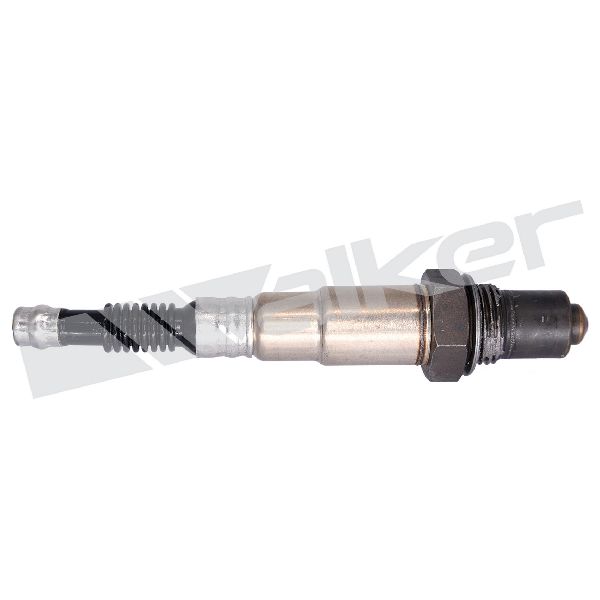
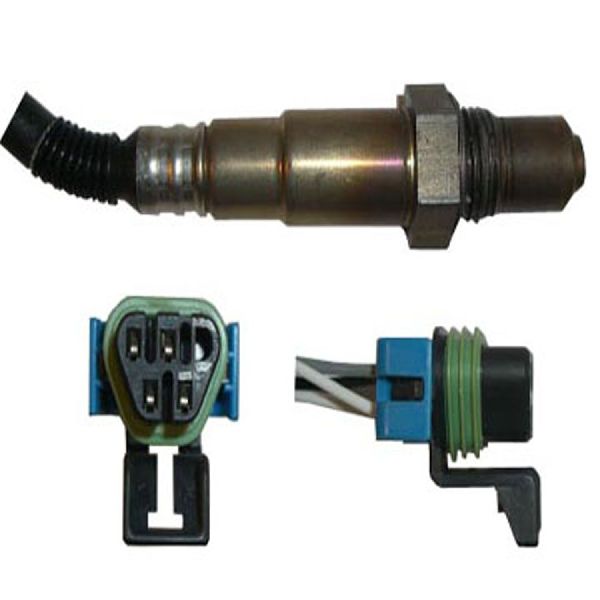
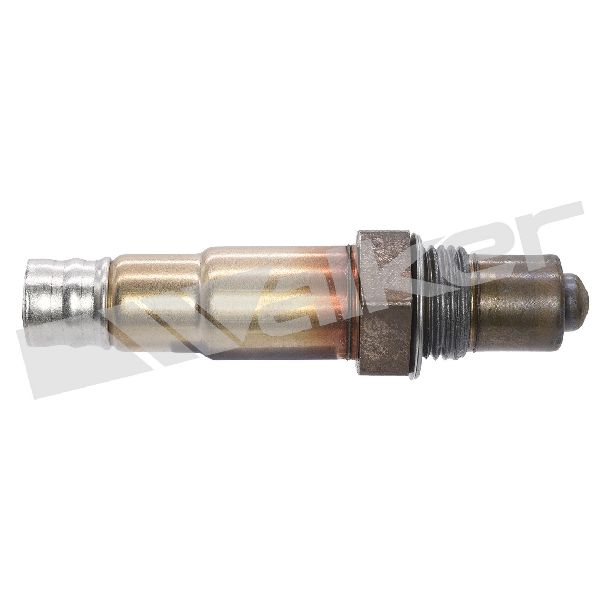
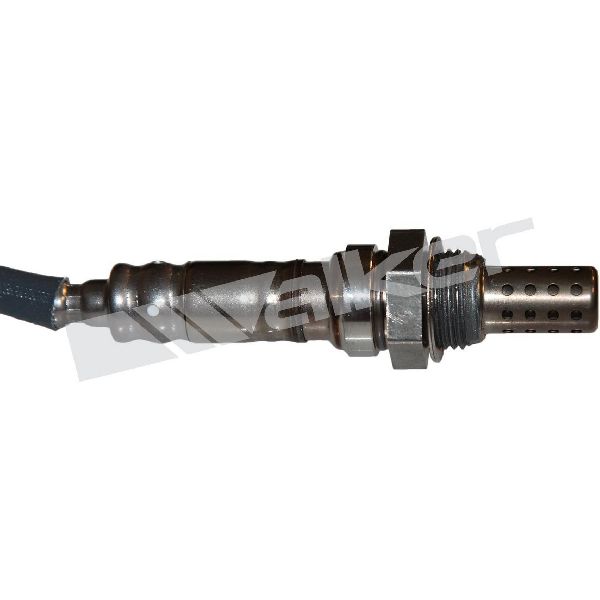
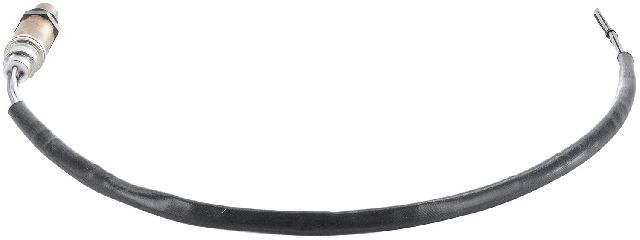
- Upstream Oxygen Sensor (Bank 1, Sensor 1)
(OEM #12655677)— This is the component identified by the code P0030. Its internal heating element is the most common point of failure for this code, often exacerbated by oil contamination.
Trusted brands: ACDelco (OEM), Denso (often the original supplier), Bosch, NGK/NTK
OEM price range: $70-$110
Aftermarket price range: $40-$90
Related Codes That Often Appear With This One
- P0135 — This is another generic code for "O2 Sensor Heater Circuit Malfunction (Bank 1, Sensor 1)". It is functionally identical to P0030 and they often appear together.
- P0134 — This code means "O2 Sensor Circuit No Activity Detected (Bank 1 Sensor 1)". If the heater fails (P0030), the sensor may not reach operating temperature and therefore won't produce a signal, triggering P0134.
- P0420 — Catalyst System Efficiency Below Threshold. If the P0030 code is ignored for too long, the resulting poor fuel control can lead to a rich condition that overheats and damages the catalytic converter, eventually triggering a P0420 code.
- P0031, P0054, P0403, P0443 — As documented in NHTSA ODI #11448862, these codes may appear simultaneously when there is a systemic electrical failure or a blown fuse affecting multiple engine emissions components.
Technical Service Bulletins (TSBs) & Recalls
- TSB 15285C / 14159 / 16118 / N192291100: These related bulletins and special coverages address excessive oil consumption due to piston ring wear on various model years of the 2.4L engine, the root cause of many recurring O2 sensor failures.
- TSB 14882: Addresses a plugged/frozen PCV orifice in the intake manifold, which can cause high crankcase pressure and lead to a blown rear main seal. This is another symptom of the engine's oil and sludge issues.
- PIP5029H: Details issues of rough idle, misfires, and hard starting due to excessive carbon buildup on intake and exhaust valves, often related to fuel quality and oil burning.
- Bulletin #PIT5336: Provides information to technicians regarding vehicles with a Service Engine Soon lamp and codes P0030, P0031, P0032, and other O2 sensor heater circuit faults across various GM models.
- TSB 21-NA-116: Cited in NHTSA ODI #11560268 as a reference for technicians diagnosing multiple faults including P0030 and blown 15 AMP fuses.
Platform-Specific Known Issues
- The 2.4L Ecotec engine in 2010-2017 Equinox models is widely known for excessive oil consumption due to piston ring design. This can cause oil to enter the exhaust stream, fouling the oxygen sensors and catalytic converter, leading to premature and repeated failures. GM issued multiple Special Coverage Adjustments and TSBs (e.g., 14159, 15285C, 16118, N192291100) acknowledging the issue and, for a time, covered piston and ring replacement for affected vehicles. If P0030 appears, especially if it's a recurring problem, the vehicle's oil consumption should be monitored closely as it is likely the underlying cause.
Mechanic-Grade Diagnostic Values
- O2 Sensor Heater Element Resistance — expected: 3 to 15 Ohms at ambient temperature. A common reading for a good sensor is 4-6 Ohms.. Failure: A reading of 'OL' (Over Limit / Open Loop) or infinite resistance indicates a burned-out heater element. A reading of 0 Ohms indicates a short circuit.
- Voltage at Harness Connector (Heater Power Pin) — expected: Battery Voltage (~12V) with Key On, Engine Off (KOEO).. Failure: 0V indicates a blown fuse (#43) or an open in the power supply wire from the fuse box.
- Heater Control Circuit (ECM Side) — expected: The ECM provides a Pulse-Width Modulated (PWM) ground. Voltage will fluctuate rapidly. A test lamp connected to battery positive should blink when connected to this pin.. Failure: No activity or a constant ground/open suggests a wiring problem or a faulty ECM driver (rare).
- DTC Set Condition — expected: The ECM expects to see voltage within a specific range on the heater control circuit.. Failure: The P0030 code will set if the ECM detects the voltage is out of the expected range for more than 6 seconds.
Scan Tool Commands That Help
- GDS2 / Tech2 or equivalent professional scan tool: Live Data Monitoring for HO2S Heater — Use this to monitor the ECM's commanded state (as a percentage or PWM value) for the O2 sensor heater. This helps verify if the ECM is attempting to control the heater. If the ECM is commanding the heater on but the sensor isn't heating (confirmed by slow response on the sensor's signal), it points to a failure in the circuit or sensor itself.
Wiring & Ground Locations

- Fuse #43 — In the under-hood fuse box, near the battery. It is a 15A blue fuse.. This is the dedicated fuse for the pre-catalytic converter (Bank 1, Sensor 1) oxygen sensor heater. It is the first electrical component to check.
- Critical PCM Ground — On a stud under the alternator, just above the A/C compressor.. This specific ground wire for the Powertrain Control Module (PCM) is known to corrode and break. A poor PCM ground can cause a host of bizarre electrical issues, including incorrect sensor readings and false codes like P0030, even if the sensor and its wiring are good. This is often missed because of its hidden location.
- HO2S Connector Pins — On the 4-pin connector for the upstream O2 sensor.. The two same-colored wires (usually black or brown) are for the heater circuit. One will have ~12V from fuse #43 (KOEO), and the other is the PWM ground controlled by the ECM. The other two mismatched color wires are for the sensor signal and signal ground.
Real Owner Repair Stories
- Aggregated from forum reports on GM vehicles with similar engine architecture. (Chevrolet Cruze 1.4T (Illustrates a relevant failure pattern for GM engines)) — Initially a P0420 (catalyst) code, then a P0030 code appeared after replacing the upstream O2 sensor.
❌ Tried (didn't work) Replacing the upstream O2 sensor (initially), Checking the O2 sensor fuse and wiring harness
✅ What actually fixed it The root cause was a failed PCV system integrated into the valve cover and intake manifold. This caused oil to be pushed into the exhaust, fouling the sensors. Replacing the intake manifold and valve cover assembly to correct the underlying PCV issue finally resolved all codes, including the P0030. - NHTSA ODI #11681144: An owner reported a list of CEL codes including P0030, P0031, and P0135, which they believed were related to an EGR system failure to circulate coolant properly.
OEM Part Supersession History
12655677→N/A— As of late 2023, 12655677 is still the current primary OEM part number listed for this application by ACDelco/GM. No common supersession has been noted.
Heads up: While this part number is used across many GM vehicles, including V8 models, ensure the specific part purchased is listed as compatible with the 2.4L Equinox, as internal calibration could differ.
Model Year Variations Within This Range
- 2010-2014 vs. 2015-2017: The physical location of the upstream (Bank 1, Sensor 1) O2 sensor. On 2010-2014 models, the sensor is typically located on the top of the exhaust manifold, easily accessible from the top of the engine bay. On 2015-2017 models, the sensor was moved further down the exhaust stream, closer to the catalytic converter, requiring access from underneath the vehicle.
- 2010-2011 (LAF) vs. 2012-2017 (LEA/LFW): The engine code changed from LAF to the FlexFuel-capable LEA/LFW around 2012. For the purpose of diagnosing a P0030 code, this change is not significant as the O2 sensor, its function, and the circuit design are effectively identical.
Diagnostic Flowchart
Other Known Issues on This Vehicle
Issues unrelated to this code that are worth knowing about as an owner of this generation:
- Excessive Oil Consumption 🔴 High — Extremely common, especially in 2010-2013 models. Often starts around 60k-80k miles. Caused by faulty piston ring design. (Ref: Multiple Special Coverage Adjustments (e.g., 15285C, 14159, N192291100) were issued.)
- Stretched Timing Chain & Failed Guides 🔴 High — Common, often exacerbated by low oil levels from oil consumption. A rattling noise on cold start is the key symptom. Failure can be catastrophic.
- Blown Rear Main Seal 🔴 High — Common, especially in cold climates. Caused by a clogged/frozen PCV orifice in the intake manifold creating excessive crankcase pressure. (Ref: TSB 14882)
- High-Pressure Fuel Pump (HPFP) Failure 🟠 Medium — A known failure point. The pump can leak fuel internally into the engine oil, causing a rich condition (P0172), engine stumbling, and oil dilution. (Ref: Emission Recall 43180 for 2010-2011 models.)
- Failed Camshaft Position Actuator Solenoids 🟡 Low — Fairly common. Can cause rough idle, stalling, and check engine lights (P0011, P0013, P0014). Often caused by dirty or low oil.
Used vs. New Parts: Buying Guide for This Vehicle
When a used part is the smart pick: Almost never for this repair. The only exception is sourcing a used connector pigtail from a junkyard if the original harness connector is melted or physically damaged. The sensor itself should always be new.
Donor-vehicle mileage cap: roughly under 75000 miles for the part to have meaningful remaining life.
What to inspect on the donor part:
- For a connector pigtail: Inspect for any signs of melting, cracking, or brittleness.
- Ensure the locking tab is intact and functional.
- Check that the pins inside are clean and free of green or white corrosion.
- Ensure there is at least 6 inches of flexible, undamaged wire attached.
OEM-only on this vehicle (don't cheap out):
- Engine Control Module (ECM) - This is a very rare cause of P0030, but if it is faulty, it must be replaced with a new, OEM unit that requires VIN-specific programming.
Aftermarket brands forum-validated for this vehicle:
- Denso
- NTK (made by NGK)
- Bosch
Brands owners have reported issues with on this vehicle:
- Unbranded, generic, or suspiciously cheap sensors from online marketplaces like Amazon or eBay. Forum consensus is that these parts have a high failure rate and often do not meet the correct resistance specifications, causing the code to return quickly.
Real Owner Stories
Aggregated from forums and TSBs cited above. Mileages and costs reflect what owners reported in those sources.
2012 Chevrolet Equinox 2.4L
Symptoms: The check engine light came on with 7 codes initially, eventually growing to 12 codes, including P0030 for the heater circuit.
What fixed it: Replacing a blown fuse #43 in the under-hood fuse box.
Source hint: Reddit r/MechanicAdvice - '2012 Chevy Equinox 2.4l. 7 codes all at once...'
2012 Chevrolet Equinox 2.4L
Symptoms: Owner observed an oil leak that appeared to be coming from the rear main seal.
What fixed it: The discussion linked the leak to high crankcase pressure caused by the PCV system issues endemic to the 2.4L engine.
Source hint: Chevrolet Forum - '2012 chevy equinox oil leak looks to be near rear main seal'
2016 Chevrolet Volt (Cross-Model Reference)
Symptoms: An owner reported the vehicle would eventually stop with a message saying "engine offline" and found codes P0030, P0031, P0054, and P0135.
Source hint: NHTSA ODI #11448862
2017 Chevrolet Volt (Cross-Model Reference)
Symptoms: Customer reported the Check Engine Light was on and a "Reduced Propulsion" message appeared on the dash with codes P0030 and P0031.
What fixed it: Technicians found a blown fuse [F03] for the EGR valve and related circuits.
Source hint: NHTSA ODI #11632222
Related OBD-II Codes
Frequently Asked Questions
Is there a specific fuse I should check for the P0030 code on my 2012 Equinox?
Could the excessive oil consumption on my 2.4L Ecotec engine be causing my O2 sensor to fail?
Does GM have any special coverage for the engine issues that might be causing my P0030 code?
Where is the Bank 1, Sensor 1 oxygen sensor located on a 2016 Chevrolet Equinox?
My Equinox has a rough idle and P0030; could this be related to carbon buildup?
Can a faulty PCV system on the 2.4L engine affect my exhaust sensors?
Helpful Videos
We Have This Part in Stock


The information in this article is provided for general reference and educational purposes only. Vehicle specifications, procedures, and part compatibility can vary by production date, trim level, and region. Always consult your vehicle's factory service manual and verify part numbers before purchasing or performing repairs. Safety-critical components such as airbags, seat belts, and braking systems should be installed by a qualified professional.
- Chevrolet Equinox:
- 🎬 Helpful Videos
- 🛍️ Shop This Part
- What's Unique About the 2010-2017 Chevrolet Equinox
- Symptoms You May Notice
- Most Likely Causes
- Rare But Worth Checking
- Diagnosis Steps
- Parts You'll Likely Need
- Related Codes That Often Appear With This One
- Technical Service Bulletins (TSBs) & Recalls
- Platform-Specific Known Issues
- Mechanic-Grade Diagnostic Values
- Scan Tool Commands That Help
- Wiring & Ground Locations
- Real Owner Repair Stories
- OEM Part Supersession History
- Model Year Variations Within This Range
- Diagnostic Flowchart
- Other Known Issues on This Vehicle
- Used vs. New Parts: Buying Guide for This Vehicle
- Real Owner Stories
- 2012 Chevrolet Equinox 2.4L
- 2012 Chevrolet Equinox 2.4L
- 2016 Chevrolet Volt (Cross-Model Reference)
- 2017 Chevrolet Volt (Cross-Model Reference)
- Related OBD-II Codes
- Frequently Asked Questions
- 🎟️ Get 5% Off