

P0030 on 2005-2013 Chevrolet Corvette: HO2S Heater Circuit Fault Causes and Fixes
P0030 on a C6 Corvette almost always means the Bank 1, Sensor 1 (driver's side, pre-catalyst) oxygen sensor's internal heater has failed. Replacing the sensor is the typical fix. Before replacing, check the 15A 'O2 SEN' fuse in the underhood fuse block. Expect to pay ~$50-$90 for an aftermarket sensor (like Bosch or Denso) or ~$100-$160 for an OEM ACDelco part (p/n 213-4229). It's a straightforward DIY job for most owners.
- P0030 specifically refers to a problem with the heater circuit in the upstream oxygen sensor on the driver's side (Bank 1, Sensor 1).
- The most likely fix is replacing the oxygen sensor itself. A quality part from ACDelco (213-4229), Denso, or Bosch is recommended.
- Before replacing any parts, always check the 15A 'O2 SEN' fuse (position #15) in the underhood fuse box.
- Thoroughly inspect the sensor's wiring harness for signs of melting, especially if aftermarket headers are installed. This is a very common problem on Corvettes.
- This is a DIY-friendly repair that requires basic tools, though a special 22mm (or 7/8") O2 sensor socket can make removal much easier.
- Driving with this code is safe, but it will cause an automatic emissions test failure and may slightly hurt fuel economy.
What's Unique About the 2005-2013 Chevrolet Corvette
The C6 Corvette's high-performance V8 engines and low-slung design create an extremely hot environment for all exhaust components. The wiring for the front oxygen sensors is routed close to the exhaust manifolds, making it particularly vulnerable to melting, brittleness, and damage over time. While the sensor itself is the most common failure point, melted wiring from contact with headers is a frequent secondary cause reported by owners. This is especially true after installing aftermarket long-tube headers, which can alter wiring proximity and often require careful routing and heat shielding to prevent the O2 sensor connectors and wires from melting on the hot primary tubes.
Symptoms You May Notice
- Check Engine Light (CEL) is illuminated.
- Failure to pass a state emissions inspection.
- Slightly reduced fuel economy.
- Rough idle on a cold start in some cases.
- Noticeable gasoline smell from the exhaust due to a rich fuel mixture.
- In some GM vehicles, a "Reduced Propulsion" or similar power-loss message may appear on the dashboard alongside the CEL.
- Replacing the wrong oxygen sensor. P0030 is specifically for Bank 1 (driver's side) and Sensor 1 (pre-catalytic converter). Replacing Bank 2 or a downstream sensor will not fix this code.
- Replacing the sensor without checking the fuse first. If the fuse is blown, a new sensor will not work either.
- Replacing a blown fuse without finding the underlying short circuit. If the wiring is melted to the exhaust, the new fuse will blow immediately.
Most Likely Causes
- Failed Bank 1, Sensor 1 Oxygen Sensor 🔴 High Probability The internal heater element is a common wear item that fails from thousands of heat cycles, similar to a light bulb filament. It's the most frequent point of failure for this code.
How to confirm: Disconnect the sensor and measure the resistance across the two heater circuit pins (usually the two same-colored wires, often black or gray). A healthy sensor should read between 4-20 ohms at room temperature. An open circuit (infinite resistance) or a reading far outside this range confirms the heater has failed.
Typical fix: Replace the Bank 1, Sensor 1 oxygen sensor.
Est. part cost: $50-$160 - Damaged Wiring or Connector 🟡 Medium Probability The factory wiring harness runs very close to the hot exhaust manifold. Aftermarket headers significantly increase the risk of the plastic connector or wiring insulation melting from direct contact, causing a short or open circuit.
How to confirm: Visually inspect the entire wiring harness for the sensor, from the connector back as far as possible. Look for melted plastic, chafed insulation, or corroded pins in the connector. A melted connector is a very common story on Corvette forums after a header installation.
Typical fix: Repair the damaged section of wire or replace the connector pigtail. O2 sensor extension harnesses can be purchased and spliced in to replace a melted connector.
Est. part cost: $15-$40 - Blown Fuse ⚪ Low Probability A short circuit in the wiring (often from melting on the exhaust) or in the sensor itself can cause the fuse for the O2 heater circuit to blow.
How to confirm: Locate and inspect the fuse for the O2 sensor heaters in the underhood fuse block. For the C6 Corvette, this is typically fuse #15 (a 15A minifuse) labeled 'O2 SEN' or similar in the underhood fuse box. Test the fuse for continuity. If codes P0030 and P0050 appear together, a blown fuse is highly likely as it powers heaters for both banks.
Typical fix: Replace the blown fuse. If the new fuse blows immediately, a short circuit exists in the wiring or one of the sensors and must be diagnosed and repaired first.
Est. part cost: <$5
Rare But Worth Checking
- Faulty Powertrain Control Module (PCM): This is extremely rare. The internal driver circuit in the PCM that provides the ground for the O2 sensor heater can fail, but this should only be considered after the sensor, wiring, and fuse have all been proven to be good.
Technical Service Bulletins (TSBs) & Recalls
- Bulletin #PIT5336: A manufacturer service bulletin notes that technicians may find P0030 along with a wide array of other O2 sensor heater and performance codes (such as P0031, P0050, and P0134) on various GM vehicles, indicating the need for systematic electrical diagnosis when multiple heater codes are present.
Diagnosis Steps
- Verify the code is P0030 using an OBD-II scanner.
- Locate Bank 1, Sensor 1. On a Corvette V8, Bank 1 is the driver's side, and Sensor 1 is the upstream sensor in the exhaust manifold.
- Check the fuse for the O2 sensor heaters. In the C6 underhood fuse block, this is typically the 15A minifuse in position #15. If it's blown, inspect wiring for shorts before replacing.
- Thoroughly inspect the sensor's wiring harness and connector for any signs of melting, chafing, or corrosion. This is a known issue on Corvettes, especially with aftermarket headers.
- If the fuse and wiring are good, test the sensor's heater element. Disconnect the sensor and use a multimeter set to Ohms. Measure resistance between the two heater pins on the sensor side of the connector. A reading outside the 4-20 ohm specification indicates a bad sensor.
- If the sensor tests good, check for 12V power at the harness-side connector (terminal D) with the ignition on. If power is missing, trace the ignition voltage circuit back from the fuse.
- If power is present, check the control circuit. With the engine running, the ECM should provide a pulsating ground to the other heater pin. A test lamp connected between B+ and this pin should flash. If it does not, there may be a wiring issue to the ECM or a rare ECM fault.
- If the sensor, wiring, and fuse all check out, the issue may be a rare PCM fault, which typically requires professional diagnosis.
Parts You'll Likely Need
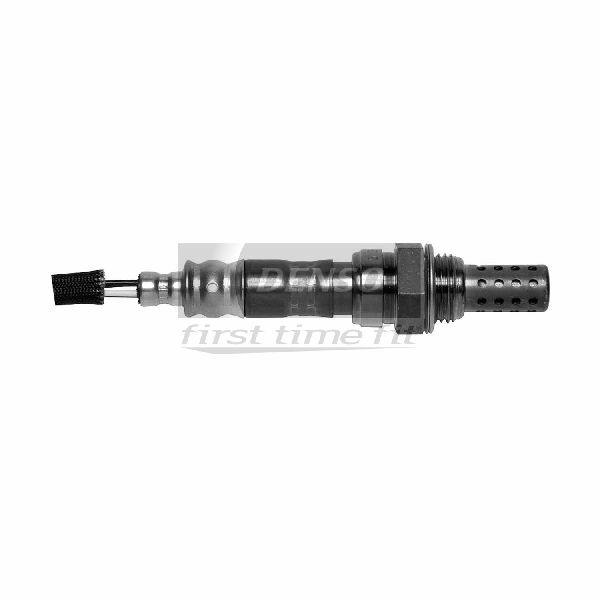
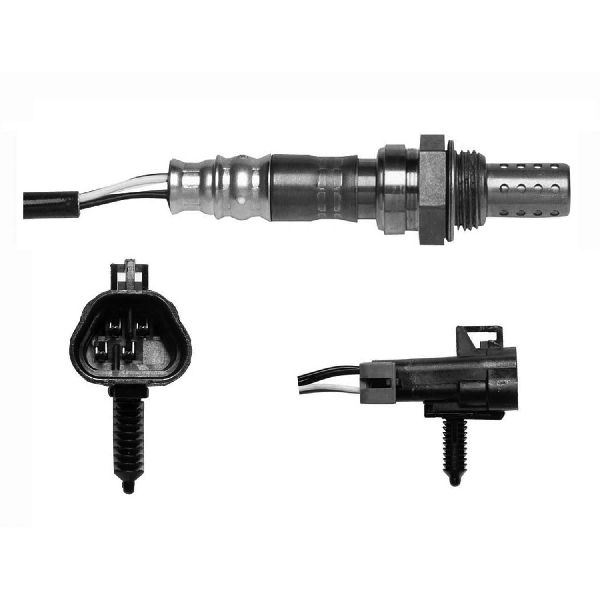
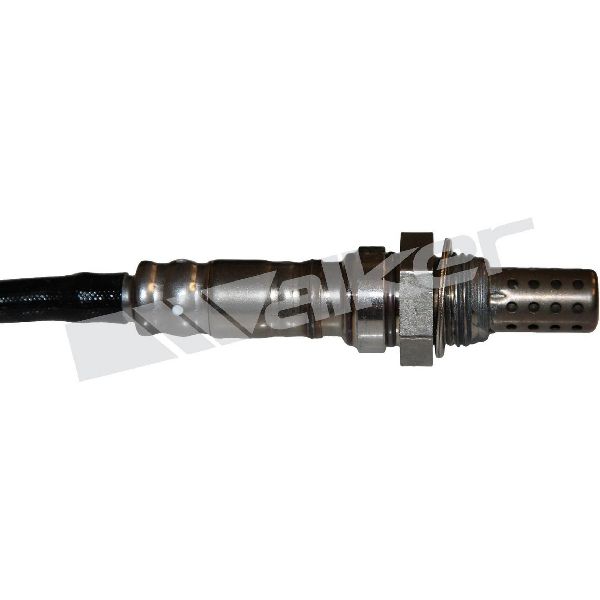
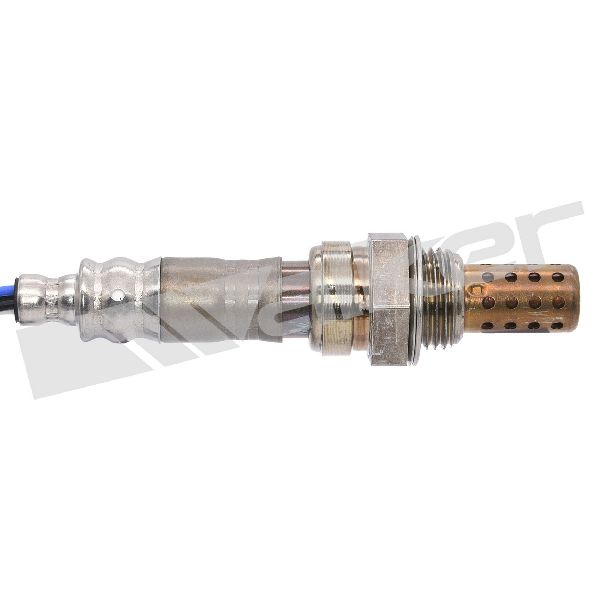
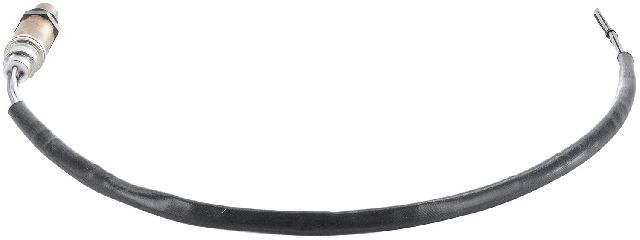
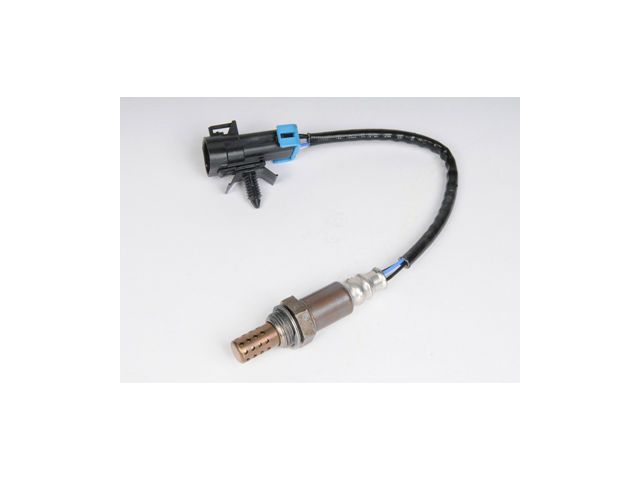
- Bank 1 Sensor 1 Heated Oxygen Sensor
(OEM #ACDelco 213-4229 (Supersedes 12581966))— The internal heater element is the most frequent point of failure, causing the P0030 code.
Trusted brands: ACDelco (OEM), Denso (e.g., 234-4651), Bosch (e.g., 15109), NTK
OEM price range: $100-$160
Aftermarket price range: $50-$90
Related Codes That Often Appear With This One
- P0050 — This is the identical heater circuit fault but for Bank 2 (passenger side). If both codes appear simultaneously, it strongly suggests a common power supply issue, such as a single blown fuse (underhood fuse #15) that powers both sensor heaters.
- P0135 — This code also indicates a malfunction in the Bank 1, Sensor 1 heater circuit. It is a more general performance code, while P0030 points specifically to the control circuit. They often appear together and point to the same root causes.
Platform-Specific Known Issues
- CorvetteForum members frequently report that the Bank 1 (driver's side) O2 sensor wiring harness can easily come into contact with the exhaust manifold or aftermarket headers, causing the connector and wires to melt and trigger a P0030 code.
- A user on CorvetteForum with a header install found codes P0030 and P0050 were caused by a blown #15 fuse in the underhood fuse box, which was the result of a melted O2 wire shorting to the exhaust.
Mechanic-Grade Diagnostic Values
- HO2S Heater Current Draw — expected: 0.3-1.5 Amps. Failure: A reading of 0A indicates an open circuit (bad heater, blown fuse, bad wiring). A reading significantly higher than 1.5A indicates a short circuit.
- HO2S Heater Control Circuit Voltage (at harness) — expected: Test lamp connected to B+ should flash once per second with engine idling.. Failure: If the lamp is steadily ON, there is a short to ground. If the lamp does not illuminate at all, there is an open/high resistance in the control circuit or a faulty ECM driver.
- Ignition 1 Voltage (System Voltage) — expected: 10-18 Volts. Failure: The diagnostic for P0030 will only run when system voltage is within this range. Consistently low voltage could prevent the test from running or cause other electrical issues.
- DTC Set Time — expected: N/A. Failure: The ECM will set code P0030 if it detects the commanded state and the actual state of the heater control circuit do not match for greater than 5-6 seconds.
Scan Tool Commands That Help
- Tech 2 / GDS2: HO2S Heater Status — When viewing live data, the status for the B1S1 heater should change between 'Active' and 'Inactive' as the ECM commands it. This helps verify if the ECM is attempting to control the heater.
- Tech 2 / GDS2: HO2S Heater Current (Amps) — This PID provides the actual current draw of the heater circuit, which is the most direct way to diagnose it. It should be within the 0.3-1.5A range when active. This can confirm a bad heater element without needing a multimeter.
Wiring & Ground Locations
- E40 ECM C2 Connector, Pin 2 — On 2005 models with the E40 ECM, the Bank 1 Sensor 1 heater control wire (Gray/White) is located at Pin 2 of the C2 (middle) connector.. This is the specific pin on the ECM that provides the PWM ground signal for the B1S1 heater. A continuity test from this pin to the sensor connector can verify the integrity of the control wire.
- E38 ECM X1 Connector, Pin 49 — On 2006-2013 models with the E38 ECM, the Bank 1 Sensor 1 heater control wire is located at Pin 49 of the X1 (black) connector.. This is the specific pin on the E38 ECM that provides the PWM ground signal for the B1S1 heater. A continuity test from this pin to the sensor connector can verify the integrity of the control wire.
- G102 / G107 — Primary engine-to-chassis grounds located on the frame rails in the engine bay, often near the battery tray or on the opposite side.. While the O2 heater is controlled by the ECM, the ECM itself relies on clean and solid main ground connections to the chassis and engine block. Poor grounds at these locations can cause a host of bizarre electrical issues, including incorrect readings and driver failures within the ECM.
- Underhood Fuse Block, Fuse #15 — Located in the fuse block in the passenger-side of the engine compartment.. This 15A fuse provides the 12V ignition power to the heater elements for both Bank 1 and Bank 2 upstream O2 sensors. It is the first place to check if P0030 and P0050 appear together.
Real Owner Repair Stories
- CorvetteForum user 'Pse' (2008 Chevrolet Corvette LS3) — P0030 code, Check Engine Light.
❌ Tried (didn't work) Replacing the Bank 1 Sensor 1 oxygen sensor., Clearing the code with a scanner (it would return on the next startup).
✅ What actually fixed it The user reported that the original issue was the sensor connector had touched the header and melted. Although the sensor was replaced, the code returned. The final fix implied a problem remained in the wiring or connector that was damaged by the heat, as simply replacing the sensor was not enough. Checking the fuse and repairing the connector pigtail was the next step.
Documented NHTSA Reports
- An owner reported in NHTSA ODI #11560268 that their vehicle registered multiple faults including P0030, P0031, P0135, and P0443, which was ultimately traced to a blown 15 AMP fuse.
- According to NHTSA ODI #11632222, a technician found a blown fuse [F03] after a customer reported a "Reduced Propulsion" message and a check engine light with codes P0030, P0031, P0054, and P0135.
- In NHTSA ODI #11448862, an owner described the engine going offline with a console message after the vehicle threw several error codes, including P0030, P0031, P0054, and P0135.
- NHTSA ODI #11681144 describes a failure where P0030 and P0031 were pulled alongside several other codes including P06DB and P0403, which the owner suspected was related to an EGR failure.
OEM Part Supersession History
GM 12581966→ACDelco 213-4229— Standard part number update and consolidation over time.
Heads up: The original GM part number 12581966 cross-references to Denso part number 234-4332. The superseding ACDelco 213-4229 is widely used across many GM V8s from this era.
Model Year Variations Within This Range
- 2005 only: The 2005 Corvette uses the E40 ECM, which was a one-year-only computer for this platform. It has different connectors (round pins) and pinouts from the E38 ECM used from 2006-2013. The E40 is known to be less robust and harder to find replacements for. While the P0030 diagnostic principles are the same, the specific ECM pin for the B1S1 heater control is different (Pin 2 on C2 connector).
- 2006-2013: These model years use the E38 ECM (or E67 for some high-performance models like LS7/LS9). This ECM uses different connectors and pinouts than the 2005 E40. The B1S1 heater control is on Pin 49 of the X1 connector. These ECMs are more common and generally considered more reliable.
Diagnostic Flowchart
Other Known Issues on This Vehicle
Issues unrelated to this code that are worth knowing about as an owner of this generation:
- Harmonic Balancer Wobble 🔴 High — Common across all C6 models, especially LS2 and LS3. Often noticed by a 'chirping' sound from the serpentine belt. Can occur at various mileages. (Ref: TSB 05-06-01-001 specifically addressed a loose crank bolt on early 2005 models, but delamination of the balancer's rubber is a more widespread issue on later years.)
- Fuel Level Sending Unit Failure 🟠 Medium — Very common, particularly in 2007-2013 models. The gauge will read empty after a fill-up and may start working again below half a tank. Codes P0463 or P2068 are common. (Ref: GM issued a special coverage adjustment for some model years, but many vehicles are now outside the coverage period.)
- LS7 Valve Guide Wear (Z06 Models) 🔴 High — A significant concern for all 2006-2013 Z06 models with the 7.0L LS7 engine. Can lead to catastrophic engine failure if not addressed. (Ref: GM released TSB #13-06-01-001A acknowledging customer concerns but stated warranty claims were low. The issue is widely documented by owners and specialists.)
- Removable Roof Panel Separation 🟠 Medium — Primarily affected 2005-2007 models due to adhesive failure between the roof panel and its frame. (Ref: GM issued recalls (e.g., NHTSA campaign 06V181000) to address the issue, eventually replacing panels on affected vehicles.)
- Melted Radiator Fan Connector 🟡 Low — The connector for the radiator fan can overheat and melt, causing the fan to stop working and leading to potential overheating issues.
Used vs. New Parts: Buying Guide for This Vehicle
When a used part is the smart pick: For this repair, a used part only makes sense for the wiring connector pigtail if the original has melted. A used oxygen sensor is never recommended as it is a wear item with a finite lifespan, and its remaining life is unknown.
Donor-vehicle mileage cap: roughly under 30000 miles for the part to have meaningful remaining life.
What to inspect on the donor part:
- For a wiring pigtail, inspect for any signs of melting, brittleness in the plastic, or corrosion on the pins.
- Ensure the wires have enough length for splicing and that the insulation is not cracked or frayed.
OEM-only on this vehicle (don't cheap out):
- While not strictly OEM-only, using a reputable brand is critical. Poor quality aftermarket sensors are known to fail prematurely or not meet the ECM's specific performance parameters, causing codes to return.
Aftermarket brands forum-validated for this vehicle:
- ACDelco (OEM)
- Denso
- NTK/NGK
- Bosch
Brands owners have reported issues with on this vehicle:
- Unbranded, no-name sensors from online marketplaces are frequently cited on forums as being problematic and a waste of money.
Real Owner Stories
Aggregated from forums and TSBs cited above. Mileages and costs reflect what owners reported in those sources.
2005 Chevrolet Corvette LS2
Symptoms: The owner experienced a melted connector on the wiring harness after a header installation.
What fixed it: Repairing the damaged wiring harness/connector that had come into contact with the exhaust manifold.
Source hint: CorvetteForum.com: Thread 'headers burning wire harness!' (2005)
2010 Chevrolet Corvette LS3
Symptoms: Codes P0030 and P0050 appeared immediately after a header installation.
What fixed it: Replacing a blown 15A fuse (#15 in the underhood block) that was caused by a shorted/melted wire.
Source hint: CorvetteForum.com: Thread 'Codes after Header Install...' (2010)
2020 Chevrolet Corvette
Symptoms: P0030 code triggered.
What fixed it: Fixing the sensor connector that was touching the header and melting.
Source hint: CorvetteForum.com: Thread 'P0030' (2020)
2021 Chevrolet Camaro SS LS3
Symptoms: Owner experienced P0030 and P0050 codes.
What fixed it: Replacing O2 sensor extensions that had burned through on aftermarket headers.
Source hint: Camaro5.com: Thread 'Code help' (2021)
Related OBD-II Codes
Frequently Asked Questions
Where is the Bank 1, Sensor 1 oxygen sensor located on my Corvette V8?
I just installed aftermarket headers and now have a P0030 code. What is the most likely cause?
Which fuse should I check for the O2 sensor heater circuit on my C6 Corvette?
If I have both P0030 and P0050 codes at the same time, does that mean both sensors failed?
What resistance should I see when testing the O2 sensor heater element with a multimeter?
Are there any known engine-specific issues for the LS7 in the Z06 that I should be aware of while fixing this?
Helpful Videos

We Have This Part in Stock

The information in this article is provided for general reference and educational purposes only. Vehicle specifications, procedures, and part compatibility can vary by production date, trim level, and region. Always consult your vehicle's factory service manual and verify part numbers before purchasing or performing repairs. Safety-critical components such as airbags, seat belts, and braking systems should be installed by a qualified professional.
- Chevrolet Corvette:
- 🎬 Helpful Videos
- 🛍️ Shop This Part
- What's Unique About the 2005-2013 Chevrolet Corvette
- Symptoms You May Notice
- Most Likely Causes
- Rare But Worth Checking
- Technical Service Bulletins (TSBs) & Recalls
- Diagnosis Steps
- Parts You'll Likely Need
- Related Codes That Often Appear With This One
- Platform-Specific Known Issues
- Mechanic-Grade Diagnostic Values
- Scan Tool Commands That Help
- Wiring & Ground Locations
- Real Owner Repair Stories
- Documented NHTSA Reports
- OEM Part Supersession History
- Model Year Variations Within This Range
- Diagnostic Flowchart
- Other Known Issues on This Vehicle
- Used vs. New Parts: Buying Guide for This Vehicle
- Real Owner Stories
- 2005 Chevrolet Corvette LS2
- 2010 Chevrolet Corvette LS3
- 2020 Chevrolet Corvette
- 2021 Chevrolet Camaro SS LS3
- Related OBD-II Codes
- Frequently Asked Questions
- 🎟️ Get 5% Off