

P0025 on 2015-2021 Ford Escape: Exhaust Cam Timing Explained
On a 2015-2021 Ford Escape, code P0025 is almost always caused by a faulty exhaust VCT solenoid or dirty/low engine oil. The most common fix is replacing the 'Bank 2' (radiator side) exhaust camshaft timing solenoid, which costs about $30-$80 for the part. An oil change should be the first step.
- P0025 on your Escape refers to the exhaust camshaft timing on the radiator-side of the engine.
- Before buying any parts, check your engine oil. Dirty, low, or incorrect oil is the #1 cause.
- The most common failed part is the exhaust VCT solenoid on the radiator side, a relatively cheap and easy fix.
- Do not immediately replace the camshaft position sensor; it is rarely the cause for this specific code.
What's Unique About the 2015-2021 Ford ESCAPE
The most confusing part of this code for a Ford Escape is the reference to 'Bank 2,' since the I4 and I3 engines in these vehicles only have one bank of cylinders. On Ford's transverse (sideways-mounted) engines, 'Bank 1' is often used to refer to the side of the engine near the firewall, while 'Bank 2' refers to the side near the radiator. Therefore, P0025 points to the exhaust camshaft timing components on the radiator side of the engine, not a second cylinder bank as in a V6 or V8.
Diagnostic Flowchart
Tap your situation to follow the diagnostic path that matches what you're seeing on this vehicle.
Generation note: This guide covers the end of the third generation (2015-2019) and the beginning of the fourth generation (2020-2021) Ford Escape. The underlying cause related to the Variable Camshaft Timing (VCT) system is common to the EcoBoost engines (1.5L, 1.6L, 2.0L) used across both generations. The 2020 model year introduced a new 1.5L 3-cylinder 'Dragon' engine, which also uses a Twin-independent Variable Cam Timing (Ti-VCT) system.
Symptoms You May Notice
- Illuminated Check Engine Light
- Rough or unstable engine idle
- Engine stalling, especially at low speeds or when stopping
- Reduced engine power and sluggish acceleration
- Decreased fuel economy
- Engine may be difficult to start
- Engine rattling noises
- Replacing the camshaft position sensor first. While possible, the sensor is not the most common failure point for this code; the issue is more often with the oil-controlled solenoid or the oil itself.
- Replacing the cam phaser before the VCT solenoid. The solenoid is cheaper, easier to access, and a much more frequent point of failure. Always start with the oil and solenoid before considering a phaser replacement.
Most Likely Causes
- Dirty, Low, or Incorrect Viscosity Engine Oil 🔴 High Probability The VCT system is hydraulically operated by engine oil pressure. Ford has issued multiple Technical Service Bulletins (TSBs) noting that small debris or sludge in the oil can cause the VCT solenoids to stick or respond slowly. This is the most common cause and the first thing to check.
How to confirm: Check the oil level on the dipstick and examine its condition. If the oil is dark, gritty, below the minimum level, or past its recommended change interval, it needs to be replaced.
Typical fix: Perform an engine oil and filter change using the OEM-specified Motorcraft oil and filter with the correct viscosity (e.g., SAE 5W-30 for many EcoBoost models).
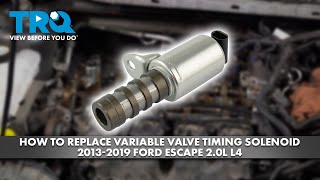
Est. part cost: $40-$80 - Faulty Exhaust VCT (Variable Camshaft Timing) Solenoid 🔴 High Probability This solenoid is an electro-hydraulic valve that directs oil flow to the cam phaser. It is a known failure point, susceptible to clogging from oil debris or electrical failure. TSBs like SSM 50067 and others directly address issues with these solenoids across a range of Ford vehicles, including the Escape.
How to confirm: A mechanic can use a scan tool to perform Ford's pinpoint test 'HK12', which cycles the solenoid 10 times to try and dislodge debris. Resistance can also be checked with a multimeter (typically 5-14 ohms). Often, it's replaced as the next logical step after an oil change fails to resolve the code.
Typical fix: Replace the 'Bank 2' (radiator side) exhaust VCT solenoid.
Est. part cost: $30-$80 - Failing Camshaft Phaser ⚪ Low Probability The phaser is the mechanical gear that actually adjusts the camshaft's position. It can get stuck, wear out, or fail internally, especially if the engine has been run with dirty or low oil for an extended period. Ford calls these actuators 'phasers'.
How to confirm: This is a more involved and expensive diagnosis. If a new solenoid and clean oil do not resolve the code, the timing cover may need to be removed to inspect the phaser and timing components. This is usually diagnosed after ruling out the simpler causes.
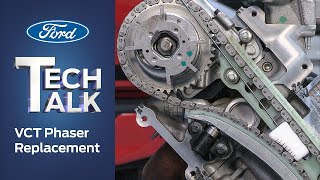
Typical fix: Replace the camshaft phaser. 🎬 Watch: Professional walkthrough of the VCT phaser replacement process This is a major repair that often involves replacing the timing chain, tensioners, and guides at the same time.
Est. part cost: $150-$400
Rare But Worth Checking
- Stretched Timing Chain or Worn Guides: If the timing chain has stretched or the guides are worn, it can cause the camshaft timing to be physically out of sync with the crankshaft, triggering this code. This is usually accompanied by rattling noises from the front of the engine, especially on startup.
- Faulty Camshaft Position Sensor: It's possible for the sensor itself to fail and send incorrect data to the PCM, but this is less common than a solenoid or oil issue. A failing sensor often triggers other specific sensor-related codes like P0365 or P0369.
- Low Oil Pressure: A failing oil pump or other internal engine issue causing system-wide low oil pressure will prevent the VCT system from operating correctly. This would likely be accompanied by other pressure-related codes or an oil pressure warning light.
Diagnosis Steps
- Read the code with an OBD-II scanner and confirm P0025 is present. Note any other codes, as they can help pinpoint the issue.
- Check the engine oil level and condition. If it is low, dirty, or overdue for a change, perform an oil and filter change with the correct Ford-specified oil (e.g., Motorcraft SAE 5W-30). Clear the codes and test drive to see if the code returns.
- If the code returns, locate the 'Bank 2' (radiator side) exhaust VCT solenoid. Inspect the solenoid's electrical connector for damage, corrosion, or loose wiring.
- Using a capable scan tool, perform the Ford-specific 'HK12' pinpoint test to cycle the VCT solenoid. This can sometimes clear internal debris. If the code clears after the test, the issue was likely a temporarily stuck solenoid.
- If the test does not resolve the issue, the next step is to replace the VCT solenoid. It is a relatively inexpensive and accessible part.
- If the code persists after a new solenoid and clean oil, the problem is likely more complex. Advanced diagnosis is needed to check for a faulty camshaft phaser, stretched timing chain, or low oil pressure, which typically requires a professional mechanic.
Parts You'll Likely Need
- Variable Camshaft Timing (VCT) Solenoid (Exhaust, Bank 2)
(OEM #CN1Z-6M280-B (or superseding part numbers like CN1Z-6M280-D, CN1Z-6M280-E) for 1.5L/1.6L EcoBoost. Check with dealer for 2.0L application.)— This is the most common part to fail or become clogged with debris, directly causing the P0025 code as noted in Ford's own service bulletins.
Trusted brands: Motorcraft, Dorman, NTK
OEM price range: $50-$90
Aftermarket price range: $30-$60 - Engine Oil and Filter
(OEM #Motorcraft FL-910S (Filter) and Motorcraft SAE 5W-30 Synthetic Blend (Oil) are common for EcoBoost engines, but verify for your specific engine.)— Clean, correct-viscosity oil is critical for the VCT system's operation. Dirty or low oil is a primary cause of VCT solenoid issues.
Trusted brands: Motorcraft
OEM price range: $50-$80
Aftermarket price range: $40-$60
Related Codes That Often Appear With This One
- P0015 — 'B' Camshaft Position Timing Over-Retarded (Bank 1). If oil contamination is severe, it can affect the solenoids on both sides (firewall and radiator) of the engine.
- P0019 — Crankshaft Position - Camshaft Position Correlation (Bank 2). This code indicates a timing mismatch between the crank and the Bank 2 exhaust cam, which is directly related to the P0025 fault.
- P0024 — 'B' Camshaft Position - Timing Over-Advanced (Bank 2). This code points to the same component group but indicates the opposite timing error (too far advanced instead of retarded). It can be caused by the same faulty parts, such as a sticking solenoid.
Technical Service Bulletins (TSBs) & Recalls
- SSM 50067: Notes that codes like P0025 may be due to small debris causing the VCT solenoid to stick and advises against immediate component replacement. Recommends running a diagnostic test (Pinpoint Test HK) to cycle the solenoid and potentially clear the debris.
- SSM 54366: Mentions that the diagnostic pinpoint test (HK) for a range of VCT codes, including P0025, has been updated, indicating this is a known and evolving issue area for Ford.
- TSB 19-2346: Pertains to 2017-2019 Escapes with the 2.0L EcoBoost engine. It addresses coolant intrusion into the cylinders causing rough running and misfires, a major issue for these engines that can sometimes be misdiagnosed.
- SSM 49821 / SSM 47170: General bulletins covering many 2015-2021 Ford vehicles that list P0025 as a potential DTC caused by sticking VCT solenoids due to debris.
Platform-Specific Known Issues
- 2.0L EcoBoost Coolant Intrusion: Some 2017-2019 Escapes with the 2.0L EcoBoost engine are subject to TSB 19-2346, which addresses coolant leaking into the cylinders. While this typically throws misfire codes (P0300-P0304), the resulting rough run condition can sometimes be confused with a timing issue. A key symptom is a dropping coolant level with no visible external leaks and white exhaust smoke. This is a severe issue that requires engine replacement and is distinct from the P0025 fault, but it's a critical issue to be aware of for this platform.
Mechanic-Grade Diagnostic Values
- VCT Solenoid Internal Resistance — expected: 5 to 15 Ohms. Failure: A reading outside this range (e.g., open circuit/infinite resistance or a dead short/zero resistance) indicates a faulty solenoid.
- Camshaft Position Sensor Signal Voltage (3-wire sensor) — expected: Approximately 4.8-5.0 Volts (DC) on the signal wire with the key on, engine off.. Failure: When a metallic object (like a wrench) is passed in front of the sensor tip, the voltage should drop to near zero. If the voltage does not change or is stuck at 0V or 5V, the sensor is likely faulty.
Hidden / Shadow Codes Worth Checking
- Mode 6, Test ID $A2-$A9 (Varies by ECU): While not a hidden code, Mode 6 data can reveal misfire counts per cylinder before they are high enough to set a standard P030x misfire code. A timing issue from P0025 can cause subtle misfires. A technician can check the misfire counters for the last 10 driving cycles to see if specific cylinders are affected, which can help confirm a performance issue even without a dedicated misfire DTC. (see via A professional scan tool with Mode 6 capabilities is required. The specific Test ID for misfire counts varies by Ford's software calibration.)
Scan Tool Commands That Help
- Ford IDS (Integrated Diagnostic System) or equivalent professional scanner: Variable Camshaft Timing (VCT) Control / Actuator Test — This bidirectional command allows a technician to manually command the VCT solenoid to advance and retard the camshaft timing while monitoring live data. If the PCM commands a change but the camshaft position sensor data doesn't show a corresponding change, it helps isolate the problem to the solenoid, phaser, or oil flow, ruling out a sensor or wiring issue. This is the underlying principle of the 'Pinpoint Test HK' mentioned in Ford TSBs.
Wiring & Ground Locations
- G104 — On 2013+ models, a key engine ground point designated G104 is located on the right rear of the transmission.. The PCM and its sensors, including the camshaft and crankshaft position sensors, rely on clean and secure ground connections for accurate readings. A loose or corroded G104 ground could potentially cause erratic sensor signals, contributing to timing correlation codes. While not a primary cause, it's a crucial check during advanced electrical diagnosis.
- VCT Solenoid Connector — On the top of the engine, plugged into the VCT solenoid on the radiator side of the valve cover.. The connector has two pins. One pin receives battery voltage (approx. 12V with key on) from the PCM power relay via a fuse. The other pin is the control wire, which the PCM pulses to ground to activate the solenoid. Checking for 12V power at the connector is a key step to rule out a wiring or fuse issue before replacing the solenoid.
Real Owner Repair Stories
- Reddit user olan_benning on r/fordescape (2012 Ford Escape XLT 4-cylinder, 165k miles) — Oil spitting from the VVT solenoid area and random engine stalling.
❌ Tried (didn't work) An aftermarket VVT solenoid gasket was installed to fix a small leak.
✅ What actually fixed it Replacing the aftermarket gasket with a genuine Ford OEM part solved both the increased oil leak and the engine stalling. The user noted the OEM part 'sits in a way that the aftermarket cant replicate'.
OEM Part Supersession History
CN1Z-6M280-A / CN1Z-6M280-C→CN1Z-6M280-F— Part revisions by the manufacturer to improve reliability or address known failure modes.
Heads up: CN1Z-6M280-F is listed as the replacement for -A and -C versions for the 1.5L/1.6L engines.CN1Z-6M280-B / CN1Z-6M280-D→CN1Z-6M280-E— Part revisions by the manufacturer to improve reliability or address known failure modes.
Heads up: CN1Z-6M280-E is listed as the replacement for -B and -D versions for the 1.5L/1.6L engines. It is critical to use a VIN lookup to ensure the correct solenoid is ordered, as intake and exhaust solenoids may differ, and revisions can have specific applications.
Model Year Variations Within This Range
- 2020-2021: For the 2020 model year, Ford introduced an all-new 1.5L EcoBoost 3-cylinder engine (known as the 'Dragon') to replace the previous 4-cylinder version. While it's a different engine architecture, it still utilizes a Twin-independent Variable Cam Timing (Ti-VCT) system, meaning the fundamental causes of P0025 (oil quality, solenoid failure) remain relevant to this newer engine.
- 2015-2019: These years primarily used the 1.5L, 1.6L, and 2.0L 4-cylinder EcoBoost engines. The part numbers for the VCT solenoids (e.g., CN1Z-6M280-B) are well-documented for these engines.
Helpful Videos

![How to Fix P0025 Engine Code in 4 Minutes [2 DIY Methods / Only $6.99]](https://img.youtube.com/vi/7E-oYdoFAfM/mqdefault.jpg)
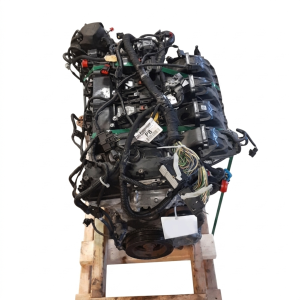
Used OEM Parts in Stock
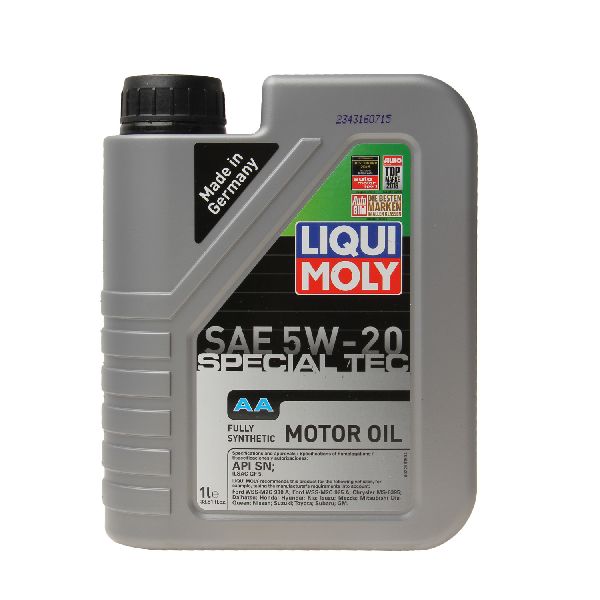
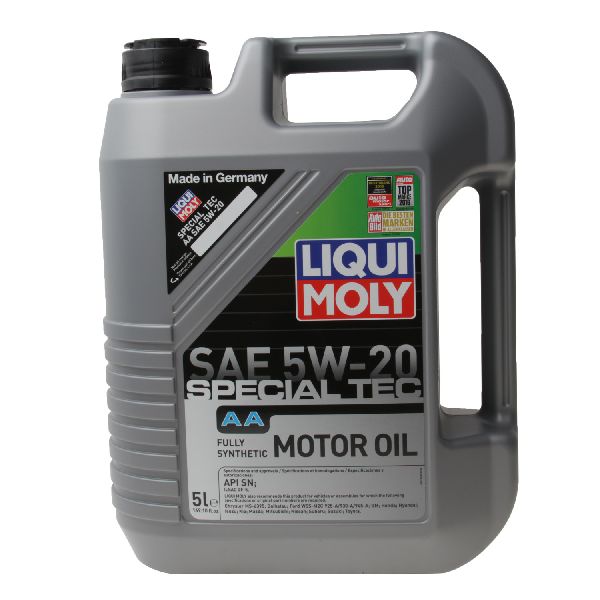
New Aftermarket Parts Available


The information in this article is provided for general reference and educational purposes only. Vehicle specifications, procedures, and part compatibility can vary by production date, trim level, and region. Always consult your vehicle's factory service manual and verify part numbers before purchasing or performing repairs. Safety-critical components such as airbags, seat belts, and braking systems should be installed by a qualified professional.
- Ford ESCAPE:
- 🎬 Helpful Videos
- 🛍️ Shop This Part
- What's Unique About the 2015-2021 Ford ESCAPE
- Diagnostic Flowchart
- Symptoms You May Notice
- Most Likely Causes
- Rare But Worth Checking
- Diagnosis Steps
- Parts You'll Likely Need
- Related Codes That Often Appear With This One
- Technical Service Bulletins (TSBs) & Recalls
- Platform-Specific Known Issues
- Mechanic-Grade Diagnostic Values
- Hidden / Shadow Codes Worth Checking
- Scan Tool Commands That Help
- Wiring & Ground Locations
- Real Owner Repair Stories
- OEM Part Supersession History
- Model Year Variations Within This Range
- 🎟️ Get 5% Off