

P0024 on 2014-2020 Kia Cadenza 3.3L V6: Exhaust Cam Timing Over-Advanced Causes and Fixes
On the 2014-2020 Kia Cadenza 3.3L V6, code P0024 is almost always caused by low or dirty engine oil. Before buying parts, check the oil and ensure a high-quality OEM filter is used. If an oil change doesn't fix it, the next most likely cause is a faulty Bank 2 Exhaust Oil Control Valve (OCV), which costs about $50-$100 for an aftermarket part and is a common DIY repair.
- Your first and cheapest step is to check the engine oil. An oil and filter change using OEM parts often resolves this code.
- If the oil is fine, the Bank 2 (front/radiator side) exhaust Oil Control Valve (OCV) is the next most likely part to have failed.
- Do NOT replace the camshaft position sensor; it is simply reporting the timing error, it is not the cause.
- Ignoring this code can lead to poor engine performance, stalling, and potential long-term engine damage.
What's Unique About the 2014-2020 Kia Cadenza
The 3.3L Lambda II GDI V6 engine is known to be very sensitive to oil level, quality, and filter type. These direct-injection engines can experience oil contamination from fuel dilution and sludge buildup, which directly impacts the hydraulically operated Continuous Variable Valve Timing (CVVT) system. Using non-OEM oil filters has been linked to oil pressure deviations that can trigger VVT codes like P0024. Furthermore, these engines can consume oil between changes, making low oil level a frequent trigger for this code. Therefore, this code on a Cadenza is more frequently a sign of a maintenance issue (oil) rather than a hard part failure.
Generation note: This range covers the first generation (2014-2016) and second generation (2017-2020) of the Kia Cadenza. Both generations use a version of the 3.3L Lambda II GDI V6 engine (G6DH), and the causes and fixes for P0024 are consistent across both.
Symptoms You May Notice
- Check Engine Light is on
- Sluggish or hesitant acceleration
- Rough idle
- Reduced fuel economy
- Engine stalling
- Difficulty starting the engine
- Engine ticking or rattling noise
- Replacing the Camshaft Position Sensor. The P0024 code indicates the sensor is working correctly by detecting a mechanical timing problem.
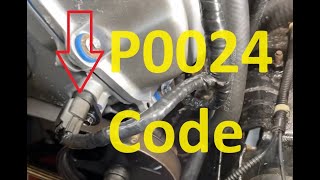
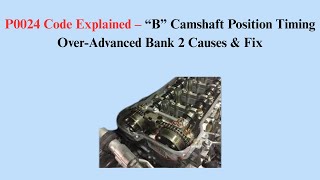
- Replacing the wrong Oil Control Valve. P0024 specifically refers to the EXHAUST camshaft on BANK 2 🎬 Watch: P0024 code causes and fixes explained (the bank closer to the radiator). It is easy to mistakenly replace the intake solenoid (Part # 24360-3CAC1) or the solenoid on the wrong bank.
Most Likely Causes
- Low or Dirty Engine Oil 🔴 High Probability The Lambda II GDI engine's VVT system is hydraulic and highly sensitive to oil pressure and cleanliness. Oil consumption between changes can lead to low levels, while GDI fuel dilution can degrade oil quality faster.
How to confirm: Check the engine oil dipstick for level and condition. If the oil is below the 'Full' mark or appears dark, thick, or sludgy, it needs to be changed.
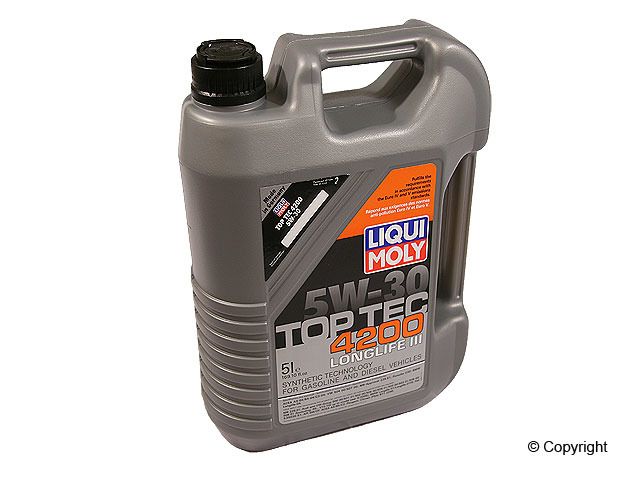
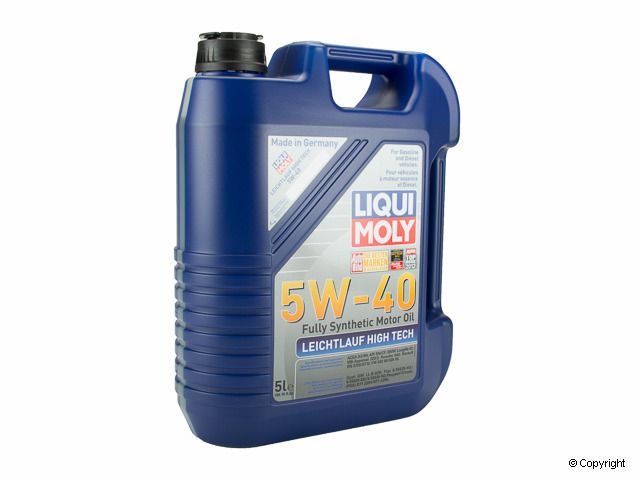
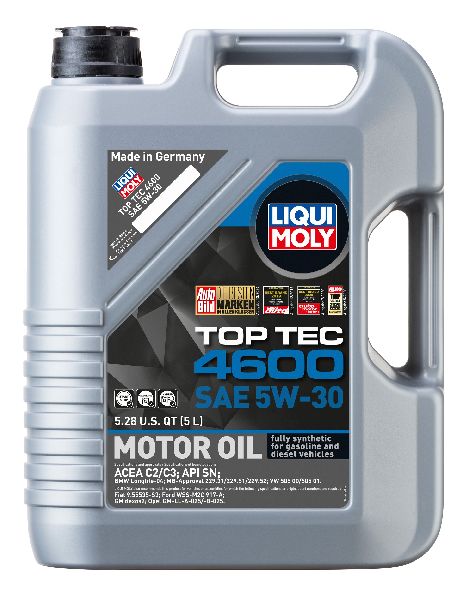
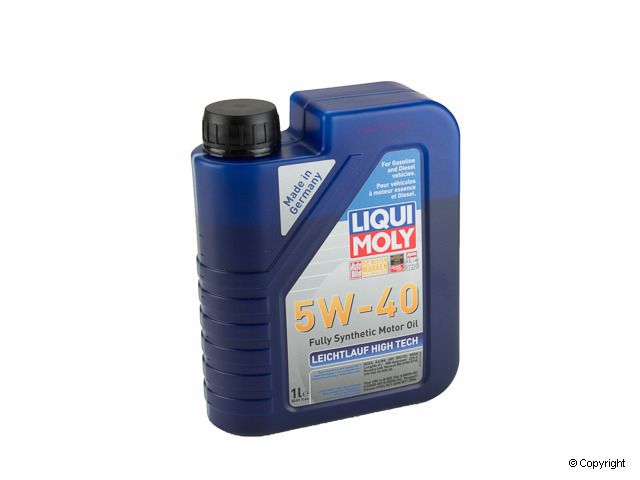
Typical fix: Perform an oil and filter change using the manufacturer-specified full synthetic oil and a genuine Kia/Hyundai OEM oil filter. This is the cheapest and most common fix.
Est. part cost: $40-$80 - Faulty Bank 2 Exhaust Oil Control Valve (OCV) 🟡 Medium Probability The OCV (also called a VVT solenoid) has fine passages and a mesh screen that can become clogged with oil sludge or debris, causing it to stick open or closed. This is the most common component failure for this code.
How to confirm: After confirming oil level is correct, swap the Bank 2 exhaust OCV with the Bank 1 exhaust OCV (they are identical parts). Clear codes and drive. If the code returns as P0014 (the Bank 1 equivalent), the OCV is faulty. You can also test the solenoid's resistance with a multimeter (should be around 6.9-7.9 ohms or 9.4-10.4 ohms depending on supplier). Applying 12V should produce an audible click.
Typical fix: Replace the Bank 2 (front/radiator side) exhaust Oil Control Valve.
Est. part cost: $50-$180
Rare But Worth Checking
- Stretched Timing Chain or Failed Tensioner: While less common than oil issues or a bad OCV, timing chain stretch can occur at higher mileage (100k+ miles). This is a more serious mechanical issue. A rattling noise on cold startup that quickly disappears is a key symptom.
- Failed Camshaft Phaser (CVVT Gear): The phaser is the mechanical gear that the OCV controls. It can become stuck or clogged internally, but this is much less common than an OCV failure. Diagnosis often requires ruling out the OCV first. A persistent rattle may be present.
Diagnosis Steps
- Check Engine Oil: Verify the oil level is correct and the oil is clean. If low or dirty, perform an oil and filter change with OEM-spec products. This resolves the issue in a majority of cases. Clear the code and see if it returns.
- Scan Tool Data: Use an OBD-II scanner to monitor live data. Observe the commanded vs. actual camshaft position for Bank 2 Exhaust. A significant, persistent difference confirms the issue. A deviation greater than 7-10 degrees indicates a problem.
- Inspect the Oil Control Valve (OCV): Locate the Bank 2 (front, radiator side) exhaust OCV. It is the solenoid closer to the exhaust manifold. Disconnect it and inspect the connector and wiring for damage.
- Test the OCV: Remove the OCV from the cylinder head (typically a single 10mm bolt). Inspect its filter screens for sludge or metallic debris. You can test the solenoid by applying 12V to its terminals 🎬 Watch: How to test and fix a P0024 code to see if it clicks. You can also measure its internal resistance with a multimeter, which should be between 6.9 and 10.4 ohms, depending on the supplier.
- Swap OCVs (Definitive Test): The Bank 1 and Bank 2 exhaust OCVs are identical. Swap them, clear the codes, and drive the vehicle. If the fault moves and a P0014 code appears, the original Bank 2 OCV is confirmed to be faulty and should be replaced.
- Inspect Timing System: If the OCV and oil are good, the issue may be more severe. A professional mechanic should inspect the timing chain, guides, tensioners, and camshaft phasers for wear or damage. This is especially true if you hear a startup rattle.
Parts You'll Likely Need
- Engine Oil Control Valve (Exhaust)
(OEM #24360-3CAB2)— This solenoid controls oil flow to the cam phaser and is the most common component to fail or get clogged with sludge, causing the P0024 code.
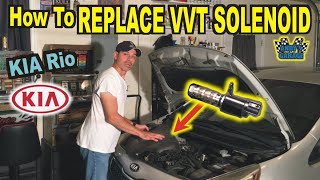
Trusted brands: Kia/Hyundai Genuine, Mando, Dorman, Standard Motor Products (SMP) 🎬 Watch: Step-by-step VVT solenoid replacement walkthrough
OEM price range: $120-$180
Aftermarket price range: $50-$100 - Engine Oil and Filter
(OEM #26320-3CKB0)— Low, dirty, or incorrect viscosity oil is the number one cause of this code. Using a genuine OEM filter is highly recommended to ensure proper oil pressure and flow.
Trusted brands: Kia/Hyundai Genuine
OEM price range: $10-$20
Aftermarket price range: $5-$15
Related Codes That Often Appear With This One
- P0014 — This is the same over-advanced fault but for Bank 1. If both P0014 and P0024 appear together, it strongly suggests a systemic problem like very low/dirty oil, low oil pressure, or use of an incorrect oil filter affecting the entire engine. In some cases, having both codes can indicate severe internal engine wear, as reported by some owners who found metal shavings in their oil.
Technical Service Bulletins (TSBs) & Recalls
- Service Action SA305: While not for P0024 specifically, this action for related models/years addresses the 'E-CVVT Cover Inspection and Motor Plug Replacement', indicating known issues within the CVVT system.
Platform-Specific Known Issues
- The Lambda II GDI engine can be prone to oil consumption, making regular oil level checks critical to prevent VVT-related codes.
- Use of aftermarket oil filters with incorrect bypass valve specifications has been reported to cause oil pressure issues, leading to codes like P0024. A report in NHTSA ODI #10911076 notes that warning codes P0024 and P0014 appeared immediately the morning after an oil change using an aftermarket filter.
- Kia issued Service Action SA305 for some related models for an 'E-CVVT Cover Inspection and Motor Plug Replacement', showing a history of manufacturer attention to this system.
Mechanic-Grade Diagnostic Values
- Oil Control Valve (OCV) Solenoid Resistance — expected: 6.9-7.9 Ohms (Denso supplier) or 9.4-10.4 Ohms (Delphi supplier) at 68°F (20°C).. Failure: A reading of 0 ohms (short), OL/infinity (open), or significantly outside the specified range.
- OCV Connector Power Supply Voltage — expected: Battery voltage (approx. 12.6V) with ignition on, engine off.. Failure: No voltage indicates a problem with the wiring or the engine main relay.
- Live Data: Desired vs. Actual Cam Angle (Bank 2 Exhaust) — expected: The 'Actual' angle should track the 'Desired' angle within a few degrees at idle and under load.. Failure: A persistent variance greater than 7-10 degrees, or a difference exceeding 20 degrees which triggers the fault code.
- Camshaft Position Sensor (CPS) Signal Voltage — expected: Approx. 4.8V on the signal wire with Key On, Engine Off.. Failure: Voltage does not drop to near zero when a metal object is passed in front of the sensor, indicating a faulty sensor.
Scan Tool Commands That Help
- Kia GDS (Global Diagnostic System) or equivalent professional scanner: Actuation Test: "Oil Control Valve" — With the engine running at idle, this command manually activates the Bank 2 exhaust OCV. A functional system will cause the engine to stumble, hesitate, or stall. If there is no change in engine operation, it confirms the OCV is stuck, clogged, has failed electrically, or the oil passage is blocked.
Wiring & Ground Locations
- Bank 2 Exhaust OCV Connector — On the front (radiator side) valve cover, connected to the exhaust OCV.. This connector has two pins. One pin should receive battery voltage from the engine main relay whenever the ignition is on. The other pin is the control wire, which the PCM pulses to ground to operate the solenoid. Testing for voltage here is a primary step in diagnosing an electrical fault vs. a mechanical one.
Real Owner Repair Stories
- Go-Parts (aggregated from forums) (2017 Hyundai Santa Fe 3.3L V6 (platform mate)) — Codes P0014 and P0024 appeared at the same time.
❌ Tried (didn't work) Initial diagnosis pointed towards a systemic oil issue or dual OCV failure.
✅ What actually fixed it The OCV filter screens, located in the cylinder head oil passages beneath the OCVs, were found to be clogged with debris. Cleaning the screens resolved the codes. - Go-Parts (aggregated from Reddit r/kia) (2015 Kia Sorento 3.3L V6 (platform mate)) — Sluggish acceleration and P0024 code.
❌ Tried (didn't work) Checking oil level, which was found to be correct.
✅ What actually fixed it Replacing the Bank 2 exhaust Oil Control Valve (VVT solenoid) resolved the symptoms and the code.
"I Checked Everything" — The Actual Cause
- A common scenario for this code is when an oil change and even a new Oil Control Valve (OCV) do not resolve the issue. The actual cause is often a separate, thimble-like OCV filter screen located in the oil passage in the cylinder head, directly underneath where the OCV mounts. This tiny screen can become clogged with sludge and debris, starving the new OCV of oil pressure and causing the code to return. Technicians who are unaware of this separate filter may mistakenly proceed to diagnose a more complex timing chain or phaser issue.
When the Usual Fixes Don't Work
- While replacing the Bank 2 exhaust OCV is a very common fix, a significant number of owners have reported that this does not solve the problem. In these cases, the root cause was often found to be a clogged OCV filter screen located in the cylinder head, underneath the OCV itself. A technician replaced the OCV, the code returned, and only after deeper research or disassembly was the small, separate filter discovered and cleaned or replaced, which finally resolved the P0024 code. This highlights that the OCV itself may be functional, but it is being starved of oil by a blockage just before it.
Model Year Variations Within This Range
- 2014-2016 vs 2017-2020: The second generation Cadenza (2017-2020) featured a revised version of the 3.3L V6. Horsepower dropped slightly from 293 hp to 290 hp, and the transmission was upgraded from a 6-speed to an 8-speed automatic. While the P0024 code's causes are the same, the ECU tuning and transmission behavior differ between generations.
Documented NHTSA Reports
- An owner reported in NHTSA ODI #11575366 that their vehicle threw codes including P0024 and P0300 after it was found to be missing 5 quarts of oil with no warning light, resulting in misfires and timing codes.
- NHTSA ODI #11289069 describes a situation where a mechanic recommended engine replacement after a scan tool read codes P0014 and P0024; initial inspections of wires and sensors did not resolve the underlying issue.
Diagnostic Flowchart
Other Known Issues on This Vehicle
Issues unrelated to this code that are worth knowing about as an owner of this generation:
- Head Gasket Leak / Head Bolt Failure 🔴 High — Common enough on 2014-2017 models for Kia to issue a warranty extension (WTY039). Can occur from 50,000 miles onward. (Ref: Warranty Extension WTY039 (15 years/180,000 miles))
- Intake Valve Carbon Buildup 🟠 Medium — An inherent issue for all GDI engines. Typically causes noticeable symptoms like rough idle or misfires after 60,000-80,000 miles.
- High-Pressure Fuel Pump (HPFP) Failure 🟠 Medium — The fuel control valve plunger within the HPFP can wear and stick, causing rough running, hesitation, and stalling. Affects 2017-2020 models. (Ref: Warranty Extension WTY034 (15 years/180,000 miles) for DTC P0088)
Used vs. New Parts: Buying Guide for This Vehicle
When a used part is the smart pick: For this specific repair, a used part is generally not recommended. The primary failure part, the Oil Control Valve (OCV), is inexpensive to buy new from a quality aftermarket brand ($50-$100) and fails due to internal wear and sludge, which would be an unknown on a used part.
Donor-vehicle mileage cap: roughly under 50000 miles for the part to have meaningful remaining life.
What to inspect on the donor part:
- If considering a used OCV, inspect the mesh screens for any tears or heavy, caked-on sludge.
- Check the electrical connector for corrosion or damage.
- Ask for the donor vehicle's maintenance history if possible; a part from a well-maintained engine is less risky.
OEM-only on this vehicle (don't cheap out):
- Engine Oil Filter: It is strongly recommended to use a genuine Kia/Hyundai OEM oil filter (PN 26320-3CKB0). Forum and technician consensus suggests that some aftermarket filters have incorrect pressure bypass specifications that can cause oil flow issues in the CVVT system, directly leading to codes like P0024.
Aftermarket brands forum-validated for this vehicle:
- Standard Motor Products (SMP)
- Dorman
- HL Mando (often the Original Equipment supplier)
Brands owners have reported issues with on this vehicle:
- Ultra-low-cost, unbranded OCV solenoids from online marketplaces like Amazon or eBay. These have a high reported failure rate and may have incorrect internal resistance, causing the code to persist even with a 'new' part.
Real Owner Stories
Aggregated from forums and TSBs cited above. Mileages and costs reflect what owners reported in those sources.
2015 Kia Sorento 3.3L V6
Symptoms: Sluggish acceleration and a P0024 code.
What fixed it: Replacement of the VVT solenoid (Oil Control Valve), as a technician advised it was the most likely culprit compared to sensors or timing chains.
Source hint: Reddit r/kia
2017 Hyundai Santa Fe 3.3L V6
Symptoms: Codes P0014 and P0024 appearing simultaneously, accompanied by a tapping noise and significant oil loss.
What fixed it: The engine required complete replacement after metal shavings were discovered in the oil filter.
Source hint: Reddit r/HyundaiSantaFe
Related OBD-II Codes
Frequently Asked Questions
Which oil filter should I use for my 2014-2020 Kia Cadenza to avoid P0024 codes?
Does Service Action SA305 apply to the P0024 code on my Cadenza?
Is there a warranty extension for engine-related issues on the 2014-2017 Cadenza?
Can I test the Bank 2 Exhaust Oil Control Valve myself?
Why is my Cadenza sluggish and ticking with a P0024 code?
Is there a warranty extension for fuel system issues that cause stalling on 2017-2020 models?
Helpful Videos

We Have This Part in Stock

The information in this article is provided for general reference and educational purposes only. Vehicle specifications, procedures, and part compatibility can vary by production date, trim level, and region. Always consult your vehicle's factory service manual and verify part numbers before purchasing or performing repairs. Safety-critical components such as airbags, seat belts, and braking systems should be installed by a qualified professional.
- Kia Cadenza:
- 🎬 Helpful Videos
- 🛍️ Shop This Part
- What's Unique About the 2014-2020 Kia Cadenza
- Symptoms You May Notice
- Most Likely Causes
- Rare But Worth Checking
- Diagnosis Steps
- Parts You'll Likely Need
- Related Codes That Often Appear With This One
- Technical Service Bulletins (TSBs) & Recalls
- Platform-Specific Known Issues
- Mechanic-Grade Diagnostic Values
- Scan Tool Commands That Help
- Wiring & Ground Locations
- Real Owner Repair Stories
- "I Checked Everything" — The Actual Cause
- When the Usual Fixes Don't Work
- Model Year Variations Within This Range
- Documented NHTSA Reports
- Diagnostic Flowchart
- Other Known Issues on This Vehicle
- Used vs. New Parts: Buying Guide for This Vehicle
- Real Owner Stories
- 2015 Kia Sorento 3.3L V6
- 2017 Hyundai Santa Fe 3.3L V6
- Related OBD-II Codes
- Frequently Asked Questions
- 🎟️ Get 5% Off