

P0024 on 2015-2021 Ford Transit Connect: Exhaust Cam Timing Causes and Fixes
On a 2015-2021 Ford Transit Connect, code P0024 is most often caused by a sticking exhaust VCT (Variable Camshaft Timing) solenoid, often due to dirty or low engine oil. An oil change and replacing the exhaust VCT solenoid is the most common fix, costing around $50-$100 for the part.
- P0024 on your Transit Connect means the exhaust camshaft timing is stuck in an over-advanced position.
- Before buying any parts, check your engine oil. Low, old, or dirty oil is a very common cause.
- The most likely failed part is the exhaust VCT solenoid, which is relatively inexpensive and easy to replace.
- Do not replace the camshaft position sensor; it is rarely the cause of this specific code.
- Ford is aware of this issue and has published service bulletins pointing towards sticking VCT solenoids.
What's Unique About the 2015-2021 Ford TRANSIT CONNECT
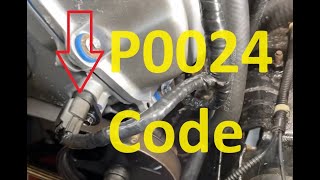
The Ford Transit Connect, primarily with the 2.5L and 2.0L engines, has a known issue with its Variable Camshaft Timing (VCT) system. Ford has issued multiple Technical Service Bulletins (TSBs) acknowledging that small debris in the engine oil can cause the VCT solenoids to stick, leading to codes like P0024. 🎬 Watch: Understanding the causes and fixes for the P0024 code. [SSM 47170, SSM 50067] This makes checking oil quality and the VCT solenoid itself the primary focus, rather than immediately suspecting more complex mechanical timing issues. TSB SSM 47170 specifically advises technicians to cycle the VCT solenoid with a scan tool 10 times to try and clear debris before replacing any parts.
Diagnostic Flowchart
Tap your situation to follow the diagnostic path that matches what you're seeing on this vehicle.
Symptoms You May Notice
- Check Engine Light is illuminated
- Rough, unstable, or low idle, sometimes feeling like it will stall
- Engine hesitation or lack of power, especially during acceleration
- Engine may be hard to start, requiring longer cranking times
- Decreased fuel economy
- Rattling or ticking noise from the top of the engine, particularly from the valve cover area
- Replacing the camshaft position sensor. This sensor reads the camshaft's position, but it's usually not the cause of the timing being incorrect. A faulty sensor would typically set a sensor-specific circuit code (like P0345-P0349) and is simply reporting the timing error caused by another component.
Most Likely Causes
- Dirty, Low, or Incorrect Viscosity Engine Oil 🔴 High Probability The VCT system is hydraulic and highly sensitive to oil pressure and cleanliness. Sludge or debris can easily clog the small passages and filter screens in the VCT solenoids, causing them to stick. This is the most common cause cited by Ford TSBs.
How to confirm: Check the oil level on the dipstick. Inspect the oil's color and consistency. If it's dark black, gritty, or below the minimum mark, this is a likely contributor. Check service records for the last oil change interval.
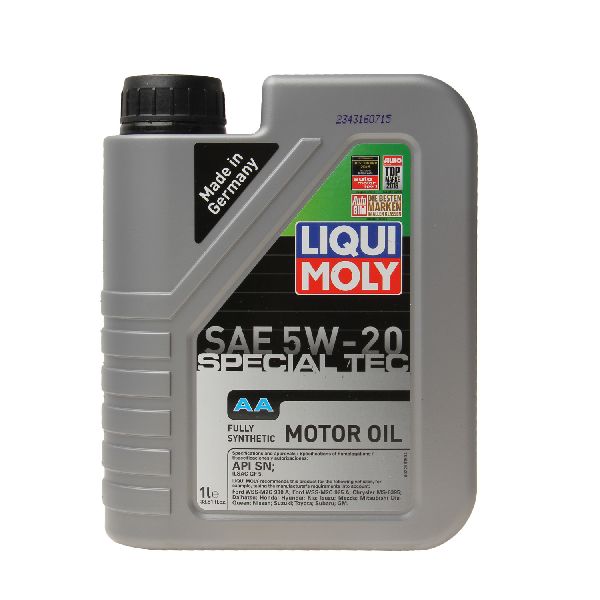
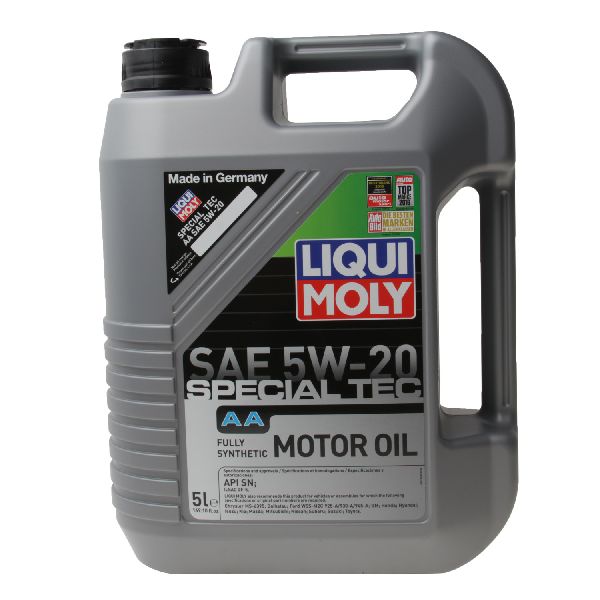
Typical fix: Perform an engine oil and filter change using the manufacturer-specified grade of oil (e.g., Motorcraft Synthetic Blend 5W-20 meeting Ford spec WSS-M2C945-A or WSS-M2C960-A1).
Est. part cost: $40-$80 - Failing or Sticking Exhaust VCT Solenoid 🔴 High Probability Ford TSBs #SSM 47170 and #SSM 50067 specifically state that small debris can cause the VCT solenoid to stick, triggering this code. The solenoids are a frequent failure point across many Ford models using this engine family.
How to confirm: With the engine running, use a capable scan tool to command the exhaust VCT solenoid on and off (Ford's diagnostic procedure HK11); a change in engine idle should be noticeable. You can also remove the solenoid, inspect its screen for debris, and test its resistance with a multimeter (typically 6.9-7.9 ohms). Applying 12V from the battery should make the internal plunger click audibly.
Typical fix: Replace the exhaust camshaft VCT solenoid. It is located on the top of the valve cover, usually the one closer to the exhaust manifold.
Est. part cost: $50-$120 - Worn Timing Chain or Guide/Tensioner Issues ⚪ Low Probability While the 2.5L Duratec is generally robust, high-mileage vehicles (typically over 150,000 miles) can suffer from a stretched timing chain or a failing hydraulic tensioner. This throws off the base mechanical timing between the crankshaft and camshafts, which the VCT system cannot overcome.
How to confirm: This is a more involved diagnosis. It often involves listening for a distinct chain rattle on cold startups that goes away after a few seconds. A mechanic would compare actual vs. desired cam/crank correlation PIDs with a scan tool (e.g., VCT_EXH_ACT2 vs. VCT_EXH_DIF2) to see a persistent deviation that doesn't correct. Physical inspection for chain slack is the definitive confirmation.
Typical fix: Replace the timing chain, tensioners, and guides. This is a significant labor-intensive repair.
Est. part cost: $300-$600
Rare But Worth Checking
- Failed Camshaft Phaser: The phaser is the gear on the end of the camshaft that actually does the rotating. It can fail internally, get stuck due to debris, or the locking pin can fail. This is less common than the solenoid that controls it but is the next logical step if a new solenoid and clean oil don't fix the issue.
- Wiring Harness or Connector Damage: Check the wiring leading to the exhaust VCT solenoid for any visible damage, corrosion, or loose connections at the connector's gray locking tab. A wiggle test on the harness while the engine is running might reveal an intermittent connection.
Diagnosis Steps
- Check Engine Oil: Verify the oil level is correct and the oil is clean and of the proper viscosity (5W-20 Synthetic Blend is common). If low, dirty, or overdue for a change, perform an oil and filter change, clear the codes, and drive to see if the code returns. This is the simplest and most common fix.
- Scan Tool Analysis: Connect a Ford-capable OBD-II scanner. Monitor the specific PIDs for the exhaust camshaft on Bank 2: VCT_EXH_ACT2 (actual angle) and VCT_EXH_DIF2 (difference between desired and actual). A large, persistent value for VCT_EXH_DIF2 confirms the timing deviation.
- Command the Solenoid (Active Test): Use the scan tool's bidirectional controls to perform pinpoint test HK11 from Ford's diagnostic procedures. Command the exhaust VCT solenoid on/off 10 times. Listen for a clicking sound and watch for a change in idle quality. If the idle stumbles or the engine stalls, the solenoid is likely working mechanically. If nothing happens, it's likely stuck.
- Inspect VCT Solenoid and Connector: Unplug the solenoid. Check the connector for corrosion or damage. Remove the single bolt holding the solenoid and pull it out of the valve cover. Inspect the small oil screens on the solenoid for sludge or metallic debris. Clean screens are a good sign, but the solenoid can still fail internally.
- Test the Solenoid Electrically: With the solenoid removed, measure the resistance between its two pins with a multimeter. A reading between 6.9 and 7.9 ohms is typical. Also, briefly apply 12V power from the vehicle's battery to the pins; you should hear a sharp, definitive click as the plunger actuates. If it's silent, sluggish, or the resistance is out of spec, it has failed.
- Check Mechanical Timing: If the solenoid tests good and the oil is clean, the issue may be mechanical. This involves checking for a stretched timing chain (often accompanied by a startup rattle) or a failed camshaft phaser. This is a more advanced step and may require professional assistance.
Parts You'll Likely Need
- Engine Variable Valve Timing (VVT) Solenoid (Exhaust)
(OEM #CJ5Z-6M280-A)— This is the most common failure point for code P0024, as identified in multiple Ford TSBs. It gets stuck due to oil debris or electrical failure. This part number is used for both intake and exhaust solenoids on the 2.5L and other Ford engines.
Trusted brands: Motorcraft, Dorman, Walker Products
OEM price range: $30-$50
Aftermarket price range: $25-$45 - Engine Oil and Filter
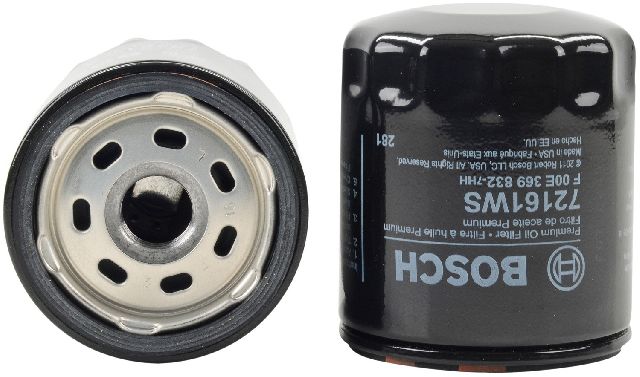
(OEM #Motorcraft FL-910S (Filter))— Clean oil of the correct viscosity (typically 5W-20 Synthetic Blend) is essential for the VCT system to function. This is the first and most important maintenance step.
Trusted brands: Motorcraft, Mobil 1, Valvoline
OEM price range: $50-$80
Aftermarket price range: $40-$60
Related Codes That Often Appear With This One
- P0014 — P0014 is the same over-advanced condition but for the exhaust camshaft on Bank 1. On an inline-four engine, this code is less likely to appear with P0024, as there is only one 'B' (exhaust) camshaft. Seeing both may indicate a scan tool misinterpretation or a more severe PCM issue.
- P0021 — This code indicates an over-advanced condition for the intake camshaft ('A') on the same bank. If both intake (P0021) and exhaust (P0024) are having over-advanced issues, it could point more strongly to a systemic problem like high oil pressure or a base timing issue with the timing chain.
Technical Service Bulletins (TSBs) & Recalls
- SSM 54366: Mentions P0024 and points to diagnostic procedures in the workshop manual.
- SSM 47170: States that P0024 may be due to small debris causing the VCT solenoid to stick.
- SSM 50067: Also attributes P0024 to debris causing the VCT solenoid to stick.
Platform-Specific Known Issues
- Ford has issued multiple Special Service Messages (SSMs) regarding a range of VCT codes, including P0024. The common theme is that debris in the oil can cause the VCT solenoids to stick. The bulletins advise performing diagnostic tests before replacing components. [SSM 54366, SSM 47170, SSM 50067]
- TSB SSM 47170 provides a specific diagnostic step (HK11) to cycle the solenoid 10 times with a scan tool to attempt to dislodge debris before authorizing a replacement, confirming this is a known issue with a non-invasive first step.
Mechanic-Grade Diagnostic Values
- VCT Solenoid Resistance — expected: 6.9 - 7.9 ohms at 68°F (20°C). Failure: A reading outside this range (open circuit or short) indicates a faulty solenoid.
- VCT Solenoid Connector Voltage (Key On, Engine Off) — expected: One pin should have 12V (battery voltage) and the other should have no voltage.. Failure: No voltage on the power pin indicates a wiring or fuse issue upstream. Voltage on the ground control pin indicates a short.
- Ford IDS Scan Tool PID: VCT_EXH_ERR (or VCT_EXH_DIF2) — expected: Should hover around 0 degrees (+/- 5 degrees) during closed-loop operation at idle.. Failure: A consistent, large deviation indicates the PCM cannot control the camshaft position as requested.
Hidden / Shadow Codes Worth Checking
- Mode 6 Test ID $83, Component ID $03: This is not a DTC, but a Mode 6 test result that monitors the Variable Camshaft Timing (VCT) system. It provides statistical data on the camshaft timing performance, including average error and maximum deviation, which can show a problem before it's bad enough to consistently trigger a P-code. (see via A capable OBD-II scanner that can display Mode 6 data, or more specifically, the Ford IDS (Integrated Diagnostic System) software.)
Scan Tool Commands That Help
- Ford IDS (or equivalent professional scanner): Output State Control / Actuator Test for VCT Solenoid — This command allows the technician to manually cycle the VCT solenoid on and off with the engine running. A functional solenoid will cause a noticeable change in idle quality or may even stall the engine. No change indicates a stuck solenoid or a blockage.
- Ford IDS (or equivalent professional scanner): Datalogger monitoring VCT PIDs (RCAM, RCAM_DSD, VCT_EXH_ERR) — Used to dynamically test the VCT system while driving. It allows the technician to compare the desired camshaft angle (RCAM_DSD) with the actual angle (RCAM) and see the resulting error (VCT_EXH_ERR) in real-time under various engine loads and RPMs.
Wiring & Ground Locations
- VCT Solenoid Connector — On top of the valve cover, plugged into the VCT solenoid.. This 2-pin connector is the interface for controlling the solenoid. Pin 1 is typically the 12V power supply from the PCM Power Relay (via a fuse in the battery junction box), and Pin 2 is the ground control wire, which is pulse-width modulated by the PCM to position the solenoid. Testing for power and control signal at this connector is a critical diagnostic step.
- Engine Block Ground Strap — Typically a braided strap running from the firewall to a bolt on the rear of the cylinder head or engine block.. While not specific to the VCT circuit, a poor main engine ground can cause a host of electrical issues, including incorrect sensor readings and erratic actuator behavior. The PCM relies on a stable ground reference. If this strap is corroded or loose, it can cause unpredictable problems that are difficult to diagnose.
Real Owner Repair Stories
- Reddit user in r/MechanicAdvice (2010 Toyota 4Runner (Note: Different vehicle, but illustrates a universal diagnostic challenge with P0024)) — P0024 code appeared after a valve cover gasket change, along with intermittent VVT and sensor codes.
❌ Tried (didn't work) Replaced all spark plugs and ignition coils., Replaced 2 of 4 VVT solenoids., Replaced one camshaft position sensor., Replaced two broken electrical connectors., Replaced PCV valve., Replaced alternator and battery., Performed three oil changes in one month., Cleaned MAF sensor., Inspected VVT oil filter screens (found them clean)., Replaced and reprogrammed the ECM.
✅ What actually fixed it The issue was unresolved. After replacing numerous parts, the P0024 code returned after 30 miles of driving. This story serves as a cautionary tale against using a 'parts cannon' approach without a definitive diagnosis, as the root cause was likely a subtle wiring issue or a mechanical timing problem missed by the parts replacement.
"I Checked Everything" — The Actual Cause
- For code P0024, the equivalent of a 'smoke test clean' scenario is when an oil change and VCT solenoid replacement do not fix the problem. As seen in the r/MechanicAdvice repair story, when the common fixes fail, the issue can become a complex and expensive diagnostic challenge. In these cases, the root cause is often a deeper issue that isn't immediately obvious, such as a subtle wiring fault that only appears when hot, a failing PCM driver circuit, low systemic oil pressure from a worn pump, or a mechanical problem with the phaser locking pin or timing chain.
OEM Part Supersession History
CJ5Z-6M280-A→N/A— This part number has remained consistent for a wide range of model years.
Heads up: The part CJ5Z-6M280-A is used for both intake and exhaust VCT solenoids on many Ford 4-cylinder engines, including the 2.0L, 2.3L, and 2.5L, from approximately 2013 through current model years. No major supersessions or compatibility issues are widely documented, indicating a stable design.
Model Year Variations Within This Range
- 2015-2018: The primary engines available were the 2.5L I4 and an optional 1.6L EcoBoost I4. The 2.5L was the workhorse engine, particularly for fleet models.
- 2019-2021: Following a facelift in 2019, the standard engine became a 2.0L GDI I4 paired with an 8-speed automatic transmission. The 2.5L I4 remained available, but primarily for fleet customers with CNG/LPG prep packages. While the engines differ, the DOHC VCT system that sets code P0024 operates on the same principles for both.
Helpful Videos
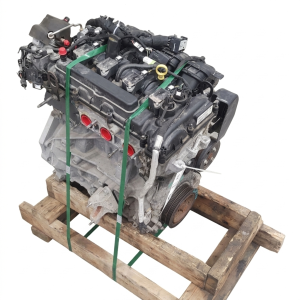
Used OEM Parts in Stock

New Aftermarket Parts Available


The information in this article is provided for general reference and educational purposes only. Vehicle specifications, procedures, and part compatibility can vary by production date, trim level, and region. Always consult your vehicle's factory service manual and verify part numbers before purchasing or performing repairs. Safety-critical components such as airbags, seat belts, and braking systems should be installed by a qualified professional.
- Ford TRANSIT CONNECT:
- 🎬 Helpful Videos
- 🛍️ Shop This Part
- What's Unique About the 2015-2021 Ford TRANSIT CONNECT
- Diagnostic Flowchart
- Symptoms You May Notice
- Most Likely Causes
- Rare But Worth Checking
- Diagnosis Steps
- Parts You'll Likely Need
- Related Codes That Often Appear With This One
- Technical Service Bulletins (TSBs) & Recalls
- Platform-Specific Known Issues
- Mechanic-Grade Diagnostic Values
- Hidden / Shadow Codes Worth Checking
- Scan Tool Commands That Help
- Wiring & Ground Locations
- Real Owner Repair Stories
- "I Checked Everything" — The Actual Cause
- OEM Part Supersession History
- Model Year Variations Within This Range
- 🎟️ Get 5% Off