

P0024 on 2011-2024 Ford Mustang 5.0L: Exhaust Cam Timing Causes and Fixes
On a 5.0L Coyote V8 Mustang, code P0024 almost always points to a faulty Variable Camshaft Timing (VCT) solenoid on the driver's side (Bank 2) exhaust camshaft. This is often caused by dirty, low, or incorrect viscosity oil. Replacing the solenoid is a common, relatively inexpensive DIY fix, but the issue can sometimes point to a more serious problem like a failed cam phaser.
- P0024 on your 5.0L Mustang points to an over-advanced exhaust camshaft on the driver's side (Bank 2).
- Before buying any parts, check your engine oil level and condition. Low or dirty oil is a very common cause.
- The most likely failed part is the Bank 2 exhaust VCT solenoid, which gets stuck. This is a known issue acknowledged by Ford in service bulletins.
- Replacing the VCT solenoid is a manageable DIY job for many owners and is not overly expensive.
- Do not replace the camshaft position sensor; it is almost never the cause of this specific code.
What's Unique About the 2011-2024 Ford Mustang
The Ford 5.0L Coyote V8 uses a sophisticated Twin Independent Variable Camshaft Timing (Ti-VCT) system, allowing the computer to adjust both intake and exhaust camshafts on both banks independently for optimal power and efficiency. However, as noted in multiple Ford Technical Service Bulletins, the VCT solenoids that control this hydraulic system are sensitive to small debris or sludge in the engine oil, causing them to stick. TSB SSM 50067 specifically instructs technicians to attempt clearing this debris by cycling the solenoid with a scan tool before replacing it, highlighting how common this specific failure mode is.
Generation note: The 2011-2024 year range covers the S197 (Gen 1 Coyote, 2011-2014), S550 (Gen 2 & 3 Coyote, 2015-2023), and S650 (Gen 4 Coyote, 2024+) Mustang generations. While the fundamental Ti-VCT system is similar, part numbers for VCT solenoids may differ. The Gen 3 engine (2018+) introduced significant changes, including port and direct injection and a higher compression ratio, which can influence VCT system health and diagnostics. Always verify the part number for your specific VIN.
Symptoms You May Notice
- Check Engine Light is on
- Rough or unstable idle
- Hesitation or sluggish acceleration, especially at low RPM
- Reduced engine power
- Decreased fuel economy
- Engine may be hard to start
- Rattling, knocking, or ticking noises from the engine
- Replacing the camshaft position sensor. The sensor is almost always doing its job correctly by reporting the timing deviation; it is not the cause of the problem. A mechanic on a forum advised against this, stating the sensors are simple Hall effect switches that rarely fail.
Most Likely Causes
- Sticking or Failed VCT Solenoid (Bank 2 Exhaust) 🔴 High Probability Ford TSBs #SSM 50067 and #SSM 47170 directly state that small debris in the oil can cause the VCT solenoid to stick, which is a known issue on these engines. The solenoids are the primary actuators for the hydraulic Ti-VCT system and are a common failure point.
How to confirm: Swap the Bank 2 exhaust solenoid with the Bank 2 intake solenoid (they are identical parts). Clear the codes and drive. If the trouble code changes to P0021 (Intake Cam Over-Advanced), the solenoid is confirmed bad. A bi-directional scan tool like FORScan can also command the solenoid to check for a response and log desired vs. actual cam angle PIDs.
Typical fix: Replace the Bank 2 (driver's side) exhaust VCT solenoid. It is highly recommended to perform an oil and filter change at the same time to prevent contamination of the new part.
Est. part cost: $30-$90 - Low, Dirty, or Incorrect Viscosity Engine Oil 🔴 High Probability The Ti-VCT system is entirely dependent on clean oil at the correct pressure and viscosity. As shown in owner forums, even being low by half a quart can be enough to trigger a VCT code under certain conditions. Delayed oil changes lead to sludge that clogs the fine mesh screens on the VCT solenoids.
How to confirm: Check the oil level on the dipstick and inspect its condition. If the oil is low, dark, or appears sludgy, this is a likely contributor. Ensure the oil viscosity matches the manufacturer's specification for your model year (e.g., 5W-20 or 5W-30).
Typical fix: Perform a complete engine oil and filter change using a high-quality, OEM-spec synthetic oil and a new filter. Clear the codes and see if the problem returns.
Est. part cost: $50-$100 - Wiring or Connector Issue at VCT Solenoid 🟡 Medium Probability The VCT solenoid connectors are located on the front of the valve covers and are exposed to significant heat and vibration, which can make wiring brittle or cause corrosion in the connector pins over time.
How to confirm: Visually inspect the wiring harness and connector going to the Bank 2 exhaust VCT solenoid. Check for any signs of damage, corrosion, or loose pins. A multimeter can be used to check for proper voltage (Pin 1 should have battery voltage with key on) and resistance at the connector.
Typical fix: Repair the damaged section of wiring or replace the connector pigtail. The OEM pigtail part number is WPT1251.
Est. part cost: $15-$40
Rare But Worth Checking
- Failing Camshaft Phaser: The phaser is the mechanical gear that the solenoid acts upon. It can get stuck internally due to sludge or mechanical failure. If replacing the solenoid doesn't fix the code, the phaser is the next likely culprit. This is a much more involved and expensive repair.
- Worn Timing Chain or Tensioner: A stretched timing chain or a failed hydraulic tensioner can cause the base cam timing to be incorrect, leading to this code. This is usually accompanied by rattling noises from the front of the engine, especially on cold starts.
- Low System Oil Pressure: In severe cases, wear on internal engine components like main or rod bearings can cause low overall oil pressure, starving the VCT system. One owner on StangNet chased a P0024 code and, despite having oil pressure within Ford's minimum spec at idle, suspected a bearing issue was the root cause, ultimately requiring an engine replacement.
Diagnosis Steps
- Verify the engine oil level and condition. Top off or change the oil and filter if necessary. A low oil level is a common trigger.
- Use an OBD-II scanner to confirm P0024 is the primary code. Check for any other stored codes, as they can provide clues (e.g., P0014, P0349).
- Locate the Bank 2 (driver's side) exhaust VCT solenoid on the front of the driver's side valve cover. Inspect its electrical connector and wiring for any visible damage, corrosion, or looseness.
- If you have a bi-directional scanner (like FORScan), use the tool's control functions. TSB SSM 50067 suggests cycling the solenoid 10 times to attempt to clear debris. You can also monitor the VCT_EXH_DSD (desired) vs. VCT_EXH_ACT (actual) PIDs while driving to see if the phaser is responding to commands.
- The most common DIY test: Swap the Bank 2 exhaust solenoid with the Bank 2 intake solenoid (located next to it). They are identical. Clear the codes and drive the vehicle. If the code returns as P0021 ('A' Camshaft Position Over-Advanced Bank 2), the solenoid you moved is faulty and needs replacement.
- If the code remains P0024 after the swap, the issue is not the solenoid. The problem lies deeper in the system, likely with the camshaft phaser itself, the timing chain, or an oil pressure delivery issue to the head. These repairs are complex and may require a professional mechanic.
Parts You'll Likely Need
- Engine Variable Valve Timing (VVT) Solenoid
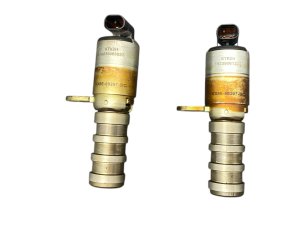
(OEM #BR3Z-6M280-F (supersedes BR3Z-6M280-E, BR3Z-6M280-D))— This is the most frequent failure point for code P0024, as confirmed by Ford TSBs. It gets stuck due to oil debris. The OEM Motorcraft part is highly recommended. The Ford Performance kit M-6297-M50A is a high-strength option for 2013-2017 models.
Trusted brands: Motorcraft (OEM), Ford Performance, Dorman
OEM price range: $50-$90
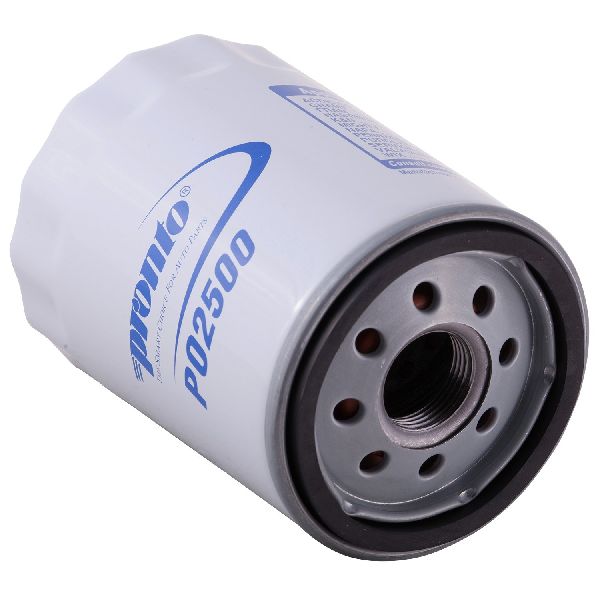
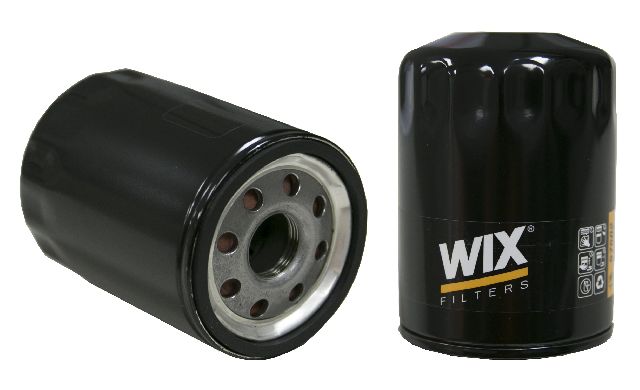
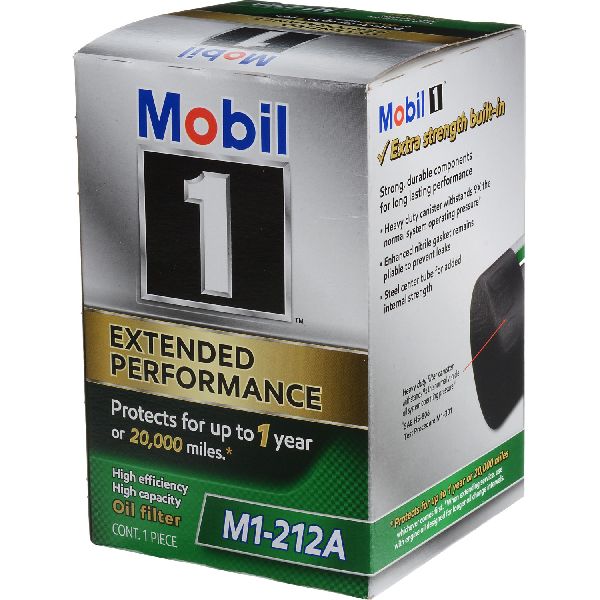
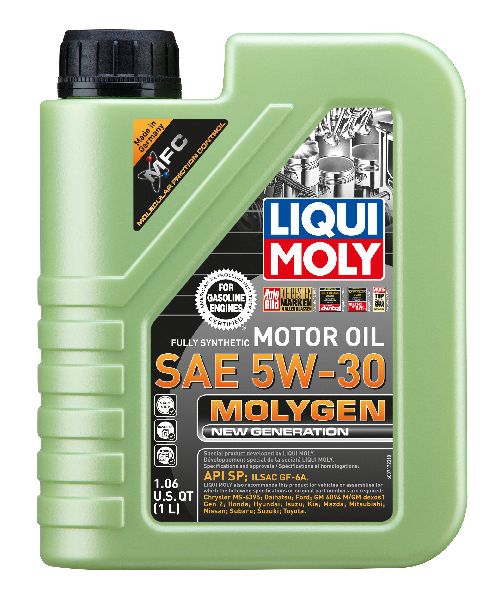
Aftermarket price range: $30-$60 - Engine Oil and Filter — Since dirty, low, or incorrect oil is a primary cause, an oil change is a critical part of the repair to ensure longevity of the new solenoid and health of the VCT system.
Trusted brands: Motorcraft, Mobil 1, Pennzoil
OEM price range: $60-$100
Aftermarket price range: $50-$80
Related Codes That Often Appear With This One
- P0014 — This is the equivalent code for the exhaust camshaft on Bank 1 (passenger side). Seeing both may indicate a systemic issue like old oil or low oil pressure affecting the entire engine.
- P0021 — This code is for the intake camshaft on the same bank (Bank 2). It will appear if the diagnostic step of swapping the intake and exhaust solenoids is performed and the original exhaust solenoid was faulty.
- P0349 — This is a code for the camshaft position sensor circuit on Bank 2. It could appear if there is a wiring issue affecting both the sensor and the solenoid, or as a secondary code resulting from the erratic timing.
- P0022 — This is for 'B' Camshaft Position Timing Over-Retarded (Bank 2). Seeing it alongside P0024 can indicate a very erratic VCT system, possibly pointing to a wiring issue or a failing phaser.
Technical Service Bulletins (TSBs) & Recalls
- SSM 54366
- SSM 50067
- SSM 47170
Platform-Specific Known Issues
- TSB #SSM 50067: Ford acknowledges that various VCT-related DTCs, including P0024, may be caused by small debris causing the VCT solenoid to stick. The bulletin advises against immediate component replacement, instead directing technicians to first use a scan tool to cycle the affected solenoid 10 times to attempt to clear the debris.
- TSB #SSM 47170: An earlier version of the same bulletin, also noting that P0024 and other VCT codes can be caused by a sticking VCT solenoid due to small debris.
Mechanic-Grade Diagnostic Values
- VCT Solenoid Internal Resistance — expected: 5 to 15 Ohms. Some sources cite a tighter range of 6.9 to 7.9 Ohms.. Failure: A reading of 0 Ohms indicates a short, while an infinite reading (OL) indicates an open circuit. A reading outside the 5-15 Ohm range suggests the solenoid's coil is failing.
- VCT Solenoid Connector Voltage (Key On, Engine Off) — expected: 12V+ (Battery Voltage) on Pin 1 (typically a Blue/Green wire).. Failure: No voltage indicates a problem with the power supply circuit, potentially a blown fuse (e.g., F16 in the battery junction box) or a wiring issue.
- FORScan/IDS Live Data PID: VCT_EXH_ERR2 — expected: Should hover around 0 degrees at idle and during steady-state driving.. Failure: A consistent, large positive value (e.g., >5 degrees) indicates the Bank 2 exhaust cam is more advanced than commanded, confirming the fault condition.
- Engine Oil Pressure (at hot idle) — expected: Ford's minimum specification is low (around 15 PSI), but a healthy Coyote engine should show significantly higher pressure. Some owners report healthy engines having 25-40 PSI at hot idle.. Failure: While technically 'in-spec', consistent hot idle pressure below 20 PSI may be insufficient to properly operate the VCT system under all conditions, potentially pointing to wider engine wear issues.
Scan Tool Commands That Help
- FORScan / Ford IDS: VCT Solenoid On/Off State Command (or 'Cycle Test') — As suggested by TSB SSM 50067, this command can be used to cycle the solenoid multiple times (e.g., 10 times) with the engine running to dislodge small debris that may be causing it to stick. It can also be used with the engine off to listen for an audible click from the solenoid, confirming electrical activation.
- FORScan / Ford IDS: Live Data Logging (PIDs: VCT_EXH_DSD2, VCT_EXH_ACT2, VCT_EXH_ERR2) — This is the primary method for diagnosing the VCT system's dynamic behavior. By logging the desired cam angle (DSD), actual cam angle (ACT), and the resulting error (ERR), a technician can see if the phaser is sticking, responding slowly, or not responding at all to the PCM's commands.
Wiring & Ground Locations
- VCT Solenoid Connector (C1540 for Bank 2 Exhaust) — On the front of the driver's side (Bank 2) valve cover.. This is the primary electrical interface for the solenoid. Pin 1 is power (VT-GN wire), and Pin 2 is the PCM control/ground (GY-YE wire). Checking for voltage, ground signal, and connector integrity is a key step.
- Main Engine-to-Chassis Ground — Typically a strap from the back of the driver's side cylinder head to the firewall. Also, major grounds are located on the engine block near the starter and on the motor mounts.. A poor engine ground can cause a variety of electrical issues, including erratic sensor readings and incorrect actuator operation. While not a direct cause of P0024, verifying grounds are clean and tight is good practice for any electrical diagnosis.
Real Owner Repair Stories
- StangNet Forums, user account (2012 Ford Mustang 5.0L) — P0024 code present. Engine ran and sounded fine otherwise.
❌ Tried (didn't work) Replacing VCT solenoids, Replacing cam phasers, Checking timing components (chains, guides, tensioners)
✅ What actually fixed it The owner ultimately swapped the engine. The suspected root cause was low systemic oil pressure due to worn main or rod bearings, even though the measured oil pressure was technically within Ford's minimum specifications. This starved the VCT system and caused the code. - Mustang6G Forums, user 'Dinokill3.7' (2017 Mustang GT) — P0024 Check Engine Light. Car ran fine with no noticeable issues.
✅ What actually fixed it The owner checked the oil level and found it was low by about half a quart. After topping off the oil and clearing the code, the CEL did not return after a 25-mile drive. This highlights the VCT system's sensitivity to oil level.
OEM Part Supersession History
BR3Z-6M280-D, BR3Z-6M280-E→BR3Z-6M280-F— Standard part evolution for improved reliability or manufacturing process.
Heads up: Early 2011 5.0L engines may have used a different VCT solenoid connector. When replacing a very early solenoid with a modern one, a new connector pigtail (WPT1251) may be required.OEM Solenoid→Ford Performance M-6297-M50A— Designed with a stronger mounting provision for high-performance and racing applications to better withstand vibration and stress.
Heads up: This kit is typically listed for 2013-2017 models. Fitment on other years should be verified.
Model Year Variations Within This Range
- 2018-2023 (Gen 3 Coyote): The Gen 3 engine introduced significant changes, including dual port and direct fuel injection, a higher 12:1 compression ratio, and Plasma Transferred Wire Arc (PTWA) cylinder liners. While the fundamental Ti-VCT system is the same, the engine control strategy is more complex, and these engines have been subject to oil consumption TSBs, which can directly impact the health of the VCT system.
- 2011 (Early Production): Some very early 2011 5.0L engines were fitted with VCT solenoids that had a different electrical connector design. Replacing these may require purchasing new connector pigtails to match the updated, commonly available solenoids.
Diagnostic Flowchart
Other Known Issues on This Vehicle
Issues unrelated to this code that are worth knowing about as an owner of this generation:
- Engine "BBQ Tick" / "Typewriter Tick" 🟡 Low — Very common across all generations (2011+). Often appears after an oil change and is more noticeable at idle when the engine is warm. While Ford has often stated the noise is benign, it is a major source of owner concern.
- Excessive Oil Consumption (Gen 3, 2018+) 🟠 Medium — A widely documented issue primarily affecting 2018-2020 models with the new Plasma Transfer Wire Arc (PTWA) cylinder liners. Consumption can be as high as 1 quart per 1,000-2,000 miles. (Ref: TSB 19-2365 (involves a PCM reflash to alter engine vacuum on deceleration and a new dipstick).)
- MT82 Manual Transmission Problems 🟠 Medium — Common complaints on 2011+ manual transmission models include high-RPM gear lockout (especially 2nd to 3rd gear), grinding, and a vague clutch feel due to the helper spring. Some 2018+ models had issues with weak shift forks.
- Intake Manifold Runner Control (IMRC) Failure 🟡 Low — On 2015-2017 models, the plastic actuator linkage on the back of the intake manifold can break, causing the IMRC plates to be stuck open or closed, leading to rough running and fault codes.
- Oil Pump Gear / Crank Sprocket Failure 🔴 High — Less common for stock vehicles but a critical failure point on modified engines, especially those with increased horsepower and higher RPM limits. Aggressive driving and frequent rev-limiter use increase risk.
Used vs. New Parts: Buying Guide for This Vehicle
When a used part is the smart pick: For this specific repair, using a used part is generally not recommended. The primary failure part, the VCT solenoid, is a relatively inexpensive electronic and hydraulic component that degrades with use and is highly sensitive to oil contamination. The risk of getting a used part that is already near the end of its life or is clogged with debris from the donor vehicle is very high.
Donor-vehicle mileage cap: roughly under 40000 miles for the part to have meaningful remaining life.
What to inspect on the donor part:
- If considering a used solenoid, insist on seeing the donor vehicle's maintenance history for frequent oil changes.
- Inspect the mesh screens on the solenoid for any signs of sludge, debris, or tearing. Clean screens are a must.
- Test the resistance of the used solenoid with a multimeter before purchase; it should be within the 5-15 Ohm range.
OEM-only on this vehicle (don't cheap out):
- VCT Solenoid: Given the sensitivity of the Ti-VCT system, using an OEM Motorcraft or Ford Performance solenoid is strongly recommended to ensure correct operation and longevity. Aftermarket solenoids can have variance in quality and performance.
- Camshaft Phaser: If the phaser is determined to be the cause, an OEM part is critical. This is a core timing component, and failure can be catastrophic.
Aftermarket brands forum-validated for this vehicle:
- Ford Performance (for M-6297-M50A high-strength solenoids)
Brands owners have reported issues with on this vehicle:
- Unnamed, low-cost online marketplace brands for VCT solenoids are a significant gamble and often lead to repeat failures.
Real Owner Stories
Aggregated from forums and TSBs cited above. Mileages and costs reflect what owners reported in those sources.
2023 Ford Mustang 5.0L Coyote
Symptoms: The owner noted hesitation symptoms and used FORScan to measure VCT wiring resistance to diagnose the Bank 2 exhaust timing issue.
What fixed it: The owner performed detailed diagnostics using FORScan to identify the fault in the 'B' cam (exhaust) circuit.
Source hint: https://www.mustang6g.com/forums/threads/p0024-bank-2-b-cam-exhaust.199341/
2012 Ford Mustang 5.0L Coyote
Symptoms: Standard diagnostics failed to resolve the timing over-advanced code; the owner suspected a deeper oil pressure delivery issue.
What fixed it: The issue was so severe that it ultimately led to an engine swap.
Source hint: https://www.stangnet.com/mustang-forums/threads/p0024-timing-over-advanced-2012-ford-5-0-coyote.898865/
2023 Ford Mustang 5.0L Coyote
Symptoms: The P0024 code appeared suddenly when the engine oil level was only half a quart low.
What fixed it: Maintaining proper oil levels; the case demonstrated the system's extreme sensitivity to oil volume.
Source hint: https://www.mustang6g.com/forums/threads/help-with-p0024-b-camshaft-position-timing-over-advanced-or-system.196884/
2013 Ford F-150 5.0L V8
Symptoms: FORScan data showed the PCM was commanding the phaser to move, but the actual position remained unchanged.
What fixed it: Diagnosis pointed toward a stuck phaser that would not respond to PCM commands.
Source hint: https://www.reddit.com/r/MechanicAdvice/comments/1d8u5v6/2013_ford_f150_50_p0024_issue/
2024 Ford Mustang 5.0L Coyote
Symptoms: Ongoing P0024 code that persisted even after the VCT solenoid was replaced.
What fixed it: The failure of the solenoid replacement led to the next diagnostic step of inspecting the camshaft phaser itself.
Source hint: https://www.mustang6g.com/forums/threads/5-0-camshaft-phasers-ford-uk-say-they-dont-know-what-this-is-help-p0024-ongoing-saga.207869/
Related OBD-II Codes
Frequently Asked Questions
My 2011-2024 Mustang 5.0L is throwing P0024; does Ford have a specific TSB for this?
Can being slightly low on oil really trigger a P0024 code on my Coyote V8?
I'm seeing P0024 on my 2013 F-150 with the 5.0L engine. Is this the same issue as the Mustang?
What is the specific replacement part for a damaged VCT solenoid connector on my Mustang?
Is the 'BBQ Tick' or 'Typewriter Tick' related to my P0024 code?
How can I test if the VCT solenoid itself is bad without buying a new one immediately?
Helpful Videos


Used OEM Parts in Stock

New Aftermarket Parts Available


The information in this article is provided for general reference and educational purposes only. Vehicle specifications, procedures, and part compatibility can vary by production date, trim level, and region. Always consult your vehicle's factory service manual and verify part numbers before purchasing or performing repairs. Safety-critical components such as airbags, seat belts, and braking systems should be installed by a qualified professional.
- Ford Mustang:
- 🎬 Helpful Videos
- 🛍️ Shop This Part
- What's Unique About the 2011-2024 Ford Mustang
- Symptoms You May Notice
- Most Likely Causes
- Rare But Worth Checking
- Diagnosis Steps
- Parts You'll Likely Need
- Related Codes That Often Appear With This One
- Technical Service Bulletins (TSBs) & Recalls
- Platform-Specific Known Issues
- Mechanic-Grade Diagnostic Values
- Scan Tool Commands That Help
- Wiring & Ground Locations
- Real Owner Repair Stories
- OEM Part Supersession History
- Model Year Variations Within This Range
- Diagnostic Flowchart
- Other Known Issues on This Vehicle
- Used vs. New Parts: Buying Guide for This Vehicle
- Real Owner Stories
- 2023 Ford Mustang 5.0L Coyote
- 2012 Ford Mustang 5.0L Coyote
- 2023 Ford Mustang 5.0L Coyote
- 2013 Ford F-150 5.0L V8
- 2024 Ford Mustang 5.0L Coyote
- Related OBD-II Codes
- Frequently Asked Questions
- 🎟️ Get 5% Off