

P0024 on 2015-2019 Ford Fusion Hybrid: Understanding an Unlikely Code
The code P0024 should not appear on a 2015-2019 Fusion Hybrid, as its 2.0L 4-cylinder engine does not have a 'Bank 2'. The equivalent code for this engine is P0014. The issue is almost always caused by low/dirty engine oil or a sticking exhaust VCT solenoid, a fix that is often under $100.
- P0024 should not appear on a Fusion Hybrid; the correct code for the same issue is P0014 (Bank 1).
- Before replacing any parts, check your engine oil. Low, old, or dirty oil is the leading cause of VCT system problems.
- The most likely failed component is the exhaust VCT solenoid for Bank 1, which is an affordable and accessible part to replace.
- A known Ford issue, documented in TSB #SSM 50067, points to debris in the oil causing these solenoids to stick.
- Do not immediately suspect a costly timing chain issue; follow the diagnostic steps from simplest to most complex.
What's Unique About the 2015-2019 Ford FUSION HYBRID
While the P0024 code itself is not applicable to the Fusion Hybrid's 2.0L I4 engine, the underlying problem it describes—a sticking Variable Camshaft Timing (VCT) component—is a known issue for this and many other Ford vehicles. Ford issued Technical Service Bulletin (TSB) #SSM 50067, which includes P0024 in a long list of VCT-related codes that can be caused by small debris in the oil causing a VCT solenoid to stick. For the Fusion Hybrid, this TSB is relevant for the Bank 1 codes it lists (like P0014), not P0024. If you see P0024 on a scan tool connected to a Fusion Hybrid, it is almost certainly a misinterpretation by the tool; the actual fault is a Bank 1 issue (P0014) that the scanner has incorrectly attributed to Bank 2.
Diagnostic Flowchart
Tap your situation to follow the diagnostic path that matches what you're seeing on this vehicle.
Symptoms You May Notice
- Check Engine Light is on
- Rough or unstable idle
- Engine hesitation or lack of power during acceleration
- Engine may be hard to start
- Decreased fuel economy
- Engine stalling at low speeds or when stopping
- Rattling noise from the engine bay.
- Replacing the camshaft position sensor first, when the VCT solenoid is the more common failure point for this specific code.
- Assuming a major timing chain failure before checking the oil and VCT solenoid, which are much more frequent and cheaper fixes.
- Replacing the VCT solenoid without performing an oil change, which can cause the new solenoid to stick as well.
Most Likely Causes
- Low, Dirty, or Incorrect Viscosity Engine Oil 🔴 High Probability The VCT system is hydraulic and highly sensitive to oil pressure and cleanliness. Old oil, incorrect viscosity, or a low oil level can prevent the VCT solenoids and phasers from operating correctly, which is a very common cause for this code.
How to confirm: Check the oil dipstick for level and observe the color and consistency of the oil. If it is low, black, sludgy, or past its service interval, it needs to be changed.
Typical fix: Perform an oil and filter change using the manufacturer-recommended oil type (for the 2.0L Atkinson-cycle, this is typically a full synthetic 5W-20). Clear codes and re-test.
Est. part cost: $40-$80 - Sticking or Failed Exhaust VCT Solenoid (Oil Control Valve) 🔴 High Probability This is a widely documented issue on Ford engines. TSB #SSM 50067 directly states that small debris can cause the VCT solenoid to stick, leading to timing codes. This is the most common mechanical failure for this code after ruling out oil issues.
How to confirm: After an oil change, if the problem persists, the solenoid is the next logical part. A mechanic can command the solenoid on and off with a scan tool to test its function and listen for a click. A common DIY method is to swap the exhaust solenoid with the intake solenoid (they are often identical, interchangeable parts). If the code changes to P0011 (Intake Over-Advanced), the solenoid is confirmed bad.
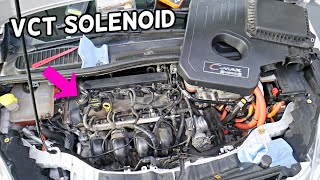
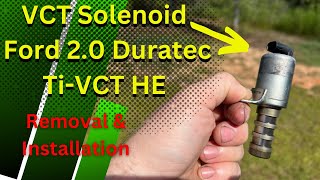
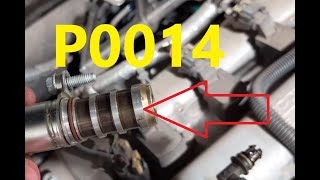
Typical fix: Replace the 'B' (Exhaust) VCT Solenoid for Bank 1. On this engine, replacement requires removing the valve cover. 🎬 Watch: See the VCT solenoid location and replacement process.
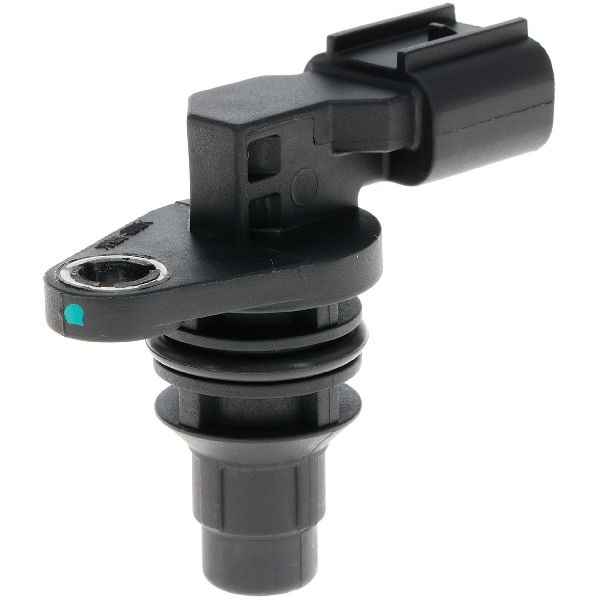
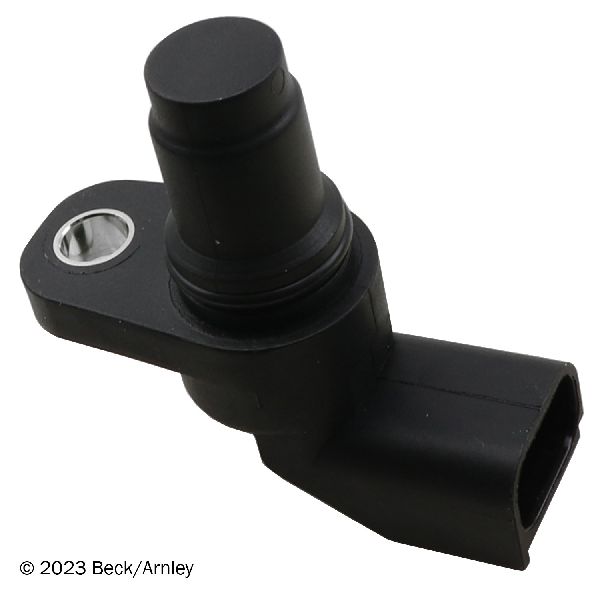
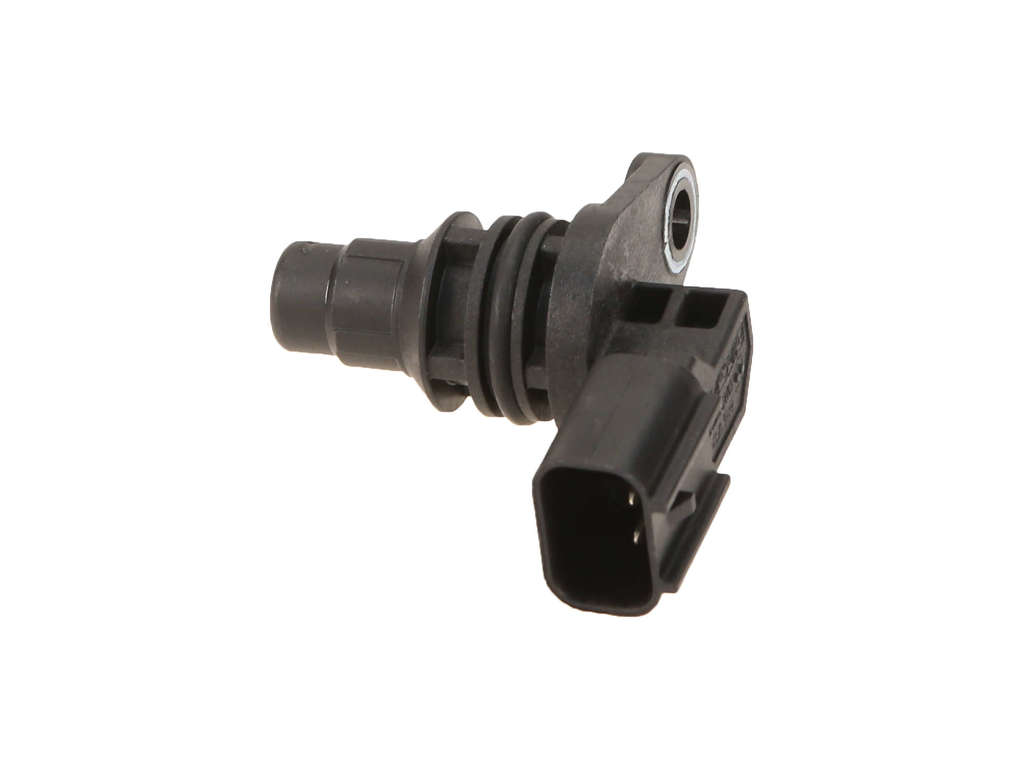
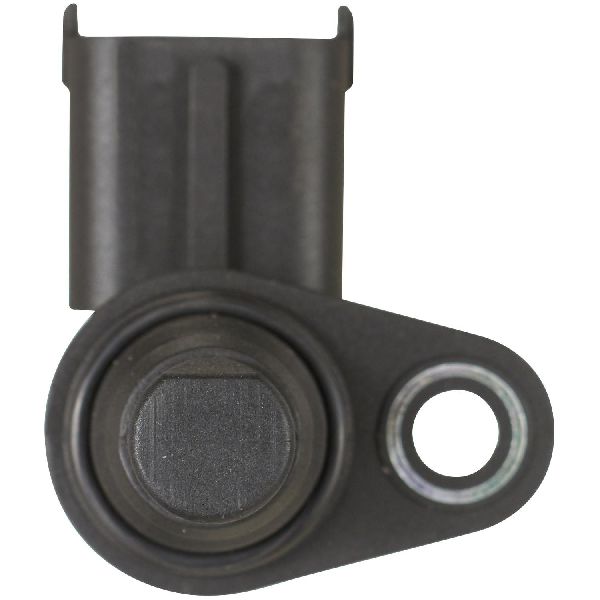
Est. part cost: $40-$100 - Faulty Camshaft Position Sensor ⚪ Low Probability While possible, the sensor is less likely to fail than the VCT solenoid for a timing *performance* code. A sensor fault usually triggers a specific sensor circuit code (like P034x) or a correlation code.
How to confirm: Test the sensor's output with a multimeter or oscilloscope. Check for a consistent signal as the engine runs. Swapping with the intake sensor can also be a diagnostic step if they are the same part number.
Typical fix: Replace the Bank 1 exhaust camshaft position sensor.
Est. part cost: $25-$70
Rare But Worth Checking
- Worn Camshaft Phaser: The phaser is the gear at the end of the camshaft that actually adjusts the timing. If the internal locking pin is broken or it's stuck due to sludge, it can cause a persistent over-advanced condition. This is a more complex and expensive repair.
- Stretched Timing Chain or Worn Guides: Over high mileage, the timing chain can stretch, causing the base timing to be off. This is a major mechanical repair and should only be considered after all other VCT components have been ruled out.
- Clogged Oil Passages: In cases of severe engine sludge, the small oil passages that feed the VCT solenoids and phasers can become blocked. This can require extensive engine cleaning or disassembly to resolve.
Diagnosis Steps
- Verify the engine oil level and condition. If low, dirty, or overdue for a change, perform an oil and filter change with the correct viscosity oil (5W-20 full synthetic). Clear the codes and drive to see if the issue returns. This is the simplest and most common fix.
- If the code returns, inspect the wiring and connector for the Bank 1 exhaust VCT solenoid for any damage or corrosion.
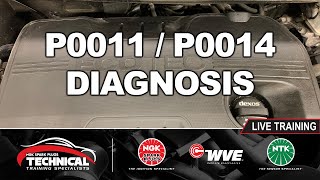
- Using a capable scan tool, monitor the desired vs. actual camshaft position angles. Command the exhaust VCT solenoid on and off to see if the angle changes as expected. TSB 50067 suggests cycling the solenoid 10 times to attempt to clear debris before replacement. 🎬 See this guide on diagnosing P0011 and P0014 timing codes.
- A practical DIY test is to swap the exhaust VCT solenoid with the intake VCT solenoid (they are identical parts). This requires removing the valve cover. Clear the codes and drive the vehicle. If the trouble code changes to P0011 (Intake Camshaft Over-Advanced), the solenoid you moved is faulty and needs to be replaced.
- If the solenoid tests good or swapping it does not resolve the issue, the problem may be more severe, such as a faulty camshaft phaser or a timing chain issue, which requires more in-depth mechanical diagnosis.
Parts You'll Likely Need
- Engine Variable Camshaft Timing (VCT) Solenoid
(OEM #CJ5Z-6M280-A)— This is the most common failure point for VCT-related timing codes on Ford engines, often due to sticking from oil debris as noted in TSB #SSM 50067. Note that both intake and exhaust solenoids are the same part number.
Trusted brands: Motorcraft, Dorman, Standard Motor Products (SMP)
OEM price range: $30-$50
Aftermarket price range: $25-$60 - Engine Oil and Filter — The VCT system is operated by engine oil pressure. Clean, correct-viscosity oil is critical for its function and is the first step in any diagnosis.
Trusted brands: Motorcraft, Mobil 1, Castrol
OEM price range: $50-$90
Aftermarket price range: $40-$70 - Valve Cover Gasket Kit — On the 2.0L engine in the Fusion Hybrid, the VCT solenoids are located underneath the valve cover. The valve cover must be removed to access them, and the gasket should always be replaced when doing so.
Trusted brands: Fel-Pro, Mahle, Motorcraft
OEM price range: $40-$70
Aftermarket price range: $25-$50
Related Codes That Often Appear With This One
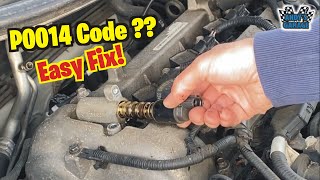
- P0014 — This is the correct code for an over-advanced exhaust camshaft on Bank 1, which is what the Fusion Hybrid's 2.0L I4 engine actually has. P0024 is likely a misreading for P0014. 🎬 Watch: Learn the common causes and fixes for code P0014.
- P0011 — This code is for an over-advanced *intake* camshaft. If seen with P0014, it points to a systemic issue affecting the whole VCT system, like very low/dirty oil. It would also appear if a faulty exhaust VCT solenoid was swapped to the intake position for diagnosis.
- P0016 / P0017 — These codes indicate a correlation problem between the crankshaft and either the intake (P0016) or exhaust (P0017) camshaft. They can appear if the timing has jumped or a phaser has failed completely.
Technical Service Bulletins (TSBs) & Recalls
- SSM 50067: Various Vehicles – Illuminated Malfunction Indicator Lamp (MIL) With Variable Cam Timing (VCT) DTCs – Diagnostic Information.
Platform-Specific Known Issues
- TSB #SSM 50067: Ford issued this bulletin for a wide range of 2015-2021 vehicles, noting that various VCT codes (including P0024 and its Bank 1 equivalent P0014) can be caused by small debris making the VCT solenoid stick. The bulletin advises attempting to cycle the solenoid with a scan tool to clear it before replacement.
- Valve Cover Access: Unlike some other Ford engines where the VCT solenoids are externally accessible, on the 2.0L Atkinson-cycle engine, the solenoids are located under the valve cover. This adds labor time and cost to the repair, as the valve cover and its gasket must be removed and replaced to access the solenoids.
Mechanic-Grade Diagnostic Values
- VCT Solenoid Internal Resistance — expected: 7 to 14 Ohms. Failure: A reading of OL (infinite resistance) indicates an open coil, while a reading under 5 Ohms suggests a shorted coil.
- VCT Solenoid Connector Voltage — expected: Approximately 12V (Battery Voltage) on Pin 1 with Key On, Engine Off.. Failure: Low or no voltage points to a problem in the power supply circuit, such as a fuse or wiring issue.
- Camshaft Position Sensor (CMP) Circuit Voltage — expected: A 3-wire sensor should show: ~5V on the power wire, a good ground, and ~5V on the signal wire (Key On, Engine Off).. Failure: When a metal object passes in front of the sensor, the signal wire voltage should drop to 0V. If it doesn't, the sensor is likely faulty.
- Scan Tool PID: VCTADVERR (VCT Advance Error) — expected: Should be close to 0 degrees (+/- 5 degrees) at hot idle and during steady-state driving.. Failure: A persistent large positive value indicates the camshaft is stuck in an over-advanced position and not responding to PCM commands.
Hidden / Shadow Codes Worth Checking
- Mode 6, TID $53 (or similar): While Ford doesn't use 'shadow codes' in the same way as some German brands, a deeper diagnosis involves looking at Mode $06 data. Test ID $53 often corresponds to VCT system monitoring. A failing test here can be an early indicator of a problem before a DTC is set. More practically, monitoring the Ford-specific PID 'VCTADVERR' (VCT Advance Error) on a capable scanner like Ford IDS provides the raw data behind the P0014 code, showing the exact degree of error between commanded and actual cam position. (see via A professional scan tool with Ford-specific capabilities (like Ford IDS) or advanced generic scan tools that can display Mode $06 test results and manufacturer-specific PIDs.)
Scan Tool Commands That Help
- Ford IDS (Integrated Diagnostic System) or equivalent professional scanner: VCT Solenoid On/Off Cycle Test (part of Pinpoint Test HK) — This bidirectional control is used after confirming oil level and quality are good. As recommended in TSBs, the command cycles the solenoid on and off rapidly (e.g., 10 times) to attempt to dislodge small debris causing it to stick. If engine idle quality changes during actuation, it confirms the solenoid is responding mechanically. If the code clears and stays away after this test, it may prevent an unnecessary solenoid replacement.
Wiring & Ground Locations
- G104 — On the right side of the engine compartment.. This is a primary ground point for the Powertrain Control Module (PCM). A corroded or loose G104 ground can cause erratic PCM behavior and incorrect readings from various engine sensors, including the camshaft and crankshaft position sensors, potentially leading to false timing codes.
- VCT Solenoid Connector (C139 for Intake, C140 for Exhaust on similar engines) — Under the valve cover, connected to the top of each VCT solenoid.. The connector pinout is critical for electrical testing. Pin 1 is the power supply wire (VPWR) and should have battery voltage with the key on. Pin 2 is the control wire, which the PCM pulses to ground to activate the solenoid. Testing for voltage at Pin 1 is a key step in diagnosing a circuit fault vs. a faulty solenoid.
Real Owner Repair Stories
- YouTube - Andy's Garage, Episode 447 (General vehicle, not a Fusion Hybrid, but demonstrating the fix for a P0014 code.) — Check Engine Light with code P0014.
❌ Tried (didn't work) The video presents the successful diagnosis directly, without showing failed attempts.
✅ What actually fixed it The issue was resolved with a two-step process. First, an engine oil and filter change was performed. Second, the corresponding VVT solenoid was removed, found to be 'filthy' with gunk, cleaned thoroughly with mass air flow sensor cleaner, and reinstalled. After clearing the codes, the problem was fixed.
OEM Part Supersession History
CJ5Z-6M280-A→No common supersession noted.— N/A
Heads up: This part number is used across a very wide range of Ford/Lincoln 2.0L, 2.3L, and 2.5L engines from 2012 through 2020 and beyond. Its stability suggests no significant design changes or incompatibility issues within the 2015-2019 Fusion Hybrid's production run. Both intake and exhaust solenoids use the same part number.
Model Year Variations Within This Range
- 2015-2019: The Ford Fusion platform received a significant refresh for the 2017 model year, which included revised exterior styling, a new rotary gear selector, and the updated Sync 3 infotainment system. However, these changes were primarily cosmetic and electronic. The core powertrain, the 2.0L I4 Atkinson-cycle engine and its associated Variable Camshaft Timing (VCT) system, were not changed in any way that would affect the causes, diagnosis, or repair of VCT-related trouble codes like P0014 within this vehicle range.
Helpful Videos
Used OEM Parts in Stock


New Aftermarket Parts Available


The information in this article is provided for general reference and educational purposes only. Vehicle specifications, procedures, and part compatibility can vary by production date, trim level, and region. Always consult your vehicle's factory service manual and verify part numbers before purchasing or performing repairs. Safety-critical components such as airbags, seat belts, and braking systems should be installed by a qualified professional.
- Ford FUSION HYBRID:
- 🎬 Helpful Videos
- 🛍️ Shop This Part
- What's Unique About the 2015-2019 Ford FUSION HYBRID
- Diagnostic Flowchart
- Symptoms You May Notice
- Most Likely Causes
- Rare But Worth Checking
- Diagnosis Steps
- Parts You'll Likely Need
- Related Codes That Often Appear With This One
- Technical Service Bulletins (TSBs) & Recalls
- Platform-Specific Known Issues
- Mechanic-Grade Diagnostic Values
- Hidden / Shadow Codes Worth Checking
- Scan Tool Commands That Help
- Wiring & Ground Locations
- Real Owner Repair Stories
- OEM Part Supersession History
- Model Year Variations Within This Range
- 🎟️ Get 5% Off