

P0022 on 2007-2009 Kia Sorento 3.8L V6: Causes and Fixes for Over-Retarded Cam Timing
On the 2007-2009 Sorento 3.8L, code P0022 is most often caused by low or dirty engine oil, or a failing Bank 2 intake Oil Control Valve (OCV). Start by checking your oil; if it's clean and full, the OCV is the next likely culprit, costing around $50-$100 for the part. This is a very common issue on Hyundai and Kia vehicles with the 3.3L and 3.8L Lambda V6 engines.
- First, check your engine oil. This code is very often caused by oil that is low, dirty, or the wrong type. An oil change is the cheapest and easiest first step.
- If an oil change doesn't fix it, the Bank 2 intake Oil Control Valve (OCV) is the next most likely cause. It is located on the front cylinder bank (near the radiator).
- Do not immediately replace the camshaft position sensor. This code points to a mechanical timing issue, not an electrical sensor failure.
- Bank 2 on this engine is the cylinder bank closer to the radiator. The intake OCV is on the driver's side of that bank.
- If you hear a loud engine rattle, especially on startup, the problem could be a more serious issue with the cam phaser or timing chain, which requires professional repair.
What's Unique About the 2007-2009 Kia Sorento
The 3.8L Lambda V6 engine (G6DA) in this generation of Sorento is known for being sensitive to oil quality and maintenance schedules. The VVT system is hydraulically operated, and issues with sludge buildup from infrequent oil changes are a primary contributor to this code. Unlike some other manufacturers where cam phasers are the most common failure point, on this Kia engine, the much cheaper and easier-to-replace Oil Control Valve (OCV) is a more frequent cause of P0022. This issue is widespread across many Hyundai and Kia models that used the 3.3L and 3.8L Lambda engines.
Symptoms You May Notice
- Check Engine Light is on
- Rough or unstable idle
- Engine hesitation or stumbling on acceleration
- Reduced engine power
- Poor fuel economy
- Engine stalling, especially at low speeds or when coming to a stop.
- Rattling or ticking noise from the engine on startup (less common, points to phaser issues).
- Replacing the Camshaft Position Sensor. This code indicates a mechanical timing *performance* problem, not an electrical fault with the sensor itself. While the sensor can fail, it's rarely the cause of P0022 and would typically set a different code related to the sensor circuit.
Most Likely Causes
- Low, Dirty, or Incorrect Viscosity Engine Oil 🔴 High Probability The Lambda V6's VVT system uses hydraulic pressure to operate. Sludge from old oil or the wrong viscosity oil can clog the small passages in the Oil Control Valve and cam phaser, preventing proper operation. This is cited as the cause for over 50% of P0022 codes across all makes.
How to confirm: Check the engine oil dipstick. The oil should be at the full mark and have a clear, amber color. If it is black, thick, or below the 'add' line, this is the likely cause.
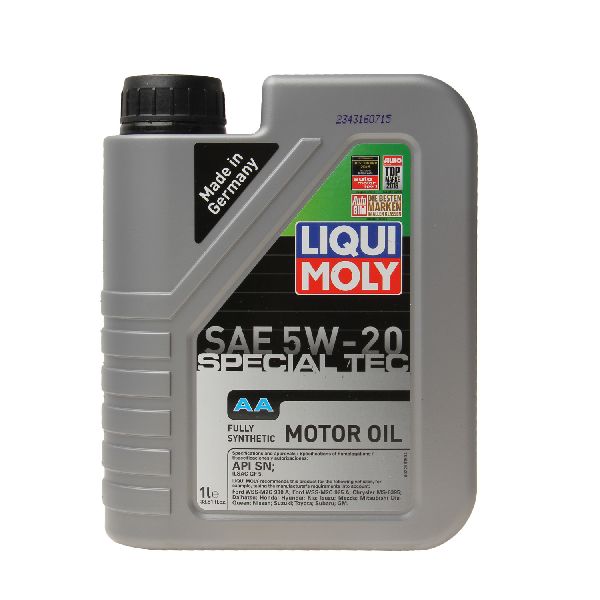
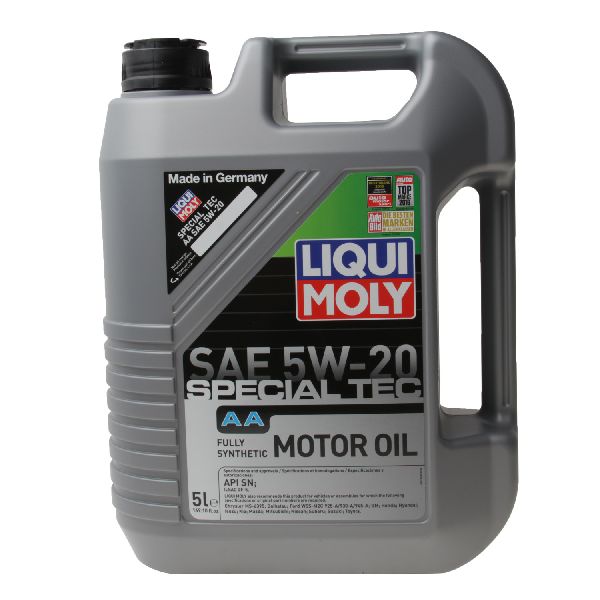
Typical fix: Perform a complete engine oil and filter change using a quality filter and the manufacturer-recommended 5W-20 or 5W-30 oil. Many owners report this simple maintenance step resolves the code.
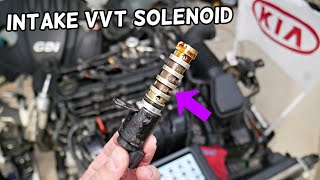
Est. part cost: $30-$70 - Faulty Bank 2 Intake Oil Control Valve (OCV) 🔴 High Probability This solenoid is the most common hardware failure for P0022 on this engine. Its internal passages and filter screen can become clogged with sludge, or the solenoid can fail electrically, preventing it from directing oil to the cam phaser.
How to confirm: After an oil change, if the code persists, swap the Bank 2 intake OCV with the Bank 1 intake OCV (located on the rear bank). Clear the codes and drive. If the code changes to P0012 (Bank 1 over-retarded), the OCV is faulty. You can also test the solenoid's resistance; it should be between 6.9 and 7.9 ohms for the Delphi-made OCVs used in this engine.
Typical fix: Replace the Bank 2 (front, driver's side) intake Oil Control Valve. Lubricate the O-rings on the new valve with clean engine oil before installation.
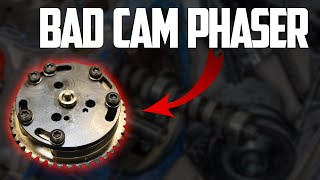
Est. part cost: $50-$100 - Failing Intake Camshaft Phaser (CVVT Actuator) ⚪ Low Probability The phaser is a mechanical gear that can get stuck due to internal wear or oil contamination. While less common than an OCV failure, it's the next logical step if a new OCV and clean oil don't solve the problem.
How to confirm: This is difficult to confirm without significant disassembly. A persistent, diesel-like rattling noise from the timing cover area on cold starts 🎬 See this guide on symptoms and costs for bad cam phasers. is a strong indicator. Diagnosis typically involves ruling out the OCV and oil issues first.
Typical fix: Replace the Bank 2 intake camshaft phaser. This is a labor-intensive job that requires removing the timing cover and re-timing the engine.
Est. part cost: $150-$250
Rare But Worth Checking
- Stretched Timing Chain or Failed Tensioner: While not common, a timing chain that has stretched or a tensioner that has lost its hydraulic pressure can cause the camshaft timing to be physically retarded. This is usually accompanied by rattling noises from the timing cover area and is a major repair. This is a more common issue on the GM 3.6L V6 but can happen on any chain-driven engine with high mileage.
- Damaged Crankshaft Reluctor Wheel: In rare cases, the reluctor wheel on the crankshaft can be damaged or shift, causing the crankshaft position sensor to send incorrect data. This can lead to a correlation code like P0022. This issue is more documented on certain GM vehicles but is a possibility.
Diagnosis Steps
- Check Engine Oil: Verify the oil level is full and the oil is clean. If low or dirty, perform an oil and filter change with the correct viscosity oil (5W-20 or 5W-30). Use a quality OEM or equivalent oil filter, as restrictive aftermarket filters can cause oil pressure issues. Clear the code and test drive.
- Inspect OCV Wiring: Check the wiring harness and connector for the Bank 2 intake OCV for any signs of damage, corrosion, or loose connections. The connectors for left and right banks are often color-coded to prevent being swapped.
- Test the OCV: The easiest test is to swap the Bank 2 intake OCV (front bank) with the Bank 1 intake OCV (rear bank). Clear codes and drive. If the fault moves to Bank 1 (code P0012), the OCV is bad. Alternatively, remove the OCV and apply a 12V power source to its terminals to see if the internal plunger moves. Do not apply power for more than 5 seconds.
- Replace OCV: If the OCV is confirmed faulty, replace the Bank 2 intake OCV. Be sure to lubricate the new O-rings with clean engine oil before installation to prevent damage.
- Advanced Mechanical Diagnosis: If the problem persists, the issue is likely more severe, such as a faulty cam phaser or a problem with the timing chain/tensioners. This level of diagnosis is best left to a professional mechanic as it requires significant engine disassembly.
Parts You'll Likely Need
- Intake Oil Control Valve (Bank 2, Left)
(OEM #24355-3C100)— This is the most common hardware failure for code P0022 on the 3.8L Lambda engine, often getting stuck or clogged with oil sludge. This part is also referred to as the VVT Solenoid or Spool Valve.
Trusted brands: Hyundai/Kia (Genuine), Delphi, Dorman
OEM price range: $80-$120
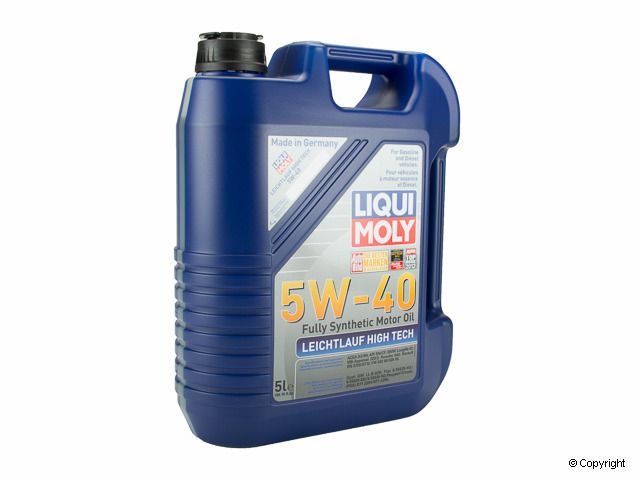
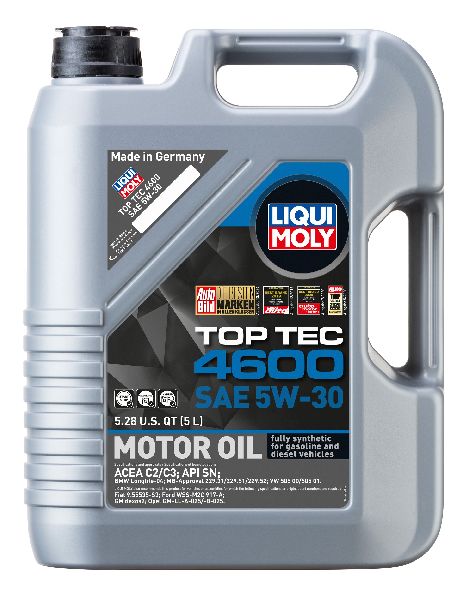
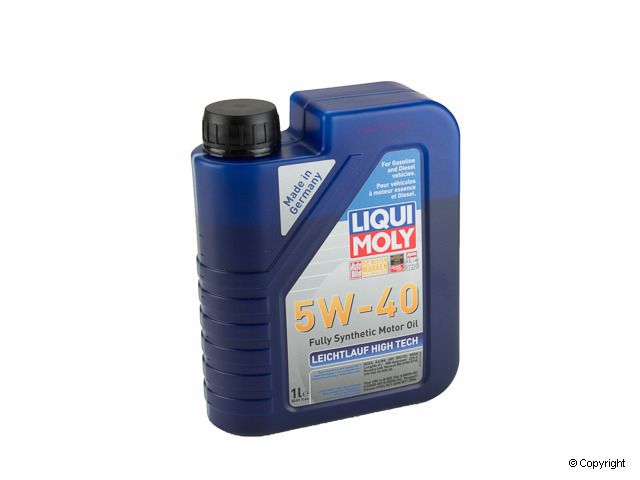
Aftermarket price range: $40-$70 - Engine Oil and Filter — Low, old, or incorrect viscosity oil is the leading cause of this code by preventing proper function of the hydraulic VVT system.
Trusted brands: Mobil 1, Castrol, Valvoline, Kia/Hyundai Genuine Filter
OEM price range: $50-$90
Aftermarket price range: $30-$70
Related Codes That Often Appear With This One
- P0012 — Intake 'A' Camshaft Position - Timing Over-Retarded (Bank 1). This code may appear after swapping a faulty Bank 2 OCV to Bank 1 for diagnostic purposes.
- P0300 — Random/Multiple Cylinder Misfire can occur because the incorrect valve timing on Bank 2 disrupts the combustion process.
- P0302, P0304, P0306 — Misfire codes for the specific cylinders on Bank 2 (2, 4, and 6) can be triggered by the incorrect valve timing on that bank.
Technical Service Bulletins (TSBs) & Recalls
- TSB ENG 046: CVVT OCV Inspection: A Kia TSB from May 2009 provides a detailed inspection procedure for the Oil Control Valve (OCV) on various models with CVVT, including the Sorento. It advises checking resistance (spec 6.9-7.9 Ohms for Delphi units) and performing a functional test by applying 12V power before replacing the valve. This is recommended for codes like P0011, P0012, P0021, and P0022.
Platform-Specific Known Issues
- Owner Experience: OCV Swap Confirms Failure: A user on a Kia forum with a 2008 Sorento 3.8L reported getting P0022. After an oil change didn't fix the issue, they swapped the front (Bank 2) and rear (Bank 1) intake OCVs. The code then changed to P0012, confirming the original OCV was the culprit. They replaced it with a new part and resolved the problem.
- Importance of OEM Oil Filters: Multiple discussions across forums for Hyundai/Kia vehicles with Lambda engines emphasize the importance of using OEM oil filters. Some aftermarket filters have been anecdotally linked to oil pressure deviations that can trigger VVT-related codes like P0022.
Mechanic-Grade Diagnostic Values
- Oil Control Valve (OCV) Solenoid Resistance — expected: 6.9 - 7.9 Ohms at 68°F (20°C) for Delphi units. Siemens units are 6.8 - 8.0 Ohms.. Failure: A reading of zero, infinite, or outside the specified range indicates a failed solenoid coil.
- Scan Tool Live Data: Desired vs. Actual Camshaft Position (Bank 2) — expected: The 'Actual' value should closely track the 'Desired' value, typically within a few degrees.. Failure: A consistent negative value or a large, lagging difference between the actual and desired angle on Bank 2 confirms an over-retarded condition.
- OCV Connector Voltage — expected: One pin should show battery voltage (~12V) with the key on, engine off. The other pin is the ground-side control from the ECM.. Failure: Zero voltage on the power pin indicates a blown fuse or a break in the power supply wire.
Scan Tool Commands That Help
- Kia GDS (Global Diagnostic System) or advanced aftermarket scanner: CVVT Actuator Test / VVT Solenoid Bi-Directional Control — This command allows a technician to manually activate the Bank 2 intake OCV while the engine is idling. If the solenoid and phaser are working, the engine should stumble or run rough when the command is activated. If there is no change in engine operation, it points to a stuck OCV, a clogged oil passage, or a failed phaser.
Wiring & Ground Locations
- Bank 1 & Bank 2 OCV Connectors — Located on the front of each valve cover, connecting to the Oil Control Valves.. Kia TSB ENG 046 notes that on V6 engines, the Left Hand (Bank 1) and Right Hand (Bank 2) OCV connectors are different colors to prevent them from being swapped. Swapping them would send control signals to the wrong bank, causing timing correlation codes.
- Main Engine Ground — Typically a large gauge wire bolted from the engine block or cylinder head to the chassis frame rail near the battery or strut tower.. A poor engine ground can cause floating voltages and incorrect readings for all engine sensors, including the camshaft and crankshaft position sensors, potentially leading to erroneous timing codes. While not a primary cause, it should be checked for corrosion and tightness.
Real Owner Repair Stories
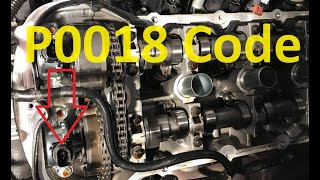
- YouTube channel 'broke jeep' (Kia Sorento with 3.3L V6 (Lambda family, similar design and causes)) — Check Engine Light with code P0018 (a related cam/crank correlation code, but diagnosis is similar).
❌ Tried (didn't work) Replaced both Oil Control Valve actuators (solenoids)., Replaced both camshaft position sensors., Tested all related wiring.
✅ What actually fixed it An oil and filter change. The engine was found to be critically low on oil, with only 1.5 to 2 quarts drained from a 5.5-quart system. The lack of oil pressure prevented the CVVT system from operating correctly, triggering the code.
OEM Part Supersession History
24355-3C100→24355-3C200— The part was updated by Hyundai/Kia. The -3C200 is the current replacement for the -3C100.
Heads up: The parts are interchangeable. Ordering 24355-3C100 will typically result in receiving 24355-3C200.
Model Year Variations Within This Range
- 2008-2009: For the 2008 and 2009 model years, the 3.8L V6 became the optional engine, available only on the higher EX trim level. The base and LX trims received a 3.3L V6. This does not change the diagnosis for P0022 on a 3.8L engine but is relevant for vehicle identification.
Diagnostic Flowchart
Used vs. New Parts: Buying Guide for This Vehicle
When a used part is the smart pick: For this specific repair, using used parts is generally not recommended. The primary failure components (OCV, cam phaser) are highly sensitive to oil quality and wear. The cost savings of a used part do not outweigh the risk of inheriting the same problem or having the part fail prematurely.
Donor-vehicle mileage cap: roughly under 80000 miles for the part to have meaningful remaining life.
What to inspect on the donor part:
- For an OCV: Inspect the filter screens for any metallic debris or heavy sludge, which indicates poor engine health of the donor vehicle.
- For a Cam Phaser: This is not recommended. There is no reliable way to inspect the internal locking pin or wear surfaces without disassembly.
- Verify the donor vehicle did not have a catastrophic engine failure, as debris could have contaminated the VVT components.
OEM-only on this vehicle (don't cheap out):
- Camshaft Phaser (CVVT Actuator): This is a high-labor, critical timing component. The risk of a used or cheap aftermarket phaser failing is too high. Stick with Genuine Hyundai/Kia or a top-tier OEM supplier like Delphi.
- Timing Chain and Tensioners: These are wear items. Never use used timing components.
Aftermarket brands forum-validated for this vehicle:
- Delphi: A known OEM supplier for Hyundai/Kia, their OCVs are considered a reliable alternative to dealer parts.
- Standard Motor Products (SMP): Generally considered a reputable brand for sensors and solenoids.
Brands owners have reported issues with on this vehicle:
- Dorman (for solenoids): While Dorman makes a wide variety of parts, forum discussions frequently advise against using their electronic components like VVT solenoids due to higher-than-average failure rates compared to OEM.
- No-name/white-box brands: Avoid unbranded solenoids from online marketplaces, as quality control is often non-existent.
Real Owner Stories
Aggregated from forums and TSBs cited above. Mileages and costs reflect what owners reported in those sources.
2007 Kia Sorento 3.8l — 207000 miles
Symptoms: The vehicle loses power, struggles to accelerate on hills, and shifts through gears 1-4 very quickly at low speeds. The check engine light was on with code P0022.
What fixed it: The issue was ongoing and not resolved. The owner's mechanic suspected the CVVT phaser assemblies were the ultimate cause after replacing the oil control valves, MAF sensor, and other parts did not fix the problem.
Source hint: Opinautos
2008 Sorento 3.8L
Symptoms: Check Engine Light was on with code P0022. An oil change did not resolve the issue.
What fixed it: The owner swapped the front (Bank 2) and rear (Bank 1) intake OCVs. The code changed to P0012, confirming the original OCV was the culprit. Replacing the faulty OCV resolved the problem.
Source hint: A user on a Kia forum
Related OBD-II Codes
Frequently Asked Questions
Where is the Bank 2 intake Oil Control Valve (OCV) located on my 2008 Sorento 3.8L?
What is the correct engine oil to use to prevent P0022 on this Kia Sorento?
If I swap the Bank 1 and Bank 2 OCVs to test for a fault, what code should I look for?
Is there a Kia TSB that covers testing the OCV for code P0022?
I'm hearing a rattling or ticking noise from the engine on startup along with the P0022 code. What could this mean?
I already changed my oil and filter, but the P0022 code came back. What is the most common next step?
Helpful Videos

We Have This Part in Stock

The information in this article is provided for general reference and educational purposes only. Vehicle specifications, procedures, and part compatibility can vary by production date, trim level, and region. Always consult your vehicle's factory service manual and verify part numbers before purchasing or performing repairs. Safety-critical components such as airbags, seat belts, and braking systems should be installed by a qualified professional.
- Kia Sorento:
- 🎬 Helpful Videos
- 🛍️ Shop This Part
- What's Unique About the 2007-2009 Kia Sorento
- Symptoms You May Notice
- Most Likely Causes
- Rare But Worth Checking
- Diagnosis Steps
- Parts You'll Likely Need
- Related Codes That Often Appear With This One
- Technical Service Bulletins (TSBs) & Recalls
- Platform-Specific Known Issues
- Mechanic-Grade Diagnostic Values
- Scan Tool Commands That Help
- Wiring & Ground Locations
- Real Owner Repair Stories
- OEM Part Supersession History
- Model Year Variations Within This Range
- Diagnostic Flowchart
- Used vs. New Parts: Buying Guide for This Vehicle
- Real Owner Stories
- 2007 Kia Sorento 3.8l — 207000 miles
- 2008 Sorento 3.8L
- Related OBD-II Codes
- Frequently Asked Questions
- 🎟️ Get 5% Off