

P0022 on 2001-2012 Ford Escape 3.0L V6: Causes for Over-Retarded Cam Timing
On the 3.0L V6 Ford Escape, code P0022 is most often caused by low or dirty engine oil, or a failing Bank 2 (front) VCT solenoid. Always check your oil first. Replacing the VCT solenoid costs around $30-$80 for the part but requires removing the valve cover. In rare cases, loose camshaft bearing cap bolts, a known issue on this engine, can be the cause.
- First, check your engine oil. Low or dirty oil is the most common cause of P0022. Use SAE 5W-20 oil.
- The most likely failed part is the Bank 2 (front) VCT solenoid, which is located under the valve cover.
- A cost-effective diagnostic step is to swap the front and rear VCT solenoids to see if the code moves to the other bank (P0012).
- If you remove the valve cover to replace a solenoid, always check the torque on the camshaft bearing cap bolts (89 lb-in) as they are a known weak point on this engine.
What's Unique About the 2001-2012 Ford Escape
The 3.0L Duratec V6 is generally reliable, but its Variable Camshaft Timing (VCT) system is very sensitive to oil quality, viscosity, and level. Unlike many other engines, the VCT solenoids are located underneath the valve covers, making replacement a more involved job that requires gasket replacement. This engine also has a unique and well-documented, though uncommon, flaw where the camshaft bearing cap bolts can loosen or break over time, causing oil pressure loss to the cam journals, leading to timing issues and misfires that can trigger this code.
Generation note: This guide covers the first (2001-2007) and second (2008-2012) generations of the Ford Escape. The fundamental causes for P0022 are the same for both. However, part numbers for components like VCT solenoids may differ by year. For example, TSB 12-10-12 is specific to the 2012 model year, pointing to VCT solenoid failure. Part number 8L3Z-6M280-B is often cited for earlier models, while 9L8Z-6M280-A/B/C are listed for 2009-2012 models. Always verify part numbers with your vehicle's specific VIN.
Symptoms You May Notice
- Check Engine Light is on
- Rough idle or engine vibration
- Engine hesitation or sluggish acceleration
- Reduced fuel economy
- Engine stalling in severe cases, sometimes during deceleration
- Hard starting
- Rattling noise from the engine on startup or during operation
- Replacing the camshaft position sensor before checking the oil or VCT solenoid. The sensor is often not the root cause.
- Assuming a timing chain replacement is needed without first diagnosing the much more common VCT solenoid failure.
Most Likely Causes
- Low or Dirty Engine Oil 🔴 High Probability The VCT system is hydraulic and uses oil pressure to adjust cam timing. The small passages in the VCT solenoids are easily clogged by sludge from old oil, the wrong viscosity oil, or low oil levels. This is the first thing to check.
How to confirm: Check the engine oil dipstick for proper level and inspect the oil's condition. If it is very dark, thick, or below the 'add' line, this is the most likely cause.
Typical fix: Perform an engine oil and filter change using the manufacturer-specified SAE 5W-20 synthetic blend oil. Clear the codes and see if the issue returns.
Est. part cost: $30-$60 - Failing VCT Solenoid (Bank 2) 🔴 High Probability The VCT solenoids are a common failure item. They can fail electrically or, more commonly, become clogged with debris or sludge, causing them to stick. Ford issued TSB 12-10-12 for the 2012 model year specifically identifying this part as the cause for P0022. Manufacturer service bulletin #SSM 50067 notes that small debris can cause the VCT solenoid to stick, triggering this code.
How to confirm: A common and effective diagnostic is to swap the Bank 2 (front, by radiator) and Bank 1 (rear, by firewall) VCT solenoids. Clear the codes and drive the vehicle. If the code returns as P0012 (Bank 1 over-retarded), the solenoid is confirmed to be faulty. This confirms the solenoid is the problem, not wiring or other components.
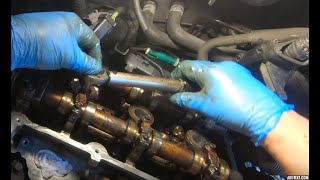
Typical fix: Replace the Bank 2 VCT solenoid. 🎬 Watch: How to locate and replace the VCT solenoids. Since this requires removing the valve cover, it is highly recommended to replace the valve cover gasket at the same time. Many technicians recommend using OEM Motorcraft solenoids as aftermarket versions can have higher failure rates.
Est. part cost: $30-$80 - Worn Timing Chain or Tensioner ⚪ Low Probability Over high mileage (typically over 150,000 miles), timing chains can stretch and plastic tensioners can wear or break. This causes slack in the system that leads to incorrect cam timing. Neglected oil changes can accelerate this wear by allowing guide material to fall into the oil pan and clog the oil pickup screen, leading to oil starvation.
How to confirm: This usually requires significant disassembly to physically inspect the timing components. A persistent rattling noise from the front of the engine, especially on startup, can be an indicator.
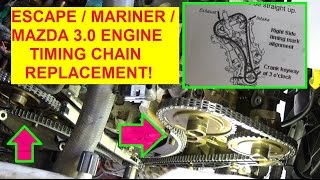
Typical fix: Replace the timing chain, guides, and tensioners. This is a complex and labor-intensive job. 🎬 Watch this walkthrough of the timing chain and marks setup.
Est. part cost: $200-$500
Rare But Worth Checking
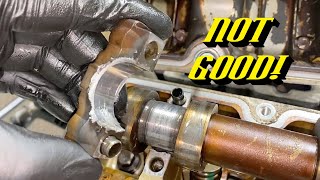
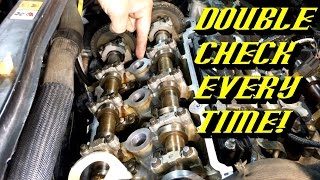
- Loose Camshaft Bearing Cap Bolts: This is a known, though rare, design flaw of the 3.0L Duratec engine. The bolts holding the camshaft bearing caps can loosen or break, allowing the cam to lift slightly. This causes a loss of oil pressure to the cam journals and disrupts valve lift, leading to misfires and timing codes. If the valve cover is already off for a VCT solenoid replacement, it is critical to check the torque on these bolts. They should be torqued to 89 lb-in (inch-pounds). 🎬 See how to properly inspect and torque camshaft bearing caps. A known early warning sign can be a misfire on the affected cylinder before the catastrophic failure occurs.
- Failed Camshaft Phaser: The phaser (the sprocket on the end of the camshaft) can become stuck in the retarded position due to internal failure, debris, or oiling issues. This is less common than a solenoid failure but more common than a timing chain issue on this engine. In some cases, the bolts on the sprocket itself can loosen, causing damage to the housing and sensor readings.
- Faulty Camshaft Position Sensor (Bank 2): While a failing sensor can cause timing codes, it is much less common than oil-related issues or a bad VCT solenoid. The code P0022 indicates a mechanical timing problem, not necessarily a sensor signal fault. However, if the sensor provides an erratic signal, it could contribute to the code.
Diagnosis Steps
- Check Engine Oil: Verify the oil level is full and the oil is clean. If low or dirty, perform an oil and filter change with SAE 5W-20 oil, clear the code, and re-test. This is the cheapest and most common fix.
- Scan for Other Codes: Check for any other codes, especially misfire codes (P030X) on Bank 2, that may point to a related issue. Manufacturer bulletin #SSM 54366 suggests that P0022 may appear alongside codes like P0011, P0012, or P0021, and recommends pinpoint test HK in the Powertrain Control and Emissions Diagnosis manual.
- Inspect VCT Solenoid Wiring: Visually inspect the connector and wiring for the Bank 2 VCT solenoid for any damage, corrosion, or loose connections.
- Swap VCT Solenoids: Swap the Bank 2 (front) and Bank 1 (rear) VCT solenoids. Clear the codes and drive the vehicle. If the code changes to P0012, the solenoid is bad and needs to be replaced. This is a definitive, no-cost diagnostic step.
- Check Camshaft Cap Bolts: If the valve cover is removed to replace the solenoid, use a torque wrench to verify the camshaft bearing cap bolts are torqued to 89 lb-in. If any are loose, they should be cleaned, have a drop of thread locker applied, and re-torqued. This is a critical preventative check.
- Advanced Mechanical Diagnosis: If the steps above do not resolve the issue, the problem is likely a more serious mechanical fault like a failed cam phaser or a stretched timing chain, which may require professional diagnosis.
Parts You'll Likely Need
- Variable Camshaft Timing (VCT) Solenoid
(OEM #8L3Z-6M280-B (pre-2009), 9L8Z-6M280-A/B (2009-2012))— This is the most common part to fail, causing the cam timing to be incorrect. It gets clogged with debris or fails electrically.
Trusted brands: Motorcraft, Dorman (917-223)
OEM price range: $50-$90
Aftermarket price range: $30-$60 - Valve Cover Gasket Set — Required for replacing the VCT solenoid, which is located under the valve cover. Reusing an old gasket will likely cause oil leaks.
Trusted brands: Motorcraft, Fel-Pro
OEM price range: $40-$70
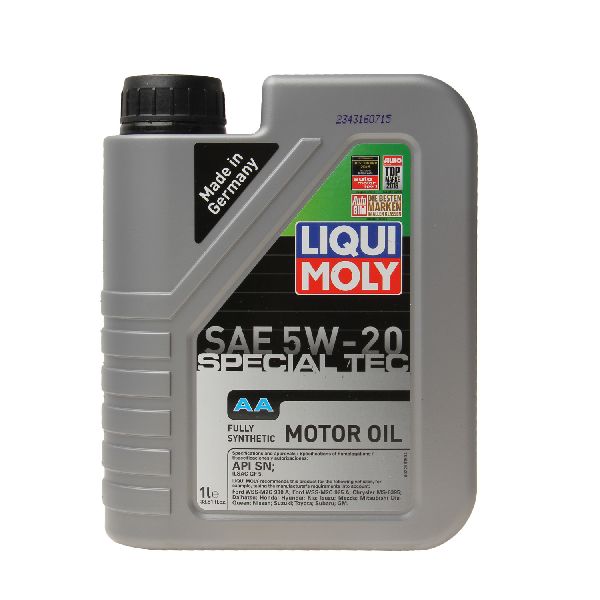
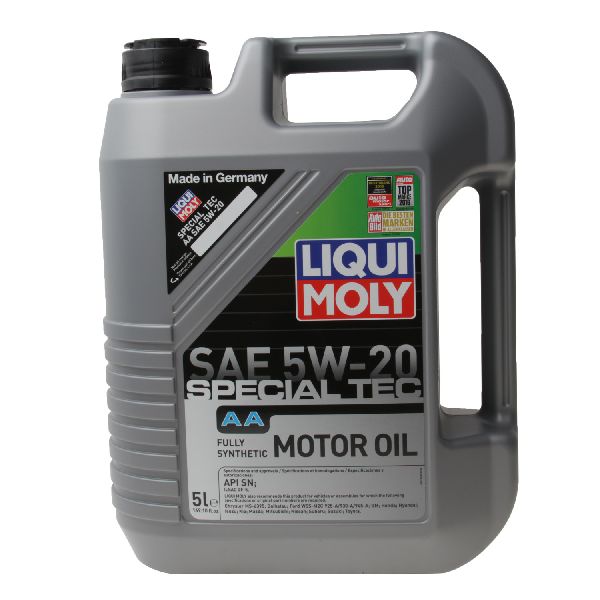
Aftermarket price range: $20-$40 - Engine Oil and Filter — Low or dirty oil is a primary cause of this code. An oil change is the first and most important diagnostic step.
Trusted brands: Motorcraft (5W-20 Synthetic Blend)
OEM price range: $40-$60
Aftermarket price range: $30-$50
Related Codes That Often Appear With This One
- P0012 — This is the equivalent code for Bank 1 ('A' Camshaft Position Timing Over-Retarded). Seeing both P0012 and P0022 simultaneously strongly points to a systemic issue like very low/dirty oil or low oil pressure affecting both banks. A TSB for 2009 models notes that when both codes appear, the solenoids are the likely culprit.
- P0021 — This code is for 'Intake Camshaft Position Timing - Over-Advanced (Bank 2)'. It shares the same potential root causes, particularly a faulty VCT solenoid. TSB 12-10-12 lists this code alongside P0022 as being caused by a faulty VCT solenoid.
- P0300, P0302, P0304, P0306 — These are misfire codes (P0300 for random, others for specific cylinders on Bank 2). An over-retarded cam can cause incorrect valve timing, leading to incomplete combustion and misfires on the affected bank.
Technical Service Bulletins (TSBs) & Recalls
- TSB 12-10-12: For 2012 Ford Escape/Fusion 3.0L models, this bulletin advises replacing the VCT solenoid if codes P0011, P0012, P0021, or P0022 are present.
- A TSB for 2009 models (build date prior to April 2009) indicates that if codes P0012 and P0022 appear together, both VCT solenoids should be replaced.
- Bulletin #SSM 47170: Notes that an illuminated MIL with P0022 may be due to small debris causing the VCT solenoid to stick, and advises checking this before component replacement.
Platform-Specific Known Issues
- A known flaw on the 3.0L Duratec V6 is the tendency for camshaft bearing cap bolts to loosen over time, which can cause timing codes like P0022. This should be inspected whenever a valve cover is removed.
- A YouTube video by FordTechMakuloco titled 'Ford 3.0L V6 Duratec Engine: The One Fatal Flaw That Will Destroy This Engine!' details a catastrophic failure wher
Mechanic-Grade Diagnostic Values
- VCT Solenoid Internal Resistance — expected: 6.9 to 7.9 Ohms. Failure: A reading outside this range, or an open (OL) / short (0 Ohms) circuit.
- Camshaft Bearing Cap Bolt Torque — expected: 89 lb-in (inch-pounds). Failure: Bolts that are loose or require less torque to turn.
- Scan Tool PID: VCTADV2_ERR (Bank 2 VCT Error) — expected: Should be at or very close to 0° at idle and in closed loop.. Failure: A consistent, significant deviation from 0° indicates the cam is not where the PCM is commanding it to be.
- Scan Tool PID: VCT2_DC (Bank 2 VCT Solenoid Duty Cycle) — expected: Should be similar to the Bank 1 duty cycle (VCT1_DC) under the same conditions.. Failure: A significantly higher duty cycle on Bank 2 compared to Bank 1 suggests the PCM is trying to compensate for a sticking solenoid or oil flow problem on that bank.
- Engine Oil Pressure (at idle, normal operating temp) — expected: Minimum 15 PSI. Failure: Pressure below 15 PSI at idle can cause erratic VCT operation and trigger timing codes.
Hidden / Shadow Codes Worth Checking
- Mode 6, Test ID $A2: Monitors misfire counts for each cylinder. While not a direct timing code, elevated misfire counts on Bank 2 cylinders (4, 5, 6) can be a direct symptom of the incorrect cam timing from a P0022 fault, helping to confirm a performance impact. (see via Requires a professional scan tool with Mode 6 data capability.)
Scan Tool Commands That Help
- Ford IDS (or equivalent professional scanner): VCT Solenoid On/Off Bidirectional Control — This command manually energizes and de-energizes the VCT solenoid. It should be used with the engine at idle to check for a response. A healthy solenoid will produce an audible click and cause a noticeable change in idle quality or may even stall the engine. A lack of response indicates a stuck or electrically failed solenoid. This can also help dislodge minor debris.
Wiring & Ground Locations
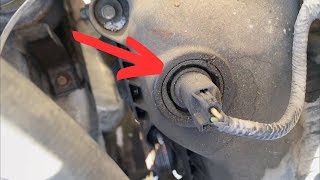
- VCT Solenoid Connector — The connector for the Bank 2 VCT solenoid protrudes from the front valve cover (closer to the radiator), near the oil fill cap.. This connector and its wiring are the primary electrical interface for the component. It has two pins: one for 12V power (supplied when the engine is running) and one for the ground signal, which is pulse-width modulated by the PCM to control the solenoid. Damage or corrosion here will cause a loss of control.
- G102 / G107 — G102 is a primary engine ground located on the right front of the engine compartment. G107 is also on the right front of the engine.. The PCM and its sensors rely on clean ground connections to function. A corroded or loose main engine ground can introduce electrical noise and cause erratic behavior in the VCT and ignition systems, potentially contributing to timing codes.
Real Owner Repair Stories
- BobIsTheOilGuy.com forum user (2008 Ford Escape 3.0L V6) — Unspecified timing-related problems.
❌ Tried (didn't work) Not specified, but the issue was identified as a known problem.
✅ What actually fixed it The camshaft cap bolts had backed themselves off. The fix was to re-torque the bolts to the correct specification (89 lb-in). - YouTube video by 'T&C Auto' (2010 Ford Escape 3.0L V6 with over 150,000 miles) — Check engine light with timing codes (P0011 mentioned, but applies to P0022), rattling engine noise.
❌ Tried (didn't work) Owner might assume it's just a VCT solenoid or a simple timing chain issue.
✅ What actually fixed it The bolts on the intake cam sprocket (phaser) itself came loose. This damaged the phaser housing where the cam position sensor reads, causing the code. The fix required a full timing job including a new phaser, chains, guides, and tensioners. - NHTSA ODI #10542950 — An owner reported that their vehicle was surging when the engine light came on with codes P0012 and P0022; the dealership resolved the issue by replacing both VCT solenoids.
- NHTSA ODI #11062913 — An owner experienced issues while the car was running and in drive; a dealership scan revealed codes P0012, P0022, P0341, and P0346, noting they were related to bulletin 11-12-5.
OEM Part Supersession History
8L3Z-6M280-A→8L3Z-6M280-B— Updated design. This part number is primarily for the 4.6L/5.4L 3V V8 engines but is often incorrectly listed for pre-2009 3.0L V6 models in aftermarket catalogs.
Heads up: While it may physically fit, using this V8-specific part on the 3.0L V6 is not recommended. Always verify the correct part for the V6 via VIN.9L8Z-6M280-A→9L8Z-6M280-B— Revision/update for the 2009-2012 3.0L V6 engine.
Model Year Variations Within This Range
- 2009-2012: The VCT solenoid part number changed for the 2009 model year to the 9L8Z-6M280-A/B series. Pre-2009 models use a different part number. While the failure mode is the same, the parts are not interchangeable.
Diagnostic Flowchart
Other Known Issues on This Vehicle
Issues unrelated to this code that are worth knowing about as an owner of this generation:
- Rear Shock Tower Rust 🔴 High — Very common on vehicles in salt-belt regions. The passenger side is noted to fail more frequently. Can occur as early as 5-7 years old. (Ref: No recall, but a well-known issue. Aftermarket repair kits (e.g., Dorman 924-358) are widely available.)
- Automatic Transmission Failure (CD4E) 🔴 High — Common, particularly in earlier 2001-2008 models, often occurring between 80,000 and 150,000 miles. Later models with the 6F35 transmission (2009+) are generally more reliable. (Ref: Multiple recalls and TSBs exist, including 16V438000 for a potentially faulty shift lever bolt on remanufactured units.)
- Engine Stalling During Deceleration 🟠 Medium — Common enough to warrant a safety recall on 2001-2003 models with the 3.0L V6. (Ref: Recall 04V165000 was issued to reprogram the Powertrain Control Module (PCM) to prevent stalling during deceleration at speeds below 40 MPH.)
- Oil Leaks (Valve Covers, Timing Cover, Oil Pan) 🟡 Low — Very common at higher mileage. The 3.0L Duratec is known for developing leaks from valve cover gaskets, the front timing cover, and main seals.
- PCV System Issues and Oil Consumption 🟠 Medium — A malfunctioning PCV system is common on 2001-2007 models and can lead to excessive crankcase pressure, forcing oil past seals and causing blue smoke and high oil consumption.
Used vs. New Parts: Buying Guide for This Vehicle
When a used part is the smart pick: For this specific repair, using used parts is generally not recommended for the electronic or hydraulic components. A used valve cover, bolts, or other simple hardware from a junkyard is acceptable, but the core failure parts should be new.
Donor-vehicle mileage cap: roughly under 100000 miles for the part to have meaningful remaining life.
What to inspect on the donor part:
- For any engine part, look for a donor vehicle with no signs of front-end collision or fire.
- If possible, remove the oil fill cap to check for milky residue (coolant contamination) or thick, black sludge.
- Avoid parts from engines that are visibly covered in old, leaking oil, as this suggests poor maintenance.
OEM-only on this vehicle (don't cheap out):
- VCT Solenoid: Many technicians and forum users strongly recommend using OEM Motorcraft solenoids, as some aftermarket versions have a high rate of premature failure.
- Camshaft Phaser: If a phaser replacement is needed, OEM is the safest choice due to the tight tolerances required for proper VCT operation. Aftermarket phasers are a common source of repeat failures.
Aftermarket brands forum-validated for this vehicle:
- Fel-Pro: A widely trusted brand for the required valve cover gasket set.
Brands owners have reported issues with on this vehicle:
- Unnamed/white-box solenoids from online marketplaces are a significant gamble and often fail quickly.
Real Owner Stories
Aggregated from forums and TSBs cited above. Mileages and costs reflect what owners reported in those sources.
2012 Ford Escape 3.0L V6
Symptoms: Check engine light on with code P0022 present.
What fixed it: Replacement of the VCT solenoid as advised by TSB 12-10-12.
Source hint: TSB 12-10-12
2008 Ford Escape 3.0L V6
Symptoms: Cam bearing caps wore out prematurely, potentially before the first oil change.
What fixed it: This report highlighted a severe instance of the cam bearing cap issue common to the platform.
Source hint: Diesel Technician Society Forum
2001-2012 Ford Escape 3.0L V6 — ~150000 miles
Symptoms: Rattling noise from the engine on startup or during operation, engine hesitation, and sluggish acceleration.
What fixed it: Replacement of the timing chain, guides, and tensioners due to slack in the system.
Source hint: Article Context - Common Causes
2009 Ford Escape 3.0L V6
Symptoms: Both P0012 and P0022 codes appearing simultaneously.
What fixed it: Replacement of both VCT solenoids as per the TSB for models built prior to April 2009.
Source hint: TSB for 2009 models
Related OBD-II Codes
Frequently Asked Questions
Does TSB 12-10-12 apply to my 2012 Ford Escape with the 3.0L engine?
I have a 2009 Escape with both P0012 and P0022; is there a specific recommendation for this?
What type of oil should I use in my 3.0L Duratec V6 to prevent VCT issues?
Is there a specific mechanical flaw I should check while the valve covers are off?
My Mazda Tribute is throwing a P0022; is the fix the same as the Ford Escape?
Could my engine stalling during deceleration be related to P0022?
Helpful Videos
Used OEM Parts in Stock
New Aftermarket Parts Available


The information in this article is provided for general reference and educational purposes only. Vehicle specifications, procedures, and part compatibility can vary by production date, trim level, and region. Always consult your vehicle's factory service manual and verify part numbers before purchasing or performing repairs. Safety-critical components such as airbags, seat belts, and braking systems should be installed by a qualified professional.
- Ford Escape:
- 🎬 Helpful Videos
- 🛍️ Shop This Part
- What's Unique About the 2001-2012 Ford Escape
- Symptoms You May Notice
- Most Likely Causes
- Rare But Worth Checking
- Diagnosis Steps
- Parts You'll Likely Need
- Related Codes That Often Appear With This One
- Technical Service Bulletins (TSBs) & Recalls
- Platform-Specific Known Issues
- Mechanic-Grade Diagnostic Values
- Hidden / Shadow Codes Worth Checking
- Scan Tool Commands That Help
- Wiring & Ground Locations
- Real Owner Repair Stories
- OEM Part Supersession History
- Model Year Variations Within This Range
- Diagnostic Flowchart
- Other Known Issues on This Vehicle
- Used vs. New Parts: Buying Guide for This Vehicle
- Real Owner Stories
- 2012 Ford Escape 3.0L V6
- 2008 Ford Escape 3.0L V6
- 2001-2012 Ford Escape 3.0L V6 — ~150000 miles
- 2009 Ford Escape 3.0L V6
- Related OBD-II Codes
- Frequently Asked Questions
- 🎟️ Get 5% Off