

P0021 on 2015-2020 Ford Explorer: Causes and Fixes for Camshaft Over-Advanced
On a 2015-2020 Ford Explorer, code P0021 is most often caused by low/dirty engine oil or a failing Variable Camshaft Timing (VCT) solenoid. An oil change and replacing the Bank 2 intake VCT solenoid is the most common fix. For the 3.5L V6, this is a labor-intensive job ($500+), while on the 2.3L I4 it is much simpler.
- First, check your engine oil. Low, old, or dirty oil is the #1 cause of P0021 on these engines.
- The most likely failed part is the Bank 2 (firewall side) intake VCT solenoid. It's affordable and relatively easy to replace.
- Do not immediately assume a major timing chain issue. Follow the diagnostic steps from simplest to most complex.
- Using the Ford-specified Motorcraft engine oil and filter is highly recommended to prevent VCT system problems.
- Ford has issued multiple service bulletins (TSBs) acknowledging that this code is often caused by oil contamination sticking the VCT solenoid.
What's Unique About the 2015-2020 Ford EXPLORER

For this generation of Ford Explorer, across multiple engines, the Variable Camshaft Timing (VCT) system is highly sensitive to oil condition and cleanliness. Multiple Ford Technical Service Bulletins (TSBs) confirm that P0021 and related codes can be triggered by small debris in the oil causing the VCT solenoid to stick. [SSM 50067, SSM 47170] Before replacing parts, Ford specifically advises performing a diagnostic test (Pinpoint Test HK11) to cycle the affected solenoid up to 10 times with a scan tool to attempt to clear the debris. This procedure can sometimes resolve the fault without requiring parts replacement.
Diagnostic Flowchart

Tap your situation to follow the diagnostic path that matches what you're seeing on this vehicle.
Generation note: This range covers the end of the 5th generation (2015-2019) and the start of the 6th generation (2020). While engine offerings changed, the VCT system principles and the common causes for P0021 (oil quality, VCT solenoids) remain consistent across the primary engines available in these years. The repair procedure for the 3.5L V6 is notably more complex than for the 2.3L I4.
Symptoms You May Notice
- Check Engine Light is on
- Rough idle or stalling, especially when coming to a stop
- Engine hesitation or loss of power during acceleration
- Decreased fuel economy
- Rattling or knocking noise from the engine, particularly on startup
- Hard starting
- Replacing the camshaft position sensor when the actual problem is the VCT solenoid or dirty oil.
- Replacing the cam phasers (a very expensive job) when the issue is just a stuck VCT solenoid, which is a much cheaper and easier repair.
- Assuming the VCT solenoid is bad without first performing an oil change, as dirty oil is the number one cause of solenoid sticking.
Most Likely Causes

- Low, Dirty, or Incorrect Viscosity Engine Oil 🔴 High Probability The VCT system uses oil pressure to adjust cam timing. Ford TSBs specifically mention that debris in the oil can cause solenoids to stick, and forum discussions frequently link this code to missed oil changes. [SSM 50067, 20] Using an oil that is too thick or thin can also prevent proper VCT operation.
How to confirm: Check the oil level and condition on the dipstick. If the oil is low, dark/sludgy, or if it's past its recommended change interval, this is the most likely cause. This should always be the first step. 🎬 See this video for a walkthrough on fixing P0021 codes.
Typical fix: Change the engine oil and filter using the correct viscosity oil specified in your owner's manual (e.g., Motorcraft 5W-30 Synthetic Blend). Clear the code and drive to see if it returns.
Est. part cost: $50-$90 - Failing Variable Camshaft Timing (VCT) Solenoid 🔴 High Probability The VCT solenoid (also called an oil control valve) can get clogged with debris, stick internally, or fail electronically. This is a very common failure point mentioned in multiple TSBs and owner forums for causing P0021. [SSM 54366, 26, 28]
How to confirm: After ruling out oil issues, you can test the solenoid's resistance with a multimeter (typically 6.9-7.9 ohms). The most effective method is to swap the Bank 2 intake solenoid with the Bank 1 intake solenoid; if the code changes to P0011 (Bank 1), the solenoid is confirmed bad.
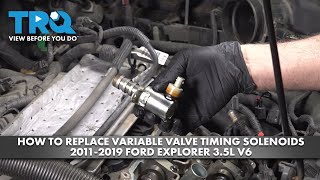
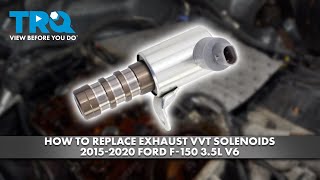
Typical fix: Replace the Bank 2 intake VCT solenoid. On the 3.5L V6, this also requires replacing the valve cover gasket 🎬 Watch: Step-by-step VCT solenoid replacement for the 3.5L V6 engine. and intake manifold gaskets. It is highly recommended to replace both solenoids (intake and exhaust) on the same bank at the same time.
Est. part cost: $40-$120 per solenoid - Worn Timing Chain or Phasers ⚪ Low Probability On higher-mileage 3.5L EcoBoost engines, stretched timing chains are a known issue that can cause timing correlation errors like P0021, often accompanied by P0018. 🎬 Watch: Diagnosing complex timing issues when multiple codes appear together. This is less common than oil or solenoid issues but is a significant potential repair.
How to confirm: This is an involved diagnosis. It often involves listening for a distinct chain rattle on cold startups that lasts for a few seconds. A professional diagnosis is required, which involves checking live data for cam/crank correlation and may require removing the front engine cover for inspection.
Typical fix: Replace the timing chain, tensioners, guides, and cam phasers. This is a significant and costly repair.
Est. part cost: $600-$1500+
Rare But Worth Checking
- Faulty Camshaft Position Sensor: While possible, it's far less common for the sensor itself to fail than the VCT solenoid. The sensor reports the problem; it doesn't cause it. Owners often replace this first by mistake. If the code persists after changing the solenoid, this is a next logical step to check.
- Wiring Harness Damage: Check the wiring and connector to the VCT solenoid for any signs of damage, corrosion, or oil contamination before replacing the part. A poor connection can mimic a failed solenoid.
- Clogged Oil Passages / VCT Filter: In cases of severe engine sludge, the small oil passages leading to the VCT components can become blocked. Some engines have a small mesh filter screen for the VCT solenoid that can become clogged and should be cleaned or replaced when servicing the solenoid.
Diagnosis Steps
- Check Engine Oil: Verify the oil level is correct and the oil is clean. If it's low, dirty, or the wrong viscosity, perform an oil and filter change with the manufacturer-specified oil. Clear the code and re-test. This solves the problem in many cases.
- Scan Tool Data: Use a scan tool to monitor the desired vs. actual camshaft position for Bank 2 (CMP2). This can confirm if the cam is actually stuck in an advanced position and by how many degrees.
- Cycle the Solenoid: Per Ford's TSBs (SSM 50067), use a capable scan tool to access the VCT solenoid actuator test (often found in Pinpoint Test HK11). Cycle the Bank 2 intake solenoid 10 times to attempt to dislodge any debris. Clear codes and re-test.
- Inspect VCT Solenoid Connector: Check the wiring and connector for the Bank 2 intake VCT solenoid for damage, corrosion, or loose connections.
- Test the VCT Solenoid (Solenoid Swap): The easiest way to confirm a bad solenoid is to swap the Bank 2 intake solenoid with the Bank 1 intake solenoid. Clear the codes and run the engine. If the code returns as P0011 (Bank 1), the solenoid is faulty and needs replacement.
- Resistance Test: Alternatively, you can remove the solenoid and test its internal resistance with a multimeter. A typical reading is between 6.9 and 7.9 ohms. An open or shorted reading indicates a failed solenoid.
- Check for Sludge: When the solenoid is removed, inspect the opening in the camshaft cover for signs of heavy oil sludge which could indicate a larger engine health problem.
- Advanced Diagnostics: If the solenoid and oil are good, the problem may be with the cam phaser or timing chain. This requires more advanced mechanical diagnosis (checking for chain slack, guide wear) and is best left to a professional.
Parts You'll Likely Need

- Engine VVT Solenoid (Bank 2 Intake)
(OEM #3.5L V6: AT4Z-6M280-B (Bank 2/Left Side Intake) | 2.3L I4: FR3Z-6C535-A)— This is the most common part to fail or stick, causing the P0021 code. It directly controls the oil flow that adjusts the camshaft timing. TSB 16-0093 points directly to this part for the 3.5L.
Trusted brands: Motorcraft, Dorman
OEM price range: $70-$120
Aftermarket price range: $40-$80 - Engine Oil and Filter — Dirty, low, or incorrect viscosity oil is a primary cause of VCT system faults. Using the correct Motorcraft oil and filter is a critical first step and maintenance item.
Trusted brands: Motorcraft
OEM price range: $50-$90
Aftermarket price range: $40-$70 - Valve Cover & Intake Manifold Gaskets (3.5L V6 Only)
(OEM #Varies by specific engine/year)— For the 3.5L V6 engines, the Bank 2 (front) valve cover must be removed to access the VCT solenoids, which requires removing the upper intake manifold
Related Codes That Often Appear With This One
- P0011 — This is the equivalent code for Bank 1. If you see both P0011 and P0021, it strongly points to a systemic issue like low oil pressure or severe oil contamination affecting both banks.
- P0018 — This code indicates a crankshaft-to-camshaft position correlation error on Bank 2. It can appear with P0021 if the timing has jumped or if there's a significant mechanical timing issue, such as a stretched timing chain. TSB 16-0038 specifically pairs P0018 and P0021 as an indicator to replace the Bank 2 intake VCT solenoid on low-mileage vehicles.
- P0022 — This is for 'Camshaft Position Timing Over-Retarded' on Bank 2. Seeing it with P0021 could indicate an erratic VCT solenoid or oil pressure issue causing the camshaft position to fluctuate wildly between advanced and retarded states.
Technical Service Bulletins (TSBs) & Recalls

- SSM 54366: Mentions P0021 among other DTCs and refers to pinpoint tests for diagnosis.
- SSM 50067: States that P0021 may be due to small debris causing the VCT solenoid to stick and advises diagnosis (cycling the solenoid) before replacement.
- SSM 47170: Similar to SSM 50067, points to debris in oil as a likely cause for a group of VCT codes including P0021.
- TSB 16-0093: For 2016 models with under 2000 miles, advises replacing the specific VCT solenoid indicated by the DTC.
- TSB 16-0038: For 2016 3.5L GTDI models under 2000 miles, specifically advises replacing the Bank 2 intake VCT solenoid if P0021 and P0018 are present together.
Platform-Specific Known Issues
- Multiple Technical Service Bulletins (TSBs) including SSM 54366, SSM 50067, and SSM 47170 have been issued by Ford for the 2015-2020 Explorer regarding VCT-related DTCs. The bulletins consistently point to small debris in the engine oil causing the VCT solenoids to stick, and advise against immediate component replacement without proper diagnosis. Specifically, they recommend using a scan tool to cycle the solenoid to clear it.
- TSB 16-0093 addresses this code on low-mileage (under 2,000 miles) 2016 models with the 3.5L engine, recommending direct replacement of the affected VCT solenoid.
- TSB 16-0038 notes that when P0021 is paired with P0018 on a low-mileage 2016 3.5L GTDI, the Bank 2 intake VCT solenoid should be replaced.
Mechanic-Grade Diagnostic Values
- VCT Solenoid Internal Resistance — expected: Generally between 6 and 12 ohms. A reading of 7.6 ohms has been shown as acceptable.. Failure: A reading of OL (Open Loop) or significantly outside the specified range indicates a faulty coil in the solenoid.
- VCT Solenoid Connector Voltage — expected: Approximately 12V (battery voltage) on the power supply pin with the key on, engine off.. Failure: No voltage indicates a problem with the power supply circuit, likely a blown fuse or wiring issue upstream of the solenoid.
- Scan Tool Live Data: VCT Differential Error — expected: The PID for VCT error (e.g., VCT_INT_DIF1) should be close to 0 degrees at idle.. Failure: A consistent, non-zero value indicates the camshaft is not at its commanded position. For P0021, this value would show a positive number of degrees, representing the over-advanced state.
Hidden / Shadow Codes Worth Checking
- Mode $06: Mode $06 is not a code itself, but a diagnostic mode that reveals the results of the PCM's self-tests for various systems before a full-blown DTC is set. For the VCT system, a technician can view the test results for the cam position monitor. Even if no code is present, Mode $06 can show that the cam timing is consistently near the maximum allowable limit, indicating a borderline failure or an emerging problem. (see via A professional-grade scan tool or advanced DIY software like FORScan is needed. The data is often presented in hexadecimal as Test IDs (TIDs) and Component IDs (CIDs) which must be cross-referenced with manufacturer service information to be understood.)
Scan Tool Commands That Help
- Ford IDS, FORScan, or equivalent professional scanner: VCT Solenoid Duty Cycle Command / On-Board System Test — This is a bidirectional control used to actively test the VCT solenoid's mechanical function. A technician can command the solenoid to advance or retard the timing while monitoring live data PIDs (like VCT_INT_ACT1 vs VCT_INT_CMD1). If the actual position doesn't change with the command, it confirms a stuck solenoid, clogged oil passage, or faulty phaser. This is a more precise version of the 'solenoid cycling' mentioned in TSBs.
Wiring & Ground Locations
- VCT Solenoid Connector — Connected to the end of the VCT solenoid, which protrudes from the valve cover on each bank.. The connector has two pins. Pin 1 is the power supply (VPWR), which receives battery voltage from a fuse in the Battery Junction Box. Pin 2 is the control circuit, which is ground-controlled by the PCM. A poor connection, corrosion, or damaged wire at this connector can cause an open or short in the circuit, mimicking a failed solenoid and triggering codes.
Real Owner Repair Stories
- Ford F150 Forum (2018 Ford F-150 3.5L EcoBoost, 75k miles) — Loss of power while towing, no CEL at first, then codes P0018 and P0021 appeared. Issue was intermittent.
❌ Tried (didn't work) Replacing spark plugs, returning the vehicle to the stock ECU tune.
✅ What actually fixed it The user took it to a dealer who could not replicate the fault. The story highlights that when P0021 is paired with a correlation code like P0018, especially after previous phaser work, the issue is likely a deeper mechanical timing problem rather than just a simple solenoid failure. The resolution was not posted, but the diagnosis pointed away from common fixes. - Ford F150 Forum (2005 Ford F-150 5.4L) — Persistent P0011 and P0021 codes after a major timing job.
❌ Tried (didn't work) Replacing cam phasers, timing chain, tensioners, solenoids, and oil pump. The truck ran smoothly but the codes kept returning.
✅ What actually fixed it The final fix was not posted, but the story serves as a critical example that replacing all common components may not resolve the codes if the underlying issue is related to restricted oil passages in the cylinder heads or engine block, which are not cleared by a standard oil flush.
When the Usual Fixes Don't Work
- While replacing the VCT solenoid is a very common fix, it is not a guaranteed solution. In cases where P0021 is accompanied by correlation codes (like P0018), or if the codes return immediately after a full timing component replacement, the root cause is likely more severe. This could include clogged oil galleys within the cylinder head that feed the VCT system, low system oil pressure from a failing pump, or incorrect base timing from a previous repair. In these instances, simply replacing the solenoid again will not resolve the code.
OEM Part Supersession History
AT4Z-6M280-B→AT4Z-6M280-B (current)— This part number appears to be stable for the 3.5L V6 engine in the 2015-2019 Explorer. No supersession was found.
Heads up: This part is specific to the 3.5L/3.7L Cyclone engine family. It is not interchangeable with the solenoid for the 2.3L EcoBoost (FR3Z-6C535-A).
Model Year Variations Within This Range
- 2016: TSB 16-0093 was issued for 2016 Explorer models (among others) with the 3.5L engine that exhibit P0021 (and other VCT codes) at very low mileage (under 2,000 miles). The bulletin directly advises replacing the affected VCT solenoid, suggesting a potential batch of faulty solenoids from the factory for that model year.
Helpful Videos
Used OEM Parts in Stock


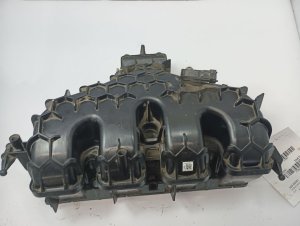

New Aftermarket Parts Available





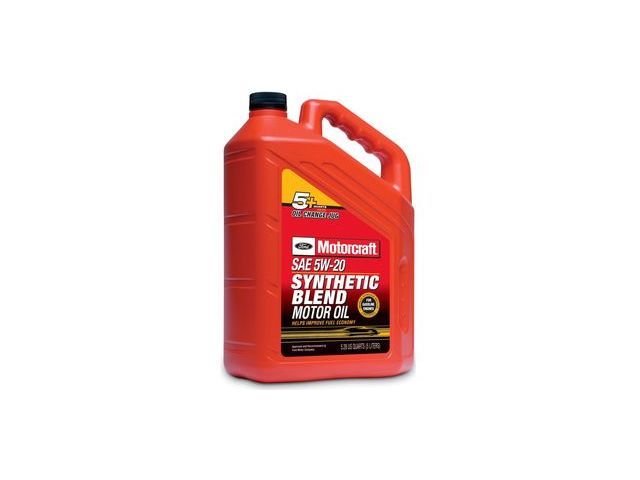

The information in this article is provided for general reference and educational purposes only. Vehicle specifications, procedures, and part compatibility can vary by production date, trim level, and region. Always consult your vehicle's factory service manual and verify part numbers before purchasing or performing repairs. Safety-critical components such as airbags, seat belts, and braking systems should be installed by a qualified professional.
- Ford EXPLORER:
- 🎬 Helpful Videos
- 🛍️ Shop This Part
- What's Unique About the 2015-2020 Ford EXPLORER
- Diagnostic Flowchart
- Symptoms You May Notice
- Most Likely Causes
- Rare But Worth Checking
- Diagnosis Steps
- Parts You'll Likely Need
- Related Codes That Often Appear With This One
- Technical Service Bulletins (TSBs) & Recalls
- Platform-Specific Known Issues
- Mechanic-Grade Diagnostic Values
- Hidden / Shadow Codes Worth Checking
- Scan Tool Commands That Help
- Wiring & Ground Locations
- Real Owner Repair Stories
- When the Usual Fixes Don't Work
- OEM Part Supersession History
- Model Year Variations Within This Range
- 🎟️ Get 5% Off