

P0021 on 2015-2021 Ford Escape: 'A' Camshaft Timing Over-Advanced Fixes
On a 2015-2021 Ford Escape, P0021 is most often caused by low or dirty engine oil, or a faulty Variable Camshaft Timing (VCT) solenoid for Bank 2. Start by checking your oil. If the oil is fine, the next step is usually replacing the Bank 2 intake VCT solenoid. Before replacing, you can try cleaning the solenoid. If the issue persists, replacement costs about $80-$100 for the part.
- Always check your engine oil first. A simple oil and filter change can sometimes fix this code.
- The most common failed part for P0021 on a Ford Escape is the VCT solenoid for Bank 2.
- A simple diagnostic test is to swap the intake VCT solenoids between Bank 1 and Bank 2 to see if the fault code moves.
- Use the correct, manufacturer-specified engine oil and change it at recommended intervals to prevent this and other engine problems.
- Ford has acknowledged this issue in multiple TSBs, pointing to debris in the oil as a likely culprit for a sticking solenoid.
What's Unique About the 2015-2021 Ford ESCAPE
For the 2015-2021 Ford Escape, particularly those with EcoBoost engines, the VCT system is sensitive to oil quality and maintenance intervals. Ford has issued multiple Technical Service Bulletins (TSBs) acknowledging that this code (and others like it) can be triggered by small debris in the oil causing the VCT solenoid to stick. This suggests the issue is often related to oil contamination or solenoid performance rather than more severe mechanical timing problems. Owners on forums frequently report that sticking to a strict 5,000-mile oil change interval with full synthetic oil can prevent the issue from occurring or reoccurring.
Diagnostic Flowchart
Tap your situation to follow the diagnostic path that matches what you're seeing on this vehicle.
Generation note: This range covers the end of the 3rd generation (2013-2019) and the beginning of the 4th generation (2020-present) Ford Escape. The 3rd gen offered 1.6L EcoBoost, 2.0L EcoBoost, and 2.5L engines. The 4th gen introduced a 1.5L EcoBoost and continued with a 2.0L EcoBoost and a 2.5L hybrid variant. While the engines differ, they all use a VCT system, making the causes and diagnostic principles for P0021 very similar across both generations.
Symptoms You May Notice
- Check Engine Light is on
- Rough or unstable idle
- Engine may hesitate or stall during acceleration
- Reduced fuel economy
- Rattling or knocking noise from the engine, especially on startup
- Hard starting
- Engine feels sluggish or lacks power
- Replacing the camshaft position sensor when the VCT solenoid is the actual cause.
- Replacing timing components (phasers, chain) before thoroughly diagnosing the VCT solenoids and checking oil pressure/quality.
- Assuming the cam phaser is bad when it's just a stuck solenoid or low oil pressure.
Most Likely Causes
- Low, Dirty, or Incorrect Viscosity Engine Oil 🔴 High Probability The VCT system uses oil pressure to adjust cam timing. Ford's TSBs (SSM 50067, SSM 47170) point to debris in oil as a primary cause for sticking VCT solenoids. EcoBoost engines, which run hotter, can degrade oil faster, making them particularly sensitive to oil condition.
How to confirm: Check the oil dipstick for level and examine the oil's color and consistency. If it's low, black, or sludgy, it needs to be changed. Note the mileage since the last oil change.
Typical fix: Perform an oil and filter change using the manufacturer-recommended full synthetic oil viscosity (e.g., SAE 5W-30 for many EcoBoost engines). Clear codes and drive to see if the issue is resolved.
Est. part cost: $40-$80 - Faulty Variable Camshaft Timing (VCT) Solenoid 🔴 High Probability As noted in Ford TSBs SSM 50067 and SSM 47170, these solenoids can stick due to small debris. It's a very common failure point for this code across the Ford lineup.
How to confirm: Swap the Bank 2 intake solenoid with the Bank 1 intake solenoid. Clear the codes and drive the vehicle. If the code changes to P0011 (Bank 1), the solenoid is confirmed faulty. You can also test its resistance with a multimeter or command it with a capable scan tool.
Typical fix: First, try cleaning the solenoid. Remove it and use MAF sensor cleaner or brake cleaner while actuating it with a 9V or 12V battery to flush out debris. If cleaning doesn't work, replace the Bank 2 intake VCT solenoid.
Est. part cost: $45-$120 - Faulty Camshaft Position Sensor 🟡 Medium Probability The sensor provides the position data to the ECM. If it sends an incorrect signal, the ECM may set a timing code. While less common than a solenoid failure, it's a possible electronic fault.
How to confirm: Inspect the sensor and wiring for damage. You can swap it with the sensor from Bank 1 to see if the fault code moves. A scan tool can also monitor the sensor's live data for dropouts or erratic readings.
Typical fix: Replace the Bank 2 intake camshaft position sensor.
Est. part cost: $30-$60
Rare But Worth Checking
- Stretched Timing Chain or Faulty Cam Phaser: This is a more serious mechanical issue. It's less common than oil or solenoid issues but should be considered if the above steps don't resolve the code. A rattling noise on startup is a common symptom, often discussed in F-150 forums with similar engines.
- Wiring or Connector Issues: Damage to the wiring harness for the VCT solenoid or camshaft position sensor can cause an intermittent or constant fault. Inspect the harness for any signs of fraying, melting, or corrosion, especially where it might rub against the engine.
- Clogged Oil Passages: In engines with a history of poor maintenance, sludge can build up and block the small oil passages or VCT solenoid filter screens that feed the cam phasers and solenoids, leading to oil starvation and timing issues.
Diagnosis Steps
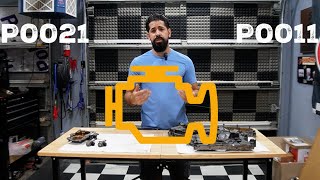
- Verify the code with an OBD-II scanner. 🎬 Watch: A complete guide to fixing P0021 and P0011 codes.
- Check the engine oil level and condition. If low, dirty, or overdue for a change, perform an oil and filter change with the correct viscosity full synthetic oil. Clear the code and see if it returns.
- Inspect the wiring and connectors for the Bank 2 intake VCT solenoid and camshaft position sensor for any visible damage.
- Using a scan tool, monitor the commanded vs. actual camshaft position for Bank 2. A significant discrepancy points to a problem.
- Try cleaning the solenoid. Remove the Bank 2 intake VCT solenoid, clean it with MAF cleaner, and cycle it with a 12V source to dislodge any debris. Reinstall and test.
- If cleaning fails, perform a VCT solenoid swap. Exchange the Bank 2 intake solenoid with the Bank 1 intake solenoid. Clear codes and test drive. If P0021 is replaced by P0011, the solenoid is faulty and needs replacement.
- If the code does not move after the solenoid swap, the issue may be with the camshaft position sensor, wiring, or the cam phaser itself.
- If all other steps fail, a mechanical timing inspection may be necessary to check for a stretched timing chain or a failed cam phaser. This is a more advanced repair.
Parts You'll Likely Need
- Engine Variable Valve Timing (VVT/VCT) Solenoid
(OEM #CM5Z-6M280-C (Fits 1.6L), CJ5Z-6M280-A (Fits 2.5L), CJ5Z-6M280-B (Fits 2.0L))— This part is the most common cause of P0021, often sticking due to oil debris as noted in Ford TSBs. Part numbers vary by engine.
Trusted brands: Motorcraft, Dorman, Standard Motor Products (SMP)
OEM price range: $80-$120
Aftermarket price range: $45-$75 - Engine Oil and Filter — Low or dirty oil is a primary trigger for VCT system faults. Always start with an oil change if maintenance is overdue.
Trusted brands: Motorcraft, Mobil 1, Castrol
OEM price range: $50-$90
Aftermarket price range: $40-$70 - Camshaft Position Sensor
(OEM #Motorcraft DY1148 or 7L1Z-6B288-A (Varies by engine))— A potential but less common cause. If the sensor fails, it can send incorrect timing data to the ECU.
Trusted brands: Motorcraft, Bosch, NTK
OEM price range: $40-$70
Aftermarket price range: $25-$50
Related Codes That Often Appear With This One
- P0011 — If you swap solenoids for diagnosis, P0021 may change to P0011, indicating the problem moved to Bank 1.
- P0022 — This code is for 'Timing Over-Retarded' on the same bank. Seeing both could indicate an erratic VCT solenoid or a more complex timing issue.
- P0016, P0017, P0018, P0019 — These are correlation codes between the crankshaft and camshafts. They often appear with P0021 if there is a base mechanical timing issue, like a stretched chain or incorrect timing.
Technical Service Bulletins (TSBs) & Recalls
- SSM 54366: Lists P0021 and other VCT codes, pointing to specific diagnostic tests.
- SSM 50067: Notes that small debris can cause the VCT solenoid to stick, triggering P0021.
- SSM 47170: An earlier bulletin with the same guidance as SSM 50067, indicating a persistent issue.
Platform-Specific Known Issues
- Ford Technical Service Bulletin (TSB) #SSM 50067 states that P0021 (among other codes) may be caused by 'small debris causing the VCT solenoid to stick.' It advises against immediate component replacement, highlighting the need for proper diagnosis.
- TSB #SSM 47170 has nearly identical wording to the above, indicating this has been a known issue for several years.
- TSB #SSM 54366 also lists P0021 and directs technicians to specific pinpoint tests in the workshop manual, reinforcing that a diagnostic procedure should be followed.
- While not for P0021 specifically, TSB 19-2188 for the 2.7L EcoBoost highlights how oil-related issues (in this case, oil supply to a turbo) are a focus for Ford, showing the sensitivity of these systems.
Mechanic-Grade Diagnostic Values
- VCT Solenoid Internal Resistance — expected: Between 7 and 14 Ohms across the two pins. A common reading is around 7.8 Ohms.. Failure: A reading of 0 Ohms indicates a short, while an infinite reading (OL) indicates an open circuit. A reading outside the 7-14 Ohm range suggests a failing coil.
- VCT Solenoid Connector Voltage — expected: With the ignition on and engine off, Pin 1 (power supply) should show battery voltage (~12V) when measured to a good ground.. Failure: No voltage at Pin 1 indicates a problem with the power supply circuit, fuse, or PCM power relay.
- Scan Tool VCT Error PID — expected: Using a Ford-capable scanner (like FORScan or IDS), monitor the PID
VCT_INT_DIF2(for Bank 2 Intake). This value should be close to 0 degrees at idle and during steady-state driving.. Failure: A consistent, significant deviation from 0 degrees indicates the camshaft is not reaching its commanded position, pointing to a stuck solenoid, phaser issue, or oil flow problem.
Hidden / Shadow Codes Worth Checking
- Mode $06 Test Results: Ford vehicles utilize Mode $06 data which provides results from non-continuous monitor tests. Technicians can look at the test results for the VCT monitor (e.g., TID $81, $82) to see if the camshaft timing is within its calibrated test limits, even before a DTC fully matures. (see via A professional scan tool or advanced DIY tool like FORScan that can access Mode $06 data.)
Scan Tool Commands That Help
- Ford IDS, FORScan, or equivalent professional scanner: On-Demand Self-Test (KOER - Key On, Engine Running) — This test commands the PCM to cycle various actuators, including the VCT solenoids. A technician can use a NOID light in the VCT connector during this test to visually confirm the PCM is sending a command signal, which helps isolate a wiring/PCM issue from a mechanical solenoid issue.
- Ford IDS, FORScan: VCT Solenoid Duty Cycle Command (e.g., VCT_INT2_DC) — This bidirectional control allows a technician to manually command the VCT solenoid to a specific duty cycle while monitoring the actual camshaft position PID (
VCT_INT_ACT2). This directly tests the solenoid's range of motion and the phaser's response.
Wiring & Ground Locations
- VCT Solenoid Connector — On the top of the valve cover, connected to the VCT solenoid.. The two-pin connector provides power and control. Pin 1 is the 12V power supply from the battery junction box, and Pin 2 is the ground-side control wire from the PCM. Checking for voltage here is a primary electrical diagnostic step.
- G104 — Likely located at the left front corner of the engine compartment, near the battery junction box (BJB).. This is a major engine compartment ground point. A poor connection at G104 could potentially cause erratic behavior in the PCM or its sensor inputs, leading to incorrect timing calculations or intermittent faults. While not a direct cause, checking major grounds is good practice for any electronic issue.
Real Owner Repair Stories
- Ford Truck Fanatics forum, user discussion on a 5.4L 3V with P0021 (2005 Ford F-150 5.4L 3V (Note: Different vehicle, but same code and underlying VCT principles, highlighting a key failure mode mentioned in Escape TSBs)) — Persistent P0021 code after extensive parts replacement.
❌ Tried (didn't work) Replaced timing chains and tensioners, Replaced cam phasers, Replaced VCT solenoids multiple times, Replaced camshaft position sensors (CPS) multiple times
✅ What actually fixed it The expert advice in the thread pointed to a known issue where aftermarket oil filters break down internally, depositing silicone or fiber debris into oil passages. This debris then clogs the new VCT solenoids or phasers, causing the code to return immediately. The fix is to use a high-quality OEM (Motorcraft) oil filter and ensure all oil passages are clean during repair.
OEM Part Supersession History
CM5Z-6M280-A→CM5Z-6M280-C— Part revision by the manufacturer, likely for improved durability or performance.
Model Year Variations Within This Range
- 2017-2021: For the 2017 model year refresh, the 2.0L EcoBoost engine was significantly updated to a twin-scroll turbo design. This involved a new engine block, revised cylinder head with an integrated exhaust manifold, new pistons, and a higher compression ratio. While the Ti-VCT system operates on the same principles, part numbers for VCT components and diagnostic procedures may differ from the 2015-2016 single-scroll 2.0L engine.
- 2017-2019: The 1.6L EcoBoost engine from the 2015-2016 models was replaced by a new 1.5L EcoBoost engine starting in 2017.
Helpful Videos

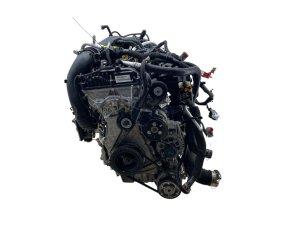
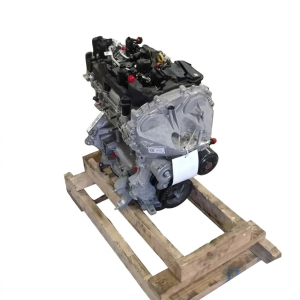
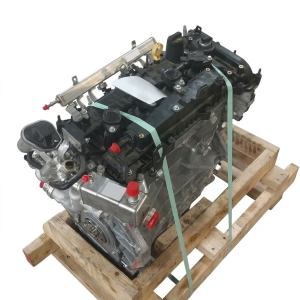
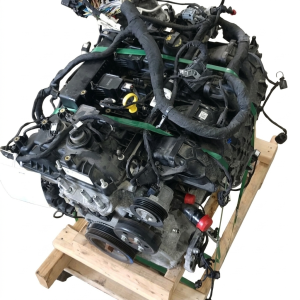
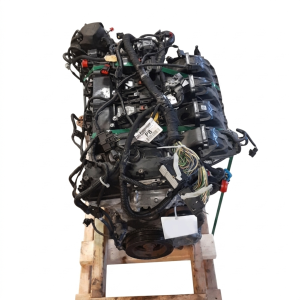
Used OEM Parts in Stock
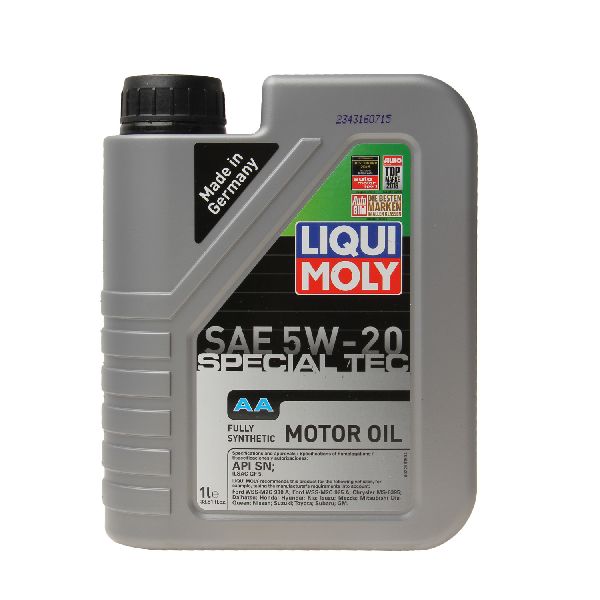
New Aftermarket Parts Available

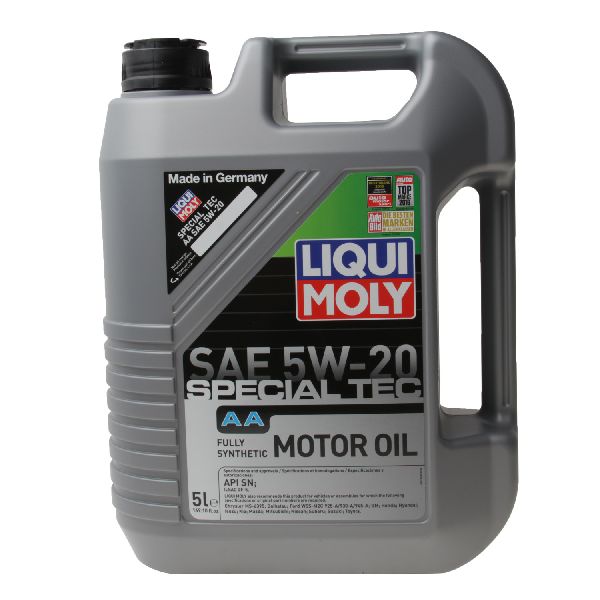

The information in this article is provided for general reference and educational purposes only. Vehicle specifications, procedures, and part compatibility can vary by production date, trim level, and region. Always consult your vehicle's factory service manual and verify part numbers before purchasing or performing repairs. Safety-critical components such as airbags, seat belts, and braking systems should be installed by a qualified professional.
- Ford ESCAPE:
- 🎬 Helpful Videos
- 🛍️ Shop This Part
- What's Unique About the 2015-2021 Ford ESCAPE
- Diagnostic Flowchart
- Symptoms You May Notice
- Most Likely Causes
- Rare But Worth Checking
- Diagnosis Steps
- Parts You'll Likely Need
- Related Codes That Often Appear With This One
- Technical Service Bulletins (TSBs) & Recalls
- Platform-Specific Known Issues
- Mechanic-Grade Diagnostic Values
- Hidden / Shadow Codes Worth Checking
- Scan Tool Commands That Help
- Wiring & Ground Locations
- Real Owner Repair Stories
- OEM Part Supersession History
- Model Year Variations Within This Range
- 🎟️ Get 5% Off